10 Best Face Masks for Dry Skin (2026): Hydrating Picks That Soothe
When your face feels tight, flaky or rough, a mask can look like the quickest fix. Some masks really do help dry skin feel softer, but clay and peel-off types can make dryness worse. This list covers 10 options, all hydrating masks, and explains which type to pick and who each one suits.
Part of our guide to skincare products. Start with: 10 Best Face Masks for Every Skin Type (2026): Clay, Gel and Sheet
The best facial mask for dry skin is a hydrating cream, gel-cream, overnight sleeping or sheet mask that combines humectants, which draw water into the outer layers of skin, with emollients and occlusives, which help keep it there. Useful ingredients include hyaluronic acid, glycerin, ceramides, squalane, shea butter, colloidal oat and honey. These masks can leave skin plumper and smoother for a day or so, especially after cold weather, flights or harsh products. Avoid clay, charcoal and peel-off masks, strong acids and heavy fragrance, which tend to strip oil or irritate dry skin. A mask supports, but does not replace, a daily gentle cleanser and moisturiser.
In short: choose a creamy or overnight hydrating mask, skip clay and peel-offs, and keep moisturising every day.
The American Academy of Dermatology recommends creams and ointments over lotions for dry skin, and lists ingredients such as hyaluronic acid, glycerin and shea butter as helpful.
Below you will find the ten picks, how we chose them, the main mask types, which ingredients to look for and avoid, how often to mask and how to get the most from a hydrating mask.
Shopping these picks?
Amazon Prime members get fast, free shipping on eligible items, plus Prime Video, Amazon Music and member deals. New members can start with a free trial.
Start a free Prime trialAged 18 to 24? Prime for Young Adults comes with a longer free trial and a lower price after it.
Affiliate link: we may earn a commission at no extra cost to you.
As an Amazon Associate we earn from qualifying purchases. This does not change which products we include.


Quick Answer
- BIODANCE Bio-Collagen Real Deep Mask is our top pick because its hydrogel sheet keeps hydration on the skin for hours.
- Summer Fridays Jet Lag Mask is the best cream option and doubles as a daily moisturiser.
- +WIS+ Hyaluronic Acid Mask is the gentlest pick for frequent use on sensitive, dry skin.
- Cream, overnight, jelly and sheet masks suit dry skin; avoid clay, charcoal and peel-offs.
- Hyaluronic acid, ceramides, oat and honey are useful ingredients.
- Apply masks to clean, slightly damp skin and follow with moisturiser.
- Masks help temporarily; daily moisturising does the real work.
Contents
- The 10 Best Face Masks for Dry Skin Right Now
- How We Chose These Products
- What Dry Skin Actually Needs From a Mask
- Face Mask Types Compared for Dry Skin
- Ingredients to Look For
- Honey and Oat Masks: What to Expect
- What to Avoid if Your Skin Is Dry
- Should You Exfoliate Before Masking?
- How to Use a Hydrating Mask on Dry Skin
- Choosing a Mask for Your Kind of Dryness
- Dos and Don’ts
- Honest Limits
- When to See a Dermatologist
- Your Questions, Answered
- Where This Leaves You
The 10 Best Face Masks for Dry Skin Right Now
These ten masks were shortlisted from widely reviewed Amazon listings and are all hydrating types that suit dry skin: hydrogel, overnight, jelly and sheet masks. Each pick explains who it suits, its trade-offs and who should skip it.
| # | Product | Best For | Standout Feature | |
|---|---|---|---|---|
| 1 | BIODANCE Bio-Collagen Real Deep Mask | Very dry, tight-feeling skin | Hydrogel sheet worn for hours | View |
| 2 | Summer Fridays Jet Lag Mask | Dull, dehydrated skin after travel | Doubles as a daily moisturiser | View |
| 3 | +WIS+ Hyaluronic Acid Sheet Mask | Frequent, gentle hydration | Triple hyaluronic acid in a thin sheet | View |
| 4 | belif Vitamin E Jelly Overnight Mask | Dry skin that dislikes heavy creams | Bouncy jelly that seals in moisture | View |
| 5 | Torriden DIVE IN Hyaluronic Acid Mask | Dehydrated skin of any type | Five weights of hyaluronic acid | View |
| 6 | Doppeltree RENEW Overnight Face Mask | Dry, easily irritated skin | Aloe and hyaluronic acid overnight | View |
| 7 | VT Cosmetics PDRN Daily Hydrating Mask | Masking several times a week | Ceramide and hyaluronic acid sheets | View |
| 8 | LAPCOS Honey Nourishing Sheet Mask | Rough, dry patches | Honey plus hyaluronic acid | View |
| 9 | BIODANCE Hydro Cera-nol Real Deep Mask | Dry skin with a weak barrier | Ceramide-focused hydrogel sheet | View |
| 10 | COSRX Propolis Honey Overnight Mask | Dry, dull skin in winter | Propolis-rich overnight gel | View |
BIODANCE Bio-Collagen Real Deep Mask

Best for: Very dry, tight-feeling skin
The BIODANCE Bio-Collagen Real Deep Mask earns the top spot because its hydrogel format suits dry skin better than most thin sheets. The essence is set into the sheet itself, so it clings closely and can be left on for several hours or overnight, turning clear as it releases its contents. That long contact time acts a little like an occlusive layer.
The listing highlights a smaller form of hyaluronic acid and collagen for a plumper, firmer look, and says it is formulated for sensitive skin. Treat the pore and elasticity wording as cosmetic, not lasting change. Compared with the Hydro Cera-nol version at #9, this one focuses on plumping rather than ceramides, and it is more involved than the Summer Fridays cream at #2.
- Hyaluronic acid and collagen set into a hydrogel sheet
- Can be worn for about 3 hours or overnight
- Sheet turns clear as it absorbs
- Multi-sheet set, described as suitable for sensitive skin
Pros
- Long wear time suits very dry skin
- Clings closely without dripping
- Multi-sheet pack
Cons
- Overnight sheet can slip if you move a lot
- Firming claims are cosmetic only
Skip it if: Skip it if you dislike wearing a sheet for hours; the belif or COSRX overnight masks are simpler.
Check Price on AmazonSummer Fridays Jet Lag Mask

Best for: Dull, dehydrated skin after travel
The Summer Fridays Jet Lag Mask is the pick for people who want a cream mask that also works as a moisturiser. The listing says a lighter layer can be left on as a day or night cream, while a thicker layer works as a mask. That flexibility makes it easy to use more often without buying two products.
Glycerin and hyaluronic acid draw water into the skin, and niacinamide is included too. It suits skin that feels tight and looks dull after flights, heating or harsh products. It is less occlusive than the hydrogel at #1, so very dry or flaky skin may still need a richer moisturiser on top. Patch test first, as with any new mask.
- Glycerin and hyaluronic acid for hydration
- Niacinamide in the formula
- Use as a mask or a light moisturiser
- Suited to dull, depleted-looking skin
Pros
- Two uses in one tube
- Creamy texture suits dry skin
- Easy to apply and leave on
Cons
- Less occlusive than a hydrogel sheet
- Tube runs out faster if also used as a daily cream
Skip it if: Skip it if your skin is extremely dry and flaky; pair a richer cream or choose the BIODANCE hydrogel.
Check Price on Amazon+WIS+ Hyaluronic Acid Sheet Mask

Best for: Frequent, gentle hydration
The +WIS+ Hyaluronic Acid Face Mask is a gentle sheet mask that suits frequent use, especially on dry skin that also reacts easily. The listing describes three sizes of hyaluronic acid, vitamin B5 and gentian extract to soothe and support the barrier, and calls it non-irritating and suitable for most sensitive skin types.
The ultra-thin sheet is designed to hold its essence without dripping, which makes it comfortable for a quick session before makeup or after sun exposure. A large pack means you can use it a few times a week. It is less rich than the cream at #2 or the overnight masks, so always finish with moisturiser to seal the water in.
- High, low and oligomer hyaluronic acid
- Vitamin B5 and gentian extract
- Thin, elastic sheet that does not drip
- Large pack for regular use
Pros
- Gentle and soothing focus
- Good value per sheet
- Works before makeup
Cons
- Needs moisturiser on top
- Sheet masks dry out if left on too long
Skip it if: Skip it if you want a richer, occlusive mask; the belif or BIODANCE picks do more for very dry skin.
Check Price on Amazonbelif Vitamin E Jelly Overnight Mask

Best for: Dry skin that dislikes heavy creams
The belif Vitamin E Jelly Overnight Mask is the best overnight option for people who want moisture without a greasy film. The listing describes a bouncy gel that melts in and forms an occlusive layer, which helps slow water loss while you sleep. Red algae and jojoba oil are included, alongside vitamin E.
It is designed to be pillow-proof and non-sticky, so you can apply it as the last step of your routine and rinse in the morning. It is free from parabens and sulfates. Compared with the COSRX honey mask at #10, it is lighter and less sticky, while the BIODANCE hydrogel at #1 gives a more intense, shorter boost.
- Jelly overnight mask with vitamin E
- Red algae and jojoba oil
- Forms a moisture-locking layer
- Pillow-proof, non-sticky, no-rinse
Pros
- Light yet occlusive
- Easy last step at night
- Non-sticky finish
Cons
- May not be rich enough for very flaky skin
- Jar packaging needs clean fingers or a spatula
Skip it if: Skip it if you want a mask that works in minutes; a sheet mask gives faster results.
Check Price on AmazonTorriden DIVE IN Hyaluronic Acid Mask

Best for: Dehydrated skin of any type
The Torriden DIVE IN mask is a popular Korean sheet mask built around a blend of five weights of hyaluronic acid, plus panthenol and allantoin, which are soothing. That mix suits skin that feels dehydrated and tight rather than oily, and the listing says it leaves no greasy or sticky feel once you remove it.
The cellulose sheet is described as highly absorbent and vegan, and the formula leaves out a long list of common irritants. It is a close rival to the +WIS+ mask at #3: Torriden has a more familiar name and a soothing focus, while +WIS+ comes in a bigger pack. Seal it with moisturiser afterwards.
- Five types of hyaluronic acid
- Panthenol and allantoin to soothe
- Absorbent vegan cellulose sheet
- Free from parabens and other common irritants
Pros
- Not sticky or greasy afterwards
- Soothing ingredients
- Well-known K-beauty brand
Cons
- Smaller pack than some rivals
- Hydrates but does not add much oil
Skip it if: Skip it if your skin needs richer oils; the COSRX or belif overnight masks are more nourishing.
Check Price on AmazonDoppeltree RENEW Overnight Face Mask

Best for: Dry, easily irritated skin
The Doppeltree RENEW Overnight Face Mask combines aloe vera with hyaluronic acid, according to its title, which makes it a calming choice for dry skin that also feels hot or irritated. As an overnight mask, it is designed to be left on while you sleep, giving the humectants time to draw water into the outer layers of skin.
The title markets it as an anti-ageing moisturiser, but treat that as cosmetic: plumper, better-hydrated skin looks smoother for a while. Its listing detail is thinner than the belif pick at #4, so patch test it first. Choose it if aloe suits your skin and you want a simple night mask.
- Aloe vera for a soothing feel
- Hyaluronic acid for hydration
- Designed to be left on overnight
- Doubles as a night moisturiser
Pros
- Calming aloe base
- Simple overnight step
- Suits dry, reactive skin
Cons
- Limited listing detail
- Anti-ageing wording is marketing
Skip it if: Skip it if you are sensitive to aloe; the +WIS+ or Torriden sheet masks are gentle alternatives.
Check Price on AmazonVT Cosmetics PDRN Daily Hydrating Mask

Best for: Masking several times a week
The VT Cosmetics PDRN Daily Hydrating Mask comes as a tub of thin daily sheets, which suits people who like to mask often. Its title lists ceramides and hyaluronic acid alongside PDRN, and ceramides in particular are useful for dry skin because they are part of the skin’s natural barrier.
Daily-style masks are lighter than a full sheet, so think of them as a quick hydrating layer after cleansing rather than an intensive treatment. PDRN is a popular K-beauty ingredient, but the evidence for it in topical products is limited, so choose this for the ceramides and convenience rather than bold promises.
- Vegan PDRN in a daily sheet format
- Ceramides for barrier support
- Hyaluronic acid for hydration
- Tub of 30 sheets
Pros
- Includes ceramides
- Quick to use every day
- Large supply of sheets
Cons
- Lighter than full sheet masks
- PDRN evidence is limited
Skip it if: Skip it if you only mask occasionally; a smaller pack such as LAPCOS is less commitment.
Check Price on AmazonLAPCOS Honey Nourishing Sheet Mask
Best for: Rough, dry patches
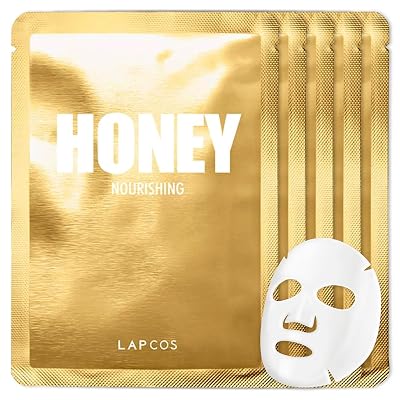
The LAPCOS Honey Sheet is a nourishing sheet mask with honey and hyaluronic acid, according to its title. Honey is a humectant that also leaves a soft, comfortable feel, which is why honey masks are a long-standing choice for dry skin. This pack of five is an easy way to try a honey mask without buying a jar.
As a sheet mask, it gives a quick, 15 to 20 minute boost rather than an overnight treatment. It is a lighter, cheaper-per-pack option than the COSRX honey overnight mask at #10, and suits people who want the feel of honey without leaving anything on overnight. Follow with a cream to lock in hydration.
- Honey for a nourishing feel
- Hyaluronic acid for hydration
- Sheet mask format
- Pack of five
Pros
- Soothing honey formula
- Small pack to try
- Quick to use
Cons
- Short-lived effect like any sheet mask
- Not suitable if you react to bee products
Skip it if: Skip it if you are allergic to honey or bee products; the +WIS+ mask avoids them.
Check Price on AmazonBIODANCE Hydro Cera-nol Real Deep Mask

Best for: Dry skin with a weak barrier
The BIODANCE Hydro Cera-nol Real Deep Mask uses the same hydrogel format as the #1 pick but, as its name suggests, focuses on ceramides and moisture rather than collagen. That makes it a sensible choice for dry skin with a weakened barrier, for example after cold weather or when using retinoids.
Like the #1 pick, it can be worn for hours or overnight, so it gives more contact time than a standard sheet. The title gives less detail than the Bio-Collagen version, so check the full ingredient list before buying. Choose it over #1 if barrier support matters more than a plumping look.
- Hydrogel sheet format
- Ceramide-focused moisturising formula
- Can be worn overnight
- Hydrating Korean mask
Pros
- Long contact time
- Barrier-friendly focus
- Clings well to the face
Cons
- Less listing detail than the #1 pick
- Hydrogel sheets can slip during sleep
Skip it if: Skip it if you already own the #1 BIODANCE mask; the two do similar jobs.
Check Price on AmazonCOSRX Propolis Honey Overnight Mask

Best for: Dry, dull skin in winter
The COSRX Propolis Honey Overnight Mask is a sleeping mask with a high share of propolis extract, according to its title. Propolis and honey-based products are popular for dry, dull skin because they leave it feeling soft and comfortable, and an overnight format gives the formula time to work while you sleep.
It is richer and slightly stickier than the belif jelly at #4, which some dry skin types will prefer in winter. It is a smaller tub, so it suits people who use it a couple of nights a week. Anyone with a bee product allergy should avoid it, and everyone should patch test first.
- High share of propolis extract
- Overnight sleeping mask format
- Nourishing, honey-style texture
- Compact tub
Pros
- Rich, comforting feel
- Well-known brand
- Good winter option
Cons
- Can feel sticky at first
- Not for people allergic to bee products
Skip it if: Skip it if you react to propolis or honey; the belif or Doppeltree overnight masks avoid them.
Check Price on AmazonHow We Chose These Products
We shortlisted face masks from Amazon listings that are highly rated by a large number of shoppers, favouring established brands and fuller-featured formulas. We kept only mask types this guide recommends for dry skin, such as hydrogel, cream, overnight, jelly and sheet masks, and left out clay, charcoal and peel-off masks, as well as generic bulk packs with little ingredient detail.
We then checked each product’s listed ingredients and features against the guidance cited in this post, including the AAD’s advice on caring for dry skin. These are research-based picks, not hands-on lab tests, so rankings reflect listing detail and formula rather than personal results.
- Strong ratings from a large number of shoppers
- Only hydrating mask types suited to dry skin
- Humectants plus soothing or barrier ingredients preferred
- Listed features checked against the cited guidance
- Products with thin or unclear listings excluded or ranked lower
What Dry Skin Actually Needs From a Mask
Dry skin has a weaker barrier: it holds less oil and loses water more easily, so it feels tight and looks dull or flaky. A good mask for dry skin needs to do three things at once. It should add water, soften rough patches and reduce how quickly that water escapes again.
- Humectants such as hyaluronic acid and glycerin pull water into the outer skin layers.
- Emollients such as squalane and plant oils fill gaps between skin cells and smooth roughness.
- Occlusives such as shea butter, petrolatum or dimethicone form a light seal to slow water loss.
- Barrier lipids such as ceramides help the skin rebuild its own protective layer.
A mask that only contains humectants can feel lovely at first but leave skin tight again an hour later, especially in dry air. The best formulas for dry skin combine all or most of these groups, which is why creamy textures usually outperform watery ones.
Face Mask Types Compared for Dry Skin
Masks come in many textures, and some are designed for oily skin rather than dry. This table shows how the common types compare.
| Mask type | How it works | Good for dry skin? |
|---|---|---|
| Cream mask | Rich emollient layer left on 10 to 20 minutes | Yes, a top choice |
| Overnight or sleeping mask | Light cream or gel left on overnight to seal moisture | Yes, very effective |
| Sheet mask | Serum-soaked sheet that holds hydration on the skin | Yes, for a quick boost |
| Gel or gel-cream mask | Cooling, water-rich, often with hyaluronic acid | Yes, best with a moisturiser after |
| Clay or mud mask | Absorbs oil from the skin | No, can worsen dryness |
| Charcoal mask | Absorbs oil and impurities | No |
| Peel-off mask | Pulls away a film and surface cells | No, can irritate |
| Exfoliating acid mask | Dissolves dead cells with AHAs or BHAs | Only occasionally and gently |
Overnight masks are especially helpful because they work while you sleep, when indoor air can be drying. Think of them as a richer version of your night moisturiser. Many can be used in place of your night cream on the evenings you use them, although very dry skin may still like a thin layer of moisturiser underneath.
Ingredients to Look For
These ingredients appear often in masks for dry skin. You do not need all of them, but a mix of humectants and emollients is ideal.
| Ingredient | What it does | Notes |
|---|---|---|
| Hyaluronic acid | Holds water in the outer skin layers | Needs a moisturiser on top in dry air |
| Glycerin | Classic humectant that attracts water | Inexpensive and well tolerated |
| Ceramides | Support the skin barrier | Good for flaky, sensitive skin |
| Squalane | Lightweight emollient that softens | Rarely irritating |
| Shea butter | Rich emollient and occlusive | Great for very dry patches |
| Colloidal oat | Soothes and helps protect irritated skin | Suits sensitive, itchy skin |
| Honey | Natural humectant with a soothing feel | Avoid if allergic to bee products |
| Panthenol | Hydrates and calms | Common in sensitive-skin formulas |
The AAD’s dermatologists’ tips for dry skin list glycerin, hyaluronic acid, shea butter, jojoba oil and similar ingredients as helpful in moisturisers, and the same logic applies to hydrating masks.
Honey and Oat Masks: What to Expect
Honey and oat are popular in both shop-bought and homemade masks. Honey is a natural humectant, so it can help skin hold water and feel softer. Oat, especially finely ground colloidal oat, has a long history of use in soothing products for dry and itchy skin.
Both are pleasant and usually gentle, but their effects are modest and temporary, much like other hydrating ingredients. Commercial masks that include them alongside ceramides or emollients tend to hydrate for longer than plain honey or oats on their own.
If you make a kitchen mask, keep it simple, use clean tools and rinse it off after 10 to 15 minutes. Avoid adding lemon juice, cinnamon, baking soda or essential oils, which can irritate or burn dry skin.
What to Avoid if Your Skin Is Dry
Some masks marketed for glowing or clear skin are designed to absorb oil or strip away surface cells. On dry skin, that usually means more tightness and flaking.
- Clay, kaolin, bentonite and mud masks, except as a spot treatment on an oily T-zone.
- Charcoal masks, which also absorb oil.
- Peel-off masks, which can pull at fragile, flaky skin.
- Masks with high alcohol near the top of the ingredient list.
- Strong fragrance and essential oils, common irritants for a weakened barrier.
- Frequent strong acid masks, which can over-exfoliate dry skin.
If you have combination skin, you do not have to choose one mask for your whole face. Our guide to multi-masking explains how to use a clay mask on oily zones and a hydrating mask on dry areas at the same time.
Stop using a mask straight away if it burns, stings persistently or causes swelling or a rash. Always patch test a new mask on your jawline or inner arm first, especially if you have eczema, rosacea or very sensitive skin.
Should You Exfoliate Before Masking?
Dry skin often has a build-up of flakes that can stop a mask from sinking in. Gentle exfoliation now and then can help, but too much makes dryness and sensitivity worse.
The AAD’s advice on how to safely exfoliate at home notes that dry and sensitive skin usually do better with a mild chemical exfoliant or a soft washcloth than with harsh scrubs, and that over-exfoliation can cause redness and irritation.
- Exfoliate no more than once a week if your skin is dry.
- Never exfoliate and use an acid mask on the same day.
- Skip exfoliation if your skin is cracked, red or stinging.
- A hydrating mask alone often loosens flakes enough.
How to Use a Hydrating Mask on Dry Skin
Getting the most from a mask is mostly about timing and sealing in the moisture afterwards.
Cleanse gently
Use a mild, non-foaming cleanser and lukewarm water.
Leave skin slightly damp
Humectants work better when there is water on the skin.
Apply an even layer
Use clean fingers or a brush and avoid the eyes unless the mask allows it.
Leave on as directed
Usually 10 to 20 minutes for cream and sheet masks, or overnight for sleeping masks.
Remove or press in
Rinse or wipe off wash-off masks; press leftover sheet-mask serum into the skin.
Seal with moisturiser
Apply your usual cream to lock in the water the mask added.
Repeat one to three times a week
Increase in very dry or cold weather if your skin likes it.
Chill a gel or sheet mask in the fridge for a soothing, cooling feel on tight, dry skin after a long flight or a day in heated rooms.
Choosing a Mask for Your Kind of Dryness
Dry skin is not all the same, and the most comfortable mask depends on what is behind the dryness. Match the texture and ingredients to how your skin behaves.
- Very dry, rough skin: rich cream or overnight masks with shea butter, ceramides or squalane.
- Dehydrated but slightly oily skin: gel or gel-cream masks with hyaluronic acid and glycerin, followed by a light moisturiser.
- Sensitive, itchy or reactive skin: short, fragrance-free ingredient lists with colloidal oat, panthenol or ceramides.
- Mature, dull skin: overnight masks with humectants and emollients, perhaps with a mild lactic acid now and then if tolerated.
- Dryness from acne treatments: plain, fragrance-free hydrating masks without acids or retinoids.
Packaging matters as well. Tubes and pumps keep a mask cleaner than an open jar you dip into, and single-use sheet masks are handy for travel. Whatever you choose, give a new mask a few uses before judging it, and stop if it causes any stinging or redness.
Dos and Don’ts
Worth Doing
- Choose cream, overnight or sheet masks
- Apply to slightly damp skin
- Follow with moisturiser
- Patch test new masks
- Use fragrance-free formulas if you are sensitive
Skip It
- Use clay or charcoal on dry areas
- Peel off masks from flaky skin
- Leave wash-off masks on longer than directed
- Exfoliate hard before masking
- Expect a mask to fix long-term dryness
Honest Limits
A hydrating mask improves how skin looks and feels for hours to a day or two, not for weeks. The plump, smooth effect fades as water evaporates, which is why daily moisturising matters far more than an occasional mask. Claims that a mask repairs the barrier overnight or reverses ageing go well beyond what a short-contact product can do.
Masks also cannot treat conditions such as eczema, psoriasis or dermatitis, which can look like ordinary dryness. If your skin is cracked, itchy or inflamed, a mask may soothe it briefly but will not solve the cause. Our guide on how to repair your moisture barrier covers the daily habits that make a lasting difference.
When to See a Dermatologist
- Dryness is severe, painful, cracked or bleeding.
- Your skin is red, scaly or itchy despite regular moisturising.
- Dry patches spread or appear with rashes elsewhere on your body.
- Masks and moisturisers sting or cause reactions.
This article is for general information and does not replace professional medical advice. See a board-certified dermatologist for persistent dryness, rashes or suspected eczema or dermatitis.
Your Questions, Answered
What is the best type of face mask for dry skin?
A cream, overnight sleeping or sheet mask with hydrating and softening ingredients.
Are clay masks bad for dry skin?
They can worsen dryness, so avoid them or use only on oily zones.
How often should I use a mask on dry skin?
Usually one to three times a week.
Is the most expensive face mask for dry skin worth it?
Not always. The BIODANCE hydrogel mask costs more per sheet because it can be worn for hours, but a cream like the Summer Fridays mask or a sheet like the +WIS+ mask still hydrates well if you follow with moisturiser.
Do sheet masks work for dry skin?
Yes, for a quick, temporary hydration boost.
Should I moisturise after a mask?
Yes, to seal in the water the mask added.
Which mask on this list is best for sensitive, dry skin?
The +WIS+ Hyaluronic Acid Mask and the Torriden DIVE IN mask both focus on gentle, soothing formulas. Patch test first and avoid honey or propolis masks if you react to bee products.
Is hyaluronic acid enough on its own?
Not in dry air; pair it with a moisturiser.
Which mask is best to use overnight?
The belif Vitamin E Jelly Overnight Mask is light and non-sticky, while the COSRX Propolis Honey Overnight Mask is richer for winter. The BIODANCE hydrogel sheets can also be worn overnight.
Are peel-off masks safe for dry skin?
They are best avoided because they can irritate.
Where This Leaves You
The best facial mask for dry skin is a creamy, overnight or sheet mask that combines humectants like hyaluronic acid and glycerin with barrier-friendly ingredients such as ceramides, oils or butters.
Skip clay, charcoal and peel-off masks, apply your mask to damp skin, always follow with moisturiser, and see a dermatologist if dryness is severe or does not improve.
Our top pick: BIODANCE Bio-Collagen Real Deep Mask
The BIODANCE Bio-Collagen Real Deep Mask takes the top spot because its hydrogel sheet holds hyaluronic acid against the skin for hours, which suits dry skin that needs a longer, occlusive boost. Choose the Summer Fridays Jet Lag Mask instead if you want a cream you can also wear as a moisturiser, or the +WIS+ Hyaluronic Acid Mask if you prefer a gentle sheet mask for frequent use.
Check Price on Amazon
Written by
Registered pharmacist and founder of Facial Adviser. Rakib's pharmacy training covers how skincare actives work and interact; a later course in cosmetology turned that into a focus on facial treatments and skincare products. He plans, researches and edits every guide on the site and checks health claims against sources such as the American Academy of Dermatology, the FDA and the NIH. He is not a dermatologist; see the Editorial Policy and Medical Disclaimer.
About · Editorial policy · How we choose products · Medical disclaimer · Contact
Keep reading: Face masks and exfoliation
- 10 Best Face Masks for Every Skin Type (2026): Clay, Gel and Sheet
- 10 Best Facial Scrubs for African American Skin (2026): Gentle Picks
- Bumpy, Uneven Chin After Wearing a Mask? Causes and Fixes
- Sebaceous Filaments vs Blackheads: How to Tell the Difference
- Facial Redness After Exfoliation: Causes, Burn Signs and How to Calm It
- Is It Okay to Use a Face Mask Every Day? It Depends on the Mask
- What Does a Facial Toner Do? The Real Answer
- 10 Best Facial Cleansers for Combination Skin (2026): Balanced Picks