
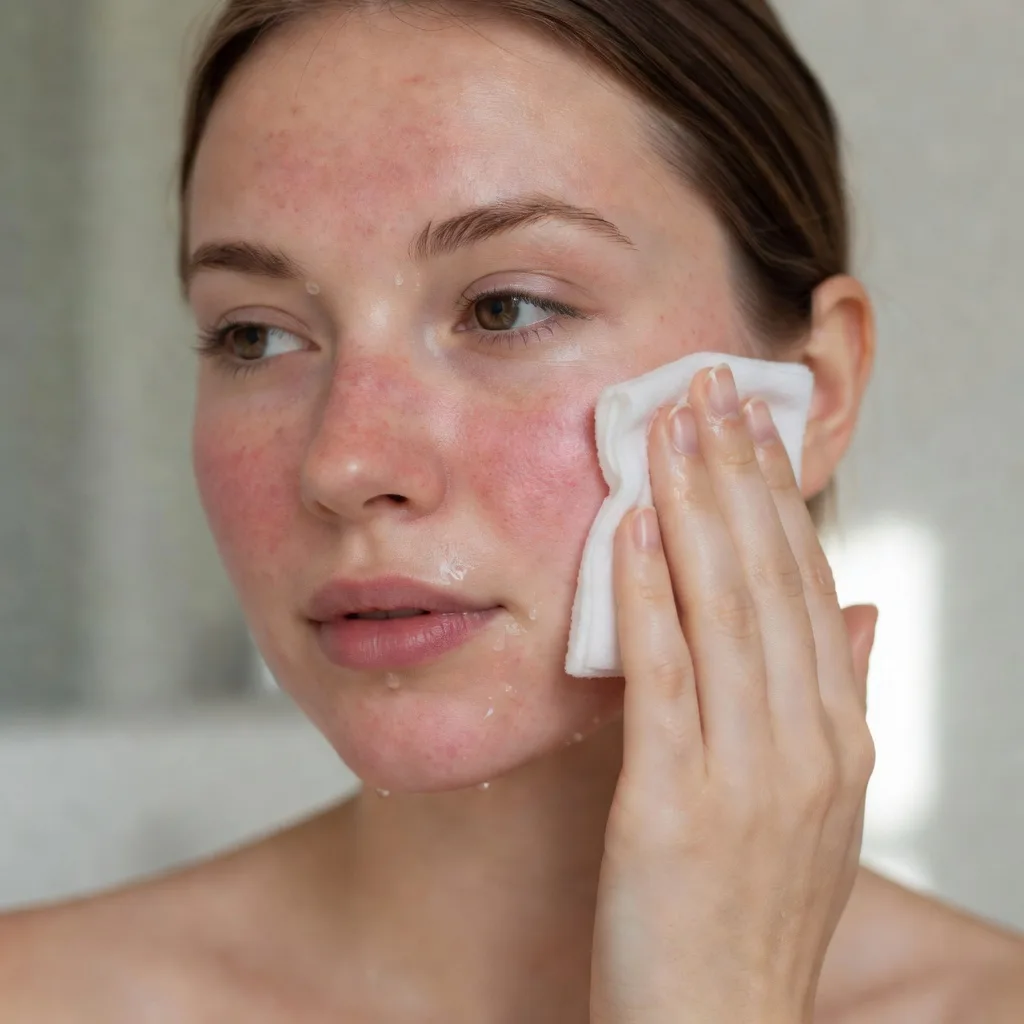
Facial Redness After Exfoliation: Causes, Burn Signs and How to Calm It
You tried a new acid toner, a stronger peel pad or an enthusiastic scrub, and now your face is pink, warm and tender. A little flush straight after exfoliating is common, but redness that lingers, stings or spreads is a sign your skin has been pushed too far. The good news is that most cases settle with the right care and a pause from actives.
Part of our guide to skincare products. Start with: 10 Best Face Masks for Every Skin Type (2026): Clay, Gel and Sheet
Facial redness after exfoliation is usually caused by irritation from exfoliating too often, too strongly or with too many products at once, which strips the skin barrier and triggers inflammation. Mild pinkness that fades within an hour or so is common. Redness that lasts for days, burns, stings with water or moisturiser, or comes with a shiny, tight surface, peeling or blisters suggests over-exfoliation or a chemical burn. To calm it, stop all exfoliants, cleanse gently with lukewarm water, apply a fragrance-free ceramide moisturiser or a panthenol or cica balm, use mineral sunscreen and wait until skin has fully settled before exfoliating again.
In short: stop exfoliating, simplify your routine and let the skin heal before you try again at a gentler level.
The American Academy of Dermatology notes that exfoliation should suit your skin type and that over-exfoliating can cause redness and irritation, which is why they advise going gently and less often if your skin is sensitive.
This guide explains the difference between normal pinkness, over-exfoliation and a chemical burn, a calming routine you can follow today, and how to judge when it is safe to exfoliate again.
Shopping these picks?
Amazon Prime members get fast, free shipping on eligible items, plus Prime Video, Amazon Music and member deals. New members can start with a free trial.
Start a free Prime trialAged 18 to 24? Prime for Young Adults comes with a longer free trial and a lower price after it.
Affiliate link: we may earn a commission at no extra cost to you.
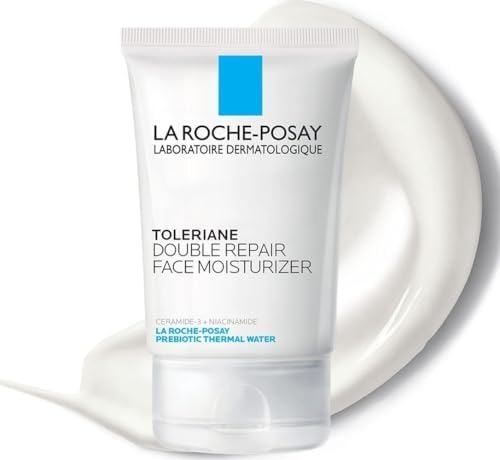
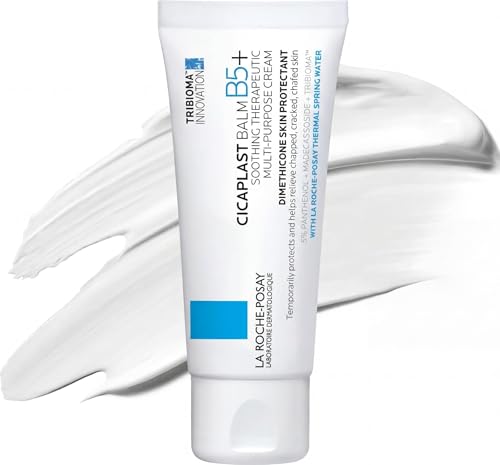
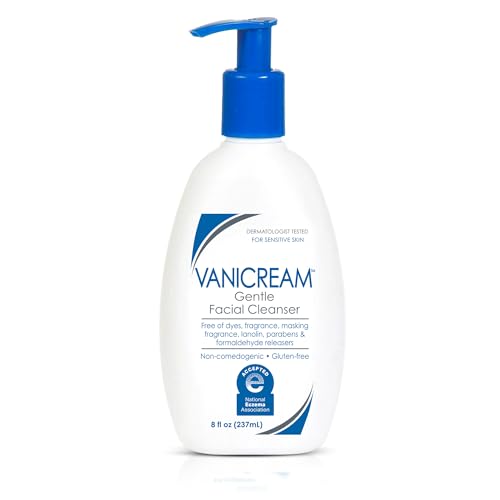
Recommended Products for Calming Redness After Exfoliation


![SKIN1004 [Hudson's Pick] Centella Ampoule, Korean Face Serum, 3.3...](https://m.media-amazon.com/images/I/31Kxg2RcOgL.jpg)

Contents
- Is Redness After Exfoliating Normal?
- Why Exfoliation Makes Your Face Red
- Why Some Skin Turns Red More Easily
- Signs You Have Over-Exfoliated
- Chemical Burn Signs: When Redness Is More Serious
- What to Do Right Now
- How to Calm Red Skin After Over-Exfoliating
- Calming Products: What Helps and What to Skip
- How Long Redness From Over-Exfoliation Lasts
- When and How to Exfoliate Again
- Honest Limits
- When to See a Dermatologist
- Questions People Ask
- Summing Up
In Brief
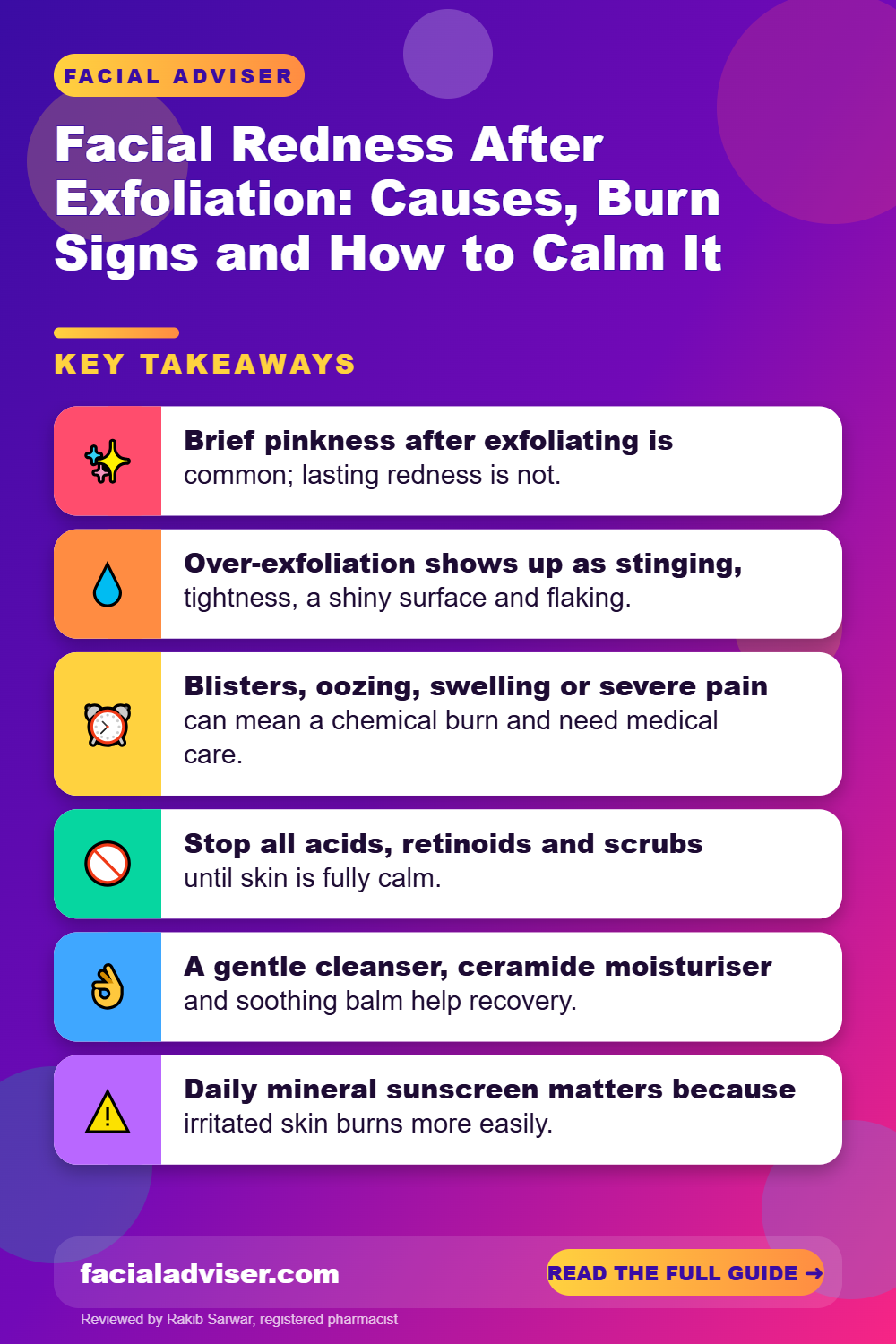
- Brief pinkness after exfoliating is common; lasting redness is not.
- Over-exfoliation shows up as stinging, tightness, a shiny surface and flaking.
- Blisters, oozing, swelling or severe pain can mean a chemical burn and need medical care.
- Stop all acids, retinoids and scrubs until skin is fully calm.
- A gentle cleanser, ceramide moisturiser and soothing balm help recovery.
- Daily mineral sunscreen matters because irritated skin burns more easily.
- Wait at least one to two weeks after redness clears before exfoliating again.
Is Redness After Exfoliating Normal?
Some redness can be expected. Rubbing a scrub across the face or applying an acid increases blood flow and can leave the skin pink for a short time, especially if you are fair-skinned or naturally flush easily. This kind of redness usually fades within an hour or so and does not come with pain.
Redness becomes a concern when it lasts into the next day, keeps coming back each time you exfoliate, feels hot or sore, or is accompanied by stinging when you apply products you normally tolerate. Those are signs the skin barrier has been damaged rather than just stimulated.
| What you see | Likely meaning | What to do |
|---|---|---|
| Pink flush that fades within an hour | Normal short-term response | Moisturise and carry on |
| Redness lasting a day or more with stinging | Over-exfoliation and barrier damage | Stop actives, follow a calming routine |
| Shiny, tight, glassy skin with flaking | Surface over-thinned by exfoliation | Pause exfoliants for several weeks |
| Burning, blistering, oozing or crusting | Possible chemical burn | Rinse, stop products, seek medical advice |
| Itchy rash or swelling beyond the area | Possible allergic contact dermatitis | Stop the product, see a doctor |
Why Exfoliation Makes Your Face Red
Exfoliants work by loosening or removing the outer layer of dead skin cells. That outer layer is also part of your skin barrier, so removing too much of it lets water escape and irritants in. The result is inflammation, which shows as redness, warmth and stinging.
- Exfoliating too often, such as daily acids on skin that only tolerates them once or twice a week.
- Using high strengths or leaving a peel on longer than directed.
- Layering several exfoliants, for example an acid toner, a retinoid and a scrub in the same routine.
- Harsh scrubs with rough particles or pressing too hard with a cleansing brush.
- Exfoliating skin that is already irritated, sunburned or windburned.
- Adding fragrance or high levels of drying alcohol on top of freshly exfoliated skin.
The FDA notes that alpha hydroxy acids can cause skin irritation and increase sensitivity to the sun, which is why careful use and sun protection are both important.
Why Some Skin Turns Red More Easily
Two people can use the same exfoliant and have very different reactions. Skin that is naturally sensitive, dry or prone to eczema tends to have a less resilient barrier, so it reaches its limit sooner. People with rosacea often flush easily and may react strongly to acids, scrubs and even hot water. Fair skin shows redness more obviously, while medium and deep skin tones may show irritation as darker patches rather than bright red.
Timing matters too. Exfoliating after a hot shower, on windburned or sunburned skin, after shaving or waxing, or while using a retinoid all raise the risk of a reaction. Seasonal changes play a part as well: skin that tolerated an acid in humid summer weather may react to the same product during a cold, dry winter with indoor heating.
Signs You Have Over-Exfoliated
Over-exfoliation often builds slowly over days or weeks rather than appearing after one session. Look for a pattern of these signs:
- Persistent redness or blotchy patches.
- Stinging or burning when you apply moisturiser, sunscreen or even water.
- A tight, shiny or waxy-looking surface that feels dry to touch.
- Flaking or peeling, especially around the nose, mouth and cheeks.
- New small red bumps or breakouts alongside irritation.
- Skin that feels thin, tender or sensitive to heat and wind.
A shiny, glassy look after exfoliating is sometimes mistaken for a healthy glow. If it comes with tightness or stinging, it is more likely a sign that the protective surface layer has been over-thinned.
Chemical Burn Signs: When Redness Is More Serious
Strong peels, high-strength acids left on too long and at-home peel solutions can cause chemical burns. These go beyond ordinary irritation and need prompt attention.
Seek medical advice promptly if you have blistering, oozing, crusting, swelling, severe or worsening pain, grey or white patches, or redness that spreads after exfoliating. Rinse the area gently with cool running water, stop all products and do not pick at or peel damaged skin.
Professional chemical peels can also cause redness and peeling as part of the expected healing process. The American Academy of Dermatology explains that deeper peels involve longer recovery, which is why aftercare instructions from your dermatologist should always come first.
What to Do Right Now
If your face has just turned red and hot after exfoliating, a few simple steps can reduce discomfort in the first hours.
- Rinse with cool or lukewarm water to remove any remaining product.
- Pat dry gently with a clean, soft towel.
- Mist with a thermal water spray if it feels soothing, then pat off the excess.
- Apply a thin layer of fragrance-free moisturiser or a panthenol or cica balm.
- Avoid makeup, hot showers, saunas, exercise that makes you flush and direct sun for the rest of the day.
Keep your moisturiser in a cool place. A cool, plain moisturiser can feel more soothing on hot, irritated skin, but avoid ice directly on the face, which can add irritation.
How to Calm Red Skin After Over-Exfoliating
Follow this routine until redness and stinging have settled, usually for at least one to two weeks.
Stop all exfoliants
Pause acids, retinoids, scrubs, peel pads and cleansing brushes completely.
Cleanse gently
Use a gentle, non-foaming cleanser with lukewarm water; in the morning a water rinse may be enough.
Soothe
Mist with thermal water if you like it and pat dry rather than rubbing.
Moisturise
Apply a fragrance-free ceramide moisturiser while skin is still slightly damp.
Seal sore spots
Dab a panthenol or cica balm on the reddest or flakiest areas, especially at night.
Protect
Use a broad-spectrum mineral sunscreen of SPF 30 or higher every morning.
Watch and wait
Keep the routine unchanged and note whether redness is fading day by day.
Calming Products: What Helps and What to Skip
When skin is irritated, the best products are simple, fragrance-free and focused on comfort and protection rather than results.
| Product type | Why it helps | What to look for |
|---|---|---|
| Gentle cleanser | Removes dirt without stripping | Non-foaming or low-foam, fragrance-free |
| Ceramide moisturiser | Supports barrier lipids and reduces water loss | Ceramides, glycerin, cholesterol, no fragrance |
| Panthenol or cica balm | Soothes and protects irritated patches | Panthenol, centella, short ingredient list |
| Mineral sunscreen | Protects sensitive skin from UV | Zinc oxide or titanium dioxide, SPF 30+ |
| Thermal water spray | Can feel cooling and comforting | Plain formula without fragrance or alcohol |
Skip toners with alcohol, fragranced serums, essential oils, vitamin C serums with a low pH, clay masks and anything marketed as brightening or resurfacing until your skin is calm. Our guide on how to calm inflamed red patches on the face covers more soothing options.
How Long Redness From Over-Exfoliation Lasts
Mild irritation often settles within a few days once you stop exfoliating. Moderate over-exfoliation, with stinging and flaking, commonly takes one to two weeks to calm and longer for the surface to feel completely normal. Deeper damage or a chemical burn can take several weeks and should be followed by a doctor.
Redness can also leave temporary darker or pink marks, especially on medium and deep skin tones. Daily sunscreen and patience help these fade, while more exfoliation tends to make them worse.
When and How to Exfoliate Again
Wait until your skin has felt normal, with no stinging, tightness or redness, for at least one to two weeks. Then restart at a lower strength and frequency than before.
Do
- Start once a week with a gentle exfoliant
- Choose milder acids such as lactic or mandelic, or a lower strength
- Patch test on a small area before using on the whole face
- Keep moisturiser and sunscreen as fixed steps
- Increase only if skin stays calm for several weeks
Don’t
- Do not return to your previous routine straight away
- Do not combine acids, retinoids and scrubs
- Do not exfoliate irritated or sunburned skin
- Do not scrub hard or use rough particles
- Do not ignore early stinging as something to push through
Our guides on how often to exfoliate sensitive skin and gentler alternatives to exfoliation can help you set a routine that your skin tolerates.
Honest Limits
No product instantly reverses over-exfoliation. Soothing creams and sprays can make skin more comfortable and support healing, but time and a break from actives do most of the work. Thermal water sprays feel pleasant but are a comfort step, not a treatment. Green-tinted primers can hide redness cosmetically but do not calm it. If redness keeps returning even when you exfoliate gently, the cause may be rosacea or another condition rather than your exfoliant, and that needs a proper diagnosis.
When to See a Dermatologist
See a dermatologist or doctor if you have blisters, oozing, crusting, swelling, severe pain or signs of infection such as spreading warmth or pus, if redness has not improved after two weeks of gentle care, or if you had a professional peel and your healing differs from what you were told to expect. Persistent flushing and visible blood vessels may point to rosacea.
This article is for general information and does not replace professional medical advice. Always follow the directions on exfoliating products, patch test new products and seek medical care for burns, blistering or severe reactions.
Questions People Ask
How long should redness last after exfoliating?
Mild pinkness usually fades within an hour or so. Redness lasting into the next day suggests irritation.
How do I know if I have over-exfoliated?
Look for stinging, tightness, a shiny surface, flaking and redness that lingers.
What does a chemical burn from an acid look like?
Intense redness with burning, blistering, oozing, crusting or swelling. It needs medical advice.
Can I use moisturiser on over-exfoliated skin?
Yes. A fragrance-free ceramide moisturiser is one of the most helpful steps.
Does thermal water help redness?
It can feel soothing and cooling, but it is a comfort step rather than a treatment.
Should I wear sunscreen after over-exfoliating?
Yes. Irritated skin burns more easily, so use a broad-spectrum SPF 30 or higher daily.
Can I wear makeup on red, irritated skin?
It is best to skip makeup until skin calms, or keep it minimal and fragrance-free.
How long should I wait to exfoliate again?
Wait until skin has felt normal for at least one to two weeks, then restart gently.
Is lactic acid gentler than glycolic acid?
Lactic and mandelic acid are often considered gentler, but any acid can irritate if overused.
Can over-exfoliation cause breakouts?
Yes. Irritated, inflamed skin can develop small red bumps and spots.
Summing Up
Short-lived pinkness after exfoliating is common, but redness that lingers, stings or flakes is a sign of over-exfoliation. Stop all exfoliants, cleanse gently, moisturise with ceramides, soothe sore spots with a balm and protect your skin with mineral sunscreen.
Give your skin time to recover before exfoliating again, restart at a gentler level, and get medical help straight away for blistering, oozing, swelling or severe pain.

Written by
Registered pharmacist and founder of Facial Adviser. Rakib's pharmacy training covers how skincare actives work and interact; a later course in cosmetology turned that into a focus on facial treatments and skincare products. He plans, researches and edits every guide on the site and checks health claims against sources such as the American Academy of Dermatology, the FDA and the NIH. He is not a dermatologist; see the Editorial Policy and Medical Disclaimer.
About · Editorial policy · How we choose products · Medical disclaimer · Contact
Keep reading: Face masks and exfoliation
- 10 Best Face Masks for Every Skin Type (2026): Clay, Gel and Sheet
- Is It Okay to Use a Face Mask Every Day? It Depends on the Mask
- Best Time to Exfoliate: Morning or Night? What Works for Each Method
- How Often to Exfoliate Sensitive Skin (and How to Do It Safely)
- Multi-Masking Explained: How to Use Different Masks on Different Zones
- Gentler Alternatives to Exfoliation for Smoother Skin
- 10 Best Facial Cleansers for Combination Skin (2026): Balanced Picks
- 10 Best Facial Moisturizers for Dry Skin (2026): Rich, Gentle Creams
One Comment