How to Calm Inflamed Red Patches on Your Face
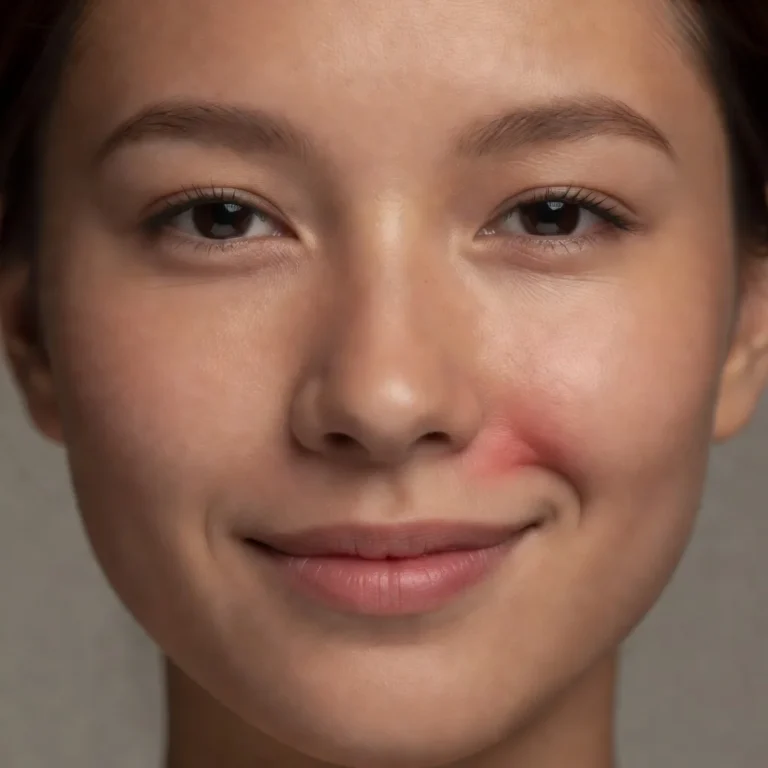
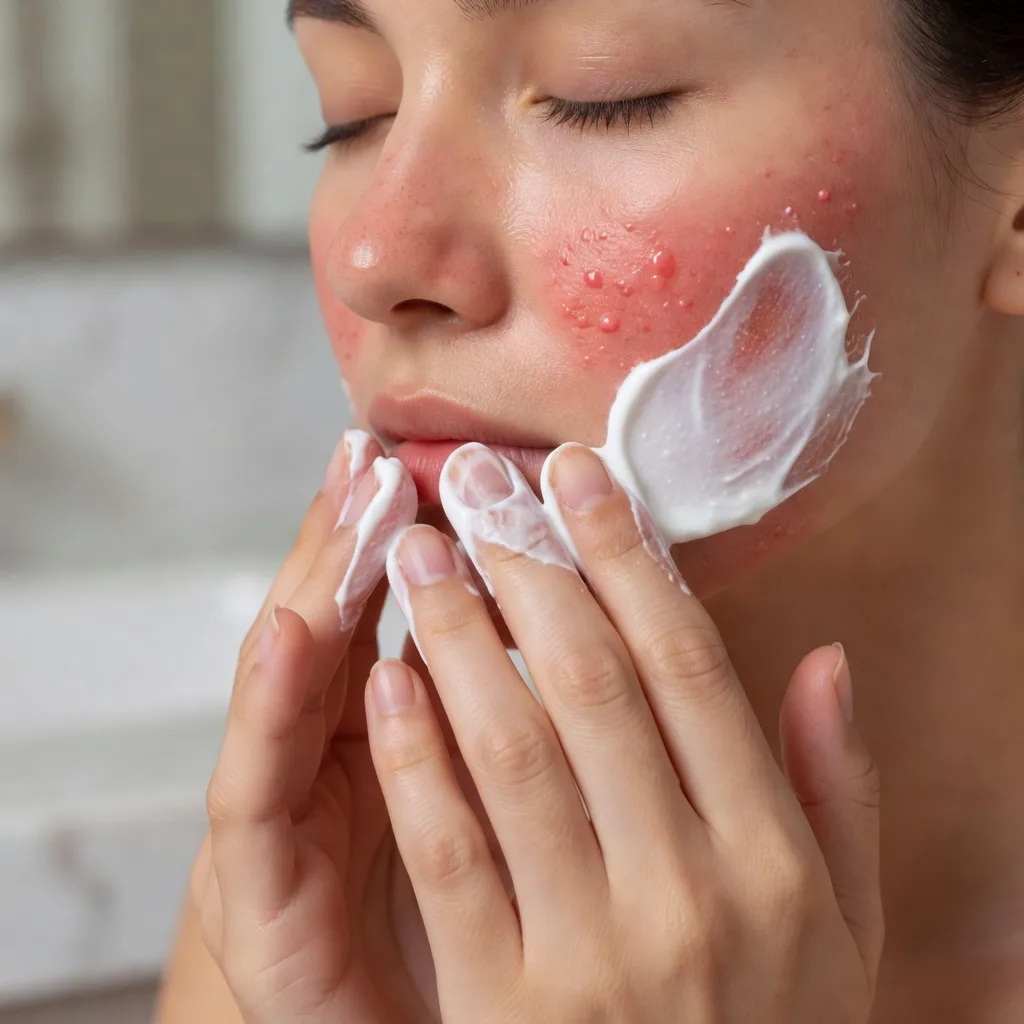
It might start as a warm, pink area on one cheek, or a dry, angry patch beside the nose that stings when you wash. By evening it feels hot and tight, and anything you put on it seems to make it worse. Red patches on the face are uncomfortable, visible and often confusing, because several different conditions look alike.
To calm an inflamed red patch on your face, strip your routine back to a gentle, fragrance-free cleanser, a bland moisturiser or barrier balm and mineral sunscreen, and stop all acids, retinoids, scrubs and new products until the skin settles. A cool compress can ease heat and itching. Most irritation calms within one to two weeks. Patches that keep returning, spread, scale or itch intensely may be eczema, rosacea or seborrheic dermatitis and need a proper diagnosis.
Inflammation is the skin’s alarm system. Whether the trigger is a new serum, cold wind, stress or an underlying condition, the result is similar: blood vessels widen, the barrier weakens and nerve endings become more sensitive. That is why a patch can feel both dry and hot, and why strong treatments often backfire.
The American Academy of Dermatology’s advice for sensitive, rosacea-prone skin applies well to most red patches: cleanse gently with fingertips, moisturise after cleansing, avoid products with alcohol, camphor, fragrance, menthol and certain acids, and protect the skin from the sun all year.
This guide will help you work out what kind of red patch you are dealing with, calm it safely at home and recognise when it needs a doctor.
Shopping these picks?
Amazon Prime members get fast, free shipping on eligible items, plus Prime Video, Amazon Music and member deals. New members can start with a free trial.
Start a free Prime trialAged 18 to 24? Prime for Young Adults comes with a longer free trial and a lower price after it.
Affiliate link: we may earn a commission at no extra cost to you.
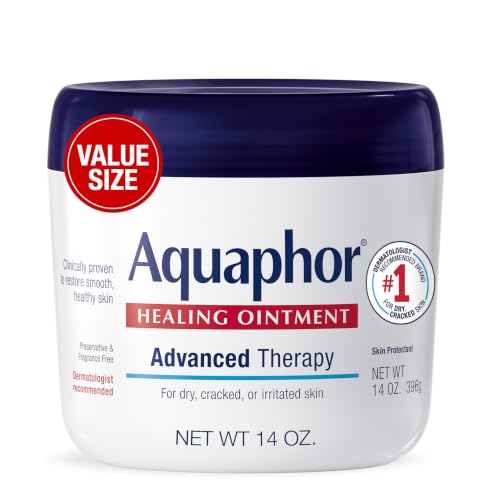
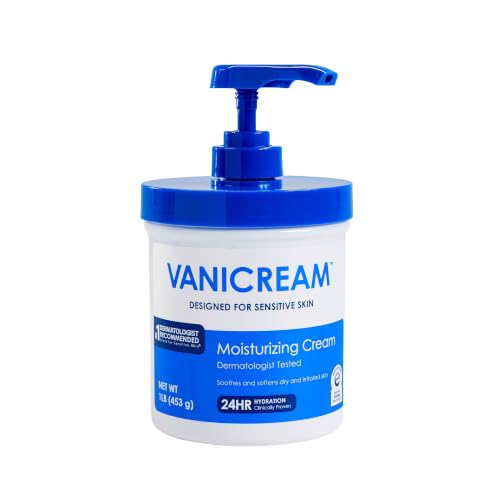
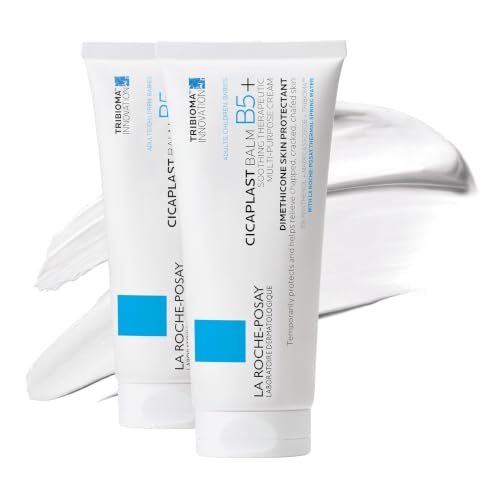
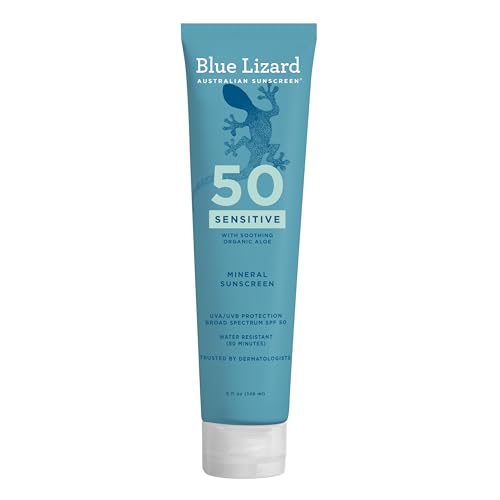
Recommended Products for Calming Red, Irritated Skin

In This Guide
- What Could the Red Patch Be?
- How to Calm a Red, Inflamed Patch on Your Face
- What to Expect Day by Day
- What to Avoid While Skin Is Inflamed
- Soothing Ingredients That Help
- Common Triggers to Watch For
- When It Is an Underlying Skin Condition
- Bringing Products Back Safely
- Seasonal Flares and Your Environment
- Covering Redness Without Irritating It
- Honest Limits
- When to See a Doctor
- Common Questions
- Final Word
Quick Answer
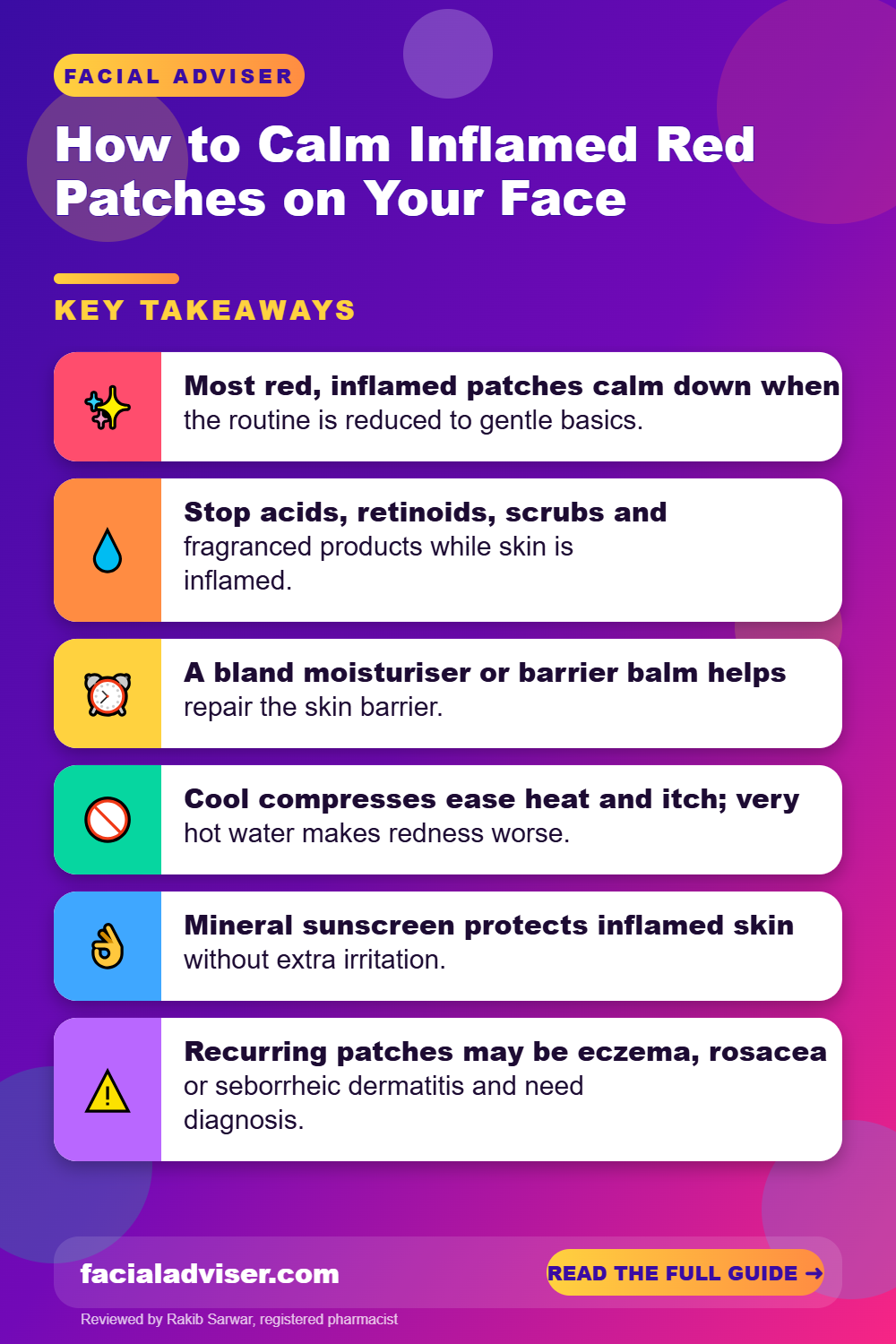
- Most red, inflamed patches calm down when the routine is reduced to gentle basics.
- Stop acids, retinoids, scrubs and fragranced products while skin is inflamed.
- A bland moisturiser or barrier balm helps repair the skin barrier.
- Cool compresses ease heat and itch; very hot water makes redness worse.
- Mineral sunscreen protects inflamed skin without extra irritation.
- Recurring patches may be eczema, rosacea or seborrheic dermatitis and need diagnosis.
- Avoid using steroid creams on the face long-term without medical guidance.
What Could the Red Patch Be?
| Pattern | Likely cause | Clues |
|---|---|---|
| Red, stinging area after a new product | Irritant contact dermatitis | Started within hours or days of the product |
| Itchy, red patch, sometimes with tiny blisters | Allergic contact dermatitis | May spread beyond where product was applied |
| Dry, red, itchy patches that come and go | Eczema (atopic dermatitis) | Personal or family history of eczema, asthma or hay fever |
| Greasy, flaky redness beside nose, brows or hairline | Seborrheic dermatitis | Yellowish scale, often worse in winter or with stress |
| Central facial redness, flushing, bumps | Rosacea | Triggered by heat, spicy food, alcohol, sun |
| Sore, red, rough area after scrubbing or peels | Over-exfoliation | Skin feels tight and shiny |
| Red rash across cheeks and nose, with fatigue or joint pain | Possible autoimmune condition | Needs medical assessment |
Looking at where the redness is, what it feels like and what happened just before it appeared is often enough to narrow things down.
It also helps to notice whether the patch is itchy, stinging or painful. Itch points more towards eczema or allergy, stinging and burning towards irritation or rosacea, and pain with warmth and swelling towards infection. Scaling that looks slightly yellow and greasy, especially around the nose and eyebrows, is a strong clue for seborrheic dermatitis rather than simple dryness.
How to Calm a Red, Inflamed Patch on Your Face
Stop the likely trigger
Put aside any new product and all actives: retinoids, acids, vitamin C, benzoyl peroxide and scrubs.
Cleanse gently
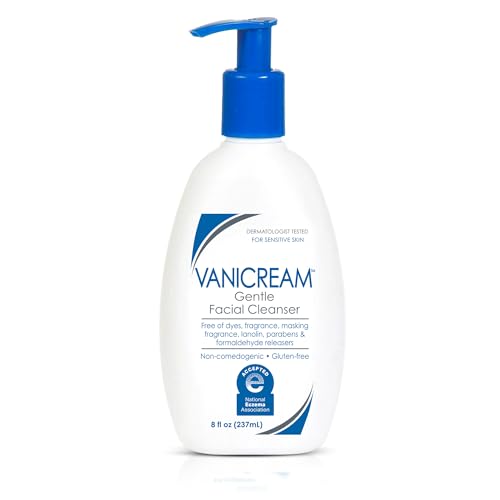
Use a mild, fragrance-free cleanser with lukewarm water and your fingertips, once or twice a day.
Apply a cool compress
Hold a clean, cool, damp cloth on the area for five to ten minutes to ease heat and itch.
Moisturise generously
Use a bland moisturiser or barrier balm straight after washing, while skin is slightly damp.
Seal dry patches at night
A thin layer of ointment over very dry, cracked areas can protect them while you sleep.
Protect from the sun
Use a mineral sunscreen with zinc oxide or titanium dioxide, SPF 30 or higher.
Wait and watch
Give skin one to two weeks of this simple routine before reintroducing anything.
Keep a short diary of what you applied, ate and did before each flare. Patterns often jump out after a few weeks.
What to Expect Day by Day
| Time | What usually happens | What to do |
|---|---|---|
| First 24 to 48 hours | Heat, stinging and tightness start to ease | Basics only, cool compresses, no makeup if possible |
| Days 3 to 7 | Redness fades, some flaking as skin repairs | Keep moisturising; do not pick or scrub flakes |
| Days 7 to 14 | Skin feels comfortable again, colour evens out | Continue the simple routine; plan reintroductions |
| After 2 weeks | Irritation-related patches have usually settled | If not, or if patches return, get a diagnosis |
If a patch is not improving at all after the first week, or is getting worse despite doing less, that is a strong sign it is not simple irritation. Eczema, seborrheic dermatitis, rosacea and infections usually need targeted treatment.
What to Avoid While Skin Is Inflamed
Helps
- Use a gentle, fragrance-free cleanser
- Moisturise after every wash
- Use lukewarm water
- Wear mineral sunscreen daily
- Patch test anything new
Backfires
- Scrub or use face brushes
- Apply acids, retinoids or vitamin C
- Use hot water or steam
- Try essential oils or DIY remedies
- Keep switching products every few days
The AAD suggests avoiding alcohol, camphor, fragrance, glycolic acid, lactic acid and menthol for sensitive, rosacea-prone skin, and advises cleansing with fingertips rather than cloths or brushes (AAD).
Do not use over-the-counter hydrocortisone on your face for more than a few days without medical advice. Long-term steroid use on the face can thin the skin and cause perioral dermatitis or rebound redness.
Soothing Ingredients That Help
| Ingredient | What it does | Best for |
|---|---|---|
| Ceramides | Rebuild the skin barrier | Dry, irritated or eczema-prone patches |
| Glycerin | Draws water into the skin | Almost all red, dry patches |
| Panthenol (vitamin B5) | Soothes and supports healing | Irritated, over-exfoliated skin |
| Colloidal oatmeal | Calms itch and irritation | Eczema-prone skin |
| Petrolatum | Seals in moisture | Very dry, cracked areas |
| Azelaic acid | Reduces redness and bumps | Rosacea, once acute irritation settles |
| Zinc oxide | Mineral UV protection, gentle | Sensitive and inflamed skin |
Once the patch is calm, some people reintroduce one gentle active at a time. Our guide on starting retinol without irritation explains how to go slowly.
Common Triggers to Watch For
- Skincare: fragrance, essential oils, alcohol toners, strong acids, retinoids and new products.
- Weather: cold wind, dry indoor heating, heat and humidity.
- Heat and flushing: hot drinks, spicy food, alcohol, saunas and intense exercise.
- Stress and poor sleep: can flare eczema, rosacea and seborrheic dermatitis.
- Allergens: pollen, pet dander and some hair dyes or nail products transferred by touch.
- Friction: masks, towels and constantly touching the face.
If your redness is mainly flushing after exercise or heat, our guide to why your face goes red after exercise covers what is normal. If stinging and burning are the main problem, facial nerve sensitivity may be relevant.
When It Is an Underlying Skin Condition
Eczema, rosacea and seborrheic dermatitis all cause recurring red patches on the face, but they are managed differently.
| Condition | Typical look | How it is usually treated |
|---|---|---|
| Eczema | Dry, itchy, rough patches | Moisturisers, trigger avoidance, prescription anti-inflammatory creams |
| Rosacea | Central redness, flushing, bumps | Gentle care, trigger control, prescription creams, lasers for vessels |
| Seborrheic dermatitis | Greasy, flaky redness at nose, brows, scalp | Antifungal washes or creams, sometimes mild anti-inflammatories |
Seborrheic dermatitis often improves with an antifungal shampoo used on the scalp and, as directed, on affected facial areas. A doctor or pharmacist can advise on the right product.
Bringing Products Back Safely
Once your skin has been calm for at least a week, you can start adding things back. Going slowly is the only way to find out what caused the problem.
- Reintroduce one product at a time, starting with the one you miss most or need most.
- Patch test first on a small area, such as the inside of the elbow, twice a day for seven to ten days, as the AAD recommends.
- Use actives such as retinoids or acids at a lower frequency than before, perhaps twice a week.
- Wait at least a week between each new addition.
- If a product causes stinging or redness again, stop it and note the ingredients.
Over time you will build a short list of products your skin tolerates. For many people with reactive skin, a smaller routine of three or four reliable products works better long term than a long shelf of treatments.
Seasonal Flares and Your Environment
Many people notice their red patches come back at the same time each year. Cold, windy weather and dry indoor heating draw moisture out of the skin, which is a classic trigger for eczema and seborrheic dermatitis flares in winter. Hot, humid summers bring more flushing and rosacea flares, plus sweat irritation.
Small environmental changes help. A humidifier in the bedroom during winter, a scarf over the lower face in cold wind, and a richer moisturiser from autumn onwards can prevent winter flares. In summer, shade, a wide-brimmed hat, cool water for rinsing sweat and a lighter moisturiser reduce heat-related redness. Adjusting your routine a few weeks before your usual flare season is easier than trying to calm skin once it has already reacted.
Covering Redness Without Irritating It
While skin is actively inflamed, it is kindest to skip makeup where possible. When you need coverage, a green-tinted corrector tones down redness, and the AAD suggests water-based or powder formulas for rosacea-prone skin.
Apply with clean fingertips or a clean sponge, and remove gently at night with a mild cleanser rather than wipes or scrubbing. Mineral makeup and simple, fragrance-free formulas tend to be better tolerated than long-wear foundations, which often contain more alcohol and film-formers. Throw away old products and wash brushes regularly, since a contaminated sponge can keep irritating a patch that is trying to heal.
Honest Limits
Home care can calm most irritated patches and reduce flares of chronic conditions, but it cannot cure eczema or rosacea. Those need ongoing management, and prescription treatments are often much more effective than anything over the counter.
Some red patches are not skin conditions at all but signs of infection or a condition affecting the whole body. If redness is spreading fast, hot and painful, or you feel unwell, it needs medical attention rather than a new moisturiser.
When to See a Doctor
- The patch spreads quickly, feels hot and painful, or you have a fever.
- There are blisters, crusting, oozing or yellow crusts.
- A butterfly-shaped rash appears across the cheeks and nose, especially with fatigue or joint pain.
- Patches keep returning or do not improve after two weeks of gentle care.
- The eyes are red, gritty or swollen along with facial redness.
- A single red, scaly spot does not heal over several weeks.
This article is for general information and does not replace professional medical advice. See a doctor or dermatologist for persistent, spreading or painful facial redness.
Common Questions
How can I calm a red patch on my face quickly?
Stop new products and actives, cleanse gently, apply a cool compress and use a bland moisturiser. Most irritation settles in one to two weeks.
Why do I have red, dry patches on my face?
Common causes include irritation, eczema, seborrheic dermatitis, rosacea and over-exfoliation.
Is it eczema or rosacea?
Eczema is usually dry and itchy, while rosacea tends to cause central redness, flushing and bumps. A dermatologist can confirm.
Can I use hydrocortisone on my face?
Only briefly and ideally with medical advice, as long-term use can thin skin and cause other rashes.
Should I moisturise an inflamed patch?
Yes. A fragrance-free moisturiser or barrier balm helps repair the skin barrier.
Does cold water help facial redness?
Cool water or a cool compress can ease heat and itch, but avoid very hot water.
What ingredients soothe irritated skin?
Ceramides, glycerin, panthenol, colloidal oatmeal and petrolatum are gentle and soothing.
Can stress cause red patches on the face?
Yes. Stress can trigger flares of eczema, rosacea and seborrheic dermatitis.
Should I wear sunscreen on irritated skin?
Yes. A mineral sunscreen is usually best tolerated on inflamed skin.
When is facial redness serious?
If it spreads quickly, is hot and painful, blisters, or comes with fever or other symptoms, see a doctor promptly.
Final Word
Inflamed red patches on the face usually calm down once you remove the trigger and give the skin a short break from everything except the gentlest basics. Heat, fragrance, strong actives and scrubbing are the most common culprits.
Keep to a mild cleanser, a bland moisturiser and mineral sunscreen for a week or two, soothe with cool compresses, and reintroduce products slowly. If patches keep returning, spread or come with other symptoms, see a doctor for a proper diagnosis.

Written by
Registered pharmacist and founder of Facial Adviser. Rakib's pharmacy training covers how skincare actives work and interact; a later course in cosmetology turned that into a focus on facial treatments and skincare products. He plans, researches and edits every guide on the site and checks health claims against sources such as the American Academy of Dermatology, the FDA and the NIH. He is not a dermatologist; see the Editorial Policy and Medical Disclaimer.
About · Editorial policy · How we choose products · Medical disclaimer · Contact
Keep reading: Redness, puffiness and uneven tone
- Fine Lines Around the Mouth in Your 20s: How to Prevent Them
- Dark Shadow Around the Mouth: Causes and How to Fade It
- Facial Tightness After Washing Face: Why It Happens and How to Stop It
- Why Cheeks Get Hot Suddenly: Causes of Facial Flushing and What Helps
- How to Soothe Post-Facial Irritation: Calm Redness and Know What Is Normal
- Are Facials Good for Acne?
- How Can I Make My Pores Less Visible?