
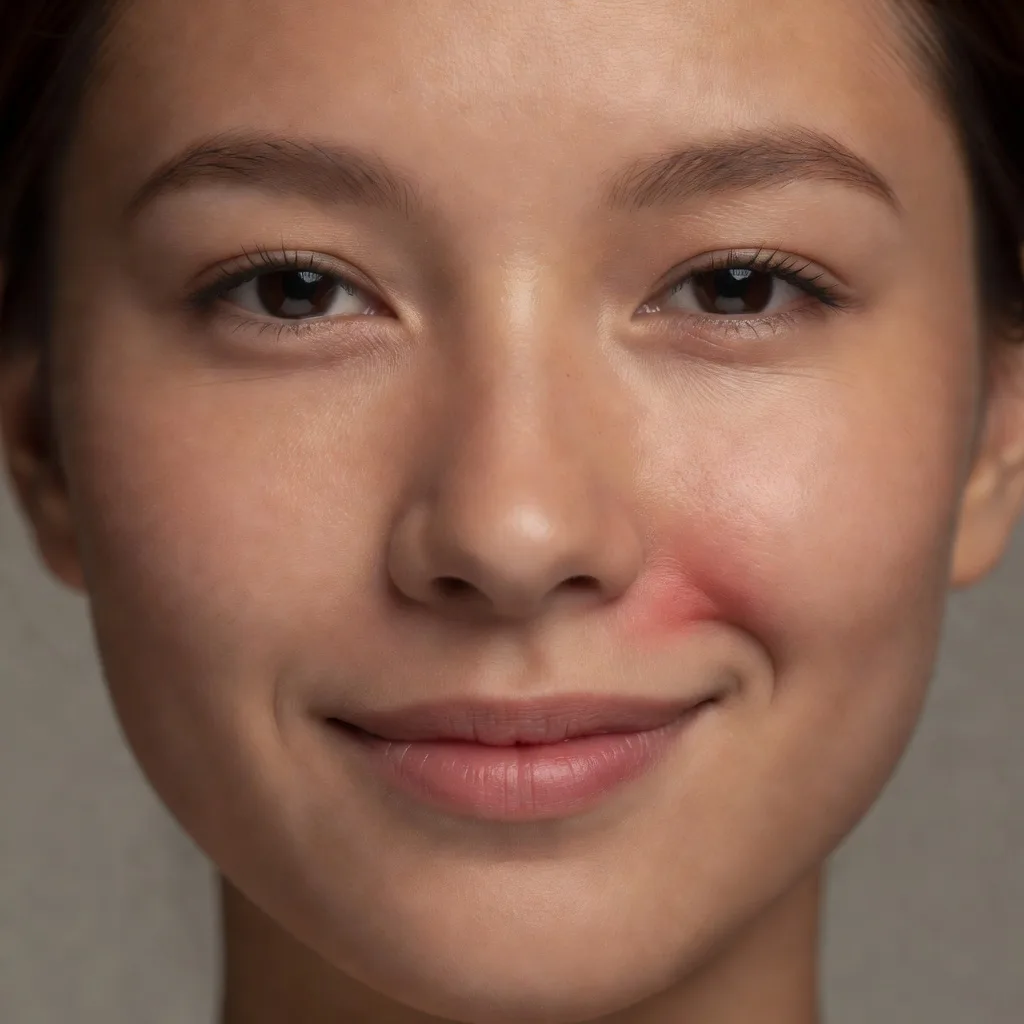
Facial Nerve Sensitivity: Why Your Face Stings, Burns or Flushes
You put on a moisturiser that everyone else loves and your cheeks sting within seconds. A gust of cold wind or a hot room turns your face blotchy red. Nothing looks wrong on the skin itself, yet it burns, tingles or itches. For many people, this is what having a sensitive face feels like.
Part of our guide to lifestyle and skin. Start with: How Diet Impacts the Skin Microbiome: What the Science Actually Shows
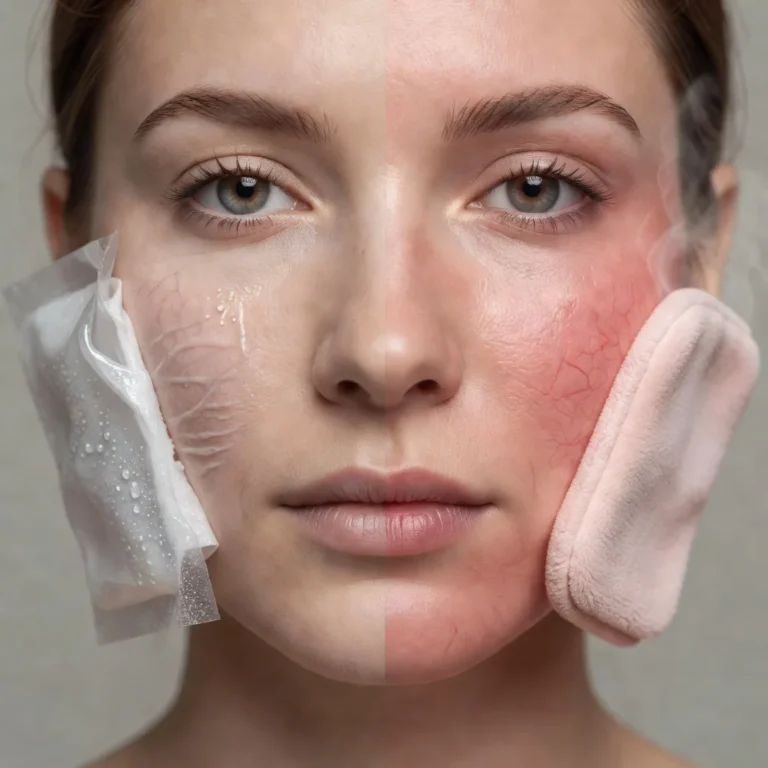
Much of what people call facial sensitivity comes from the small nerve endings in the skin reacting more strongly than usual. When these nerves fire, they cause stinging, burning, tingling or itching and can release chemicals that widen blood vessels, which is why sensitivity often shows up as redness or blotchy skin tone. Experts call this sensitive skin syndrome. A gentle, fragrance-free routine, sun protection and avoiding triggers usually help, while new numbness, weakness or pain needs a doctor.
This is common. An expert panel from the International Forum for the Study of Itch reported that around half of people describe their skin as sensitive or reactive, more often women than men, and that the face is the area most often affected.
There is an important difference between everyday sensitive skin and problems with the facial nerves themselves. Sensitive skin is about tiny nerve endings near the surface. Conditions such as Bell’s palsy, shingles or trigeminal neuralgia involve larger nerves and cause very different symptoms, including weakness, numbness or severe pain.
This guide explains how skin nerves affect how your face feels and looks, the common triggers, how to tell sensitive skin from other conditions, a calming routine that works, and the warning signs that need medical attention.
Shopping these picks?
Amazon Prime members get fast, free shipping on eligible items, plus Prime Video, Amazon Music and member deals. New members can start with a free trial.
Start a free Prime trialAged 18 to 24? Prime for Young Adults comes with a longer free trial and a lower price after it.
Affiliate link: we may earn a commission at no extra cost to you.
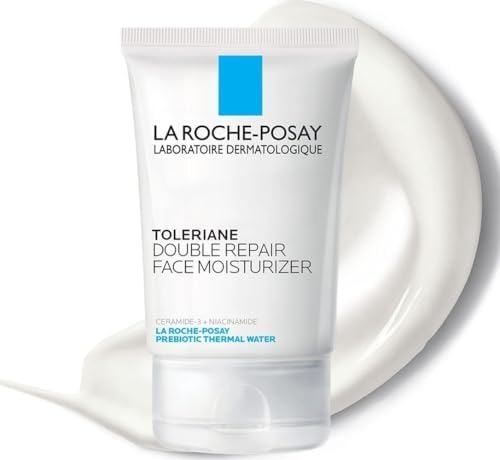
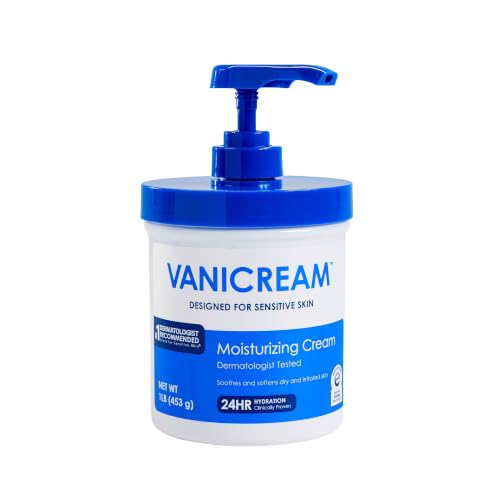
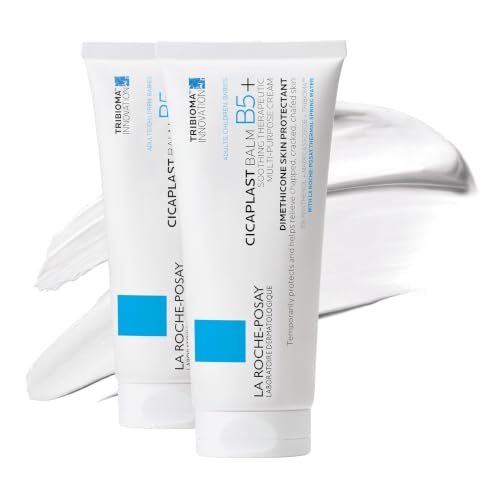
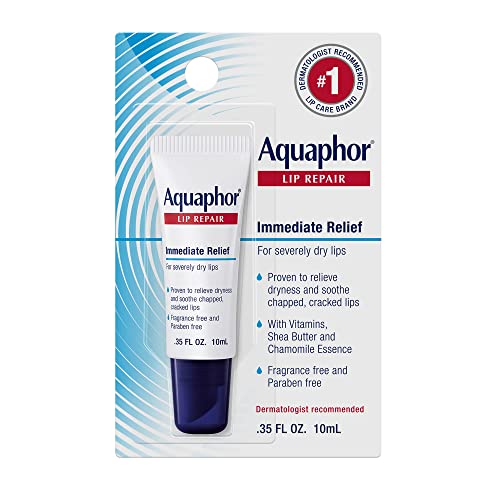
Recommended Products for Sensitive, Reactive Facial Skin



Key Takeaways
- Sensitive skin is defined by stinging, burning, tingling, itching or pain in response to things that normally should not cause them.
- Around half of people report reactive skin, and the face is the most commonly affected area.
- Over-active skin nerves can release chemicals that dilate blood vessels, causing flushing and uneven redness.
- Cosmetics are the strongest reported trigger, followed by heat, humidity, air conditioning and water.
- A short, fragrance-free routine and daily sunscreen are the foundation of care.
- Rosacea and eczema can cause similar symptoms and may need specific treatment.
- Sudden facial weakness, drooping or numbness is a medical emergency.
In This Guide
- The Nerves Behind Facial Sensitivity
- What Doctors Mean by Sensitive Skin
- Common Triggers
- How Sensitivity Affects Skin Tone
- Sensitive Skin or Something Else?
- Ingredients That Soothe and Ingredients That Sting
- Is Your Face Nerve-Sensitive?
- How to Calm Nerve-Sensitive Facial Skin
- Dos and Don’ts
- Honest Limits
- When to See a Doctor
- FAQ
- Final Word
The Nerves Behind Facial Sensitivity
Facial skin is packed with sensory nerve endings, many of them branches of the trigeminal nerve, the large nerve that carries feeling from the face to the brain. These free nerve endings sit very close to the surface and detect heat, cold, touch, pain and chemicals.
In sensitive skin, these endings appear to be more easily triggered. A weakened skin barrier lets irritants reach them more easily, and some people seem to have more reactive nerve receptors, including a family called TRP channels that respond to heat and to ingredients such as menthol and capsaicin.
When the nerves fire, they send pain or itch signals to the brain and can also release chemical messengers into the skin. Some of these widen blood vessels and trigger mild inflammation, a process known as neurogenic inflammation. That is how a feeling can become a visible change: the stinging face turns pink or blotchy.
Sensitivity also tends to change over time. Many people notice it worsens in winter, when dry air and cold wind weaken the barrier, or in hot, humid summers when sweat and heat stimulate the nerves. Hormonal shifts, pregnancy, menopause, illness and periods of stress can all make skin temporarily more reactive, which is why a product that suited you for years can suddenly start to sting.
| Nerve-related structure | Role | What you notice when it overreacts |
|---|---|---|
| Free nerve endings in the skin | Detect heat, cold, pain and chemicals | Stinging, burning, tingling |
| Itch-sensing fibres | Detect irritants and allergens | Itching without a rash |
| Nerve-to-blood-vessel signals | Control vessel widening | Flushing, redness, uneven tone |
| Trigeminal nerve branches | Carry sensation from the face | Pain, numbness or altered sensation when damaged |
What Doctors Mean by Sensitive Skin
An expert group from the International Forum for the Study of Itch defined sensitive skin as a syndrome in which unpleasant sensations such as stinging, burning, pain, itching and tingling occur in response to stimuli that normally should not provoke them. These sensations cannot be explained by another skin disease, and the skin may look normal or slightly red (Misery et al., Acta Dermato-Venereologica 2017).
The same group noted that roughly half of people report reactive skin, with women more likely to say so than men, and that the face is the most commonly affected area. Redness was present in a large share of cases.
Sensitive skin is not the same as an allergy. Allergies involve the immune system and usually cause a visible rash. Sensitive skin reactions are mainly sensory and often leave little to see.
Common Triggers
A systematic review and meta-analysis of studies from around the world found that cosmetics were the strongest reported trigger for sensitive skin, followed by humid air, air conditioning, heat and water (Brenaut et al., 2020).
| Trigger type | Examples | Practical fix |
|---|---|---|
| Products | Fragrance, alcohol, strong acids, retinoids, some preservatives | Switch to short, fragrance-free formulas; patch test |
| Temperature | Heat, cold wind, sudden changes | Lukewarm water; protect from wind; avoid direct heaters |
| Air | Air conditioning, dry indoor air, humidity | Humidifier in dry rooms; moisturise |
| Water | Hard water, hot showers | Gentle cleanser; pat dry; moisturise immediately |
| Sun | UV exposure | Daily mineral sunscreen |
| Emotional | Stress, embarrassment | Stress management and relaxation |
| Friction | Scrubs, rough towels, masks | Soft cloths; avoid physical exfoliants |
Stress deserves a special mention, since it both lowers the barrier and heightens nerve responses. Our guide on how to lower cortisol for better skin covers practical ways to reduce it.
How Sensitivity Affects Skin Tone
Because skin nerves and blood vessels are closely linked, sensitivity often shows up as changes in colour. Short bursts of flushing can follow a trigger and fade within minutes to hours. With frequent flare-ups, some people develop more persistent redness across the cheeks and nose.
Chronic irritation can also cause uneven pigmentation in medium to dark skin tones, as inflamed areas may heal darker. Scratching and rubbing make this worse.
Skin tone changes from sensitivity are usually reversible. Once triggers are removed and the barrier recovers, flushing tends to become less frequent, and dark marks from irritation fade gradually over a few months, especially with daily sun protection.
Persistent redness, visible small blood vessels or bumps may point to rosacea rather than simple sensitivity. Our guides to caffeine and facial blood flow and facial circulation explain more about what widens and narrows facial blood vessels.
Sensitive Skin or Something Else?
| Condition | Typical signs | What to do |
|---|---|---|
| Sensitive skin syndrome | Stinging or burning with little visible rash | Gentle routine, avoid triggers |
| Rosacea | Flushing, persistent redness, visible vessels, bumps | See a doctor for prescription treatment |
| Eczema (atopic or contact dermatitis) | Itchy, dry, red, scaly patches | Emollients; identify allergens; prescription creams |
| Allergic reaction to a product | Rash, swelling, itching where the product was used | Stop the product; seek help if swelling spreads |
| Shingles on the face | Burning pain, then a blistering rash on one side | See a doctor urgently, especially near the eye |
| Trigeminal neuralgia | Sudden electric-shock pain in the face | See a doctor |
| Bell’s palsy or stroke | Facial weakness or drooping | Emergency assessment |
Ingredients That Soothe and Ingredients That Sting
Reading labels is one of the most useful habits for nerve-sensitive skin. Some ingredients support the barrier and calm reactions; others are frequent culprits.
| Usually soothing | Why | Often stinging | Why |
|---|---|---|---|
| Ceramides | Rebuild barrier fats | Fragrance and essential oils | Common irritants and allergens |
| Glycerin | Draws in water gently | Denatured alcohol | Dries and strips the barrier |
| Panthenol | Calms and supports repair | Menthol, peppermint, camphor | Activate cold and pain receptors |
| Niacinamide (low strength) | Supports barrier, may reduce redness | High-strength acids | Irritate skin nerves |
| Colloidal oatmeal | Soothes itch | Physical scrubs | Friction damages the barrier |
| Zinc oxide sunscreen | Gentle UV protection | Some chemical sunscreen filters | Can sting around the eyes |
Everyone is different, so treat this as a starting point. A product with only a handful of ingredients makes it easier to spot what your skin tolerates, and keeping a simple note of what you used before each flare can reveal patterns within a few weeks.
Is Your Face Nerve-Sensitive?
- Many products sting or burn within minutes, even gentle ones.
- Your face flushes quickly with heat, cold, wind or embarrassment.
- You feel tightness, tingling or itching without an obvious rash.
- Your symptoms are worse in air-conditioned or very dry rooms.
- You react to fragranced products, alcohol-based toners or strong acids.
- The feeling settles within hours once the trigger is removed.
If several apply, you likely have sensitive skin. If you also have persistent redness, bumps or scaly patches, ask a doctor about rosacea or eczema.
How to Calm Nerve-Sensitive Facial Skin
Strip your routine back
Use only a gentle cleanser, a fragrance-free moisturiser and a mineral sunscreen for two to four weeks.
Wash with lukewarm water
Hot and cold water can both trigger stinging and flushing.
Moisturise to repair the barrier
Look for ceramides, glycerin and panthenol, which support the barrier that shields skin nerves.
Protect from sun and wind
Use a mineral sunscreen daily and cover your face in cold wind.
Patch test new products
Apply to a small area near the jaw for several days before using on the whole face.
Reintroduce actives slowly
If you use retinoids or acids, bring them back one at a time, a few nights a week.
Keep your moisturiser in a cool place, not the fridge. Very cold products can trigger stinging just as heat can.
Dos and Don’ts
Try This
- Use short ingredient lists and fragrance-free products
- Moisturise daily, even if you have combination skin
- Wear mineral sunscreen
- Pat skin dry with a soft towel
- Keep a note of what triggers reactions
Avoid This
- Use scrubs, brushes or peel-off masks
- Layer lots of active ingredients
- Use menthol, peppermint or other ‘tingling’ products
- Rub or scratch stinging skin
- Ignore new numbness, weakness or severe pain
Honest Limits
Sensitive skin is common and real, but it is not fully understood. There is no single test for it, and products marketed as ‘for sensitive skin’ are not guaranteed to suit everyone, because triggers differ between people.
Some people are sensitive only to specific ingredients, which a dermatologist can identify with patch testing. Others react to a wide range of things and do best with the simplest possible routine.
Improvement takes time. Barrier repair usually takes two to four weeks of consistent, gentle care before stinging settles noticeably.
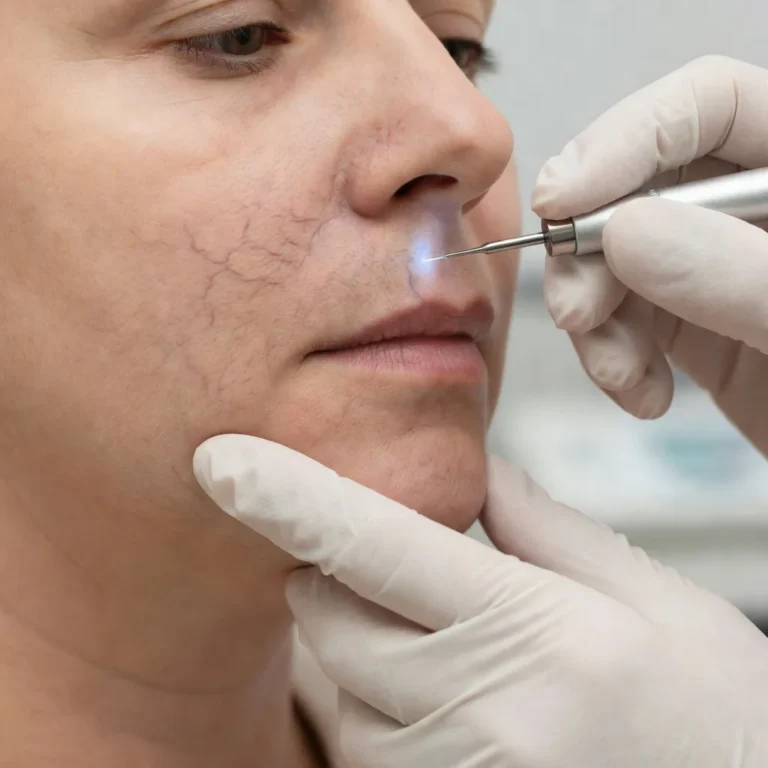
For stubborn cases, dermatologists sometimes use treatments that act on nerves or blood vessels, such as prescription creams for rosacea, vascular lasers for persistent redness, or medicines that calm over-active nerve signalling. These need a proper assessment first.
Sudden facial drooping, weakness, numbness or difficulty speaking can be signs of a stroke. Call emergency services immediately.
When to See a Doctor
See a doctor or dermatologist if you have:
- Persistent redness, visible blood vessels or acne-like bumps
- Itchy, scaly or weeping patches
- Burning pain on one side of the face, especially with a rash or near the eye
- Sudden, severe electric-shock pain in the face
- Numbness, tingling or weakness in part of the face
- Sensitivity that does not improve after a month of a gentle routine
This article is for general information and does not replace professional medical advice. Seek urgent care for sudden facial weakness, drooping or loss of sensation.
FAQ
What is facial nerve sensitivity?
It usually refers to sensitive skin, where nerve endings in facial skin react strongly, causing stinging, burning or itching.
Can nerve sensitivity cause facial redness?
Yes. Over-active skin nerves can release chemicals that widen blood vessels, causing flushing and uneven redness.
Why does my face sting when I apply products?
Your skin barrier may be weakened or your skin nerves may be more reactive. Fragrance, alcohol and acids are common triggers.
Is sensitive skin the same as an allergy?
No. Sensitive skin is mainly a sensory reaction, while allergies involve the immune system and usually cause a rash.
How common is sensitive skin?
Around half of people report sensitive or reactive skin, according to an expert panel.
Can stress make my face more sensitive?
Yes. Emotional stress is a common trigger for stinging and flushing.
Which products are best for sensitive skin?
Simple, fragrance-free cleansers and moisturisers and mineral sunscreens usually suit sensitive skin best.
Can sensitive skin be cured?
It often improves a lot with barrier care and avoiding triggers, though some people remain prone to reactions.
When is facial numbness serious?
Sudden numbness or weakness, especially with drooping or speech problems, needs emergency care.
Does rosacea cause burning?
Yes. Many people with rosacea feel burning or stinging along with redness.
Final Word
Facial sensitivity usually comes from the tiny nerve endings in the skin reacting more readily than they should. They produce stinging, burning or itching and, through their links with blood vessels, can cause flushing and uneven redness. It is very common, and the face is where most people feel it.
A simple, fragrance-free routine, lukewarm water, a barrier-supporting moisturiser and daily mineral sunscreen calm most sensitive skin within a few weeks. See a doctor for persistent redness, scaly patches or one-sided pain, and call emergency services straight away for sudden facial weakness or numbness.

Written by
Registered pharmacist and founder of Facial Adviser. Rakib's pharmacy training covers how skincare actives work and interact; a later course in cosmetology turned that into a focus on facial treatments and skincare products. He plans, researches and edits every guide on the site and checks health claims against sources such as the American Academy of Dermatology, the FDA and the NIH. He is not a dermatologist; see the Editorial Policy and Medical Disclaimer.
About · Editorial policy · How we choose products · Medical disclaimer · Contact
Keep reading: Diet, sleep, stress and skin
- How Diet Impacts the Skin Microbiome: What the Science Actually Shows
- What Alcohol Does to Your Face Overnight (and Over Time)
- How Sleep Deprivation Causes Dull Skin (and How to Recover)
- Why Your Face Goes Red After Exercise and When It Matters
- Can Vitamin Deficiency Cause a Dull Face? What the Evidence Says
- Hormonal Facial Skin Changes During Your Cycle: A Phase-by-Phase Guide


One Comment