Why Your Face Goes Red After Exercise and When It Matters
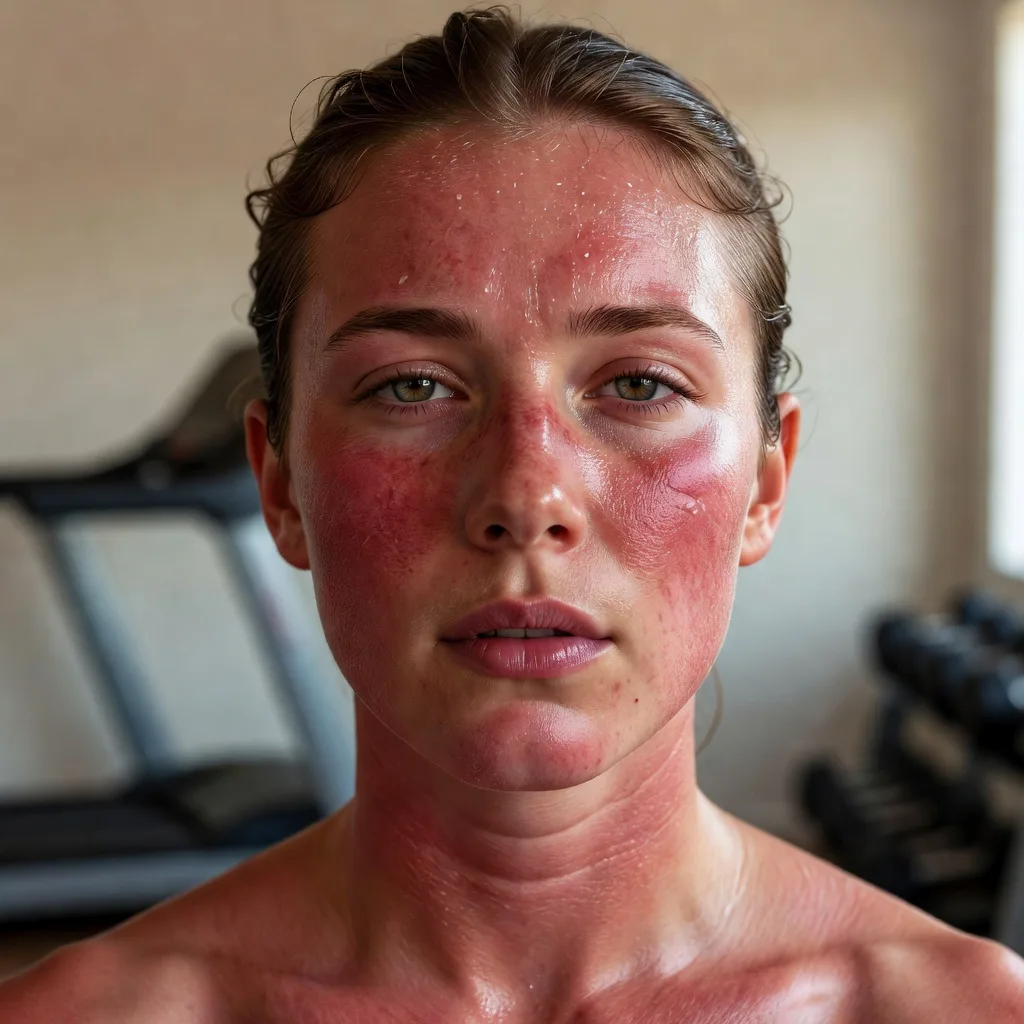
Some people finish a run looking barely warm. Others look like they have been standing next to a furnace, with bright red cheeks, forehead and neck that take an hour to fade. If you are in the second group, you may have wondered whether it means something is wrong.
Part of our guide to lifestyle and skin. Start with: How Diet Impacts the Skin Microbiome: What the Science Actually Shows
Facial flushing after exercise is usually a normal part of cooling down. As your body heats up, blood vessels near the skin widen to release heat, and the face, with its dense network of vessels close to the surface, shows this most. It is more noticeable in people with fair skin, those who are less conditioned and in hot or humid conditions. Flushing that lasts for hours, burns or comes with bumps may be rosacea, and flushing with chest pain, dizziness or confusion needs urgent attention.
How red you go is not a reliable measure of how fit you are. Genetics, skin tone, the size and number of facial blood vessels, and even how much you sweat all affect it. Some very fit athletes flush dramatically; some beginners barely change colour.
For most people, the flush fades within 30 to 60 minutes after cooling down. What matters is whether it settles, whether it comes with other symptoms and whether it is gradually leaving behind persistent redness.
This guide explains why exercise makes faces go red, who is more prone, how to tell normal flushing from rosacea or heat illness, practical ways to cool down faster, and the warning signs to take seriously.
Shopping these picks?
Amazon Prime members get fast, free shipping on eligible items, plus Prime Video, Amazon Music and member deals. New members can start with a free trial.
Start a free Prime trialAged 18 to 24? Prime for Young Adults comes with a longer free trial and a lower price after it.
Affiliate link: we may earn a commission at no extra cost to you.
Recommended Products for Post-Workout Facial Redness



On This Page
- Why Exercise Makes Your Face Red
- What Normal Exercise Flushing Looks Like
- When It Might Be Rosacea
- When Flushing Is a Warning Sign
- Which Workouts Cause the Most Flushing?
- A Quick Check After Your Workout
- How to Reduce Facial Redness After Exercise
- Skincare for People Who Flush
- Dos and Don’ts
- Honest Limits
- When to See a Doctor
- FAQ
- Where This Leaves You
Quick Answer
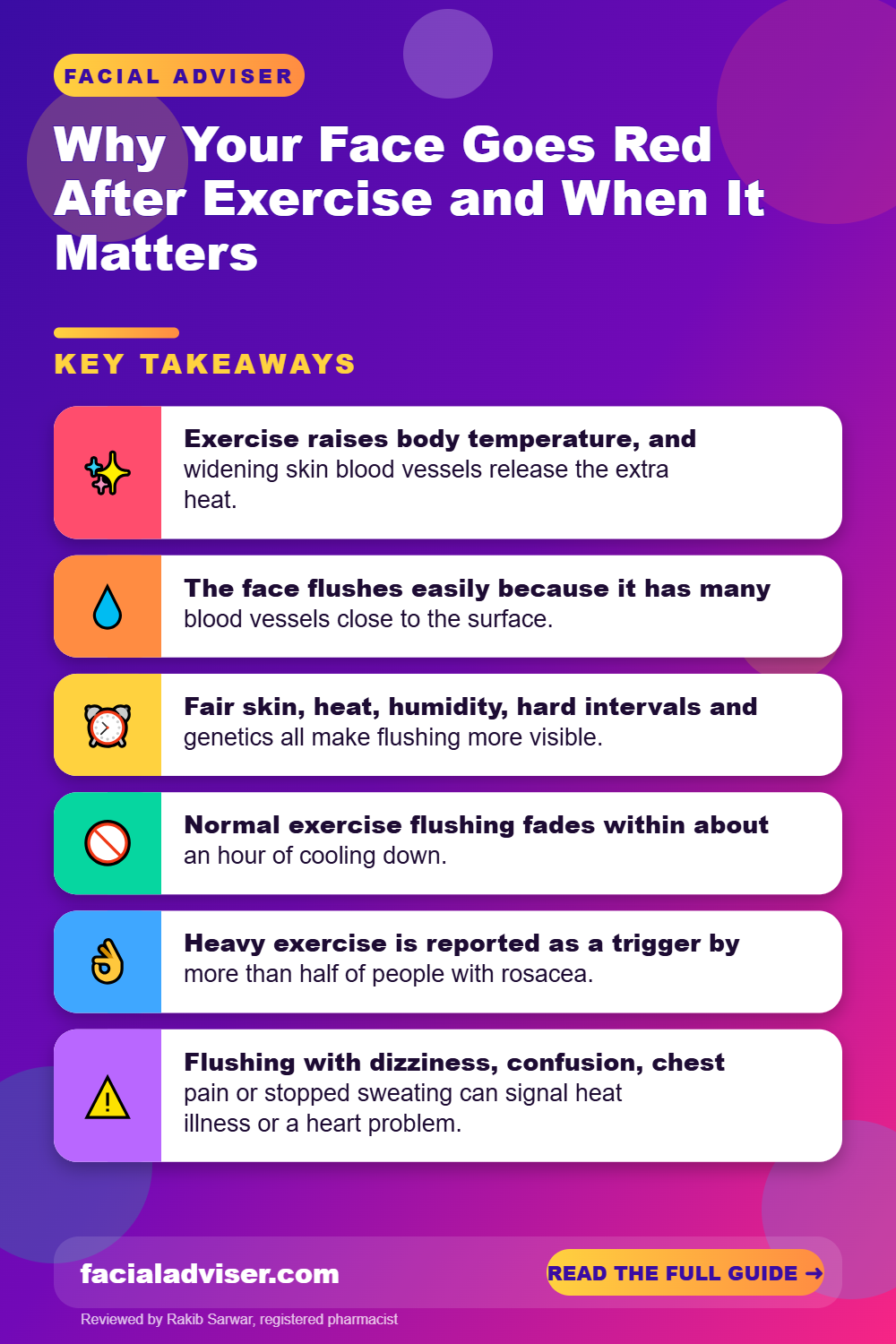
- Exercise raises body temperature, and widening skin blood vessels release the extra heat.
- The face flushes easily because it has many blood vessels close to the surface.
- Fair skin, heat, humidity, hard intervals and genetics all make flushing more visible.
- Normal exercise flushing fades within about an hour of cooling down.
- Heavy exercise is reported as a trigger by more than half of people with rosacea.
- Flushing with dizziness, confusion, chest pain or stopped sweating can signal heat illness or a heart problem.
- Cooling strategies and exercise timing can reduce flushing without stopping exercise.
Why Exercise Makes Your Face Red
Working muscles generate a lot of heat. To stop your core temperature rising too far, your body sends more blood to the skin, where heat can escape into the air, and switches on sweating so evaporation can cool you further.
The face is especially good at showing this. It has a dense network of small blood vessels close to the surface, thin skin on the cheeks, and it is often uncovered. Increased heart rate and blood pressure during exercise add to the effect.
| Factor | Effect on flushing |
|---|---|
| Higher intensity | More heat produced, more redness |
| Hot or humid weather | Harder to lose heat, so more blood is sent to the skin |
| Indoor classes with poor ventilation | Heat builds up quickly |
| Fair skin | Redness is simply more visible |
| Less fitness | Less efficient cooling at first |
| Genetics | Some people have more or larger facial vessels |
| Dehydration | Less sweat for cooling, so more reliance on skin blood flow |
Sweat plays a big part in this. When sweat evaporates, it carries heat away very efficiently. People who sweat less, whether because of genetics, dehydration or certain medicines, rely more heavily on sending blood to the skin, so they often look redder for longer. In humid weather, sweat evaporates poorly, which is why flushing is often worse on muggy days even at the same temperature.
What Normal Exercise Flushing Looks Like
- Even redness across the cheeks, forehead, nose and sometimes neck and chest
- Appears during exercise and peaks soon after stopping
- Comes with sweating and feeling warm
- Fades steadily over 30 to 60 minutes once you cool down
- No burning, stinging, bumps or swelling
- You otherwise feel well
If that describes you, your body is doing exactly what it should, and there is no need to change your workouts because of it. Our guide to facial circulation explains how exercise also supports healthy blood vessels in the long run.
People with darker skin tones may not see obvious redness after exercise, but the same cooling process is happening. Warmth and sweating are the more reliable signs.
When It Might Be Rosacea
Rosacea is a common condition that causes flushing, persistent redness and sometimes visible vessels, bumps and burning or stinging. Exercise is one of its classic triggers. In a National Rosacea Society survey of more than 1,000 people with rosacea, 56% said heavy exercise triggered their symptoms, alongside sun exposure (81%), emotional stress (79%) and hot weather (75%) (National Rosacea Society).
| Feature | Normal exercise flush | Possible rosacea flare |
|---|---|---|
| How long it lasts | Under an hour | Hours or into the next day |
| Sensation | Warmth | Burning, stinging or itching |
| Other signs | None | Bumps, visible vessels, dry or sensitive skin |
| Between workouts | Skin returns to normal | Persistent redness on cheeks and nose |
| Other triggers | Mainly heat and effort | Also sun, alcohol, spicy food, stress |
Rosacea is very treatable, and diagnosing it early can stop redness becoming permanent. For more on what widens facial vessels, see our guide to facial nerve sensitivity and redness.
When Flushing Is a Warning Sign
Occasionally, a red face during exercise is part of something more serious. Heat exhaustion and heat stroke can develop during exertion in hot conditions, and some heart and blood pressure problems show up with exercise.
Stop exercising and seek urgent help if flushing comes with chest pain, severe breathlessness, fainting or near-fainting, confusion, a pounding or irregular heartbeat, a severe headache, vomiting, or hot skin that has stopped sweating. These can be signs of heat stroke or a heart problem.
Other, less common causes of flushing include some medicines such as niacin and certain blood pressure tablets, menopausal hot flushes, and rare hormonal conditions. Flushing that happens without exercise, especially with diarrhoea or wheezing, is worth discussing with a doctor.
Which Workouts Cause the Most Flushing?
Different types of exercise heat the body in different ways, so it is common to flush more with some activities than others.
| Activity | Flushing tendency | Why | Tip |
|---|---|---|---|
| Hot yoga and heated classes | Very high | Room heat plus exertion | Choose unheated classes if you flush badly |
| High-intensity interval training | High | Rapid heat build-up | Take longer recovery intervals |
| Running outdoors in summer | High | Sun and heat | Run early or late in the day; wear a cap |
| Indoor cycling | High | Poor airflow, high effort | Use a fan and bring a cooling towel |
| Swimming | Low | Water cools the skin | A good option if you flush easily |
| Weight training | Moderate | Short bursts of effort with rest | Rest in a cool spot between sets |
| Walking and gentle cycling | Low to moderate | Lower heat production | Good for recovery days |
If you have rosacea, mixing lower-heat activities such as swimming and strength training into your week can keep you active while reducing flare-ups.
A Quick Check After Your Workout
- Time how long the redness lasts after you stop and cool down. Under an hour is typical.
- Notice whether it burns or stings, or just feels warm.
- Look for small bumps or visible blood vessels on the cheeks and nose.
- Check whether your face is red on days when you have not exercised.
- Think about other triggers, such as sun, alcohol, hot drinks or stress.
If the redness is short-lived and painless, it is almost certainly normal. If it lingers, stings or is present between workouts, ask a doctor or dermatologist about rosacea.
How to Reduce Facial Redness After Exercise
Choose cooler times and places
Exercise in the early morning or evening in summer, and pick well-ventilated or air-conditioned spaces.
Hydrate before and during
Start well hydrated and sip water through your workout to support sweating.
Cool your skin as you go
Use a cold, damp towel on your neck and face, a small fan or a spray of cool water between sets.
Build intensity gradually
Warm up slowly and use interval breaks to let your body shed heat.
Cool down properly
Finish with five to ten minutes of easy movement, then rest somewhere cool.
Rinse with lukewarm water
Wash off sweat with a gentle cleanser and cool, not cold, water, then moisturise.
Placing a cold towel on the back of the neck and the insides of the wrists cools you quickly, because blood vessels run close to the surface there.
Skincare for People Who Flush
Before outdoor workouts, apply a sweat-resistant, broad-spectrum sunscreen. Sun exposure adds to heat and is the top rosacea trigger. Mineral sunscreens with zinc oxide are often better tolerated by reactive skin.
Afterwards, avoid harsh scrubs, toners with alcohol and hot showers, which all intensify redness. A gentle cleanser followed by a fragrance-free moisturiser helps the barrier recover.
If you have diagnosed rosacea, prescription treatments such as topical ivermectin, azelaic acid or metronidazole, or medicines that temporarily narrow blood vessels, can reduce flushing and redness. Your doctor can advise which suits you.
Many people with persistent redness also benefit from vascular laser or intense pulsed light treatment, which reduces the visible blood vessels that make flushing more obvious. These treatments are usually done in a course of sessions and work best alongside daily sun protection and trigger management.
Makeup can help too. A green-tinted primer or a mineral foundation applied after your post-workout shower can neutralise lingering redness if you need to head straight to work or an event.
Dos and Don’ts
Helps
- Keep exercising; the long-term benefits for skin and health are large
- Exercise in cooler conditions when possible
- Cool your face and neck during and after workouts
- Wear sweat-resistant sunscreen outdoors
- See a doctor if redness lingers or stings
Backfires
- Push through dizziness, confusion or chest pain
- Jump straight into a hot shower after exercise
- Use scrubs or alcohol toners on flushed skin
- Assume a red face means you are unfit
- Ignore redness that has become permanent
Honest Limits
Some degree of flushing is a normal, healthy response and cannot be completely prevented. The aim is to reduce it and make sure it is not a sign of something else, not to stop your body from cooling itself.
Getting fitter may help a little, because conditioned bodies start sweating earlier and cool more efficiently, but many very fit people still flush heavily. Genetics and skin type play a big role.
If you have rosacea, avoiding exercise is not the answer. Adjusting timing, intensity and environment usually keeps flare-ups manageable while you enjoy the benefits of staying active. Keeping a simple log of workouts and flare-ups for a few weeks often reveals which sessions are the problem.
When to See a Doctor
See a doctor or dermatologist if you have:
- Facial redness that lasts for hours after exercise or is present between workouts
- Burning, stinging, bumps or visible blood vessels on the face
- Flushing that also happens with alcohol, hot drinks or stress
- Flushing without exercise along with sweating, palpitations, diarrhoea or wheezing
Seek emergency care for flushing with chest pain, fainting, confusion, severe breathlessness or signs of heat stroke.
This article is for general information and does not replace medical advice. If you have a heart condition or other health concerns, check with your doctor before starting or intensifying exercise.
FAQ
Is it normal for my face to go red when I exercise?
Yes. It is your body releasing heat through the skin, and it usually fades within an hour.
Does a red face mean I am unfit?
Not necessarily. Skin tone, genetics and conditions affect flushing as much as fitness does.
How long should redness last after exercise?
Typically 30 to 60 minutes once you cool down.
Can exercise trigger rosacea?
Yes. More than half of people with rosacea report heavy exercise as a trigger.
How can I stop my face going red at the gym?
Exercise in cooler conditions, stay hydrated, use cooling towels and build intensity gradually.
When is exercise flushing dangerous?
If it comes with chest pain, fainting, confusion, severe breathlessness or no sweating in the heat, get urgent help.
Should I stop exercising if I have rosacea?
No. Adjust timing, intensity and environment rather than stopping.
Why does my face stay red for hours after running?
Long-lasting redness can point to rosacea or overheating. See a doctor if it happens often.
Does cold water help post-workout redness?
Cool, not icy, water helps. Very cold water can cause a rebound flush in sensitive skin.
Can sunscreen make flushing worse?
Some chemical sunscreens sting reactive skin. Mineral sunscreens are often better tolerated.
Where This Leaves You
A red face after exercise is usually your body doing its job, sending warm blood to the skin to release heat. It is more noticeable in fair skin, hot conditions and hard sessions, and it should fade within about an hour of cooling down.
If the redness lingers, burns or is present on rest days, rosacea may be involved and is worth checking with a doctor. Meanwhile, cooler conditions, hydration, cooling towels, a proper cool-down and gentle skincare help, and any flushing with chest pain, dizziness or confusion needs urgent attention.

Written by
Registered pharmacist and founder of Facial Adviser. Rakib's pharmacy training covers how skincare actives work and interact; a later course in cosmetology turned that into a focus on facial treatments and skincare products. He plans, researches and edits every guide on the site and checks health claims against sources such as the American Academy of Dermatology, the FDA and the NIH. He is not a dermatologist; see the Editorial Policy and Medical Disclaimer.
About · Editorial policy · How we choose products · Medical disclaimer · Contact
Keep reading: Diet, sleep, stress and skin
- How Diet Impacts the Skin Microbiome: What the Science Actually Shows
- Can Vitamin Deficiency Cause a Dull Face? What the Evidence Says
- Hormonal Facial Skin Changes During Your Cycle: A Phase-by-Phase Guide
- How Do You Get Cell Nutrition? The Real Answer
- Does Stress Make Your Skin Darker?
- Is Daily Massage Harmful for Your Face?