Is Daily Massage Harmful for Your Face?
Is daily massage harmful to your face, or is that just an old skincare myth? The honest answer sits somewhere in between: gentle daily massage has genuine, if modest, evidence behind it, but there’s a narrower real risk tied specifically to harsh technique.
Part of our guide to lifestyle and skin. Start with: How Diet Impacts the Skin Microbiome: What the Science Actually Shows
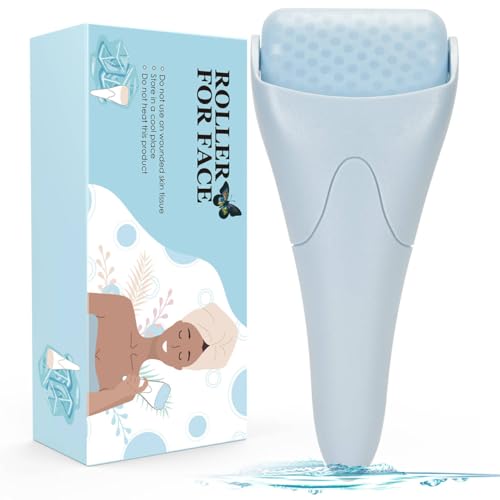
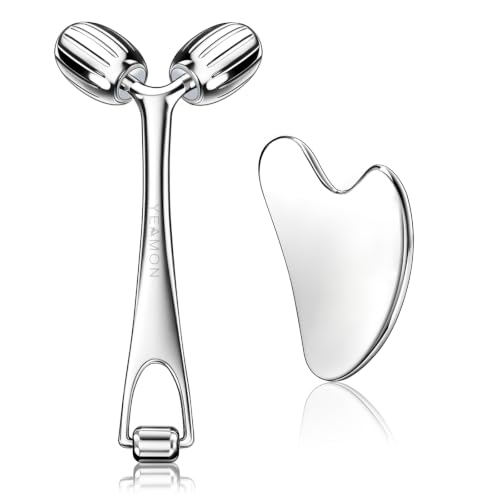
A 2025 randomized controlled trial found facial rollers and gua sha both produced statistically significant improvements in facial contour and muscle tone over eight weeks. That’s a real evidence base, not just a wellness trend, though it doesn’t mean more massage is automatically better.
The widely repeated claim that massage “stretches out” your skin isn’t well supported for ordinary gentle touching, skin’s elastin fibers make it inherently elastic. The genuine, narrower concern is repeated harsh pulling on thin areas like the under-eyes over years.
This guide covers what the actual research shows, a 60-second reactivity check to run before you massage, the difference between gentle and harsh technique, and the specific situations, like active breakouts or rosacea flares, where you should pause.
Recommended Products for Facial Massage



Key Takeaways
- A 2025 randomized controlled trial found facial rollers and gua sha both produced statistically significant improvements in facial contour and muscle tension over eight weeks, with rollers also improving measured skin elasticity.
- The idea that gentle facial massage “stretches out” your skin isn’t well supported, skin’s elastin fibers make it inherently elastic and it recoils after light mechanical pressure.
- The real, more limited risk is repeated, harsh, or aggressive pulling, especially on thin under-eye skin, over years, not ordinary gentle daily massage.
- Technique and pressure matter more than raw frequency, gentle upward strokes at light-to-moderate pressure are the relevant safety variable.
- Pause facial massage during active acne breakouts, over broken skin, or during a rosacea flare, since mechanical stimulation can worsen all three.
- A simple flush-and-recovery check on your cheek tells you whether your skin is reactive enough that you should skip massage that day.
- Daily massage isn’t inherently harmful for most people, the harm comes specifically from harsh technique, not from frequency alone.
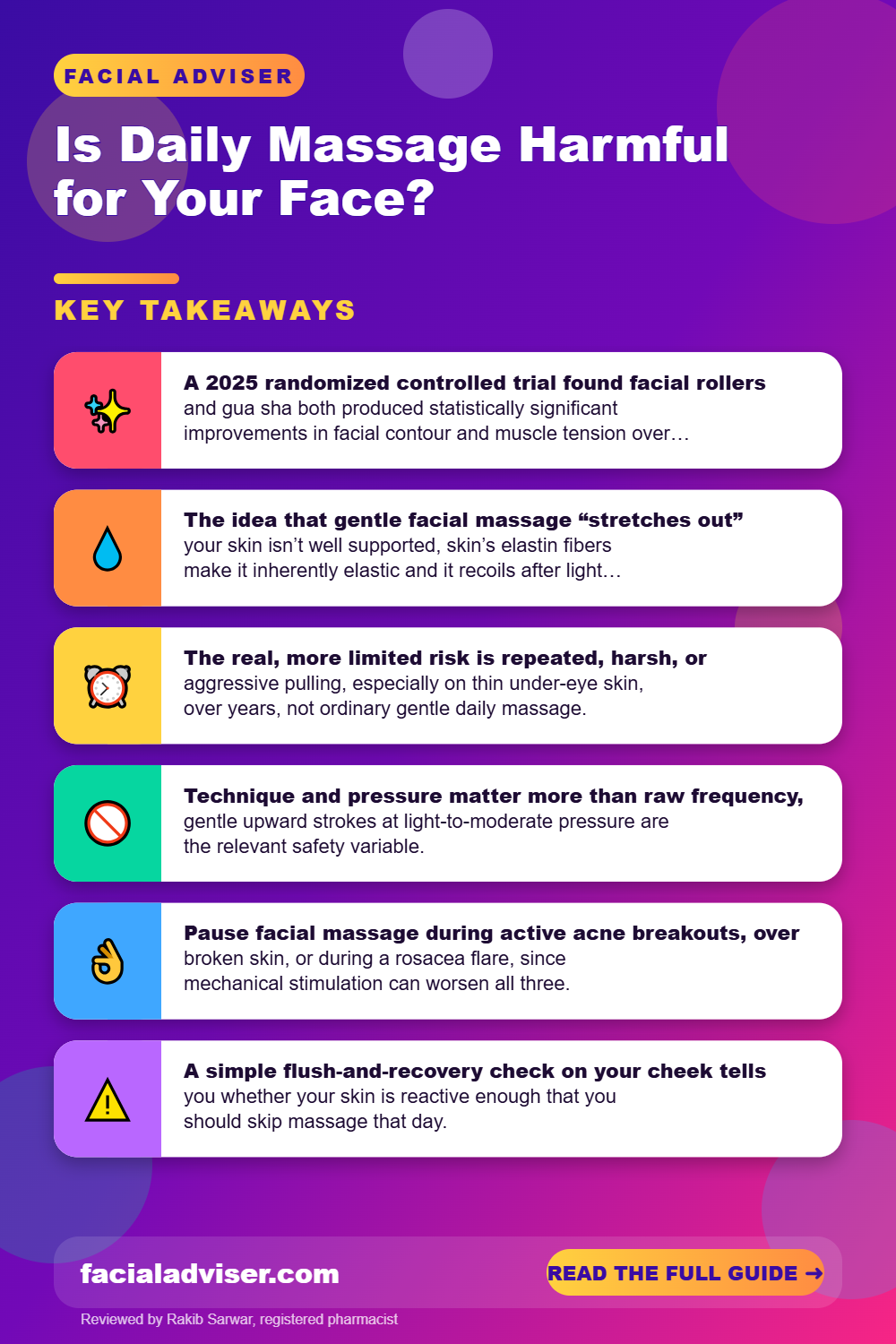
Table of Contents
What the Evidence Actually Shows
A 2025 randomized controlled trial published in the Journal of Cosmetic Dermatology, led by Ahn and colleagues, tested facial rollers and gua sha in 34 women over eight weeks and found statistically significant improvements in facial contour and muscle tone for both tools. Facial rollers specifically improved measured skin elasticity by roughly 7.5 to 8.6 percent, while gua sha significantly reduced muscle tension and stiffness, with no adverse events reported.
Shopping these picks?
Amazon Prime members get fast, free shipping on eligible items, plus Prime Video, Amazon Music and member deals. New members can start with a free trial.
Start a free Prime trialAged 18 to 24? Prime for Young Adults comes with a longer free trial and a lower price after it.
Affiliate link: we may earn a commission at no extra cost to you.
That’s a genuinely useful, modest evidence base for gentle facial massage, comparable in kind to how lymphatic facial massage has real supporting evidence for its established medical uses even as the purely cosmetic claims run ahead of the research.
The “Stretching Your Skin” Myth
A common worry is that repeated facial massage physically stretches skin out of shape over time. Dermatology consensus doesn’t support this for ordinary light touching or gentle massage: skin’s elastin fibers make it inherently elastic, and it recoils back after light mechanical pressure rather than permanently deforming, the same elastic-recoil principle behind a simple under-eye skin pinch test.
Note: The nuance here is real but narrow: repeated, harsh, or aggressive pulling and tugging, especially on thin under-eye skin, is theorized to potentially contribute to laxity over years of forceful manipulation. That’s a distinct scenario from ordinary gentle massage, and the evidence for it remains largely observational rather than rigorously proven.
A 60-Second Reactivity Check Before You Massage
Press a finger gently on your cheek, hold briefly, then release:
- Redness fades within a minute or two, no lingering warmth or stinging: your skin is tolerating mechanical pressure well that day.
- Flushes noticeably red and takes several minutes to calm, or feels warm and stingy: that’s a signal of reactive or rosacea-prone skin, and it’s worth skipping massage that day.
This is a practical, real-time gut-check rather than a validated clinical test, but it’s a genuinely useful habit before reaching for a roller or gua sha tool.
Gentle Massage vs. Harsh Technique
| Gentle daily massage | Harsh/aggressive technique | |
|---|---|---|
| Pressure | Light to moderate | Firm dragging or pulling |
| Skin response | Temporary flush, quick recovery | Prolonged redness, possible irritation |
| Evidence of benefit | Modest, supported by 2025 RCT | Not studied as a beneficial technique |
| Theorized long-term risk | Minimal for ordinary use | Possible contribution to laxity over years, especially under-eye |
| Tool | Trial-supported benefit |
|---|---|
| Facial roller | Improved measured skin elasticity (7.5-8.6%) |
| Gua sha | Significantly reduced muscle tension/stiffness |
Do This, Not That
Do
- Use gentle, upward strokes with light-to-moderate pressure
- Run the cheek-flush check before massaging on a given day
- Pause during active breakouts, open skin, or a rosacea flare
- Treat technique as more important than how many times per week you massage
- Stop immediately if you feel pain, not just mild pressure
Don’t
- Drag or tug aggressively, especially around the thin under-eye area
- Massage over active acne, broken skin, or a rosacea flare-up
- Assume “more massage” automatically means more benefit
- Ignore persistent redness or irritation that lingers after massage
- Use a roller or gua sha tool with excessive downward force
A Safer Daily Massage Routine
Check your skin first
Run the cheek-flush reactivity check before starting, and skip massage that day if your skin flushes and stays red.
Choose gentle pressure
Light-to-moderate pressure, not firm dragging, is what the supporting trial evidence used.
Work in upward strokes
Direction matters for comfort and for avoiding unnecessary tension on delicate areas.
Tip: Use a facial oil or serum as slip so the tool glides rather than drags, which reduces friction-related irritation.
Limit frequency to a tolerable ceiling
A few times a week is a reasonable ceiling for tool-assisted massage for most people, rather than forcing it daily.
Avoid the thinnest skin when in doubt
Use lighter pressure or skip the immediate under-eye area if you notice any lingering irritation there specifically.
Reassess if anything changes
Stop and reassess your routine if you notice new redness, sensitivity, or irritation that wasn’t there before.
When to Pause Massage Entirely
Facial massage, gentle or otherwise, should pause during active acne breakouts, since mechanical stimulation can spread bacteria and worsen inflammation. The same applies over any broken or open skin, and during a rosacea flare, where added stimulation tends to worsen redness and flushing rather than help it.
Warning: Stop facial massage immediately if you experience pain, persistent redness, or irritation that doesn’t resolve within a reasonable time, these are signals to stop, not push through.
When to See a Dermatologist
If you notice worsening rosacea symptoms, persistent irritation, or signs of skin laxity that concern you regardless of massage habits, a dermatologist can help distinguish what’s actually related to technique from what may need a different explanation entirely.
Frequently Asked Questions
Is daily facial massage harmful?
Not inherently. Ordinary gentle daily massage isn’t well-documented as harmful; the real risk comes from harsh or aggressive technique, not frequency alone.
Does facial massage stretch out your skin?
Not with ordinary gentle massage. Skin’s elastin fibers make it inherently elastic and it recoils after light pressure rather than permanently deforming.
What does the research say about facial rollers and gua sha?
A 2025 randomized controlled trial found both significantly improved facial contour and muscle tone over eight weeks, with rollers also improving measured skin elasticity.
How do I know if my skin is too reactive for massage today?
Press a finger gently on your cheek and release; if it flushes noticeably and takes several minutes to calm, skip massage that day.
When should I avoid facial massage?
Pause during active acne breakouts, over broken skin, or during a rosacea flare, since mechanical stimulation can worsen all three.
Is there a real risk of under-eye skin laxity from massage?
Repeated harsh or aggressive pulling on thin under-eye skin over years is theorized as a possible contributor, though the evidence is largely observational, not rigorously proven.
How often should I do facial massage?
A few times a week is a reasonable ceiling for tool-assisted massage for most people; technique matters more than raw frequency.
What pressure should I use for facial massage?
Light-to-moderate pressure with gentle upward strokes, the level used in the supporting clinical trial evidence.
Can facial massage help with muscle tension?
Yes, gua sha specifically showed a significant reduction in facial muscle tension and stiffness in a 2025 clinical trial.
When should I see a dermatologist about facial massage concerns?
If you notice worsening rosacea, persistent irritation, or laxity concerns regardless of your massage habits, a dermatologist can help clarify the actual cause.
The Bottom Line
Daily facial massage isn’t inherently harmful, and there’s genuine, if modest, clinical evidence behind gentle facial rollers and gua sha for contour and muscle tension. The real risk sits specifically in harsh, aggressive technique over time, not in doing it every day.
Check your skin’s reactivity first, keep pressure gentle, and pause during breakouts, broken skin, or a rosacea flare, that combination gets you the documented benefits without the narrow, technique-driven risk.

Written by
Registered pharmacist and founder of Facial Adviser. Rakib's pharmacy training covers how skincare actives work and interact; a later course in cosmetology turned that into a focus on facial treatments and skincare products. He plans, researches and edits every guide on the site and checks health claims against sources such as the American Academy of Dermatology, the FDA and the NIH. He is not a dermatologist; see the Editorial Policy and Medical Disclaimer.
About · Editorial policy · How we choose products · Medical disclaimer · Contact
Keep reading: Diet, sleep, stress and skin