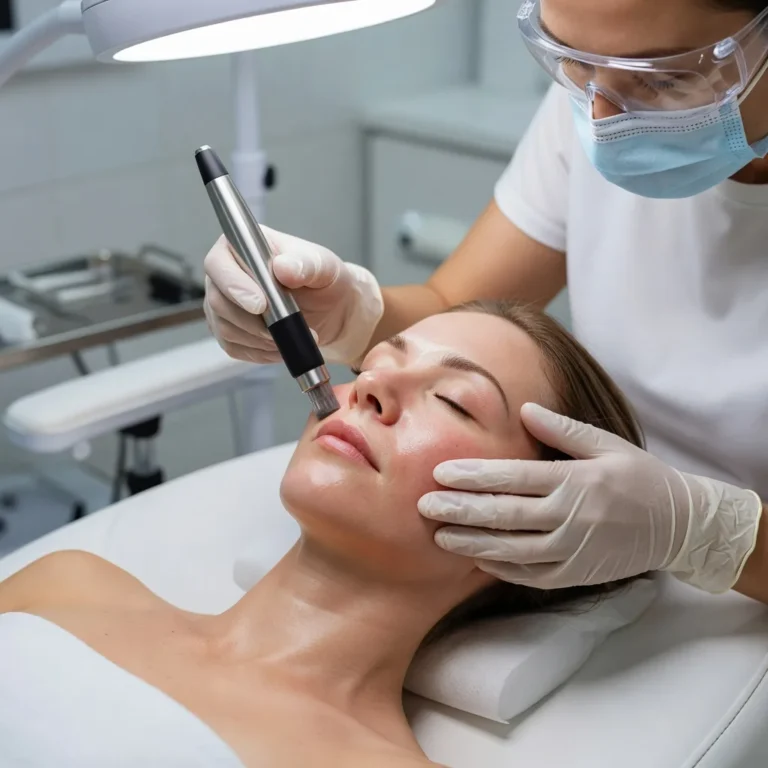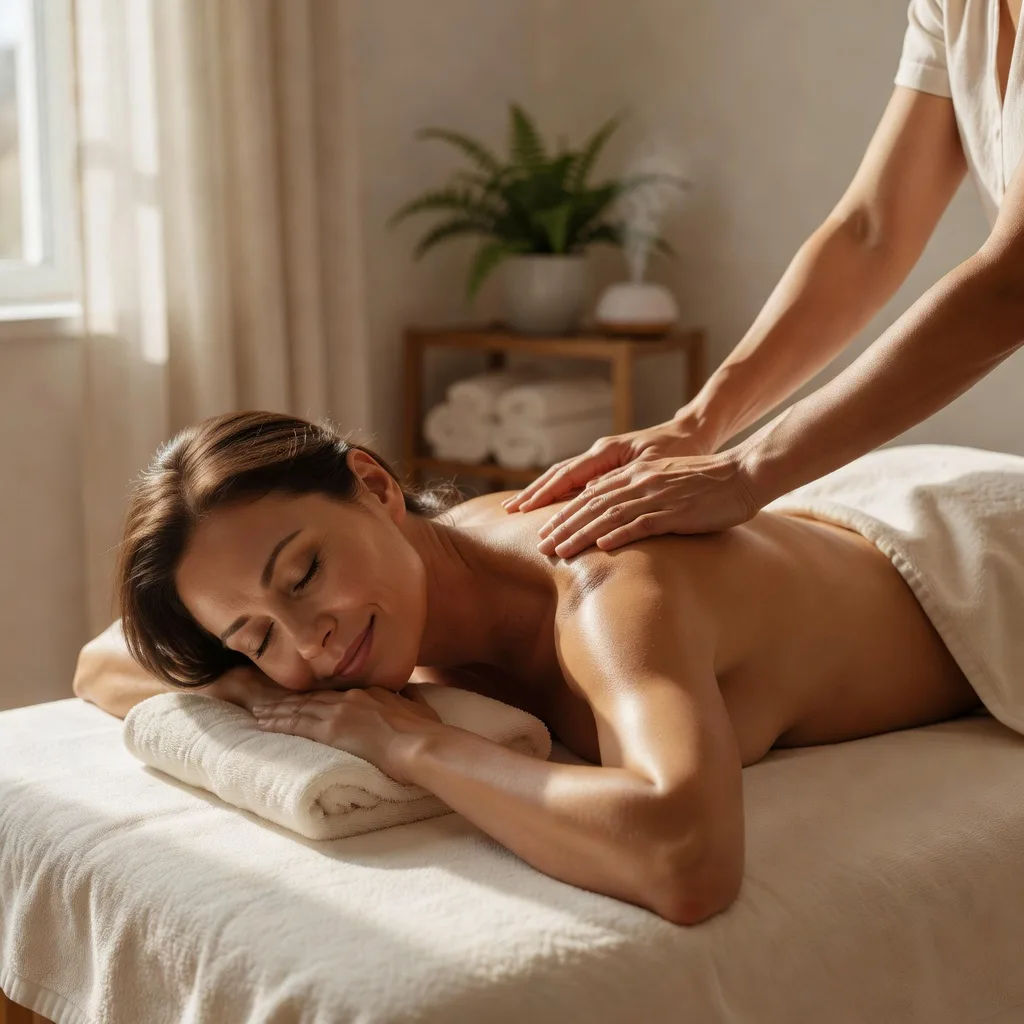
Benefits of Massage Therapy: What’s Actually True
The benefits of massage therapy have a genuinely large research base behind them, but the honest headline finding is more modest than most wellness marketing suggests.
Part of our guide to lifestyle and skin. Start with: How Diet Impacts the Skin Microbiome: What the Science Actually Shows
A 2024 systematic review in JAMA Network Open examined 17 systematic reviews across 13 conditions and found zero conclusions reached high-certainty evidence status, with only seven reaching moderate certainty. UCLA Health states plainly there is no substantial scientific evidence that lymphatic massage detoxes, boosts immunity, or causes weight loss in healthy people.
A 2025 randomized controlled trial found facial roller and gua sha massage produced real, if modest, improvements in facial contour and muscle tone.
This guide covers what the real evidence shows condition by condition, the cortisol and detox myths, and who should modify or skip a session.
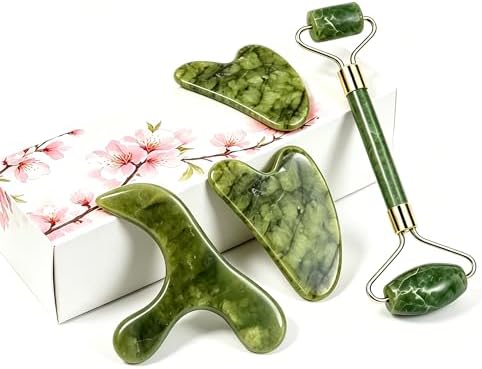
Recommended Massage Tools and Facial Rollers

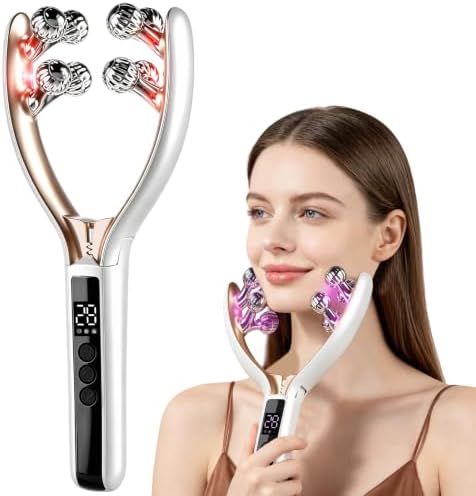

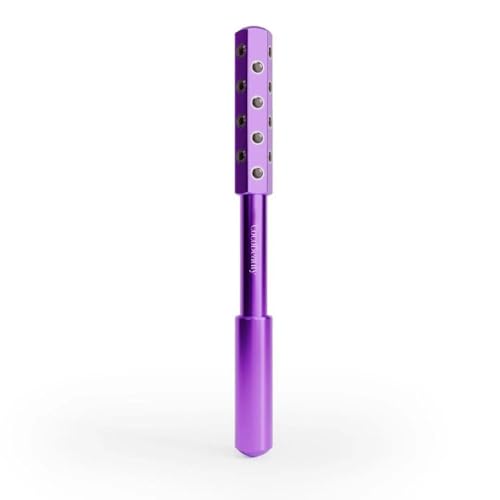
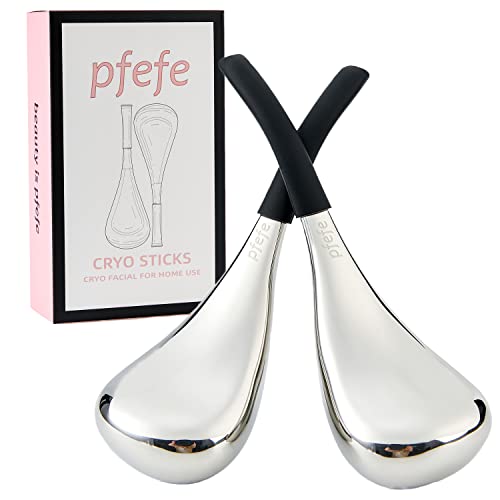
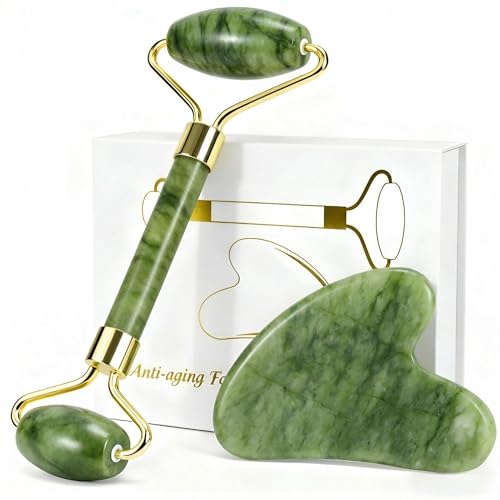
What the Research on Massage Therapy Actually Shows
Massage therapy has a genuinely large research base behind it, but the honest headline finding is more modest than most wellness marketing suggests. A 2024 systematic review in JAMA Network Open covering research from 2018 to 2023 examined 17 systematic reviews across 13 conditions, including chronic low back pain, fibromyalgia, labor pain, cancer-related pain, chronic neck pain, postoperative and postpartum pain, plantar fasciitis, and myofascial pain. Despite hundreds of randomized controlled trials behind these reviews, zero conclusions reached high-certainty evidence status; only seven reached moderate certainty, all favoring massage. The large majority of conclusions were rated low or very-low certainty — not because massage doesn’t help, but because blinding is inherently difficult in massage research, samples tend to be small, and protocols are heterogeneous across studies.
Shopping these picks?
Amazon Prime members get fast, free shipping on eligible items, plus Prime Video, Amazon Music and member deals. New members can start with a free trial.
Start a free Prime trialAged 18 to 24? Prime for Young Adults comes with a longer free trial and a lower price after it.
Affiliate link: we may earn a commission at no extra cost to you.
What’s True
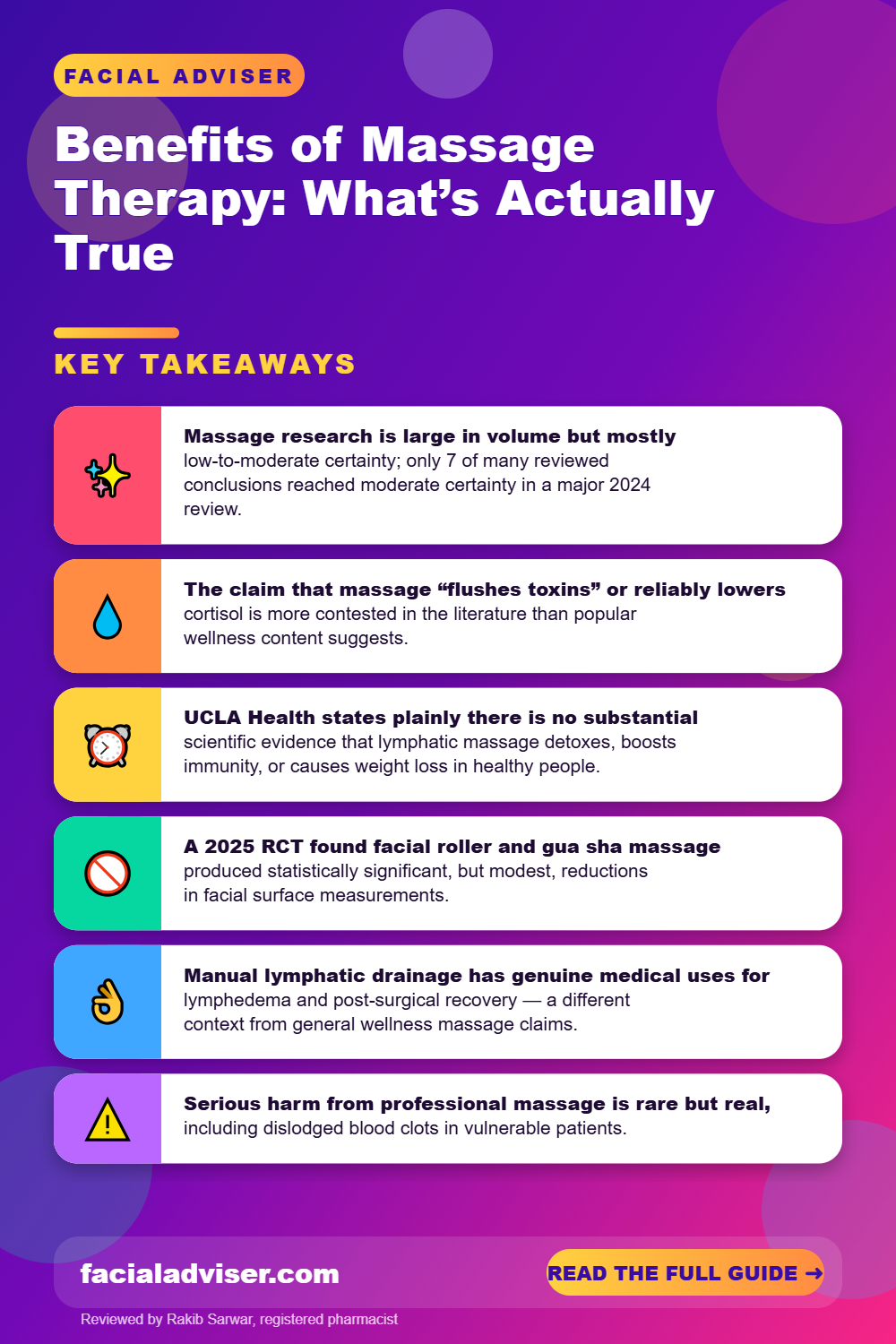
- Massage research is large in volume but mostly low-to-moderate certainty; only 7 of many reviewed conclusions reached moderate certainty in a major 2024 review.
- The claim that massage “flushes toxins” or reliably lowers cortisol is more contested in the literature than popular wellness content suggests.
- UCLA Health states plainly there is no substantial scientific evidence that lymphatic massage detoxes, boosts immunity, or causes weight loss in healthy people.
- A 2025 RCT found facial roller and gua sha massage produced statistically significant, but modest, reductions in facial surface measurements.
- Manual lymphatic drainage has genuine medical uses for lymphedema and post-surgical recovery — a different context from general wellness massage claims.
- Serious harm from professional massage is rare but real, including dislodged blood clots in vulnerable patients.
Contents
- What the Research on Massage Therapy Actually Shows
- Condition-by-Condition: What NCCIH Actually Says
- The Cortisol and “Stress Relief” Claim
- The “Toxins” and Lymphatic Detox Myth
- Facial Massage, Gua Sha, and Jade Rollers Specifically
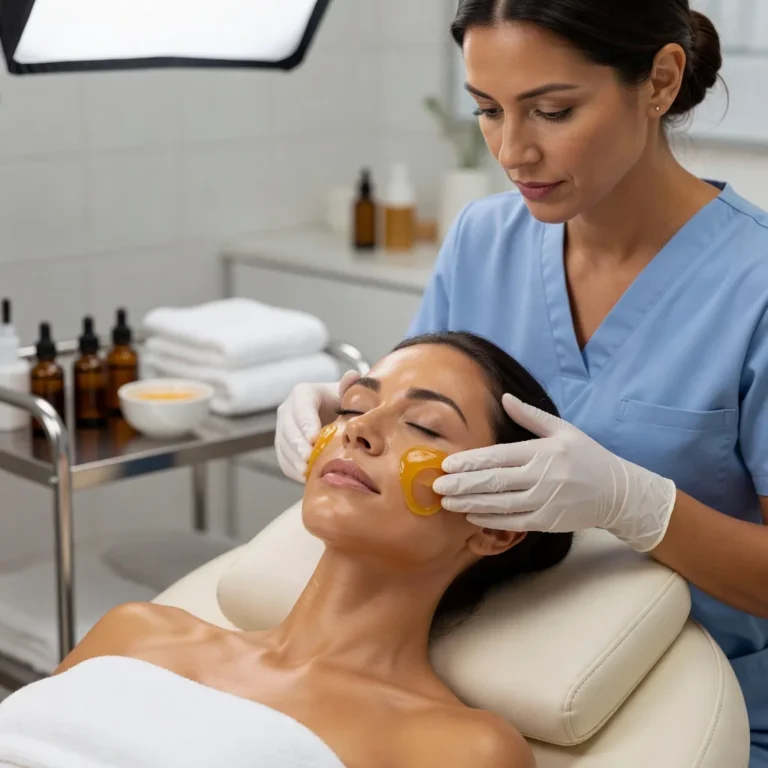
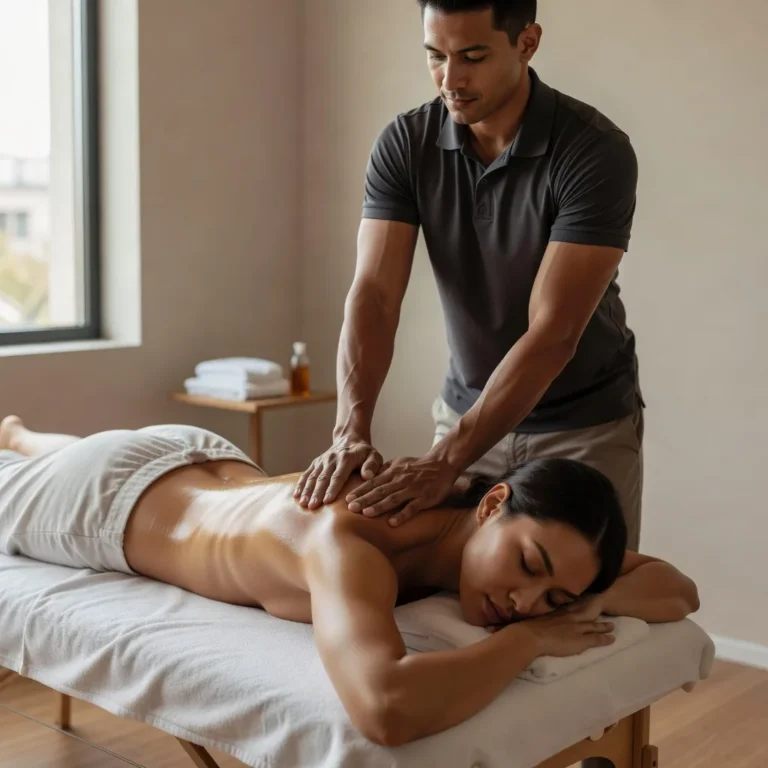
- What a Typical Massage Session Looks Like
- Who Tends to Benefit Most
- Who Should Modify or Skip It
- When to See a Doctor Instead
- A One-Minute Check Before Booking
- Where the Evidence Runs Out
- Frequently Asked Questions
Condition-by-Condition: What NCCIH Actually Says
The NIH’s National Center for Complementary and Integrative Health gives specific, condition-by-condition detail that’s more useful than a blanket “massage helps with pain” claim. For chronic low-back pain, it describes “weak evidence” with short-term improvement in some studies but very little overall confidence. For neck and shoulder pain, massage may help but relief appears temporary, and it isn’t clearly better than other active therapies. For knee osteoarthritis, research is limited but showed short-term pain relief in five of six studies reviewed. For headaches, evidence is inconsistent with no clear superiority over inactive treatment. For neck and shoulder pain more broadly, massage appeared more effective than doing nothing at all, but it wasn’t clearly better than other active treatments people already had access to, which is a meaningfully different and more modest claim than the general “massage cures neck pain” framing often used in marketing. For fibromyalgia, massage sustained for at least five weeks improved pain and anxiety, though not sleep disturbance. For cancer and HIV/AIDS patients, evidence for pain and anxiety relief is very-low-quality, and NCCIH specifically flags a safety caution around pressure and technique in these populations.
| Condition | Evidence quality | Real finding |
|---|---|---|
| Chronic low-back pain | Weak | Short-term improvement in some studies, low overall confidence |
| Fibromyalgia | Moderate | Sustained 5+ weeks improved pain and anxiety, not sleep |
| Knee osteoarthritis | Limited | Short-term relief in 5 of 6 studies reviewed |
The Cortisol and “Stress Relief” Claim
The claim that massage reliably lowers cortisol is more contested in the research literature than popular wellness content suggests. A widely cited quantitative review examined whether massage reliably reduces cortisol, and more recent commentary explicitly argues the cortisol-and-massage narrative needs updating rather than being treated as settled fact. What has more consistent support is the subjective relaxation and mood benefit — lower self-reported anxiety and improved short-term mood — which is a real, if less measurable, effect distinct from the specific cortisol-biomarker claim. If you’re curious how often is too often, we’ve separately looked at whether daily massage is harmful.
The “Toxins” and Lymphatic Detox Myth
Manual lymphatic drainage does have genuine, evidence-supported medical uses — treating lymphedema as part of complete decongestive therapy, and improving recovery and satisfaction after cosmetic surgery like liposuction or facelift in preliminary research. Lymphatic massage on the neck has also been shown to produce measurable short-term relaxation effects, including temporarily lower heart rate and blood pressure, in healthy people. But for the popular claim that massage “flushes toxins” or “detoxes” a healthy person’s body, UCLA Health states plainly that there is no substantial scientific evidence supporting these claims regarding detoxification, immune-boosting, or weight loss in healthy individuals — noting that a healthy lymphatic system doesn’t need help with those tasks, and that real support for lymphatic function comes from ordinary exercise, balanced nutrition, and hydration, not massage. For the specific facial version of this technique, see our dedicated guide to lymphatic facial massage.
Facial Massage, Gua Sha, and Jade Rollers Specifically
A 2023 review in the Journal of Cosmetic Dermatology specifically examined whether gua sha, jade rolling, and facial massage have real dermatologic benefits. A 2025 randomized controlled trial directly compared facial roller and gua sha massage on facial contour, muscle tone, and skin elasticity, finding statistically significant reductions in facial surface distances of roughly 2.2 to 2.4 millimeters along with improved muscle tone — real, measured, but modest effects. The mechanism behind the immediate puffiness-reduction people notice is real, temporary fluid mobilization and muscle relaxation, not permanent structural change. Dermatologic commentary on this research lands on “partially true”: facial gua sha and massage can modestly, temporarily reduce puffiness and produce a real relaxation effect, but permanent structural results like jawline “sculpting” or lasting wrinkle reduction are not supported by the evidence and shouldn’t be promised. One specific citation worth flagging: a commonly cited 2007 study claiming a “fourfold increase in blood circulation” from gua sha is frequently applied to gentle facial technique in marketing, but that original research used firm, traditional gua sha pressure on the back, not gentle facial technique — citing it as proof of facial-specific circulation benefits is a mismatch between what was actually studied and what’s being claimed.
| Tool | Mechanism | Best-supported use |
|---|---|---|
| Jade or quartz roller | Rolling pressure plus mild cooling of the tool itself | Temporary de-puffing, brief relaxation sensation |
| Gua sha stone | Flatter-edged scraping pressure along muscle lines | 2025 RCT-measured modest contour and tone improvement |
| Hands-only facial massage | Direct manual pressure and fluid mobilization | Comparable temporary de-puffing without a tool |
What a Typical Massage Session Looks Like
Consultation
The therapist asks about problem areas, pressure preference, and any medical conditions or contraindications.Warm-up
Lighter strokes are used initially to warm tissue and gauge sensitivity before deeper work begins.Targeted work
Pressure and technique are adjusted to the specific area and goal, whether relaxation or targeted tension relief.Cool-down and hydration
Sessions typically end with lighter strokes, and drinking water afterward is commonly recommended.
Who Tends to Benefit Most
People seeking real, if modest, relaxation and short-term pain relief for conditions like fibromyalgia, mild low-back pain, or general stress are the clearest fit for the actual evidence base. Those specifically interested in facial gua sha or roller massage can expect real, temporary de-puffing and a relaxing sensation, without expecting permanent structural change.
Do
- Set realistic expectations based on condition-specific evidence rather than blanket wellness claims
- Mention any blood clot history, pregnancy, or recent surgery before a session
- Treat facial massage’s de-puffing effect as real but temporary
Don’t
- Expect massage to “detox” a healthy body — no substantial evidence supports this
- Assume cortisol reduction is a settled, reliable mechanism behind feeling relaxed
- Skip mentioning a known blood clot or DVT risk before a deep-pressure session
Who Should Modify or Skip It
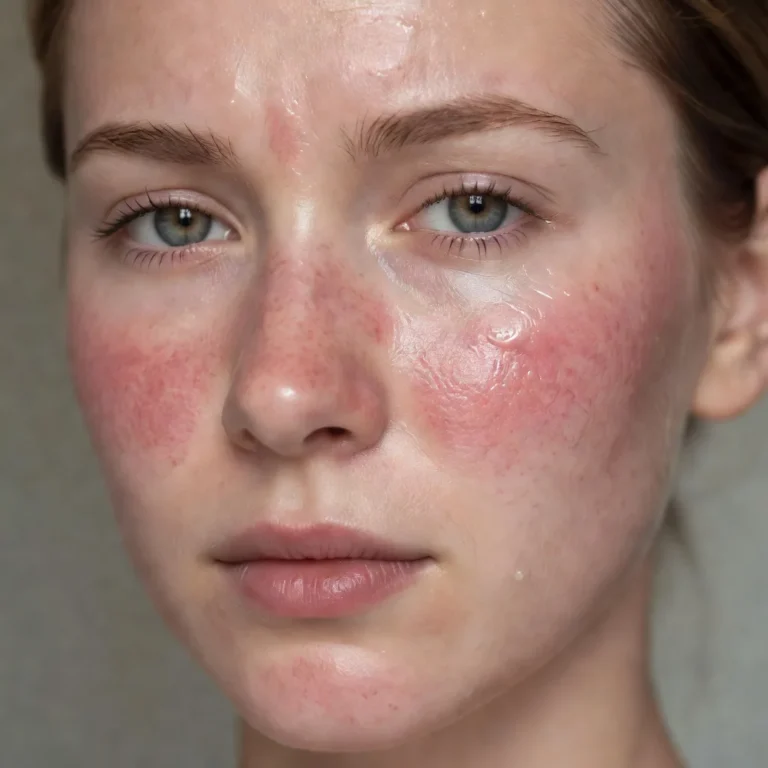
Anyone with a known or suspected blood clot, active infection, recent surgery, certain cancers, or an uncontrolled bleeding disorder should get medical clearance or a modified approach before a massage. Facial-specific caution applies to people with active rosacea flares or recent injectable filler, given bruising risk and potential filler displacement from vigorous technique.
When to See a Doctor Instead
Massage therapy is a wellness and complementary treatment, not a substitute for medical care. See a doctor directly if you have persistent or worsening pain that massage doesn’t meaningfully improve, any sign of a blood clot such as sudden leg swelling or pain, or a skin reaction after facial massage that doesn’t resolve within a day or two.
A One-Minute Check Before Booking
Before your session, ask: do you have any history of blood clots, recent surgery, or an uncontrolled bleeding disorder? Are you pregnant, or do you have an active infection or cancer diagnosis your therapist should know about? For facial massage specifically, have you had recent injectable filler or an active rosacea flare? A “yes” to any of these is worth discussing with your therapist or doctor before proceeding.
Where the Evidence Runs Out
Be honest about what’s established: massage research is large in volume but mostly low-to-moderate certainty, with real but modest, condition-specific pain and relaxation benefits. The cortisol-lowering and “detox” narratives are more contested or unsupported than popular wellness content suggests. Facial gua sha and roller massage have real, modest, measured evidence for temporary de-puffing and improved muscle tone — not for permanent structural change. The honest research priority going forward, according to the field’s own major 2024 review, is better trials comparing massage against other active treatments rather than against doing nothing at all, since most current evidence only clears the relatively low bar of beating an inactive comparator rather than demonstrating it outperforms other genuine treatment options.
Frequently Asked Questions
Does massage therapy actually reduce pain?
Real evidence supports modest, condition-specific improvement for several conditions, though most conclusions are rated low-to-moderate certainty.
Does massage lower cortisol?
This specific claim is more contested in the research literature than popular wellness content suggests.
Does massage flush toxins from the body?
No — UCLA Health states there is no substantial scientific evidence supporting detox, immune-boosting, or weight-loss claims from massage in healthy people.
Does facial massage or gua sha actually work?
A 2025 RCT found modest, statistically significant improvements in facial contour measurements and muscle tone, though not permanent structural change.
Is lymphatic drainage massage medically useful?
Yes, for specific conditions like diagnosed lymphedema and post-surgical recovery — a different context from general wellness detox claims.
Is massage therapy safe?
Generally yes, with low risk of serious harm, though rare but real risks like dislodged blood clots exist in vulnerable patients.
Who should avoid deep-pressure massage?
Anyone with a known or suspected blood clot, recent surgery, uncontrolled bleeding disorder, or certain cancers should get medical clearance first.
How long do facial massage results last?
The de-puffing effect is real but temporary, driven by fluid mobilization and muscle relaxation rather than lasting structural change.
Is massage good for stress relief?
Subjective relaxation and mood improvement have more consistent support than the specific cortisol-reduction mechanism.
Is massage therapy worth it?
For modest, condition-specific pain relief and real relaxation, yes — for detox or dramatic structural claims, expectations should stay realistic.

Written by
Registered pharmacist and founder of Facial Adviser. Rakib's pharmacy training covers how skincare actives work and interact; a later course in cosmetology turned that into a focus on facial treatments and skincare products. He plans, researches and edits every guide on the site and checks health claims against sources such as the American Academy of Dermatology, the FDA and the NIH. He is not a dermatologist; see the Editorial Policy and Medical Disclaimer.
About · Editorial policy · How we choose products · Medical disclaimer · Contact