Facial Skin Sensitivity to Fragrance: Allergy vs Irritation and What to Do
A new moisturiser smells lovely in the shop, but a day later your cheeks are itchy, pink and tight. Fragrance is one of the most common reasons a face reacts to skincare and makeup, and it hides in more products than most people realise.
Part of our guide to cosmetic science. Start with: How to Read a Cosmetic Ingredient List: A Beginner Guide
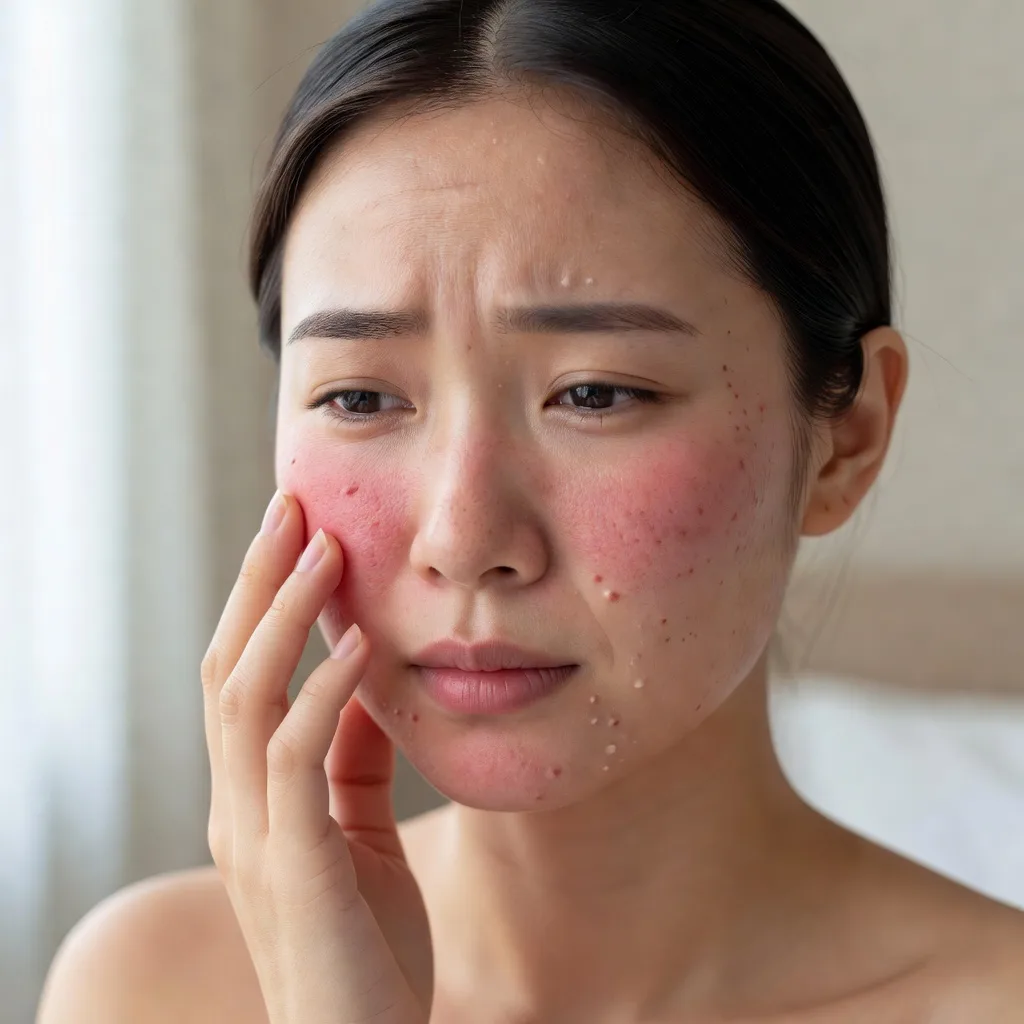
Facial skin sensitivity to fragrance usually shows up in one of two ways. Irritation happens when fragrance chemicals or essential oils directly aggravate the skin, causing stinging, burning or redness soon after application, often where the skin is thin or already dry. Fragrance allergy is an immune reaction called allergic contact dermatitis, which typically appears one to three days after use as an itchy, red, sometimes bumpy or swollen rash, and returns every time you use that ingredient. The best approach is to switch to fragrance-free products, learn to read ingredient labels and, if reactions keep happening, ask a dermatologist about patch testing to find the exact trigger.
In short: if your face reacts to scented products, choose fragrance-free rather than unscented, and get patch tested if reactions recur.
The US Food and Drug Administration notes that fragrance ingredients are among the common causes of allergic reactions to cosmetics, and the American Academy of Dermatology advises people with sensitive skin to use fragrance-free products.
This guide explains the difference between allergy and irritation, why essential oils are not a safe swap, how to spot hidden fragrance on labels, how to patch test and when professional testing makes sense.
Shopping these picks?
Amazon Prime members get fast, free shipping on eligible items, plus Prime Video, Amazon Music and member deals. New members can start with a free trial.
Start a free Prime trialAged 18 to 24? Prime for Young Adults comes with a longer free trial and a lower price after it.
Affiliate link: we may earn a commission at no extra cost to you.
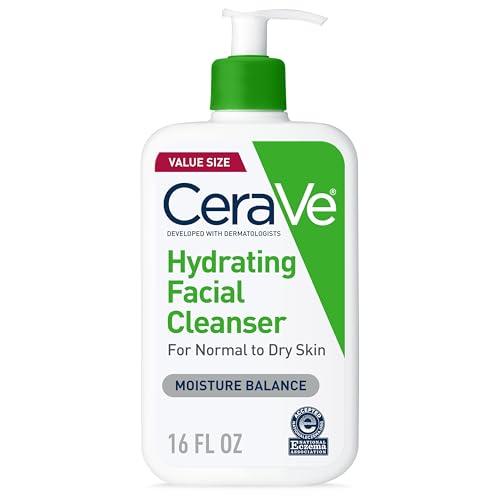
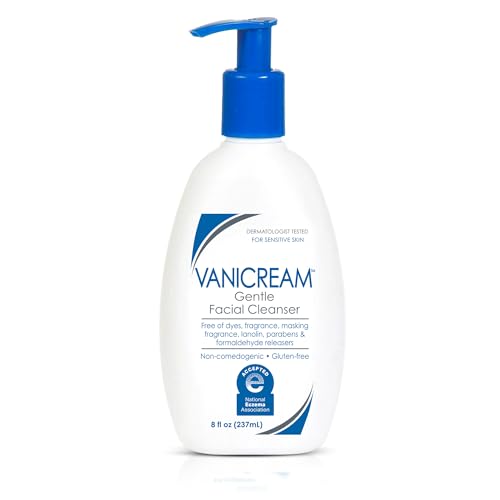
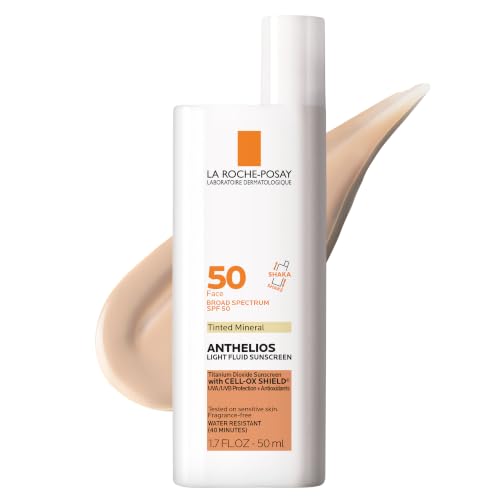
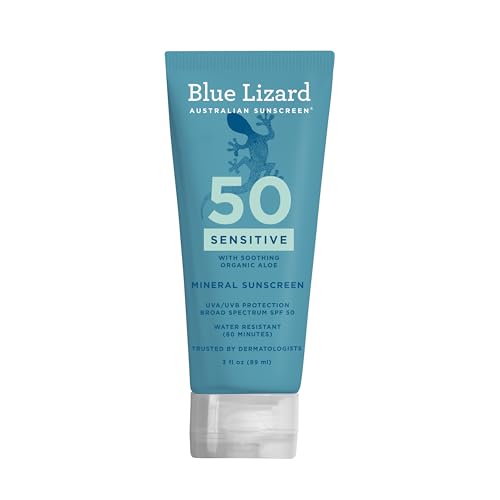
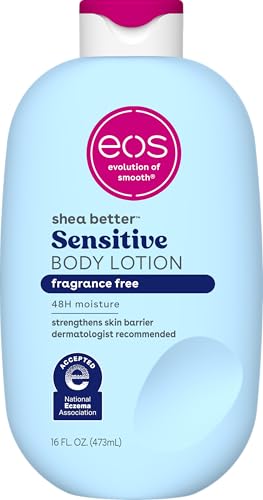
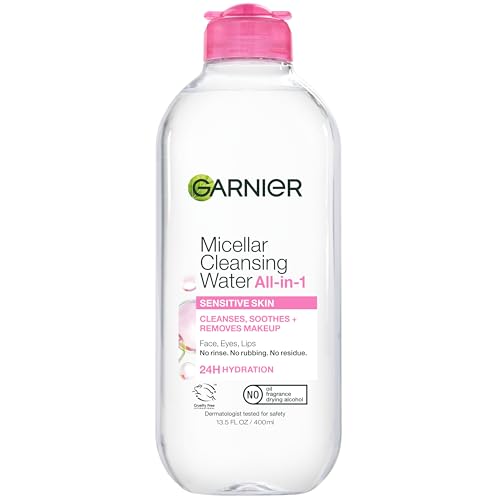
Recommended Fragrance-Free Skincare

Contents
- Why Fragrance Bothers Facial Skin
- Fragrance Allergy vs Fragrance Irritation
- Signs Your Face Is Reacting to Fragrance
- Are Essential Oils Safer Than Synthetic Fragrance?
- How to Read Labels for Hidden Fragrance
- How to Patch Test a Product for Fragrance Sensitivity
- Dermatologist Patch Testing: What It Involves
- Building a Fragrance-Free Facial Routine
- Other Ingredients That Can Look Like a Fragrance Reaction
- What to Do During a Fragrance Reaction
- Honest Limits
- When to See a Dermatologist
- Questions People Ask
- Summing Up
What to Know First
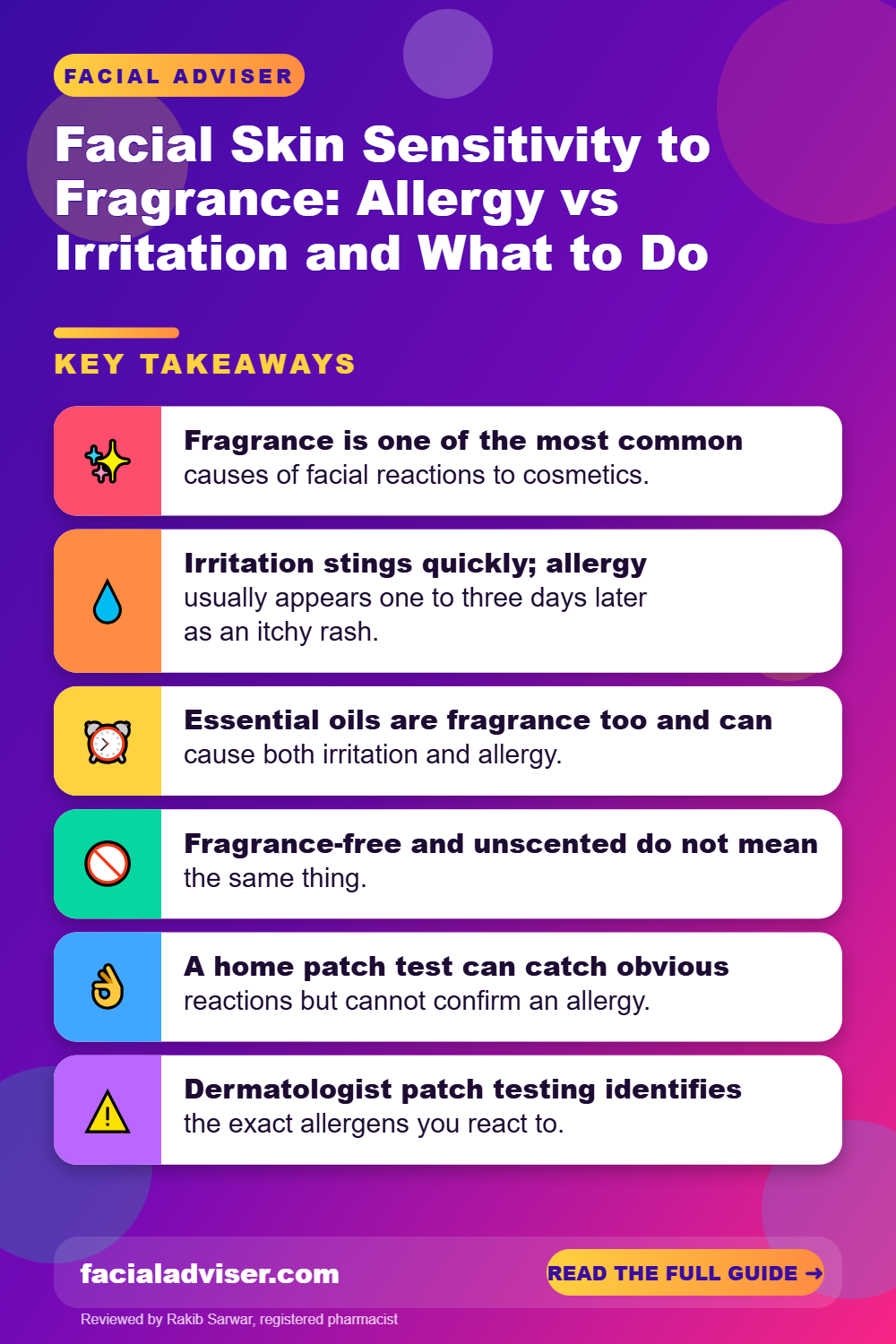
- Fragrance is one of the most common causes of facial reactions to cosmetics.
- Irritation stings quickly; allergy usually appears one to three days later as an itchy rash.
- Essential oils are fragrance too and can cause both irritation and allergy.
- Fragrance-free and unscented do not mean the same thing.
- A home patch test can catch obvious reactions but cannot confirm an allergy.
- Dermatologist patch testing identifies the exact allergens you react to.
- A short, simple routine of fragrance-free basics is the safest reset.
Why Fragrance Bothers Facial Skin
A single fragrance can be made from dozens of separate chemicals, natural or synthetic. Some of them are known skin sensitisers, meaning that with repeated exposure the immune system can learn to react to them. Others are simply irritating, especially at higher concentrations or on skin that is already dry, damaged or inflamed.
The face is more vulnerable than most areas. The skin on the eyelids and around the mouth is thin, you apply several products there every day, and products are often left on for hours. Cleansers that rinse off tend to cause fewer problems than leave-on serums, moisturisers and makeup, but they are not risk-free.
Reacting to fragrance is common and does not mean your skin is weak. Many people develop sensitivity after years of using the same scented product without problems, because allergy builds with repeated exposure.
Fragrance Allergy vs Fragrance Irritation
The two reactions can look alike, but they behave differently, and the difference matters for what you do next.
| Feature | Irritant reaction | Allergic contact dermatitis |
|---|---|---|
| What causes it | Direct damage or aggravation of the skin | Immune system reaction to a specific chemical |
| When it starts | Minutes to hours after use | Usually 24 to 72 hours after use |
| How it feels | Stinging, burning, tightness | Mainly itching |
| How it looks | Redness, dryness, flaking where applied | Red, bumpy, sometimes swollen or weepy rash that can spread beyond the area |
| Who gets it | Anyone, especially with a weak barrier | Only people who have become sensitised |
| Dose matters? | Yes, less product often means less reaction | Even small amounts can trigger it |
Irritation often improves once the barrier recovers, while a true allergy usually lasts for life. That is why someone who is allergic to a fragrance component needs to avoid it permanently, not just take a break.
Signs Your Face Is Reacting to Fragrance
- Stinging or burning within minutes of applying a scented product.
- An itchy rash on the eyelids, cheeks, jawline or neck that keeps coming back.
- Redness where you apply perfume, such as the neck and behind the ears.
- Dry, rough patches that do not respond to moisturiser.
- Swelling of the eyelids after using a new cream, makeup or hair product.
- Reactions that flare after using a partner’s scented product or a new laundry detergent.
Hair products, shampoos and perfumes often drip or transfer onto the face, so a rash on the hairline, eyelids or neck is not always caused by your skincare. If the pattern does not match your skincare, think about everything else that touches your face, including pillowcases washed in scented detergent and hands after applying hand cream.
Are Essential Oils Safer Than Synthetic Fragrance?
No. Essential oils are concentrated plant extracts, and many contain the same fragrance chemicals that cause reactions in synthetic perfumes, such as limonene, linalool, geraniol and citral. Lavender, tea tree, citrus, ylang-ylang, peppermint and cinnamon oils are all known to cause irritation or allergy in some people.
Natural does not mean gentle. Some essential oils become more allergenic as they oxidise with air and light, so an old bottle can be more of a problem than a fresh one. Citrus oils can also make skin more sensitive to sunlight. The article on facial oil vs essential oil explains the difference between plant oils used for moisture and essential oils used for scent.
How to Read Labels for Hidden Fragrance
Marketing words on the front of the pack are much less reliable than the ingredient list on the back.
| Label term | What it usually means | Safe for fragrance-sensitive skin? |
|---|---|---|
| Fragrance-free | No added fragrance ingredients for scent | Usually the best choice, still check the list |
| Unscented | May contain masking fragrance to cover odours | Not reliable |
| Parfum or fragrance | A blend of undisclosed scent chemicals | Avoid |
| Aroma, essential oil, botanical extract | Plant ingredients that may add scent | Check carefully; often a problem |
| Linalool, limonene, citronellol, geraniol, eugenol | Individual fragrance allergens named on labels | Avoid if you are sensitive to them |
| Hypoallergenic | No standard legal definition | Not a guarantee |
Ingredients such as some botanical extracts are added for other reasons but still carry scent chemicals. The US Food and Drug Administration’s page on allergens in cosmetics explains that fragrance is a common allergen group. For step-by-step label reading, see our guide on how to spot fragrance in an ingredient list.
Photograph the ingredient list of any product that causes a reaction. Over time, comparing the lists helps you and your dermatologist spot the shared ingredient.
How to Patch Test a Product for Fragrance Sensitivity
A home patch test, sometimes called a use test, checks whether a product is likely to bother your skin before you put it all over your face.
Pick a test spot
Choose a small area on the side of the neck, just below the jaw, or the inner forearm. Make sure the skin is clear and not irritated.
Apply a small amount
Apply the product as you normally would, twice a day for leave-on products. Rinse-off cleansers can be applied and rinsed after a minute.
Repeat for several days
Continue for about a week, because allergic reactions can take a few days to appear.
Watch for changes
Look for itching, redness, bumps or swelling. Stinging that passes in a few seconds is less concerning than a rash.
Stop if you react
Wash the area with lukewarm water and a gentle cleanser, and do not use the product on your face.
Introduce one product at a time
If the test is clear, start using the product on your face, and wait before adding anything else new.
A clear home test is reassuring but not a guarantee. Facial skin can react differently from arm skin, and irritation can build over weeks.
Dermatologist Patch Testing: What It Involves
If you keep reacting to products and cannot work out why, a dermatologist or allergist can arrange formal patch testing. This is different from skin prick testing for hay fever or food allergies.
- Small amounts of standard allergens, often including fragrance mixes, balsam of Peru and common preservatives, are placed on the back under patches.
- The patches stay on for about 48 hours and must be kept dry.
- The skin is checked again at around 48 hours and once more a few days later.
- Results tell you which specific substances you are allergic to.
- You then get a list of ingredient names to avoid across skincare, makeup and household products.
Patch testing is especially helpful because many people who think they are allergic to fragrance are actually reacting to a preservative or another ingredient, and vice versa.
Building a Fragrance-Free Facial Routine
When your face is reacting, fewer products are better. Strip back to basics for at least two to four weeks while the skin settles.
Worth Doing
- Use a gentle, fragrance-free cleanser once or twice a day.
- Choose a plain fragrance-free moisturiser with ceramides or glycerin.
- Wear a fragrance-free sunscreen daily; mineral filters are often better tolerated.
- Use fragrance-free micellar water or cleanser to remove makeup.
- Add back one product at a time after a patch test.
Skip It
- Do not switch to essential oil products as a natural alternative.
- Do not trust unscented or hypoallergenic without checking the list.
- Do not layer several new products at once.
- Avoid perfume sprayed on the neck while your skin is healing.
- Do not keep using a product that repeatedly stings or itches.
If sunscreen tends to sting, the American Academy of Dermatology’s guide on how to apply sunscreen covers choosing formulas for sensitive skin.
Other Ingredients That Can Look Like a Fragrance Reaction
Not every reaction to a scented product is caused by the scent. If fragrance-free products still bother you, other common culprits are worth considering.
- Preservatives such as methylisothiazolinone and formaldehyde-releasing preservatives.
- Lanolin and some plant extracts, including chamomile, arnica and propolis.
- Chemical sunscreen filters, which sting some sensitive faces.
- Active ingredients such as retinoids, acids and benzoyl peroxide, which irritate rather than cause allergy.
- Hair dye ingredients, which can cause swelling around the face and eyes.
This overlap is exactly why formal patch testing is so useful. Our guide to reading a cosmetic ingredient list shows where these ingredients usually appear.
What to Do During a Fragrance Reaction
Stop all scented products and anything new. Wash your face with lukewarm water and a gentle cleanser, then apply a simple fragrance-free moisturiser or a thin layer of plain petrolatum on very dry, sore areas. Cool compresses can ease itching.
Seek urgent medical care if a reaction causes swelling of the lips, tongue or throat, difficulty breathing, or a rash spreading quickly across the body. Do not use leftover prescription creams on the face without advice, as some can thin facial skin.
Honest Limits
Fragrance-free products lower the risk of a reaction, but they cannot remove it completely, because people can also react to preservatives, plant extracts, sunscreen filters and other ingredients. A home patch test can miss allergies that only show up on the face or with repeated use, and it cannot tell you which ingredient caused the problem. Only formal patch testing does that. There is also no product that cures fragrance allergy; avoidance is the treatment, and it has to include perfume, hair products and household items that touch your face.
When to See a Dermatologist
- Reactions keep coming back even with fragrance-free products.
- The rash involves your eyelids, is swollen or weeps.
- Your skin does not settle within two weeks of stopping products.
- You want patch testing to identify exact allergens.
- You are unsure whether you have eczema, rosacea or contact dermatitis.
This article is for general information and does not replace professional medical advice. See a board-certified dermatologist or allergist for persistent rashes, suspected allergies and patch testing.
Questions People Ask
Can you suddenly become sensitive to fragrance?
Yes. Allergy can develop after years of using the same product.
Is fragrance-free the same as unscented?
No. Unscented products may contain masking fragrance.
Are essential oils safe for sensitive faces?
Not necessarily; many cause irritation or allergy.
How long does a fragrance reaction last?
Irritation often settles in days; allergic rashes can last one to three weeks.
Can perfume cause a rash on my face?
Yes, especially on the neck, jawline and eyelids.
What does a fragrance allergy look like?
Usually an itchy, red, bumpy rash that can swell.
Is hypoallergenic makeup fragrance-free?
Not always; check the ingredient list.
How do I test if I am allergic to fragrance?
A dermatologist can do patch testing.
Can laundry detergent make my face react?
It can, through pillowcases and towels.
What is the safest moisturiser for fragrance sensitivity?
A plain, fragrance-free formula with few ingredients.
Summing Up
Facial skin sensitivity to fragrance can be irritation that stings quickly or an allergy that itches a day or two later, and both are common.
Switch to fragrance-free basics, read labels rather than front-of-pack claims, patch test new products one at a time and see a dermatologist for patch testing if reactions keep coming back.

Written by
Registered pharmacist and founder of Facial Adviser. Rakib's pharmacy training covers how skincare actives work and interact; a later course in cosmetology turned that into a focus on facial treatments and skincare products. He plans, researches and edits every guide on the site and checks health claims against sources such as the American Academy of Dermatology, the FDA and the NIH. He is not a dermatologist; see the Editorial Policy and Medical Disclaimer.
About · Editorial policy · How we choose products · Medical disclaimer · Contact
Keep reading: How cosmetics are made
- How to Read a Cosmetic Ingredient List: A Beginner Guide
- How to Spot Fragrance in an Ingredient List
- Antioxidant Synergy in Skincare: Which Combinations Work?
- The Role of Emulsifiers in Cosmetic Stability: How They Keep Creams Together
- What Makes Makeup High Coverage? Pigments Explained
- Which Cosmetic Preservatives Are Mild? A Plain-English Guide