How to Stimulate Collagen Naturally: What Works and What Does Not
Collagen is the scaffolding of your skin. It gives the face its firmness and structure, and from our mid-twenties onward the body makes roughly one percent less of it each year. Sun exposure, smoking and time speed the decline, which is why so many products promise to ‘boost collagen’.
Part of our guide to skincare products. Start with: 10 Best Facial Serums for Aging Skin (2026): Picks by Concern
The most effective natural ways to support collagen are protecting what you already have and giving your skin the signals and materials to make more. Daily sunscreen prevents the biggest cause of collagen breakdown. Topical retinoids have the strongest evidence for building new collagen. Vitamin C is essential for collagen production, and not smoking protects it. Collagen supplements have mixed evidence, with the most rigorous studies showing little benefit.
‘Natural’ is a slippery word in skincare. Here it means working with the skin’s own repair processes rather than relying on injections or surgery. Some of the best tools, such as retinoids, are pharmaceutical compounds, but they work by switching on the skin’s natural collagen-making machinery.
It is also worth setting expectations, because the collagen industry is very good at promising fast results. Collagen turns over slowly. Most effective approaches take three to six months to show visible changes, and none can fully reverse decades of sun damage.
Below we cover why collagen declines, the methods with the best evidence, what the research says about collagen drinks and powders, a simple routine to follow and the limits of what any natural approach can achieve.
Shopping these picks?
Amazon Prime members get fast, free shipping on eligible items, plus Prime Video, Amazon Music and member deals. New members can start with a free trial.
Start a free Prime trialAged 18 to 24? Prime for Young Adults comes with a longer free trial and a lower price after it.
Affiliate link: we may earn a commission at no extra cost to you.
Recommended Products That Support Collagen



Jump to a Section
- Why Collagen Declines
- Sunscreen: Protecting the Collagen You Have
- Retinoids: The Best-Proven Collagen Builders
- Vitamin C: Essential for Building Collagen
- Do Collagen Supplements Work?
- Collagen and Menopause
- When You Want to Go Further: Professional Options
- Where Should You Focus First?
- How to Stimulate Collagen Naturally
- Dos and Don’ts
- Honest Limits
- When to See a Dermatologist
- Questions People Ask
- The Takeaway
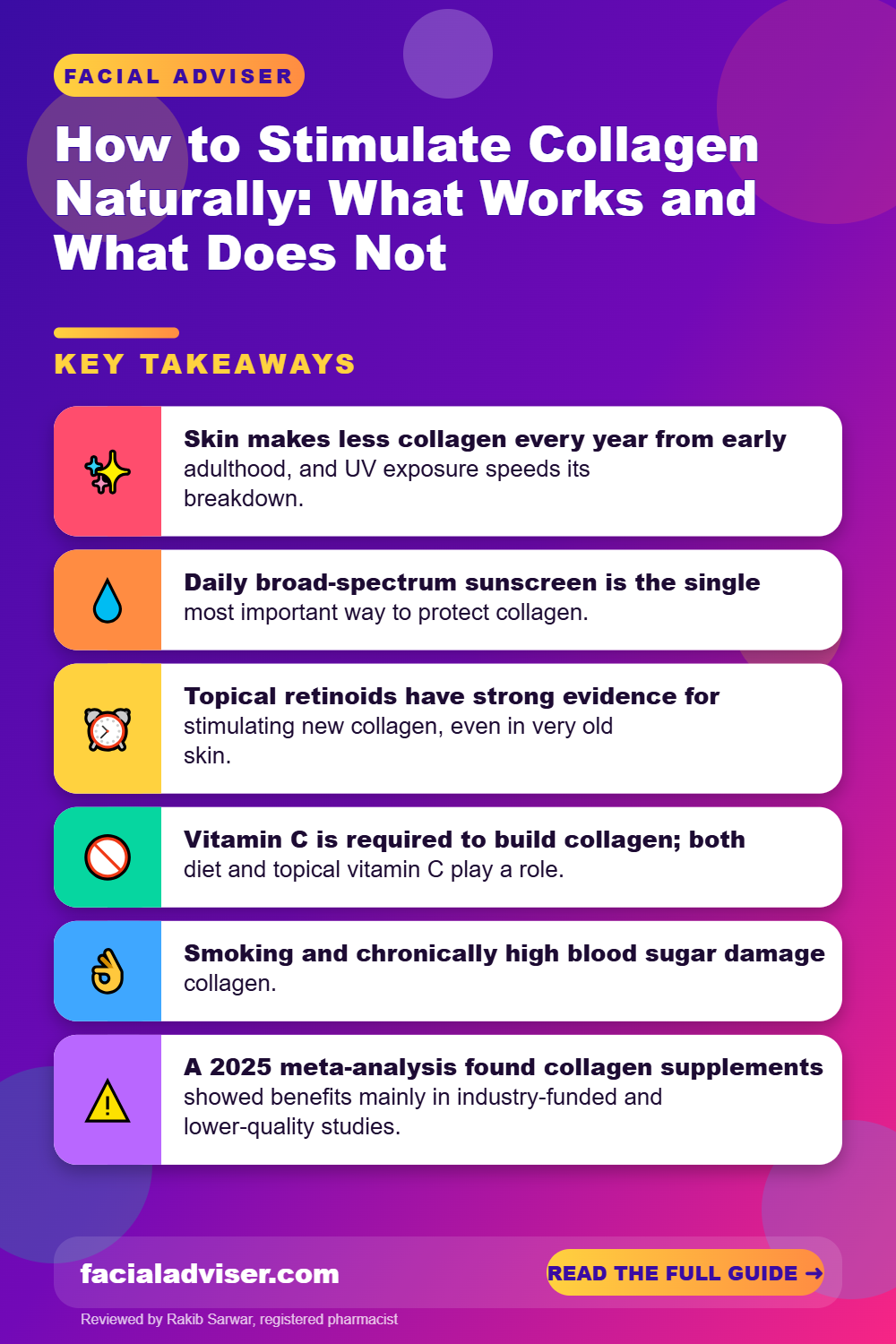
Key Takeaways
- Skin makes less collagen every year from early adulthood, and UV exposure speeds its breakdown.
- Daily broad-spectrum sunscreen is the single most important way to protect collagen.
- Topical retinoids have strong evidence for stimulating new collagen, even in very old skin.
- Vitamin C is required to build collagen; both diet and topical vitamin C play a role.
- Smoking and chronically high blood sugar damage collagen.
- A 2025 meta-analysis found collagen supplements showed benefits mainly in industry-funded and lower-quality studies.
- Expect three to six months before seeing visible change.
Why Collagen Declines
Collagen is made by cells in the dermis called fibroblasts. They produce long protein strands that are woven into a strong, flexible mesh. Throughout life, old collagen is broken down by enzymes and replaced.
With age, fibroblasts slow down and make less new collagen, while breakdown continues. Outside factors tip the balance further.
| Factor | Effect on collagen | Can you control it? |
|---|---|---|
| Intrinsic ageing | Slower production, thinner dermis | No |
| UV exposure | Activates enzymes that break collagen down | Yes, with sun protection |
| Smoking | Increases breakdown enzymes, reduces blood flow | Yes |
| High blood sugar | Glycation stiffens collagen | Partly, through diet and health |
| Menopause | Falling oestrogen speeds collagen loss | Partly, with medical advice |
| Poor nutrition | Too little protein or vitamin C limits production | Yes |
Researchers estimate that women lose around 30% of skin collagen in the first five years after menopause, which is one reason skin can change quickly in the late forties and fifties.
Sunscreen: Protecting the Collagen You Have
UV light, particularly UVA, penetrates into the dermis and switches on enzymes called matrix metalloproteinases that break collagen down. It also reduces new collagen production. Over years, this is the main reason sun-exposed skin on the face looks older than skin on the inner arm.
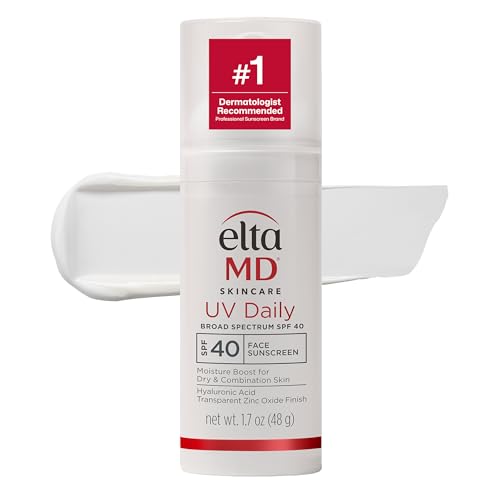
Daily broad-spectrum sunscreen of SPF 30 or higher, applied generously and reapplied when outdoors, is the most effective single step. In a well-known Australian trial, adults who used sunscreen daily showed no detectable increase in skin ageing over four and a half years, unlike those who used it at their own discretion (Hughes et al., 2013).
Apply sunscreen as the last step of your morning routine, even on cloudy days and when sitting near windows, since UVA passes through glass.
Retinoids: The Best-Proven Collagen Builders
Retinoids are vitamin A derivatives. They bind to receptors in skin cells and switch on genes involved in collagen production while also reducing the enzymes that break it down.
In a study of elderly adults with an average age in their late eighties, applying 0.4% retinol to the arm for 24 weeks reduced fine wrinkles and increased markers of new collagen and other skin-building molecules compared with a placebo lotion (Kafi et al., 2007). That shows even very old skin can respond, and that it is never too late to start.
| Type | Availability | Strength |
|---|---|---|
| Retinyl esters | Over the counter | Mildest |
| Retinol | Over the counter | Moderate |
| Retinaldehyde | Over the counter | Stronger than retinol |
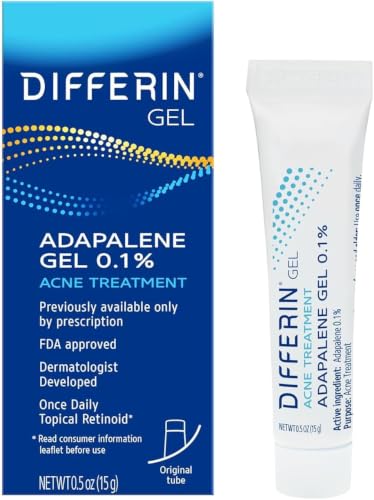
| Adapalene 0.1% | Over the counter in some countries | Strong, well tolerated |
| Tretinoin | Prescription | Strongest evidence for photoageing |
Start slowly, two or three nights a week, and build up. Our guide on how to transition to retinol smoothly covers how to avoid irritation.
Do not use retinoids if you are pregnant, trying to conceive or breastfeeding. Retinoids also make skin more sensitive to the sun, so daily sunscreen is essential.
Vitamin C: Essential for Building Collagen
Vitamin C is a required helper for the enzymes that stabilise newly made collagen. Without enough of it, collagen is weak, which is why severe deficiency (scurvy) causes fragile skin, bleeding gums and poor wound healing.
From the diet, citrus fruit, berries, kiwi, peppers, broccoli and tomatoes are rich sources. Most people who eat fruit and vegetables daily get enough.
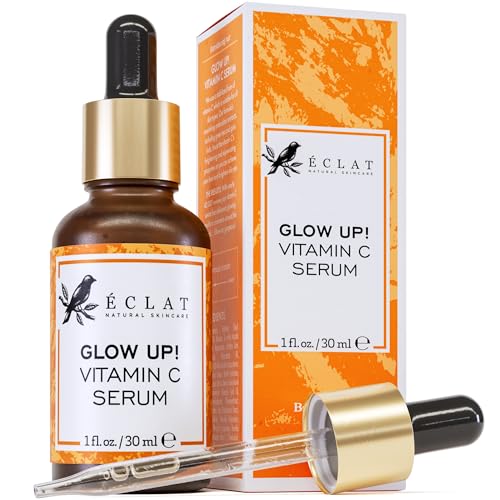
Topical vitamin C, usually as L-ascorbic acid at 10 to 20%, can deliver higher levels directly to the skin. It acts as an antioxidant against UV and pollution damage and has been shown in small studies to increase collagen production markers. It works best as a morning partner to sunscreen, not a replacement.
Pure vitamin C is unstable and breaks down when exposed to air, light and heat. Choose products in opaque, airtight packaging, store them away from sunlight and replace a serum that has turned dark orange or brown. Some people find higher strengths sting, so starting at around 10% and building up is sensible, especially for sensitive skin.
Do Collagen Supplements Work?
Collagen powders and drinks are one of the fastest-growing supplement categories. The idea is that digested collagen peptides reach the skin and signal fibroblasts to make more collagen.
Early meta-analyses suggested improvements in skin hydration and elasticity. However, a 2025 systematic review and meta-analysis of 23 randomised trials with 1,474 participants found that benefits appeared in industry-funded and lower-quality studies, while non-industry-funded and high-quality studies showed no significant effect. The authors concluded there is currently no clinical evidence to support collagen supplements for preventing or treating skin ageing (Myung and Park, American Journal of Medicine, 2025). Supplement makers have disputed some of the analysis, so the debate is ongoing.
Collagen supplements are generally safe for most people, but they are a source of protein rather than a proven skin treatment. If you enjoy them, treat them as an optional extra alongside sunscreen and a retinoid.
Collagen and Menopause
Oestrogen helps maintain collagen, skin thickness and moisture. As levels fall around menopause, collagen loss speeds up sharply, and many women notice their skin becoming thinner, drier and less firm within a few years.
The same basics still apply: sunscreen, a retinoid and a good moisturiser. Hormone replacement therapy may have some benefits for skin, but it is prescribed for menopausal symptoms and overall health, not as a skin treatment, and the decision should be made with a doctor who can weigh the risks and benefits for you.
Richer moisturisers, gentler cleansers and a slower introduction of retinoids often help, since skin tends to become more sensitive at this stage.
When You Want to Go Further: Professional Options
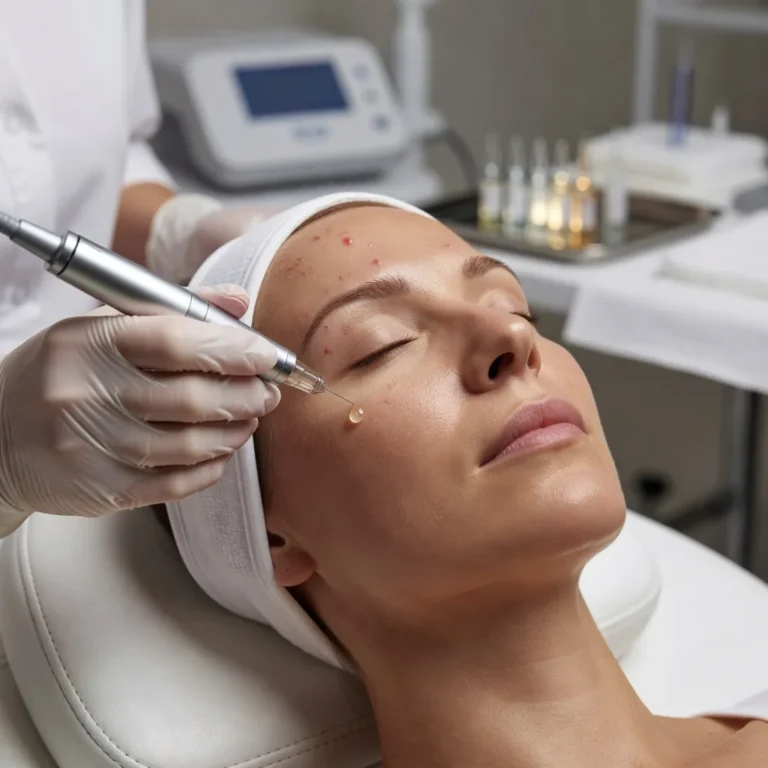
Natural approaches are the foundation, but some people want faster or bigger results. These in-clinic treatments also work by triggering the skin’s own collagen production.
| Treatment | How it stimulates collagen | Typical downtime |
|---|---|---|
| Microneedling | Tiny controlled injuries trigger repair | One to three days of redness |
| Fractional laser resurfacing | Heat creates microscopic columns of repair | Several days to a week or more |
| Radiofrequency | Heats deeper layers to tighten and remodel | Minimal |
| Chemical peels | Controlled exfoliation prompts renewal | Varies with depth |
| Biostimulatory fillers | Injectable materials that prompt new collagen over months | Minimal, some swelling |
These should be done by a qualified dermatologist or experienced practitioner, and they work best on skin that is already protected with daily sunscreen.
Where Should You Focus First?
- You do not wear sunscreen every day: start here, before anything else.
- You wear sunscreen but have never used a retinoid: add one at night.
- You smoke: quitting will protect collagen more than any product.
- Your diet is low in fruit, vegetables or protein: improve that before buying supplements.
- You already do all of the above: consider professional treatments for further gains.
How to Stimulate Collagen Naturally
Wear sunscreen every morning
Use broad-spectrum SPF 30 or higher on face, neck and hands.
Add a retinoid at night
Start with a gentle retinol or adapalene two or three nights a week and build up.
Use vitamin C in the morning
Apply a vitamin C serum before sunscreen for antioxidant support.
Eat enough protein and vitamin C
Include protein at every meal and plenty of fruit and vegetables.
Stop smoking and limit alcohol
Both accelerate collagen breakdown.
Be patient
Take photos monthly in the same light and judge results after three to six months.
Dos and Don’ts
Good Habits
- Protect collagen with daily sunscreen
- Use a retinoid consistently
- Eat a varied, protein-rich diet
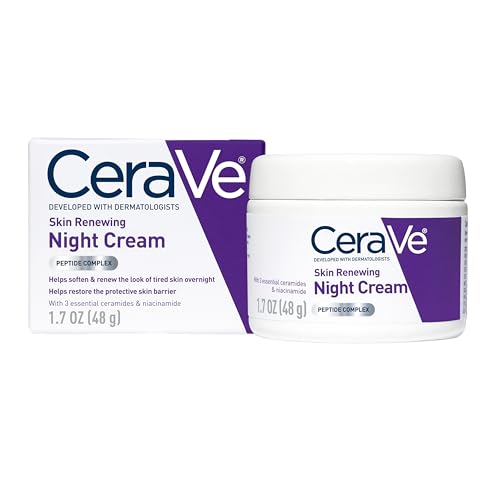
- Moisturise to reduce retinoid irritation
- Talk to a dermatologist about prescription options
Common Mistakes
- Rely on collagen creams to add collagen to skin; the molecules are too large to penetrate
- Use retinoids during pregnancy
- Expect results in a few weeks
- Tan or use sunbeds
- Layer too many strong actives at once
Honest Limits
No natural method can fully restore collagen lost over decades. Retinoids and sunscreen slow the decline and bring measurable improvement, but deep wrinkles and significant sagging usually need professional treatments such as microneedling, lasers, radiofrequency or, for volume, fillers.
Collagen in skin creams does not add collagen to your skin. The molecules are too large to pass through the skin barrier, although they can act as moisturisers. The same goes for many ‘collagen-boosting’ creams: check whether they contain an ingredient with real evidence, such as a retinoid, vitamin C or peptides, rather than relying on the label claim.
Blood sugar and smoking also matter. For more, see our guides to sugar and facial ageing and smoking and facial blood vessels.
When to See a Dermatologist
A dermatologist can help if:
- Over-the-counter retinoids irritate your skin or do not seem to work
- You want to discuss prescription tretinoin
- You are considering in-clinic treatments such as lasers or microneedling
- You notice sudden skin thinning, easy bruising or slow healing, which can have medical causes
- You have a changing mole or spot, which needs checking regardless of ageing concerns
This article is for general information and is not a substitute for professional advice. Consult a dermatologist before starting prescription retinoids, and a doctor before taking supplements if you are pregnant or have a health condition.
Questions People Ask
What is the best natural way to boost collagen?
Daily sunscreen to protect existing collagen and a topical retinoid to stimulate new collagen have the strongest evidence.
Do collagen supplements really work?
Evidence is mixed. A 2025 meta-analysis found benefits mainly in industry-funded or lower-quality studies.
How long does it take to build collagen?
Visible change usually takes three to six months of consistent use.
Does vitamin C increase collagen?
Vitamin C is essential for collagen production, and topical vitamin C has shown benefits in small studies.
Can food boost collagen?
A diet with enough protein and vitamin C supports collagen production, but food alone will not reverse sun damage.
Is retinol or collagen cream better?
Retinol has far better evidence. Collagen in creams cannot penetrate the skin to add collagen.
Does bone broth increase skin collagen?
There is no good evidence that bone broth specifically improves skin collagen.
At what age does collagen start declining?
Production begins to fall in the mid-twenties and drops faster after menopause.
Can facial exercises build collagen?
They may improve muscle tone, but there is little evidence they increase skin collagen.
Does sleep affect collagen?
Sleep supports skin repair generally, but direct evidence on collagen is limited.
The Takeaway
Stimulating collagen naturally is mostly about two things: stopping the damage and switching on repair. Daily sunscreen prevents the UV-driven breakdown that ages facial skin most, and a topical retinoid, used patiently, prompts your skin to make new collagen. Vitamin C, a protein-rich diet and not smoking support both.
Collagen supplements are popular, but the most rigorous studies have not found a clear benefit, so treat them as optional. Give any routine three to six months, and see a dermatologist if you want to go further with prescription retinoids or in-clinic treatments.

Written by
Registered pharmacist and founder of Facial Adviser. Rakib's pharmacy training covers how skincare actives work and interact; a later course in cosmetology turned that into a focus on facial treatments and skincare products. He plans, researches and edits every guide on the site and checks health claims against sources such as the American Academy of Dermatology, the FDA and the NIH. He is not a dermatologist; see the Editorial Policy and Medical Disclaimer.
About · Editorial policy · How we choose products · Medical disclaimer · Contact
Keep reading: Serums and actives
- 10 Best Facial Serums for Aging Skin (2026): Picks by Concern
- Sensitive Skin Barrier Damage Signs: Causes, Repair Routine and Timeline
- Essence vs Serum: The Real Difference and Whether You Need Both
- Is Niacinamide Safe With Acids? What Actually Happens When You Mix Them
- Does Sleeping With the Window Open Affect Your Skin?
- Should You Apply Acids Before or After Vitamin C?
- 10 Best Face Masks for Every Skin Type (2026): Clay, Gel and Sheet
- What Does a Facial Toner Do? The Real Answer