How Smoking Affects the Tiny Blood Vessels in Your Face
Most people know smoking harms the lungs and heart. Fewer think about the network of tiny blood vessels running just beneath the skin of the face, even though that network is responsible for much of how healthy, or tired, your skin looks.
Part of our guide to lifestyle and skin. Start with: How Diet Impacts the Skin Microbiome: What the Science Actually Shows
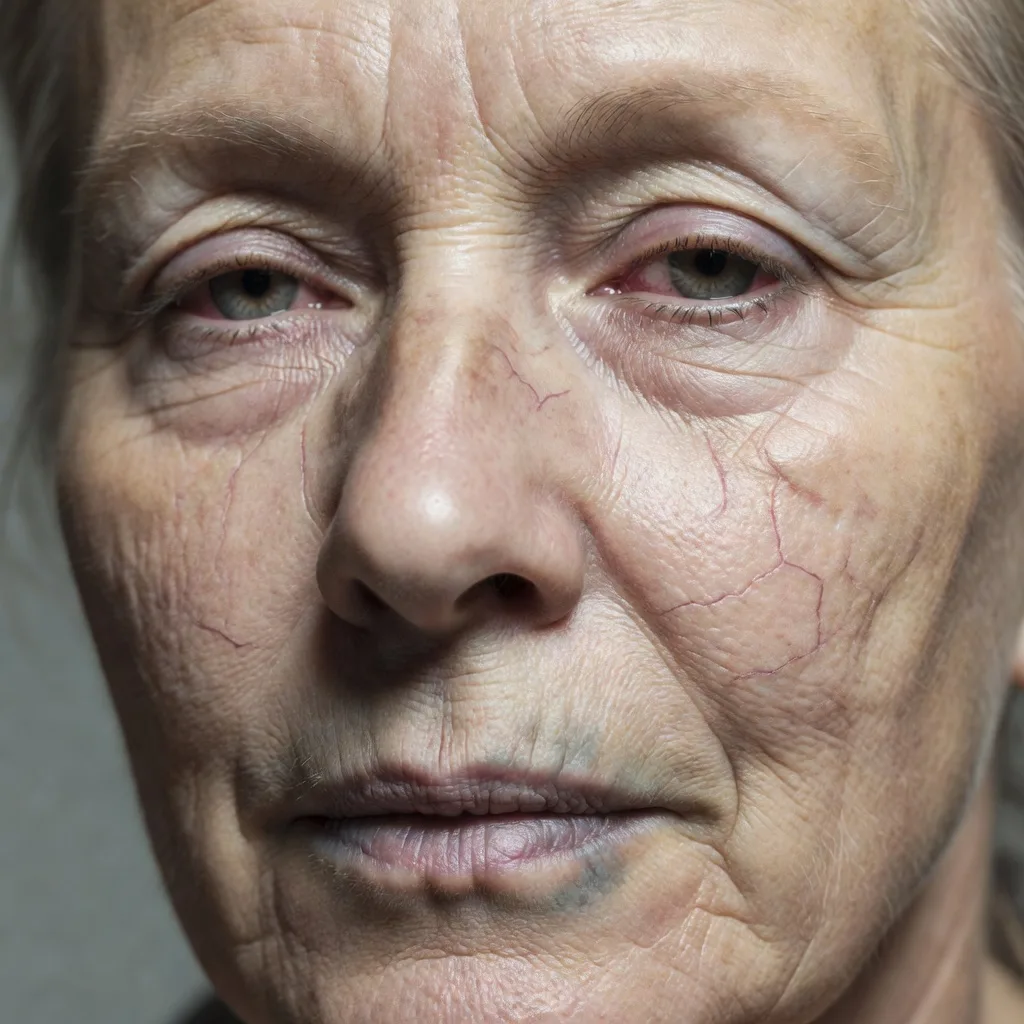
Smoking narrows the small blood vessels in the skin within minutes, reducing blood flow and the oxygen and nutrients that reach skin cells. Over years, that repeated squeeze, combined with chemical damage from smoke, weakens collagen and elastin and slows healing. The result is a greyer, duller complexion, deeper lines around the mouth and eyes, and skin that repairs more slowly.
Researchers measuring skin circulation have seen blood flow drop sharply while a person smokes a single cigarette, with habitual smokers taking longer to recover than non-smokers. Repeat that twenty times a day for years and the cumulative effect adds up, especially in the thin, sun-exposed skin of the face, which already has the most to cope with.
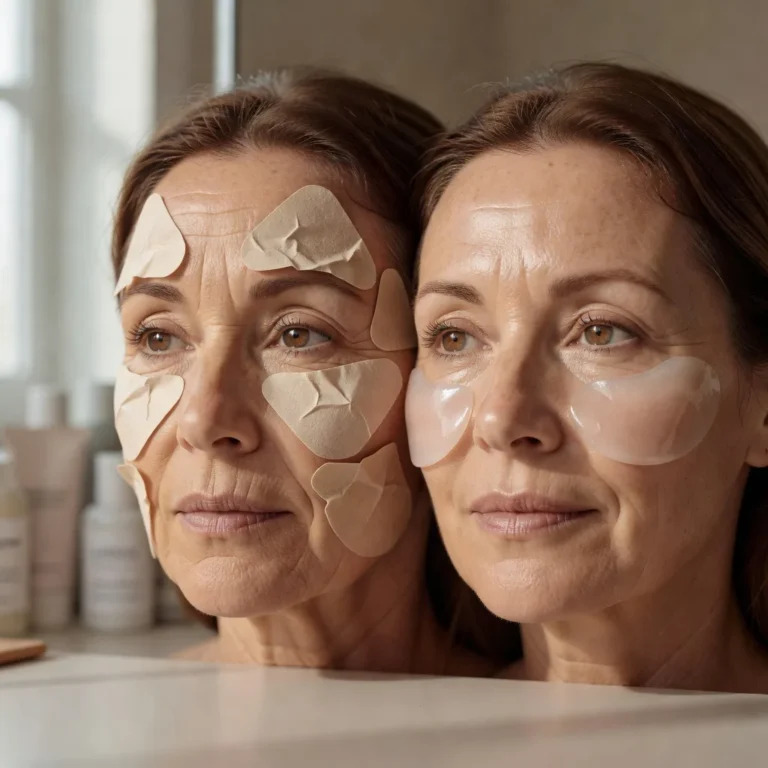
A well-known study of identical twins showed what that looks like in practice. When one twin smoked and the other did not, the smoker generally looked older, with more bags under the eyes, more lines around the lips and more sagging along the jaw.
This guide explains what happens in the facial microvessels when you smoke, the visible changes that follow, what improves after quitting, and how to care for your skin as it recovers.
Shopping these picks?
Amazon Prime members get fast, free shipping on eligible items, plus Prime Video, Amazon Music and member deals. New members can start with a free trial.
Start a free Prime trialAged 18 to 24? Prime for Young Adults comes with a longer free trial and a lower price after it.
Affiliate link: we may earn a commission at no extra cost to you.
Recommended Skincare to Support Skin After Quitting



![SKIN1004 [Hudson's Pick] Centella Ampoule, Korean Face Serum, 3.3...](https://m.media-amazon.com/images/I/31Kxg2RcOgL.jpg)

Key Takeaways
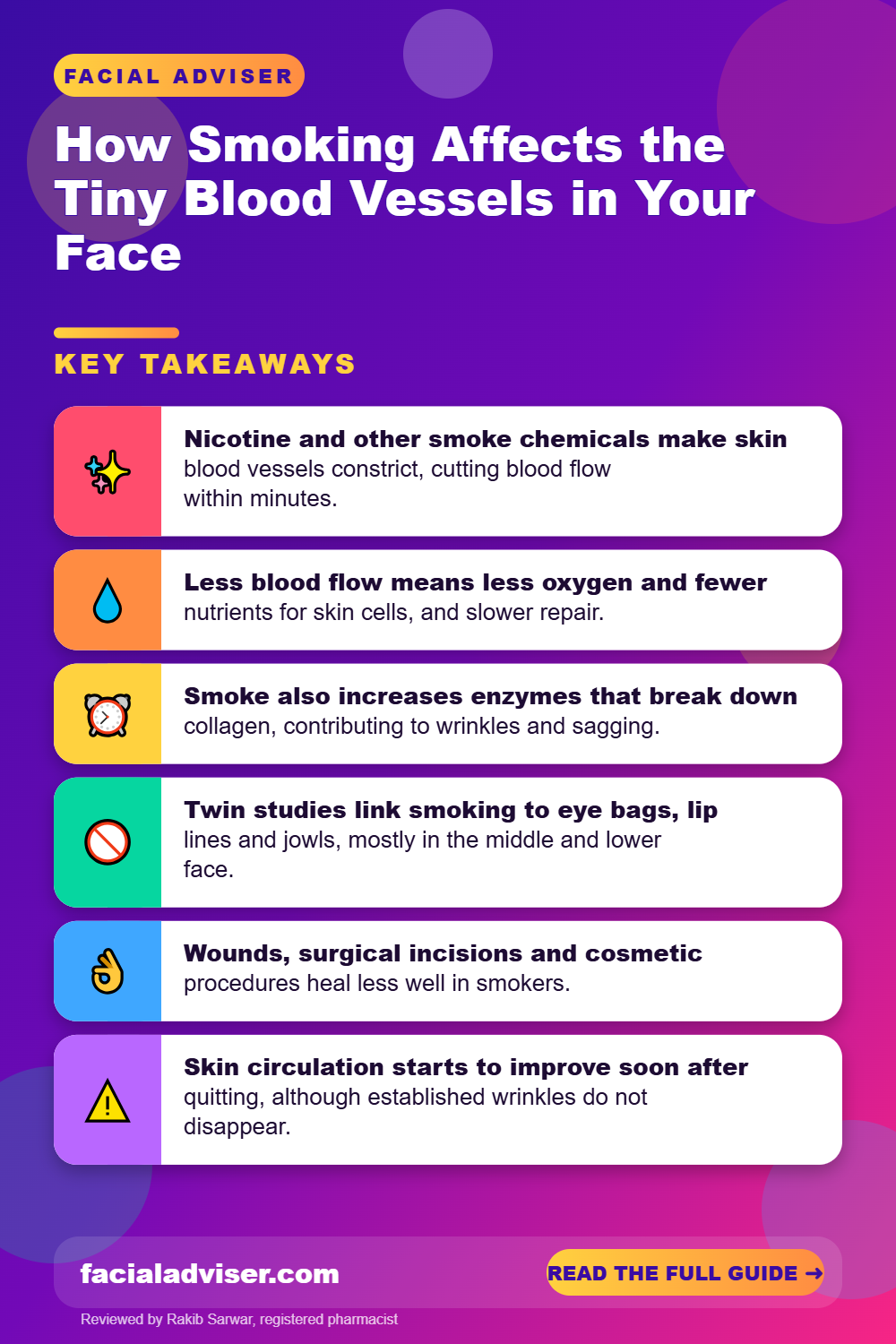
- Nicotine and other smoke chemicals make skin blood vessels constrict, cutting blood flow within minutes.
- Less blood flow means less oxygen and fewer nutrients for skin cells, and slower repair.
- Smoke also increases enzymes that break down collagen, contributing to wrinkles and sagging.
- Twin studies link smoking to eye bags, lip lines and jowls, mostly in the middle and lower face.
- Wounds, surgical incisions and cosmetic procedures heal less well in smokers.
- Skin circulation starts to improve soon after quitting, although established wrinkles do not disappear.
- Vaping still delivers nicotine, which also narrows blood vessels.
What This Covers
- What Happens to Facial Microvessels When You Smoke
- The Visible Changes That Follow
- Why Collagen Suffers Too
- Healing, Scars and Cosmetic Procedures
- How Much Is Smoking Affecting Your Skin?
- What Improves After You Quit
- How to Support Your Skin After Quitting
- Dos and Don’ts
- Honest Limits
- When to See a Doctor
- Your Questions, Answered
- The Bottom Line
What Happens to Facial Microvessels When You Smoke
The skin is fed by a dense web of capillaries and small arterioles. Their job is to deliver oxygen and nutrients, carry away waste and help regulate temperature. They are also very responsive: they widen when you are warm or blushing and narrow when you are cold or stressed.
Nicotine triggers the release of adrenaline-like chemicals that make these vessels tighten. Carbon monoxide from smoke also binds to red blood cells in place of oxygen, so the blood that does get through carries less oxygen than it should.
In a study using laser Doppler measurements, skin blood flow fell by around 38% in habitual smokers and 28% in non-smokers while they smoked a cigarette, and it took habitual smokers longer to return to baseline (Monfrecola et al., 1998).
| Smoke component | Effect on skin vessels and tissue |
|---|---|
| Nicotine | Constricts blood vessels, raises heart rate |
| Carbon monoxide | Reduces the oxygen carried by red blood cells |
| Oxidants and free radicals | Damage vessel walls and skin proteins |
| Heat and squinting | Encourage lines around the mouth and eyes |
The Visible Changes That Follow
Over time, reduced circulation and chemical damage combine to change how skin looks. In a study of 79 pairs of identical twins, smokers scored worse on several measures of facial ageing, including upper eyelid sagging, lower eyelid bags, lines around the lips and jowls. Differences showed up with as little as five years’ difference in smoking history (Okada et al., 2013).
- Dull, greyish or sallow tone from reduced oxygen and blood flow
- Lines around the lips, often called smoker’s lines, from repeated pursing plus collagen damage
- Crow’s feet deepened by squinting against smoke
- Under-eye bags and dark circles
- Sagging jowls and loss of firmness from breakdown of collagen and elastin
- Uneven pigmentation in some people
- Slower healing of blemishes, cuts and scratches
Smoking also raises the risk of several skin conditions, including psoriasis and some skin cancers of the lip. These are a reason to mention your smoking history to a doctor if you notice skin changes.
Why Collagen Suffers Too
Blood flow is only part of the picture. Smoke exposure increases the activity of enzymes called matrix metalloproteinases, which break down collagen, while also reducing the skin’s ability to make new collagen. Collagen and elastin are what keep skin firm and springy, so tipping the balance toward breakdown leads to deeper wrinkles and sagging.
This damage adds to the effect of the sun rather than replacing it. Smokers who also get a lot of unprotected sun exposure tend to show the most marked changes.
Low levels of antioxidants play a part as well. Smokers tend to have lower blood levels of vitamin C, which the skin needs to build collagen, and the oxidative stress from smoke uses up the skin’s own antioxidant defences faster. That is one reason dermatologists often suggest a vitamin C serum as part of a post-quitting routine, although it works best alongside quitting rather than instead of it.
Healing, Scars and Cosmetic Procedures
Because skin healing depends on good blood supply, smoking has well-documented effects on how wounds recover. Surgeons routinely ask patients to stop smoking before and after operations, particularly facelifts and other procedures that involve lifting skin, because reduced blood flow raises the risk of poor healing and tissue damage.
The same principle applies on a smaller scale to acne scars, laser treatments, peels and microneedling. Results tend to be better and recovery smoother in non-smokers.
Even small everyday injuries show the difference. A blemish that has been squeezed, a razor nick or a scratch from a pet can linger longer and leave more marking when blood supply is reduced, which is why some smokers notice more lasting dark spots after breakouts.
If you are planning any facial surgery or skin procedure, tell your practitioner that you smoke or vape. Many will ask you to stop for several weeks before and after to reduce the risk of complications.
How Much Is Smoking Affecting Your Skin?
There is no precise test, but these questions give a rough picture.
- Do you have vertical lines above your upper lip that are deeper than others your age?
- Does your skin look grey or sallow compared with photos from a few years ago?
- Do cuts, spots or scratches on your face take a long time to heal?
- Do you have more under-eye bags or jowling than siblings or friends of a similar age who do not smoke?
- Have you smoked for more than five years?
If you answered yes to several, smoking is likely to be one of the factors affecting your skin. The positive side is that it is one of the few ageing factors you can change completely.
What Improves After You Quit
Some changes begin quickly. Nicotine’s vessel-narrowing effect wears off, carbon monoxide levels in the blood fall within about a day, and circulation to the skin improves. Many people who quit notice a healthier colour within weeks.
Collagen damage and established wrinkles do not reverse on their own, but the ongoing damage stops, so skin ages more slowly from that point on. Healing also improves, which makes treatments for existing lines and scars more effective.
| Time after quitting | What tends to change |
|---|---|
| Hours to a day | Carbon monoxide levels drop, blood oxygen improves |
| Weeks | Skin circulation and colour improve; wound healing gets better |
| Months | Skin may look brighter and less sallow |
| Years | Slower rate of further wrinkling compared with continuing to smoke |
Free help to quit is available in many countries. In the US, Smokefree.gov offers tools and support, and you can call 1-800-QUIT-NOW. A doctor or pharmacist can also discuss nicotine replacement and prescription options.
How to Support Your Skin After Quitting
Protect from the sun every day
Use a broad-spectrum sunscreen of SPF 30 or higher. Sun damage and smoking damage stack together.
Add an antioxidant serum
Vitamin C in the morning can help counter oxidative damage and brighten tone.
Introduce a retinoid at night
Retinoids have the strongest evidence for improving fine lines and supporting collagen. Start slowly.
Keep the barrier comfortable
Use a gentle cleanser and a moisturiser suited to your skin type.
Break the lip habit
Look after your lips with an SPF balm, and try not to purse your lips repeatedly.
Consider professional treatment
Once you have been smoke-free for a while, a dermatologist can discuss peels, lasers or fillers for lip lines and texture.
Take a photo in the same spot and light the week you quit and again at three and six months. The improvement in colour is often easier to see side by side.
Dos and Don’ts
Good Habits
- Tell your dermatologist or surgeon if you smoke or vape
- Use sunscreen daily
- Seek support to quit; it improves your odds
- Give skin a few months to show improvement
- Use gentle, consistent skincare
Common Mistakes
- Assume vaping is harmless for your skin
- Expect creams to cancel out ongoing smoking damage
- Book elective facial surgery while still smoking without discussing it
- Rely on ‘detox’ products after quitting
- Pick at slow-healing spots
Honest Limits
Skincare cannot undo what continued smoking does to blood vessels and collagen. Serums and creams work on the surface and upper layers; they do not restore circulation while nicotine keeps narrowing vessels. Quitting is the single change that matters most.
It is also worth saying that some widely shared claims go beyond the evidence. For example, you will often read that smoking directly causes broken capillaries or spider veins on the face. Rosacea, sun damage, genetics and alcohol are better-established causes of visible facial vessels, and the link with smoking is less clear.
Vaping and heated tobacco products are often seen as skin-friendly alternatives. They expose you to fewer combustion chemicals, but they still deliver nicotine, which narrows blood vessels. Long-term skin effects of vaping have not been well studied yet, so it is safest not to assume that switching will protect your skin in the way that stopping nicotine altogether would.
When to See a Doctor
Book an appointment if you notice:
- A sore on the lip or inside the mouth that does not heal within three weeks
- White or red patches in the mouth
- A new or changing mole or spot on the face
- Wounds on the face that are very slow to heal or keep reopening
- Cold, pale or painful fingers or toes, which can signal circulation problems
This article is for general information and is not medical advice. For help quitting smoking or for any skin change that worries you, speak to a doctor, pharmacist or dermatologist.
Your Questions, Answered
Does smoking affect blood flow to the face?
Yes. Nicotine narrows skin blood vessels within minutes, reducing blood flow and oxygen delivery.
Can quitting smoking improve my skin?
Yes. Circulation and colour usually improve within weeks, and skin ages more slowly after you stop.
Will my wrinkles go away if I quit?
Existing wrinkles will not disappear on their own, but they are less likely to deepen, and treatments work better.
What are smoker’s lines?
Vertical lines above and below the lips, caused by repeated pursing combined with collagen damage.
Does vaping affect the skin?
Vaping delivers nicotine, which constricts blood vessels. Its long-term skin effects are not yet well understood.
Does smoking cause dark circles?
It is associated with more under-eye bags and dark circles, likely due to reduced circulation and collagen damage.
Is second-hand smoke bad for skin?
Second-hand smoke exposes skin to many of the same chemicals, although at lower levels.
Why do surgeons ask you to stop smoking before surgery?
Smoking reduces skin blood flow and slows healing, raising the risk of complications.
Can vitamin C serum reverse smoking damage?
It can help brighten skin and counter some oxidative stress, but it cannot reverse structural damage.
How long after quitting does skin improve?
Many people notice better colour within weeks; continued improvement in texture can take months.
The Bottom Line
Every cigarette briefly tightens the small blood vessels in your face, cutting the oxygen and nutrients that skin cells need, while smoke chemicals speed up the breakdown of collagen. Over years, that shows as dull, greyish skin, lines around the lips and eyes, under-eye bags and sagging, as twin studies have made strikingly clear.
The good news is that this is one of the most changeable ageing factors there is. Circulation begins to recover soon after quitting, skin colour often improves within weeks, and the rate of further damage drops. Pair quitting with daily sunscreen and a retinoid, and your skin has the best possible chance to catch up.

Written by
Registered pharmacist and founder of Facial Adviser. Rakib's pharmacy training covers how skincare actives work and interact; a later course in cosmetology turned that into a focus on facial treatments and skincare products. He plans, researches and edits every guide on the site and checks health claims against sources such as the American Academy of Dermatology, the FDA and the NIH. He is not a dermatologist; see the Editorial Policy and Medical Disclaimer.
About · Editorial policy · How we choose products · Medical disclaimer · Contact
Keep reading: Diet, sleep, stress and skin
- How Diet Impacts the Skin Microbiome: What the Science Actually Shows
- Does Air Pollution Age Your Face? What Studies Show
- Can Your Mouth Affect Your Face? Oral Health and Facial Inflammation
- Does Omega-3 Give You Glowing Skin? What the Evidence Says
- How to Boost Facial Circulation Naturally (and What Actually Works)
- Can Dehydration Cause Dark Circles? What the Link Really Is