Does Omega-3 Give You Glowing Skin? What the Evidence Says
Fish oil capsules and ‘glow’ supplements promise skin that looks lit from within. Omega-3 fats do have genuine roles in the skin, so the idea is not baseless. The question is how much difference extra omega-3 makes to someone who already eats a reasonably varied diet.
Part of our guide to lifestyle and skin. Start with: How Diet Impacts the Skin Microbiome: What the Science Actually Shows
Omega-3 fatty acids help build the fats that hold the skin barrier together and have anti-inflammatory effects, which can make skin less dry and less reactive. Small trials suggest omega-3 supplements may modestly reduce acne and slightly raise the skin’s sunburn threshold. But there is little direct evidence that omega-3 makes healthy skin visibly ‘glow’, and supplements are not a substitute for sunscreen or a good skincare routine.
The best-supported benefits are for people with low intake or inflammatory skin conditions. If you rarely eat oily fish, nuts or seeds, increasing omega-3 may improve dryness and comfort. If you already eat fish a couple of times a week, a supplement is less likely to change what you see in the mirror.
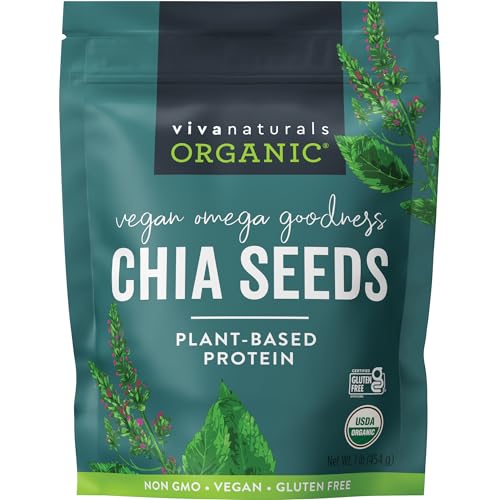
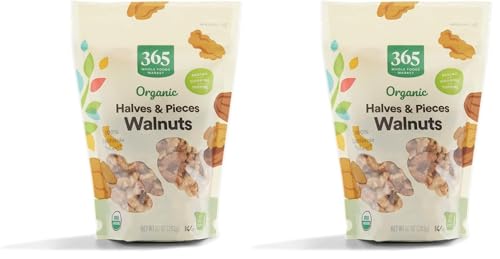
Omega-3 comes in a few forms. The long-chain types, EPA and DHA, are found mainly in oily fish and algae. The plant form, ALA, is found in flaxseed, chia seeds and walnuts, and the body converts only a small amount of it to EPA and DHA.
Below we cover what omega-3 does in the skin, what the studies show for acne, sun sensitivity and dryness, how to get enough from food, who might benefit from a supplement and the safety points to know first.
Shopping these picks?
Amazon Prime members get fast, free shipping on eligible items, plus Prime Video, Amazon Music and member deals. New members can start with a free trial.
Start a free Prime trialAged 18 to 24? Prime for Young Adults comes with a longer free trial and a lower price after it.
Affiliate link: we may earn a commission at no extra cost to you.
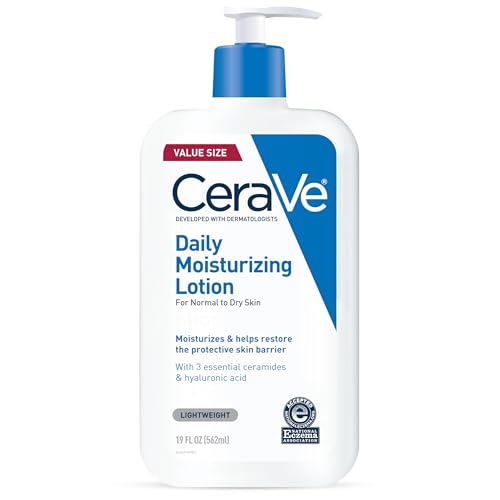
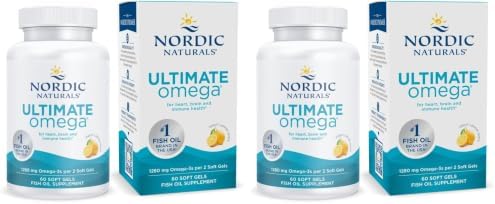
Recommended Omega-3 Foods and Supplements for Skin


In This Guide
- What Omega-3 Does in the Skin
- What the Research Shows
- Omega-3 and Common Skin Concerns at a Glance
- Are You Likely to Benefit?
- Getting Omega-3 From Food
- How to Add More Omega-3 to Your Diet
- Should You Take a Supplement?
- Dos and Don’ts
- Honest Limits
- When to Talk to a Doctor
- Frequently Asked Questions
- The Bottom Line
Quick Answer
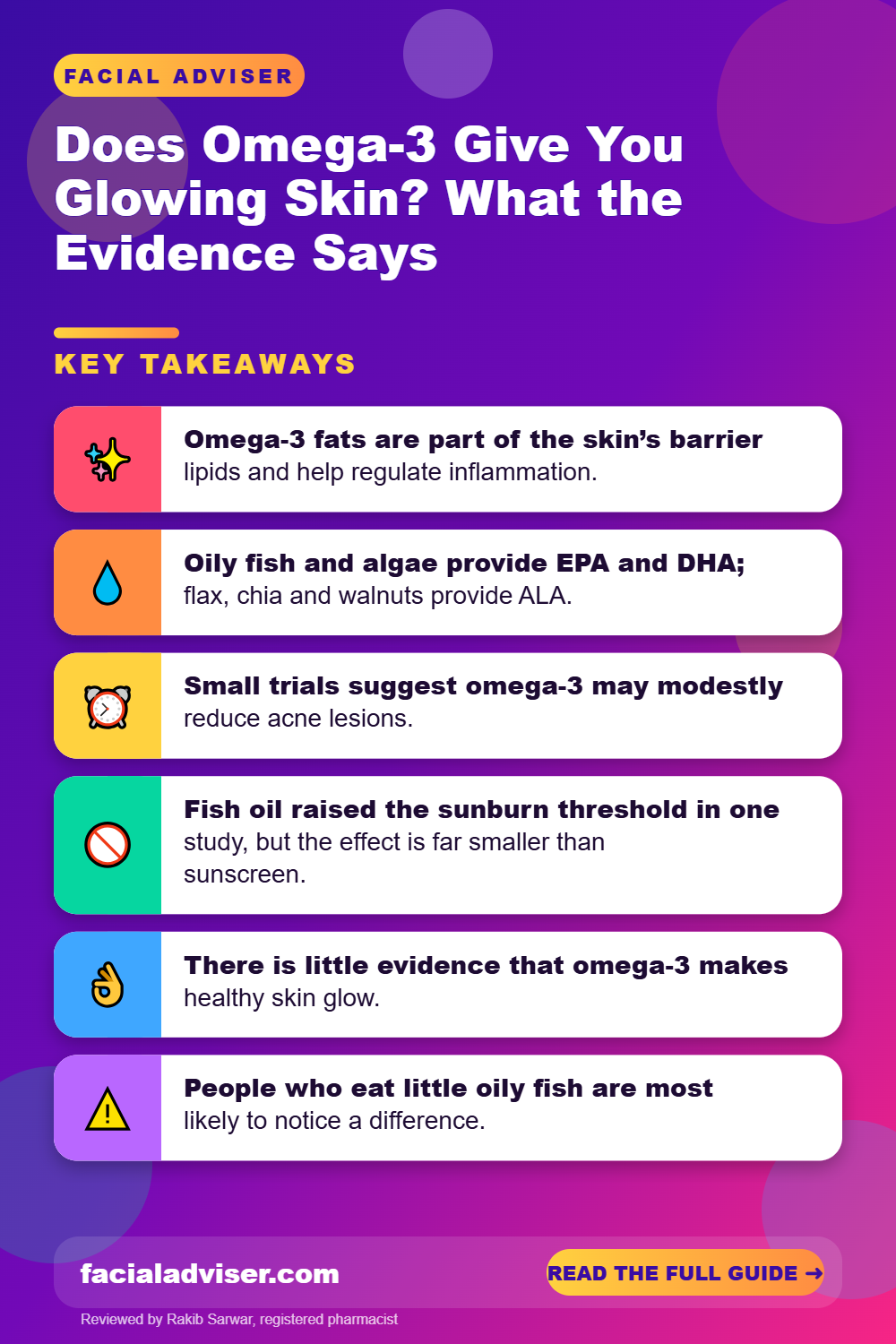
- Omega-3 fats are part of the skin’s barrier lipids and help regulate inflammation.
- Oily fish and algae provide EPA and DHA; flax, chia and walnuts provide ALA.
- Small trials suggest omega-3 may modestly reduce acne lesions.
- Fish oil raised the sunburn threshold in one study, but the effect is far smaller than sunscreen.
- There is little evidence that omega-3 makes healthy skin glow.
- People who eat little oily fish are most likely to notice a difference.
- High-dose supplements can interact with blood thinners; check with a doctor first.
What Omega-3 Does in the Skin
Skin cells are wrapped in membranes made largely of fats, and the barrier at the surface is held together by a mix of ceramides, cholesterol and fatty acids. The fats you eat influence the make-up of these membranes and, to some extent, the barrier.
Omega-3 fatty acids are also raw materials for signalling molecules that help switch inflammation off. Omega-6 fatty acids, which are far more common in modern diets, feed into pathways that tend to promote inflammation. A diet heavy in omega-6 and light in omega-3 may tip skin toward being more reactive.
| Type | Main sources | Role for skin |
|---|---|---|
| EPA | Oily fish, algae oil | Anti-inflammatory signalling, may reduce sun sensitivity |
| DHA | Oily fish, algae oil | Cell membrane structure |
| ALA | Flaxseed, chia seeds, walnuts, rapeseed oil | Partly converted to EPA and DHA; supports barrier lipids |
The NIH Office of Dietary Supplements notes that true omega-3 deficiency is very uncommon in the US, but when it does happen it can cause rough, scaly skin and a red, itchy rash (NIH ODS).
What the Research Shows
Acne
In a 10-week randomised controlled trial, 45 people with mild to moderate acne took either an omega-3 supplement, a gamma-linolenic acid supplement or nothing. Both supplement groups saw significant reductions in inflammatory and non-inflammatory acne lesions compared with the control group (Jung et al., 2014). The study was small, so it is an encouraging signal rather than proof.
Sun sensitivity
In a double-blind study of 42 people, taking 4 grams a day of EPA for three months raised the amount of UV light needed to cause sunburn and reduced markers of UV damage in the skin (Rhodes et al., 2003). That is a high dose, and the level of protection was modest, roughly the equivalent of a very low SPF.
Dryness and barrier function
Evidence here is mixed and mostly from small studies or studies combining several nutrients. It is reasonable to expect that correcting a low intake helps dry skin, but there is little proof that extra omega-3 on top of an adequate diet makes a visible difference.
Glow and anti-ageing
Claims that omega-3 gives skin a radiant glow or reduces wrinkles are largely based on its known biology and marketing rather than solid trials in people.
Omega-3 supplements are not a replacement for sunscreen. Even the best results from fish oil provide far less protection than a broad-spectrum SPF 30.
Omega-3 and Common Skin Concerns at a Glance
| Concern | What omega-3 may do | Strength of evidence | Better first step |
|---|---|---|---|
| Inflammatory acne | Modest reduction in lesions | Small trials | Proven topical or prescription acne treatment |
| Dry, tight skin | Support barrier lipids if intake is low | Limited | Daily moisturiser, gentle cleanser |
| Sunburn and UV damage | Slightly higher sunburn threshold | Small trials, high doses | Broad-spectrum sunscreen |
| Eczema | Possible reduction in itch for some | Mixed | Emollients and prescribed treatment |
| Psoriasis | Possible small benefit alongside treatment | Mixed | Treatment plan from a dermatologist |
| Fine lines and glow | Unclear | Very limited | Sunscreen and a retinoid |
The pattern is consistent: omega-3 is a helpful supporting player, particularly when intake is low, but the proven first-line treatments still do most of the work.
Are You Likely to Benefit?
- You eat oily fish such as salmon, mackerel or sardines less than once a week.
- You follow a vegetarian or vegan diet and do not use algae oil or ALA-rich foods regularly.
- Your skin is often dry, tight or easily irritated despite a good moisturiser.
- You have inflammatory acne and are looking for a low-risk add-on alongside treatment.
- Your diet relies heavily on processed foods and vegetable oils high in omega-6.
If several of these apply, adding more omega-3, ideally through food first, is a sensible step. If none apply, a supplement is unlikely to transform your skin.
Getting Omega-3 From Food
Food gives you omega-3 along with protein, vitamin D, selenium and other nutrients that also matter for skin.
| Food | Type of omega-3 | Practical tip |
|---|---|---|
| Salmon, mackerel, sardines, herring, trout | EPA and DHA | Aim for about two portions of fish a week, one of them oily |
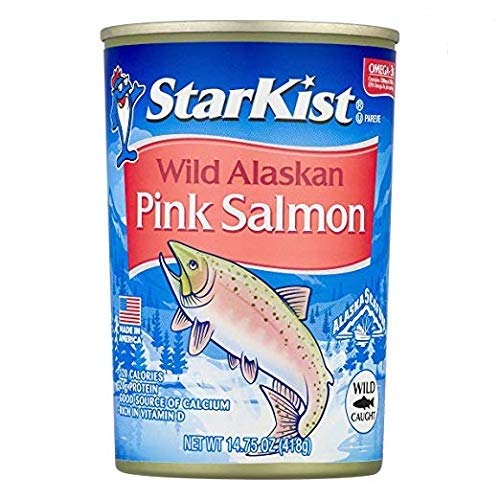
| Canned salmon or sardines | EPA and DHA | A convenient, budget-friendly option |
| Ground flaxseed | ALA | Grind it or buy it ground; whole seeds often pass through undigested |
| Chia seeds | ALA | Add to oats, yoghurt or smoothies |
| Walnuts | ALA | A small handful a day |
| Algae oil | EPA and DHA | The main plant-based source of long-chain omega-3 |
How you cook and store these foods matters a little too. Baking, steaming or poaching fish preserves more of its omega-3 than deep frying. Ground flaxseed and walnuts contain delicate oils that can go rancid, so keep them in a sealed container in the fridge and use them within a few weeks.
Pair omega-3 foods with plenty of vegetables and fruit. Antioxidants help protect these delicate fats from oxidation in the body and on the plate.
How to Add More Omega-3 to Your Diet
Plan two fish meals a week
Make at least one of them an oily fish such as salmon, sardines or mackerel.
Use a daily plant source
Stir ground flaxseed or chia into breakfast, or snack on walnuts.
Swap some cooking oils
Use rapeseed or olive oil more often than oils high in omega-6, such as corn or sunflower oil.
Consider algae oil if you are plant-based
It provides EPA and DHA directly, which ALA conversion cannot fully replace.
Talk to a doctor before high-dose supplements
Especially if you take blood thinners, have a bleeding disorder or are due for surgery.
Give it time
Skin renews over several weeks, so judge any change after two to three months.
Should You Take a Supplement?
For most people who eat fish regularly, a supplement is optional. It may be worth considering if you rarely eat fish, are vegan or have inflammatory skin that you are managing with your doctor.
Look for products that state the amounts of EPA and DHA, not just total fish oil, and that are tested for purity. Algae-based supplements suit vegetarians and vegans. Taking capsules with a meal that contains some fat helps absorption and can reduce fishy aftertaste, and storing them away from heat and light helps keep the oil fresh.
The NIH notes that omega-3 supplements usually cause only mild side effects such as an unpleasant taste, bad breath, heartburn, nausea or stomach upset, but high doses may increase bleeding risk when combined with warfarin or other anticoagulants.
Cod liver oil also contains vitamin A. Taking it alongside other vitamin A supplements or retinoid acne medication can push intake too high, and too much vitamin A is harmful in pregnancy.
Dos and Don’ts
Helps
- Eat oily fish around twice a week
- Use ground flaxseed, chia or walnuts daily for plant omega-3
- Choose supplements that list EPA and DHA content
- Keep using sunscreen and your usual skincare
- Tell your doctor about any supplements you take
Backfires
- Expect a supplement to replace sunscreen
- Megadose fish oil without medical advice
- Combine cod liver oil with retinoid medication
- Assume vegan ALA sources supply much EPA or DHA
- Judge results after only a week or two
Honest Limits
Omega-3 is one nutrient among many. Protein, vitamins C and A, zinc and adequate calories all matter for skin, and no single fat will outweigh the effects of sun exposure, smoking, poor sleep or genetics.
Most of the positive studies are small and short. Larger, longer trials are needed before anyone can promise specific skin results from omega-3. If a product claims a guaranteed glow, that is marketing rather than science.
It is also worth thinking about balance rather than just quantity. Many modern diets contain far more omega-6 than omega-3, mostly from processed foods and some cooking oils. Adding fish and seeds while cutting back on heavily processed snacks shifts that balance in two directions at once, which is likely to matter more than simply swallowing a capsule.
Finally, individual responses vary. Some people with dry or inflamed skin notice an improvement within a couple of months; others see no change at all.
When to Talk to a Doctor
Speak to a doctor or pharmacist before starting omega-3 supplements if you:
- Take warfarin, aspirin or other blood-thinning medication
- Have a bleeding disorder or are scheduled for surgery
- Are pregnant or breastfeeding and considering cod liver oil
- Are taking prescription retinoids for acne
- Have a fish or shellfish allergy
See a dermatologist if your skin is persistently dry, scaly, itchy or inflamed, since conditions such as eczema, psoriasis or rosacea need proper treatment beyond diet.
This article is for general information and does not replace advice from a doctor, dermatologist or registered dietitian. Check with a healthcare professional before starting supplements, especially if you take medication.
Frequently Asked Questions
Does omega-3 make your skin glow?
It supports the skin barrier and may reduce dryness and inflammation, but there is little direct evidence for a visible glow in healthy skin.
How long does omega-3 take to affect skin?
Most studies look at two to three months, which matches the time skin takes to renew.
Is fish oil good for acne?
A small trial found omega-3 reduced acne lesions over 10 weeks, but larger studies are needed.
Can omega-3 protect against sunburn?
High-dose EPA modestly raised the sunburn threshold in one study, but the protection is far lower than sunscreen.
What is the best food source of omega-3?
Oily fish such as salmon, mackerel and sardines provide EPA and DHA directly.
Are flaxseed and chia as good as fish oil?
They provide ALA, which the body converts to EPA and DHA only in small amounts.
Should vegans take algae oil?
Algae oil is the main plant-based source of EPA and DHA and is worth considering if you eat no fish.
Can omega-3 help eczema?
Evidence is mixed. Some people find it helpful, but it does not replace eczema treatment.
Are there side effects of omega-3 supplements?
Usually mild, such as a fishy taste or stomach upset. High doses may raise bleeding risk with blood thinners.
Can I get too much omega-3?
Very high doses from supplements can cause problems. Food sources are very unlikely to cause harm.
The Bottom Line
Omega-3 fats have real jobs in the skin: they help form the barrier and help keep inflammation in check. Small studies suggest they may reduce acne and slightly raise the sunburn threshold, and people who eat little oily fish may notice less dryness when they increase their intake.
What omega-3 will not do is guarantee a glow or replace sunscreen. Start with food, such as oily fish twice a week and a daily spoon of ground flaxseed or chia, consider an algae or fish oil supplement if your diet falls short, and check with a doctor first if you take blood thinners or other medication.

Written by
Registered pharmacist and founder of Facial Adviser. Rakib's pharmacy training covers how skincare actives work and interact; a later course in cosmetology turned that into a focus on facial treatments and skincare products. He plans, researches and edits every guide on the site and checks health claims against sources such as the American Academy of Dermatology, the FDA and the NIH. He is not a dermatologist; see the Editorial Policy and Medical Disclaimer.
About · Editorial policy · How we choose products · Medical disclaimer · Contact
Keep reading: Diet, sleep, stress and skin
- How Diet Impacts the Skin Microbiome: What the Science Actually Shows
- How to Boost Facial Circulation Naturally (and What Actually Works)
- Can Dehydration Cause Dark Circles? What the Link Really Is
- Does Sugar Age Your Face? Glycation, Blood Sugar and Skin
- Magnesium Deficiency and Skin: What Is Known and What Is Hype
- How Indoor Air Quality Affects Skin Health: Dryness, Pollutants and What Helps