Can Vitamin D Deficiency Cause Acne? What Studies Show
If you have been dealing with stubborn breakouts, you may have seen claims that low vitamin D is the hidden cause. It is an appealing idea: a simple blood test, a cheap supplement and clearer skin. The research is genuinely interesting, but it is not quite that simple.
Part of our guide to lifestyle and skin. Start with: How Diet Impacts the Skin Microbiome: What the Science Actually Shows
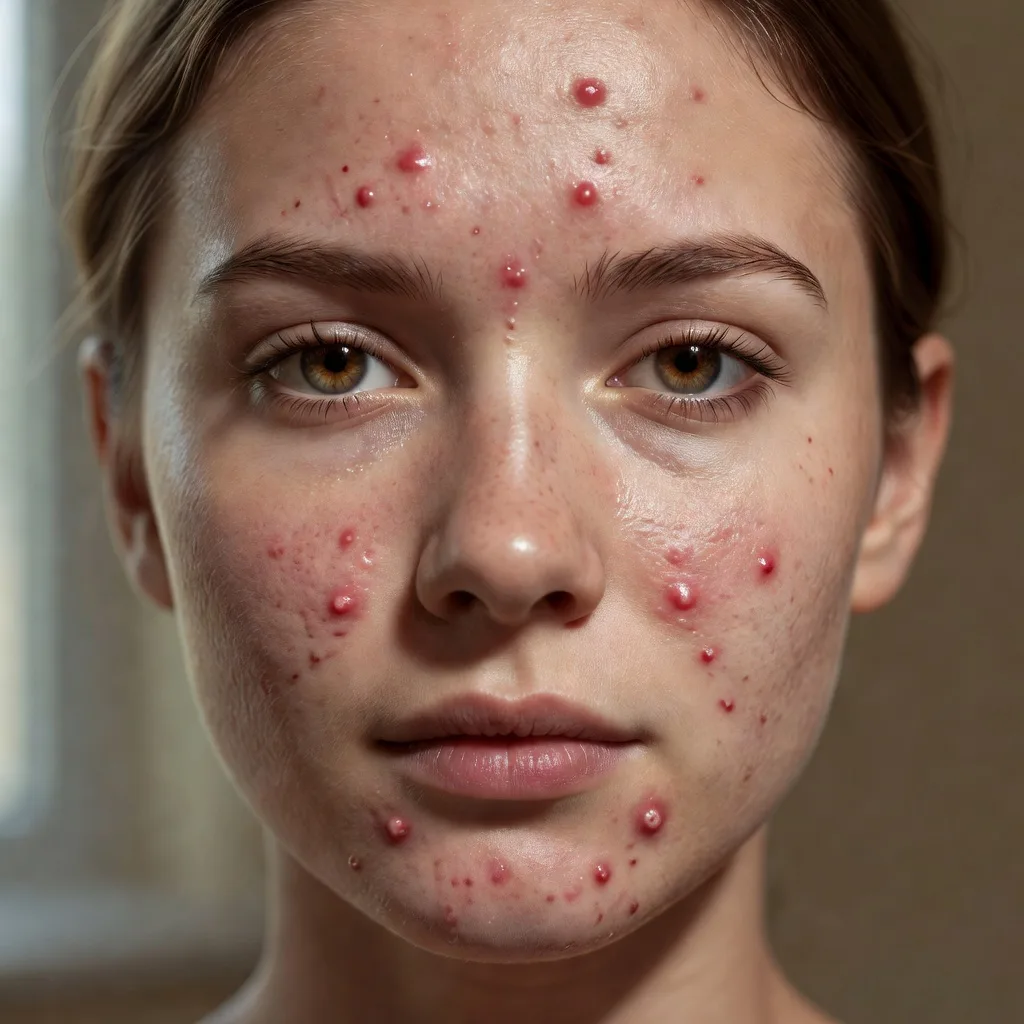
Vitamin D deficiency does not directly cause acne, but studies consistently find that people with acne are more likely to have low vitamin D levels, and lower levels tend to go with more inflamed acne. In one randomised trial, vitamin D supplements reduced inflammatory acne lesions by about 35% in deficient patients over eight weeks. If you are low, correcting it may help alongside proper acne treatment, but supplements are unlikely to help if your levels are already normal.
Vitamin D has roles far beyond bone health. It helps regulate the immune system and inflammation, and skin cells both make and respond to it. That gives a plausible reason why low levels might make acne worse, particularly the red, swollen kind.
At the same time, low vitamin D is very common, especially in winter, in people with darker skin and in those who spend most of the day indoors. Many people with low vitamin D have no acne at all, and many people with acne have perfectly normal levels.
Below we look at what vitamin D does in the skin, what the studies actually show, who is most likely to be low, how to test and top up safely, and why proven acne treatments should still come first.
Shopping these picks?
Amazon Prime members get fast, free shipping on eligible items, plus Prime Video, Amazon Music and member deals. New members can start with a free trial.
Start a free Prime trialAged 18 to 24? Prime for Young Adults comes with a longer free trial and a lower price after it.
Affiliate link: we may earn a commission at no extra cost to you.
Recommended Products for Vitamin D and Acne-Prone Skin
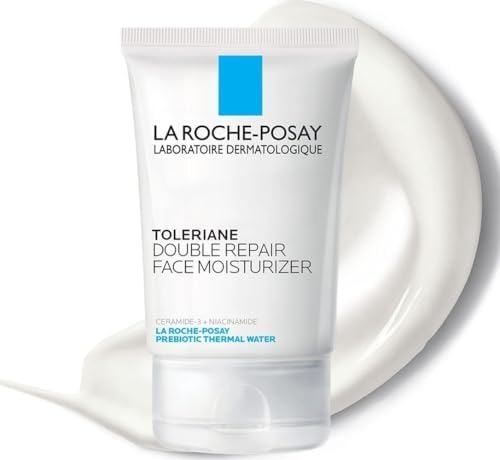
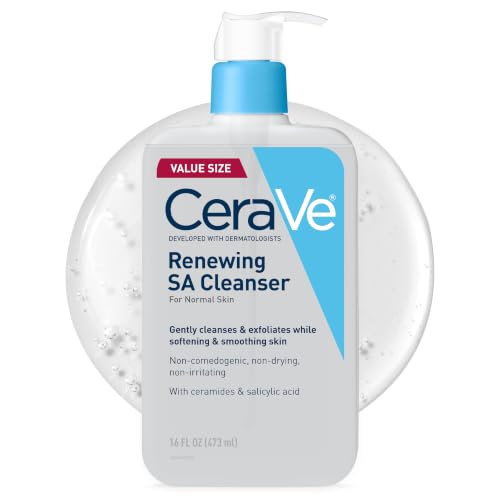
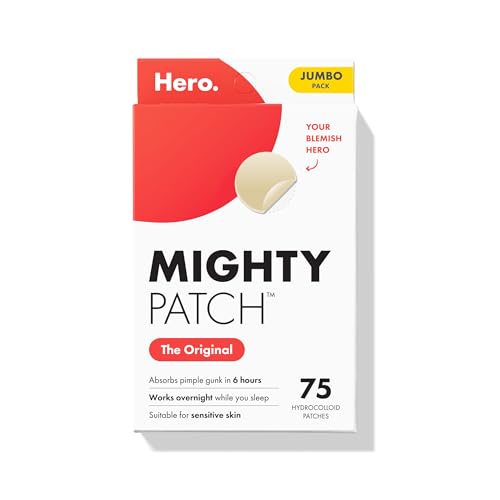
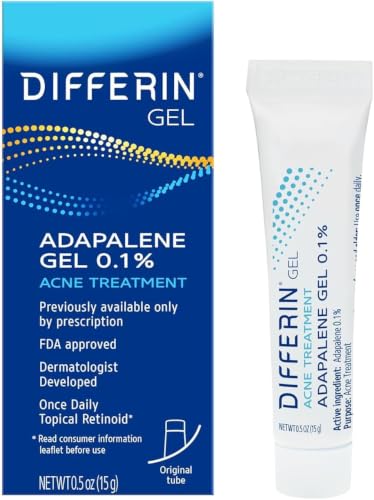


In Brief
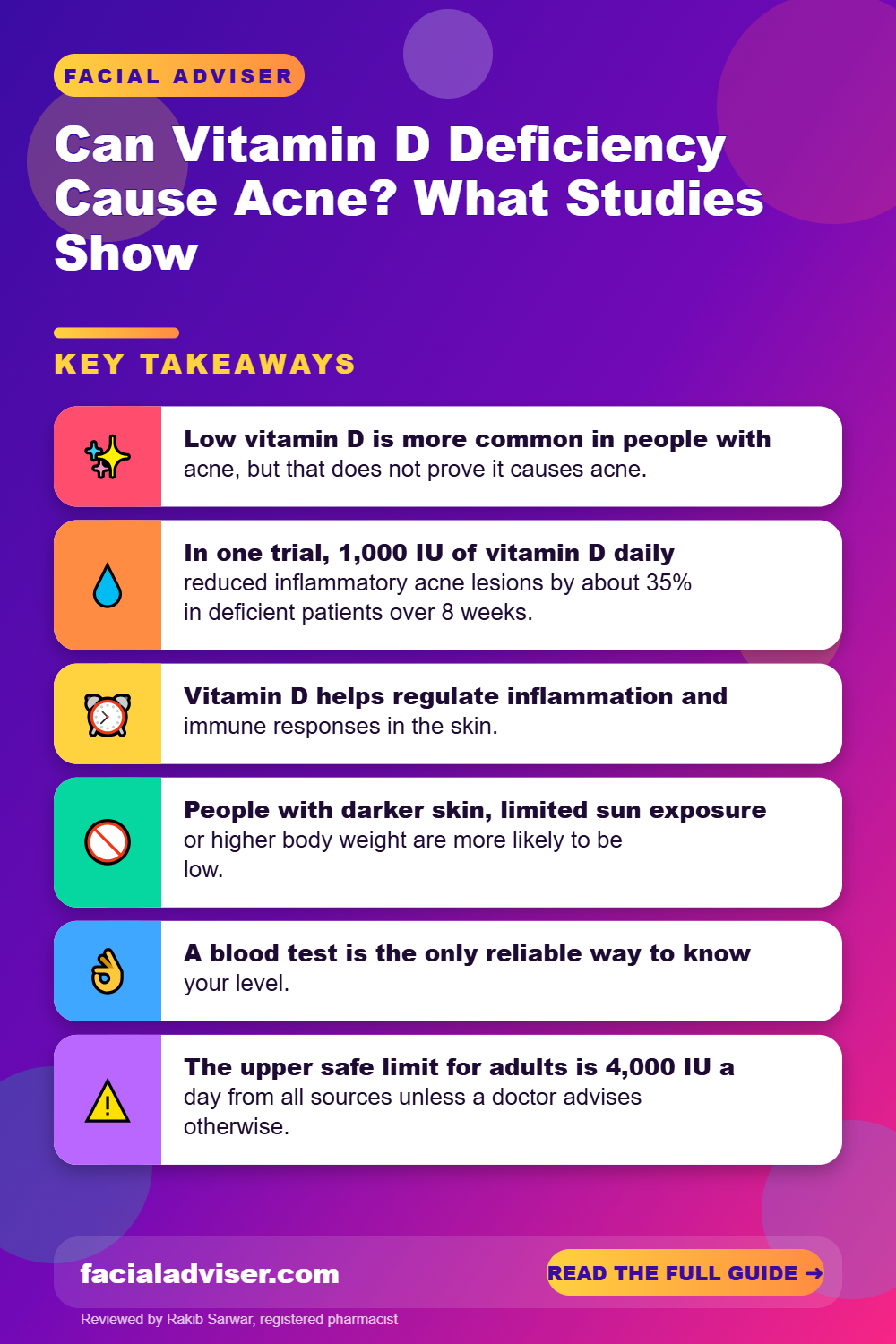
- Low vitamin D is more common in people with acne, but that does not prove it causes acne.
- In one trial, 1,000 IU of vitamin D daily reduced inflammatory acne lesions by about 35% in deficient patients over 8 weeks.
- Vitamin D helps regulate inflammation and immune responses in the skin.
- People with darker skin, limited sun exposure or higher body weight are more likely to be low.
- A blood test is the only reliable way to know your level.
- The upper safe limit for adults is 4,000 IU a day from all sources unless a doctor advises otherwise.
- Proven acne treatments such as retinoids and benzoyl peroxide remain the foundation.
What This Covers
- What Vitamin D Does in the Skin
- What the Research Shows
- Who Is Most Likely to Be Low in Vitamin D?
- Could Low Vitamin D Be Part of Your Acne Picture?
- How to Check and Correct Low Vitamin D Safely
- Getting Vitamin D From Food
- What About Getting Vitamin D From the Sun?
- Proven Acne Treatments Come First
- Dos and Don’ts
- Honest Limits
- When to See a Doctor or Dermatologist
- Questions People Ask
- The Takeaway
What Vitamin D Does in the Skin
Your skin makes vitamin D when exposed to UVB light from the sun. The body then converts it into its active form, which acts more like a hormone than a typical vitamin, switching genes on and off in many tissues.
In the skin, active vitamin D helps control how skin cells grow and mature, supports the barrier and influences the immune system. It encourages the production of natural antimicrobial peptides and helps damp down inflammatory signals.
Acne involves four main processes: excess oil, clogged pores, the growth of acne bacteria and inflammation. Vitamin D’s strongest links are with the last two, which may explain why research finds the clearest associations with red, inflamed spots rather than blackheads and whiteheads.
| Acne factor | Possible role of vitamin D | Strength of evidence |
|---|---|---|
| Inflammation | May dampen inflammatory signals | Moderate: lab work plus a small trial |
| Acne bacteria | Supports antimicrobial peptides | Mostly laboratory evidence |
| Clogged pores | May influence skin cell turnover | Limited |
| Oil production | Unclear | Very limited |
What the Research Shows
A Korean study compared 80 people with acne and 80 without. Vitamin D deficiency was found in 48.8% of those with acne but only 22.5% of the healthy controls, and lower vitamin D levels were linked to more severe inflammatory acne. In the second part of the study, 39 deficient acne patients were randomly given either 1,000 IU of vitamin D daily or a placebo for two months. Inflammatory lesions fell by 34.6% in the vitamin D group compared with 5.8% in the placebo group (Lim et al., PLOS ONE 2016).
A later systematic review and meta-analysis that pooled several studies also found that people with acne tended to have lower vitamin D levels than those without, and suggested supplementation might help deficient patients (Wang et al., 2021).
These findings are encouraging but limited. The trial was small and short, included only people who were already deficient, and did not test vitamin D against standard acne treatments. It does not show that vitamin D helps people with normal levels.
Who Is Most Likely to Be Low in Vitamin D?
| Group | Why |
|---|---|
| People with darker skin | Melanin reduces how much vitamin D the skin makes from sunlight |
| People who spend most of the day indoors | Little UVB exposure |
| People living far from the equator, especially in winter | UVB is too weak for much of the year |
| People who cover most of their skin | Less skin exposed to sunlight |
| People with higher body weight | Vitamin D is stored in fat tissue and less available |
| Older adults | Skin makes less vitamin D with age |
| People with digestive conditions such as coeliac or Crohn’s disease | Reduced absorption |
Heavy sunscreen use is sometimes blamed, but studies suggest most people still make some vitamin D with normal sunscreen use. Sun protection remains important, especially if you use acne treatments that make skin more sun-sensitive.
Could Low Vitamin D Be Part of Your Acne Picture?
- Your acne is mostly red, inflamed spots rather than blackheads and whiteheads.
- Your acne tends to be worse in winter.
- You spend most daylight hours indoors.
- You have a darker skin tone or cover most of your skin outdoors.
- You rarely eat oily fish, eggs or fortified foods.
- You have other symptoms that can go with low vitamin D, such as tiredness, bone or muscle aches.
If several apply, it is reasonable to ask your doctor about a vitamin D blood test. It is a simple check that can guide whether supplements make sense.
How to Check and Correct Low Vitamin D Safely
Get tested
Ask your doctor for a 25-hydroxyvitamin D blood test. It shows your stores more reliably than guessing from symptoms.
Understand the result
The NIH considers levels of 50 nmol/L (20 ng/mL) or above adequate and below 30 nmol/L (12 ng/mL) deficient.
Supplement if advised
Most adults need 600 to 800 IU a day. If you are deficient, your doctor may suggest a higher dose for a set period.
Include food sources
Oily fish, egg yolks, fortified milk and cereals and UV-exposed mushrooms all contribute.
Keep treating your acne
Continue your retinoid, benzoyl peroxide or prescribed treatment; vitamin D is an add-on, not a replacement.
Recheck if needed
Your doctor may retest after a few months to confirm your level has improved.
Do not take high-dose vitamin D for long periods without medical supervision. The NIH sets the upper limit for adults at 4,000 IU a day from all sources, and very high levels can cause nausea, weakness, confusion and kidney problems.
Getting Vitamin D From Food
Few foods are naturally rich in vitamin D, which is why many people fall short, especially in winter. The best sources are listed below.
| Food | Notes |
|---|---|
| Oily fish such as salmon, trout, mackerel and sardines | Among the richest natural sources |
| Cod liver oil | Very high in vitamin D, but also contains vitamin A |
| Egg yolks | Small amounts |
| Fortified milk and plant milks | Check labels; amounts vary |
| Fortified breakfast cereals | Check labels |
| Mushrooms exposed to UV light | Some brands are treated to boost vitamin D |
Diet alone rarely provides enough vitamin D for people who get little sun, which is why many health bodies suggest considering a daily supplement during the darker months.
Take vitamin D supplements with a meal that contains some fat. Vitamin D is fat-soluble, so it is absorbed better that way.
What About Getting Vitamin D From the Sun?
Sunlight is the body’s main natural source of vitamin D, and it is tempting to think a bit of sun will help acne. Some people do find their skin looks clearer in summer, partly because a tan can hide redness and because UV light has a temporary drying, anti-inflammatory effect.
However, deliberate sun exposure carries real risks. It raises the risk of skin cancer and ageing, and many acne treatments, including retinoids and some antibiotics, make skin more sensitive to burning. Post-acne dark marks also tend to darken in the sun.
For most people, getting vitamin D from food and, if needed, a supplement is safer than seeking extra sun. Daily sunscreen on the face should stay part of your routine.
Proven Acne Treatments Come First
Even if you are low in vitamin D, correcting it will not replace treatments with strong evidence. The American Academy of Dermatology’s acne guidance centres on the following.
| Treatment | How it helps | Availability |
|---|---|---|
| Topical retinoids (adapalene, tretinoin) | Unclog pores and reduce inflammation | Over the counter or prescription |
| Benzoyl peroxide | Kills acne bacteria, reduces inflammation | Over the counter |
| Salicylic acid | Helps clear pores | Over the counter |
| Azelaic acid | Reduces inflammation and dark marks | Over the counter or prescription |
| Oral antibiotics | Reduce inflammation for moderate to severe acne | Prescription, short courses |
| Hormonal treatments | Help hormone-driven acne in women | Prescription |
| Isotretinoin | For severe or scarring acne | Specialist prescription |
Dos and Don’ts
Do
- Ask for a blood test if you might be low
- Take supplements at the dose your doctor advises
- Keep using proven acne treatments
- Wear sunscreen daily
- Eat oily fish, eggs and fortified foods
Don’t
- Take megadoses of vitamin D without testing
- Sunbathe to treat acne
- Stop your acne treatment because you started vitamin D
- Assume vitamin D will help if your level is normal
- Pick at spots, which increases scarring
Honest Limits
The link between vitamin D and acne is an association supported by one small, encouraging trial. That is not enough to say vitamin D treats acne in general. Larger, longer studies are needed, including in people with normal vitamin D levels and in comparison with standard treatments.
It is also possible that low vitamin D and acne share causes rather than one causing the other. For example, higher body weight and certain diets are linked with both.
Social media claims that a supplement ‘cured’ someone’s acne are anecdotes. Acne naturally fluctuates, and people often start several changes at once, which makes it hard to know what helped. If you do try vitamin D, change one thing at a time and give it at least two months, so you can judge fairly whether it made a difference for you.
When to See a Doctor or Dermatologist
See a doctor or dermatologist if you have:
- Painful, deep cysts or nodules
- Acne that is leaving scars or dark marks
- Acne that has not improved after two to three months of over-the-counter treatment
- Acne alongside irregular periods, excess hair growth or rapid weight gain, which can suggest hormonal causes
- Acne that is affecting your mood or confidence
Your doctor can also check vitamin D and other blood tests if they think they are relevant.
This article is for general information and does not replace medical advice. Speak to a doctor before starting high-dose supplements, especially if you are pregnant, have kidney disease or take other medicines.
Questions People Ask
Can low vitamin D cause acne?
Low vitamin D is more common in people with acne and linked with more inflamed spots, but it has not been shown to directly cause acne.
Does vitamin D help clear acne?
In one small trial, vitamin D reduced inflammatory acne lesions by about 35% in deficient patients over 8 weeks.
How much vitamin D should I take for acne?
There is no acne-specific dose. Adults generally need 600 to 800 IU daily, and deficient people may need more under medical guidance.
Should I get my vitamin D tested?
If you have risk factors for low vitamin D or inflamed acne that is not responding, asking for a test is reasonable.
Can sunlight help acne?
Some people notice temporary improvement, but sun exposure raises skin cancer risk and can worsen dark marks.
Which foods contain vitamin D?
Oily fish, egg yolks, fortified milk and cereals, and UV-exposed mushrooms.
Can too much vitamin D be harmful?
Yes. Very high levels can cause nausea, weakness, confusion and kidney problems.
Does vitamin D affect oily skin?
There is little evidence that vitamin D changes oil production.
Is topical vitamin D used for acne?
Topical vitamin D analogues are used for psoriasis, not routinely for acne.
How long does vitamin D take to help acne?
In the main trial, improvements were seen after eight weeks in people who were deficient.
The Takeaway
Vitamin D deficiency is more common in people with acne, and lower levels tend to go with more inflamed spots. In a small randomised trial, correcting deficiency with a modest daily dose reduced inflammatory acne lesions by about a third over two months, which suggests it is worth checking if you might be low.
But vitamin D is an add-on, not a cure. If you are deficient, correct it with food and supplements under medical guidance, keep using proven acne treatments such as retinoids and benzoyl peroxide, protect your skin from the sun, and see a dermatologist for acne that is painful, scarring or not improving.

Written by
Registered pharmacist and founder of Facial Adviser. Rakib's pharmacy training covers how skincare actives work and interact; a later course in cosmetology turned that into a focus on facial treatments and skincare products. He plans, researches and edits every guide on the site and checks health claims against sources such as the American Academy of Dermatology, the FDA and the NIH. He is not a dermatologist; see the Editorial Policy and Medical Disclaimer.
About · Editorial policy · How we choose products · Medical disclaimer · Contact
Keep reading: Diet, sleep, stress and skin
- How Diet Impacts the Skin Microbiome: What the Science Actually Shows
- Can Iron Deficiency Cause Pale Skin? Signs, Tests and Fixes
- How Hormones Control Oil Production in Your Skin
- Facial Nerve Sensitivity: Why Your Face Stings, Burns or Flushes
- What Alcohol Does to Your Face Overnight (and Over Time)
- How Sleep Deprivation Causes Dull Skin (and How to Recover)