Can Your Mouth Affect Your Face? Oral Health and Facial Inflammation
Your mouth and your face share more than a border. The same blood vessels, lymph nodes and nerves serve both, and the skin around the lips is in constant contact with saliva, toothpaste and whatever you eat. So it should not be surprising that problems in one can show up in the other.
Part of our guide to lifestyle and skin. Start with: How Diet Impacts the Skin Microbiome: What the Science Actually Shows
Oral health affects the face in three main ways. A tooth or gum infection can spread and cause facial swelling, which can become serious. Chronic gum disease adds to low-grade inflammation in the body and has been linked in studies to some inflammatory skin conditions. And products and habits around the mouth, such as certain toothpastes, lip licking and steroid creams, can trigger rashes like perioral dermatitis.
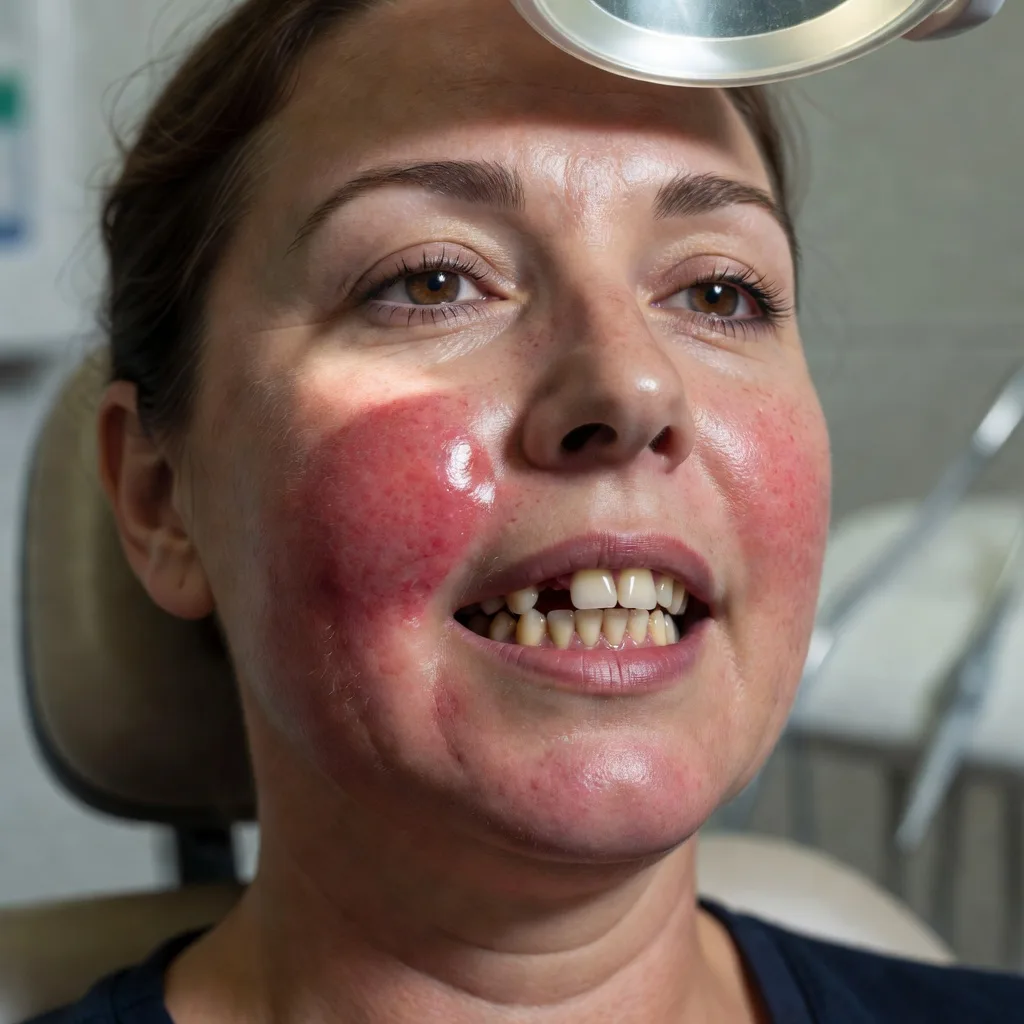
The first of these is the one that matters most for safety. A dental abscess can cause swelling of the cheek, jaw or even the eye, and in rare cases spreads into the neck and airway. It will not go away on its own.
The second link is more subtle and still being researched. Gum disease is very common: the CDC estimates that 42% of US adults aged 30 and over have periodontitis. Whether treating it improves skin is not yet clear, but it is good for your health either way.
Below we look at each connection, how to tell whether facial redness or swelling is coming from your mouth, what helps, and the warning signs that need a dentist or doctor today.
Shopping these picks?
Amazon Prime members get fast, free shipping on eligible items, plus Prime Video, Amazon Music and member deals. New members can start with a free trial.
Start a free Prime trialAged 18 to 24? Prime for Young Adults comes with a longer free trial and a lower price after it.
Affiliate link: we may earn a commission at no extra cost to you.
Recommended Oral Care Products for Healthier Skin Around the Mouth



On This Page
- Three Ways Your Mouth Can Affect Your Face
- Dental Infections and Facial Swelling
- Gum Disease and Body-Wide Inflammation
- Rashes Around the Mouth
- Is It Coming From Your Mouth? A Quick Check
- How to Keep Your Mouth From Affecting Your Skin
- Everyday Habits That Link Mouth and Skin
- Dos and Don’ts
- Honest Limits
- When to See a Dentist or Doctor
- Questions People Ask
- The Takeaway
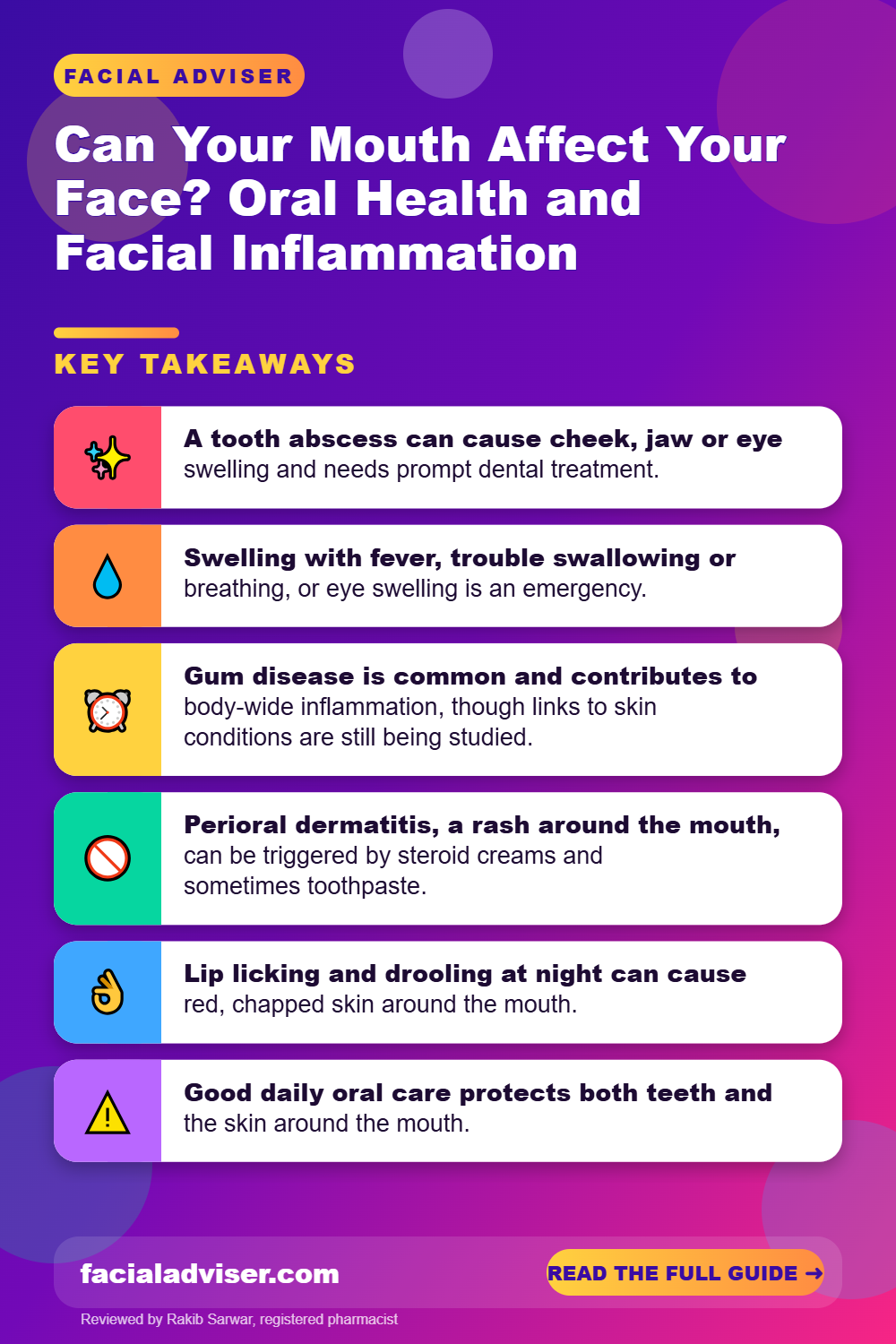
At a Glance
- A tooth abscess can cause cheek, jaw or eye swelling and needs prompt dental treatment.
- Swelling with fever, trouble swallowing or breathing, or eye swelling is an emergency.
- Gum disease is common and contributes to body-wide inflammation, though links to skin conditions are still being studied.
- Perioral dermatitis, a rash around the mouth, can be triggered by steroid creams and sometimes toothpaste.
- Lip licking and drooling at night can cause red, chapped skin around the mouth.
- Good daily oral care protects both teeth and the skin around the mouth.
- A rash around the mouth that does not settle should be seen by a dermatologist.
Three Ways Your Mouth Can Affect Your Face
| Connection | What happens | What you might notice |
|---|---|---|
| Dental infection | Bacteria from a tooth or gum spread into nearby tissue | Swelling of cheek, jaw or under the eye, pain, fever |
| Chronic gum disease | Ongoing inflammation that can affect the whole body | Bleeding gums, bad breath, loose teeth; possible links to skin inflammation |
| Contact and habits | Saliva, toothpaste, lip products or steroid creams irritate skin | Red, bumpy or flaky rash around the lips, chin or nose |
The first is urgent, the second is a long-term health issue, and the third is usually a skin-care problem. Knowing which one you are dealing with determines what to do next.
Dental Infections and Facial Swelling
A dental abscess is a pocket of pus caused by a bacterial infection, usually at the root of a tooth or in the gum. Because the upper teeth sit close to the cheeks and sinuses and the lower teeth close to the jaw and floor of the mouth, infection can spread into the soft tissues of the face.
The NHS lists symptoms including intense toothache or gum pain, redness in the mouth or face, sensitivity to hot or cold, a bad taste, difficulty opening the mouth, swelling of the face or jaw, swollen neck glands and a high temperature. It also stresses that a dental abscess will not go away on its own (NHS).
Call emergency services or go to an emergency department if you have facial swelling with difficulty breathing, speaking or swallowing, swelling around the eye, sudden vision problems, or you cannot open your mouth properly. Do not drive yourself.
Treatment usually involves draining the infection and treating the tooth, through a root canal or extraction. Antibiotics may be added if the infection has spread, but on their own they do not fix the cause.
Gum Disease and Body-Wide Inflammation
Gum disease begins as gingivitis, where the gums are red, swollen and bleed when you brush. If plaque is not removed, it can progress to periodontitis, where the tissues holding the teeth break down. The CDC reports that nearly half of adults aged 30 and over have periodontitis, with about 8% having severe disease (CDC).
Periodontitis is a chronic inflammatory condition. Inflammatory signals and bacteria from infected gums can enter the bloodstream, and gum disease has been associated with heart disease, diabetes and other inflammatory conditions. A number of observational studies have also reported associations between gum disease and inflammatory skin conditions such as psoriasis and rosacea.
Association is not the same as cause. People with one inflammatory condition may simply be more prone to others, and shared risk factors such as smoking and diabetes complicate the picture. There is not yet good evidence that treating gum disease clears skin conditions.
What is clear is that gum disease is worth treating for its own sake. Smoking and diabetes are two of its biggest risk factors, and both also affect the skin.
Rashes Around the Mouth
Perioral dermatitis
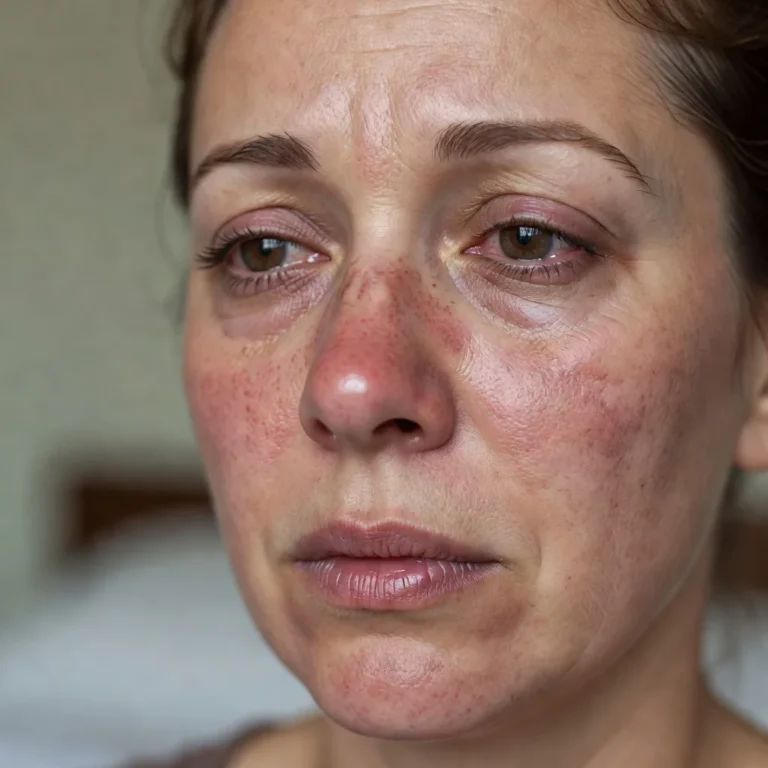
Perioral dermatitis causes small red or skin-coloured bumps around the mouth, sometimes spreading to the nose and eyes, often with a clear strip of skin right next to the lip. It can itch or burn. The American Academy of Dermatology names irritating skincare products or toothpaste, allergic reactions and, most notably, prolonged use of corticosteroid creams as possible triggers, and notes that clearing it requires stopping all corticosteroids on the face, including hydrocortisone (AAD).
Lip-licking dermatitis
Repeatedly licking the lips leaves a ring of red, chapped skin around the mouth, especially in cold, dry weather. Saliva contains digestive enzymes and evaporates quickly, drying the skin further and creating a cycle.
Angular cheilitis
Cracks and soreness at the corners of the mouth can come from saliva pooling there, ill-fitting dentures, yeast or bacteria, or occasionally low iron or B vitamins.
Acne around the chin and mouth
Breakouts in this area are common and usually hormonal, but heavy lip balms, residue from toothpaste and frequent touching can add to them.
Is It Coming From Your Mouth? A Quick Check
- Is the swelling on one side, near a sore or sensitive tooth? Think dental infection and see a dentist urgently.
- Do your gums bleed when you brush, or do you have persistent bad breath? Gum disease is likely; book a dental check-up.
- Is there a rash of small bumps around your mouth, especially after using a steroid cream? Consider perioral dermatitis.
- Is the redness a ring around your lips that gets worse in cold weather? Lip licking may be the cause.
- Did the rash appear after switching toothpaste or mouthwash? Try switching back or to a simpler formula.
How to Keep Your Mouth From Affecting Your Skin
Brush twice a day
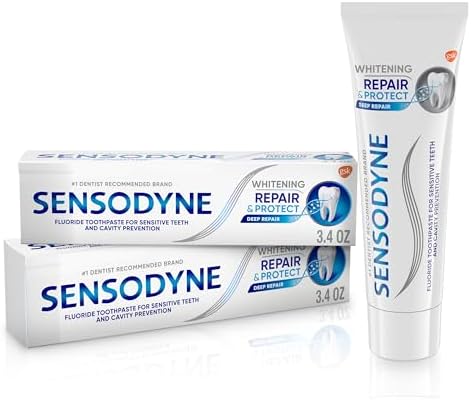
Use a fluoride toothpaste for two minutes. An electric toothbrush makes it easier to clean the gum line.
Clean between your teeth daily
Floss, interdental brushes or a water flosser remove plaque where brushes cannot reach.
Rinse and wipe after brushing
Rinse toothpaste off the lips and surrounding skin, and pat dry.
Protect the lips
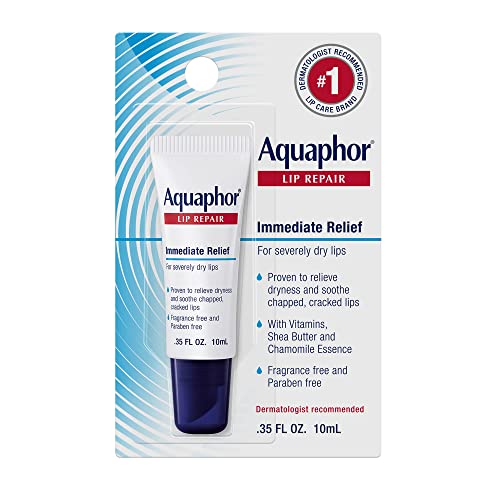
Apply a plain, fragrance-free ointment to the lips and the skin around them, especially at night.
Stop steroid creams on the face
Unless prescribed for the face by a doctor, avoid hydrocortisone and stronger steroids around the mouth.
See your dentist regularly
Check-ups and professional cleaning catch gum disease and tooth problems early.
If you suspect toothpaste is irritating your skin, try a simpler formula without strong flavourings, whitening agents or sodium lauryl sulphate, but keep using fluoride unless your dentist advises otherwise.
Everyday Habits That Link Mouth and Skin
A few ordinary habits sit right at the meeting point of oral care and skin care, and small changes make a noticeable difference.
| Habit | Effect on skin | Simple fix |
|---|---|---|
| Leaving toothpaste on the lips and chin | Residue can irritate and dry the skin | Rinse and pat the area dry after brushing |
| Licking dry lips | Creates a red, chapped ring around the mouth | Use a plain ointment and keep it with you |
| Sleeping with your mouth open | Drool can irritate the chin and corners of the mouth | Protect the area with a barrier ointment at night; treat nasal blockage |
| Resting your chin on your hand | Transfers oil and bacteria, can add to breakouts | Keep hands away from the face |
| Using a dirty phone | Pressed against the cheek and chin all day | Wipe your phone regularly |
Dry mouth is worth mentioning too. Some medicines, mouth breathing and dehydration reduce saliva, which raises the risk of tooth decay and gum problems and often goes hand in hand with cracked lips. Sipping water, chewing sugar-free gum and asking your pharmacist about medication side effects can help.
Dos and Don’ts
Try This
- See a dentist promptly for tooth pain with swelling
- Brush and clean between your teeth every day
- Keep lips moisturised with a plain ointment
- Stop smoking, which harms gums and skin
- Ask a dermatologist about a rash that will not settle
Avoid This
- Wait for a tooth abscess to go away on its own
- Pop or squeeze a gum or facial swelling
- Use hydrocortisone on a rash around the mouth without advice
- Lick your lips to relieve dryness
- Rely on antibiotics alone without treating the tooth
Honest Limits
The most popular claims online, such as ‘your breakouts are caused by your gut or your teeth’, go further than the evidence. Most chin and jawline acne is hormonal, not dental. Most rosacea and psoriasis is not caused by gum disease, even if the two sometimes occur together.
Similarly, fluoride in toothpaste is sometimes blamed for perioral dermatitis. Some case reports suggest a link in certain people, but fluoride is important for preventing tooth decay, so it is better to discuss switching with a dentist or dermatologist than to drop it entirely.
Where oral health makes a clear, direct difference to the face is infection. That is the connection to take most seriously.
When to See a Dentist or Doctor
Contact a dentist urgently, the same day if possible, for:
- Toothache with swelling in the gum, cheek or jaw
- A bad taste or pus in the mouth
- A fever with tooth or gum pain
- Difficulty opening your mouth fully
Seek emergency care for facial swelling with trouble breathing, speaking or swallowing, swelling around the eye or vision changes. See a dermatologist for a rash around the mouth that lasts more than a few weeks or keeps returning.
This article is for general information and is not a substitute for professional dental or medical advice. If you have facial swelling, pain or a persistent rash, contact a dentist or doctor.
Questions People Ask
Can a tooth infection cause facial swelling?
Yes. A dental abscess can cause swelling in the cheek, jaw or around the eye and needs urgent dental treatment.
When is facial swelling from a tooth an emergency?
If it comes with difficulty breathing, speaking or swallowing, swelling around the eye or vision changes, seek emergency care.
Can gum disease cause skin problems?
Studies have linked gum disease with some inflammatory skin conditions, but a direct cause has not been proven.
Can toothpaste cause a rash around the mouth?
Some people react to ingredients in toothpaste, which can contribute to perioral dermatitis or irritation.
What is perioral dermatitis?
A rash of small bumps around the mouth, sometimes the nose and eyes, often triggered by steroid creams or irritating products.
Should I use hydrocortisone on a rash around my mouth?
No, not without advice. Steroid creams can trigger or worsen perioral dermatitis.
Why is the skin around my mouth red and dry?
Lip licking, cold weather, irritating products or perioral dermatitis are common causes.
Can bad teeth cause acne?
There is little evidence that dental problems cause typical acne. Chin breakouts are more often hormonal.
Will antibiotics cure a tooth abscess?
They may control spreading infection, but the tooth still needs treatment to remove the source.
How often should I see a dentist?
Most people benefit from a check-up at least once a year, or as often as their dentist recommends.
The Takeaway
Your mouth can affect your face in several ways. The most important is infection: a tooth abscess can cause facial swelling that sometimes becomes dangerous, so tooth pain with swelling needs a dentist quickly and swelling with breathing or eye problems needs emergency care. Gum disease adds to body-wide inflammation and may be linked with some skin conditions, although the evidence is still developing.
Closer to the surface, steroid creams, some toothpastes and habits like lip licking can trigger rashes around the mouth. Good daily oral care, plain lip protection and regular dental check-ups cover most of this. If a rash around your mouth will not settle, a dermatologist can confirm what it is and how to clear it.

Written by
Registered pharmacist and founder of Facial Adviser. Rakib's pharmacy training covers how skincare actives work and interact; a later course in cosmetology turned that into a focus on facial treatments and skincare products. He plans, researches and edits every guide on the site and checks health claims against sources such as the American Academy of Dermatology, the FDA and the NIH. He is not a dermatologist; see the Editorial Policy and Medical Disclaimer.
About · Editorial policy · How we choose products · Medical disclaimer · Contact
Keep reading: Diet, sleep, stress and skin
- How Diet Impacts the Skin Microbiome: What the Science Actually Shows
- Does Omega-3 Give You Glowing Skin? What the Evidence Says
- How to Boost Facial Circulation Naturally (and What Actually Works)
- Can Dehydration Cause Dark Circles? What the Link Really Is
- Does Sugar Age Your Face? Glycation, Blood Sugar and Skin
- Magnesium Deficiency and Skin: What Is Known and What Is Hype