Does Sugar Age Your Face? Glycation, Blood Sugar and Skin
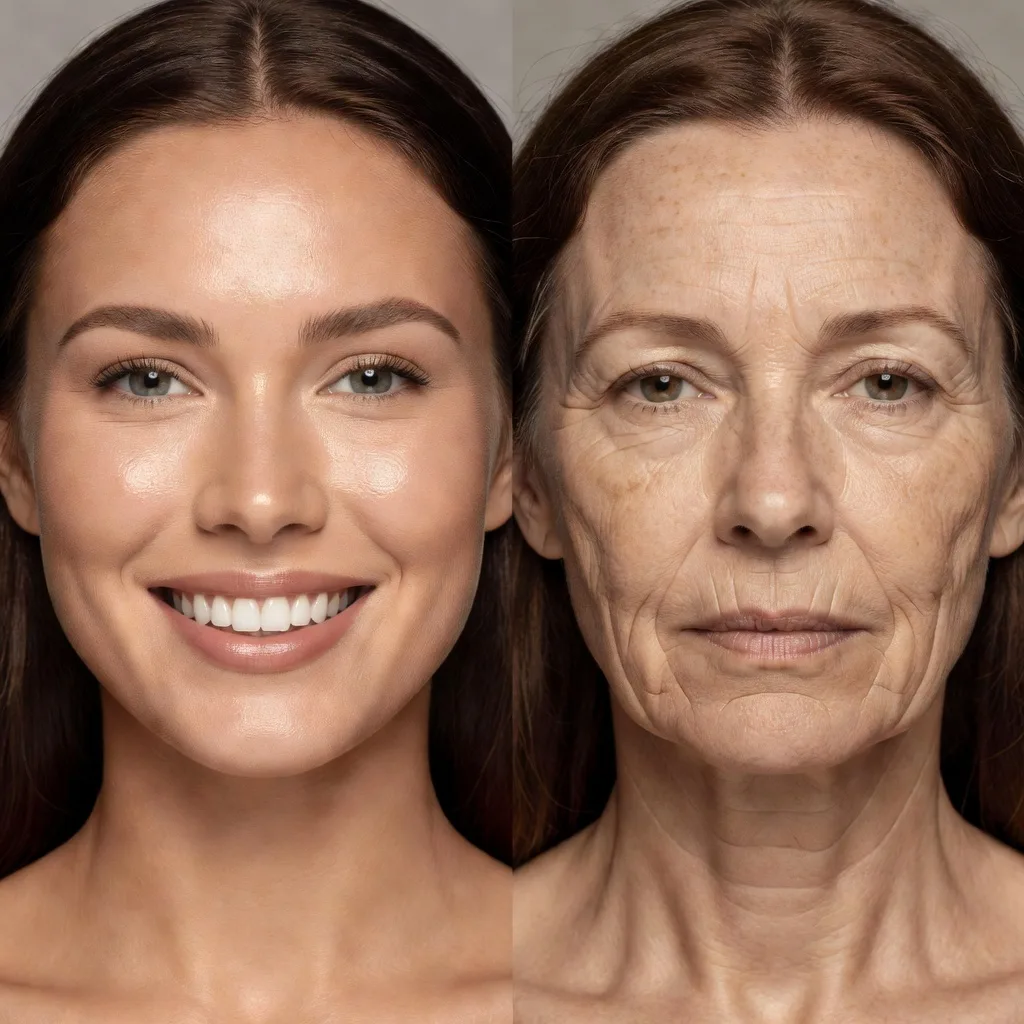
‘Sugar ages your skin’ has become one of the most repeated lines in wellness writing, often alongside dramatic claims that a single dessert can wrinkle your face. There is real science underneath, but the size of the effect is usually overstated.
Part of our guide to lifestyle and skin. Start with: How Diet Impacts the Skin Microbiome: What the Science Actually Shows
Sugar can contribute to skin ageing through a process called glycation, in which glucose attaches to collagen and elastin and forms stiff cross-links known as advanced glycation end products, or AGEs. These make collagen less flexible and harder to repair. A study of older adults found that higher blood sugar was linked to looking older, but the effect was modest, and sun exposure and smoking remain far bigger causes of facial ageing.
Glycation happens in everyone, all the time. It is a normal part of ageing, and it speeds up when blood sugar runs high for long periods, which is why people with poorly controlled diabetes often show more skin changes. For someone with normal blood sugar, occasional sweets are unlikely to make a visible difference.
That does not make sugar irrelevant. Diets high in added sugar tend to push blood sugar and insulin higher, add to weight gain and may feed inflammation, all of which can affect skin over years. Cutting back is good for your health, and your skin may benefit too.
This guide explains how glycation works, what the research actually shows about sugar and looking older, how sugar and acne connect, and practical ways to reduce sugar without obsessing over every biscuit.
Shopping these picks?
Amazon Prime members get fast, free shipping on eligible items, plus Prime Video, Amazon Music and member deals. New members can start with a free trial.
Start a free Prime trialAged 18 to 24? Prime for Young Adults comes with a longer free trial and a lower price after it.
Affiliate link: we may earn a commission at no extra cost to you.
Recommended Products for Lower-Sugar Habits and Skin Protection




Key Takeaways
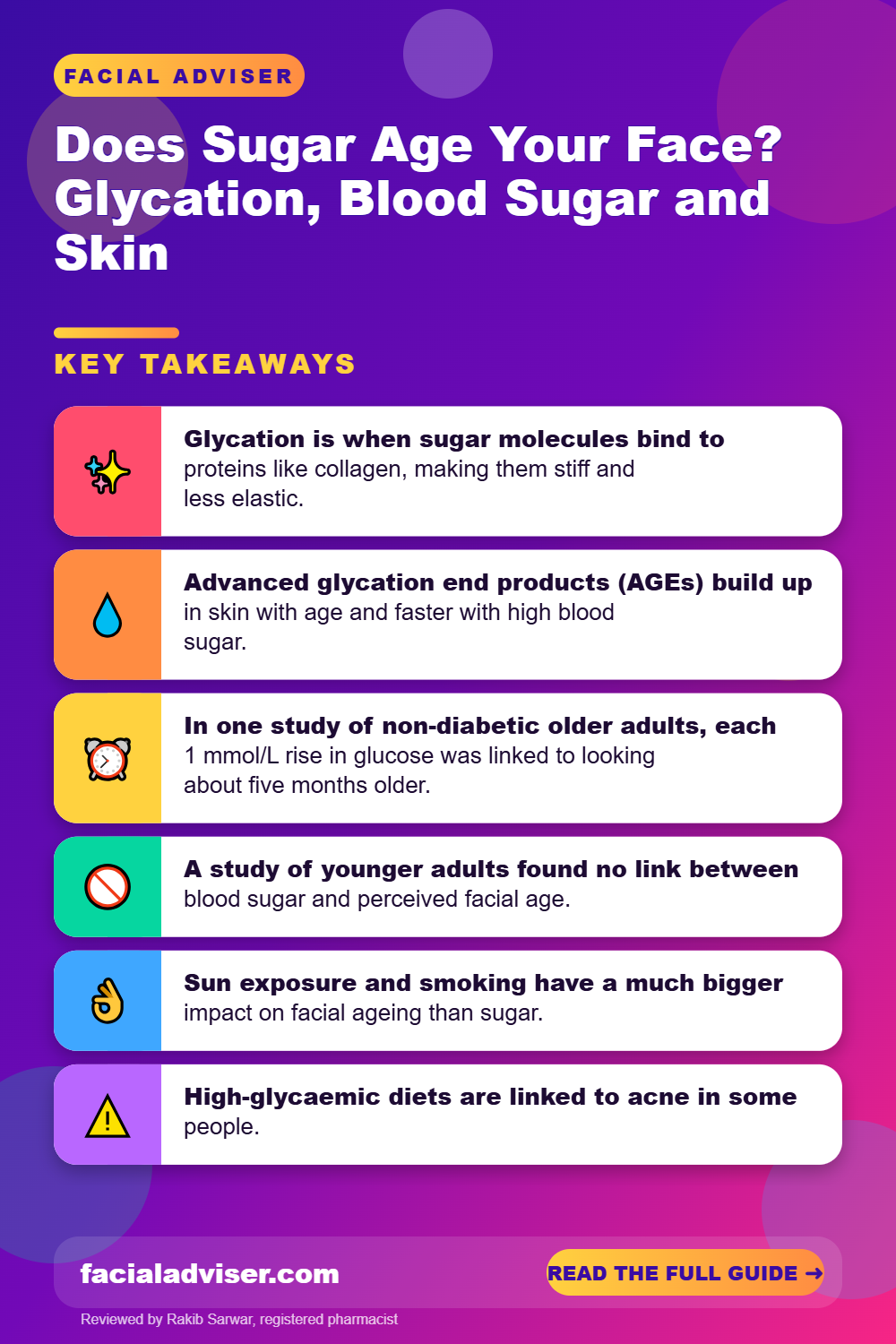
- Glycation is when sugar molecules bind to proteins like collagen, making them stiff and less elastic.
- Advanced glycation end products (AGEs) build up in skin with age and faster with high blood sugar.
- In one study of non-diabetic older adults, each 1 mmol/L rise in glucose was linked to looking about five months older.
- A study of younger adults found no link between blood sugar and perceived facial age.
- Sun exposure and smoking have a much bigger impact on facial ageing than sugar.
- High-glycaemic diets are linked to acne in some people.
- Cutting added sugar is sensible for overall health; it is not a substitute for sunscreen.
On This Page
- What Glycation Does to Collagen
- What the Research Shows About Sugar and Looking Older
- How Sugar Compares With Other Ageing Factors
- Sugar, Blood Sugar Spikes and Acne
- Where Added Sugar Hides
- Diabetes and the Skin
- Is Sugar Likely to Be Affecting Your Skin?
- How to Cut Back on Sugar for Healthier Skin
- Dos and Don’ts
- Honest Limits
- When to See a Doctor
- Your Questions, Answered
- The Bottom Line
What Glycation Does to Collagen
Collagen is the main structural protein in the skin, forming a mesh of fibres that keeps it firm. Elastin lets skin stretch and spring back. Both are long-lived proteins, which makes them especially prone to glycation damage over the years.
When glucose or fructose in the blood reacts with these proteins, it can eventually form advanced glycation end products. AGEs link neighbouring collagen fibres together in a rigid, disorganised way. Instead of a flexible mesh that can be broken down and replaced, the skin ends up with stiff, brittle fibres that resist normal repair.
AGEs also interact with receptors on skin cells that trigger inflammation and oxidative stress, adding further wear. A review in Clinics in Dermatology described glycation as one of the mechanisms linking diet with skin ageing, while noting that much of the evidence comes from laboratory and diabetes research (Danby, 2010).
| Stage | What happens | Effect on skin |
|---|---|---|
| Early | Sugar attaches loosely to proteins | Reversible |
| Intermediate | Bonds rearrange into more stable forms | Harder to reverse |
| Late (AGEs) | Permanent cross-links between collagen fibres | Stiffer, less elastic skin; slower repair |
What the Research Shows About Sugar and Looking Older
The most-quoted study comes from the Leiden Longevity Study in the Netherlands. Among 569 people without diabetes, those with higher blood glucose were rated as looking older, even after adjusting for age, sex, body mass index, smoking and sun damage. Each 1 mmol/L increase in glucose was associated with looking about 0.4 years, or roughly five months, older (Noordam et al., 2013).
A later study took a different angle. In healthy adults aged 24 to 45, researchers found no relationship between blood sugar markers, including HbA1c, and perceived facial age. They suggested that any effect of glucose may only become visible after many years of exposure (Scientific Reports, 2022).
Put together, these findings suggest that long-term higher blood sugar may add a little to visible ageing, mostly in later life. They do not show that eating sugar today will wrinkle your skin tomorrow. It is also notable that the Leiden participants were older adults, many in their sixties, so the results may not apply to someone in their twenties or thirties.
Blood glucose is influenced by many things besides sugar intake, including genetics, weight, physical activity, sleep and overall diet. Studies of blood sugar cannot tell us exactly how much dietary sugar contributes.
How Sugar Compares With Other Ageing Factors
| Factor | Strength of evidence for facial ageing | Relative impact |
|---|---|---|
| Sun exposure | Very strong | Largest single external factor |
| Smoking | Strong | Large |
| Genetics | Strong | Large |
| Air pollution | Moderate | Moderate, mainly pigment spots |
| High blood sugar over many years | Moderate | Modest |
| Occasional dietary sugar | Weak | Small or none in healthy people |
If you are choosing where to put your effort, daily sunscreen and not smoking will do far more for your face than cutting out dessert. For more on those, see our guides to smoking and facial blood vessels and pollution and facial ageing.
Sugar, Blood Sugar Spikes and Acne
The link between sugar and acne is arguably stronger than the link with wrinkles. Diets with a high glycaemic load, meaning lots of foods that raise blood sugar quickly, increase insulin and a related hormone called IGF-1. These can boost oil production and the growth of skin cells that clog pores.
The American Academy of Dermatology notes that studies suggest a low-glycaemic diet may reduce acne in some people (AAD). Not everyone responds, and diet works best alongside proper acne treatment rather than instead of it.
Dairy, especially skimmed milk, has also been linked to acne in some studies, possibly through the same insulin and IGF-1 pathway. If you want to test your own response, change one thing at a time for at least eight to twelve weeks, since skin takes that long to show a clear difference.
Where Added Sugar Hides
Most added sugar does not come from the sugar bowl. It is built into drinks and processed foods, often in places people do not expect.
| Food or drink | Why it matters | Easy swap |
|---|---|---|
| Soft drinks and energy drinks | Large amounts of sugar absorbed very quickly | Sparkling water with citrus |
| Sweetened coffee drinks | Syrups and sweetened milk add up | Plain coffee or a smaller size |
| Fruit juice and smoothies | Fibre is removed or broken down, so sugar hits faster | Whole fruit |
| Flavoured yoghurt | Often heavily sweetened | Plain yoghurt with berries |
| Breakfast cereals and granola | Frequently high in added sugar | Porridge oats or low-sugar cereal |
| Sauces and dressings | Ketchup, barbecue and sweet chilli sauces contain sugar | Herbs, spices, olive oil and lemon |
Swapping two or three of these daily items often cuts added sugar more than giving up an occasional dessert.
Diabetes and the Skin
The clearest evidence that blood sugar affects skin comes from diabetes. When glucose stays high for years, glycation affects collagen throughout the body, including the skin. People with poorly controlled diabetes may notice thicker, stiffer or yellowish skin, slower wound healing and more frequent infections.
Good diabetes management, with medication where needed, a balanced diet and regular activity, reduces these risks. It also protects the small blood vessels that feed the skin, which are damaged by long-term high blood sugar.
For people with prediabetes or insulin resistance, a dark, velvety thickening of skin in body folds called acanthosis nigricans can be an early visible clue. It often improves as insulin sensitivity improves.
Is Sugar Likely to Be Affecting Your Skin?
- You drink sugary drinks, sweetened coffees or juice most days.
- Much of your diet comes from white bread, pastries, sweets and processed snacks.
- You have been told your blood sugar is high, or you have prediabetes or diabetes.
- You have ongoing acne that seems to flare after sugary or refined-carb-heavy periods.
- You are carrying extra weight around the middle and exercise rarely.
If several apply, reducing added sugar and refined carbs is worth doing, for your general health as much as your skin. If you have diabetes, keeping blood sugar well controlled is the most important step for skin and everything else.
How to Cut Back on Sugar for Healthier Skin
Start with drinks
Swap sugary drinks and juices for water, sparkling water, unsweetened tea or coffee. This is often the biggest single source of added sugar.
Read labels
Check for added sugars under different names, such as syrup, dextrose, sucrose and fruit concentrate.
Build balanced meals
Pair carbohydrates with protein, healthy fats and fibre to slow the rise in blood sugar.
Choose whole grains
Wholegrain bread, oats, brown rice and legumes raise blood sugar more gently than refined versions.
Plan snacks
Keep nuts, fruit, yoghurt or vegetables to hand so sweets are not the default.
Move after meals
A 10 to 15 minute walk after eating helps muscles use glucose.
Aim for progress, not perfection. The World Health Organization suggests keeping free sugars below 10% of daily energy, and ideally below 5%. Most people can get there by cutting sugary drinks and a few processed snacks.
Dos and Don’ts
Try This
- Reduce sugary drinks first
- Eat plenty of vegetables, fruit, whole grains and protein
- Keep up daily sunscreen
- Get blood sugar checked if you have risk factors
- Enjoy sweets occasionally without guilt
Avoid This
- Believe that one dessert will wrinkle your skin
- Spend money on anti-glycation supplements with little evidence
- Replace sugar with lots of ultra-processed ‘sugar-free’ snacks
- Ignore signs of diabetes
- Neglect sun protection because you are focused on diet
Honest Limits
Anti-glycation skincare and supplements are increasingly marketed, often containing ingredients like carnosine, aminoguanidine or various plant extracts. Some show promise in the lab, but good evidence that they reduce visible ageing in people is lacking.
Glycation cannot be stopped entirely, because it is a normal chemical reaction in the body. The aim is to avoid keeping blood sugar persistently high, not to eliminate sugar altogether.
AGEs also come from food itself, particularly from foods cooked at high, dry heat such as grilling, frying and roasting. Some researchers think dietary AGEs matter, but how much they affect skin is still unclear.
If you notice excessive thirst, frequent urination, unexplained weight loss, slow-healing wounds or frequent skin infections, see a doctor. These can be signs of diabetes, which needs proper diagnosis and treatment.
When to See a Doctor
Diabetes and prediabetes can show up in the skin. See a doctor if you notice:
- Dark, velvety patches in skin folds such as the neck or armpits (acanthosis nigricans), often linked to insulin resistance
- Cuts or sores that heal very slowly
- Frequent skin, gum or fungal infections
- Yellowish, thickened or waxy skin patches
- Increased thirst, urination or unexplained tiredness
This article is for general information and does not replace medical or dietary advice. If you have diabetes or concerns about your blood sugar, speak to your doctor or a registered dietitian before making major changes to your diet.
Your Questions, Answered
Does sugar cause wrinkles?
Sugar contributes to glycation, which stiffens collagen, but its effect on wrinkles is modest compared with sun and smoking.
What are AGEs?
Advanced glycation end products, formed when sugars bind permanently to proteins like collagen, making them stiff.
Can cutting sugar reverse ageing?
It cannot reverse existing damage, but it may slow further glycation and benefits overall health.
Is fruit sugar bad for skin?
Whole fruit comes with fibre, water and antioxidants and is not a concern for most people. Fruit juice is a different matter.
Does sugar cause acne?
High-glycaemic diets are linked to acne in some people, but responses vary.
Do people with diabetes age faster?
Poorly controlled blood sugar is linked to more skin changes. Good control reduces the risk.
Do anti-glycation creams work?
Evidence in people is limited. Sunscreen and retinoids have far stronger support.
How much sugar is too much for skin?
There is no skin-specific limit. Keeping added sugar below 10% of calories is a reasonable general target.
Are artificial sweeteners better for skin?
They do not cause glycation, but the bigger benefit comes from an overall less processed diet.
Does cooking method affect AGEs?
Yes. High, dry heat cooking creates more AGEs than steaming, stewing or poaching.
The Bottom Line
Sugar does play a part in skin ageing through glycation, which stiffens collagen over time, and research links higher blood sugar in later life with looking a little older. But the effect is modest, and in younger adults it may not show at all. Sun exposure, smoking and genetics matter far more.
The practical takeaway is balanced: cut back on sugary drinks and refined carbs for your overall health, keep blood sugar in a healthy range, and never let diet distract from daily sunscreen. If you notice signs of high blood sugar in your skin or elsewhere, talk to a doctor.

Written by
Registered pharmacist and founder of Facial Adviser. Rakib's pharmacy training covers how skincare actives work and interact; a later course in cosmetology turned that into a focus on facial treatments and skincare products. He plans, researches and edits every guide on the site and checks health claims against sources such as the American Academy of Dermatology, the FDA and the NIH. He is not a dermatologist; see the Editorial Policy and Medical Disclaimer.
About · Editorial policy · How we choose products · Medical disclaimer · Contact
Keep reading: Diet, sleep, stress and skin
- How Diet Impacts the Skin Microbiome: What the Science Actually Shows
- Magnesium Deficiency and Skin: What Is Known and What Is Hype
- How Indoor Air Quality Affects Skin Health: Dryness, Pollutants and What Helps
- Your Skin Has a Body Clock: How Circadian Rhythm Shapes Skin Repair
- Does Caffeine Constrict Facial Blood Flow? Coffee, Skin and Redness
- How to Lower Cortisol for Better Skin: What Stress Really Does