Is Hydrafacial a Gimmick? What Evidence Shows
Is Hydrafacial a gimmick is a question worth answering carefully, since the honest answer sits somewhere between the marketing and the skepticism.
The widely quoted “100% of participants reported clearer skin” statistic traces to a study co-authored by the manufacturer’s own Chief Medical Officer, with no disclosed sample size or control group. The device itself is genuinely mechanistically distinct from crystal or diamond-tip microdermabrasion, since no abrasive surface ever touches the skin.
It’s also FDA Class I and explicitly exempt from premarket review, the same low bar as any ordinary microdermabrasion machine.
This guide covers the real mechanism, the evidence behind the marketing, and how it compares to cheaper alternatives.
Recommended At-Home Alternatives and Serums


What a Hydrafacial Actually Does to Your Skin
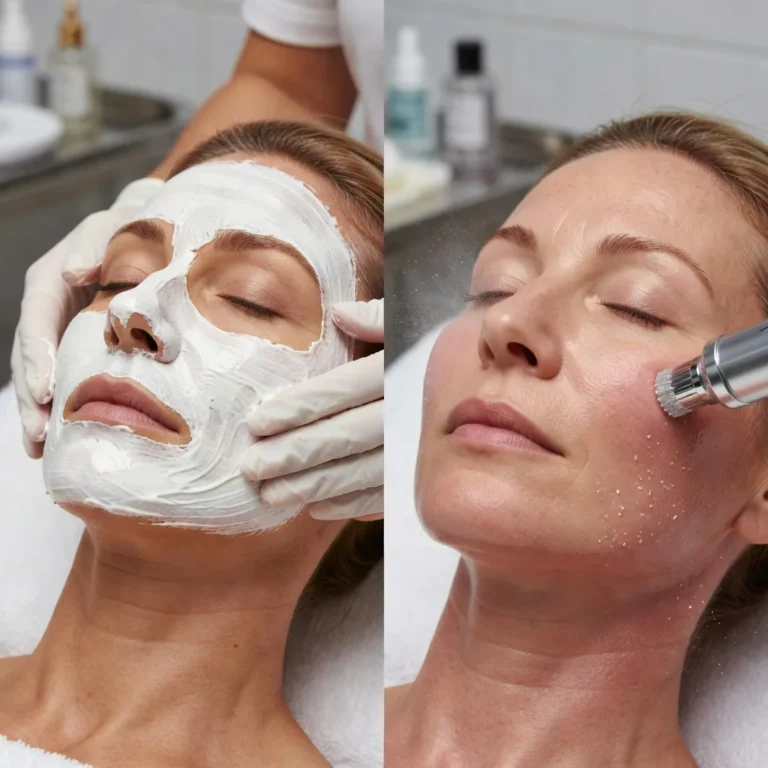
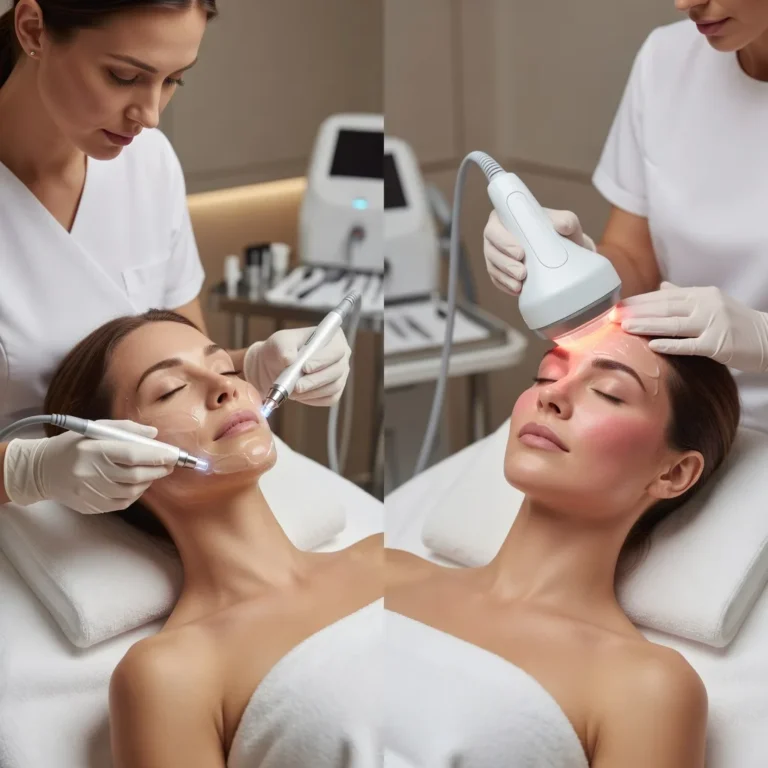
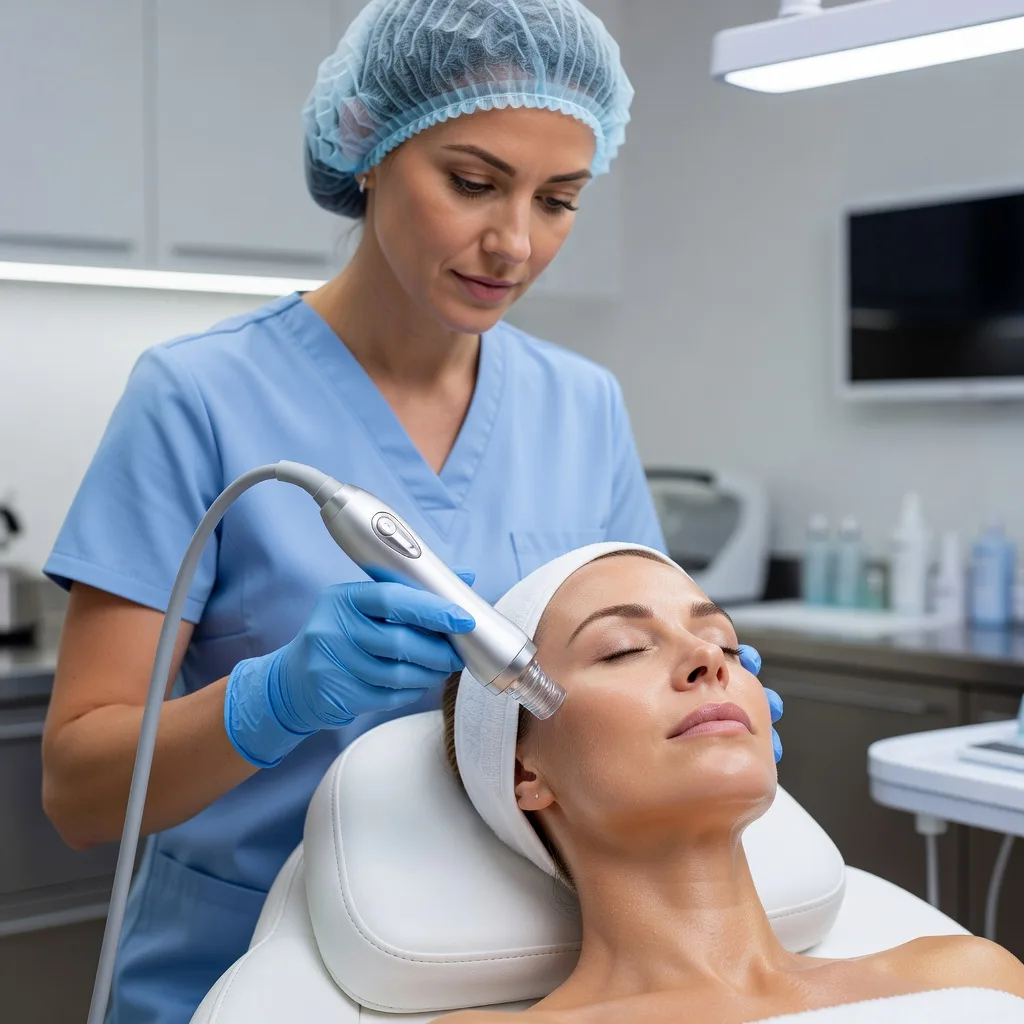
Hydrafacial is a branded skincare device — specifically the Hydrafacial Syndeo, made by The Beauty Health Company — built around a patented handpiece the company calls “Vortex-Fusion.” A spiral suction pattern inside the tip does three things at once: a mild acid solution loosens the top layer of dead cells, a vacuum pulls debris and oil out of pores, and a serum is infused into the freshly cleared skin. The genuinely distinctive part is mechanical, not marketing: no crystals, no diamond-tip, no abrasive surface ever touches your face. That’s a real, verifiable difference from standard microdermabrasion, which relies on physically abrading the skin with a crystal spray or a diamond-coated tip.
Shopping these picks?
Amazon Prime members get fast, free shipping on eligible items, plus Prime Video, Amazon Music and member deals. New members can start with a free trial.
Start a free Prime trialAged 18 to 24? Prime for Young Adults comes with a longer free trial and a lower price after it.
Affiliate link: we may earn a commission at no extra cost to you.
The Short Answer
- The “no abrasive contact” mechanism is real and mechanistically distinct from crystal or diamond-tip microdermabrasion.
- The widely-quoted “100% of participants reported clearer skin” statistic comes from a company-sponsored study co-authored by Hydrafacial’s own Chief Medical Officer.
- A separate, independently registered clinical trial (NCT05932732) does exist, though its full published results aren’t yet independently available.
- The device is FDA Class I and explicitly exempt from premarket review — the same low bar as any ordinary microdermabrasion machine.
- No independent, blinded, controlled trial comparing Hydrafacial to standard microdermabrasion or a chemical peel was found.
- The premium price reflects the proprietary tip-and-serum licensing model more than any demonstrated superior outcome.
In This Guide
- What a Hydrafacial Actually Does to Your Skin
- The Study Behind “100% Reported Clearer Skin”
- Is There Independent Research?
- How It Compares to Microdermabrasion and Peels
- Hydrafacial vs. Generic Hydrodermabrasion Machines
- What “FDA-Registered” Actually Means
- Cost vs. the Alternatives
- The “Lymphatic Drainage” Claim
- What a Typical Session Looks Like
- Who Tends to Benefit Most
- Who Should Skip or Modify It
- When to See a Dermatologist Instead
- A One-Minute Check Before Booking
- Where the Evidence Runs Out
- Frequently Asked Questions
The Study Behind “100% Reported Clearer Skin”
The statistic behind most Hydrafacial acne marketing traces to a study published in the Journal of Clinical and Aesthetic Dermatology and publicized via a company press release in January 2023. It followed a 12-week protocol of “Clarifying” treatments delivered every two weeks by trained estheticians, across participants ages 19 to 48 with varied skin tones. It’s co-authored by Dr. Jwala Karnik — who is also the Chief Medical Officer of The Beauty Health Company, Hydrafacial’s own parent company. The press materials report that confidence scores rose from 40% after the first treatment to 100% by the final one, and that all participants reported clearer, less inflamed skin. What the public-facing materials don’t state: the exact sample size, whether any blinding was used, or whether there was a control group receiving a different or sham treatment. The company’s own forward-looking-statement language even concedes results “may not be representative of all skin tones and skin types” — a direct-affiliation study reporting a perfect result is worth reading with real caution, not dismissing outright.
Is There Independent Research?
There is at least one registered clinical trial beyond the marketing copy: ClinicalTrials.gov lists NCT05932732, “Trial Assessing the Impact on Facial Skin Quality, Hydration, and Skin Barrier of Three Hydrafacial Treatments in Adults of All Skin Types.” Its existence confirms this isn’t purely an unstudied marketing device — a real trial was registered and, presumably, conducted. What isn’t independently available is the granular published outcome data from that trial, so it’s fair to say a formal research effort exists without being able to say exactly what it found.
How It Compares to Microdermabrasion and Peels
| Feature | Hydrafacial | Standard microdermabrasion | Chemical peel |
|---|---|---|---|
| Exfoliation method | Mild acid solution via vortex tip | Crystal spray or diamond-tip abrasion | Single-purpose acid application |
| Simultaneous extraction | Yes, via built-in vacuum | No, separate step if done at all | No |
| Serum infusion in same pass | Yes, built into the handpiece | No | No |
| Physical abrasive contact | None | Yes | No |
The “no abrasive contact” distinction is the most defensible, non-hyperbolic claim in Hydrafacial’s marketing — it’s a real mechanistic difference that plausibly explains the commonly reported “less downtime, less irritation” experience. What hasn’t been tested is whether that translates into a measurably better outcome than a well-performed diamond-tip session or a superficial peel; no independent controlled trial comparing the three head-to-head on an objective measure was found.
Hydrafacial vs. Generic Hydrodermabrasion Machines
Hydrafacial isn’t the only device built around this general mechanism. A broader look at how hydrodermabrasion compares to standard microdermabrasion covers the category-level mechanics, and a more detailed side-by-side of microdermabrasion and Hydrafacial specifically is worth reading if you’re deciding between the two as a consumer rather than just wondering whether the brand name is overselling itself. What differentiates Hydrafacial from a generic competitor isn’t the underlying water-jet-and-suction principle — it’s the patented handpiece geometry and the required system of branded, single-use tips and serums, which is also largely why sessions cost more than a generic equivalent.
What “FDA-Registered” Actually Means Here
The Hydrafacial Syndeo device carries FDA product code GFE, described as “Brush, Dermabrasion, Powered,” and is explicitly listed as exempt from premarket submission requirements. That’s the same Class I, 510(k)-exempt category that covers ordinary diamond-tip and crystal microdermabrasion machines — the lowest tier of FDA device oversight that exists. No device in this category, Hydrafacial included, has ever been “FDA-approved,” because approval was never sought or required. When marketing language says “FDA-registered” or “medical-grade device,” it’s describing that low bar, not an efficacy or safety endorsement from the agency.
Cost vs. the Alternatives
| Service | Typical relative cost | Why |
|---|---|---|
| Standard microdermabrasion | Lowest | Simple crystal or diamond-tip equipment, no proprietary consumables |
| Hydrafacial | Higher, comparable to or above a superficial peel | Proprietary equipment plus required brand-specific single-use tips and serums |
| Superficial chemical peel | Moderate to higher | Practitioner time and acid-solution cost, no licensed consumable system |
The premium price largely reflects a business model — proprietary hardware and mandatory branded consumables a provider must keep purchasing — rather than a documented superior clinical result compared with lower-cost alternatives that use the same general exfoliation-plus-extraction logic.
The “Lymphatic Drainage” Claim
Some Hydrafacial marketing mentions lymphatic drainage benefits. The vacuum-suction mechanism is real and does move surface fluid, which can produce a genuine, visible short-term de-puffing effect — the same category of benefit already documented for manual lymphatic facial massage. What isn’t supported is any trial evidence of a measurable, lasting change to lymphatic system function beyond that temporary fluid shift.
What a Typical Session Looks Like
Cleanse and peel
A gentle cleanse followed by the vortex tip’s mild acid pass to loosen the outer layer of dead cells.Extract
The vacuum suction step pulls debris and oil out of visible pores without manual pressure.Infuse
A serum, chosen for your skin’s needs, is delivered through the same handpiece into the freshly cleared skin.Protect
The session finishes with a boost of hydration and SPF before you leave.
Who Tends to Benefit Most
People who want a low-downtime, no-abrasion option — especially those who found crystal or diamond-tip microdermabrasion too irritating in the past — are the most plausible fit for this mechanism. It’s also a reasonable choice for anyone who wants extraction and hydration handled in a single pass rather than as separate services, or who values the convenience of a customizable add-on serum over seeking out the single lowest-cost exfoliation option available.
Do
- Ask what’s actually in the infused serum before booking, since formulations vary by add-on
- Disclose recent Botox, retinoid use, or a recent peel, since the acid step still applies standard exfoliation precautions
- Compare price against a standard microdermabrasion session if budget is a factor
Don’t
- Assume “no abrasive contact” means “no active ingredient exposure” — a real acid solution is still used
- Expect a single session to outperform a well-done peel on hard clinical evidence, since no head-to-head trial confirms that
- Treat the company’s own press-release statistics as independent proof
Who Should Skip or Modify It
Because the exfoliation step uses a real acid solution circulated through the device, the same standard precautions for chemical exfoliation apply: active cystic acne, sunburn, recent aggressive peels, and recent retinoid use are all reasons to reschedule or ask for a gentler protocol. This isn’t a device that bypasses those contraindications just because no crystals or diamond-tip touch the skin.
When to See a Dermatologist Instead
A Hydrafacial is a cosmetic maintenance service, not a treatment for a diagnosed skin condition. If you have persistent inflammatory acne, a rash that hasn’t responded to standard care, or a lesion that looks unusual, bleeds, or won’t heal, see a board-certified dermatologist rather than booking a spa treatment.
A One-Minute Check Before Booking
Before you book, ask yourself: any active cystic or pustular breakouts right now? Any peel or aggressive exfoliation in the last week? Currently using a prescription retinoid? Recent Botox or filler in the treatment area? A “yes” to any of these is worth raising with the provider beforehand, not mentioning after the fact.
Where the Evidence Runs Out
Be honest about what’s actually established here: the mechanism is real and mechanistically distinct from abrasive microdermabrasion, and at least one registered independent trial exists. What’s missing is any independent, blinded, controlled comparison against standard microdermabrasion or a chemical peel on an objective outcome measure — the most-cited “100%” statistic comes from a company-affiliated study, not from that kind of independent research.
Frequently Asked Questions
Is Hydrafacial actually FDA-approved?
No — it’s Class I and exempt from premarket FDA review, the lowest oversight tier that exists for a medical device, not an approval of safety or efficacy.
Is the “100% reported clearer skin” claim reliable?
It comes from a study co-authored by the manufacturer’s own Chief Medical Officer, with no disclosed sample size, blinding, or control group, so it should be weighted with real caution.
Does Hydrafacial use any abrasive materials?
No — that’s a genuine, verifiable difference from crystal or diamond-tip microdermabrasion; it uses a mild acid solution and vacuum suction instead.
Is Hydrafacial better than a standard chemical peel?
No independent controlled trial has compared the two head-to-head on an objective outcome, so that claim isn’t currently established either way.
Why is Hydrafacial more expensive than microdermabrasion?
Largely because of proprietary equipment and mandatory branded single-use tips and serums, not a documented superior clinical result.
Does it actually improve lymphatic drainage?
The vacuum step produces a real, temporary de-puffing effect from fluid movement, but no trial shows a lasting lymphatic-system change.
Can I get one if I’m using a retinoid?
Disclose it beforehand — the acid exfoliation step still carries standard precautions around recent retinoid use, same as any chemical exfoliation service.
Is there any independent clinical trial on Hydrafacial?
Yes, a registered trial (NCT05932732) exists, though its full independently-verified results aren’t publicly detailed yet.
What does “Vortex-Fusion” actually mean?
It’s the brand name for the patented spiral-suction handpiece that exfoliates, extracts, and infuses serum in one pass without abrasive contact.
Is Hydrafacial a gimmick overall?
The mechanism is real and distinct from abrasive alternatives, but the strongest marketing claims rest on company-affiliated research rather than independent proof — it’s a legitimate service oversold by its own statistics.

Written by
Registered pharmacist and founder of Facial Adviser. Rakib's pharmacy training covers how skincare actives work and interact; a later course in cosmetology turned that into a focus on facial treatments and skincare products. He plans, researches and edits every guide on the site and checks health claims against sources such as the American Academy of Dermatology, the FDA and the NIH. He is not a dermatologist; see the Editorial Policy and Medical Disclaimer.
About · Editorial policy · How we choose products · Medical disclaimer · Contact
Keep reading: HydraFacial and hydrodermabrasion
- Hydrodermabrasion: What It Actually Does
- Hydrodermabrasion vs Microdermabrasion Compared
- Fire and Ice Facial vs HydraFacial: Differences, Results and Which to Book
- Cryo Facial vs HydraFacial: Differences, Results and Which to Choose
- Aqua Facial vs HydraFacial: Differences, Results and Which to Book
- Ultimate Guide Microdermabrasion: What to Know
- Facial vs Chemical Peel: Differences, Results and Which to Choose