
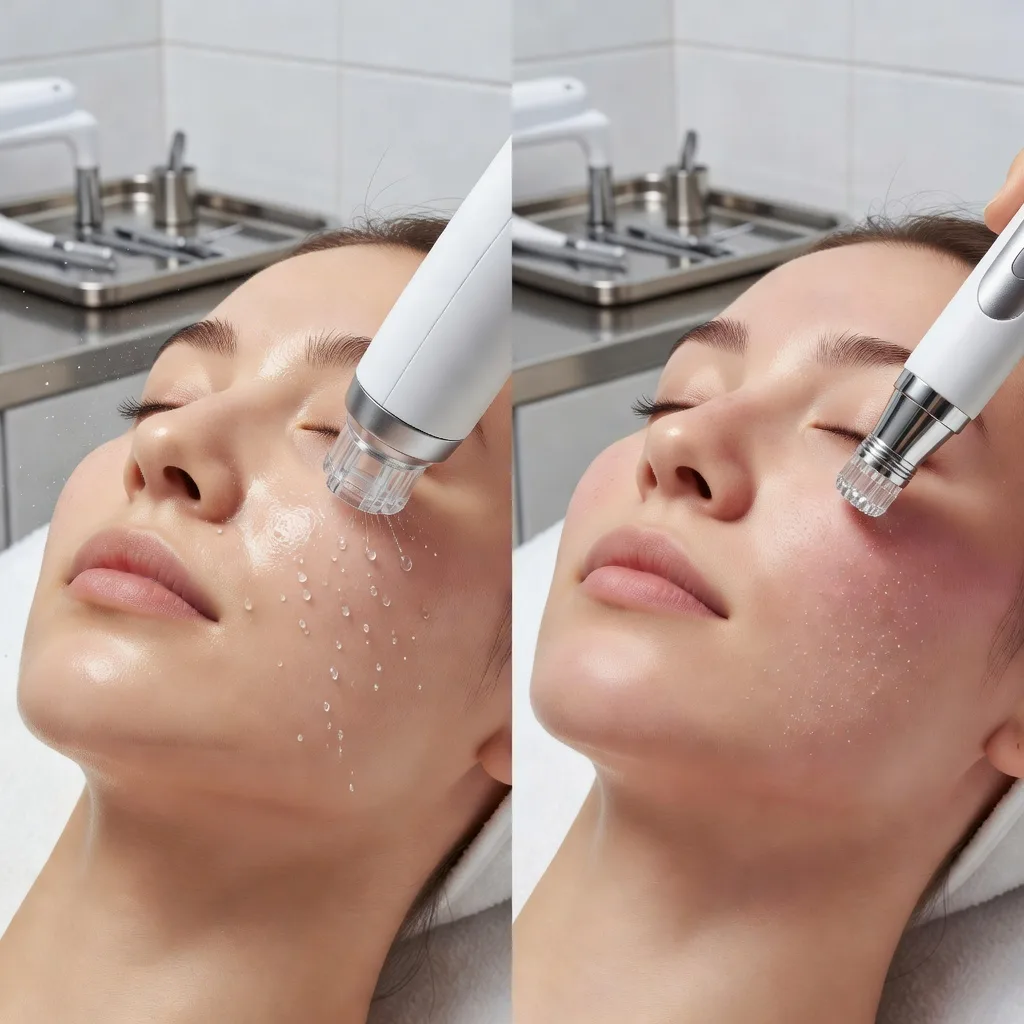
Hydrodermabrasion vs Microdermabrasion Compared
Half the confusion around hydrodermabrasion vs microdermabrasion comes from marketing pages that use the two names almost interchangeably. They’re not the same treatment, and neither one is what most people picture when they hear “dermabrasion,” which is a completely different medical procedure that happens to share half its name.
Part of our guide to facial treatments. Start with: Is Hydrafacial a Gimmick? What Evidence Shows
Microdermabrasion mechanically sands away the skin’s outer layer using crystals or a diamond-tipped wand. Hydrodermabrasion does something similar with a pressurized water jet instead of direct abrasive contact. That single mechanical difference is why one is generally recommended over the other for sensitive or reactive skin.
Here’s the check almost nobody mentions before booking: active acne, a rosacea flare, sunburn, or broken skin means abrasive microdermabrasion is a bad idea right now, regardless of how gentle a spa says their version is. It’s a standard pre-treatment screen, not an inconvenience, and running it yourself takes about ten seconds in front of a mirror.
This guide breaks down how hydrodermabrasion, microdermabrasion, and true dermabrasion actually differ, what to realistically expect from an at-home device versus an in-office session, and when persistent redness or irritation means it’s time to see a dermatologist instead of booking another appointment.
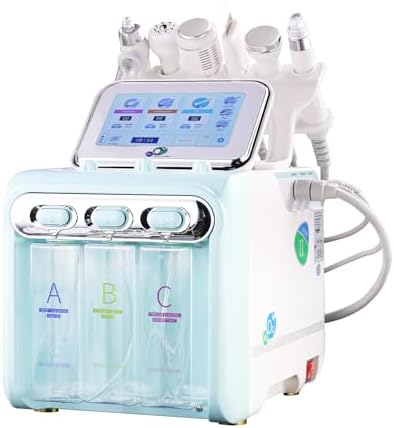
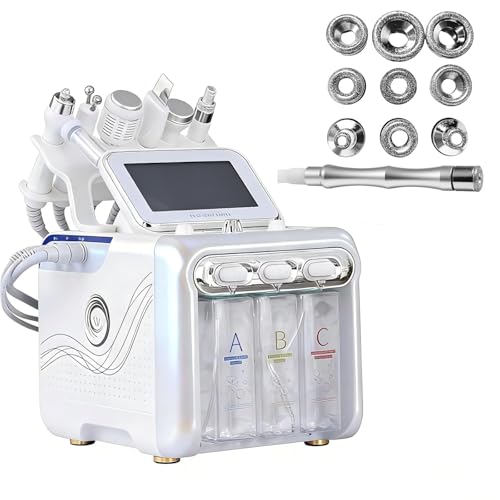
Recommended Products for Hydrodermabrasion




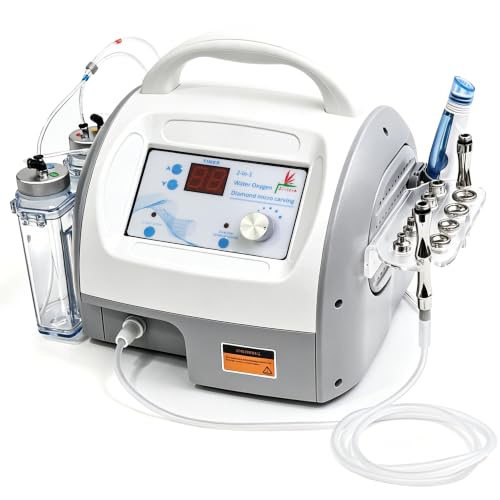


Recommended Products for Microdermabrasion
Shopping these picks?
Amazon Prime members get fast, free shipping on eligible items, plus Prime Video, Amazon Music and member deals. New members can start with a free trial.
Start a free Prime trialAged 18 to 24? Prime for Young Adults comes with a longer free trial and a lower price after it.
Affiliate link: we may earn a commission at no extra cost to you.
Key Takeaways
- Microdermabrasion uses crystals or a diamond-tipped wand to mechanically abrade the outermost layer of skin. Hydrodermabrasion replaces the abrasive tip with a water jet, exfoliating and extracting without direct mechanical friction.
- Dermabrasion is a different, far more aggressive procedure entirely, performed by a physician, that reaches deeper into the skin and is used mainly for significant scarring.
- A quick checklist of active acne, rosacea flares, sunburn, or broken skin tells you whether abrasive microdermabrasion is a bad idea for you right now.
- Hydrodermabrasion is generally gentler on reactive or sensitive skin, but it isn’t automatically safe during an active flare either.
- Both treatments exfoliate the surface layer only. Neither reaches deep enough to meaningfully change fine lines, deep scarring, or pigmentation sitting lower in the skin.
- At-home devices in either category are meaningfully weaker than professional in-office versions, since consumer safety limits keep the abrasion or suction well below clinical intensity.
- Persistent redness, broken skin, or an infection-like reaction after treatment is a reason to see a dermatologist, not to book another session.
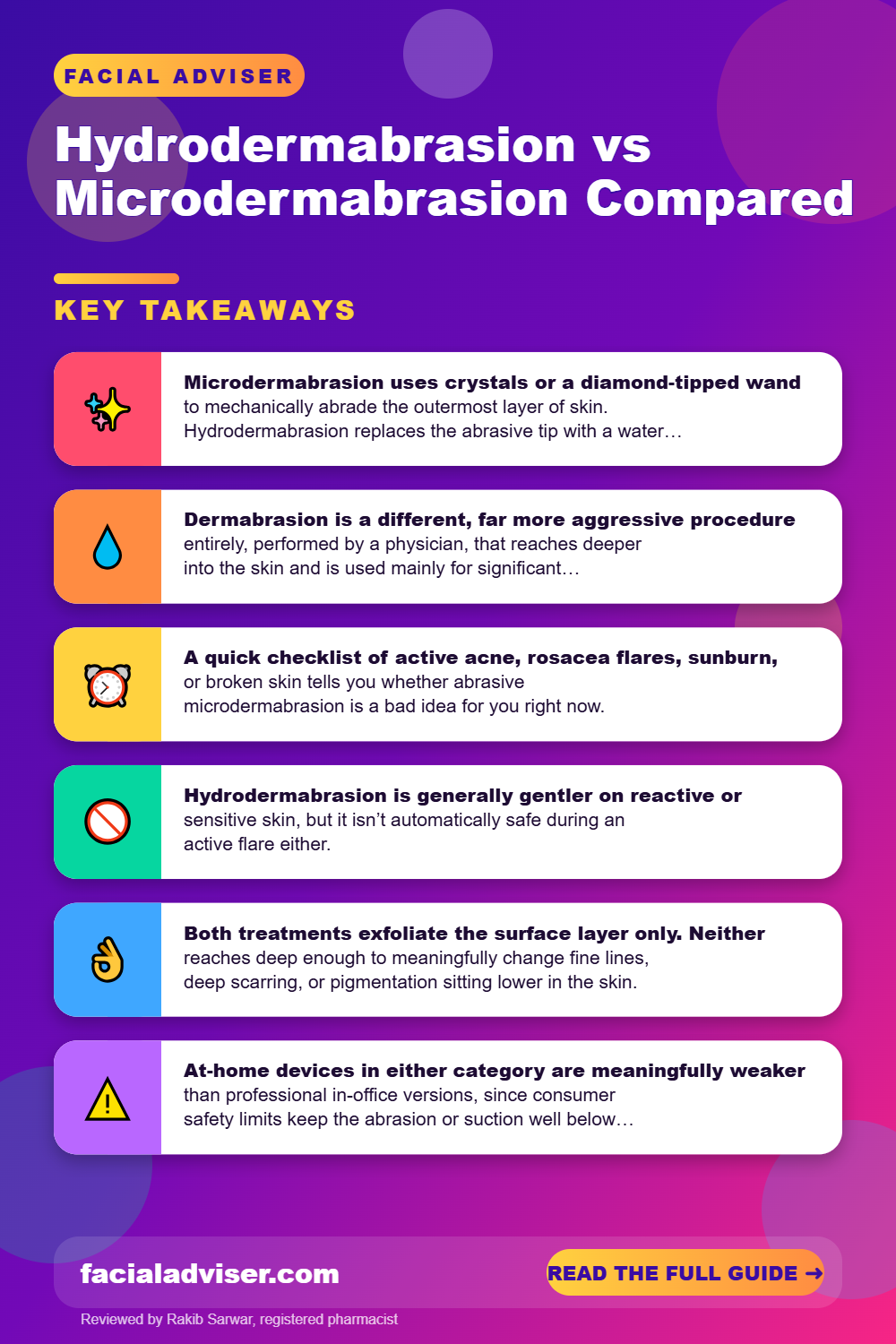
Table of Contents
- What These Treatments Actually Do to Your Skin
- The Pre-Treatment Checklist: Should You Skip Abrasive Exfoliation Right Now?
- Hydrodermabrasion vs. Microdermabrasion vs. Dermabrasion
- At-Home Devices vs. Professional Treatment
- Do This, Not That: Getting the Most from Either Treatment
- What a Session Actually Involves
- What Neither Treatment Can Do
- When to See a Dermatologist Instead
- Frequently Asked Questions
- The Bottom Line
What These Treatments Actually Do to Your Skin
Choosing between hydrodermabrasion vs microdermabrasion mostly comes down to how each one physically touches your skin. Microdermabrasion uses fine crystals sprayed across the skin, or a diamond-coated wand dragged across it, to mechanically sand away the outermost layer of dead skin cells, with simultaneous suction removing the debris. The friction itself is what does the work.
Hydrodermabrasion replaces that abrasive contact with a pressurized water jet, exfoliating the same surface layer through fluid dynamics and suction rather than physical scraping. Because there’s no direct abrasive friction against the skin, it’s generally considered gentler and better tolerated by sensitive or reactive skin types, which is the same water-jet approach used in the branded HydraFacial treatment.
Both are cosmetic procedures targeting only the outermost skin layer. Neither should be confused with dermabrasion, an entirely different, more invasive medical procedure covered in the comparison below.
The Pre-Treatment Checklist: Should You Skip Abrasive Exfoliation Right Now?
Check the mirror before booking either treatment:
- Active acne breakouts, a rosacea flare, sunburn, or any broken or open skin: skip crystal or diamond-tip microdermabrasion. The direct abrasive contact can spread bacteria from active breakouts and further irritate already-inflamed or compromised skin.
- None of the above, skin is calm: microdermabrasion is a reasonable option, and hydrodermabrasion remains the gentler choice if you have generally reactive or sensitive skin even without an active flare.
This is a standard pre-treatment screen used in professional settings, not a technicality. A reputable provider should be asking you these same questions before starting either treatment.
Hydrodermabrasion vs. Microdermabrasion vs. Dermabrasion
| Treatment | Mechanism | Depth | Who performs it | Downtime |
|---|---|---|---|---|
| Hydrodermabrasion | Pressurized water jet, no abrasive contact | Outermost skin layer | Esthetician or medical provider | None to minimal |
| Microdermabrasion | Crystals or diamond-tip wand, mechanical abrasion | Outermost skin layer | Esthetician or medical provider | Minimal, possible mild redness |
| Dermabrasion | Motorized rotating instrument, deep mechanical resurfacing | Reaches into the deeper dermis | Physician, often with local anesthesia | Days to weeks of visible healing |
Dermabrasion is not a stronger version of microdermabrasion you graduate to. It’s a genuinely different, medical-grade procedure used mainly for significant acne scarring or deep wrinkles, performed under anesthesia with real recovery time. For scarring specifically, a treatment like microneedling is often a more targeted option than either form of dermabrasion. Confusing the two leads people to expect microdermabrasion-level downtime from a procedure that actually requires real healing.
At-Home Devices vs. Professional Treatment
| At-home devices | Professional in-office treatment | |
|---|---|---|
| Abrasion/suction intensity | Deliberately limited for consumer safety | Higher intensity settings, adjusted to your skin by a trained provider |
| Visible results | Subtle, gradual improvement in texture with regular use | More noticeable single-session results |
| Risk of overuse | Lower per-session, but repeated overuse can still cause irritation | Managed by the provider’s training and experience |
| Cost pattern | One device, ongoing personal use | Recurring per-session cost |
Setting expectations here matters. An at-home hydrodermabrasion or microdermabrasion device is not a weaker version of the same in-office result achieved more slowly, the intensity ceiling itself is meaningfully lower for safety reasons, and that changes what’s realistic to expect from either.
Tip: If you’re using an at-home device, let a full cycle of a few sessions play out before judging results. Gradual, cumulative texture change is the realistic pattern, not a dramatic single-session transformation.
Do This, Not That: Getting the Most from Either Treatment
Do
- Run the pre-treatment checklist before every session, not just the first one
- Choose hydrodermabrasion if your skin is generally reactive or sensitive
- Apply sunscreen diligently afterward, since freshly exfoliated skin is more UV-sensitive
- Space professional sessions several weeks apart rather than back to back
- Ask what intensity setting is being used and why
Don’t
- Book microdermabrasion during an active acne breakout or rosacea flare
- Confuse dermabrasion’s downtime expectations with microdermabrasion’s
- Expect an at-home device to match in-office intensity or results
- Combine either treatment with a strong retinoid or acid the same week without spacing them out
- Skip sunscreen on days you’ve had either treatment
What a Session Actually Involves
Skin check
The provider screens for active acne, rosacea, sunburn, or broken skin before proceeding.
Cleansing
Skin is cleaned to remove makeup, oil, and surface debris.
Treatment pass
The device, crystal or diamond-tip wand for microdermabrasion, water jet for hydrodermabrasion, is moved across the skin in controlled passes, typically 20 to 30 minutes total.
Extraction and serum
Many protocols follow with extractions and a hydrating or brightening serum suited to your skin.
Immediately after
Mild redness is common and usually settles within a few hours.
Aftercare
Sunscreen and gentle skincare for several days protect the freshly exfoliated surface.
Repeat sessions
Most people see cumulative texture improvement with sessions spaced 2 to 4 weeks apart.
What Neither Treatment Can Do
Both treatments work on the outermost skin layer only. Neither meaningfully changes deep wrinkles, significant acne scarring, or pigmentation sitting lower in the skin, those need a treatment that reaches further, like dermabrasion, laser resurfacing, or a deeper chemical peel performed by a qualified provider.
Results from either treatment are also temporary. Skin naturally regenerates, and the smoother texture and temporary glow fade over roughly two to four weeks without repeat sessions or a supporting home routine.
When to See a Dermatologist Instead
Warning: Persistent redness that doesn’t settle within a day or two, broken or bleeding skin, or signs of infection like increasing pain, warmth, or pus after a treatment need medical evaluation, not another cosmetic session.
Note: If you have active, inflammatory acne rather than mild surface congestion, a dermatologist-directed treatment plan will do more than repeated cosmetic exfoliation, which can aggravate active breakouts rather than clear them.
Frequently Asked Questions
Which is better, hydrodermabrasion or microdermabrasion?
Neither is universally better. Hydrodermabrasion is generally gentler for sensitive or reactive skin since it skips direct abrasive contact. Microdermabrasion can provide a slightly more noticeable exfoliating effect for tougher, non-reactive skin.
Is hydrodermabrasion the same as a HydraFacial?
HydraFacial is a specific branded device using hydrodermabrasion technology along with extraction and serum infusion steps. Hydrodermabrasion is the broader category of technology; HydraFacial is one commercial version of it.
Can I get microdermabrasion with active acne?
It’s generally not recommended. The abrasive contact can spread bacteria from active breakouts and further irritate inflamed skin. Hydrodermabrasion or a dermatologist-guided treatment plan is a better fit during a flare.
What’s the difference between dermabrasion and microdermabrasion?
Dermabrasion is a medical procedure performed by a physician, often under local anesthesia, that reaches deep into the skin and requires real recovery time. Microdermabrasion is a superficial cosmetic treatment with minimal to no downtime.
How often should I get hydrodermabrasion or microdermabrasion?
Most people space professional sessions 2 to 4 weeks apart, since the surface layer needs time to regenerate between treatments.
Do at-home microdermabrasion devices actually work?
They can improve surface texture gradually with regular use, but their intensity is deliberately limited for safety, so results are more subtle than a professional in-office session.
Can these treatments remove acne scars?
Not meaningfully. Both work on the outermost skin layer only. Significant acne scarring needs a deeper treatment like dermabrasion, laser resurfacing, or microneedling performed by a qualified provider.
Is hydrodermabrasion safe for rosacea?
It’s generally gentler than abrasive microdermabrasion, but it isn’t automatically safe during an active flare. Check with a dermatologist before scheduling treatment during a rosacea flare-up.
How long do results from microdermabrasion last?
The smoother texture and glow typically last two to four weeks before skin returns to its prior state without further treatment.
What symptoms after treatment mean I should see a doctor?
Persistent redness beyond a day or two, broken or bleeding skin, or signs of infection like increasing pain, warmth, or pus need medical evaluation rather than another session.
The Bottom Line
Check the mirror before booking either one. Active acne, a rosacea flare, sunburn, or broken skin means skip abrasive microdermabrasion for now, hydrodermabrasion’s water-jet approach is the gentler option, though it isn’t automatically safe during a flare either. Both work on the surface layer only, and neither is a substitute for dermabrasion, which is a genuinely different medical procedure for deeper scarring, not a stronger version of the same cosmetic treatment.
Whichever you choose, keep expectations realistic: temporary texture improvement over two to four weeks, not a fix for deep wrinkles or significant scarring, and always with sunscreen afterward since freshly exfoliated skin is more sun-sensitive than usual.

Written by
Registered pharmacist and founder of Facial Adviser. Rakib's pharmacy training covers how skincare actives work and interact; a later course in cosmetology turned that into a focus on facial treatments and skincare products. He plans, researches and edits every guide on the site and checks health claims against sources such as the American Academy of Dermatology, the FDA and the NIH. He is not a dermatologist; see the Editorial Policy and Medical Disclaimer.
About · Editorial policy · How we choose products · Medical disclaimer · Contact
Keep reading: HydraFacial and hydrodermabrasion
- Is Hydrafacial a Gimmick? What Evidence Shows
- Fire and Ice Facial vs HydraFacial: Differences, Results and Which to Book
- Cryo Facial vs HydraFacial: Differences, Results and Which to Choose
- Aqua Facial vs HydraFacial: Differences, Results and Which to Book
- Salt Facial vs HydraFacial: Differences, Results and Which to Choose
- HydraFacial vs Deep Cleansing Facial: Differences, Results and Which to Book
- What Is a Spa Facial?
- Fruit Facial at Home: Does It Actually Work?

4 Comments