
Can Mixing Skincare Actives Reduce Their Effectiveness?
Skincare advice is full of warnings about which actives must never be mixed. Vitamin C and niacinamide, retinol and acids, benzoyl peroxide and almost anything. Follow every rule and you end up with a routine that feels like a chemistry exam.
Part of our guide to skincare products. Start with: 10 Best Facial Serums for Aging Skin (2026): Picks by Concern
A small number of combinations really can make one active less effective. The best-known example is benzoyl peroxide with traditional tretinoin, where benzoyl peroxide can break down the tretinoin. Benzoyl peroxide can also oxidise vitamin C. Most other famous clashes, such as vitamin C with niacinamide, are either myths or based on old research. For most pairings, the real risk is irritation rather than lost effectiveness, and separating actives by time of day or by night is the simplest fix.
Understanding the difference matters. If two actives inactivate each other, layering them wastes both. If they simply irritate together, you may be able to use both with care, on alternate nights or at different times of day.
Many of the rules online also ignore how products are formulated, and some are repeated so often that they are treated as fact. A well-designed product that combines two actives has been tested for stability, whereas two separate products layered at home have not.
This guide explains which combinations can reduce effectiveness, which are mainly an irritation risk, which are fine, and how to build a routine that uses several actives without problems, even if your skin is on the sensitive side.
Shopping these picks?
Amazon Prime members get fast, free shipping on eligible items, plus Prime Video, Amazon Music and member deals. New members can start with a free trial.
Start a free Prime trialAged 18 to 24? Prime for Young Adults comes with a longer free trial and a lower price after it.
Affiliate link: we may earn a commission at no extra cost to you.
Recommended Actives and Supporting Products


Key Takeaways
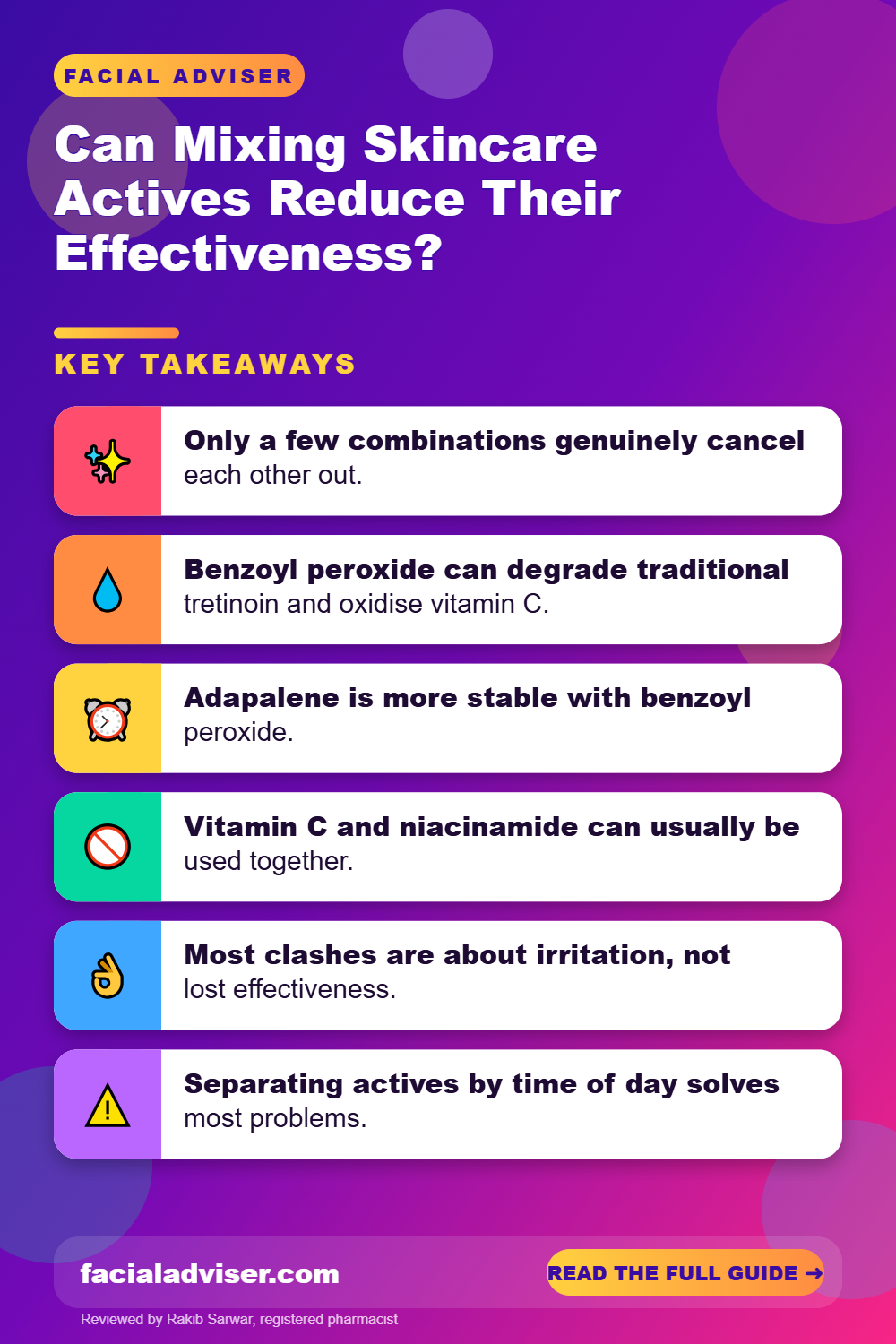
- Only a few combinations genuinely cancel each other out.
- Benzoyl peroxide can degrade traditional tretinoin and oxidise vitamin C.
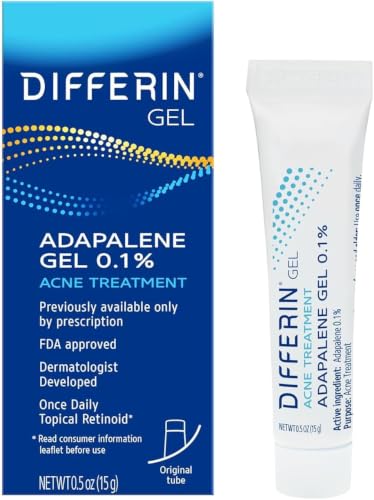
- Adapalene is more stable with benzoyl peroxide.
- Vitamin C and niacinamide can usually be used together.
- Most clashes are about irritation, not lost effectiveness.
- Separating actives by time of day solves most problems.
- Introduce one active at a time.
Jump to a Section
- Which Combinations Clash and Why
- Benzoyl Peroxide: The Main Troublemaker
- Common Myths About Mixing Actives
- When the Problem Is Irritation, Not Effectiveness
- How to Combine Actives Safely
- A Sample Weekly Routine With Several Actives
- Why Formulation Matters More Than Rules
- How to Tell if a Combination Is Not Working
- Adjusting by Skin Type
- Dos and Don’ts
- Honest Limits
- When to See a Dermatologist
- Questions People Ask
- Where This Leaves You
Which Combinations Clash and Why
| Combination | Main concern | What to do |
|---|---|---|
| Benzoyl peroxide + tretinoin (traditional) | Benzoyl peroxide can degrade tretinoin | Use at different times, or use adapalene or a stable combined product |
| Benzoyl peroxide + vitamin C | Benzoyl peroxide can oxidise vitamin C | Vitamin C in the morning, benzoyl peroxide at night or as a wash |
| Retinoids + AHAs or BHAs | Irritation, dryness, peeling | Alternate nights |
| Vitamin C + AHAs | Stinging, irritation | Vitamin C in the morning, acids at night |
| Multiple exfoliating acids | Over-exfoliation | Choose one per routine |
| Vitamin C + niacinamide | Old concern, largely a myth | Usually fine together |
| Niacinamide + retinoids | Generally compatible | Fine together; niacinamide may help comfort |
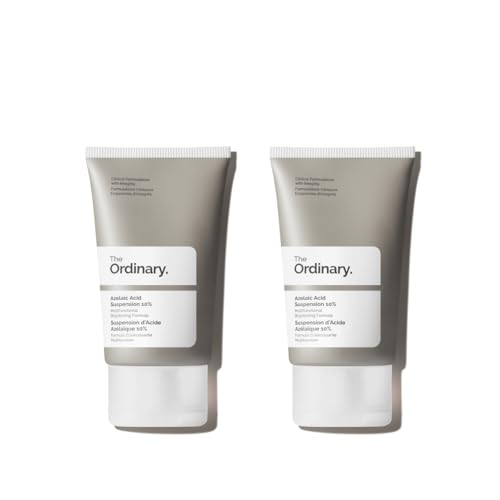
| Azelaic acid + most actives | Generally compatible | Introduce slowly |
The first two rows are the ones where effectiveness is genuinely at stake. Most of the rest are about how much irritation your skin can handle.
Newer prescription formulas, such as some microencapsulated tretinoin products, are designed to be stable alongside benzoyl peroxide. Follow your prescriber’s instructions rather than general rules.
Benzoyl Peroxide: The Main Troublemaker
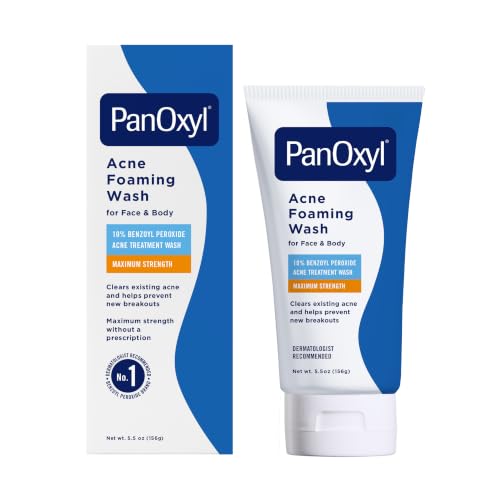
Benzoyl peroxide is an effective acne treatment, but it is a strong oxidising agent. That is how it helps kill acne-causing bacteria, and it is also why it can react with other ingredients.
Research published in the British Journal of Dermatology found that tretinoin broke down when combined with benzoyl peroxide, especially in light, while adapalene remained stable. This is one reason adapalene and benzoyl peroxide are sold together in some combined products.
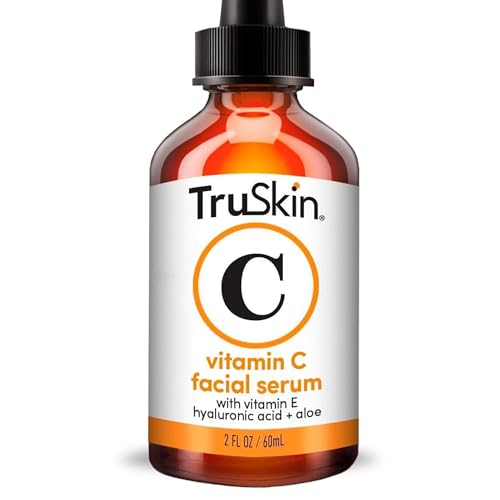
Benzoyl peroxide can also oxidise vitamin C, so layering the two is unlikely to give you the full benefit of the vitamin C.
Benzoyl peroxide can also bleach towels, pillowcases and clothing, so it is worth using white fabrics while you use it. That has nothing to do with effectiveness, but it is one of the most common surprises for people starting it, and a good reason to apply it at a time when it will have dried before touching fabric.
A simple approach is to use benzoyl peroxide as a wash, which is rinsed off, or at a different time of day from other actives. Our guide on leave-on treatments versus night creams explains where treatments fit in a routine.
Common Myths About Mixing Actives
Vitamin C and niacinamide cancel each other out. This idea comes from older research using different forms of the ingredients under conditions that do not reflect modern skincare. Many products now combine them, and most people can use them together. If you notice flushing, try using them at different times of day. Retinol and vitamin C cannot be used in the same routine. They do not inactivate each other in any practical sense, but both can irritate. Using vitamin C in the morning and retinol at night is a convenient split rather than a strict rule. You must wait 30 minutes between actives for pH to reset. There is little evidence for long waits. A minute or two for each layer to dry is usually enough. More actives means faster results. Stacking actives mainly increases irritation, which can slow progress by forcing you to stop.When the Problem Is Irritation, Not Effectiveness
Retinoids, exfoliating acids and high-strength vitamin C can all cause dryness, stinging and peeling on their own. Using them together adds up. The ingredients may still work, but your skin may not tolerate the combination.
Irritation also has knock-on effects. A damaged barrier lets irritants in more easily and loses water faster, so your whole routine may start to sting. Our guide on repairing your moisture barrier covers what to do if that happens.
For most people, the best approach is to spread strong actives across the week rather than stacking them. Our guide to how many nights off actives you need shows how to plan a rotation.
Stop combining actives if you notice burning, persistent redness, peeling or swelling. Return to a gentle cleanser, moisturiser and sunscreen until your skin settles.
How to Combine Actives Safely
Start with one active
Use it alone for several weeks so you know how your skin responds.
Split by time of day
Use antioxidants such as vitamin C in the morning and retinoids or acids at night.
Alternate strong actives
Keep retinoids and exfoliating acids on different nights.
Keep benzoyl peroxide separate
Use it as a wash or at a different time from tretinoin and vitamin C.
Support with moisturiser
A plain, fragrance-free moisturiser helps you tolerate actives.
Protect with sunscreen
Wear broad-spectrum SPF 30 or higher every day.
If a combined product contains two actives you would normally separate, trust the formulation. It has been designed and tested for stability, unlike two separate products layered at home.
A Sample Weekly Routine With Several Actives
| Day | Morning | Evening |
|---|---|---|
| Monday | Vitamin C, moisturiser, sunscreen | Retinoid, moisturiser |
| Tuesday | Vitamin C, moisturiser, sunscreen | Moisturiser only |
| Wednesday | Vitamin C, moisturiser, sunscreen | Exfoliating acid, moisturiser |
| Thursday | Vitamin C, moisturiser, sunscreen | Retinoid, moisturiser |
| Friday | Vitamin C, moisturiser, sunscreen | Moisturiser only |
| Saturday | Vitamin C, moisturiser, sunscreen | Exfoliating acid, moisturiser |
| Sunday | Moisturiser, sunscreen | Moisturiser only |
This is just one example. Niacinamide and azelaic acid are usually gentle enough to use most days alongside other actives, and many people do well with far fewer actives than this.
Our guide on applying acids before or after vitamin C covers what to do if you want to use them in the same routine.
Why Formulation Matters More Than Rules
Whether two actives clash depends on far more than their names. The form of the ingredient, its concentration, the pH of each product, the other ingredients present and even the packaging all play a part.
Take vitamin C. Pure L-ascorbic acid is acidic and unstable, while derivatives such as sodium ascorbyl phosphate are gentler and more stable. A combination that causes stinging with one form may be perfectly comfortable with another.
Retinoids vary too. Retinol, retinal, adapalene and tretinoin differ in strength, stability and how likely they are to irritate. Advice that applies to one does not automatically apply to all.
This is why product directions and your prescriber’s advice should always come before general mixing charts. Brands test their own formulas for stability and tolerability in ways that home layering cannot match.
How to Tell if a Combination Is Not Working
- Your skin stings, burns or feels hot after applying the second product.
- Redness, peeling or tightness appears within a few days of adding a new active.
- Products pill or leave a residue when layered.
- A vitamin C serum turns darker faster than usual when used with other products.
- Your results stall or skin gets worse despite consistent use.
If any of these happen, go back to one active at a time. Reintroduce the second product on alternate nights or at a different time of day, and give your skin a couple of weeks before judging the result.
Keeping a simple note of what you used and how your skin responded makes it much easier to spot the combination that causes problems.
Adjusting by Skin Type
Sensitive or dry skin: use as few actives as possible and keep them apart. Gentle options such as niacinamide and azelaic acid are often easier to combine than retinoids and exfoliating acids. Oily or acne-prone skin: may tolerate more combinations, such as salicylic acid with a retinoid on alternate nights, but benzoyl peroxide still needs care around tretinoin and vitamin C. Mature skin: a retinoid at night and vitamin C in the morning is a common, well-tolerated split. Add exfoliating acids sparingly, as skin can become drier with age.Dos and Don’ts
Good Habits
- Separate benzoyl peroxide from tretinoin and vitamin C
- Split actives between morning and night
- Alternate retinoids and exfoliating acids
- Introduce one active at a time
- Use sunscreen daily
Common Mistakes
- Believe every mixing rule online
- Stack several strong actives in one routine
- Wait long periods for pH to reset
- Add more actives to speed up results
- Keep going if your skin burns or peels
Honest Limits
Much of what is known about active combinations comes from laboratory stability testing rather than studies of real routines on skin. A combination that degrades in a test tube may still offer some benefit on the skin, and one that looks stable may still irritate.
Formulation matters enormously. The same active can behave differently depending on its form, strength, pH and the other ingredients in the product. General rules are a starting point, and product directions or your prescriber’s advice should take priority.
Finally, you may not need multiple actives at all. Many people get good results from one well-chosen active, a moisturiser and sunscreen. Adding more is optional, not a requirement for good skin. A simple routine you follow consistently will almost always beat a complicated one that keeps your skin irritated.
When to See a Dermatologist
- You are using prescription treatments and want to add other actives.
- Acne is not improving after several months of over-the-counter products.
- Your skin burns, peels or stings with most products.
- You are pregnant or breastfeeding and unsure which actives are safe.
A dermatologist can recommend combinations that work together, including prescription products designed to be used alongside each other.
This article is for general information and does not replace professional medical advice. See a dermatologist for persistent skin concerns.
Questions People Ask
Can mixing actives make them less effective?
A few combinations can, especially benzoyl peroxide with traditional tretinoin or vitamin C, but most clashes are about irritation.
Can I use vitamin C and niacinamide together?
Yes, for most people. The idea that they cancel out is largely based on old research.
Can I use benzoyl peroxide with retinol?
It can be irritating, and benzoyl peroxide can degrade some retinoids. Use them at different times or use adapalene.
Is adapalene stable with benzoyl peroxide?
Yes. Adapalene is more stable with benzoyl peroxide than traditional tretinoin.
Can I use retinol and AHAs together?
It can be irritating. Alternate nights instead.
Do I need to wait between actives?
A minute or two for each layer to dry is usually enough.
Can I use vitamin C with benzoyl peroxide?
Benzoyl peroxide can oxidise vitamin C, so use them at different times.
Is niacinamide safe with retinol?
Generally yes, and it may help some people tolerate retinol.
How many actives should I use?
As few as needed. One well-chosen active is often enough.
What if a product already contains two actives?
It has been formulated for stability, so follow its directions.
Where This Leaves You
Only a few active combinations genuinely reduce effectiveness, mainly benzoyl peroxide with traditional tretinoin or vitamin C. Most other clashes are about irritation, and many popular mixing rules are myths.
Split actives between morning and night, alternate strong ones across the week, introduce one at a time and support your skin with moisturiser and daily sunscreen.

Written by
Registered pharmacist and founder of Facial Adviser. Rakib's pharmacy training covers how skincare actives work and interact; a later course in cosmetology turned that into a focus on facial treatments and skincare products. He plans, researches and edits every guide on the site and checks health claims against sources such as the American Academy of Dermatology, the FDA and the NIH. He is not a dermatologist; see the Editorial Policy and Medical Disclaimer.
About · Editorial policy · How we choose products · Medical disclaimer · Contact
Keep reading: Serums and actives
- 10 Best Facial Serums for Aging Skin (2026): Picks by Concern
- How to Transition to Retinol Smoothly: A 12-Week Plan That Avoids the Peel
- Niacinamide or Hyaluronic Acid: Pick Both?
- Antioxidant Facial Treatment: What Holds Up
- Vitamin C Facial: What the Real Data Shows
- Collagen Facial Treatment: What the Evidence Shows
- What Does a Facial Toner Do? The Real Answer
- 10 Best Facial Cleansers for Combination Skin (2026): Balanced Picks