10 Best Facial Products for Women (2026): A Simple Core Routine
Skincare shelves can make it look as if every woman needs ten steps and a drawer full of jars. In reality, a small set of well-chosen products does most of the work. This list covers 10 options across the core routine, from a gentle cleanser and moisturisers to sunscreen and targeted serums, and explains who each one suits.
Part of our guide to facials: what to expect. Start with: How Often Should You Get a Professional Facial? A Guide by Skin Type and Goal
The best facial products for women are a gentle cleanser, a moisturiser suited to your skin type and a broad-spectrum sunscreen of SPF 30 or higher every morning. Those three cover the basics for almost everyone. From there, add one targeted product for your main concern: a vitamin C serum for dullness and uneven tone, a retinoid at night for fine lines, texture or breakouts, or a hydrating serum for dryness. An eye cream is optional. Choose fragrance-free, non-comedogenic formulas if your skin is sensitive or acne-prone, introduce one new product at a time and give each several weeks to work.
In short: cleanse, moisturise and protect every day, then add one proven active for your main concern.
The American Academy of Dermatology recommends broad-spectrum sunscreen of SPF 30 or higher for daily use and advises gentle, non-irritating products for acne-prone skin.
Below you will find the ten picks, how we chose them, each core product type, which ingredients to look for, how the routine changes with age and skin type, and how to avoid irritation.
Shopping these picks?
Amazon Prime members get fast, free shipping on eligible items, plus Prime Video, Amazon Music and member deals. New members can start with a free trial.
Start a free Prime trialAged 18 to 24? Prime for Young Adults comes with a longer free trial and a lower price after it.
Affiliate link: we may earn a commission at no extra cost to you.
As an Amazon Associate we earn from qualifying purchases. This does not change which products we include.


Contents
- The 10 Best Facial Products for Women Right Now
- How We Chose These Products
- The Core Routine Every Woman Needs
- Cleanser: What to Look For
- Moisturiser: Matching Texture to Skin Type
- Sunscreen: The Most Important Anti-Ageing Product
- Serums and Actives: Choosing One That Fits
- How the Routine Changes With Age
- How to Build Your Facial Routine Step by Step
- Avoiding Irritation When Combining Products
- Dos and Don’ts
- Honest Limits
- When to See a Dermatologist
- Questions People Ask
- The Bottom Line
What to Know First
- PCA SKIN Hyaluronic Acid Boosting Serum is our top pick because hydration suits almost every woman’s routine.
- Vibriance Super C is the best vitamin C serum for mature skin wanting brightness and hydration.
- SkinMedica Retinol Serum 1.0 is the pick for fine lines and texture, used slowly at night.
- Three essentials: gentle cleanser, moisturiser and daily SPF 30 or higher.
- Add one targeted active at a time for your main concern.
- Vitamin C suits mornings; retinoids suit evenings.
- Give each new product several weeks before judging it.
The 10 Best Facial Products for Women Right Now
These ten products were shortlisted from widely reviewed Amazon listings to cover the core routine: serums, retinoids, sunscreens, moisturisers and a gentle cleanser. Each pick explains where it fits in a routine, who it suits and who should skip it.
| # | Product | Best For | Standout Feature | |
|---|---|---|---|---|
| 1 | PCA SKIN Hyaluronic Acid Boosting Serum | Dehydrated skin at any age | Light, creamy hydrating serum | View |
| 2 | Vibriance Super C Vitamin C Serum | Dullness and uneven tone after 50 | Multi-tasking vitamin C for mature skin | View |
| 3 | SkinMedica Retinol Serum 1.0 Complex | Fine lines and uneven texture | Higher-strength retinol from a pro brand | View |
| 4 | ISDIN Eryfotona Actinica Mineral SPF 50 | Daily protection on sensitive skin | Clear zinc oxide fluid | View |
| 5 | Peter Thomas Roth Retinol Fusion PM | Experienced retinol users | Microencapsulated retinol, night use | View |
| 6 | Ursa Major Golden Hour Moisturizer | Dry or winter-stressed skin | Fragrance-free plant-based recovery cream | View |
| 7 | EltaMD UV Skin Recovery SPF 50 | Rosacea-prone and red skin | Mineral SPF that tones down redness | View |
| 8 | EltaMD UV Clear Face Sunscreen | Oily and breakout-prone skin | Oil-free zinc SPF with niacinamide | View |
| 9 | AESTURA ATOBARRIER365 Ceramide Cream | Dry, sensitive or retinol-stressed skin | Ceramide cream for barrier repair | View |
| 10 | First Aid Beauty Ultra Gentle Cleanser | Sensitive skin and makeup removal | Fragrance-free cream-to-foam wash | View |
PCA SKIN Hyaluronic Acid Boosting Serum

Best for: Dehydrated skin at any age
The PCA SKIN Hyaluronic Acid Boosting Serum earns the top spot because hydration is the one extra step that suits nearly every woman, whatever her age or skin type. The listing describes a light, creamy serum that absorbs quickly without heaviness, with hydrolysed hyaluronic acid and a technology designed to support the skin’s own moisture levels.
It sits comfortably under the moisturisers at #6 and #9 and under any sunscreen on this list, so it slots into a morning or evening routine without clashing with vitamin C or retinol. Plumper, better-hydrated skin makes fine lines look softer, but treat that as a temporary cosmetic effect rather than a change to the lines themselves.
- Hyaluronic acid serum for immediate and lasting hydration
- Hydrolysed hyaluronic acid for deeper moisture
- Designed to support the skin’s own moisture levels
- Light, creamy texture for most skin types
Pros
- Suits almost every skin type and age
- Layers easily under other products
- Quick-absorbing, not sticky
Cons
- Hydration alone will not treat spots or pigmentation
- Premium option for a single-purpose serum
Skip it if: Skip it if your skin is already comfortable with a good moisturiser; put your effort into daily SPF instead.
Check Price on AmazonVibriance Super C Vitamin C Serum

Best for: Dullness and uneven tone after 50
Vibriance Super C is a vitamin C serum made specifically for mature skin, which makes it the pick for women who want brightness and hydration in one step. The listing describes it as a multi-tasker designed to hydrate without irritation, and says it suits all skin types, including very sensitive skin.
Vitamin C is best used in the morning under sunscreen, where it adds antioxidant support. This pack contains three bottles, so it is a longer commitment than most serums here. It is gentler in positioning than the retinoids at #3 and #5, which makes it a softer first active for someone new to serums. Some of the listing wording is promotional, so judge it on how your skin feels.
- Vitamin C serum aimed at mature skin
- Designed to hydrate without irritation
- Quick-absorbing formula
- Pack of three bottles
Pros
- Made with mature skin in mind
- Pairs well with morning SPF
- Positioned as gentle for sensitive skin
Cons
- Three-bottle pack is a big commitment
- Marketing claims are bolder than the evidence
Skip it if: Skip it if you only want to try vitamin C once; a single bottle is a smaller risk.
Check Price on AmazonSkinMedica Retinol Serum 1.0 Complex

Best for: Fine lines and uneven texture
SkinMedica Retinol Serum 1.0 Complex is the pick for women who want a well-known, higher-strength retinol from a brand sold through skin clinics. Retinoids are among the best-supported ingredients for fine lines and texture, and this serum pairs retinol with an encapsulated antioxidant complex to help limit irritation. It is a step up for people ready to target lines seriously.
The listing sensibly tells you to apply it in the evening, increase use gradually and wear SPF 30 or higher daily, which matches dermatologist advice. It is stronger than a beginner product, so first-time retinol users should start two or three nights a week. Compared with the Peter Thomas Roth pick at #5, it gives clearer usage guidance.
- Retinol and vitamin A derivatives for skin renewal
- Encapsulated antioxidant complex
- Aims to improve the look of tone and texture
- Evening use with gradual build-up and daily SPF
Pros
- Established professional brand
- Clear, sensible usage instructions
- Targets lines and texture
Cons
- Can irritate if you start too fast
- Not for use during pregnancy
Skip it if: Skip it if you are pregnant, trying to conceive or have very reactive skin; ask a doctor first.
Check Price on AmazonISDIN Eryfotona Actinica Mineral SPF 50

Best for: Daily protection on sensitive skin
ISDIN Eryfotona Actinica is the best sunscreen pick because daily broad-spectrum SPF is the single most important product for protecting skin, and this one is easy to wear. The listing describes a 100% mineral, zinc oxide fluid that is ultralight, tintless and designed not to leave a white cast, and it is labelled non-comedogenic.
It is aimed at sensitive and acne-prone skin, which makes it a safe choice for women who have struggled with sunscreens that sting. Some listing claims about repairing sun damage go further than the evidence supports, so buy it for protection. Compared with the EltaMD picks at #7 and #8, it is the most neutral finish.
- 100% mineral zinc oxide, SPF 50
- Broad-spectrum UVA and UVB protection
- Non-comedogenic, for sensitive and acne-prone skin
- Ultralight fluid with no white cast
Pros
- Easy daily wear
- Gentle mineral filters
- Suits most skin tones
Cons
- Fluid texture needs shaking and careful measuring
- Repair claims go beyond what sunscreen can prove
Skip it if: Skip it if you prefer a tinted or moisturising sunscreen; the EltaMD picks have more specific finishes.
Check Price on AmazonPeter Thomas Roth Retinol Fusion PM

Best for: Experienced retinol users
Peter Thomas Roth Retinol Fusion PM is a night serum built around microencapsulated retinol, according to its title, and it is described as hydrating. Encapsulation is designed to release retinol more gradually, which can make it easier to tolerate than some older formulas, but it is still a strong retinoid product.
Its listing details are limited, so we rely on the title here. It suits women who have already used retinol and want another evening option, while beginners are better served by starting slowly with the clearer guidance on the SkinMedica pick at #3. Use it at night only, never with other strong actives on the same evening, and wear sunscreen every day.
- Night-time retinol serum
- Microencapsulated retinol
- Described as hydrating
- For evening use only
Pros
- Encapsulated for gradual release
- Hydrating base
- Well-known brand
Cons
- Limited listing detail
- Strong for retinol beginners
Skip it if: Skip it if you are new to retinol, pregnant or trying to conceive; start with gentler options or ask a doctor.
Check Price on AmazonUrsa Major Golden Hour Moisturizer

Best for: Dry or winter-stressed skin
Ursa Major Golden Hour is a rich, fast-absorbing face moisturiser that the listing describes as a recovery cream for all skin types. It uses plant ingredients such as sea buckthorn, calendula and sunflower, and it is fragrance-free, vegan and paraben-free, which matters for women whose skin reacts to scented creams.
It works as a daily moisturiser or a night cream and is pitched as protective in winter, so it suits normal to dry skin best. Oily skin may find it heavy in summer. Compared with the AESTURA ceramide cream at #9, it is richer and more botanical, while AESTURA is more focused on barrier repair with ceramides.
- Rich yet fast-absorbing recovery cream
- Sea buckthorn, calendula and sunflower
- Vegan, paraben-free and fragrance-free
- Day, night or winter moisturiser
Pros
- Fragrance-free
- Comforting on dry skin
- Works day or night
Cons
- Can feel heavy on oily skin
- Plant extracts can still irritate some people
Skip it if: Skip it if your skin is very oily; a light gel or the AESTURA cream may suit you better.
Check Price on AmazonEltaMD UV Skin Recovery SPF 50

Best for: Rosacea-prone and red skin
EltaMD UV Skin Recovery is a mineral SPF 50 aimed at sensitive and rosacea-prone skin. The listing says it neutralises the look of redness while staying untinted, and describes it as lightweight, oil-free, hypoallergenic and non-comedogenic, which is a helpful combination for women whose skin flushes easily or reacts to chemical filters.
It comes in a travel-size pump, so it is easy to keep in a bag for reapplication. Colour correction is cosmetic and temporary, and anyone with persistent redness should see a dermatologist, since rosacea is treatable. Choose it over the ISDIN pick at #4 if redness bothers you, or the EltaMD UV Clear at #8 if breakouts are the bigger issue.
- 100% mineral SPF 50
- Neutralises the look of redness while untinted
- Lightweight, oil-free, non-comedogenic
- Travel-size pump bottle
Pros
- Calms the look of redness
- Gentle for sensitive skin
- Portable size
Cons
- Small bottle runs out quickly
- Colour correction is temporary
Skip it if: Skip it if your skin is oily and breakout-prone; the EltaMD UV Clear is a better match.
Check Price on AmazonEltaMD UV Clear Face Sunscreen
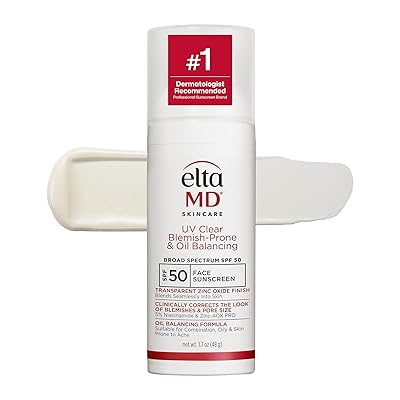
Best for: Oily and breakout-prone skin
EltaMD UV Clear is one of the most recommended face sunscreens for acne-prone skin, and its listing explains why: a lightweight, oil-free formula with transparent zinc oxide, broad-spectrum protection and niacinamide. For women who skip sunscreen because it seems to cause spots, this is a sensible and widely trusted place to start.
It is hypoallergenic and comes in a travel-size pump. The listing quotes large improvements in blemishes and oil, but sunscreen is not an acne treatment, so use it alongside proper acne care rather than instead of it. It is lighter and less redness-focused than the EltaMD Skin Recovery at #7.
- Transparent zinc oxide, broad spectrum
- Oil-free and lightweight
- Contains niacinamide
- Hypoallergenic, travel-size pump
Pros
- Good for oily and acne-prone skin
- Light, non-greasy finish
- Widely recommended
Cons
- Not an acne treatment in itself
- Small bottle for daily use
Skip it if: Skip it if your skin is very dry; a moisturising sunscreen will feel more comfortable.
Check Price on AmazonAESTURA ATOBARRIER365 Ceramide Cream

Best for: Dry, sensitive or retinol-stressed skin
AESTURA ATOBARRIER365 Cream is a Korean ceramide moisturiser that, as its title says, focuses on barrier repair. Ceramides are a natural part of the skin barrier, so creams that add them back are a sensible choice for dry or sensitive skin and for anyone starting a retinoid like the #3 or #5 picks.
Its listing detail beyond the title is limited, so check the ingredient list if you have known allergies. It is a lighter and more barrier-focused alternative to the richer Ursa Major cream at #6, and a good everyday moisturiser for women who want one simple, dependable cream morning and night.
- Ceramide moisturising cream
- Focused on barrier repair
- Everyday face cream
- Suitable morning or night
Pros
- Ceramides support the skin barrier
- Pairs well with retinoids
- Simple, focused formula
Cons
- Limited listing detail
- May be too light for very dry skin in winter
Skip it if: Skip it if you want a very rich night cream; the Ursa Major pick is more comforting.
Check Price on AmazonFirst Aid Beauty Ultra Gentle Cleanser
Best for: Sensitive skin and makeup removal
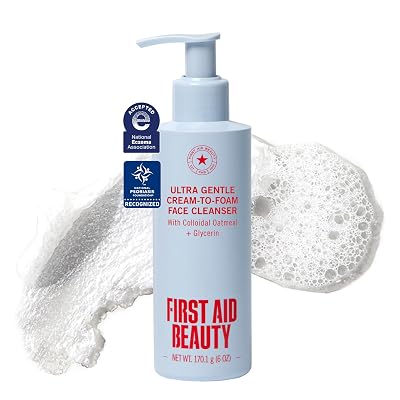
First Aid Beauty Ultra Gentle Cream-to-Foam Cleanser is the cleanser pick because a gentle face wash is the foundation of any routine. Its title describes it as fragrance-free and able to remove makeup, and the cream-to-foam texture suits women who want a light lather without the tight, stripped feeling harsh foaming washes can leave.
It is the simplest product on this list but one of the most important: a cleanser that irritates your skin makes every serum and cream harder to tolerate. Use it morning or evening, rinse with lukewarm water, and follow with a moisturiser from this list. Very dry skin may prefer an even creamier non-foaming wash.
- Cream-to-foam facial cleanser
- Fragrance-free
- Removes makeup
- Gentle for daily use
Pros
- Fragrance-free and gentle
- Doubles as a makeup remover
- Easy first step for any routine
Cons
- Heavy waterproof makeup may need a second cleanse
- Very dry skin may prefer a non-foaming wash
Skip it if: Skip it if you only wear waterproof makeup; add a cleansing balm or oil first.
Check Price on AmazonHow We Chose These Products
We shortlisted facial products from Amazon listings that are highly rated by a large number of shoppers, favouring established brands and fuller-featured, premium formulas. Because this guide is about a core routine, we balanced the list across serums, retinoids, sunscreens, moisturisers and a cleanser, and removed near-duplicates such as the same serum in a second strength.
We then checked each product’s listed features against the guidance cited in this post, including the AAD’s advice on daily broad-spectrum sunscreen and gentle products. These are research-based picks, not hands-on lab tests. Where a listing made bold claims, such as repairing sun damage, we did not repeat them as fact.
- Strong ratings from a large number of shoppers
- Established brands and premium formulas preferred
- Coverage of every step in the core routine
- Listed features checked against the cited guidance
- Products with thin or unclear listings excluded or ranked lower
The Core Routine Every Woman Needs
Most dermatologists agree on a short list of essentials. These products protect the skin barrier, keep skin comfortable and prevent the sun damage behind most visible ageing.
| Product | What it does | When | Essential or optional |
|---|---|---|---|
| Gentle cleanser | Removes dirt, oil, sunscreen and makeup without stripping | Evening, and morning if needed | Essential |
| Moisturiser | Supports the skin barrier and prevents dryness | Morning and evening | Essential |
| Broad-spectrum sunscreen SPF 30+ | Protects against sunburn, dark spots and premature ageing | Every morning | Essential |
| Vitamin C serum | Antioxidant; helps brighten and even tone | Morning, under sunscreen | Optional, targeted |
| Retinoid (retinol, retinal or adapalene) | Improves texture, fine lines and breakouts | Evening | Optional, targeted |
| Hydrating serum | Adds water-binding humectants | Morning or evening | Optional |
| Eye cream | Moisturises the thin under-eye skin | Morning or evening | Optional |
If you only buy three products, make them the essentials. Actives do little if skin is irritated or unprotected from the sun, so a solid base comes first. It also helps to buy the essentials in textures you genuinely enjoy using, because the product you reach for every day will always do more than a better one left in the drawer.
Cleanser: What to Look For
A good cleanser leaves skin clean but not tight or squeaky. That tight feeling is a sign the barrier has been stripped.
- Dry or sensitive skin: cream, milk or gentle hydrating gel cleansers with glycerin or ceramides.
- Oily skin: a gentle foaming or gel cleanser; salicylic acid versions can help breakouts.
- Combination skin: a mild gel cleanser that is not heavily fragranced.
- Heavy makeup or water-resistant sunscreen: an oil or balm cleanser first, then a gentle second cleanse if needed.
- Avoid harsh soaps, gritty scrubs for daily use and high levels of fragrance.
The AAD’s acne skin care tips recommend washing twice a day and after sweating, using fingertips rather than rough cloths, which is sound advice for most skin types.
Moisturiser: Matching Texture to Skin Type
Moisturiser is where skin type matters most. The right texture feels comfortable all day without shine or tightness.
- Oily or acne-prone: lightweight gel or lotion, labelled oil-free or non-comedogenic.
- Normal: a light lotion or cream.
- Dry: a richer cream with ceramides, glycerin, shea butter or squalane.
- Mature: a cream with humectants and barrier lipids; peptides are a pleasant extra rather than an essential.
- Sensitive: a short, fragrance-free ingredient list.
| Skin type | Cleanser | Moisturiser | Sunscreen texture | Good first active |
|---|---|---|---|---|
| Oily | Gel or gentle foaming | Oil-free gel or lotion | Fluid or gel | Niacinamide or salicylic acid |
| Dry | Cream or milk | Rich cream with ceramides | Creamy | Hyaluronic acid serum |
| Combination | Mild gel | Light lotion | Fluid | Niacinamide |
| Sensitive | Fragrance-free cream | Short-list, fragrance-free cream | Mineral | Azelaic acid or none at first |
| Acne-prone | Gentle or salicylic gel | Non-comedogenic lotion | Oil-free fluid | Adapalene or salicylic acid |
Some women can use a moisturiser with SPF in the morning, but only if they apply enough of it. Many prefer a separate sunscreen for more reliable protection. If your moisturiser pills under sunscreen or makeup, try using a little less, waiting a minute between layers, or switching to a lighter texture in the morning and keeping the richer cream for night.
Sunscreen: The Most Important Anti-Ageing Product
Daily sunscreen does more to prevent wrinkles, sagging and dark spots than any serum. Choose a broad-spectrum formula of SPF 30 or higher that you like enough to wear every day.
- Mineral (zinc oxide, titanium dioxide) sunscreens tend to suit sensitive skin; tinted versions reduce white cast.
- Chemical sunscreens are often thinner and blend easily on all skin tones.
- Oily skin often prefers fluid or gel textures; dry skin often prefers creamy ones.
- Apply roughly a quarter to a third of a teaspoon for the face and reapply when outdoors.
The AAD explains how to apply sunscreen correctly, including how much to use and how often to reapply.
Serums and Actives: Choosing One That Fits
Actives are optional but can make a clear difference when chosen for a specific concern. Start with one and add others only once your skin is comfortable.
- Vitamin C: for dullness, uneven tone and antioxidant support; use in the morning under sunscreen.
- Retinoids: the best-studied option for fine lines and texture, and helpful for acne; use at night, starting two or three times a week.
- Niacinamide: generally well tolerated; helps with redness, oiliness and uneven tone.
- Hyaluronic acid: a humectant for dehydrated skin; works best on damp skin under moisturiser.
- Azelaic acid: helpful for redness, breakouts and dark marks; often tolerated by sensitive skin.
- Gentle exfoliating acids: occasional use for rough texture, not daily.
When choosing a serum, look for a clear ingredient name near the top of the list, opaque or airtight packaging for vitamin C and retinoids, which break down with light and air, and realistic claims. Words such as miracle, instant or clinically proven without details are marketing rather than evidence. Retinoids are the step most likely to cause irritation, so start slowly. Our guide on how to transition to retinol smoothly explains a gradual schedule.
How the Routine Changes With Age
Skin needs change gradually over the decades. This table is a general guide; skin type and concerns matter more than the number.
| Age group | Common concerns | Core products | Useful additions |
|---|---|---|---|
| Teens and early 20s | Oiliness, breakouts | Gentle cleanser, light moisturiser, SPF | Salicylic acid or adapalene for acne |
| 20s to early 30s | Early sun damage, uneven tone | Cleanser, moisturiser, SPF | Vitamin C, low-strength retinol |
| 30s to 40s | Fine lines, dullness, dark spots | Cleanser, moisturiser, SPF | Retinoid, vitamin C, niacinamide |
| 40s to 50s | Dryness, loss of firmness, pigmentation | Creamier cleanser and moisturiser, SPF | Retinoid, hydrating serum, eye cream |
| 60s and beyond | Dryness, thinning, sensitivity | Very gentle cleanser, rich moisturiser, SPF | Gentle retinoid, barrier-repair cream |
Hormonal changes around pregnancy and menopause can change skin quickly. Some actives, including retinoids, are generally not recommended during pregnancy, so check with your doctor before using them if you are pregnant or trying to conceive.
How to Build Your Facial Routine Step by Step
Building slowly lets you see what works and spot anything that irritates.
Identify your skin type
Notice whether your skin is oily, dry, combination, normal or sensitive a few hours after cleansing.
Start with the essentials
Use a gentle cleanser, moisturiser and daily broad-spectrum SPF 30+ for two weeks.
Pick one main concern
Choose the concern that bothers you most, such as dullness, lines or breakouts.
Add one active
Add a single targeted product, such as vitamin C in the morning or a retinoid at night.
Patch test
Try new products on a small area for a few days first.
Layer thinnest to thickest
Apply watery products first, then serums, then moisturiser, then sunscreen in the morning.
Review after eight to twelve weeks
Keep what helps and drop what does not before adding anything else.
Keep mornings for protection (antioxidant, moisturiser, sunscreen) and evenings for repair (cleanse well, then retinoid or treatment and moisturiser). Our guide to morning vs night skincare routine order explains the layering in detail.
Avoiding Irritation When Combining Products
Most skincare problems come from doing too much too quickly rather than from one bad product. A calm, comfortable face is the sign a routine is working, while constant tightness, stinging or new bumps usually mean it is time to simplify and let the skin barrier recover.
- Introduce new products one at a time, about two weeks apart.
- Avoid using a retinoid and strong exfoliating acids on the same night.
- Reduce frequency if skin stings, peels or looks red.
- Keep a basic, fragrance-free moisturiser on hand for recovery days.
Stop using any product that causes burning, swelling, hives, blistering or a spreading rash, and seek medical advice. Sudden swelling of the face, lips or eyes needs urgent care.
Dos and Don’ts
Try This
- Wear broad-spectrum SPF 30+ every day
- Choose textures for your skin type
- Add one active at a time
- Patch test new products
- Remove makeup and sunscreen at night
Avoid This
- Buy a full routine all at once
- Stack several strong actives
- Scrub or over-cleanse
- Judge a product after a few days
- Choose products for packaging or hype alone
Honest Limits
No product works for every woman, and higher prices do not guarantee better results. Many affordable cleansers, moisturisers and sunscreens perform as well as luxury versions. Skincare also cannot fully reverse deep wrinkles, sagging or severe pigmentation; it improves and protects, but medical treatments do more for established changes.
Results take time. Moisturisers work within days, but vitamin C, niacinamide and retinoids often need two to three months of consistent use to show visible change, and some claims on labels are based on individual ingredients rather than tests of the finished product.
When to See a Dermatologist
- Acne, redness or rosacea does not improve with a simple routine.
- You react to many skincare products.
- You notice a new, changing or bleeding spot.
- You want prescription-strength treatment for pigmentation, lines or breakouts.
This article is for general information and does not replace professional medical advice. See a board-certified dermatologist for skin conditions, and check with your doctor before using retinoids or other actives if you are pregnant or breastfeeding.
Questions People Ask
What facial products does every woman need?
A gentle cleanser, a moisturiser and a broad-spectrum SPF 30+ sunscreen.
What is the most important skincare product?
Daily sunscreen, for preventing sun damage and premature ageing.
When should women start using retinol?
Many start in their mid-20s to 30s, slowly, for early signs of ageing.
Which product on this list should I buy first?
If you do not wear sunscreen every day, start with the ISDIN Eryfotona Actinica or an EltaMD sunscreen. If you already do, add the PCA SKIN hydrating serum, then consider a retinoid such as the SkinMedica Retinol Serum.
Is eye cream necessary?
No, a gentle moisturiser often works around the eyes too.
Can I use vitamin C and retinol together?
Yes, usually vitamin C in the morning and retinol at night.
What order should I apply products?
Thinnest to thickest, with sunscreen last in the morning.
Is the most expensive facial product worth it?
Not always. The PCA SKIN serum is our top pick, but a gentle cleanser like First Aid Beauty and a daily sunscreen such as EltaMD UV Clear do more for most skin than any single premium serum.
How long before I see results?
Weeks for hydration, two to three months for actives.
Which products on this list suit sensitive skin?
The First Aid Beauty cleanser and Ursa Major moisturiser are fragrance-free, and the ISDIN and EltaMD UV Skin Recovery sunscreens use mineral filters. Introduce one product at a time and patch test first.
The Bottom Line
The best facial products for women are a gentle cleanser, a moisturiser that suits your skin type and a broad-spectrum SPF 30 or higher every morning, with one targeted active added for your main concern.
Build the routine slowly, adjust it as your skin changes with age, skip what you do not need, and give each product time to work before deciding whether it earns a place on your shelf.
Our top pick: PCA SKIN Hyaluronic Acid Boosting Serum
The PCA SKIN Hyaluronic Acid Boosting Serum takes the top spot because hydration suits almost every skin type and age, and it layers easily under any moisturiser or sunscreen on this list. Choose the SkinMedica Retinol Serum 1.0 instead if fine lines and texture are your main concern, or the ISDIN Eryfotona Actinica if you do not yet wear a daily sunscreen, which matters more than any serum.
Check Price on Amazon
Written by
Registered pharmacist and founder of Facial Adviser. Rakib's pharmacy training covers how skincare actives work and interact; a later course in cosmetology turned that into a focus on facial treatments and skincare products. He plans, researches and edits every guide on the site and checks health claims against sources such as the American Academy of Dermatology, the FDA and the NIH. He is not a dermatologist; see the Editorial Policy and Medical Disclaimer.
About · Editorial policy · How we choose products · Medical disclaimer · Contact
Keep reading: Facials: what to expect