
What Is Diamond Microdermabrasion Facial?
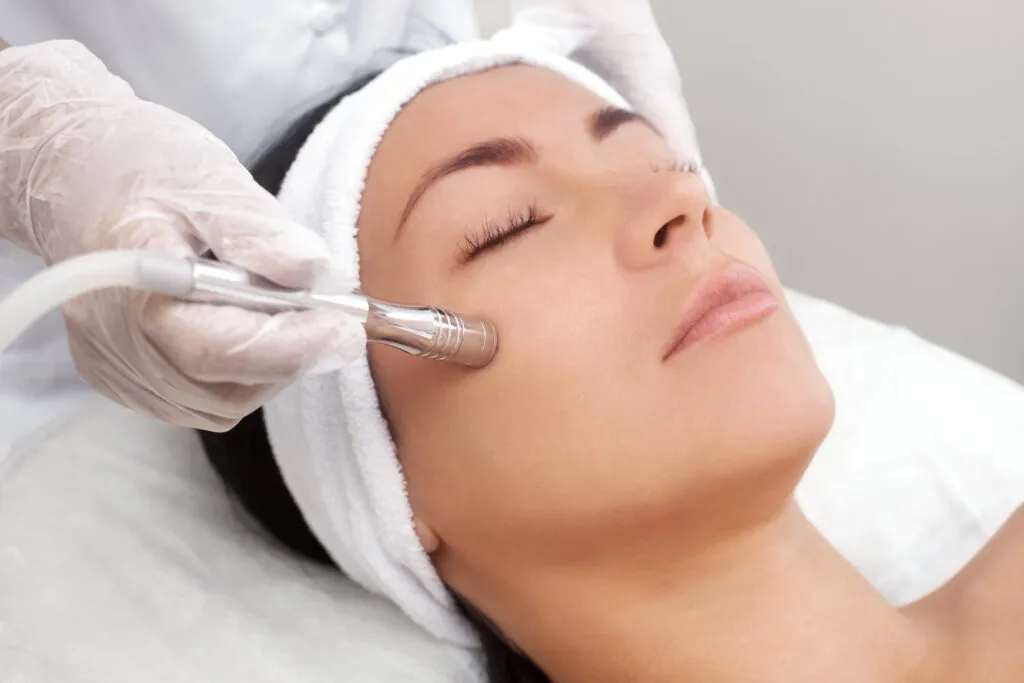
What is diamond microdermabrasion facial treatment, really? It’s mechanical exfoliation using a diamond-coated wand and built-in vacuum, and understanding that mechanism matters more than the luxury name suggests.
Part of our guide to facial treatments. Start with: Ultimate Guide Microdermabrasion: What to Know
Diamond itself contributes nothing beyond being an extremely hard, durable abrasive, no published research supports any special mineral or energetic benefit from the material. A 2023 dermatology-journal study did examine the diamond-tip modality directly, real data worth knowing, even as an industry-adjacent usage study rather than a large randomized trial.
The FDA regulates diamond-tip devices identically to older crystal-spray machines, both Class I, the lowest-risk category, with no special “diamond” classification or claim of superiority.
This guide walks through exactly how the wand works, what diamond does and doesn’t do, how it compares to crystal microdermabrasion, and the real reasons a session might need to wait.
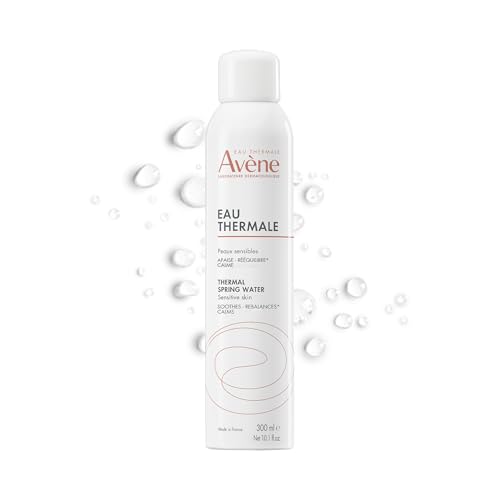
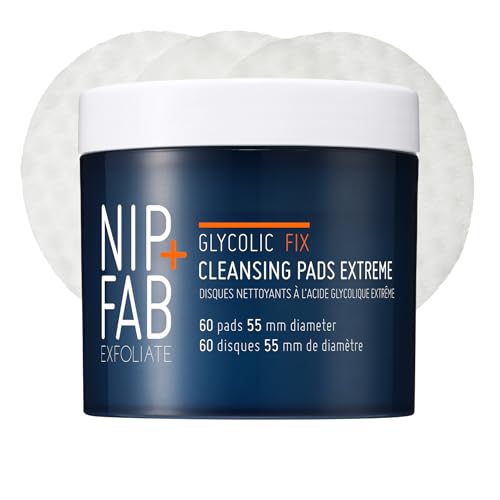
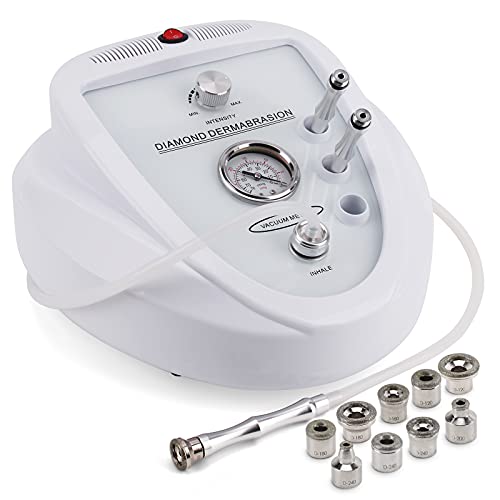
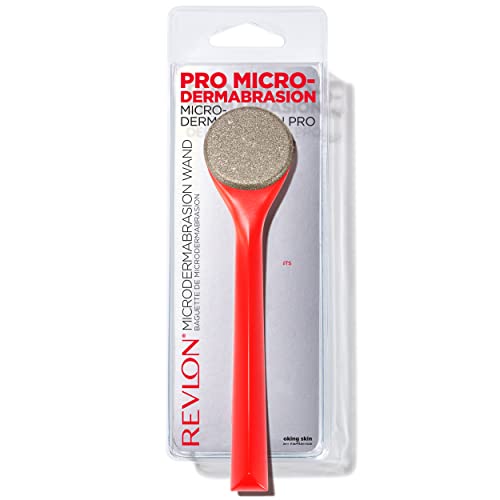
Recommended At-Home Diamond Microdermabrasion Devices
Key Takeaways
- A diamond microdermabrasion facial uses a diamond-coated wand to mechanically abrade and vacuum away the outer dead-skin layer, nothing more exotic than that.
- Diamond itself contributes nothing beyond being an extremely hard, durable abrasive; no published research supports any mineral or “energy” benefit from diamond dust.
- Diamond-tip devices are regulated identically to crystal microdermabrasion devices under the FDA’s lowest-risk device category, with no special “diamond” classification.
- Professional diamond-tip machines are preferred mainly for practical reasons, no loose crystal residue, no inhalation risk, finer control near the eyes, not because they exfoliate more effectively at a biological level.
- No published head-to-head trial was found comparing diamond-tip and crystal microdermabrasion for clinical outcomes; claims that one is superior are industry marketing, not trial data.
- Results are genuine but temporary, requiring repeat sessions and ongoing monthly maintenance to sustain.
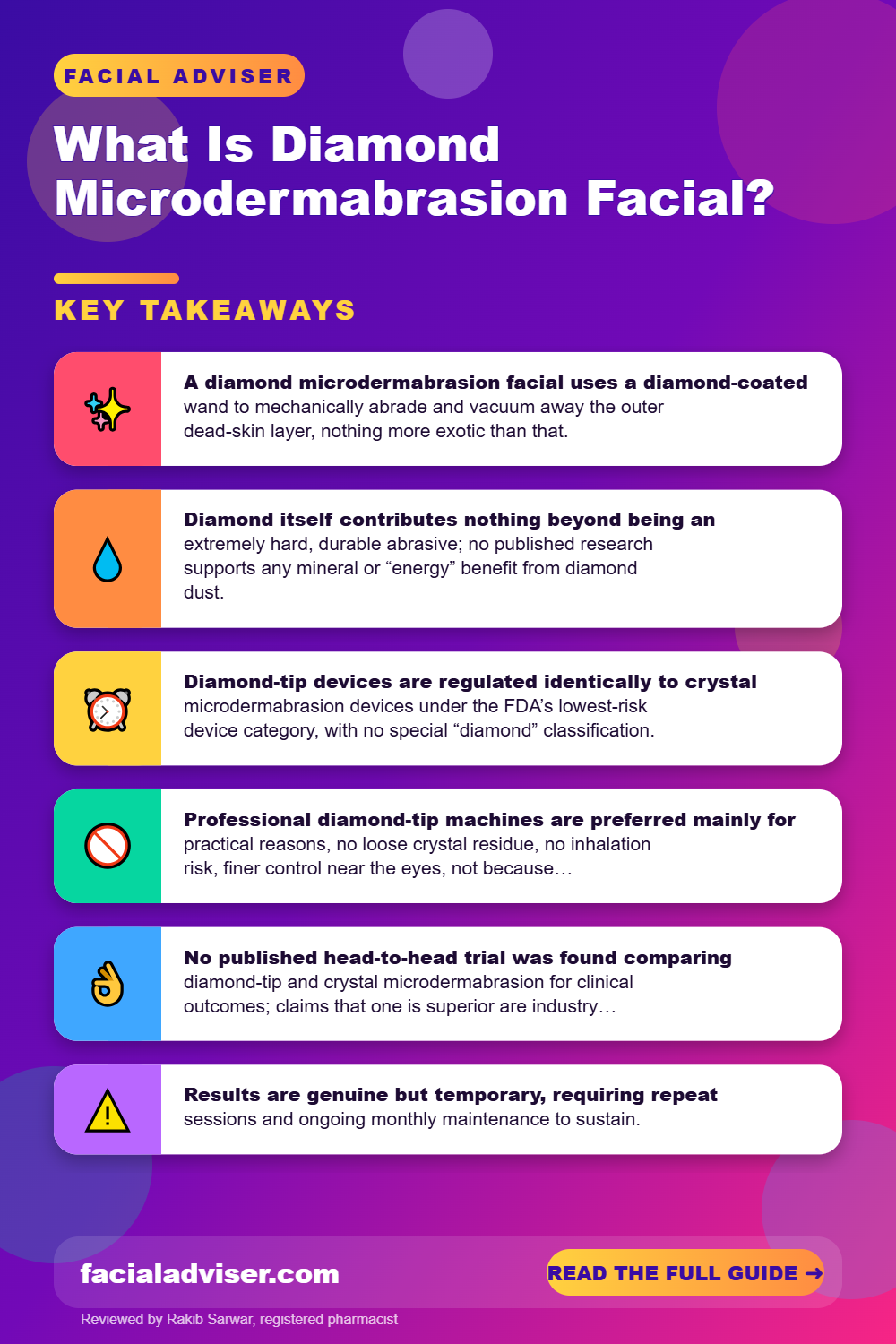
Table of Contents
- What Is Diamond Microdermabrasion Facial?
- How the Diamond-Tip Wand Actually Works
- What Diamond Itself Actually Contributes
- Diamond-Tip vs. Crystal Microdermabrasion
- What the Real Research Shows
- What to Expect During and After a Session
- How Many Sessions You’ll Actually Need
- Do This, Not That
- Checking If You’re a Candidate
- When to See a Dermatologist
- Frequently Asked Questions
- The Bottom Line
What Is Diamond Microdermabrasion Facial?
A diamond microdermabrasion facial uses a handheld wand tipped with diamond-coated abrasive material to mechanically remove the outermost layer of dead skin cells, with a built-in vacuum simultaneously suctioning away the exfoliated debris. It’s a genuine, if temporary, physical exfoliation treatment, not a chemical peel and not a treatment that delivers any special property from the diamond material itself beyond abrasive hardness.
Shopping these picks?
Amazon Prime members get fast, free shipping on eligible items, plus Prime Video, Amazon Music and member deals. New members can start with a free trial.
Start a free Prime trialAged 18 to 24? Prime for Young Adults comes with a longer free trial and a lower price after it.
Affiliate link: we may earn a commission at no extra cost to you.
This guide explains exactly how the device works, what diamond actually contributes to the process (and what it doesn’t), how it compares to the older crystal-spray method, and the real, dermatology-sourced reasons someone might need to skip a session.
How the Diamond-Tip Wand Actually Works
The wand’s diamond-coated tip is moved across the skin’s surface, and its abrasive texture physically loosens and lifts dead skin cells as it passes. A vacuum built into the same device head suctions the loosened debris away in the same motion, so there’s no separate cleanup step and no loose abrasive material left on the skin or in the treatment room, unlike the older crystal-spray method.
Different wand tips offer different grit levels, from fine to coarse, letting an esthetician or dermatologist adjust intensity by treatment area and skin sensitivity. The eye and mouth areas typically get a finer, gentler pass than the cheeks or forehead.
What Diamond Itself Actually Contributes
Note: This is the single most important thing to understand about this treatment: diamond contributes nothing beyond being an extremely hard, long-lasting abrasive surface. It is not a source of minerals, “energy,” or any special skin-nourishing property, whatever the marketing copy implies.
A cosmetic-ingredient review of diamond powder states plainly that research supporting its cosmetic use is lacking, and explicitly dismisses supplier claims that it “improves skin’s complexion and circulation” as unsupported. The same review actually rates diamond powder unfavorably in scrub products, since its irregular particle shape can cause micro-tears in skin. A dermatologist interviewed on the topic confirmed that diamond dust exfoliates “just as crystal microdermabrasion does,” and that claims about diamond dust improving detoxification or product absorption have “no hard proof” behind them.
Diamond-Tip vs. Crystal Microdermabrasion
| Diamond-tip | Crystal/corundum spray | |
|---|---|---|
| Mechanism | Fixed abrasive wand tip + vacuum | Sprayed aluminum oxide crystals + vacuum |
| Residue | None, no loose particles | Loose crystal spray and debris |
| Eye/inhalation risk | Minimal | Real, documented occupational concern |
| Control near eyes/mouth | Finer, more precise | Less precise due to spray pattern |
| FDA device category | Class I (21 CFR 878.4820) | Class I (same category) |
The FDA regulates both diamond-tip and crystal-spray dermabrasion devices identically, as Class I devices, the lowest-risk category, generally exempt from premarket clearance for standard indications like general dermabrasion or scar revision. There is no special “diamond” regulatory category. Diamond-tip has been steadily displacing crystal machines in professional settings mainly for the practical and logistical reasons in the table above, not because it’s been shown to exfoliate more effectively at a biological level.
What the Real Research Shows
| Claim | What the evidence actually shows |
|---|---|
| “Diamond exfoliates better than crystal” | No head-to-head clinical trial found comparing outcomes; unsupported by published research |
| “Diamond dust nourishes or detoxifies skin” | Not supported; diamond contributes only abrasive hardness |
| “Diamond-tip microdermabrasion exfoliates skin” | Well-supported, genuine mechanical effect |
A 2023 study published in Clinical, Cosmetic and Investigational Dermatology examined diamond-tip dermabrasion combined with topical skincare across dry, hyperpigmented, photodamaged, and acne-prone skin types. This is real, published dermatology-journal data on the diamond-tip modality specifically, though it’s worth noting honestly that it’s an industry-adjacent usage study rather than a large independent randomized controlled trial. The broader evidence gap, no trial establishing diamond-tip’s superiority over crystal, is worth stating directly rather than glossing over.
What to Expect During and After a Session
A typical session runs 30 to 60 minutes, starting with cleansing, then the diamond-tip wand pass over the treatment area, and finishing with a soothing serum or moisturizer plus sunscreen. Most people describe the sensation as a mild scratching or vibrating feeling rather than pain, and no anesthesia or numbing is needed for a standard pass. Redness similar to a mild sunburn is common immediately afterward and typically fades within a few hours to a day.
Because the treatment physically removes the outer dead-skin layer, skin is measurably more sensitive to sun exposure in the days following a session. Providers commonly advise avoiding direct sun, tanning beds, and any additional exfoliating products (retinoids, acids, other scrubs) for several days afterward to let the fresh skin underneath recover without added irritation. Makeup can typically be applied again within a few hours once any initial redness has settled.
How Many Sessions You’ll Actually Need
Because diamond microdermabrasion only reaches the outermost skin layer, a single session produces a real but modest and temporary smoothing effect, visible mainly as a brighter, more even-toned complexion for a few days. Building a more lasting improvement in texture or mild pigmentation takes a course of treatments, most protocols call for sessions spaced one to four weeks apart, with a typical course running from five sessions up to sixteen depending on the skin concern being addressed and how a person’s skin responds.
After completing an initial course, most providers recommend ongoing monthly maintenance sessions to sustain the result, since the skin naturally regenerates and the exfoliated benefit is not permanent. This is a genuine limitation worth being upfront about: diamond microdermabrasion is a maintenance treatment, not a one-time fix, and anyone expecting a single visit to produce a lasting change in skin texture or tone is likely to be disappointed by how quickly the effect fades without repeat sessions.
Cost tends to track this session structure closely: a single visit is priced as a standalone service, while most providers offer a package rate for a full course, which usually works out cheaper per session than booking one at a time. Because there’s no independently established “correct” number of sessions for every skin type, it’s reasonable to start with a smaller package, evaluate how your skin responds after three or four sessions, and only commit to a longer course once you’ve seen how your own skin reacts to the treatment.
Do This, Not That
Do
- Understand diamond contributes hardness and control, not any special mineral benefit
- Check for active acne, infections, or lesions before booking a session
- Ask your provider about grit level and intensity for your specific skin sensitivity
- Apply sunscreen after treatment, since sun sensitivity is temporarily increased
- Space sessions weekly to monthly as recommended for your skin goals
Don’t
- Expect diamond dust itself to deliver minerals or detox benefits
- Book a session with active, inflamed acne or an open lesion present
- Assume diamond-tip is clinically proven superior to crystal microdermabrasion
- Skip sunscreen in the days following your treatment
- Treat a single session as a permanent result
Checking If You’re a Candidate
Check your skin for active breakouts
Inflamed acne, cold sores, or open lesions are a genuine reason to postpone treatment.
Review your isotretinoin history
A 2017 expert consensus found little evidence to support delaying superficial procedures after isotretinoin, though full mechanical dermabrasion still warrants a longer wait; ask your provider which category your session falls into.
Tip: A single light pass with a diamond-tip wand is generally considered superficial, unlike full rotary mechanical dermabrasion.
Flag any suspicious moles or lesions
Have a dermatologist evaluate any changing or unusual spot before treatment near it.
Plan for post-treatment sun protection
Have sunscreen ready, since skin is temporarily more sun-sensitive afterward.
Set realistic expectations on frequency
Most people need multiple sessions with ongoing monthly maintenance, not a single treatment.
When to See a Dermatologist
Warning: Persistent redness, unusual bruising, blistering, or skin discoloration that doesn’t resolve within a few days after treatment warrants a dermatologist’s evaluation rather than repeated at-home sessions.
See a dermatologist or skin specialist before your first session if you have a history of easy scarring, eczema or psoriasis flares, or recent isotretinoin use, since they can evaluate whether a superficial diamond-tip pass is appropriate for your specific case. If you’re also comparing this against other exfoliation options, our hydrodermabrasion vs. microdermabrasion guide covers how these mechanical treatments differ from true dermabrasion.
Frequently Asked Questions
What is diamond microdermabrasion facial?
It’s a mechanical exfoliation treatment using a diamond-coated wand tip with a built-in vacuum to remove dead skin cells.
Does the diamond material itself benefit skin?
No, diamond contributes only hardness and durability as an abrasive; no research supports any mineral or nourishing benefit from it.
Is diamond-tip better than crystal microdermabrasion?
No clinical trial has established diamond-tip as biologically superior; the preference is mostly practical, less residue and finer control.
How many sessions does diamond microdermabrasion take?
Most people need 5 to 16 sessions for visible improvement, with ongoing monthly maintenance.
Who should avoid diamond microdermabrasion?
Anyone with active acne, an active infection, recent isotretinoin use, or suspicious skin lesions should avoid or delay treatment.
Is diamond microdermabrasion regulated by the FDA?
Yes, as a Class I dermabrasion device, the same lowest-risk category as crystal microdermabrasion devices.
Does diamond microdermabrasion hurt?
It typically feels like a mild scratching or vibrating sensation, with temporary redness afterward similar to a mild sunburn.
Can I do diamond microdermabrasion after isotretinoin?
A superficial single pass is generally considered lower-risk, though full mechanical dermabrasion still warrants a longer wait; ask your provider.
Do I need sunscreen after diamond microdermabrasion?
Yes, skin is temporarily more sun-sensitive after treatment.
Are results from diamond microdermabrasion permanent?
No, results are temporary and require repeat sessions and ongoing maintenance.
The Bottom Line
A diamond microdermabrasion facial is a genuine, if temporary, mechanical exfoliation treatment. The diamond-coated wand tip abrades and a built-in vacuum removes the outer dead-skin layer, and that’s the entire mechanism, diamond itself adds nothing beyond hardness and durability as an abrasive.
It’s regulated the same as crystal microdermabrasion, and no clinical trial has shown one method biologically superior to the other. Check for active breakouts or lesions before booking, protect your skin with sunscreen afterward, and set realistic expectations that results require repeat sessions to maintain.

Written by
Registered pharmacist and founder of Facial Adviser. Rakib's pharmacy training covers how skincare actives work and interact; a later course in cosmetology turned that into a focus on facial treatments and skincare products. He plans, researches and edits every guide on the site and checks health claims against sources such as the American Academy of Dermatology, the FDA and the NIH. He is not a dermatologist; see the Editorial Policy and Medical Disclaimer.
About · Editorial policy · How we choose products · Medical disclaimer · Contact
Keep reading: Microdermabrasion and diamond peel
- Ultimate Guide Microdermabrasion: What to Know
- What Is Diamond Peel Facial Treatment? Real Answer
- Which Facial Is Best for Bride, Gold or Diamond?
- How to Use VLCC Diamond Facial Kit, Step by Step
- Does Microdermabrasion Remove Hair? The Real Answer
- Microdermabrasion Facial: What the Evidence Shows
- Microneedling Facial: Real Results, Explained
- Is Hydrafacial a Gimmick? What Evidence Shows


2 Comments