
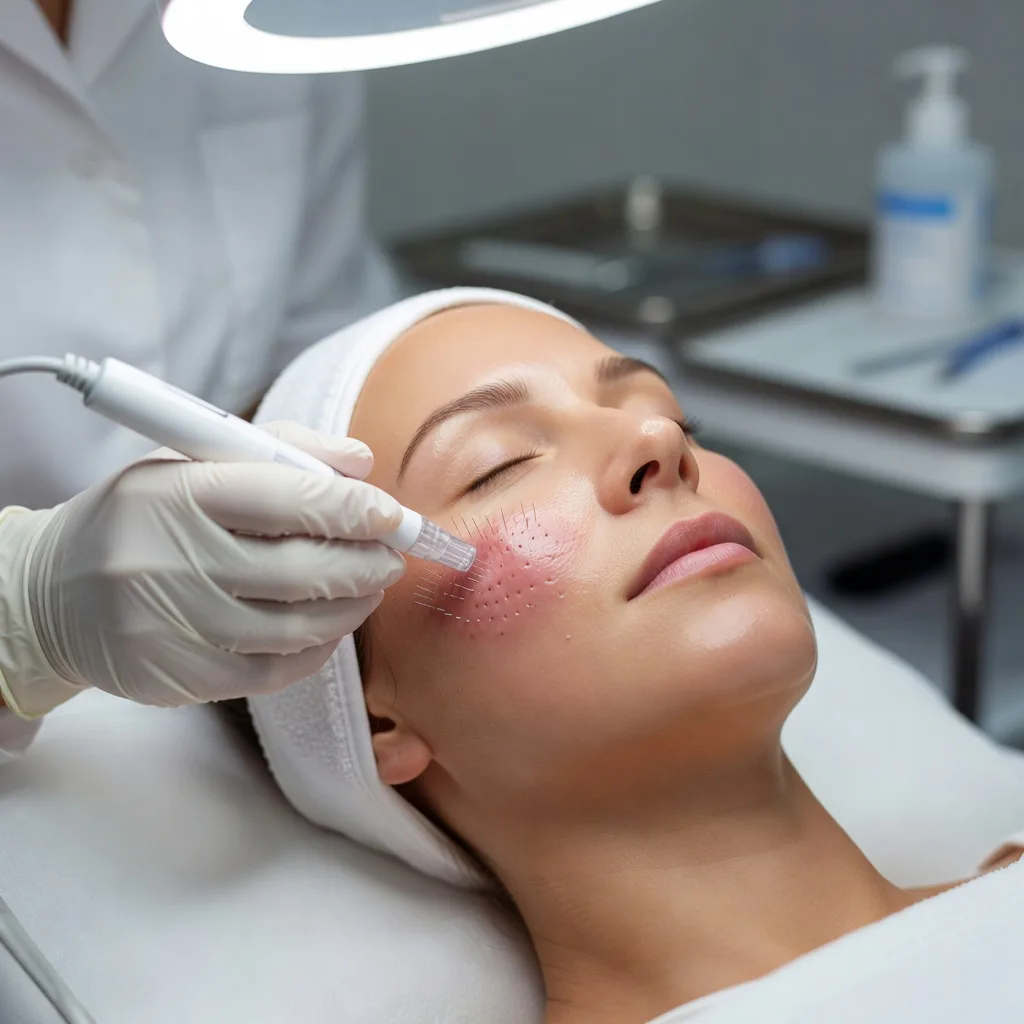
Microneedling Facial: Real Results, Explained
A microneedling facial is one of the few cosmetic treatments with a genuine FDA clearance and a mechanism that holds up under real scrutiny, which makes it worth understanding properly rather than treating it as one more skincare trend.
The entire result depends on needle depth, and that single number is what separates an at-home routine booster from real collagen induction. SkinPen’s 2018 FDA clearance for facial acne scars created the regulatory benchmark other devices now clear against, but that clearance says nothing about the shallow consumer rollers marketed under the same name.
Here’s what most product pages leave out: an at-home dermaroller and an in-office clinical device can differ in depth by a factor of ten, and that difference is the whole story behind why results vary so wildly between what someone tries at home and what a provider delivers in a chair.
This guide covers the 60-second depth check to run before booking or buying anything, how in-office treatment actually compares to at-home rollers, what a session involves start to finish, and the specific situations where microneedling should wait.
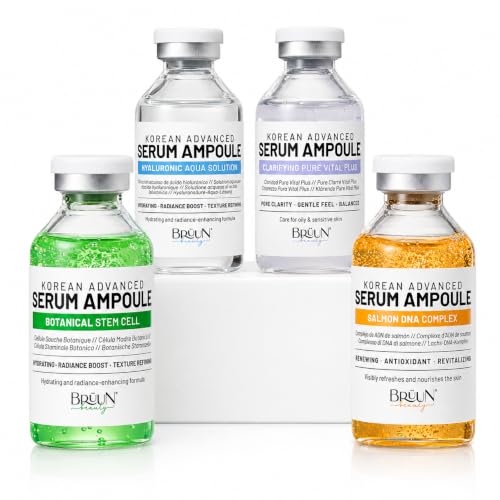
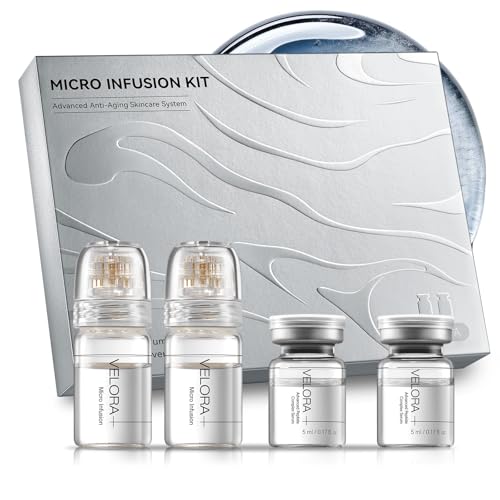
Recommended Products for Post-Microneedling Recovery
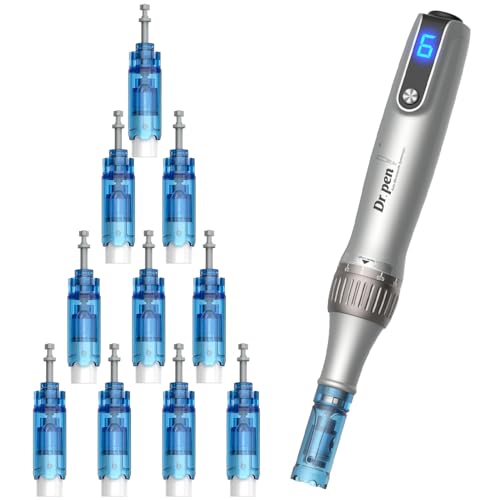
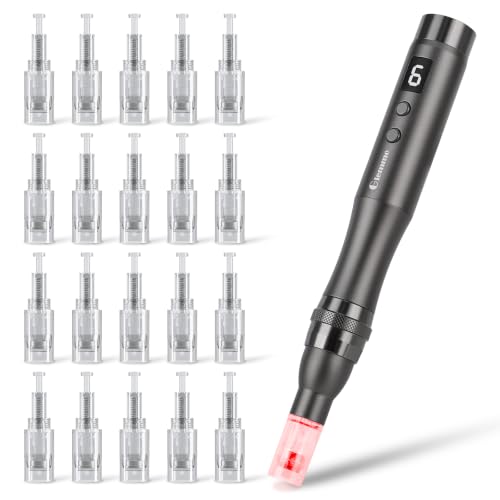
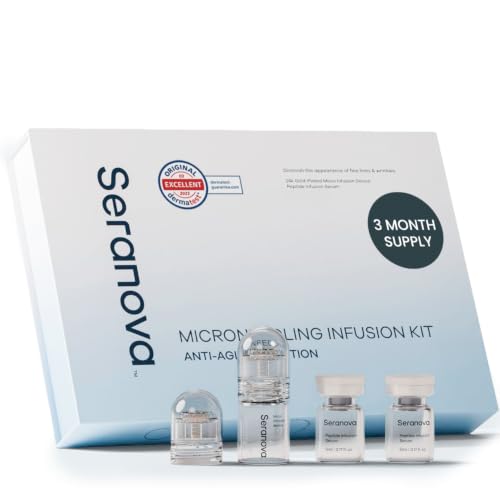
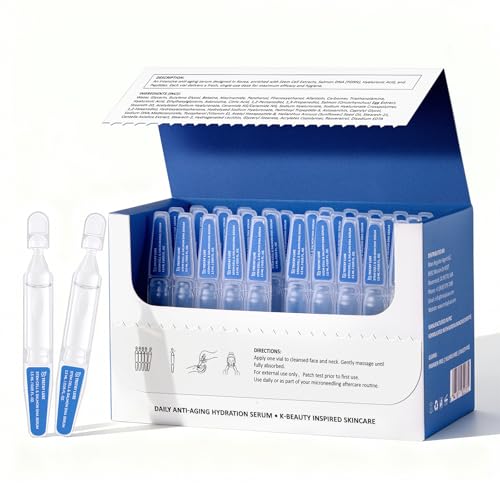

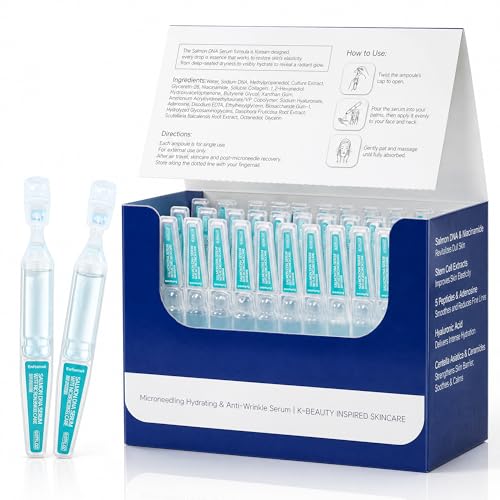
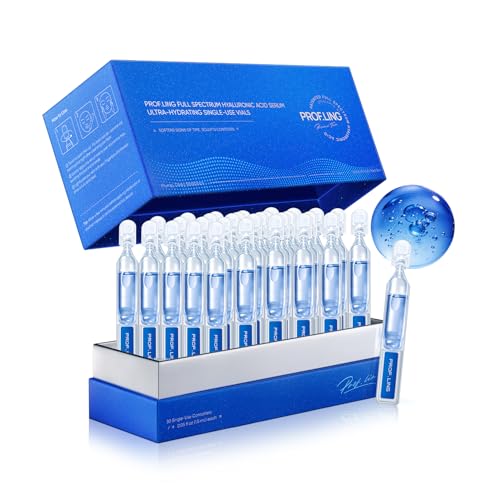
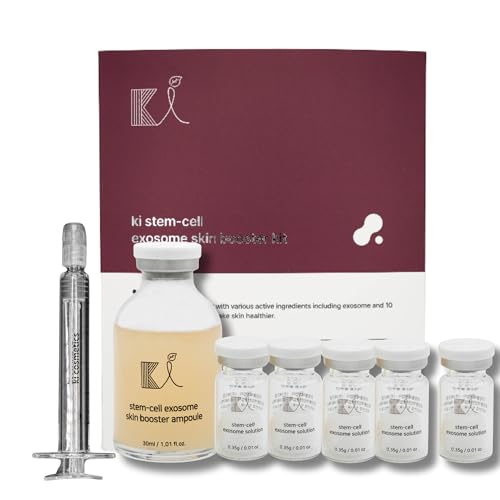
Shopping these picks?
Amazon Prime members get fast, free shipping on eligible items, plus Prime Video, Amazon Music and member deals. New members can start with a free trial.
Start a free Prime trialAged 18 to 24? Prime for Young Adults comes with a longer free trial and a lower price after it.
Affiliate link: we may earn a commission at no extra cost to you.
Key Takeaways
- A microneedling facial uses fine needles to create controlled micro-injuries that trigger your body’s own collagen and elastin production, a process called percutaneous collagen induction.
- SkinPen became the first FDA-cleared microneedling device in 2018, specifically for facial acne scars in adults 22 and older, which created a real regulatory category other devices now clear against.
- Needle depth is what separates a real in-office treatment from an at-home dermaroller: clinical devices go up to 2.5mm for deep scarring, while consumer rollers are typically 0.13-0.3mm, too shallow for true collagen induction.
- At-home rollers mainly help topical products absorb better. They aren’t FDA-cleared as therapeutic devices and reused non-sterile rollers carry a real infection risk.
- Active acne or infection at the treatment site, keloid-prone skin, active cold sores, bleeding disorders, and pregnancy are the main reasons to skip or delay microneedling.
- Evidence for improving atrophic acne scarring and fine lines is real and moderate, generally less dramatic than ablative laser but with far less downtime.
- Results build gradually over weeks as new collagen forms, not immediately after a session.
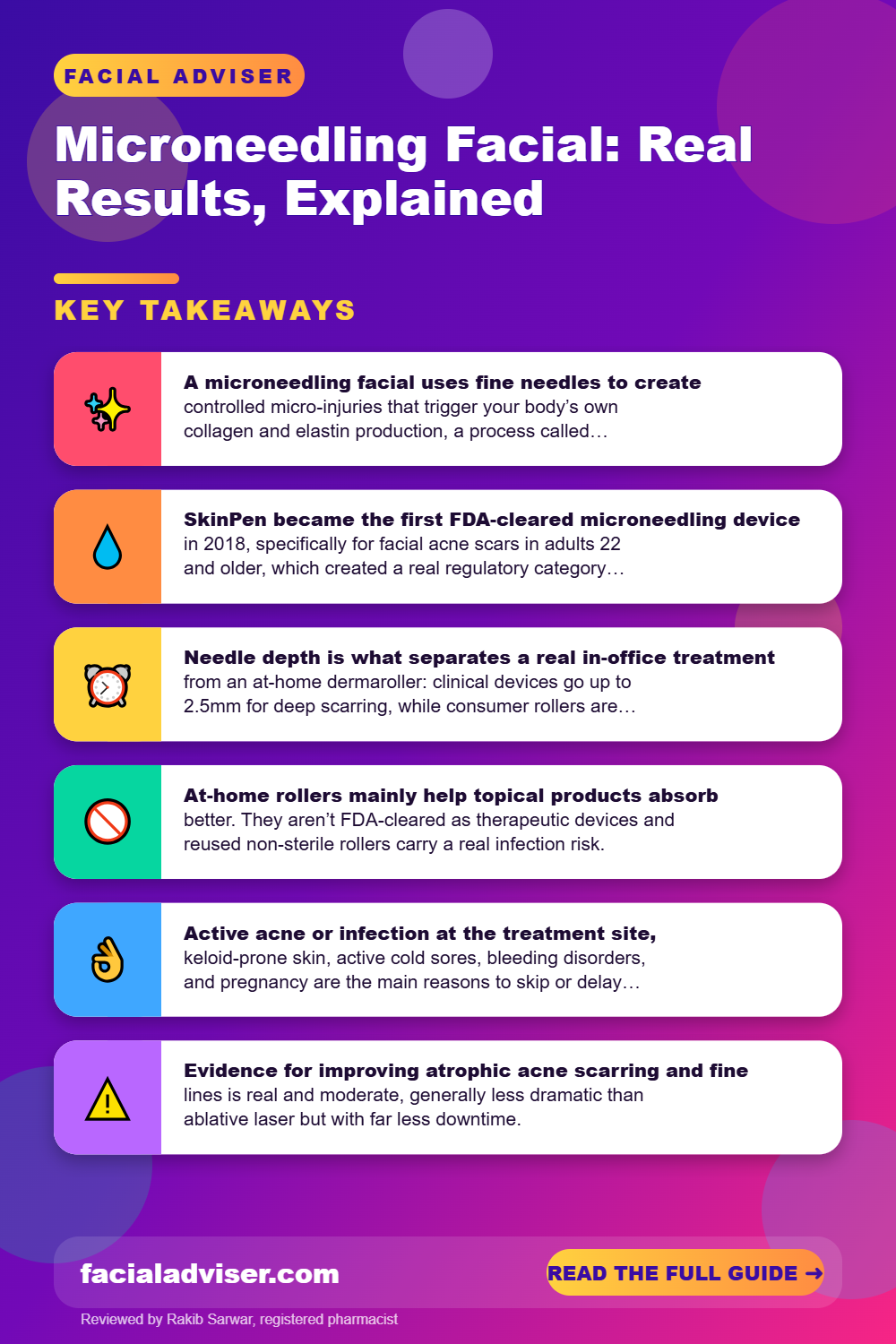
Table of Contents
- How Microneedling Actually Triggers Collagen
- The 60-Second Depth Check Before You Book or Buy
- In-Office Microneedling vs. At-Home Dermarollers
- Do This, Not That: Getting Real Results Safely
- What a Session Actually Involves
- What Microneedling Can’t Do
- When to See a Dermatologist Instead
- Frequently Asked Questions
- The Bottom Line
How Microneedling Actually Triggers Collagen
A microneedling device passes dozens of fine needles across the skin, creating hundreds of controlled micro-injuries. Your body responds to that injury the way it responds to any wound: releasing growth factors like PDGF and TGF-beta that activate fibroblasts, the cells responsible for laying down new type I and III collagen and elastin.
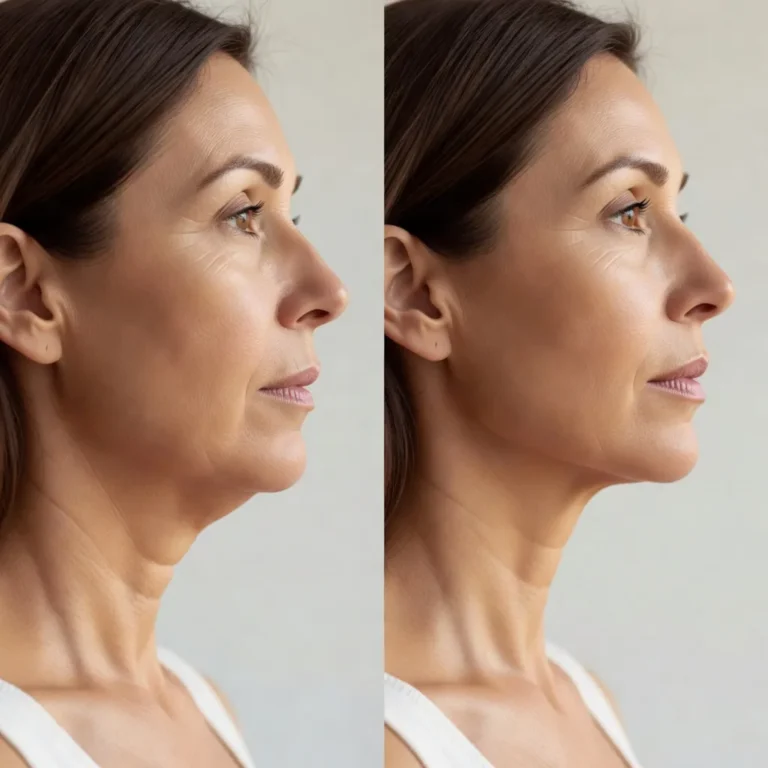
This process, called percutaneous collagen induction, is why results build gradually over several weeks rather than appearing immediately after treatment. The visible improvement in texture, fine lines, and some types of scarring comes from that new collagen remodeling the skin over time, not from the needling itself.
SkinPen received FDA clearance in 2018 specifically for improving the appearance of facial acne scars in adults 22 and older, the first microneedling device to receive that authorization and the regulatory benchmark other devices now clear against.
Note: An FDA clearance covers a specific device for a specific claim, not the entire “microneedling” category. A device cleared for acne scars hasn’t necessarily been evaluated for other marketed uses, which is worth asking about if a provider’s claims sound broader than what the clearance actually covers.
The 60-Second Depth Check Before You Book or Buy
Ask about needle depth before any session, or check it on any device you’re considering buying:
- 0.13mm to 0.3mm (most consumer dermarollers): shallow enough mainly to help serums and topical products absorb better. This is not deep enough to reliably trigger clinical-level collagen induction.
- 0.5mm to 1.5mm (typical in-office facial treatment): the range most professional facial microneedling sessions use for texture and fine lines.
- Up to 2.0mm to 2.5mm (deeper in-office treatment): used for more significant atrophic acne scarring on thicker skin, always by a trained provider.
If a device or provider won’t tell you the needle depth, that’s a reasonable reason to ask more questions before proceeding.
In-Office Microneedling vs. At-Home Dermarollers
| In-office microneedling | At-home dermaroller | |
|---|---|---|
| Typical needle depth | 0.5mm to 2.5mm | 0.13mm to 0.3mm, occasionally 0.5mm |
| FDA status | Cleared devices exist (e.g. SkinPen, 2018) | Not FDA-cleared as therapeutic devices |
| Equipment | Single-use sterile cartridges | Reusable roller, real infection risk if reused without proper sterilization |
| Evidence for scarring | Real, moderate improvement shown in clinical studies | Mainly supports better topical product absorption |
| Who performs it | Licensed medical or trained esthetic provider | Self-administered |
The two aren’t really the same category of treatment despite sharing a name. An at-home roller is a skincare-routine booster. An in-office device at clinical depth is what the collagen-induction research is actually describing.
Do This, Not That: Getting Real Results Safely
Do
- Confirm the provider uses single-use, sterile needle cartridges
- Ask about needle depth relative to your specific concern
- Disclose any history of keloid scarring or cold sores beforehand
- Expect gradual improvement over several weeks, not an instant change
- Follow the aftercare instructions on sun protection closely
Don’t
- Reuse an at-home dermaroller without proper sterilization
- Get microneedling over active acne or an active skin infection
- Expect an at-home roller to match in-office collagen-induction results
- Skip disclosing a bleeding disorder or anticoagulant use
- Book microneedling right before sun exposure or an event with no recovery time
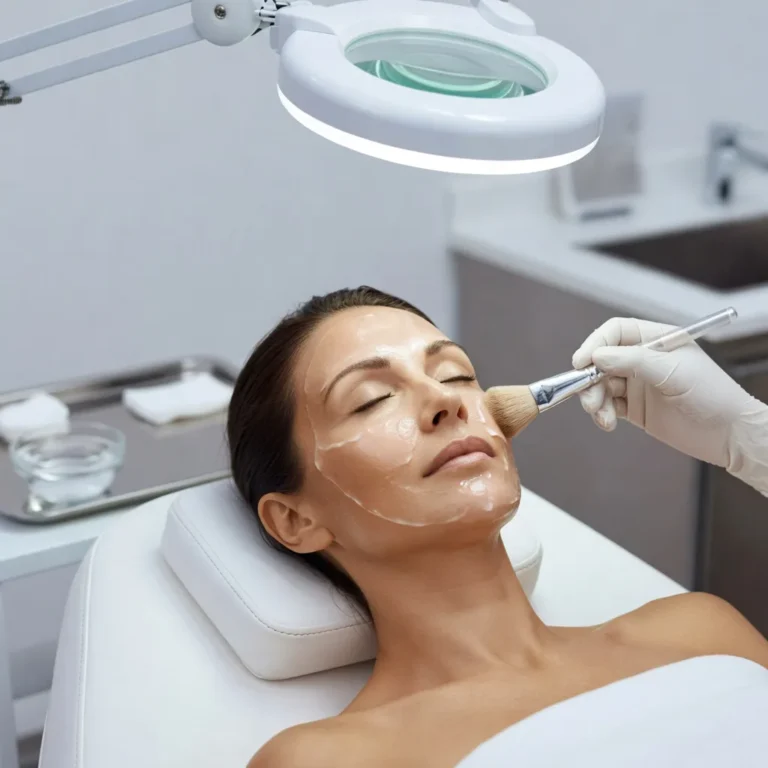
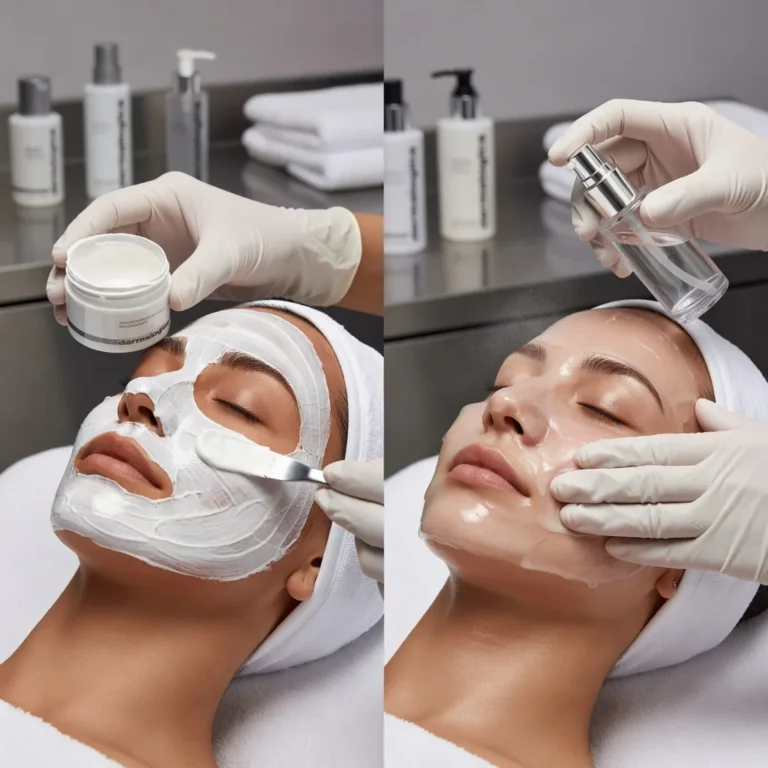
What a Session Actually Involves
Consultation
The provider reviews your concern, skin history, and any contraindications like active acne or keloid tendency.
Numbing
A topical anesthetic is typically applied and given time to take effect.
Needling
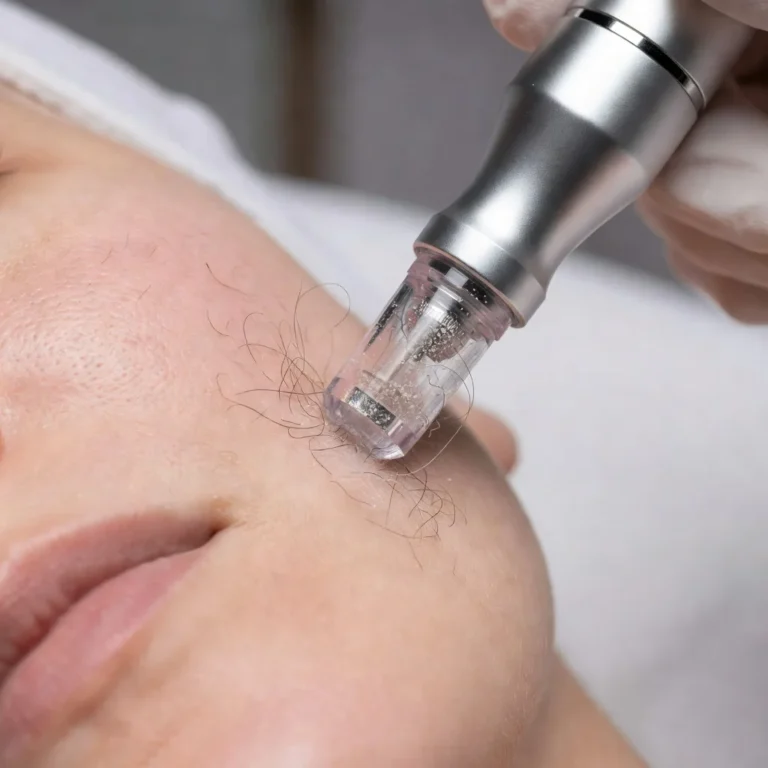
The device passes across the treatment area at the depth appropriate to your skin and concern.
Tip: Redness immediately after looks more dramatic than it feels. Most people describe the sensation as mild pressure or vibration rather than pain once numbing has taken effect.
Serum application
A soothing or growth-factor serum is often applied while the micro-channels are still open.
Immediately after
Redness and mild swelling are common and typically settle within a day or two.
First week
Skin may feel slightly rough as it heals. Gentle cleansing and daily sunscreen matter more than usual.
Following weeks
Collagen remodeling continues gradually, with visible texture and fine-line improvement building over several weeks to months.
What Microneedling Can’t Do
Microneedling doesn’t produce the dramatic, instant change some marketing implies. Results depend on your own collagen response, which takes weeks to build and varies between individuals. It also isn’t the right tool for active inflammatory acne, an acne facial or medical treatment addresses that stage first, and it won’t fix deep static wrinkles from volume loss or significant skin laxity, those need different approaches entirely.
For deep, established acne scarring, results are often more noticeable when paired with a treatment like radiofrequency or when performed at a greater needle depth by an experienced provider than a single standard session provides.
When to See a Dermatologist Instead
Warning: Active acne, cold sores, or any skin infection at the treatment site should be resolved before microneedling. A history of keloid scarring, uncontrolled bleeding disorders, or pregnancy are also reasons to have a fuller conversation with a dermatologist before proceeding.
Frequently Asked Questions
What does microneedling actually do?
It creates controlled micro-injuries in the skin that trigger the body’s own collagen and elastin production, gradually improving texture, fine lines, and some types of scarring.
Is microneedling FDA approved?
SkinPen was the first FDA-cleared microneedling device, authorized in 2018 specifically for facial acne scars in adults 22 and older. Other devices have since cleared against that same regulatory category.
What’s the difference between in-office microneedling and an at-home dermaroller?
Needle depth mainly. In-office devices go up to 2.5mm for real collagen induction, while at-home rollers are typically 0.13mm to 0.3mm, shallow enough mainly to boost topical product absorption rather than trigger clinical-level collagen response.
Who should not get microneedling?
People with active acne or skin infection at the site, a history of keloid scarring, active cold sores, uncontrolled bleeding disorders, or who are pregnant are generally advised to avoid or delay it.
How many microneedling sessions do you need to see results?
Most protocols involve a series of three to six sessions spaced four to six weeks apart, with gradual improvement building across that series.
Does microneedling hurt?
With topical numbing applied beforehand, most people describe the sensation as mild pressure or vibration rather than significant pain.
Can microneedling remove deep acne scars?
It shows real, moderate improvement for atrophic scarring, but deep or severe scarring may need greater needle depth, more sessions, or a combination treatment for the most noticeable results.
Is an at-home dermaroller as effective as in-office microneedling?
No. At-home rollers are too shallow to reliably trigger the same collagen-induction response as a clinical-depth in-office device.
How much downtime does microneedling require?
Typically mild redness and swelling that improves within a day or two, similar to a moderate sunburn.
What symptoms after microneedling mean I should see a doctor?
Excessive or worsening redness, pus, fever, or any symptom suggestive of infection needs prompt medical evaluation rather than waiting it out.
The Bottom Line
Microneedling has real, FDA-recognized backing for improving facial acne scars and a genuine mechanism behind the collagen response it triggers. The depth check is the detail that actually matters: an at-home roller and an in-office clinical device share a name but not a treatment depth, and that difference is what separates a skincare-routine booster from real collagen induction.
Results build over weeks, not overnight, and the treatment isn’t right for active acne, infection, or significant scarring that needs a more intensive approach. Confirm sterile single-use equipment, disclose your full skin history, and give your skin the recovery time the aftercare instructions actually call for.

Written by
Registered pharmacist and founder of Facial Adviser. Rakib's pharmacy training covers how skincare actives work and interact; a later course in cosmetology turned that into a focus on facial treatments and skincare products. He plans, researches and edits every guide on the site and checks health claims against sources such as the American Academy of Dermatology, the FDA and the NIH. He is not a dermatologist; see the Editorial Policy and Medical Disclaimer.
About · Editorial policy · How we choose products · Medical disclaimer · Contact
Keep reading: Microneedling, PRP and lasers
- Can Facial Thread Veins Be Removed? Real Answer
- What Is a Diamond Signature Laser Facial, Really?
- Best Microneedling Pens: Derma Pen Needle Depth and Safety Guide
- Microneedling With PRP: Steps, Benefits, Cost
- Laser Lipo vs Cavi Lipo: Real Differences
- What Is a Spa Facial?
- Fruit Facial at Home: Does It Actually Work?


3 Comments