Microderm Infusion vs Facial: Differences, Results and Which One to Book
Microderm infusion and a classic facial are both booked for fresher, brighter skin, and some spa menus list them side by side at similar prices. But one is a device-based resurfacing treatment and the other is a hands-on, multi-step skin treatment, so the experience, cost and results are quite different for most people.
Part of our guide to facial treatments. Start with: Ultimate Guide Microdermabrasion: What to Know
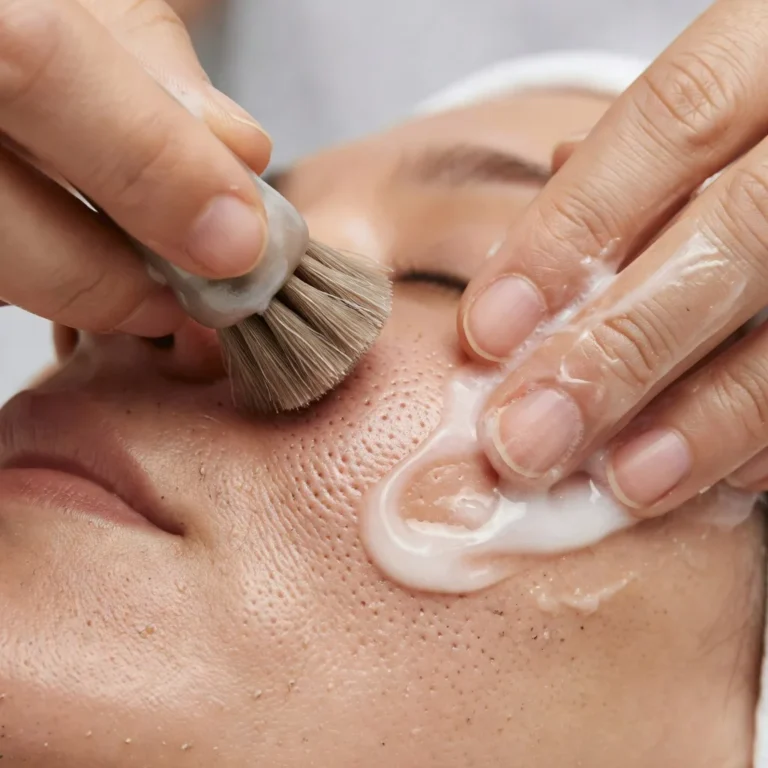
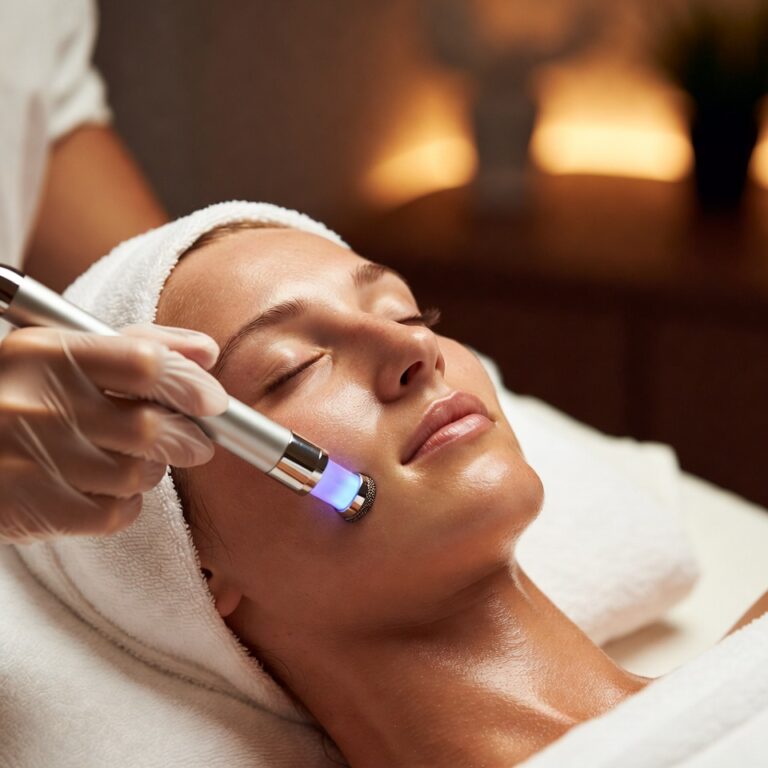
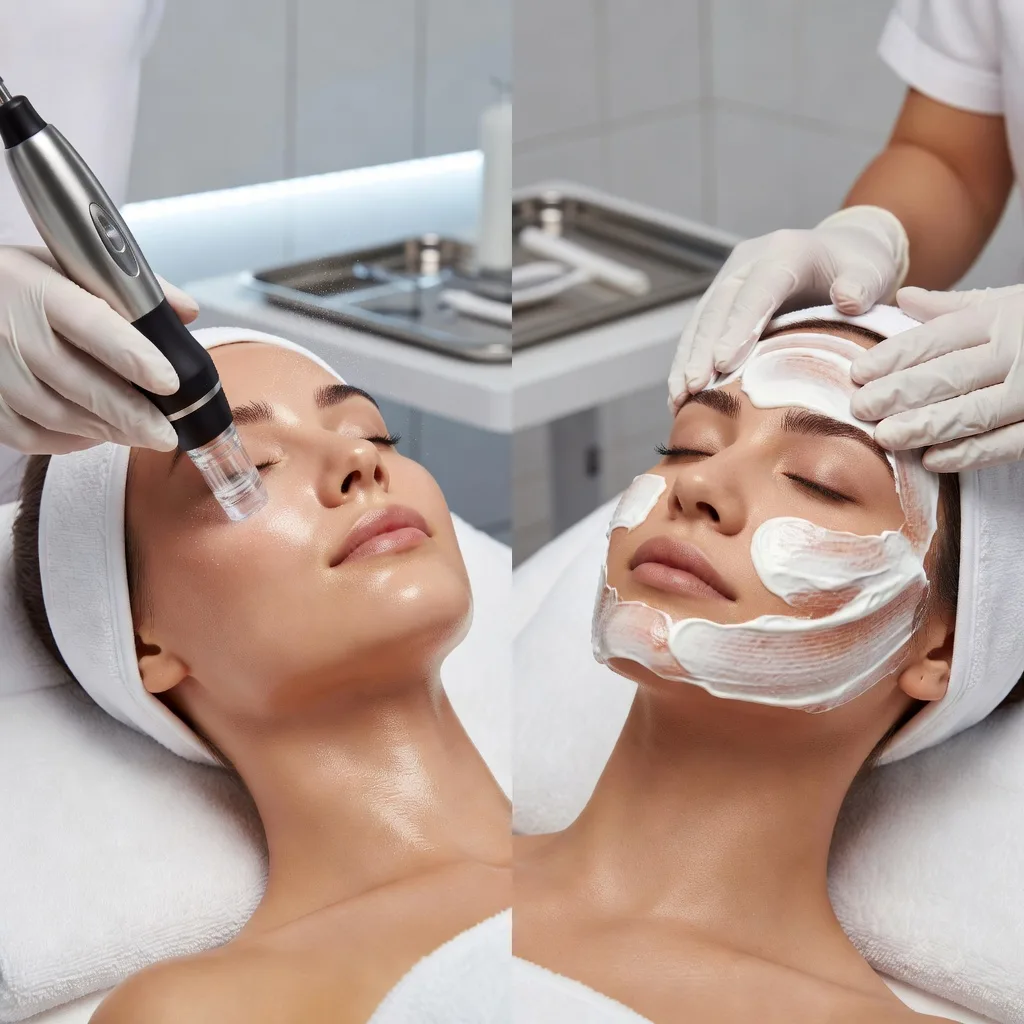
The main difference between microderm infusion and a facial is how the skin is treated. Microderm infusion combines diamond-tip microdermabrasion with serum delivery: the same wand exfoliates the outer layer of dead skin while suction draws a serum, often hyaluronic acid or brightening ingredients, onto the freshly exfoliated surface. A facial is a broader, hands-on treatment that usually includes cleansing, steam, gentle exfoliation, extractions, a mask, massage and moisturiser. Microderm infusion suits dullness, rough texture and dehydration, while a facial suits congestion, general upkeep and relaxation.
In short: microderm infusion is targeted resurfacing plus hydration, while a classic facial is an all-round skin treatment.
The American Academy of Dermatology describes microdermabrasion as a treatment for a dull complexion, uneven texture and tone, age spots and acne marks, with little downtime. Microderm infusion builds on that by adding a serum during the same pass.
This guide compares the two side by side, explains what happens in each session and helps you decide which suits your skin, budget and goals, including simple home care that keeps results looking fresh between appointments.
Shopping these picks?
Amazon Prime members get fast, free shipping on eligible items, plus Prime Video, Amazon Music and member deals. New members can start with a free trial.
Start a free Prime trialAged 18 to 24? Prime for Young Adults comes with a longer free trial and a lower price after it.
Affiliate link: we may earn a commission at no extra cost to you.
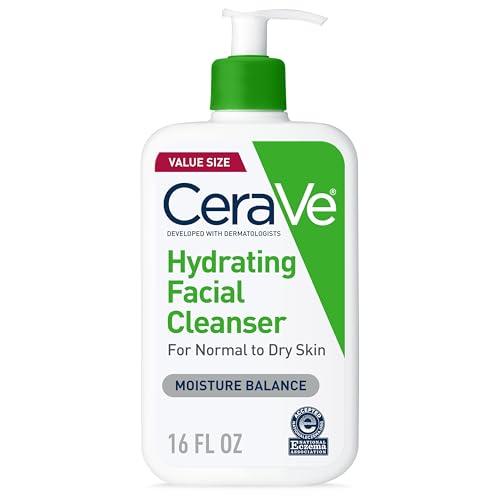
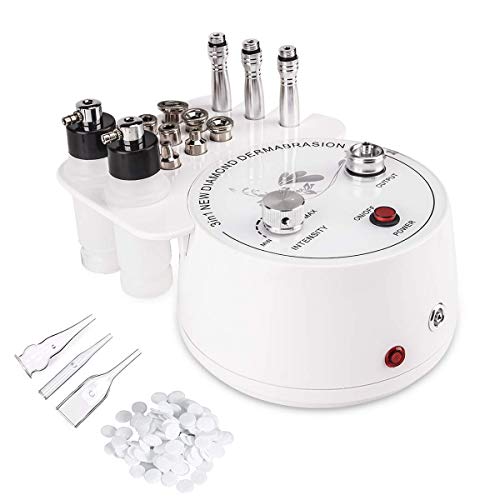
Recommended At-Home Microdermabrasion and Facial Products
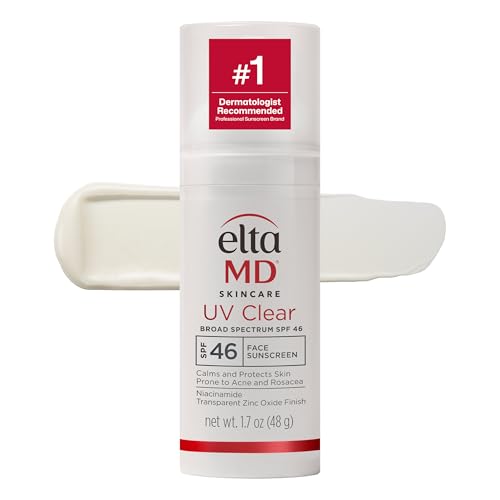
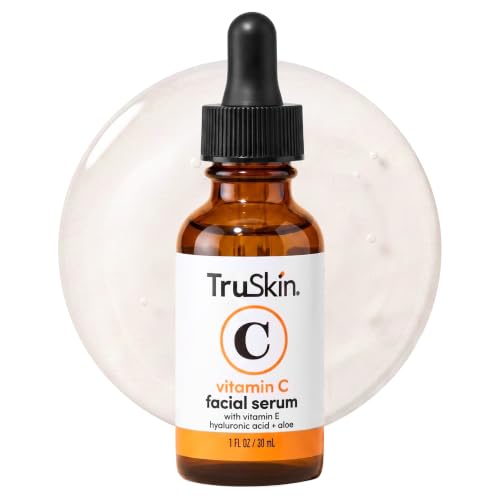
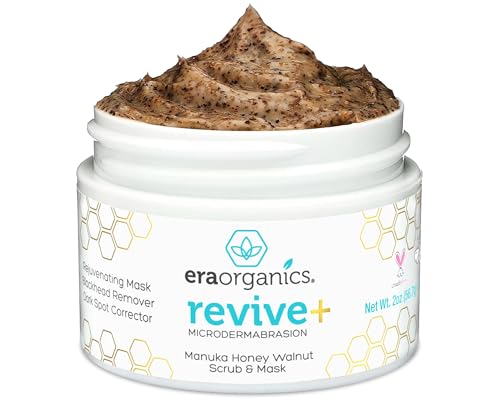
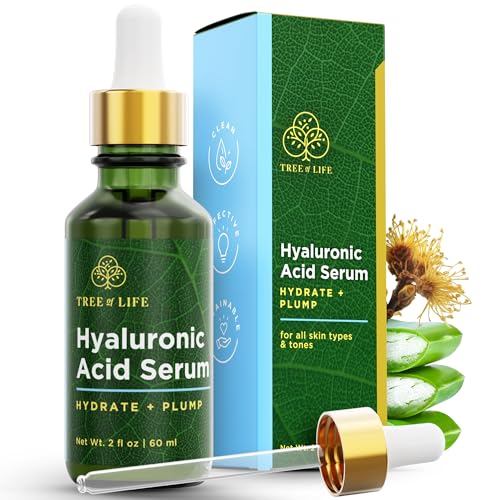

What to Know First
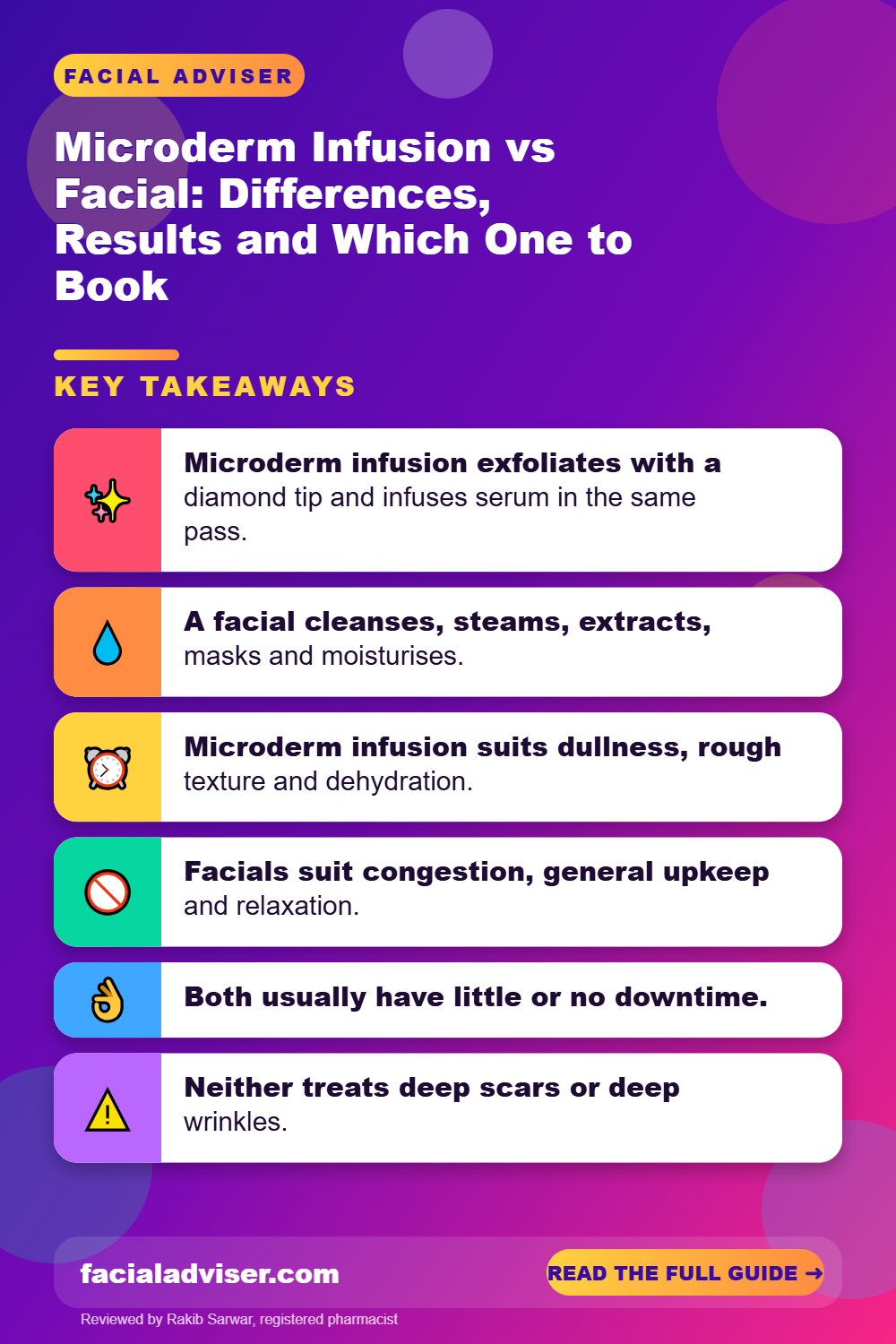
- Microderm infusion exfoliates with a diamond tip and infuses serum in the same pass.
- A facial cleanses, steams, extracts, masks and moisturises.
- Microderm infusion suits dullness, rough texture and dehydration.
- Facials suit congestion, general upkeep and relaxation.
- Both usually have little or no downtime.
- Neither treats deep scars or deep wrinkles.
- Daily sunscreen protects results from either treatment.
On This Page
- Microderm Infusion vs Facial at a Glance
- What Happens During Microderm Infusion
- What Happens in a Facial
- Results Compared
- Which Treatment Suits Your Skin?
- Microderm Infusion, Microdermabrasion and HydraFacial Compared
- How to Choose Between Microderm Infusion and a Facial
- Side Effects and Safety
- Aftercare, Home Care and How Often to Book
- Dos and Don’ts
- Honest Limits
- When to See a Dermatologist
- Your Questions, Answered
- Final Word
Microderm Infusion vs Facial at a Glance
This table compares typical versions of each treatment. Spa menus vary, so always ask what is included before booking.
| Feature | Microderm infusion | Facial |
|---|---|---|
| Main goal | Resurface and hydrate | Cleanse, balance and relax |
| How it works | Diamond tip exfoliation with serum delivery and suction | Hands-on cleansing, steam, extraction and mask |
| Exfoliation | Mechanical, with a diamond tip | Gentle scrub, enzyme or mild acid |
| Extractions | Usually none | Usually included |
| Session length | About 30 to 45 minutes | About 45 to 90 minutes |
| Feel | Light suction and vibration | Relaxing, with massage |
| Best for | Dullness, texture, dehydration | Congestion, upkeep, relaxation |
| Downtime | Mild redness for a few hours | Usually none |
Microderm infusion is sometimes sold under brand names for specific machines, and some clinics describe it as a hydrating microdermabrasion. The core idea is the same: exfoliate and treat the skin in one step. Ask which serum will be used and why, because the serum choice is what makes each session different. A good therapist will also explain how many passes they plan and how they will adjust suction for thinner areas such as around the eyes.
What Happens During Microderm Infusion
Microderm infusion is a device treatment performed by a trained therapist or clinician. A typical session looks like this:
- The skin is cleansed to remove makeup and oil.
- The therapist chooses a serum for your concern, such as hydrating, brightening or clarifying.
- A diamond-tipped wand is passed over the skin in sections; it exfoliates while suction draws the serum onto the skin.
- The number of passes and suction strength are adjusted to your skin.
- Moisturiser and sunscreen finish the treatment.
Because exfoliation and serum delivery happen together, skin often looks smooth and dewy straight away. A course of several sessions a few weeks apart is usually recommended for texture and tone. See the AAD microdermabrasion overview and our guide on what microdermabrasion is good for.
What Happens in a Facial
A classic facial focuses on cleansing and balancing the skin, and the therapist adapts the steps to your skin type on the day.
- Cleansing and a skin analysis to spot congestion, dryness and sensitivity.
- Steam to soften the skin before extractions.
- Gentle exfoliation with a scrub, enzyme or mild acid.
- Extractions to clear blackheads and clogged pores.
- A mask chosen for your skin type, then massage, toner and moisturiser.
Many people value the relaxation as much as the skin benefits, and the extractions are something microderm infusion does not usually offer. If blackheads are a regular problem, this step alone can make a facial the better choice. Our guide comparing a European facial and microdermabrasion explains the classic facial in more detail.
Results Compared
The two treatments give overlapping but different results. This table shows where each one usually performs best.
| Concern | Microderm infusion | Facial |
|---|---|---|
| Dullness | Very good | Good, immediate glow |
| Rough texture | Good, builds over a series | Mild |
| Dehydration | Good, thanks to the serum | Good, with hydrating masks |
| Blackheads and congestion | Mild | Good, through extractions |
| Mild dark marks | Moderate, over a series | Limited |
| Relaxation | Low | High |
| Deep scars and wrinkles | No | No |
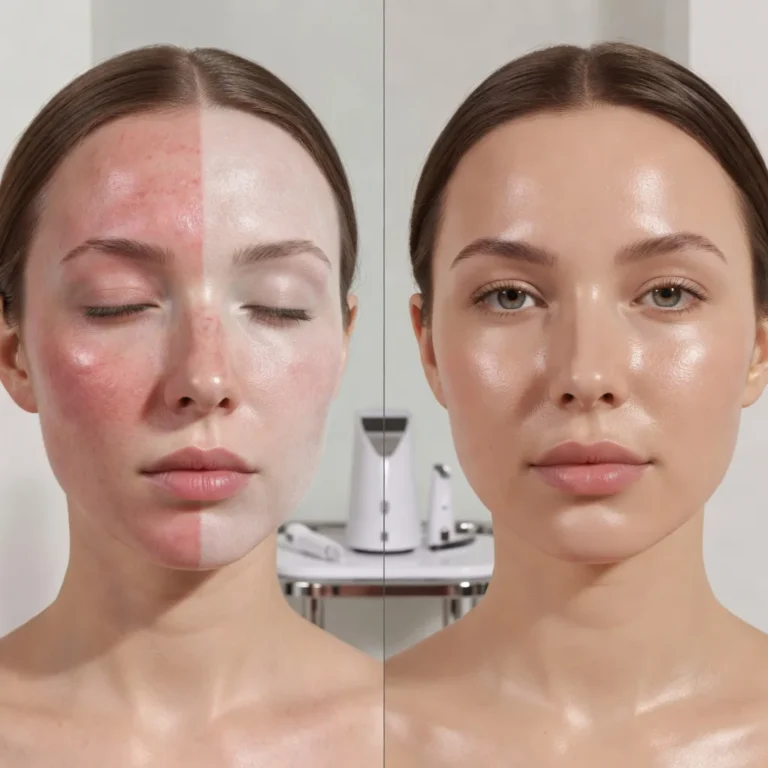
Microderm infusion usually leaves skin looking smooth and plump straight away, with texture improving further over a course of treatments. A facial gives a clean, fresh glow that is often at its best the day after, once any redness from extractions has settled. Results from both fade gradually as skin renews itself, which is why regular maintenance matters. A steady home routine with gentle cleansing, hydration and daily sunscreen helps either treatment last longer.
Which Treatment Suits Your Skin?
Use your main concern and skin type as a guide.
- Dull, dehydrated skin: microderm infusion with a hydrating serum.
- Rough texture on normal or oily skin: microderm infusion as a course.
- Blackheads and clogged pores: a facial with extractions.
- Sensitive or reactive skin: a gentle facial first.
- Stress relief and self-care: a facial.
- Before an event: either, booked a few days beforehand.
If you are unsure, a facial is a gentle starting point. The therapist can assess your skin and suggest whether microderm infusion would help later. Our comparison of microdermabrasion and a HydraFacial covers another option that combines exfoliation with serums.
Microderm Infusion, Microdermabrasion and HydraFacial Compared
These three treatments are often confused because they all use a handheld device with suction. The differences come down to how they exfoliate and whether anything is applied during the treatment.
- Microdermabrasion: dry exfoliation with a diamond tip or crystals and suction; moisturiser is applied afterwards.
- Microderm infusion: diamond-tip exfoliation with a serum delivered onto the skin during the same pass.
- HydraFacial: wet exfoliation with a spiral tip, a mild acid step, vortex extraction and serums at the end.
If congestion is your main concern, a treatment with extractions usually helps more. If dullness and dehydration bother you most, microderm infusion or a HydraFacial are both reasonable choices, and a classic facial remains the gentlest option for reactive skin. Whichever you choose, the skill of the practitioner and a sensible aftercare routine matter as much as the device itself.
How to Choose Between Microderm Infusion and a Facial
These steps help you choose the right treatment, prepare for it safely and get the most from your appointment.
Name your main concern
Dullness and texture point to microderm infusion; congestion points to a facial.
Consider your skin type
Sensitive skin often starts better with a gentle facial.
Check for breakouts or flares
Avoid microderm infusion over inflamed acne, eczema or rosacea.
Pause strong actives
Stop retinoids and acids a few days before if advised.
Ask about the serum
Check the ingredients if you have allergies or sensitive skin.
Book ahead of events
Leave a few days before an important date.
Plan aftercare
Keep your routine gentle and wear sunscreen daily.
Keeping a short note of how your skin looked and felt in the week after each treatment makes it easier to decide which is worth repeating.
If this is your first device treatment, ask for lower suction and fewer passes. It shows how your skin reacts before you commit to a series.
Side Effects and Safety
Both treatments are generally safe in trained hands. Most side effects are mild and short-lived.
- Microderm infusion: redness, tightness, sun sensitivity and, rarely, bruising or irritation from the serum.
- Facial: temporary redness after extractions and occasional breakouts if products do not suit you.
- Both: irritation if combined with strong actives too soon afterwards.
Avoid microderm infusion over cold sores, sunburn, broken skin, eczema or rosacea flares and inflamed acne. If you use isotretinoin or prescription retinoids, talk to your dermatologist first, and tell your therapist about any ingredient allergies before either treatment.
People with deeper skin tones should choose experienced practitioners, as irritation can occasionally leave dark marks that take weeks to fade. It is reasonable to ask how the practitioner adjusts suction and passes for your skin tone before you book.
Aftercare, Home Care and How Often to Book
Freshly treated skin is more sensitive than usual, so keep your routine short for a few days.
- Use a mild, hydrating cleanser and lukewarm water.
- Apply a hyaluronic acid serum to damp skin, then moisturiser.
- Wear broad-spectrum SPF 30 or higher every day.
- Skip retinoids, acids and scrubs for a few days.
- Avoid saunas and heavy sweating for 24 hours.
At home, do not use a scrub, a microdermabrasion device and an acid exfoliant in the same week. Over-exfoliating weakens the skin barrier and leads to redness and breakouts.
Our guide on microdermabrasion versus a facial explains how to fit both into a regular routine.
Prices vary by location and clinic, so compare the total cost over a few months rather than one session.
- Microderm infusion is usually booked as a course of several sessions, then every month or so for maintenance.
- Facials are often booked every four to six weeks.
- Branded machines and premium serums increase the price.
- Packages only save money if you already know the treatment suits your skin.
Budget for aftercare as well. A gentle cleanser, moisturiser and daily sunscreen protect your results and cost far less than extra sessions to fix irritation. It also helps to ask whether a consultation or patch test is included, because this can save you paying for a full course that does not suit your skin.
Dos and Don’ts
Try This
- Choose by your main concern
- Ask which serum will be used
- Wear sunscreen daily afterwards
- Start gently if you are new to device treatments
- Keep aftercare simple
Avoid This
- Have microderm infusion over inflamed acne
- Stack several exfoliating treatments
- Book the day before a big event
- Use strong actives straight afterwards
- Expect deep scars to disappear
Honest Limits
There is little independent research on microderm infusion as a combined treatment, so many claims come from device makers and clinics. Evidence for microdermabrasion itself shows modest, surface-level improvements, and classic facials vary so much that they are hard to study.
Both give temporary improvements that need regular maintenance. For acne scars, melasma, persistent acne or deeper wrinkles, a dermatologist can offer treatments with stronger evidence. Think of both as maintenance treatments for healthy-looking skin rather than long-term cures, and be cautious of any clinic that promises permanent results from either one.
When to See a Dermatologist
- You have persistent acne, rosacea or eczema.
- You want to treat scars, melasma or deep wrinkles.
- You react to treatments with lasting redness, bumps or dark patches.
- You use prescription skincare and want to add treatments safely.
This article is for general information and does not replace professional medical advice. See a board-certified dermatologist before cosmetic treatments if you have a skin condition or take medications that affect the skin.
Your Questions, Answered
What is the difference between microderm infusion and a facial?
Microderm infusion exfoliates and infuses serum with a device; a facial is a hands-on cleanse, extract, mask and massage treatment.
What is the difference between microderm infusion and microdermabrasion?
Microderm infusion adds a serum during the same pass.
Which is better for dull skin?
Microderm infusion usually gives a stronger smoothing effect.
Which is better for blackheads?
A facial with extractions.
Is there downtime?
Usually little or none for either.
Does microderm infusion hurt?
It feels like light suction and vibration.
How many microderm infusion sessions do I need?
Usually a series of several sessions.
How often should I get a facial?
Many people choose every four to six weeks.
Is microderm infusion good for sensitive skin?
It can be too strong; start with a gentle facial.
How is microderm infusion different from a HydraFacial?
A HydraFacial uses wet exfoliation and extraction; microderm infusion uses a diamond tip.
Final Word
Microderm infusion combines diamond-tip exfoliation with serum delivery for smoother, hydrated skin, while a facial is a hands-on treatment for clean, balanced skin and relaxation.
Choose by your main concern and skin type, start gently and protect your results with simple aftercare and daily sunscreen.

Written by
Registered pharmacist and founder of Facial Adviser. Rakib's pharmacy training covers how skincare actives work and interact; a later course in cosmetology turned that into a focus on facial treatments and skincare products. He plans, researches and edits every guide on the site and checks health claims against sources such as the American Academy of Dermatology, the FDA and the NIH. He is not a dermatologist; see the Editorial Policy and Medical Disclaimer.
About · Editorial policy · How we choose products · Medical disclaimer · Contact
Keep reading: Microdermabrasion and diamond peel
- Ultimate Guide Microdermabrasion: What to Know
- Microdermabrasion vs Facial: Which Treatment Does Your Skin Need?
- European Facial vs Microdermabrasion: Which Treatment Is Right for Your Skin?
- Fire and Ice Facial vs Microdermabrasion: Differences, Results and Which to Choose
- Diamond Facial: Diamond-Tip Microdermabrasion vs Diamond Dust Facials
- What Is Diamond Microdermabrasion Facial?
- Is Hydrafacial a Gimmick? What Evidence Shows
- Facial vs Chemical Peel: Differences, Results and Which to Choose