Diamond Facial: Diamond-Tip Microdermabrasion vs Diamond Dust Facials
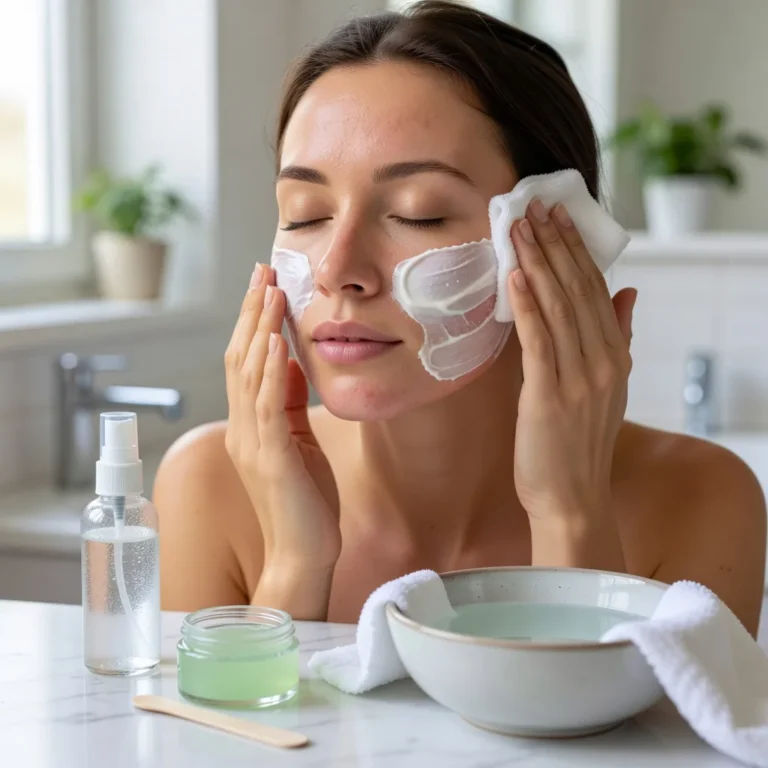
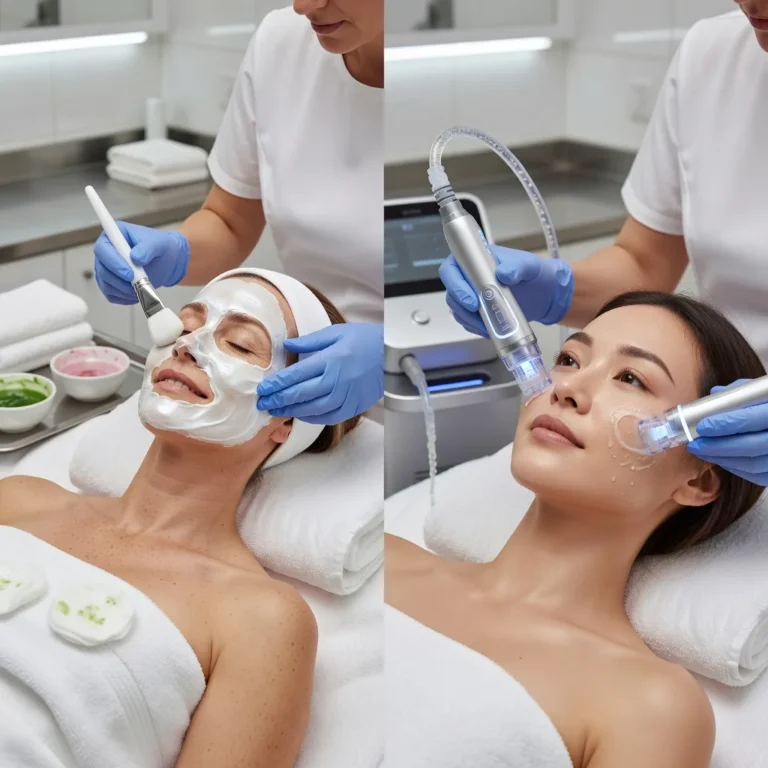
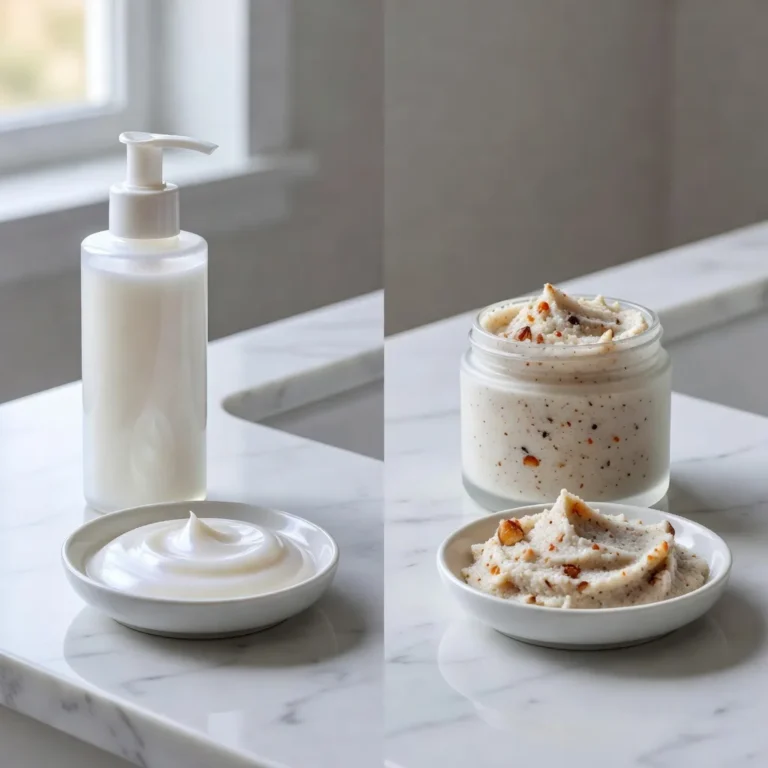
The name diamond facial is used for two very different treatments, which is why it causes so much confusion. In most clinics it means diamond-tip microdermabrasion, a mechanical exfoliation. In some spas it means a luxury facial that uses products containing crushed diamond powder.
Part of our guide to facial treatments. Start with: Ultimate Guide Microdermabrasion: What to Know
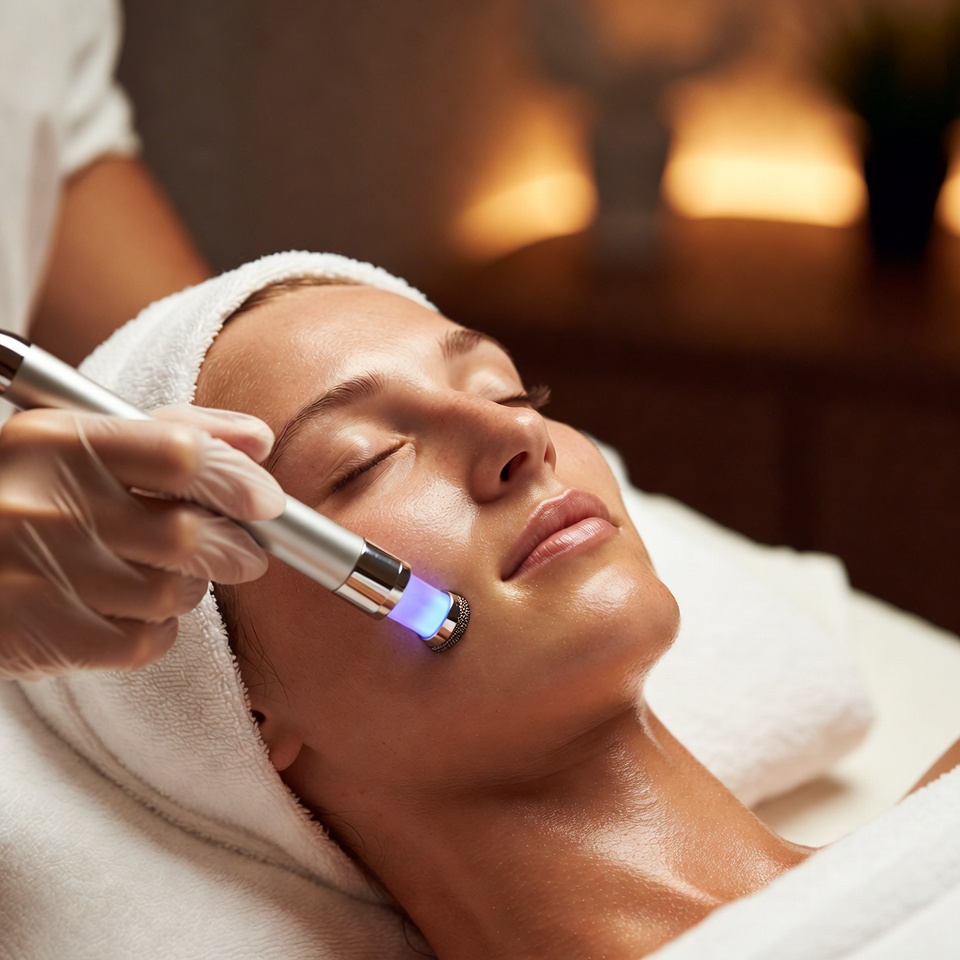
A diamond facial usually means diamond-tip microdermabrasion, a non-invasive treatment where a wand with a diamond-coated tip gently abrades the top layer of dead skin while light suction lifts the debris away. It can make skin feel smoother and look brighter, and a course of treatments may soften dull tone, rough texture and mild marks, with little or no downtime. The other meaning, a diamond dust facial, uses creams or masks containing finely ground diamond powder; these feel luxurious but have little evidence behind them beyond ordinary gentle exfoliation and moisturising. Neither type removes deep wrinkles or deep scars.
In short: diamond-tip microdermabrasion is a real exfoliating treatment with modest results, while diamond dust facials are mainly a luxury experience.
The American Academy of Dermatology describes microdermabrasion as a non-invasive way to gently exfoliate that can improve dullness, uneven tone and texture, with results building over a series of treatments.
This guide explains both meanings, what the evidence supports, what happens during a session, how to care for your skin afterwards and how at-home diamond devices compare with professional treatment, so you can decide whether it is worth booking.
Shopping these picks?
Amazon Prime members get fast, free shipping on eligible items, plus Prime Video, Amazon Music and member deals. New members can start with a free trial.
Start a free Prime trialAged 18 to 24? Prime for Young Adults comes with a longer free trial and a lower price after it.
Affiliate link: we may earn a commission at no extra cost to you.
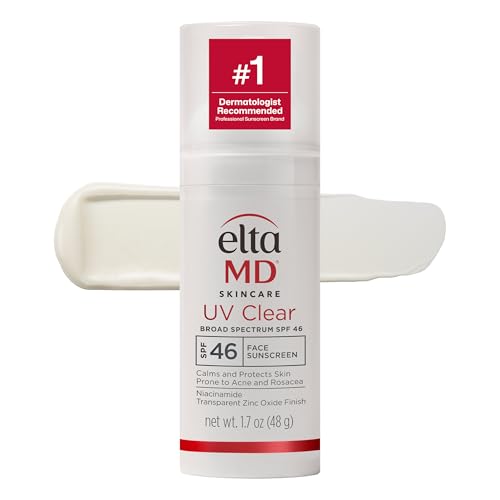
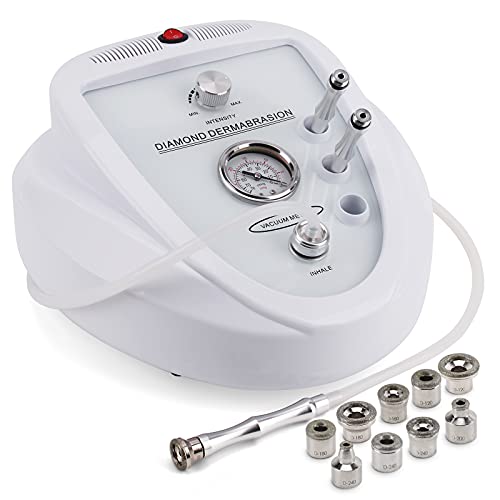
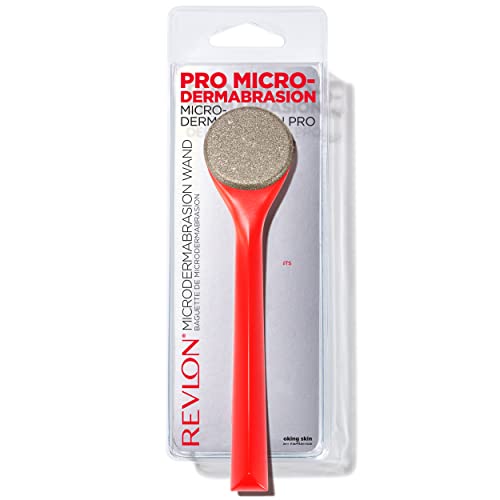
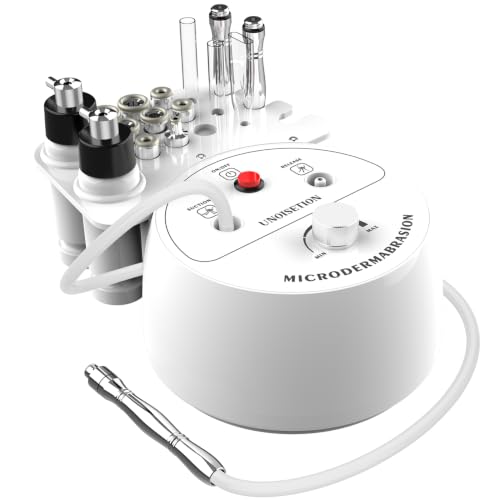
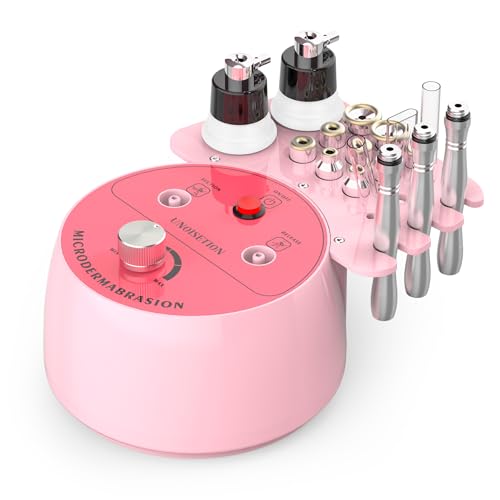
Recommended At-Home Diamond Microdermabrasion Devices on Amazon


In This Guide
- Two Meanings of Diamond Facial
- How Diamond-Tip Microdermabrasion Works
- What the Evidence Says
- Diamond Dust Facials: Luxury or Hype?
- What Happens During a Diamond Microdermabrasion Session
- Who Should Avoid a Diamond Facial
- Diamond Facial Aftercare
- How to Use an At-Home Diamond Microdermabrasion Device
- Dos and Don’ts
- Diamond Facial vs Other Exfoliating Treatments
- Honest Limits
- When to See a Dermatologist
- Frequently Asked Questions
- The Bottom Line
At a Glance
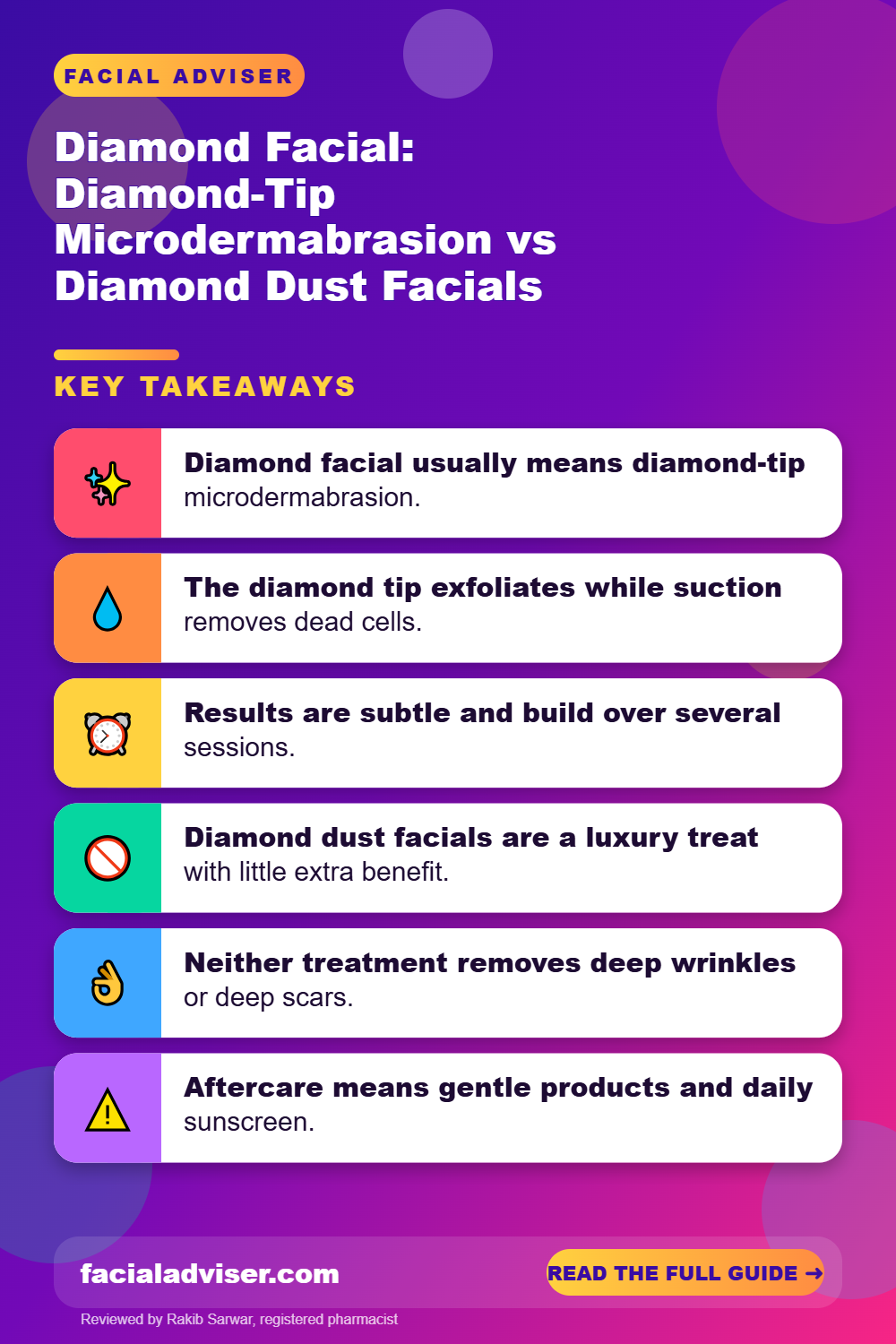
- Diamond facial usually means diamond-tip microdermabrasion.
- The diamond tip exfoliates while suction removes dead cells.
- Results are subtle and build over several sessions.
- Diamond dust facials are a luxury treat with little extra benefit.
- Neither treatment removes deep wrinkles or deep scars.
- Aftercare means gentle products and daily sunscreen.
- At-home devices are milder than clinic machines.
Two Meanings of Diamond Facial
Before booking, check which treatment a clinic or spa actually offers. The name is marketing, not a medical term, and the experience and results differ a lot.
| Feature | Diamond-tip microdermabrasion | Diamond dust facial |
|---|---|---|
| What it is | Mechanical exfoliation with a diamond-coated wand and suction | Facial using creams, scrubs or masks with diamond powder |
| How it works | Abrades and vacuums away dead surface cells | Mild polishing plus moisturising and massage |
| Evidence | Supported for dullness, texture and mild marks | Little independent evidence for diamond itself |
| Downtime | Usually none, mild redness | None |
| Feel | Light scratching and suction | Relaxing, spa-like |
| Best for | Rough texture, dull tone, mild marks | A pampering treat before an event |
Most of this guide focuses on diamond-tip microdermabrasion because it is the more common meaning and the one with a clear mechanism. The diamond dust version is covered in its own section below.
How Diamond-Tip Microdermabrasion Works
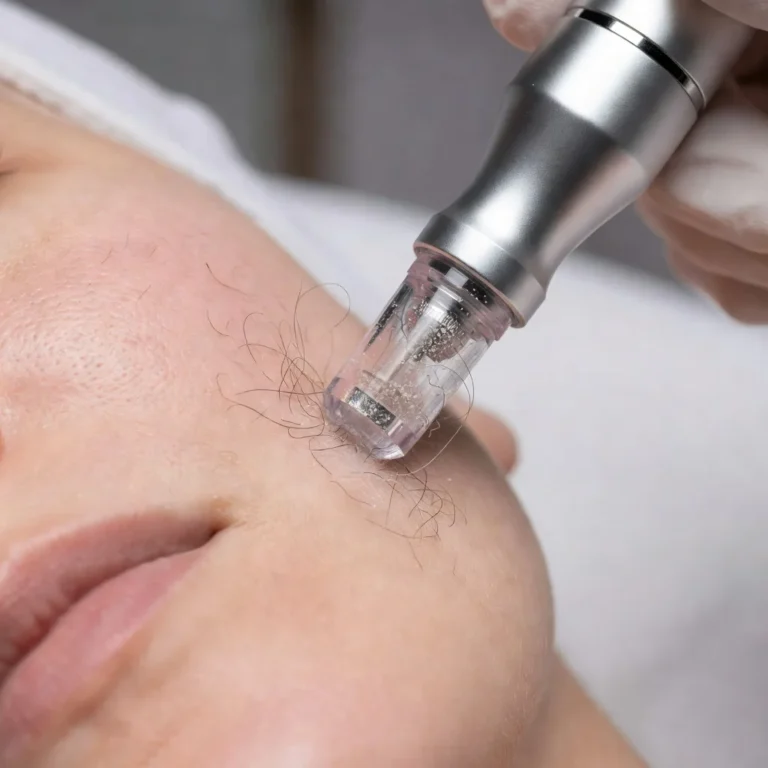
Older microdermabrasion machines sprayed tiny crystals onto the skin and vacuumed them back up. Diamond-tip machines replace the loose crystals with a wand whose tip is coated with industrial diamond chips. As the wand glides over the skin, the rough tip lifts dead cells and a built-in vacuum pulls them into a filter.
- No loose crystals, so less mess and less risk of particles near the eyes.
- Tips come in different grits, from fine for sensitive areas to coarser for thicker skin.
- Suction strength can be adjusted to suit the skin.
- The practitioner controls depth by choosing the tip, suction level and number of passes.
The AAD microdermabrasion overview notes that treatment by a dermatologist goes a little deeper than at-home kits and that results usually appear after a series of sessions. Our guide on what microdermabrasion is good for covers the concerns it can help with.
What the Evidence Says
Microdermabrasion is a long-established cosmetic treatment, and its effects on the surface of the skin are well described. What it can do is modest, and expectations matter.
| Concern | Likely effect | Realistic expectation |
|---|---|---|
| Dull complexion | Good | Brighter look after one session |
| Rough texture | Good | Smoother feel, better with a course |
| Mild post-acne marks | Fair | Gradual fading over several sessions |
| Age spots and uneven tone | Fair | Some improvement, sunscreen essential |
| Fine lines | Limited | Slight softening at best |
| Deep wrinkles or ice-pick scars | Poor | Needs lasers, needling or other procedures |
| Active acne | Not suitable | Can spread bacteria and irritate |
Many before-and-after photos online use better lighting, makeup or several combined treatments. Judge results by your own skin after a full course, not by a single promotional image.
Diamond Dust Facials: Luxury or Hype?
Diamond dust facials use products that contain finely ground diamond powder, often alongside moisturisers, peptides or light-reflecting minerals. The diamond particles may add a very mild polishing effect and a temporary glow as they reflect light, much like shimmer in makeup.
There is little independent evidence that diamond powder offers skin benefits beyond what an ordinary gentle exfoliant and a good moisturiser provide. The relaxing massage, steam and hydrating masks are what most people enjoy. If you want a treat before an event and understand you are paying for the experience, that is fine. If you want measurable change in texture or tone, a course of microdermabrasion or another proven treatment is a better use of money. It is also worth asking what else is in the products, because fragrance and essential oils in luxury formulas are a more common cause of irritation than the diamond powder itself. If you have sensitive skin, ask for a fragrance-free option or bring a list of ingredients that have irritated you before.
What Happens During a Diamond Microdermabrasion Session
A professional session usually takes 30 to 60 minutes, often as part of a wider facial.
- Consultation about skin type, medications and recent treatments.
- Thorough cleanse to remove makeup and oil.
- The practitioner chooses a tip and suction level and tests a small area.
- The wand is moved in short, overlapping passes across the face, avoiding the eyelids.
- Skin is wiped, then a calming serum or mask is applied.
- Moisturiser and sunscreen finish the treatment.
Most people feel a light scratching and pulling sensation. It should not be painful. Skin often looks pink for a few hours, similar to a mild windburn. Sessions are usually spaced a couple of weeks apart. Many clinics suggest a course of several sessions for texture or marks, followed by occasional maintenance visits if you like the results. Our comparison of microdermabrasion vs hydradermabrasion facials helps if you are choosing between the two.
Who Should Avoid a Diamond Facial
Microdermabrasion is suitable for many skin types and tones, but it is not for everyone. Talk to a dermatologist first if any of these apply.
- Active acne, cold sores, warts or skin infection on the face.
- Rosacea, eczema or psoriasis flares.
- Recent use of oral isotretinoin, or strong prescription retinoids.
- Sunburn, open wounds or recent waxing on the area.
- A tendency to keloid scars or dark marks after irritation.
- Recent fillers, injections or laser treatment without your practitioner’s approval.
Stop and seek advice if you develop bleeding, blistering, oozing, streaks of broken skin or redness that lasts more than a day or two. Over-treatment with a coarse tip or strong suction can damage the skin and cause dark marks, especially on deeper skin tones.
Diamond Facial Aftercare
Your skin is more exposed after exfoliation, so the first 48 hours matter most.
| Timing | Do | Avoid |
|---|---|---|
| First few hours | Gentle moisturiser, leave skin to calm | Makeup if skin is very pink, touching the face |
| First 24 hours | Lukewarm water, fragrance-free products | Hot showers on the face, saunas, heavy workouts |
| First 48 hours | Broad-spectrum sunscreen SPF 30 or higher | Retinoids, acids, scrubs and cleansing brushes |
| Ongoing | Daily sunscreen and a simple routine | Another exfoliating treatment too soon |
Our guide on what not to do after a facial has more detail on the first day. The AAD also recommends a broad-spectrum sunscreen of SPF 30 or higher every day; its guide on how to apply sunscreen explains how much to use.
How to Use an At-Home Diamond Microdermabrasion Device
Home devices use the same idea as clinic machines, with weaker suction and finer tips. Read the manual first, as settings differ between devices.
Start on clean, dry skin
Cleanse, remove makeup and dry the face fully, as the tip glides better on dry skin.
Choose the finest tip
Begin with the gentlest tip and the lowest suction setting.
Test a small area
Try one pass on the jawline and wait a day to check for redness or marks.
Hold the skin taut
Stretch the skin lightly with your free hand to avoid bruising from suction.
Use short, single passes
Glide in one direction, lifting the wand at the end of each stroke, and do not go over the same spot repeatedly.
Avoid delicate areas
Keep away from the eyelids, lips, broken skin and any spots or moles.
Clean and protect
Rinse, moisturise, wash the tip as directed and wear sunscreen the next day.
Use a home device no more than once a week at first, and replace or clean filters and tips as the maker advises. A dirty tip can spread bacteria across the face.
Dos and Don’ts
Good Habits
- Check which type of diamond facial you are booking
- Choose a trained practitioner
- Start with gentle settings
- Moisturise after treatment
- Wear sunscreen every day
Common Mistakes
- Treat active acne or broken skin
- Combine with acids or retinoids the same week without advice
- Press hard or repeat passes
- Share device tips
- Expect wrinkle removal
The AAD advice on safe exfoliation at home is a useful rule of thumb: the more aggressive the method, the less often you should use it.
Diamond Facial vs Other Exfoliating Treatments
Diamond-tip microdermabrasion is one of several ways to exfoliate in a clinic or salon. Each option suits slightly different skin and goals, so it helps to know where it sits.
- Crystal microdermabrasion works in the same way but uses sprayed crystals instead of a diamond tip, which can be messier.
- Hydradermabrasion combines gentle suction with serums and water, and many people find it less abrasive.
- Dermaplaning uses a blade to remove dead skin and fine facial hair, with a similarly short recovery.
- Superficial chemical peels use acids to loosen dead cells and can reach more evenly into uneven areas.
- Enzyme facials are the gentlest option and suit very sensitive skin that dislikes friction.
- Microneedling and lasers work deeper and are better for scars and wrinkles, with more downtime.
If your skin is sensitive or prone to redness, a chemical or enzyme option may feel kinder than friction and suction. If your skin is thicker, oily or rough, many people enjoy the immediate smoothness that diamond-tip treatment gives. A dermatologist or experienced skin therapist can suggest which option fits your skin, your tone and the result you want, and whether combining treatments over time makes sense.
Honest Limits
Diamond-tip microdermabrasion only works on the surface. It will not tighten sagging skin, remove deep wrinkles or fill deep acne scars. At-home devices are milder still, so results are gentler and slower than in a clinic. Diamond dust facials add a luxury experience rather than a proven extra effect.
The benefits also fade if you stop treatments, as skin renews itself every few weeks. For long-term improvement, daily sunscreen, a retinoid if suitable and a consistent routine matter more than any single facial.
When to See a Dermatologist
- You want to treat deep scars, melasma or significant sun damage.
- Your skin stays red, raw or scabbed after a session.
- You develop dark patches after exfoliation.
- You have a skin condition and are unsure whether microdermabrasion is safe.
This article is for general information and does not replace professional medical advice. See a board-certified dermatologist before cosmetic procedures if you have a skin condition or take prescription skin medication.
Frequently Asked Questions
What is a diamond facial?
Usually diamond-tip microdermabrasion; sometimes a spa facial with diamond powder products.
Is a diamond facial good for your skin?
It can smooth and brighten skin when done gently and not too often.
Does a diamond facial hurt?
It feels like light scratching and suction, not pain.
How long do diamond facial results last?
A few weeks, longer with a course and good skincare.
How often can you get a diamond facial?
Usually every two to four weeks, depending on your skin.
Is there downtime after a diamond facial?
Usually only a few hours of mild redness.
Does diamond dust do anything for skin?
There is little evidence it does more than gentle exfoliation.
Can a diamond facial remove acne scars?
It may soften shallow marks but not deep scars.
Are at-home diamond microdermabrasion devices safe?
Generally yes when used gently, but they can irritate if overused.
Can I wear makeup after a diamond facial?
It is best to wait a few hours, or until the next day.
The Bottom Line
A diamond facial most often means diamond-tip microdermabrasion, a gentle mechanical exfoliation that can brighten and smooth skin over a course of sessions. Diamond dust facials are mainly a pampering experience.
Keep expectations realistic, protect your skin with daily sunscreen, and see a dermatologist for deep scars, pigmentation or wrinkles that need stronger treatment.

Written by
Registered pharmacist and founder of Facial Adviser. Rakib's pharmacy training covers how skincare actives work and interact; a later course in cosmetology turned that into a focus on facial treatments and skincare products. He plans, researches and edits every guide on the site and checks health claims against sources such as the American Academy of Dermatology, the FDA and the NIH. He is not a dermatologist; see the Editorial Policy and Medical Disclaimer.
About · Editorial policy · How we choose products · Medical disclaimer · Contact
Keep reading: Microdermabrasion and diamond peel
- Ultimate Guide Microdermabrasion: What to Know
- What Is Diamond Microdermabrasion Facial?
- What Is Diamond Peel Facial Treatment? Real Answer
- Which Facial Is Best for Bride, Gold or Diamond?
- How to Use VLCC Diamond Facial Kit, Step by Step
- Does Microdermabrasion Remove Hair? The Real Answer
- What Is a Spa Facial?
- Fruit Facial at Home: Does It Actually Work?