Lactic Peel Facial: Strengths, Who It Suits, Procedure and Aftercare
A lactic peel facial is one of the gentlest chemical peels available, which is why it is often the first peel people try. It is popular with anyone who wants brighter, smoother skin but worries that stronger acids will leave them red, flaky or sore.
Part of our guide to facial treatments. Start with: Facial vs Chemical Peel: Differences, Results and Which to Choose
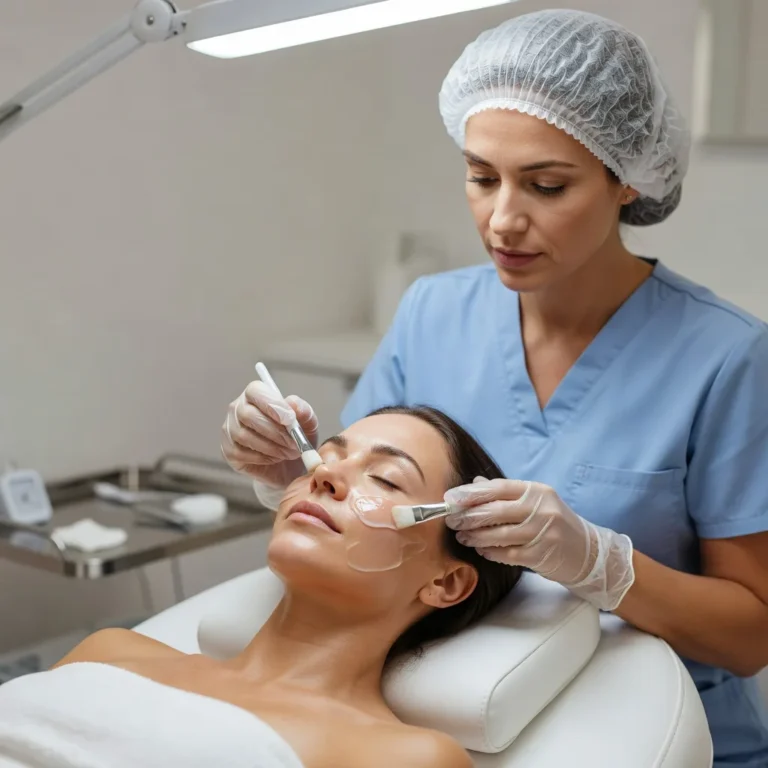
A lactic peel facial is a superficial chemical peel that uses lactic acid, an alpha hydroxy acid (AHA), to loosen and remove dead skin cells from the outer layer of skin. Because lactic acid has a larger molecule than glycolic acid, it penetrates more slowly and tends to be gentler, and it also helps skin hold on to moisture. That makes it well suited to dry, sensitive, dull or mildly uneven skin. Professional peels are usually applied at strengths well above home products for a few minutes, then neutralised or removed. Most people see brighter, softer skin within days, with little or no peeling, and a course of several peels gives the best results.
In short: a lactic peel is a light, hydrating AHA peel that suits dry and sensitive skin better than most other acids.
The American Academy of Dermatology describes light chemical peels as a way to improve uneven tone, dryness, fine lines and mild acne, and the US Food and Drug Administration warns that AHAs can make skin more sensitive to the sun, so sunscreen is essential afterwards.
This guide explains lactic peel strengths, who it suits, what happens during the treatment, how to care for your skin afterwards and how at-home lactic products compare.
Shopping these picks?
Amazon Prime members get fast, free shipping on eligible items, plus Prime Video, Amazon Music and member deals. New members can start with a free trial.
Start a free Prime trialAged 18 to 24? Prime for Young Adults comes with a longer free trial and a lower price after it.
Affiliate link: we may earn a commission at no extra cost to you.
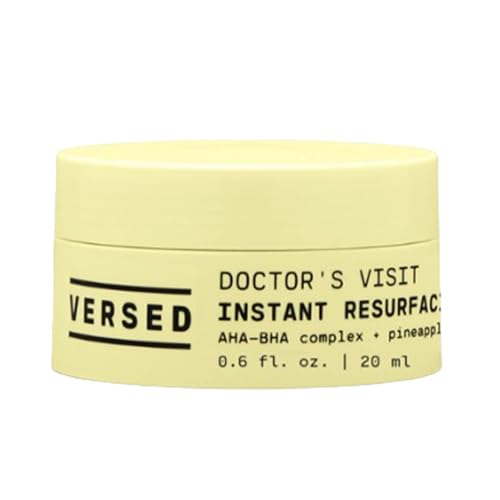
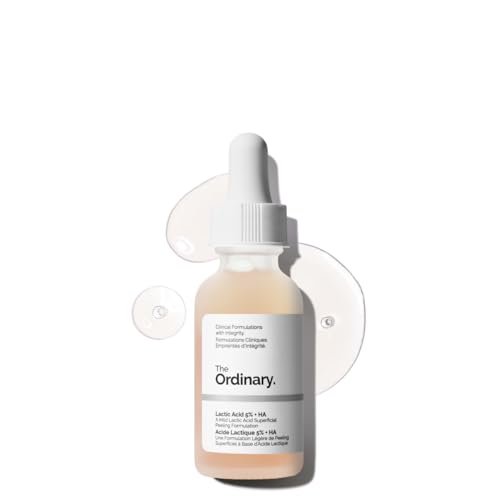
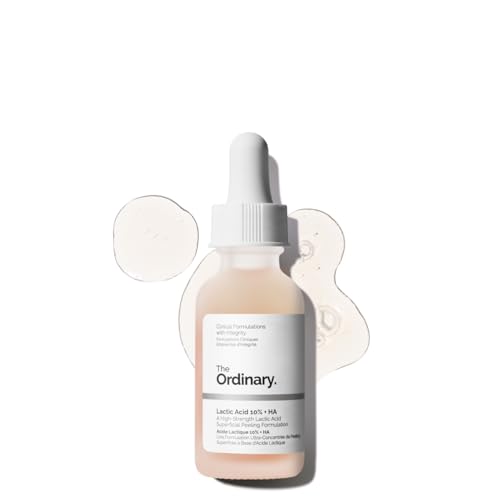
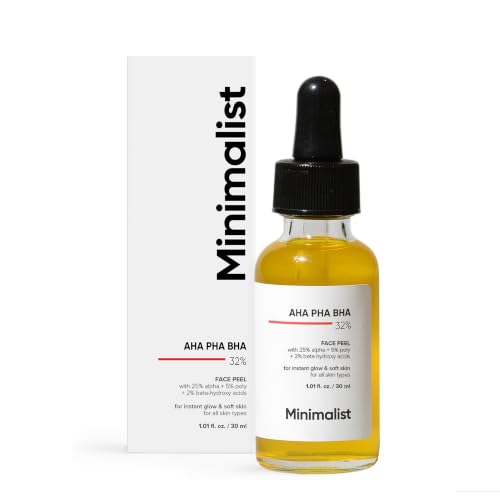
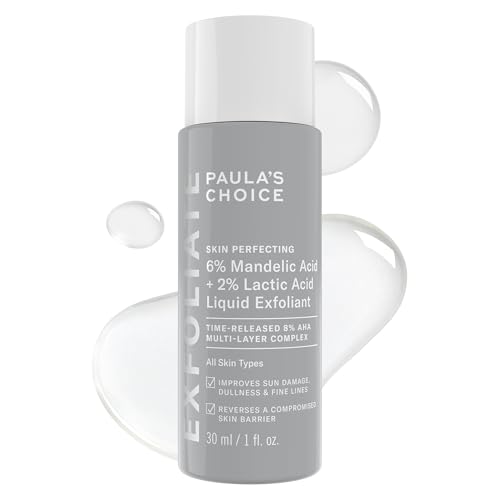
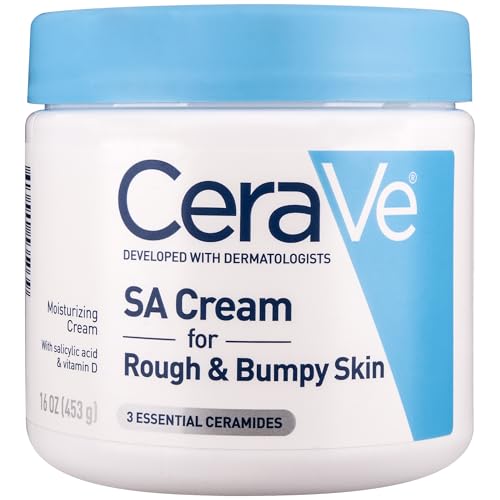
Recommended Lactic Acid Serums and Peels on Amazon

Jump to a Section
- What Is a Lactic Acid Peel?
- Lactic Peel Strengths Explained
- Lactic Acid vs Glycolic, Mandelic and Salicylic Peels
- Who a Lactic Peel Suits (and Who Should Wait)
- What Happens During a Lactic Peel Facial
- Results and Downtime
- How to Care for Your Skin After a Lactic Peel Facial
- At-Home Lactic Acid Products vs a Professional Peel
- Side Effects and Risks
- Dos and Don’ts for Lactic Peels
- Honest Limits of Lactic Peels
- When to See a Dermatologist
- FAQ
- The Bottom Line
At a Glance
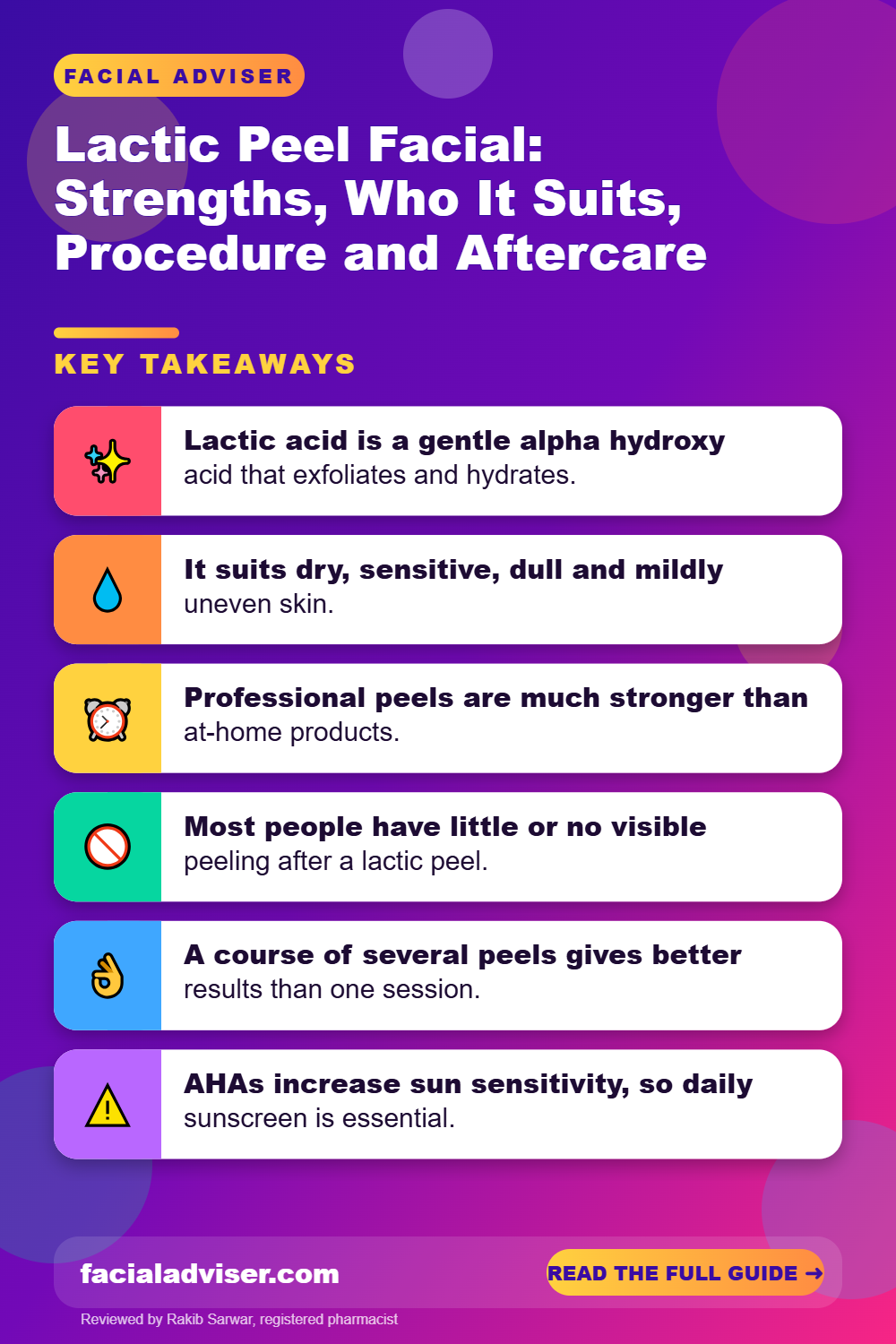
- Lactic acid is a gentle alpha hydroxy acid that exfoliates and hydrates.
- It suits dry, sensitive, dull and mildly uneven skin.
- Professional peels are much stronger than at-home products.
- Most people have little or no visible peeling after a lactic peel.
- A course of several peels gives better results than one session.
- AHAs increase sun sensitivity, so daily sunscreen is essential.
- At-home lactic serums give gradual, milder results.
What Is a Lactic Acid Peel?
Lactic acid was originally derived from sour milk, but the lactic acid used in skincare today is usually made by fermentation. It belongs to the alpha hydroxy acid family, alongside glycolic and mandelic acid, and works by loosening the bonds that hold dead cells to the skin surface so they shed more evenly.
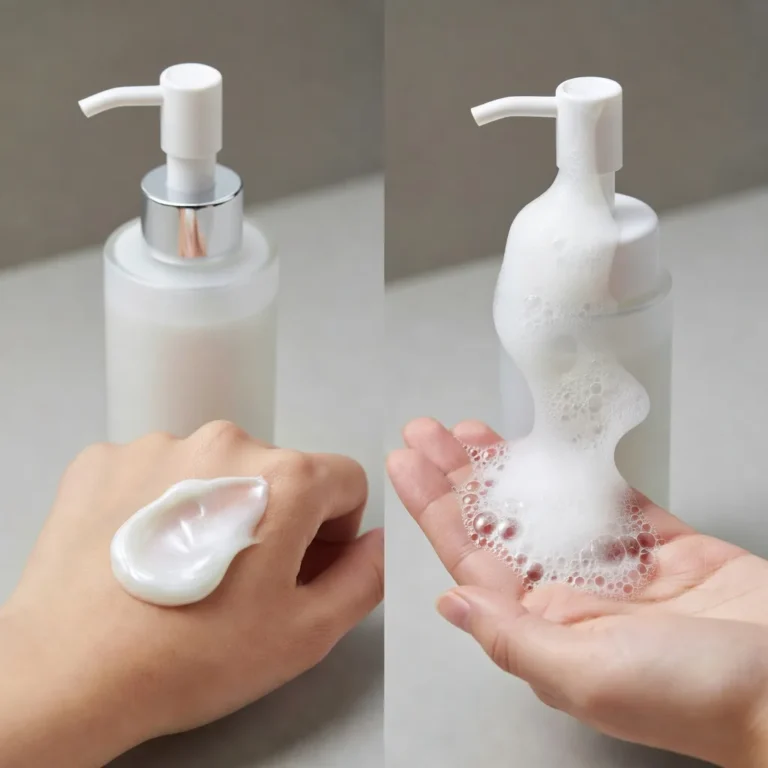
Unlike many acids, lactic acid is also a humectant, meaning it attracts water into the skin. It is naturally part of the skin’s own moisturising factors, which helps explain why it often feels less drying than other peels. The result is smoother texture, a brighter look and better absorption of the products you apply afterwards.
If you are deciding between a classic facial and a peel, our comparison of a facial vs a chemical peel explains how the two treatments differ.
Lactic Peel Strengths Explained
Strength depends on both the percentage of acid and the pH of the product. A lower pH means a more active acid. This table gives typical ranges, although exact products vary.
| Setting | Typical lactic acid strength | Use | Expected effect |
|---|---|---|---|
| Daily home products | Around 5 to 10 percent | Serums, toners, creams | Gradual smoothing and glow |
| Weekly home peels and masks | Around 10 to 15 percent | Short-contact masks and pads | Mild exfoliation |
| Professional light peel | Often 20 to 50 percent | Applied for a few minutes in clinic | Brighter, smoother skin in days |
| Stronger professional peel | Higher strengths or lower pH | Experienced provider only | Deeper exfoliation, some peeling |
The FDA page on alpha hydroxy acids explains that cosmetic AHA products sold for home use are generally kept at lower concentrations and a higher pH, while stronger salon products are meant for brief use by trained professionals.
The percentage alone does not tell you how strong a peel is. A 10 percent product with a low pH can be more active than a higher-percentage product that has been buffered to a gentler pH.
Lactic Acid vs Glycolic, Mandelic and Salicylic Peels
Lactic acid is only one of several acids used in light peels. Comparing them helps you understand why a provider might choose one over another for your skin.
| Acid | Type | Gentleness | Best for |
|---|---|---|---|
| Lactic | AHA | Gentle, hydrating | Dry, sensitive and dull skin |
| Glycolic | AHA | Stronger, penetrates faster | Normal skin, texture and fine lines |
| Mandelic | AHA | Very gentle, slow | Sensitive skin and deeper skin tones |
| Salicylic | BHA | Gentle, oil-soluble | Oily and acne-prone skin, clogged pores |
Many professional peels blend two or more acids to balance strength and comfort. If your skin found glycolic acid too harsh in the past, lactic acid is often a sensible next step, and if your main concern is blackheads and oiliness, a salicylic peel may suit you better. A provider can switch or combine acids across a course of peels as your skin adapts, which is one advantage of professional treatment over guessing at home.
Who a Lactic Peel Suits (and Who Should Wait)
Lactic peels are among the most forgiving chemical peels, but they are not right for everyone at every moment.
| Skin type or concern | Suitability | Notes |
|---|---|---|
| Dry or dehydrated skin | Very good | Exfoliates while helping hydration |
| Sensitive skin | Good, at lower strengths | Patch test first and start low |
| Dull or rough texture | Very good | Brightens and smooths |
| Mild uneven tone or sun spots | Good, over a course | Needs several sessions and sunscreen |
| Mild acne | Fair | Salicylic acid may suit oily, congested skin better |
| Deeper skin tones | Generally good | Light peels carry lower pigment risk; choose an experienced provider |
| Active rosacea or eczema flare | Wait | Treat the flare first |
People with deeper skin tones are more prone to dark marks after irritation, so a gentle, well-controlled lactic peel from an experienced provider is often a safer starting point than stronger acids.
What Happens During a Lactic Peel Facial
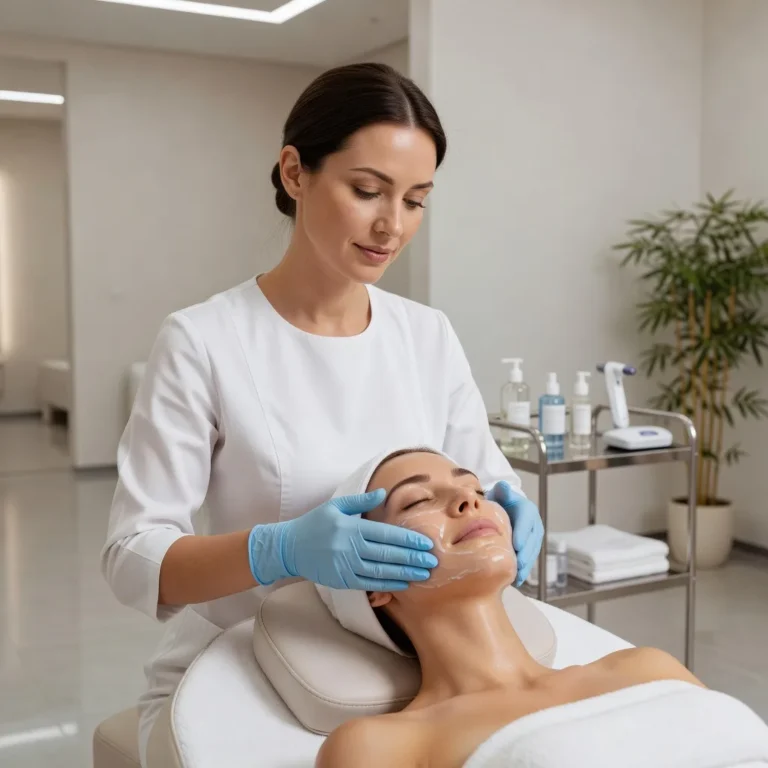
A professional lactic peel is quick, usually 30 to 45 minutes including cleansing and aftercare. The peel itself often takes only a few minutes, and most people describe it as mild tingling rather than pain.
- Consultation: your provider asks about your skin, current products and any recent treatments.
- Cleansing and degreasing: the skin is cleaned and prepared so the acid spreads evenly.
- Protecting sensitive areas: a barrier balm may be applied around the eyes, nostrils and lips.
- Applying the peel: lactic acid is brushed or swept on in even layers.
- Timing: it stays on for a few minutes while you may feel tingling or mild warmth.
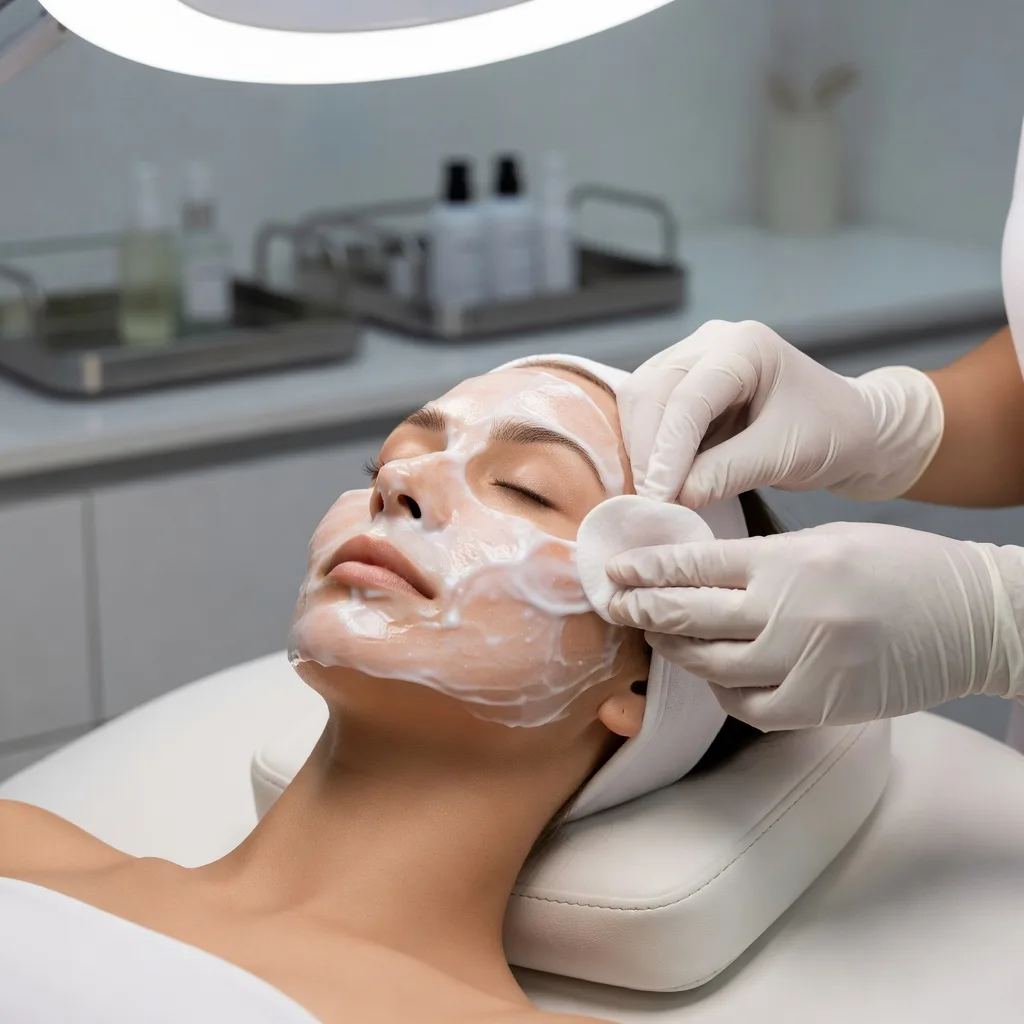
- Neutralising or removal: the peel is neutralised or rinsed off.
- Soothing and protection: a calming serum, moisturiser and sunscreen are applied.
The AAD overview of chemical peels explains that light peels have the shortest recovery and can be repeated at intervals to build results over time.
Results and Downtime
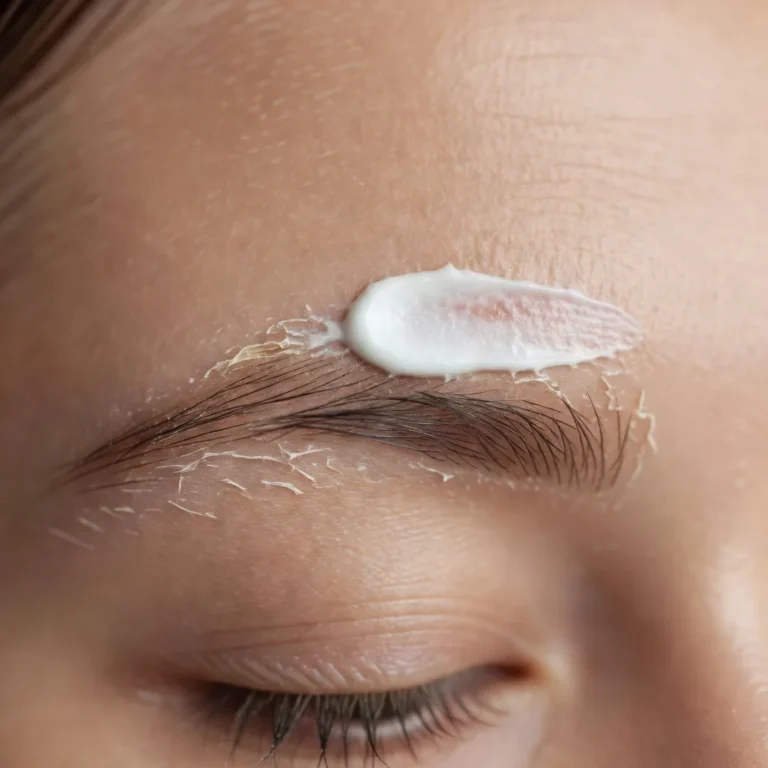
Most people leave a lactic peel with skin that looks slightly pink and feels tight or smooth. Any redness usually fades within a few hours. Over the next few days, the skin often looks brighter and feels softer, and some people notice light flaking around the nose or chin.
For concerns like uneven tone, texture or fine lines, a single peel gives a short-lived boost. A course of several peels, spaced a few weeks apart, gives more noticeable and longer-lasting improvements. Your provider may gradually increase the strength or contact time as your skin gets used to the treatment. Many clinics suggest a short course followed by occasional maintenance peels.
If you see flaking after using a new acid product at home, our guide to facial peeling after product use explains when it is normal and when to stop.
How to Care for Your Skin After a Lactic Peel Facial
Good aftercare protects your results and lowers the risk of irritation or dark marks. Follow any specific advice from your provider first.
Keep it simple for 48 hours
Use only a gentle cleanser, a plain moisturiser and sunscreen.
Wash with lukewarm water
Avoid hot water, rough cloths and scrubbing.
Moisturise generously
Apply a fragrance-free moisturiser morning and night.
Wear broad-spectrum SPF 30 or higher
Apply every morning and reapply outdoors, even on cloudy days.
Pause other actives
Skip retinoids, other acids and vitamin C for about three to five days.
Let flakes shed naturally
Do not pick, peel or scrub loose skin.
Avoid heat and sweat briefly
Skip saunas, hot yoga and intense workouts for a day or two.
Book your lactic peel at least a week before a big event. That gives any flaking or pinkness time to settle and lets you see the glow at its best on the day.
At-Home Lactic Acid Products vs a Professional Peel
At-home lactic products are lower in strength and designed for regular use. They cannot match a professional peel in one session, but used consistently they give gradual smoothing and brightening.
- Serums: usually used a few evenings a week; good for dry and dull skin.
- Toners and pads: easy to apply, but check the strength and use them no more than directed.
- Wash-off peels and masks: short-contact products used once a week or less.
- Creams: lower strengths combined with moisturising ingredients for very dry skin.
Start with the lowest strength, two or three evenings a week, and increase only if your skin tolerates it. Our guide on how often to exfoliate sensitive skin gives a sensible starting schedule.
Side Effects and Risks
Lactic peels are low-risk when done well, but side effects are possible, especially with higher strengths, the wrong timing or poor aftercare.
- Stinging, redness and tightness for a few hours.
- Mild flaking for a few days.
- Irritation if combined with retinoids or other acids too soon.
- Dark marks in people prone to pigmentation, especially after irritation.
- Increased sensitivity to the sun for some time after AHA use.
Do not use high-strength lactic acid peels sold online for professional use at home. Leaving a strong acid on too long can cause burns, blisters and lasting pigmentation changes. Avoid peels if you have used isotretinoin recently, have broken or sunburnt skin, or have an active cold sore in the area, unless a doctor approves.
Dos and Don’ts for Lactic Peels
Try This
- Patch test new lactic products
- Start with a low strength
- Wear sunscreen every day
- Keep your routine simple after a peel
- Tell your provider about all medications
Avoid This
- Pick or peel flaking skin
- Mix a peel with retinoids the same night
- Use professional-strength acids at home
- Book a peel right before sun holidays
- Peel over irritated or broken skin
Honest Limits of Lactic Peels
A lactic peel is a surface treatment. It can brighten dull skin, soften rough texture and help with mild pigmentation over a course, but it will not remove deep wrinkles, significant acne scars, sagging skin or stubborn melasma on its own.
Results also fade if you stop exfoliating and skip sun protection. For deeper concerns, a dermatologist may recommend medium-depth peels, prescription creams or procedures such as microneedling or laser. Think of lactic peels as a gentle maintenance tool rather than a transformation. It is also worth remembering that marketing terms such as glass skin or instant resurfacing are not medical measures, and before-and-after photos are often taken in flattering light. Judge a course of peels by how your skin looks and feels over a couple of months, not by a single day.
When to See a Dermatologist
- You have blistering, crusting, severe pain or swelling after a peel.
- Dark patches appear or worsen after peels or acid products.
- You have melasma, rosacea or eczema and want to try peels.
- You are pregnant, breastfeeding or on prescription skin treatments.
- You want stronger peels for scarring or deeper wrinkles.
This article is for general information and does not replace professional medical advice. See a board-certified dermatologist before chemical peels if you have a skin condition, take prescription skin medicines or are pregnant.
FAQ
What is a lactic peel facial?
A light chemical peel using lactic acid to exfoliate and hydrate the skin.
Is a lactic peel good for sensitive skin?
Often yes, at lower strengths and after a patch test.
Will I peel after a lactic peel?
Usually little or no visible peeling, perhaps light flaking.
How long does a lactic peel take?
About 30 to 45 minutes in total.
How many lactic peels do I need?
A course of several peels gives the best results.
Can I wear makeup after a lactic peel?
It is best to wait until the next day.
Is lactic acid gentler than glycolic acid?
Generally yes, because it penetrates more slowly.
Does a lactic peel help acne?
It can help mild acne, but salicylic acid may suit oily skin better.
Can I do a lactic peel at home?
Use low-strength home products only, not professional peels.
Do I need sunscreen after a lactic peel?
Yes, AHAs make skin more sensitive to the sun.
The Bottom Line
A lactic peel facial is a gentle, hydrating AHA peel that suits dry, sensitive and dull skin, giving brighter and smoother skin with little downtime.
Choose an experienced provider, follow simple aftercare, wear sunscreen daily and use low-strength lactic products at home to maintain your results between peels.

Written by
Registered pharmacist and founder of Facial Adviser. Rakib's pharmacy training covers how skincare actives work and interact; a later course in cosmetology turned that into a focus on facial treatments and skincare products. He plans, researches and edits every guide on the site and checks health claims against sources such as the American Academy of Dermatology, the FDA and the NIH. He is not a dermatologist; see the Editorial Policy and Medical Disclaimer.
About · Editorial policy · How we choose products · Medical disclaimer · Contact
Keep reading: Chemical peels and acid facials
- Skin Peel Facial: The Real Depth Guide
- Glycolic Acid Facial: What the Evidence Shows
- Facial vs Chemical Peel: Differences, Results and Which to Choose
- 10 Best Facial Peels for Aging Skin (2026): Smoother, Brighter at Home
- Is Facial Peeling After a New Product Normal? What to Do
- Ultimate Guide Microdermabrasion: What to Know
- What Is the Best Anti-Aging Facial Treatment? Options Compared by Goal