
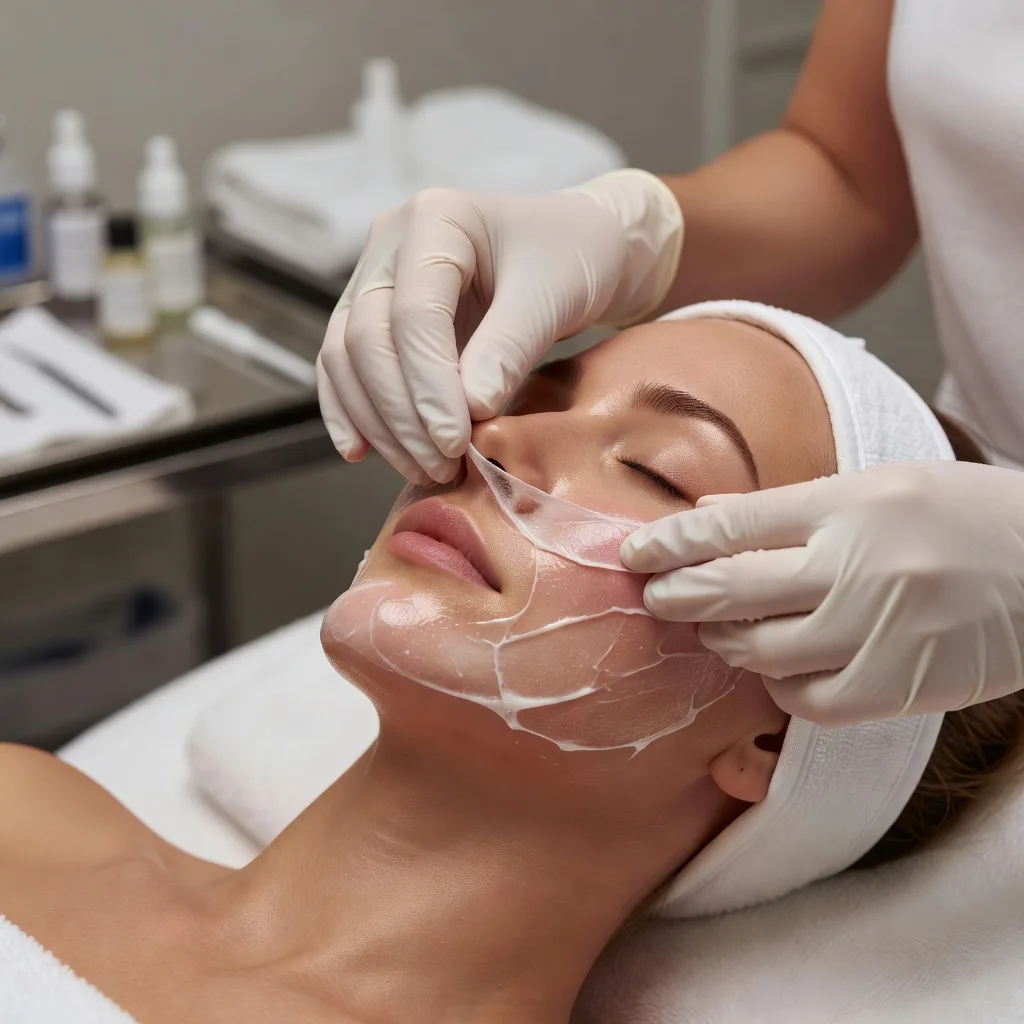
Skin Peel Facial: The Real Depth Guide
A skin peel facial covers a much wider range of actual procedures than the phrase suggests, from a gentle at-home-adjacent exfoliation to a medical procedure requiring cardiac monitoring, and knowing which depth you’re getting matters enormously.
Part of our guide to facial treatments. Start with: Facial vs Chemical Peel: Differences, Results and Which to Choose
Chemical peels fall into three real depth categories, superficial, medium, and deep, each using different agents, reaching a different skin layer, and carrying a different downtime and risk profile. None of them are FDA-approved as drugs or cleared as devices, which makes provider qualification genuinely important.
Post-inflammatory hyperpigmentation is a real, well-documented risk that’s more pronounced in darker skin tones, and there’s a genuine, widely used self-assessment, the Fitzpatrick Skin Type scale, that can help frame that risk before you book.
This guide covers all three peel depths, who’s legally allowed to perform each one, the Fitzpatrick self-check, and the real precautions worth taking regardless of which depth you choose.
Recommended Products for Post-Peel Skin Care
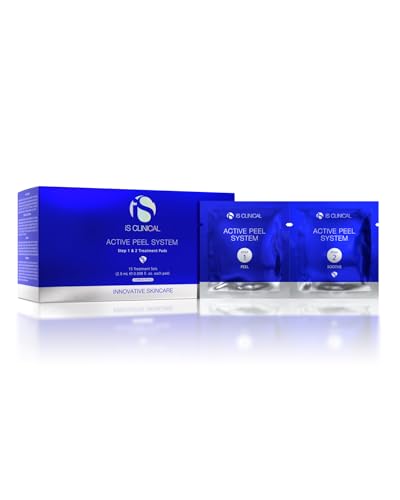
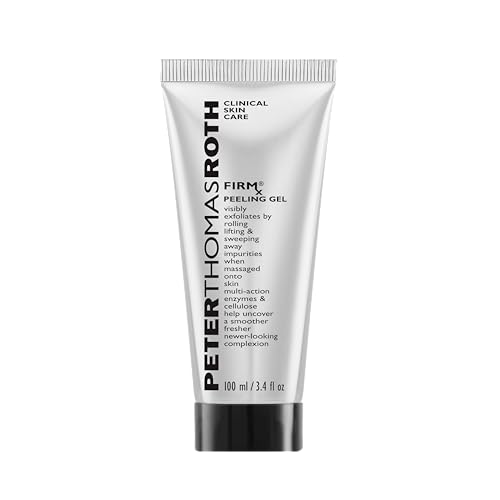
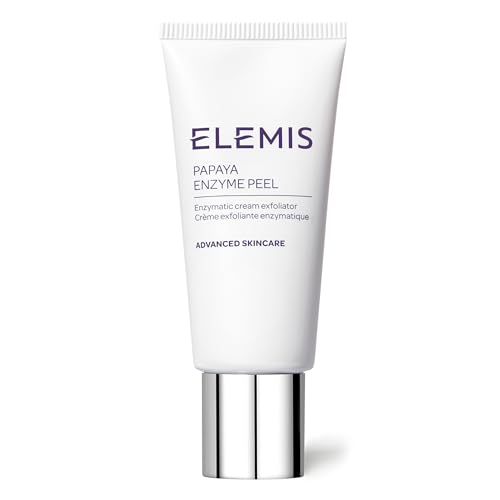


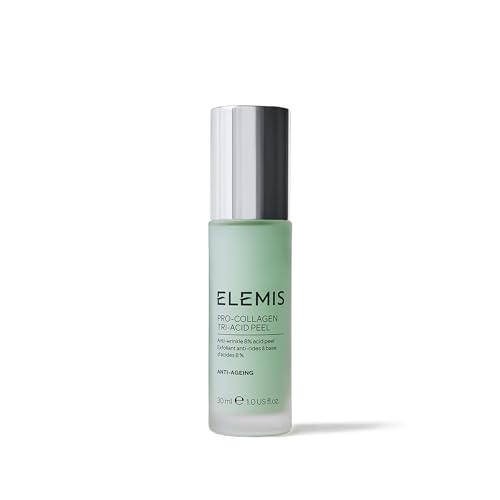
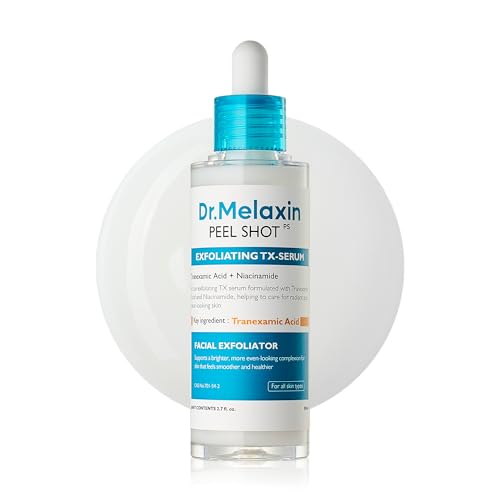
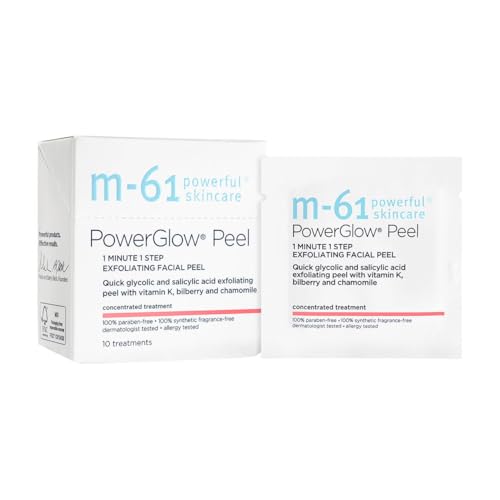
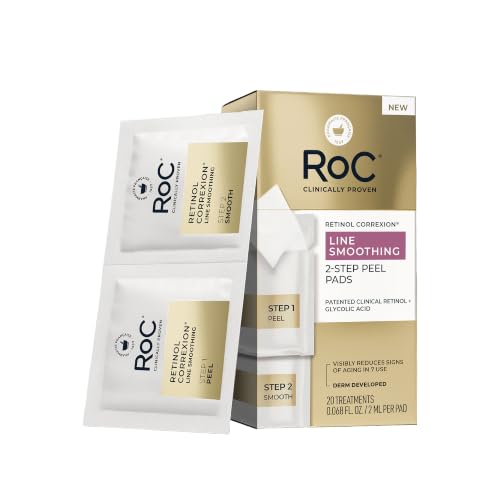
Shopping these picks?
Amazon Prime members get fast, free shipping on eligible items, plus Prime Video, Amazon Music and member deals. New members can start with a free trial.
Start a free Prime trialAged 18 to 24? Prime for Young Adults comes with a longer free trial and a lower price after it.
Affiliate link: we may earn a commission at no extra cost to you.
Key Takeaways
- Chemical peels fall into three real depth categories, superficial, medium, and deep, each with different agents, downtime, and who’s legally allowed to perform them.
- No chemical peel product or procedure is FDA-approved as a drug or cleared as a device, the FDA explicitly advises professional supervision for all of them.
- Superficial peels can often be performed by licensed estheticians, while medium and deep peels are restricted to physicians and dermatologists in nearly every state.
- Post-inflammatory hyperpigmentation is a real, well-documented risk that’s more pronounced in darker skin tones due to greater baseline melanocyte reactivity.
- A genuine, widely used self-assessment does exist here: the Fitzpatrick Skin Type scale, a self-reported burn-versus-tan tendency that helps gauge your baseline sun-sensitivity and pigmentation risk.
- Deep phenol peels carry real systemic risks, including cardiac arrhythmias, and require cardiac monitoring in a medical setting.
- Sun protection after any peel isn’t optional, freshly peeled skin is measurably more UV-vulnerable during healing.
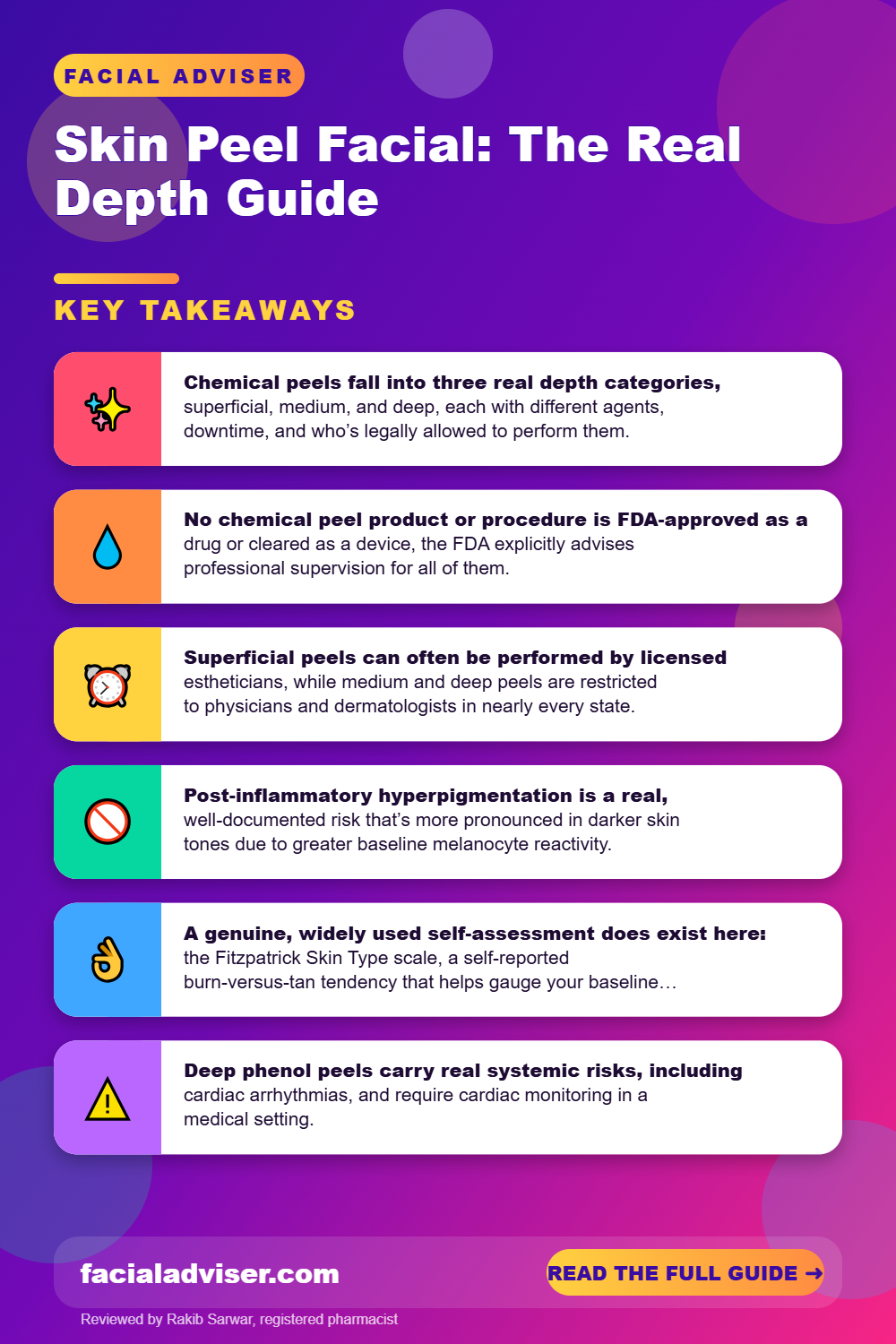
Table of Contents
- The Three Depths of Chemical Peels
- Regulatory Status and Who Can Perform Each Depth
- The Fitzpatrick Skin Type Self-Assessment
- Comparing the Three Peel Depths
- Do This, Not That
- Choosing the Right Depth for Your Goals
- Why Darker Skin Tones Need Extra Care
- When to See a Dermatologist
- Frequently Asked Questions
- The Bottom Line
The Three Depths of Chemical Peels
Chemical peels are classified into three real depth categories: superficial, medium, and deep, each reaching a different layer of skin and treating a different set of concerns. Superficial peels affect only the epidermis, using agents like glycolic acid (30-50%), lactic acid (10-30%), mandelic acid (40%), or salicylic acid, and treat solar lentigines, mild photoaging, fine lines, and superficial hyperpigmentation.
Medium peels reach through the full epidermis into the papillary dermis, using 70% glycolic acid, 35-50% TCA, or Jessner’s solution, and address moderate wrinkles, actinic photodamage, and shallow acne scars. Deep peels reach the mid-reticular dermis using the Baker-Gordon phenol formula, treating severe photoaging and deep wrinkles, but with substantially more downtime and risk.
Regulatory Status and Who Can Perform Each Depth
No chemical peel product or procedure is FDA-approved as a drug or cleared as a device. The FDA has explicitly warned it has not approved any chemical peel products and that they should only be used under professional supervision, citing risks of severe chemical burns, infection, and disfiguring scars from unsupervised use.
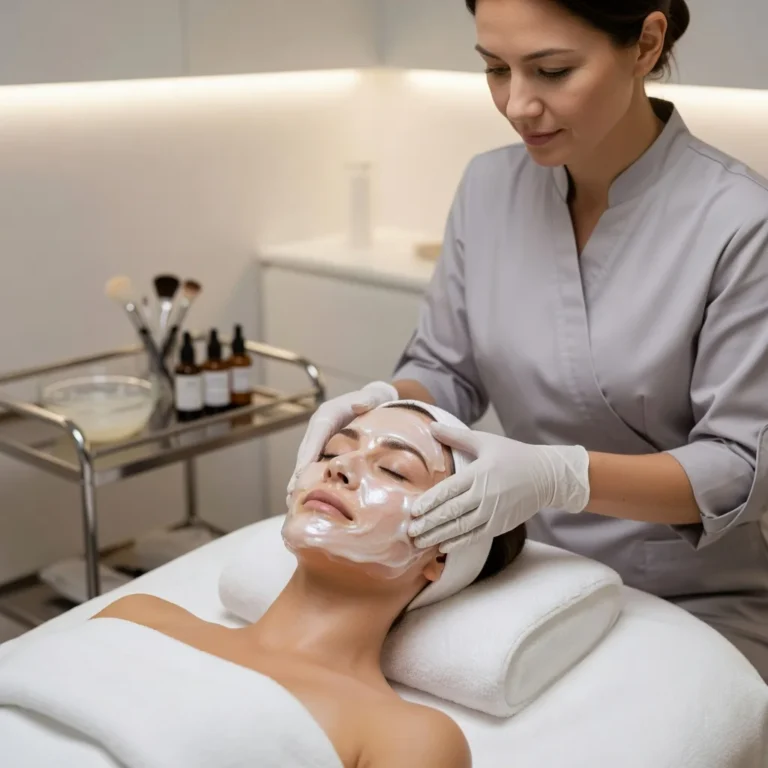
Note: Superficial peels at appropriate concentrations can legally be performed by licensed estheticians in many states, with specific concentration and pH caps set by each state board. Medium and deep peels are restricted to physicians, dermatologists, or their supervised staff in virtually every jurisdiction, this isn’t a gray area worth testing.
The Fitzpatrick Skin Type Self-Assessment
Unlike many skincare “self-tests,” this one is genuinely real and clinically used: the Fitzpatrick Skin Type scale, based on how your skin has historically responded to sun exposure.
- Always burns, rarely or never tans (Type I-II): generally lower risk of post-inflammatory hyperpigmentation from a peel, but higher burn/sun-sensitivity risk overall.
- Burns moderately, tans gradually (Type III-IV): intermediate risk profile requiring careful provider discussion.
- Rarely or never burns, tans deeply (Type V-VI): higher baseline risk of post-inflammatory hyperpigmentation from peeling procedures.
This is a real, widely used screening tool, though it correlates imperfectly with actual melanin content and pigmentation risk, and it was originally developed for UV-treatment dosing rather than pigmentation-risk stratification. Use it to inform a conversation with your provider, not to replace one.
Comparing the Three Peel Depths
| Superficial | Medium | Deep | |
|---|---|---|---|
| Depth reached | Epidermis only | Papillary dermis | Mid-reticular dermis |
| Common agents | Glycolic, lactic, mandelic, salicylic | 70% glycolic, 35-50% TCA, Jessner’s | Baker-Gordon phenol formula |
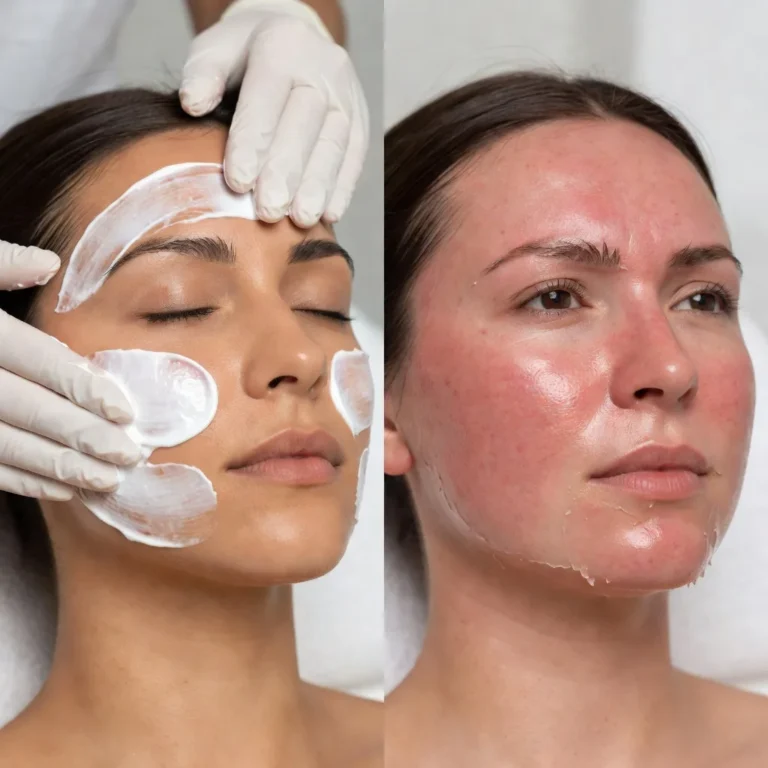
| Downtime | Re-epithelializes in 7-10 days | Re-epithelializes in 10-14 days | 14+ days, erythema can last weeks-months |
| Who can perform it | Licensed esthetician (many states) or physician | Physician-supervised | Dermatologist/plastic surgeon only |
| Depth | Real risk consideration |
|---|---|
| Superficial | Mild irritation, generally low risk with proper concentration |
| Medium | Post-inflammatory hyperpigmentation risk, especially in darker skin tones |
| Deep | Cardiac arrhythmia risk from phenol absorption, requires cardiac monitoring |
Do This, Not That
Do
- Confirm your provider’s license matches the peel depth being offered
- Consider your Fitzpatrick skin type before discussing peel depth with a provider
- Use daily broad-spectrum sunscreen before and after any peel
- Ask specifically about post-inflammatory hyperpigmentation risk if you have a darker skin tone
- Expect longer downtime and higher risk as peel depth increases
Don’t
- Attempt a medium or deep peel at home under any circumstances
- Assume superficial peel products are risk-free just because they’re available at retail
- Skip sun protection during the healing period
- Ignore your Fitzpatrick type when discussing pigmentation risk with a provider
- Book a deep phenol peel without confirming cardiac monitoring is part of the protocol
Choosing the Right Depth for Your Goals
Identify your actual concern
Fine lines and superficial pigmentation call for a superficial peel, while deeper wrinkles or significant photodamage may need medium or deep treatment.
Assess your Fitzpatrick skin type
This helps frame your baseline pigmentation and sun-sensitivity risk before choosing a depth.
Confirm provider credentials
Match the peel depth to a provider legally licensed to perform it, superficial for estheticians, medium/deep for physicians.
Tip: Don’t hesitate to ask a provider directly about their training and how many of a specific peel depth they perform regularly.
Discuss realistic downtime
Plan around the expected 7-10 days (superficial), 10-14 days (medium), or 14+ days (deep) re-epithelialization window.
Commit to aftercare
Daily sun protection and gentle skincare during healing protect both your results and your skin’s pigmentation.
Why Darker Skin Tones Need Extra Care
Post-inflammatory hyperpigmentation is a real, mechanistically well-characterized risk: inflammation from a peel releases cytokines and reactive oxygen species that stimulate melanocyte activity, and that risk is compounded in darker skin tones by greater baseline melanocyte reactivity and reduced microvascular function in some studies. Precautions include broad-spectrum SPF 30+, favoring gentler options where possible, and anti-inflammatory adjuncts like azelaic acid or niacinamide.
When to See a Dermatologist
Warning: Never attempt a medium or deep chemical peel outside a medical setting, deep phenol peels specifically carry cardiac arrhythmia risk from systemic absorption and require cardiac monitoring during the procedure.
A dermatologist can assess your Fitzpatrick type, concern, and history to recommend the right peel depth, or whether a non-peel treatment better fits your goals.
Frequently Asked Questions
What are the three depths of chemical peels?
Superficial (epidermis only), medium (through the papillary dermis), and deep (mid-reticular dermis), each with different agents, downtime, and risk.
Are chemical peels FDA-approved?
No chemical peel product or procedure is FDA-approved as a drug or cleared as a device; the FDA advises professional supervision for all peels.
Can an esthetician perform a chemical peel?
Licensed estheticians can typically perform superficial peels within state-permitted concentrations; medium and deep peels are restricted to physicians.
What is the Fitzpatrick Skin Type scale?
A self-reported classification based on how your skin responds to sun exposure, used as a real screening tool for sun-sensitivity and pigmentation risk before treatments like peels.
Why do darker skin tones have higher peel risk?
Post-inflammatory hyperpigmentation risk is higher due to greater baseline melanocyte reactivity and other factors documented in skin-of-color research.
What’s the downtime for a superficial peel?
Re-epithelialization typically completes within 7-10 days.
Are deep chemical peels dangerous?
They carry real systemic risks including cardiac arrhythmias from phenol absorption, requiring cardiac monitoring in a medical setting.
Do I need sunscreen after a chemical peel?
Yes, freshly peeled skin is measurably more UV-vulnerable during healing, making daily sun protection essential.
Can I do a medium or deep peel at home?
No, these require physician supervision and, for deep peels, cardiac monitoring; they should never be attempted outside a medical setting.
What concerns do medium peels treat?
Moderate wrinkles, actinic photodamage, hyperpigmentation, and shallow acne scars.
The Bottom Line
Chemical peels genuinely differ by depth, and that depth determines what they can treat, how much downtime to expect, and who’s legally allowed to perform them. None are FDA-approved as drugs or devices, which makes provider qualification and supervision genuinely important, not a formality.
Know your Fitzpatrick skin type, match the peel depth to a properly licensed provider, and commit to sun protection during healing, that combination gets you the real benefits of peeling without the risks that come from cutting corners.

Written by
Registered pharmacist and founder of Facial Adviser. Rakib's pharmacy training covers how skincare actives work and interact; a later course in cosmetology turned that into a focus on facial treatments and skincare products. He plans, researches and edits every guide on the site and checks health claims against sources such as the American Academy of Dermatology, the FDA and the NIH. He is not a dermatologist; see the Editorial Policy and Medical Disclaimer.
About · Editorial policy · How we choose products · Medical disclaimer · Contact
Keep reading: Chemical peels and acid facials
- Glycolic Acid Facial: What the Evidence Shows
- Facial vs Chemical Peel: Differences, Results and Which to Choose
- 10 Best Facial Peels for Aging Skin (2026): Smoother, Brighter at Home
- Is Facial Peeling After a New Product Normal? What to Do
- Grape Peel Treatment: What It Really Does
- What Is the Best Anti-Aging Facial Treatment? Options Compared by Goal
- What Is a Spa Facial?

One Comment