10 Best Facial Peels for Aging Skin (2026): Smoother, Brighter at Home
As skin ages, dead cells shed more slowly, tone becomes uneven and fine lines are easier to see. Facial peels speed up that shedding, which can make mature skin look smoother and brighter. This list covers 10 options, from two-step AHA and BHA pads to mandelic serums and a gentle enzyme mask, with notes on who each suits.
Part of our guide to facial treatments. Start with: Facial vs Chemical Peel: Differences, Results and Which to Choose
The best facial peel for aging skin is usually a gentle alpha hydroxy acid (AHA) peel: glycolic acid for fine lines and texture, lactic acid for dry or mature skin that needs hydration, or mandelic acid for sensitive or darker skin that is prone to marks. At home, choose low-strength peel pads or weekly peels and build up slowly. For deeper wrinkles, sun damage or age spots, a professional peel done by a dermatologist gives stronger, more predictable results. Every AHA peel makes skin more sensitive to the sun, so daily broad-spectrum sunscreen is essential.
In short: start with a gentle glycolic, lactic or mandelic peel at home, use sunscreen daily, and see a dermatologist for deeper peels.
The US Food and Drug Administration warns that alpha hydroxy acids can increase sun sensitivity, and the American Academy of Dermatology explains that deeper peels give bigger results but need more recovery time.
Below you will find the ten picks, how we chose them, the main peel acids for aging skin, how at-home and professional peels differ, what to avoid and how to use a peel safely.
Shopping these picks?
Amazon Prime members get fast, free shipping on eligible items, plus Prime Video, Amazon Music and member deals. New members can start with a free trial.
Start a free Prime trialAged 18 to 24? Prime for Young Adults comes with a longer free trial and a lower price after it.
Affiliate link: we may earn a commission at no extra cost to you.
As an Amazon Associate we earn from qualifying purchases. This does not change which products we include.


The Short Version
- Dr Dennis Gross Alpha Beta Extra Strength is our top pick for experienced acid users.
- m-61 PowerGlow Peel is the quickest option: a one-minute glycolic and salicylic pad.
- Dr Dennis Gross Alpha Beta Universal is the best starting point for first-timers.
- Lactic and mandelic acids suit dry, sensitive or darker skin; glycolic targets texture.
- Professional peels treat deeper lines, spots and sun damage.
- AHAs increase sun sensitivity, so daily sunscreen is essential.
- Start slowly and stop if the skin burns or peels badly.
What This Covers
- The 10 Best At-Home Facial Peels for Aging Skin Right Now
- How We Chose These Products
- The Main Peel Acids for Aging Skin
- At-Home Peels vs Professional Peels
- Peel Formats: Pads, Liquids and Masks
- How to Choose the Right Peel for Your Skin
- Peels and Sun Sensitivity
- What to Avoid
- Professional Peel Options for Mature Skin
- How to Use an At-Home Peel Safely
- What Results to Expect
- Honest Limits
- When to See a Dermatologist
- Your Questions, Answered
- Summing Up
The 10 Best At-Home Facial Peels for Aging Skin Right Now
These ten at-home peels were shortlisted from widely reviewed Amazon listings and ranked by acid type, how clearly each listing describes strength and use, and how well each suits mature skin. Every acid peel raises sun sensitivity, so pair any pick with daily broad-spectrum sunscreen.
| # | Product | Best For | Standout Feature | |
|---|---|---|---|---|
| 1 | Dr Dennis Gross Alpha Beta Extra Strength Peel | Experienced acid users with texture | Two-step pads with seven acids | View |
| 2 | m-61 PowerGlow Peel | Busy people wanting a quick routine | 7% glycolic and salicylic in one minute | View |
| 3 | Dr Dennis Gross Alpha Beta Universal Peel | Newcomers to acid peels | Gentler five-acid two-step pads | View |
| 4 | Almond Clear Mandelic Acid Level 1 Serum | Sensitive or darker skin tones | Mandelic acid serum, gentle entry level | View |
| 5 | ELEMIS Papaya Enzyme Peel | Thin, dry or sensitive mature skin | Fruit enzyme mask, no acids or grains | View |
| 6 | StriVectin Daily Reveal Exfoliating Pads | Mild dullness and rough patches | Daily AHA pads with clear sun warning | View |
| 7 | Dr. Denese SkinScience Exfoliating Pads | Long-term routine users | Glycolic pads with vitamin C | View |
| 8 | First Aid Beauty Brighten and Glow Pads | Mild peeling for easily irritated skin | Lactic plus glycolic, alcohol-free | View |
| 9 | DRMTLGY Tingl Exfoliating Pads | Mature skin with oily areas | AHA and BHA pads for face and body | View |
| 10 | Bliss Incredi-Peel Glycolic Resurfacing Pads | Trying glycolic peel pads first | Small glycolic pack to test | View |
Dr Dennis Gross Alpha Beta Extra Strength Peel

Best for: Experienced acid users with texture
The Dr Dennis Gross Alpha Beta Extra Strength Daily Peel earns the top spot for people who already tolerate exfoliating acids. Each treatment is a two-step pad: the first uses a blend of seven alpha and beta hydroxy acids to loosen dead skin cells, and the second is massaged in afterwards to finish the treatment, which gives a controlled, predictable routine.
The listing suggests once-daily use, but mature skin often does better starting two or three times a week. It is stronger than the #3 Universal version from the same brand, so it suits skin with visible roughness and dullness rather than thin, reactive skin. Sunscreen every morning is essential, as the FDA warns AHAs raise sun sensitivity.
- Two-step AHA/BHA peel pads
- Step one blends seven exfoliating acids
- Designed for daily use morning or night
- Cruelty-free, paraben-free and vegan
Pros
- Controlled, pre-measured two-step system
- Strong option for rough texture
- Pads make application easy
Cons
- Too strong for many first-time users
- Daily use may be too much for thin, dry skin
Skip it if: Skip it if you have never used acids; start with the #3 Alpha Beta Universal or #8 First Aid Beauty pads.
Check Price on Amazonm-61 PowerGlow Peel

Best for: Busy people wanting a quick routine
The m-61 PowerGlow Peel is a one-step, one-minute peel pad that combines seven percent glycolic acid with salicylic acid. The listing describes it as exfoliating, resurfacing and clarifying, so it suits mature skin that is also prone to congestion or clogged pores as well as general dullness and uneven texture.
Because it is designed as a one-minute treatment, it feels more like a mini peel than a daily toner pad, so follow the pack directions closely. It is simpler than the two-step #1 Dr Dennis Gross pads. Start once or twice a week, avoid broken skin and never use it straight after waxing or a retinoid flare.
- One-minute at-home peel pad
- 7% glycolic acid plus salicylic acid
- Exfoliates and clarifies skin
- Sixty treatments per pack
Pros
- Very quick to use
- Suits congestion as well as dullness
- One step, no neutraliser needed
Cons
- Salicylic acid can dry mature skin
- Can sting on sensitive or broken skin
Skip it if: Skip it if your skin is very dry or thin; the ELEMIS enzyme peel is gentler.
Check Price on AmazonDr Dennis Gross Alpha Beta Universal Peel

Best for: Newcomers to acid peels
The Dr Dennis Gross Alpha Beta Universal Daily Peel is the gentler sibling of our top pick and the best starting point for many people over 40. It uses the same two-step pad system, but the first step blends five alpha and beta hydroxy acids rather than seven, which the listing describes as gently loosening and buffing away dead skin cells.
That makes it a sensible way to learn how your skin handles acids before stepping up to the #1 Extra Strength pads. The smaller thirty-pack is enough to test it over several weeks. Begin two or three times a week, moisturise afterwards and wear daily broad-spectrum sunscreen, since AHAs increase sun sensitivity.
- Two-step AHA/BHA peel pads
- Step one blends five exfoliating acids
- Designed for daily use morning or night
- Cruelty-free, paraben-free and vegan
Pros
- Gentler entry point to peels
- Same easy two-step pad system
- Smaller pack to try first
Cons
- May feel too mild for experienced users
- Still too strong for very reactive skin
Skip it if: Skip it if you already use strong acids with no irritation; the #1 Extra Strength version suits you better.
Check Price on AmazonAlmond Clear Mandelic Acid Level 1 Serum

Best for: Sensitive or darker skin tones
The Almond Clear Level 1 Serum is a leave-on mandelic acid serum, and mandelic acid is often suggested for sensitive skin and darker skin tones because its larger molecule tends to penetrate more slowly than glycolic acid. The listing describes it as deeply exfoliating and aimed at the look of dark spots, marks and fine lines.
Level 1 is the brand’s entry strength, which suits careful introduction on mature skin. It is a serum rather than a pad, so it fits into an evening routine after cleansing. The listing also mentions acne and folliculitis, which are medical concerns for a doctor. Compared with the #1 pads, it is gentler but slower to show change.
- Mandelic (almond) acid serum
- Entry-level Level 1 strength
- Aimed at the look of dark spots and marks
- Leave-on evening treatment
Pros
- Mandelic acid suits sensitive and darker skin
- Gentle entry strength
- Easy to use as a serum
Cons
- Slower results than stronger glycolic peels
- Leave-on acid still raises sun sensitivity
Skip it if: Skip it if you want a quick weekly peel; the m-61 or Bliss pads are more peel-like.
Check Price on AmazonELEMIS Papaya Enzyme Peel

Best for: Thin, dry or sensitive mature skin
The ELEMIS Papaya Enzyme Peel is the gentlest pick on this list and a good choice for mature skin that is thin, dry or easily irritated. Instead of acids or gritty particles, it uses fruit enzymes such as papain in a rinse-off cream mask, which the listing describes as non-abrasive exfoliation.
The formula also includes bladderwrack and vitamin E for a more comforting feel. It will not deliver the same smoothing as the acid pads at #1 to #3, but it is a sensible weekly treat for skin that cannot handle glycolic acid. Anyone with a papaya or latex allergy should check the ingredients carefully first.
- Fruit enzyme peel with papain
- Non-abrasive rinse-off cream mask
- Bladderwrack and vitamin E
- No acids or scrubbing particles
Pros
- Gentlest option on the list
- Comforting creamy texture
- Good for weekly use on dry skin
Cons
- Milder effect than acid peels
- Not suitable for papaya allergies
Skip it if: Skip it if you want visible smoothing of rough texture; the Dr Dennis Gross pads are stronger.
Check Price on AmazonStriVectin Daily Reveal Exfoliating Pads

Best for: Mild dullness and rough patches
The StriVectin Daily Reveal Exfoliating Face Pads are one-step AHA pads that you swipe over clean skin in the morning or evening, then follow with serum and moisturiser. The listing is refreshingly clear about the sunburn alert that comes with alpha hydroxy acids, which matches the FDA guidance cited in this post.
They suit people who want gentle, regular polishing rather than an occasional stronger peel. They are simpler than the two-step #1 Dr Dennis Gross pads and less intense than the #2 m-61 peel. On mature skin, start every other day and cut back if you notice stinging or tightness. Always follow morning use with broad-spectrum sunscreen.
- One-step AHA exfoliating pads
- Use morning or evening on clean skin
- Follow with serum and moisturiser
- Clear AHA sun sensitivity warning
Pros
- Simple one-step routine
- Honest sun warning on the listing
- Easy to fit into morning or night
Cons
- Listing gives few details on acid strength
- Daily use may be too much for dry skin
Skip it if: Skip it if you want a clearly stated acid percentage; the m-61 or DRMTLGY pads list theirs.
Check Price on AmazonDr. Denese SkinScience Exfoliating Pads

Best for: Long-term routine users
The Dr. Denese SkinScience Exfoliating Pads are glycolic acid pads that the title says include vitamin C and other supporting ingredients, and a pack of one hundred lasts a long time. That suits people who already know they tolerate glycolic acid and want a steady supply for a regular routine.
Our information comes mainly from the listing title, so check the acid strength and full ingredient list before use. Glycolic acid is the classic choice for fine lines and texture, but it can sting more than the lactic acid in the #8 First Aid Beauty pads. Build up slowly and use sunscreen every day.
- Glycolic acid exfoliating pads
- Includes vitamin C
- One hundred pads per pack
- Designed for regular at-home use
Pros
- Large pack for long-term use
- Classic glycolic acid for texture
- Added vitamin C
Cons
- Limited listing detail beyond the title
- Glycolic acid can sting sensitive skin
Skip it if: Skip it if you are new to acids; begin with the #3 Universal or #8 First Aid Beauty pads.
Check Price on AmazonFirst Aid Beauty Brighten and Glow Pads

Best for: Mild peeling for easily irritated skin
The First Aid Beauty Brighten and Glow Facial Radiance Pads are designed for sensitive skin and combine lactic acid with glycolic acid. Lactic acid is often suggested for dry, mature skin because it tends to feel gentler, and the listing says the pads are made without alcohol and artificial colours, which lowers the chance of stinging.
They also prep skin for makeup, so they can fit into a morning routine as long as sunscreen follows. They are gentler than the #9 DRMTLGY pads and a good middle ground between the enzyme-based #5 ELEMIS and stronger glycolic pads. Start two or three times a week and increase slowly if your skin stays calm.
- Lactic and glycolic acid pads
- Designed for sensitive skin
- Made without alcohol and artificial colours
- Preps skin for makeup
Pros
- Gentler acid blend for mature skin
- Alcohol-free formula
- Works morning or night
Cons
- Milder effect than stronger pads
- Still raises sun sensitivity
Skip it if: Skip it if you want a strong peel effect; the #1 Dr Dennis Gross or #2 m-61 are stronger.
Check Price on AmazonDRMTLGY Tingl Exfoliating Pads

Best for: Mature skin with oily areas
The DRMTLGY Tingl Exfoliating Pads combine five percent glycolic acid with beta hydroxy acid in a pad that can be used on the face and body. The listing positions them for both anti-ageing and acne-prone skin and says they help control oiliness, so they suit mature skin that still has oily areas or breakouts.
Being able to use one product on rough elbows, the chest or the back is practical. They contain salicylic acid, so they may dry out very dry skin, where the #8 First Aid Beauty pads would be kinder. As the name hints, a mild tingle is expected, but burning or redness that lingers means you should stop.
- 5% glycolic acid plus BHA
- For face and body
- Aimed at anti-ageing and acne-prone skin
- Helps control oily skin
Pros
- Clear acid strength on the listing
- Works on face and body
- Suits oily, congested mature skin
Cons
- BHA can dry very dry skin
- Tingling may bother sensitive users
Skip it if: Skip it if your skin is dry and sensitive; the First Aid Beauty pads or ELEMIS peel are gentler.
Check Price on AmazonBliss Incredi-Peel Glycolic Resurfacing Pads

Best for: Trying glycolic peel pads first
The Bliss Incredi-Peel Glycolic Resurfacing Facial Pads are glycolic acid pads in a small pack of fifteen, which the title describes as non-greasy. A small pack is a sensible way to see how your skin handles glycolic acid before buying a large supply such as the #7 Dr. Denese pads.
Our information comes mainly from the listing title, so check the acid strength and directions on the pack. Glycolic acid is the classic choice for fine lines and rough texture, and at fifteen pads it suits a once or twice weekly routine. Always wear sunscreen and avoid using it on the same night as a retinoid at first.
- Glycolic acid resurfacing pads
- Pack of fifteen pads
- Non-greasy finish
- Suits occasional weekly use
Pros
- Small pack for testing
- Classic glycolic acid for texture
- Easy pre-soaked pads
Cons
- Limited listing detail beyond the title
- Small pack runs out quickly with regular use
Skip it if: Skip it if you already know you like glycolic pads; a larger pack such as the Dr. Denese makes more sense.
Check Price on AmazonHow We Chose These Products
We shortlisted at-home peels from Amazon listings that are highly rated by a large number of shoppers, favouring established brands and fuller-featured formulas such as two-step pads, clearly labelled acid blends and gentle enzyme options. We then checked each product’s listed features against the guidance cited in this post, including the FDA’s warning that alpha hydroxy acids increase sun sensitivity.
These are research-based picks, not hands-on lab tests. We have not assessed how any peel performs on mature skin ourselves, so rankings reflect listing detail, acid type and suitability. We excluded high-strength professional-style gel peels, body-only products and near-duplicate pack sizes, and we have not repeated listing claims about collagen or acne as fact.
- Strong ratings from a large number of shoppers
- Established brands and fuller-featured formulas preferred
- Clear directions and sun warnings favoured
- Listed features checked against the cited FDA and AAD guidance
- High-strength and unclear products excluded or ranked lower
The Main Peel Acids for Aging Skin
Most at-home peels for mature skin are built on alpha hydroxy acids. They loosen the bonds between dead skin cells so that the surface sheds more evenly. Each acid has a slightly different personality.
| Acid | Molecule size | Best for | Things to know |
|---|---|---|---|
| Glycolic acid | Smallest AHA, penetrates fastest | Fine lines, texture, dullness | Most effective but most likely to sting |
| Lactic acid | Medium | Dry, mature or sensitive skin | Also helps hold moisture |
| Mandelic acid | Largest, slowest | Sensitive skin, darker tones, pigment | Gentlest, slower results |
| Salicylic acid (BHA) | Oil-soluble | Oily skin, clogged pores | Less focused on lines; often combined with AHAs |
| Polyhydroxy acids (PHA) | Large | Very sensitive skin | Very gentle; modest results |
For most aging skin, lactic acid is the safest first choice, glycolic acid is the choice when you want more visible smoothing, and mandelic acid is the choice when your skin reacts to everything or marks easily.
At-Home Peels vs Professional Peels
At-home peels and professional peels use similar acids, but at very different strengths. That difference changes what they can do and how safe they are to use alone.
| Feature | At-home peel | Professional peel |
|---|---|---|
| Acid strength | Low, designed for self-use | Higher, applied by a trained professional |
| Depth | Very superficial | Superficial, medium or deep |
| Best for | Dullness, fine lines, mild texture | Deeper lines, sun damage, age spots |
| Downtime | Usually none | None to several weeks, depending on depth |
| How often | Weekly or as directed | A series, or single deeper sessions |
| Risk | Low if used as directed | Higher; needs skilled aftercare |
The AAD’s chemical peels overview explains that light peels need little recovery, while medium and deep peels can treat more signs of ageing but take longer to heal. Our comparison of a facial vs a chemical peel covers how peels differ from a standard salon facial.
Peel Formats: Pads, Liquids and Masks
At-home peels come in several formats. The acid matters most, but the format affects how easy the product is to use and how much control you have.
- Peel pads: pre-soaked pads that are easy to dose; many are designed for daily or alternate-day use.
- Two-step peel pads: an acid pad followed by a neutralising pad, usually stronger and used less often.
- Liquid peels or serums: applied with fingers or a cotton pad and left on or rinsed off after a set time.
- Wash-off peel masks: applied for a few minutes and rinsed; good for weekly use.
- Resurfacing toners: lower-strength acids used after cleansing a few times a week.
For beginners with aging skin, single-step pads or a gentle leave-on lactic serum are usually easiest to control. Save two-step and rinse-off peels for when your skin is used to acids.
How to Choose the Right Peel for Your Skin
The label tells you most of what you need to know. Look for the acid type, the strength and how often the product is meant to be used, then match them to your skin.
- Dry or mature skin: lactic acid, or a glycolic and lactic blend with hydrating ingredients.
- Normal skin with fine lines: glycolic acid at a low to moderate strength.
- Sensitive skin: mandelic acid or PHA, used once or twice a week to start.
- Medium to deep skin tones: mandelic or lactic acid, introduced slowly to reduce the risk of dark marks.
- Oily or blemish-prone mature skin: an AHA and salicylic acid blend.
A higher percentage is not always better. The pH of the product also affects how strong it is, so a well-formulated lower-strength peel can work as well as a harsher one with less irritation.
Fragrance-free formulas, soothing additions such as panthenol or aloe, and clear usage instructions are all good signs. Avoid products that do not state which acid they contain.
Peels and Sun Sensitivity
This is the part people most often skip, and it matters. AHAs remove part of the skin’s outer layer, which leaves it more vulnerable to UV damage for some time after use.
- The FDA advises using sunscreen and limiting sun exposure while using AHA products and for a week afterwards.
- Apply broad-spectrum SPF 30 or higher every morning, even in winter.
- Use peels in the evening rather than before going outdoors.
- Wear a hat and seek shade after professional peels.
- Without sun protection, peels can worsen the dark spots you are trying to fade.
The FDA page on alpha hydroxy acids covers these sun-sensitivity warnings and advises testing any AHA product on a small area first.
What to Avoid
Some habits turn a helpful peel into a damaging one. Avoid these, especially with thinner, mature skin.
- Using a peel on the same night as a retinoid, until your skin is used to both.
- Combining peels with scrubs, cleansing brushes or other exfoliants.
- Leaving rinse-off peels on longer than directed to get stronger results.
- Applying peels to broken, sunburned, freshly waxed or irritated skin.
- Using high-strength professional peel solutions bought online without supervision.
- Peeling more often than the label recommends.
Stop using any peel that causes burning that does not settle within a few minutes, blistering, crusting or raw patches. Rinse with cool water, use a plain moisturiser and seek medical advice if the skin does not recover within a few days.
Helps
- Start with a gentle lactic or mandelic peel
- Patch test every new peel
- Wear sunscreen every day
- Moisturise after each use
- Give your skin rest nights between peels
Backfires
- Mix peels with scrubs or retinoids at first
- Leave peels on longer than directed
- Peel sunburned or broken skin
- Buy professional-strength acids for home use
- Expect a peel to lift sagging skin
Professional Peel Options for Mature Skin
If at-home peels have taken you as far as they can, a dermatologist can offer stronger options. They are usually grouped by how deeply they work, and deeper peels bring bigger changes along with longer recovery.
- Light (superficial) peels: higher-strength glycolic, lactic or salicylic acid; little downtime and often done as a series of sessions.
- Medium peels: typically trichloroacetic acid (TCA), which reaches deeper to treat fine to moderate wrinkles, age spots and rough, sun-damaged skin.
- Deep peels: the strongest option for pronounced wrinkles and sun damage, with a long recovery that needs close medical follow-up.
- Combination plans: peels paired with retinoids at home, or alternated with other in-office treatments such as lasers.
A dermatologist will look at your skin type, skin tone, medical history and any medicines you take before recommending a depth. They may ask you to prepare the skin for a few weeks beforehand and will give detailed aftercare instructions. Medium and deep peels should never be attempted at home, even if the solutions are available to buy online.
How to Use an At-Home Peel Safely
These steps suit most at-home AHA peels and pads. Always follow your product’s own instructions where they differ.
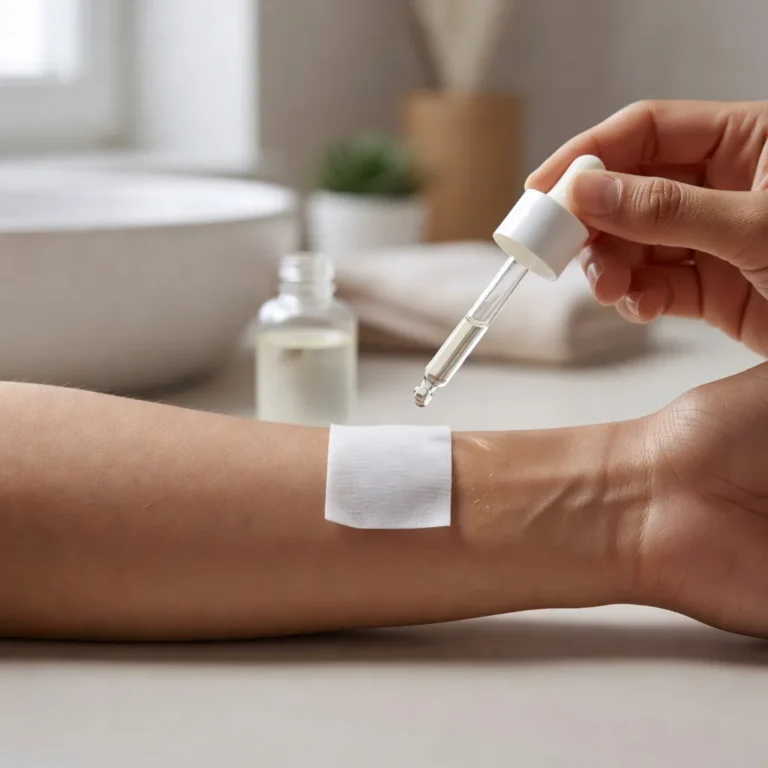
Patch test first
Apply a small amount behind the ear or on the jaw and wait 24 hours.
Cleanse and dry
Wash your face gently and pat it completely dry before applying acids.
Apply a thin layer
Sweep a pad or spread a thin layer, avoiding the eyes, lips and nostrils.
Time it
For rinse-off peels, set a timer and remove at or before the stated time.
Moisturise
Follow with a plain, fragrance-free moisturiser.
Protect from the sun
Use broad-spectrum SPF 30 or higher the next morning and every day.
Build up slowly
Start once a week and increase only if your skin stays comfortable.
Mild tingling for a minute or two is normal with AHAs. Tightness or pinkness that fades within an hour is usually fine, but stinging that keeps building is a sign to rinse off and use the peel less often.
The AAD’s guidance on exfoliating safely at home also recommends choosing an exfoliant that suits your skin type and being gentle, especially on sensitive or darker skin.
What Results to Expect
At-home peels work gradually. After the first few uses, skin often looks brighter and feels smoother. Over several weeks, fine lines may look softer and tone more even. Deep wrinkles, sagging and stubborn age spots usually need professional peels or other in-office treatments.
Consistency matters more than strength. A gentle peel used regularly for two or three months, alongside daily sunscreen and a good moisturiser, usually gives better and safer results than an aggressive peel used now and then. Taking photos in the same light before you start and every few weeks makes it easier to see real change rather than relying on memory.
Some light flaking is common in the first weeks. Our guide on whether facial peeling after a product is normal explains when flaking is expected and when it signals irritation. If you have sensitive skin, our article on how often to exfoliate sensitive skin can help you set a safe schedule.
Honest Limits
At-home peels are superficial by design. They improve dullness, rough texture and fine lines, but they cannot remove deep wrinkles, tighten sagging skin or erase long-standing sun damage. Results also fade if you stop, because skin keeps renewing and ageing.
Peels are not risk-free either. Mature skin can be thinner and slower to heal, and darker skin tones have a higher risk of dark marks after irritation. A dermatologist can help decide whether a professional peel, a retinoid, lasers or another treatment would serve your goals better.
When to See a Dermatologist
- You want a medium or deep peel for wrinkles or sun damage.
- You have dark spots or melasma that are not fading.
- A peel causes burning, blisters, crusting or lasting redness.
- You have rosacea, eczema or very sensitive skin.
- You notice a spot or patch that changes, bleeds or will not heal.
This article is for general information and does not replace professional medical advice. See a board-certified dermatologist before starting stronger peels or if a product irritates your skin.
Your Questions, Answered
What is the best facial peel for aging skin?
Our top pick is the Dr Dennis Gross Alpha Beta Extra Strength peel; first-timers should start with the Universal version.
Is glycolic or lactic acid better for mature skin?
Lactic suits dry skin; glycolic gives stronger smoothing.
Is the most expensive at-home peel worth it?
Only if you already tolerate acids. Beginners do better with a gentler pick such as the Alpha Beta Universal or First Aid Beauty pads.
How often should I use an at-home peel?
Start once a week, then follow the label.
Do peels help wrinkles?
They soften fine lines; deeper wrinkles need professional care.
Do AHA peels make you sun sensitive?
Yes, so use daily sunscreen and limit sun exposure.
Can I use a peel with retinol?
Only once your skin tolerates both, and not on the same night at first.
Which peel on this list is best for sensitive mature skin?
The ELEMIS Papaya Enzyme Peel is the gentlest, and the First Aid Beauty pads use a milder lactic and glycolic blend. Mandelic acid, as in Almond Clear, also suits sensitive skin.
Should my skin peel after a chemical peel?
Light flaking is common; raw or blistered skin is not.
When should I get a professional peel?
For deeper lines, sun damage or stubborn spots.
Summing Up
The best facial peel for aging skin is usually a gentle AHA peel: lactic acid for dry, mature skin, glycolic acid for more visible smoothing and mandelic acid for sensitive or darker skin, with professional peels for deeper concerns.
Patch test, start slowly, moisturise afterwards and wear broad-spectrum sunscreen every day, because sun protection decides whether a peel helps or harms.
Our top pick: Dr Dennis Gross Alpha Beta Extra Strength Peel
The Dr Dennis Gross Alpha Beta Extra Strength Daily Peel takes the top spot because its two-step pads pair a blend of exfoliating acids with a neutralising second step, which gives experienced users a controlled daily peel. Choose the Alpha Beta Universal version instead if you are new to acids, or the ELEMIS Papaya Enzyme Peel if your mature skin is thin, dry or sensitive.
Check Price on Amazon
Written by
Registered pharmacist and founder of Facial Adviser. Rakib's pharmacy training covers how skincare actives work and interact; a later course in cosmetology turned that into a focus on facial treatments and skincare products. He plans, researches and edits every guide on the site and checks health claims against sources such as the American Academy of Dermatology, the FDA and the NIH. He is not a dermatologist; see the Editorial Policy and Medical Disclaimer.
About · Editorial policy · How we choose products · Medical disclaimer · Contact
Keep reading: Chemical peels and acid facials
- Facial vs Chemical Peel: Differences, Results and Which to Choose
- Is Facial Peeling After a New Product Normal? What to Do
- Grape Peel Treatment: What It Really Does
- Vitalize Peel Treatment: What's Really In It
- Azelaic Acid Facial: What It Treats Best
- Enzyme Peel Facial: How Fruit Enzymes Work, Benefits and Who It Suits
- Fruit Facial at Home: Does It Actually Work?
- Facial Types: A Guide to 11 Popular Facials and How to Choose One