
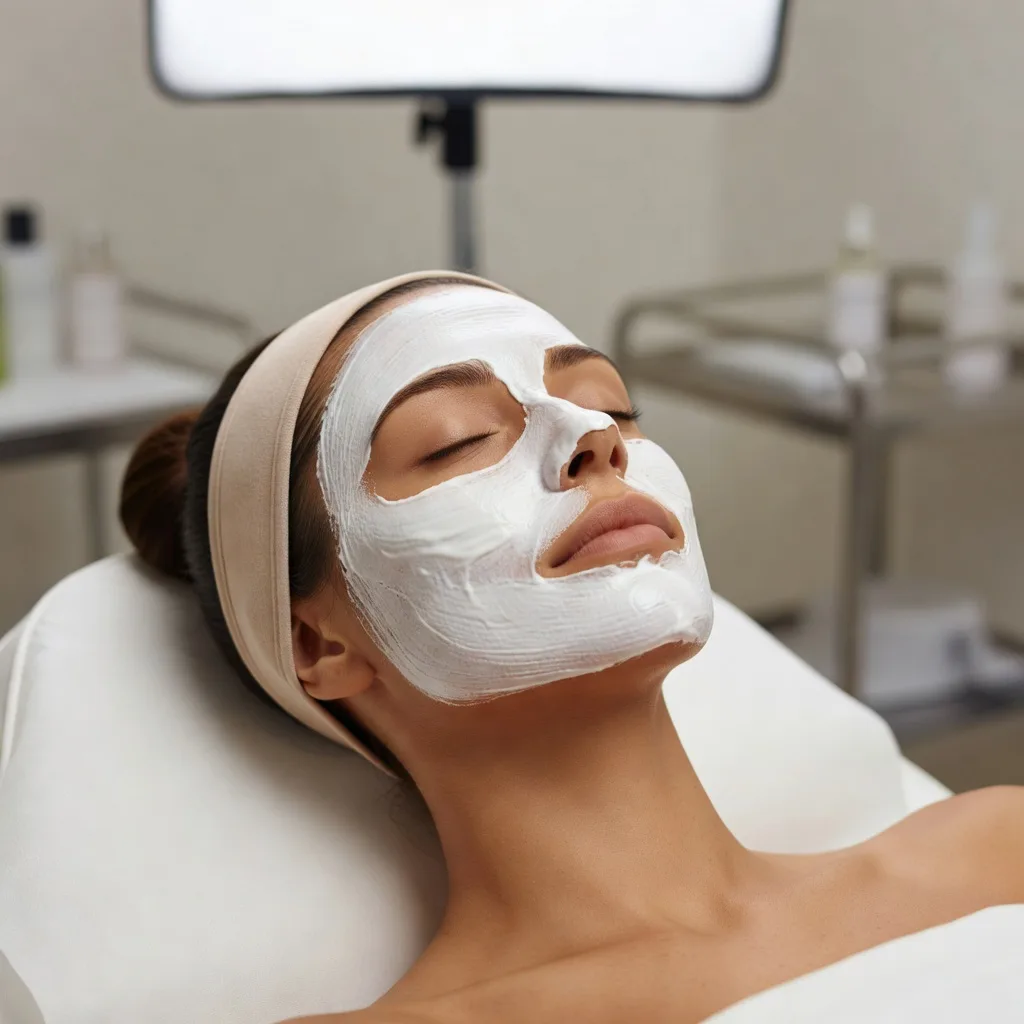
Azelaic Acid Facial: What It Treats Best
An azelaic acid facial routine is one of the rare cases where a single, well-tolerated ingredient genuinely addresses several different skin concerns at once, acne, rosacea redness, and stubborn dark spots, rather than being a one-trick active.
Part of our guide to facial treatments. Start with: Facial vs Chemical Peel: Differences, Results and Which to Choose
Azelaic acid works through a genuinely multi-pronged mechanism: it’s anti-inflammatory, mildly antibacterial, and inhibits tyrosinase, the enzyme behind melanin production. That combination is why it holds FDA approval for both acne and rosacea, and why it’s also used for pigmentation.
It’s also one of the few actives considered safe during pregnancy, a meaningful advantage over retinoids, which explains why it’s frequently the preferred option for treating acne, rosacea, or melasma while pregnant.
This guide covers exactly how azelaic acid works, the difference between FDA-approved prescription strengths and over-the-counter versions, a patch-test routine to start safely, and how long it actually takes to see results.
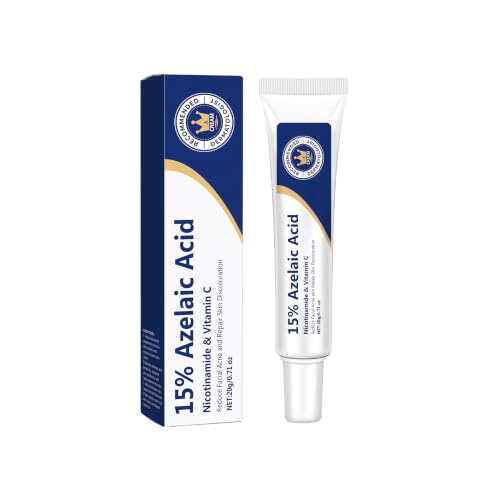
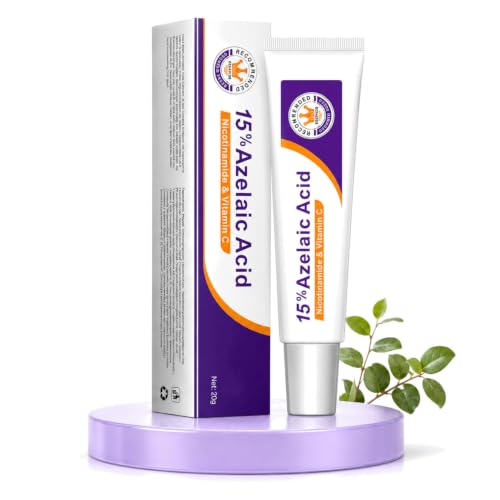
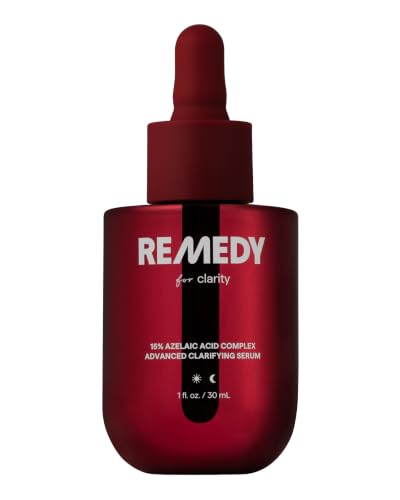
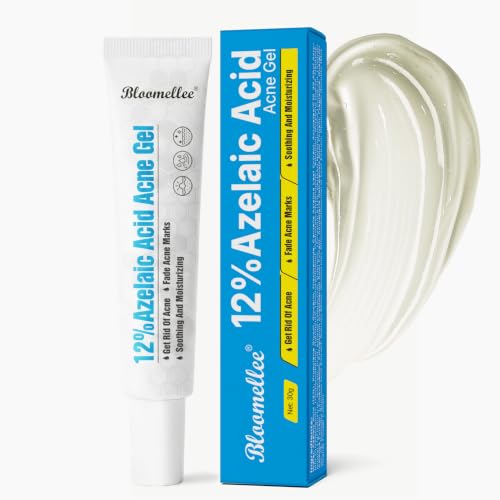
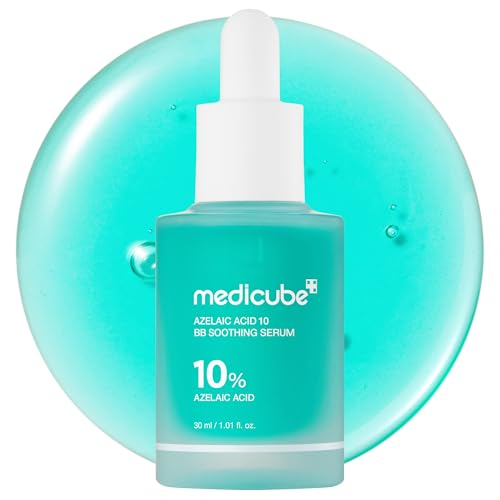
Recommended Products for Azelaic Acid Routines


Key Takeaways
- Azelaic acid works through multiple mechanisms at once: anti-inflammatory, mildly antibacterial against C. acnes, and tyrosinase inhibition, which is why it treats acne, rosacea, and pigmentation.
- Azelex (20% cream) is FDA-approved for mild-to-moderate acne, and Finacea (15% gel and 15% foam) is FDA-approved for the inflammatory bumps of mild-to-moderate rosacea.
- Over-the-counter versions are typically formulated well under prescription strength, generally under 10-15%, and are marketed for brightening and redness rather than as a regulated acne or rosacea drug.
- Azelaic acid is one of the best-tolerated topical actives, with notably lower irritation than retinoids or higher-strength acids.
- It’s considered safe during pregnancy, unlike retinoids, which makes it a frequently preferred option for treating acne, rosacea, or melasma while pregnant.
- Visible improvement typically takes six to twelve weeks of consistent twice-daily use, with continued gradual gains beyond that.
- A simple 24-hour patch test on the inner forearm is a genuinely useful precaution before applying any new active to your face.
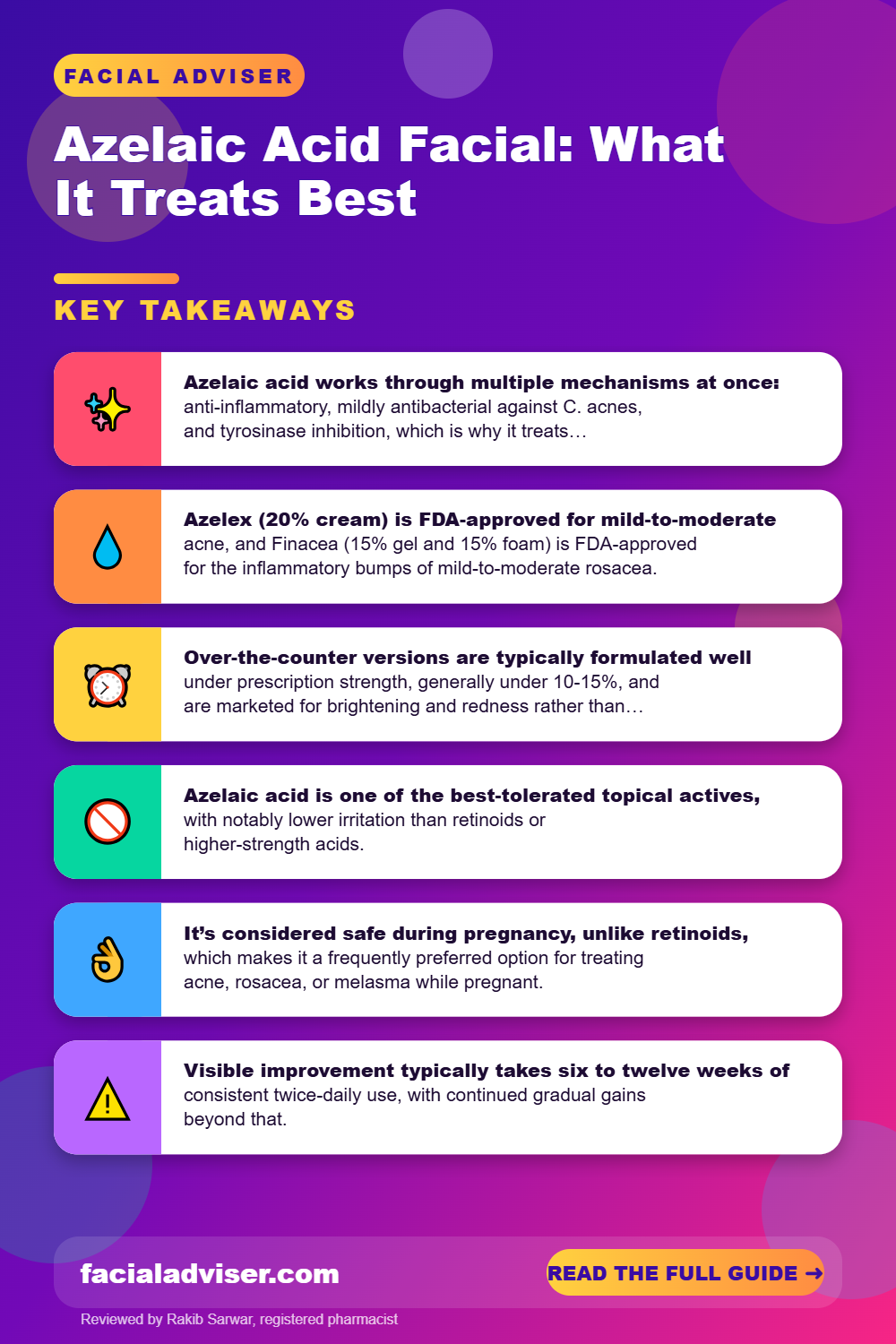
Table of Contents
- How Azelaic Acid Actually Works
- FDA-Approved Products vs. Over-the-Counter
- The 24-Hour Patch Test Before Facial Use
- Azelaic Acid vs. Other Common Actives
- Do This, Not That
- Building an Azelaic Acid Facial Routine
- Why It’s a Preferred Option During Pregnancy
- When to See a Dermatologist
- Frequently Asked Questions
- The Bottom Line
How Azelaic Acid Actually Works
Azelaic acid is a dicarboxylic acid with a genuinely multi-pronged mechanism: it reduces inflammatory mediators involved in acne and rosacea redness and bumps, has mild antibacterial activity against C. acnes, and inhibits tyrosinase, the enzyme melanocytes use to produce melanin. That tyrosinase-inhibiting action is why the same ingredient shows up in both acne and pigmentation treatment, and why it’s often recommended for combination concerns like acne paired with dark marks.
Shopping these picks?
Amazon Prime members get fast, free shipping on eligible items, plus Prime Video, Amazon Music and member deals. New members can start with a free trial.
Start a free Prime trialAged 18 to 24? Prime for Young Adults comes with a longer free trial and a lower price after it.
Affiliate link: we may earn a commission at no extra cost to you.
Even FDA prescribing information for rosacea products acknowledges the exact mechanism there “isn’t fully understood” beyond its anti-inflammatory effects, an honest gap rather than a knock against its real, well-documented clinical results.
FDA-Approved Products vs. Over-the-Counter
| Product | Strength | FDA-approved use |
|---|---|---|
| Azelex (cream) | 20% | Mild-to-moderate inflammatory acne vulgaris |
| Finacea (gel) | 15% | Inflammatory papules/pustules of mild-to-moderate rosacea |
| Finacea (foam) | 15% | Inflammatory papules/pustules of mild-to-moderate rosacea |
| Over-the-counter serums | Typically under 10-15% | Not FDA-regulated as a drug; marketed for brightening/redness |
Note: A prescription-strength product and an over-the-counter serum both containing “azelaic acid” can differ meaningfully in concentration and regulatory status, worth confirming with a dermatologist if you’re treating a diagnosed condition rather than general skin tone.
The 24-Hour Patch Test Before Facial Use
Apply a small amount of the product to your inner forearm or behind your ear, then wait 24 hours:
- No redness, burning, or itching: reasonable to proceed to facial use, starting with a lower frequency to gauge tolerance.
- Redness, burning, or itching develops: hold off on facial application and consider a lower concentration or consulting a dermatologist first.
This is a standard, genuinely useful precaution for introducing any new active, not specific to azelaic acid, but worth doing every time regardless of how well-tolerated the ingredient generally is.
Azelaic Acid vs. Other Common Actives
| Azelaic acid | Retinoids | Higher-strength acids (AHA/BHA) | |
|---|---|---|---|
| Irritation potential | Low | Moderate to high | Moderate |
| Pregnancy-safe | Yes | No | Case-by-case |
| Treats pigmentation | Yes, via tyrosinase inhibition | Indirectly, via cell turnover | Yes, via exfoliation |
| Treats rosacea | Yes, FDA-approved (Finacea) | Not typically first-line | Generally not recommended |
Do This, Not That
Do
- Patch test for 24 hours before applying to your face
- Use twice daily consistently for at least six to twelve weeks before judging results
- Confirm concentration and FDA status if treating diagnosed acne or rosacea
- Pair with sunscreen, since treated skin can be more UV-sensitive during active treatment
- Mention it to your provider if pregnant and treating acne, rosacea, or melasma
Don’t
- Expect overnight results, meaningful change takes weeks of consistent use
- Assume an over-the-counter serum matches prescription strength
- Stop at the first mild tingling, that typically resolves with continued use
- Combine with multiple other strong actives without easing in gradually
- Skip the patch test just because azelaic acid is generally well-tolerated
Building an Azelaic Acid Facial Routine
Patch test first
Confirm tolerance on your inner forearm before applying anywhere on your face.
Cleanse gently
Start with a clean, dry face using a gentle, non-stripping cleanser.
Apply a thin layer
Use a pea-sized amount across the treatment area, avoiding the eyes and lips.
Tip: Start with once-daily application for the first week or two, then move to twice daily as tolerated.
Follow with moisturizer
A supportive moisturizer helps manage the mild tingling or dryness some people notice initially.
Apply sunscreen each morning
Daily sun protection supports the pigmentation-fading benefit and protects treated skin.
Give it six to twelve weeks
Consistent twice-daily use over this period is when most people notice meaningful improvement, with continued gradual gains after.
Why It’s a Preferred Option During Pregnancy
Azelaic acid is considered safe during pregnancy, a meaningful distinction from retinoids and tretinoin, which are contraindicated. Multiple dermatology pregnancy-safety resources list it as a preferred option for treating acne, rosacea, or melasma while pregnant, which matters given how common pregnancy-related melasma and hormonal acne both are.
Warning: Being generally considered pregnancy-safe doesn’t mean self-prescribing without guidance, always confirm any active ingredient, azelaic acid included, with your OB-GYN or dermatologist before starting it during pregnancy.
When to See a Dermatologist
If you’re treating diagnosed rosacea or moderate-to-severe acne, a dermatologist can prescribe Finacea or Azelex at clinically studied strengths rather than relying on an over-the-counter version of uncertain concentration. They can also help you combine azelaic acid safely with other actives you may already be using, similar to layering niacinamide and hyaluronic acid into a broader routine.
Frequently Asked Questions
What does azelaic acid do for skin?
It reduces inflammation, has mild antibacterial action against acne-causing bacteria, and inhibits tyrosinase to fade pigmentation, addressing acne, rosacea, and dark marks.
Is azelaic acid FDA-approved?
Yes. Azelex (20% cream) is FDA-approved for acne, and Finacea (15% gel and foam) is FDA-approved for rosacea’s inflammatory bumps.
How is over-the-counter azelaic acid different from prescription versions?
OTC versions are typically formulated well under prescription strength, generally under 10-15%, and aren’t regulated as an acne or rosacea drug.
Is azelaic acid safe during pregnancy?
Yes, it’s widely considered a preferred, pregnancy-safe option for acne, rosacea, or melasma, unlike retinoids, though confirming with your provider is still recommended.
How long does azelaic acid take to work?
Most people see visible improvement after six to twelve weeks of consistent twice-daily use, with continued gradual gains beyond that.
Does azelaic acid help with rosacea?
Yes, Finacea is FDA-approved specifically for the inflammatory papules and pustules of mild-to-moderate rosacea.
Should I patch test azelaic acid before using it on my face?
Yes, apply a small amount to your inner forearm and wait 24 hours to check for redness, burning, or itching before facial use.
Is azelaic acid gentler than retinoids?
Yes, it’s one of the best-tolerated topical actives, with notably lower irritation potential than retinoids or higher-strength acids.
Can azelaic acid help with dark spots?
Yes, its tyrosinase-inhibiting action helps fade post-inflammatory hyperpigmentation and melasma over consistent use.
When should I see a dermatologist about azelaic acid?
If you’re treating diagnosed rosacea or moderate-to-severe acne, a dermatologist can prescribe clinically studied strengths rather than relying on an OTC version.
The Bottom Line
Azelaic acid earns its reputation as one of the gentlest, most versatile actives available, genuinely FDA-approved for both acne and rosacea, pregnancy-safe, and effective against pigmentation through a distinct tyrosinase-inhibiting mechanism.
Patch test first, confirm concentration if you’re treating a diagnosed condition, and give it the six to twelve weeks it actually needs, azelaic acid rewards consistency more than intensity.

Written by
Registered pharmacist and founder of Facial Adviser. Rakib's pharmacy training covers how skincare actives work and interact; a later course in cosmetology turned that into a focus on facial treatments and skincare products. He plans, researches and edits every guide on the site and checks health claims against sources such as the American Academy of Dermatology, the FDA and the NIH. He is not a dermatologist; see the Editorial Policy and Medical Disclaimer.
About · Editorial policy · How we choose products · Medical disclaimer · Contact
Keep reading: Chemical peels and acid facials
- Enzyme Peel Facial: How Fruit Enzymes Work, Benefits and Who It Suits
- Lactic Peel Facial: Strengths, Who It Suits, Procedure and Aftercare
- Skin Peel Facial: The Real Depth Guide
- Glycolic Acid Facial: What the Evidence Shows
- Facial vs Chemical Peel: Differences, Results and Which to Choose
- Facial Types: A Guide to 11 Popular Facials and How to Choose One
- Microneedling Facial: Real Results, Explained


One Comment