
Which Facial Is Best for Glowing Skin? Matching the Treatment to Your Skin
Glowing skin is one of the most common reasons people book a facial, and nearly every spa menu has at least one treatment that promises radiance. The trouble is that glow means different things for different skin. Dry skin looks dull because it lacks moisture, oily skin can look congested and uneven, and sensitive skin may look red rather than bright.
Part of our guide to facial treatments. Start with: Facial Types: A Guide to 11 Popular Facials and How to Choose One
The best facial for glowing skin depends on why your skin looks dull. For dry or dehydrated skin, a hydrating facial with gentle exfoliation and moisture-rich masks usually gives the most visible glow. For dull, uneven or congested skin, a light chemical peel, enzyme facial or HydraFacial-style treatment that exfoliates and cleans pores often works best. Sensitive skin usually does better with a calming, low-exfoliation facial. Whatever you choose, the glow lasts longer with daily sunscreen, gentle exfoliation and good hydration at home.
Most facials give an immediate glow because they remove dead skin cells, hydrate the surface and increase blood flow to the face. That effect is real but temporary, often lasting days rather than weeks, so it helps to know what to expect.
The American Academy of Dermatology notes that exfoliation can brighten skin but can also cause irritation if overdone or used on the wrong skin type. Choosing a facial that suits your skin is what makes the difference between a glow and a flare-up.
This guide compares the main types of facials for glowing skin, explains which suits each skin type, walks through how to choose and prepare, and covers how to keep results going at home.
Shopping these picks?
Amazon Prime members get fast, free shipping on eligible items, plus Prime Video, Amazon Music and member deals. New members can start with a free trial.
Start a free Prime trialAged 18 to 24? Prime for Young Adults comes with a longer free trial and a lower price after it.
Affiliate link: we may earn a commission at no extra cost to you.
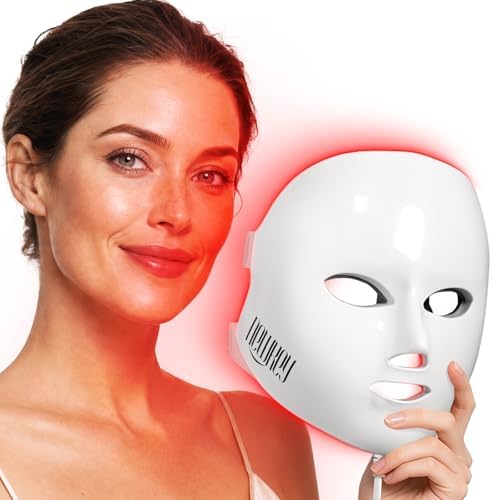
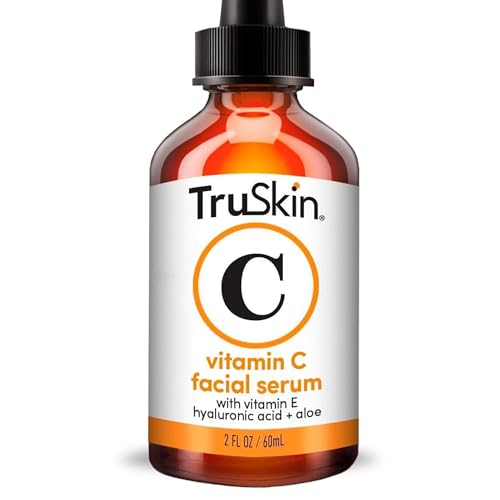
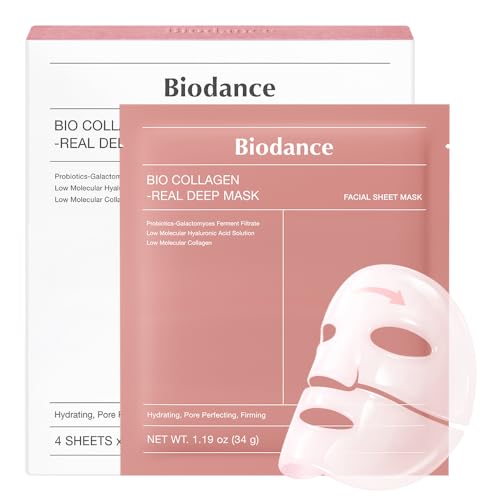
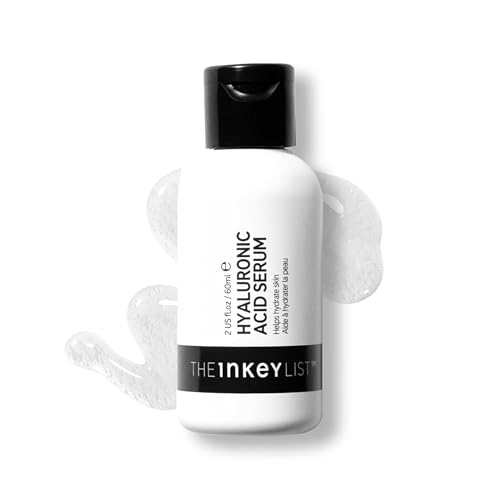
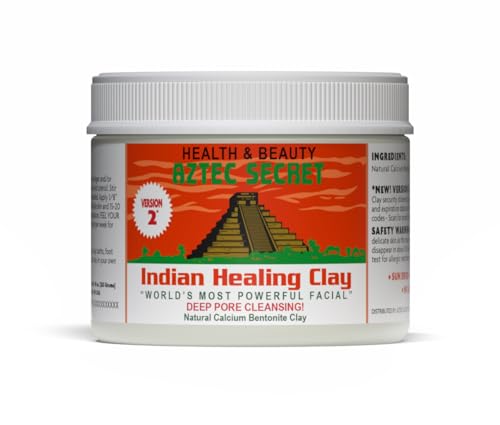
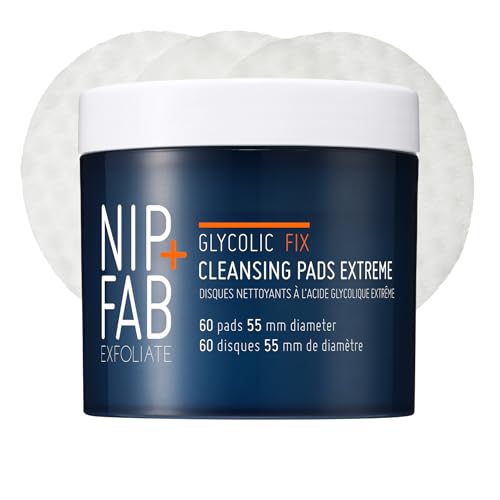
Recommended At-Home Facial Products for Glowing Skin

On This Page
Key Takeaways
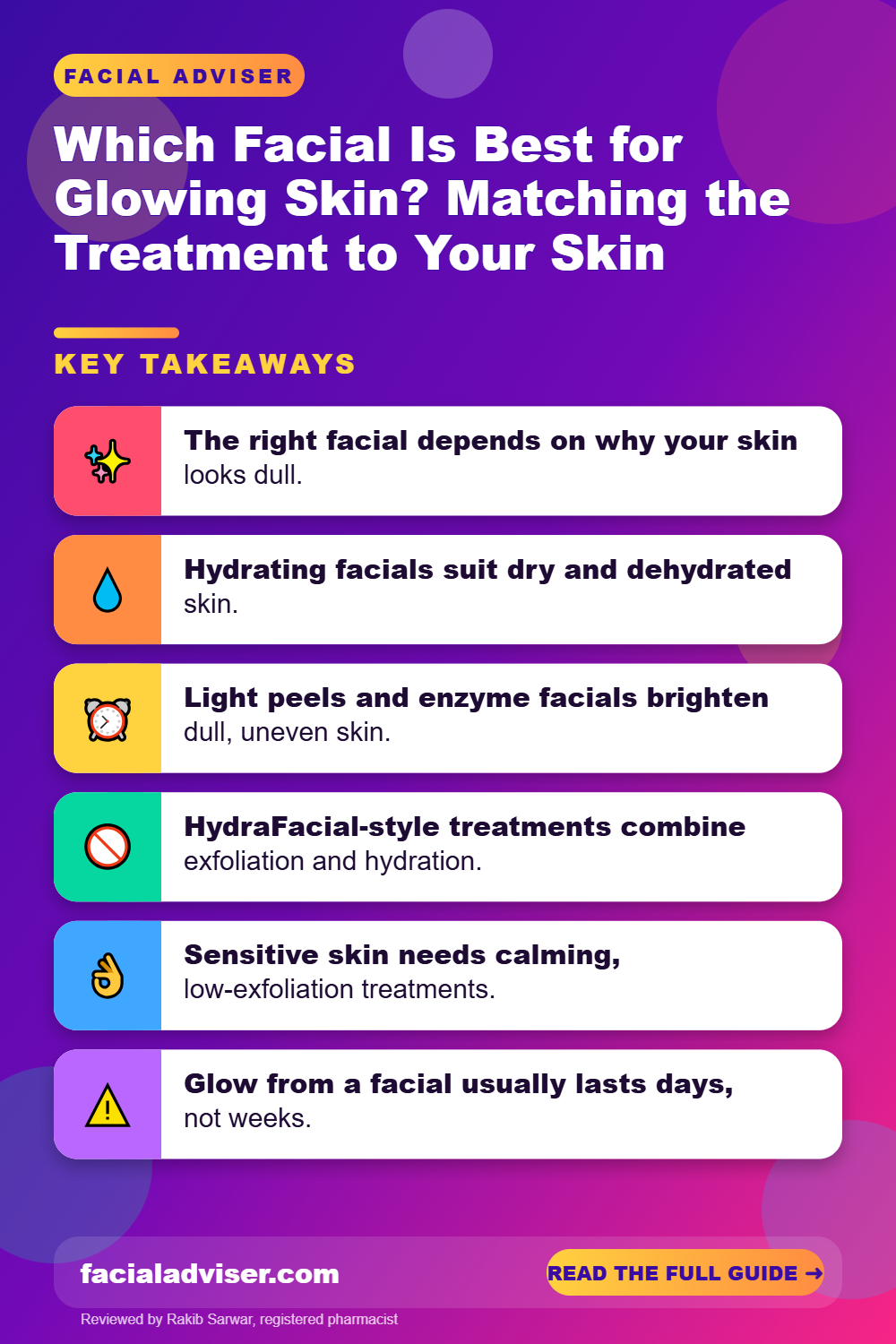
- The right facial depends on why your skin looks dull.
- Hydrating facials suit dry and dehydrated skin.
- Light peels and enzyme facials brighten dull, uneven skin.
- HydraFacial-style treatments combine exfoliation and hydration.
- Sensitive skin needs calming, low-exfoliation treatments.
- Glow from a facial usually lasts days, not weeks.
- Daily sunscreen and hydration keep results going.
Why Skin Looks Dull
Skin looks radiant when its surface is smooth and hydrated, so it reflects light evenly. Dullness usually comes from a build-up of dead skin cells, dehydration, uneven pigmentation, congestion or redness. Lifestyle factors such as poor sleep, smoking and sun damage also play a part.
| Cause of dullness | What it looks like | Facial that helps most |
|---|---|---|
| Dehydration | Tight, flat, fine lines more visible | Hydrating facial |
| Dead skin build-up | Rough texture, grey tone | Enzyme or light peel facial |
| Congestion | Clogged pores, uneven surface | Deep cleansing or HydraFacial-style |
| Uneven pigmentation | Patchy tone, sun spots | Light peel series with sunscreen |
| Redness and sensitivity | Flushed, reactive skin | Calming facial |
| Poor circulation or tiredness | Sallow, lifeless look | Facial with massage |
Identifying your main cause helps you choose a treatment that targets it rather than one that sounds appealing on the menu. If you are not sure, a consultation with an esthetician or dermatologist is a good place to start. Look at your skin in natural daylight without makeup and notice whether it feels tight, looks rough, has visible congestion or flushes easily. Those clues usually point to the main cause of dullness.
Types of Facials for Glowing Skin
Here is how the most common glow-focused facials compare. Names vary between spas, so it is worth asking what each treatment actually involves.
| Facial | What it involves | Best for | Downtime |
|---|---|---|---|
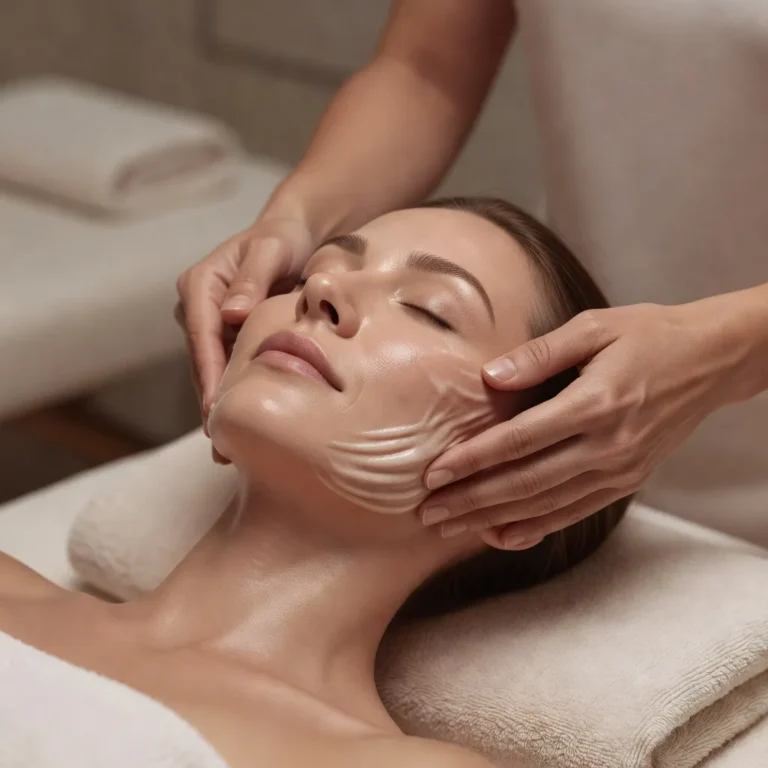
| Hydrating facial | Gentle cleanse, mild exfoliation, hydrating masks and massage | Dry, dehydrated or mature skin | None |
| Enzyme facial | Fruit-derived enzymes loosen dead skin | Dull skin, mild sensitivity | None to minimal |
| Light chemical peel facial | Low-strength acids such as lactic or glycolic | Dullness, uneven tone, mild texture | Mild redness or flaking for a few days |
| HydraFacial-style treatment | Suction cleansing, exfoliation and serum infusion | Congested, dull or normal skin | Minimal |
| Oxygen facial | Pressurised mist with serums | Instant plumping before events | None |
| LED facial | Light therapy, often combined with other steps | Adding to other treatments | None |
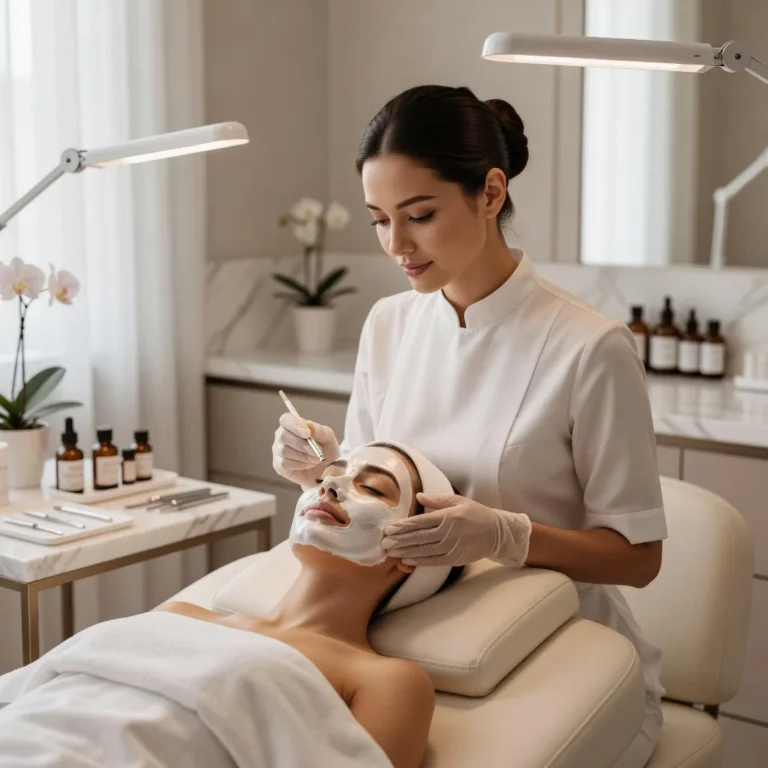
Hydrating and enzyme facials are good starting points for most people, because they brighten without much risk of irritation. They are also a sensible first choice if you have never had a facial and do not know how your skin reacts to professional products. Peels and more intensive treatments give more noticeable brightening but need more preparation and aftercare. Our guide on European facials versus basic facials explains two of the most common classic options.
Choosing by Skin Type
Your skin type is one of the best guides to which facial will give you a glow without problems.
- Dry or mature skin: hydrating facial, enzyme facial or gentle lactic acid peel.
- Oily or congested skin: deep cleansing facial, HydraFacial-style treatment or salicylic acid peel.
- Combination skin: HydraFacial-style treatment or a customised facial that treats zones differently.
- Sensitive skin: calming facial with minimal exfoliation and fragrance-free products.
- Uneven tone: a series of light peels, combined with daily sunscreen.
If you have rosacea, eczema or very reactive skin, avoid strong peels and aggressive extractions. A calming facial may not give as dramatic a glow, but it is less likely to cause a flare. Once your skin is settled and less red, it naturally looks brighter, so reducing irritation can itself be the best route to glow for reactive skin. Our guide on why your face may itch after a facial explains common reactions.
Glow is not the same as shine. A good glow facial leaves skin looking smooth and hydrated, not greasy, and the effect should look natural in daylight.
How to Choose a Facial for Glowing Skin
Identify your main concern
Decide whether dryness, dullness, congestion or unevenness is the biggest issue.
Check your skin type
Note whether your skin is dry, oily, combination or sensitive.
Read the menu carefully
Look for what the facial actually involves, not just its name.
Ask about ingredients
Check for acids, fragrance and essential oils if you are sensitive.
Book a consultation
Ask the esthetician which treatment suits your skin and goals.
Prepare properly
Pause strong actives and avoid waxing before your appointment.
Plan aftercare
Keep skin hydrated and protected from the sun afterwards.
For a special event, book a hydrating or enzyme facial three to five days beforehand rather than a peel the day before. You get the glow without the risk of redness or flaking on the day.
Preparation affects how your skin responds. Our guide on how to prepare for a facial covers what to stop and what to tell your esthetician.
How Long the Glow Lasts
Most people notice a visible glow straight after a facial, especially after exfoliation and hydrating masks. For hydrating facials, the effect often lasts a few days. Peels and HydraFacial-style treatments may keep skin looking brighter for a week or two, especially when combined with good home care.
Longer-lasting improvements in tone and texture usually come from a series of treatments combined with daily skincare. Many spas suggest facials every four to six weeks, roughly matching the skin’s natural renewal cycle, but more often is not always better, especially with exfoliating treatments. Skin needs time to recover between sessions, and frequent peels can weaken the skin barrier and make dullness worse. Keeping a simple note of how your skin looks in the days after each facial helps you and your esthetician decide what to repeat.
For more intensive concerns such as scarring or deep pigmentation, dermatologist-led treatments may be more effective than spa facials. Our guide on laser facials versus microneedling compares two stronger options.
Keeping Your Glow at Home
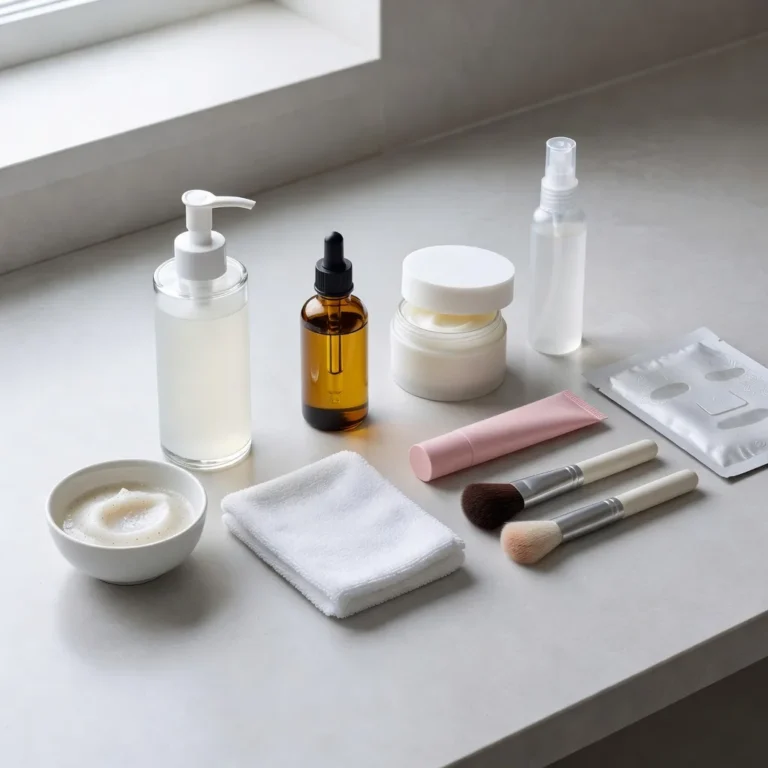
The glow from a facial fades fastest when home care is inconsistent. A simple routine that hydrates, protects and gently exfoliates helps maintain results between appointments.
- Cleanse gently once or twice a day.
- Use a hydrating serum and moisturiser suited to your skin type.
- Apply broad-spectrum sunscreen every morning.
- Exfoliate gently once or twice a week, not every day.
- Add vitamin C in the morning if your skin tolerates it.
Introduce any new active ingredient slowly, one at a time, so you can tell what your skin likes and what irritates it. Patch testing on the jawline for a few days before using a new product on the whole face is a simple way to avoid surprises. Sunscreen is the step that protects your results the most. UV exposure can dull skin and deepen uneven pigmentation over time. The American Academy of Dermatology explains how to choose the right sunscreen. For gentle exfoliation, the AAD also explains how to exfoliate safely at home.
Avoid combining at-home peels, scrubs and retinoids in the days after a facial. Over-exfoliating can leave skin red, tight and more dull, the opposite of the glow you wanted.
Everyday Habits That Affect Glow
Facials work best when the rest of your routine supports them. Several everyday habits have a noticeable effect on how radiant skin looks.
- Sleep: short or poor sleep can leave skin looking tired and dull.
- Sun exposure: UV damage causes uneven tone and rough texture over time.
- Smoking: reduces blood flow to the skin and contributes to a sallow look.
- Hydration and diet: very dry indoor air and a poor diet can leave skin looking flat.
- Stress: can trigger flare-ups of acne, eczema and rosacea.
None of these need a perfect lifestyle. Small, consistent changes, such as wearing sunscreen every morning and keeping a regular sleep schedule, often make a bigger difference to everyday glow than an extra facial each month.
If you exercise regularly, cleanse after sweating and avoid leaving heavy makeup on during workouts. Exercise itself can give a temporary healthy flush, but sweat and product left on the skin can lead to congestion.
Common Mistakes When Chasing Glow
- Booking the strongest treatment on the menu for a first facial.
- Getting a peel right before an important event.
- Using at-home acids and retinoids straight after a facial.
- Skipping sunscreen after exfoliating treatments.
- Choosing heavily fragranced facials when your skin is sensitive.
- Expecting one facial to fix long-term concerns.
The most common pattern is doing too much at once. Skin that is over-exfoliated looks red, tight and shiny rather than glowing. A gentler treatment, repeated over time and supported by good home care, usually gives a more natural and lasting result.
Dos and Don’ts
Helps
- Choose a facial based on your skin type and concern
- Ask what the treatment involves
- Book glow facials a few days before events
- Use sunscreen daily afterwards
- Keep home care gentle and consistent
Backfires
- Book a strong peel the day before an event
- Choose by name alone
- Over-exfoliate at home after a facial
- Expect permanent results from one session
- Ignore stinging or burning during treatment
Honest Limits
A facial can make skin look brighter and feel smoother, but the effect is mostly temporary. Lasting glow depends far more on sun protection, sleep, hydration and a consistent routine than on occasional treatments.
Results vary between people and between spas. Treatment names are not standardised, and the skill of the esthetician matters. If a treatment makes your skin worse, it is not the right one for you, regardless of how popular it is.
When to See a Dermatologist
- Dullness comes with persistent redness, flaking or itching.
- You have acne, rosacea or eczema that flares after treatments.
- Dark patches are spreading or not responding to sunscreen.
- You want stronger treatments such as medical peels or lasers.
This article is for general information and does not replace professional medical advice. See a dermatologist for persistent skin concerns or before starting stronger treatments.
FAQ
Which facial gives the best glow?
It depends on your skin; hydrating facials suit dry skin, light peels suit dull, uneven skin.
Is HydraFacial good for glowing skin?
Many people see a glow from its combination of exfoliation and hydration.
How long does a facial glow last?
Usually a few days to a week or two.
Which facial is best for dry, dull skin?
A hydrating facial with gentle exfoliation.
Which facial is best for oily skin?
A deep cleansing or HydraFacial-style treatment.
Can sensitive skin get a glow facial?
Yes, choose a calming facial with minimal exfoliation.
How often should I get a facial for glowing skin?
Many people choose every four to six weeks.
Should I get a facial before an event?
Yes, a gentle facial a few days before is safest.
Are chemical peels good for glowing skin?
Light peels can brighten dull, uneven skin.
How do I keep my skin glowing after a facial?
Hydrate, use sunscreen daily and exfoliate gently.
Final Word
The best facial for glowing skin depends on why your skin looks dull. Hydrating facials suit dry skin, light peels and enzyme facials brighten dull or uneven skin, HydraFacial-style treatments help congested skin and calming facials suit sensitive skin.
Choose by skin type and concern rather than by name, prepare properly and book a few days before events. Keep the glow going with daily sunscreen, hydration and gentle exfoliation at home.

Written by
Registered pharmacist and founder of Facial Adviser. Rakib's pharmacy training covers how skincare actives work and interact; a later course in cosmetology turned that into a focus on facial treatments and skincare products. He plans, researches and edits every guide on the site and checks health claims against sources such as the American Academy of Dermatology, the FDA and the NIH. He is not a dermatologist; see the Editorial Policy and Medical Disclaimer.
About · Editorial policy · How we choose products · Medical disclaimer · Contact
Keep reading: Types of facials compared
- Facial Types: A Guide to 11 Popular Facials and How to Choose One
- Cleanup or Facial: Which Is Actually Better?
- Facial vs Massage: Which Spa Treatment Is Worth Booking?
- Facial Treatment Names Explained: 25+ Types and What Each One Does
- Best Place for a Facial: Spa, Dermatologist, Medspa, Salon or Home?
- Best Facial Treatment for Acne Scars: Options by Scar Type and Home Care
- Is Hydrafacial a Gimmick? What Evidence Shows
- Ultimate Guide Microdermabrasion: What to Know