Itchy Face After a Facial? Common Reasons and What to Do
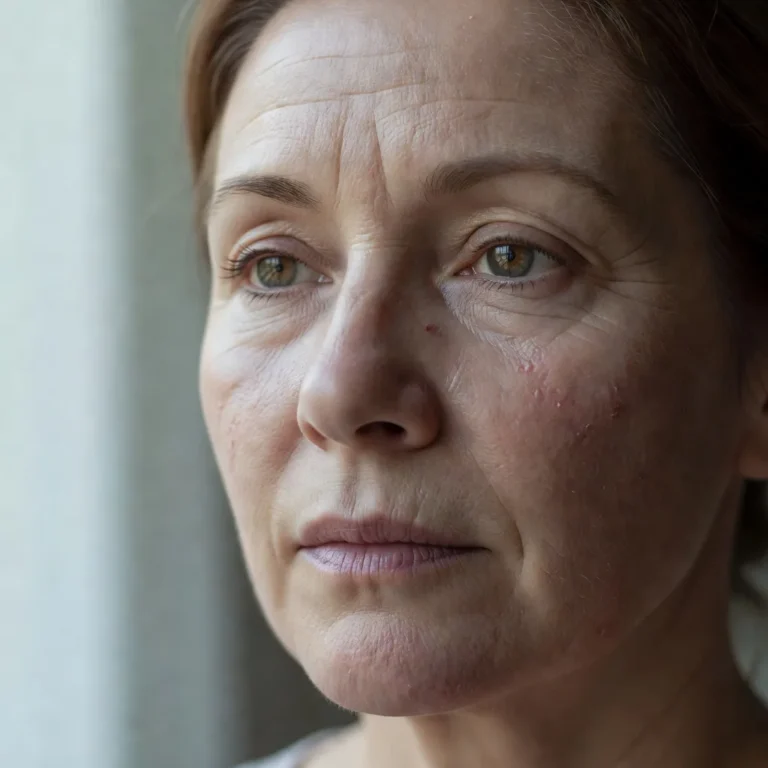
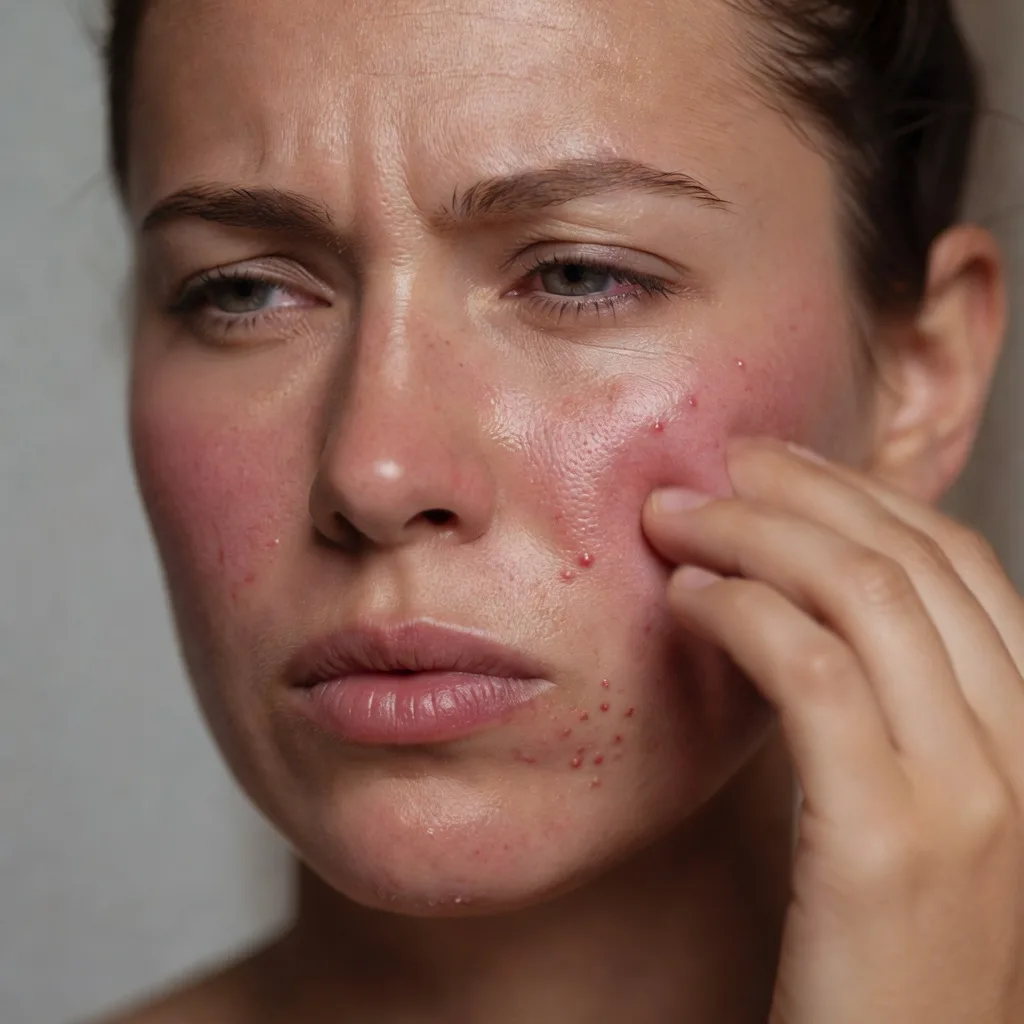
You leave the salon glowing, and a few hours later your face starts to itch. Maybe there is a little redness, some small bumps or a tight, prickly feeling across your cheeks. It is a common experience, and in most cases it settles on its own.
Part of our guide to skin concerns. Start with: How to Calm Inflamed Red Patches on Your Face
An itchy face after a facial is most often caused by irritation: exfoliation, peels, extractions, steam and massage all stress the skin barrier, and nerve endings react with itching and tingling. Less often, it is an allergic reaction to an ingredient such as fragrance or a preservative, which can appear hours or even a day or two later. Mild irritation usually calms within 24 to 72 hours with cool compresses and a plain moisturiser. Swelling, hives, blisters or itching that worsens need medical advice.
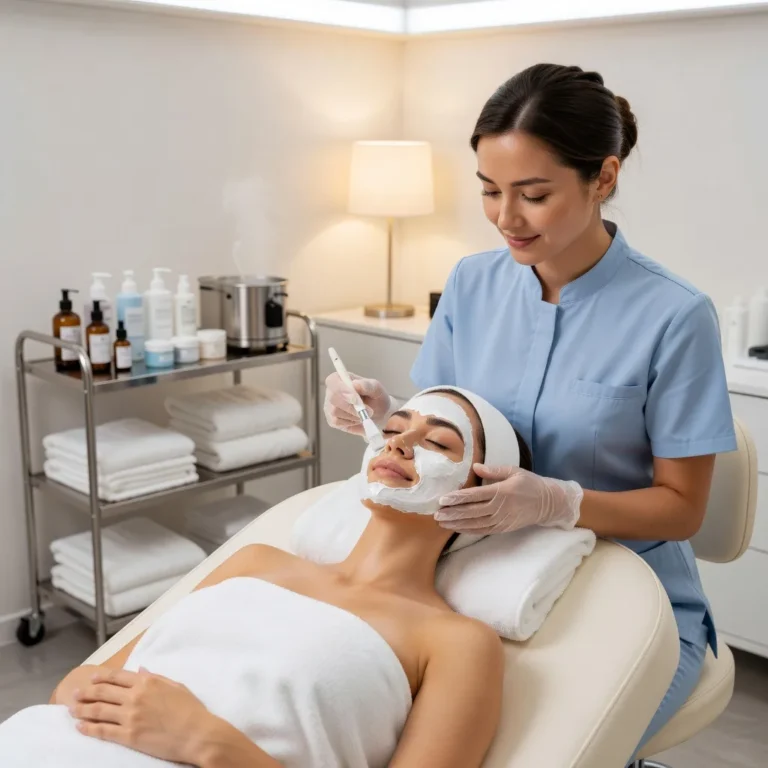
Facials vary enormously, from a gentle cleanse and massage to chemical peels, microdermabrasion, dermaplaning and extractions. The more intense the treatment, the more likely some temporary sensitivity is, especially if you have dry, sensitive or rosacea-prone skin.
The key is telling ordinary post-facial irritation apart from an allergic reaction or infection, because they need different handling. Timing, where the itch is, and what it looks like give strong clues.
This guide explains the common reasons your face itches after a facial, how to tell them apart, how to calm your skin at home, how to prevent it next time, and the signs that need a doctor.
Shopping these picks?
Amazon Prime members get fast, free shipping on eligible items, plus Prime Video, Amazon Music and member deals. New members can start with a free trial.
Start a free Prime trialAged 18 to 24? Prime for Young Adults comes with a longer free trial and a lower price after it.
Affiliate link: we may earn a commission at no extra cost to you.
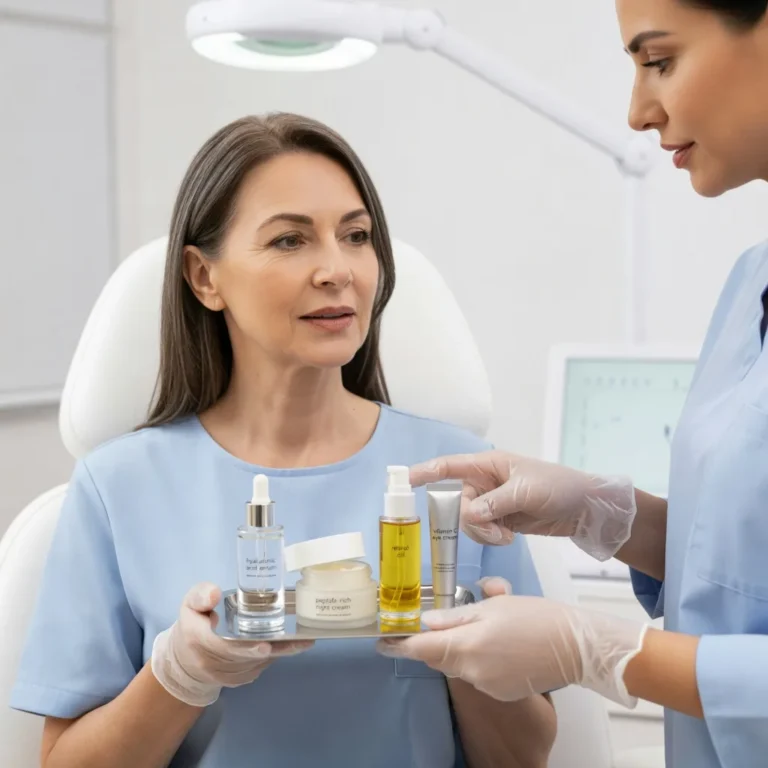
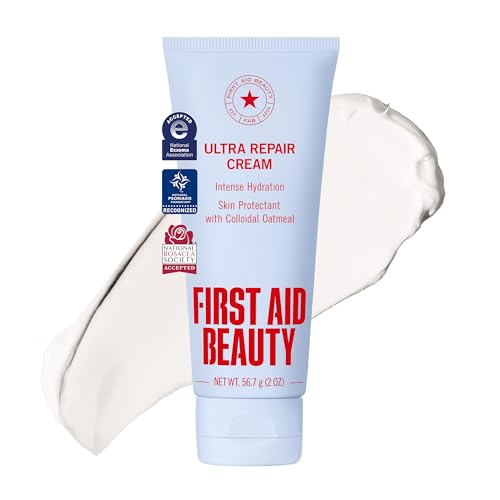
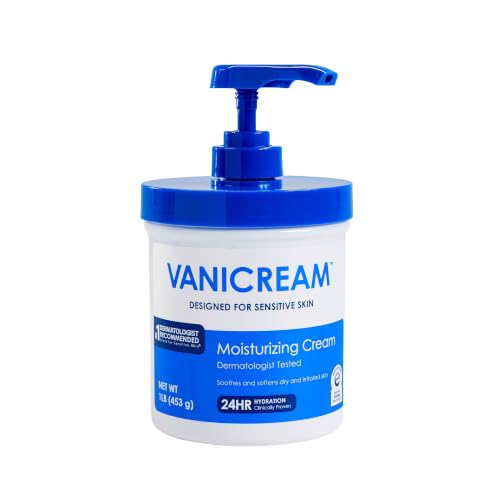
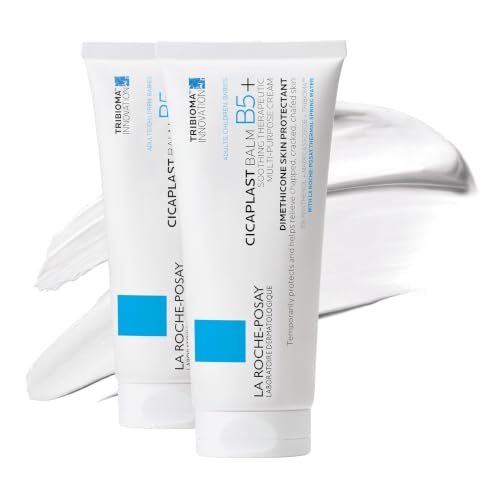
Recommended Products to Soothe Skin After a Facial



In This Guide
- Why Your Face Itches After a Facial
- Irritation or Allergy?
- Which Facial Treatments Are Most Likely to Cause Itching?
- Who Is More Likely to React?
- A Quick Check Before You Act
- How to Calm an Itchy Face After a Facial
- What to Avoid in the Days After a Facial
- How to Prevent It Next Time
- Dos and Don’ts
- Honest Limits
- When to See a Doctor
- Frequently Asked Questions
- Summing Up
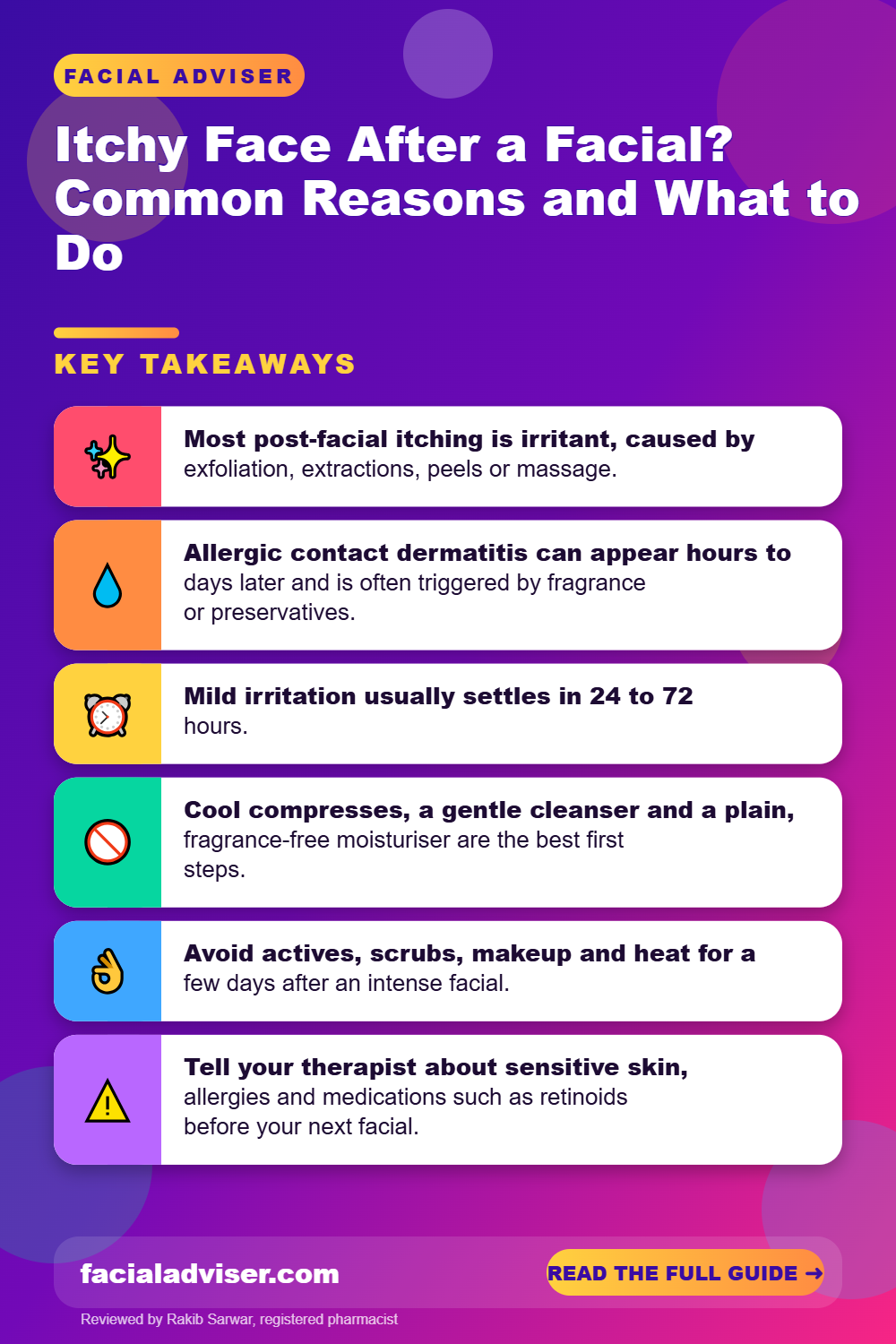
Quick Answer
- Most post-facial itching is irritant, caused by exfoliation, extractions, peels or massage.
- Allergic contact dermatitis can appear hours to days later and is often triggered by fragrance or preservatives.
- Mild irritation usually settles in 24 to 72 hours.
- Cool compresses, a gentle cleanser and a plain, fragrance-free moisturiser are the best first steps.
- Avoid actives, scrubs, makeup and heat for a few days after an intense facial.
- Tell your therapist about sensitive skin, allergies and medications such as retinoids before your next facial.
- Swelling around the eyes or lips, hives, blisters or signs of infection need prompt medical advice.
Why Your Face Itches After a Facial
| Cause | How it happens | Typical timing |
|---|---|---|
| Barrier irritation | Exfoliation, peels, dermaplaning or microdermabrasion strip the outer layer | Within hours |
| Extractions | Pressure and small wounds inflame pores | Within hours, localised |
| Heat and steam | Dilate vessels and can trigger itch and flushing | During or soon after |
| Massage and friction | Rubbing sensitises nerve endings | Within hours |
| Allergic contact dermatitis | Immune reaction to an ingredient, often fragrance or preservatives | Hours to two days later |
| Heat rash or blocked pores | Occlusive masks or creams trap sweat | Within a day |
| Flare of an existing condition | Rosacea, eczema or seborrheic dermatitis triggered by treatment | Within hours to days |
Irritation is by far the most common cause, and it is usually proportional to how intense the treatment was. It happens because the treatment deliberately removes or disrupts the top layer of skin, and the exposed nerve endings respond with tingling and itch as the barrier rebuilds.
Irritation or Allergy?
The American Academy of Dermatology explains that contact dermatitis comes in two forms: irritant, caused by something damaging the skin directly, and allergic, an immune reaction that can develop from brief contact and may appear hours or days later. More than 15,000 substances can cause allergic reactions, with fragrance among the most common (AAD).
| Feature | Irritant reaction | Allergic reaction |
|---|---|---|
| When it starts | During or soon after the facial | Often 12 to 48 hours later |
| Where | Where products or treatment were applied | Can spread beyond the treated area, often to eyelids |
| What it looks like | Redness, tightness, mild stinging or itch | Intense itch, red bumps, swelling, sometimes blisters |
| Course | Improves day by day | May worsen over the first few days |
| Next time | May happen again with the same intensity of treatment | Will happen again with the same ingredient |
Eyelids are especially sensitive, and allergic reactions to facial products often show up there first, even if the product was mostly applied to the cheeks.
Which Facial Treatments Are Most Likely to Cause Itching?
Not all facials carry the same risk. The table below gives a rough guide based on how much each treatment disrupts the skin barrier.
| Treatment | Itch risk | What to expect afterwards |
|---|---|---|
| Basic cleanse, mask and massage | Low | Usually none, unless you react to a product |
| Steam and extractions | Moderate | Localised redness and itch around treated pores |
| Enzyme or mild acid peel | Moderate | Tingling and tightness for a day or two |
| Dermaplaning | Moderate | Sensitivity and itch as fine hair and surface cells are removed |
| Microdermabrasion | Moderate to high | Redness and itch for one to two days |
| Medium chemical peel | High | Itch, tightness and peeling for several days |
| Microneedling | High | Redness, itch and dryness for several days |
If you have sensitive skin, starting with a gentle treatment and building up gives you a chance to see how your skin responds.
Who Is More Likely to React?
Some skin types and situations make post-facial itching more likely. People with sensitive skin, rosacea, eczema or seborrheic dermatitis have a weaker or more reactive barrier to start with. Those using prescription retinoids, acne medicines or recent at-home acids have thinner outer layers that are easily over-exfoliated.
Hay fever and other allergies also raise the chance of reacting to fragrances and plant extracts, which are common in spa products. Dry winter air and sunburn can tip skin into irritation too. If any of these apply, mention them before your appointment so the treatment can be adjusted.
A Quick Check Before You Act
- Did the itch start within a few hours and is it gradually improving? Irritation is likely.
- Did it start a day later and is it getting worse or spreading? Consider an allergy.
- Are there tiny red or white bumps in areas where heavy creams or masks were used? Blocked pores or heat rash may be the cause.
- Is there swelling around the eyes or lips, or hives elsewhere on your body? Seek medical advice promptly.
- Are there yellow crusts, pus, warmth or fever? This could be infection and needs a doctor.
How to Calm an Itchy Face After a Facial
Stop and simplify
For the next three to five days, use only a gentle cleanser, a plain fragrance-free moisturiser and mineral sunscreen.
Cool the skin
Apply a clean, cool compress or a wrapped gel pack for 10 minutes a few times a day. Avoid ice directly on skin.
Rinse with lukewarm water
Hot water and steam will worsen itch and redness.
Moisturise generously
Look for ceramides, glycerin, panthenol or colloidal oatmeal to support barrier repair.
Avoid scratching
Pat or press instead. Keep nails short and hands clean.
Skip makeup and actives
Leave out retinoids, acids, vitamin C, scrubs and heavy makeup until the itch has gone.
An over-the-counter oral antihistamine can help with itch at night, particularly if you suspect an allergic reaction. Check with a pharmacist that it is suitable for you.
What to Avoid in the Days After a Facial
- Saunas, hot yoga, hot baths and intense exercise for 24 to 48 hours
- Sun exposure without sunscreen, since freshly exfoliated skin burns more easily
- Retinoids, exfoliating acids and benzoyl peroxide for at least three to five days
- Face masks, scrubs, cleansing brushes and at-home peels
- New skincare products; introduce them only once your skin is calm
- Fragranced products and essential oils
After deeper treatments such as medium-strength peels or microneedling, follow your practitioner’s aftercare instructions, which may be longer or more specific.
Cooling is one of the simplest ways to ease itch in the meantime. Cold narrows surface blood vessels and slows nerve signalling, which is why a cool compress takes the edge off quickly. Keep it gentle and brief, though, as very cold packs held against freshly treated skin can cause their own irritation. Our guide to cold therapy for skin explains how to use cold safely.
Keep your pillowcase and towels clean for the first few nights, as freshly treated skin is more vulnerable to bacteria, and try not to rest your face on your hands.
How to Prevent It Next Time
Much post-facial itching can be avoided by giving your therapist the full picture beforehand.
| Tell your therapist about | Why it matters |
|---|---|
| Sensitive skin, rosacea or eczema | They can choose gentler products and skip steam or strong exfoliation |
| Known allergies, especially fragrance | They can avoid problem ingredients |
| Retinoids, acne medicines or recent peels | These make skin more fragile, increasing irritation risk |
| Recent waxing, sunburn or cosmetic procedures | Skin needs time to recover first |
| Past reactions to facials | Helps them adjust the treatment |
Ask for a patch test of key products behind the ear or along the jaw if you have reacted before. It is also reasonable to request a gentler facial without extractions or steam. Booking your facial at least a week before an important event gives your skin time to settle if it does react, and avoiding retinoids for three to five days beforehand reduces the risk of over-exfoliation.
Dos and Don’ts
Do
- Use cool compresses and a plain moisturiser
- Wear mineral sunscreen
- Keep a note of products used in the facial
- Tell your therapist about sensitive skin next time
- See a doctor for swelling, blisters or spreading rash
Don’t
- Scratch or pick at bumps
- Apply the salon’s products again until you know what caused it
- Use hydrocortisone on your face for long periods without advice
- Use retinoids or acids straight after a facial
- Go into a sauna or steam room the same day
Honest Limits
Some temporary sensitivity after a strong facial is expected and is not necessarily a sign that something went wrong. The skin needs a few days to rebuild after exfoliation.
It is not always possible to pin down which product caused a reaction, because facials often use many products in one session. If reactions keep happening, patch testing by a dermatologist is the most reliable way to identify the culprit.
Home remedies such as aloe, honey or essential oils can themselves cause reactions on already irritated skin. Stick to plain, fragrance-free products until your skin has calmed, and see our guide to calming reactive, nerve-sensitive skin for longer-term care.
If you notice swelling of the lips, tongue or throat, difficulty breathing, or widespread hives, seek emergency medical help immediately.
When to See a Doctor
Contact a doctor or dermatologist if you have:
- Itching and redness that are getting worse after 48 hours
- Swelling around the eyes or lips
- Blisters, weeping or crusting
- Yellow crusts, pus, increasing warmth or fever, which may signal infection
- A painful rash with blisters on one side of the face, which could be shingles or a cold sore flare after treatment
- Repeated reactions after facials
This article is for general information and is not a substitute for medical advice. Seek urgent care for any swelling of the face, lips or throat, or difficulty breathing.
Frequently Asked Questions
Is it normal for my face to itch after a facial?
Mild itching or tingling for a day or so is common, especially after exfoliation, peels or extractions.
How long does itching last after a facial?
Irritation usually settles within 24 to 72 hours with gentle care.
How do I know if I am allergic to a facial product?
Allergic reactions often start a day later, spread beyond the treated area, swell and worsen rather than improve.
Can I put ice on my face after a facial?
Use a cool compress or a wrapped gel pack rather than bare ice, for about 10 minutes at a time.
Should I use hydrocortisone for an itchy face?
Only briefly and ideally on medical advice. Long-term use on the face can cause other skin problems.
Can extractions make my face itchy?
Yes. Pressure and small wounds inflame the skin and can cause localised itching.
Can I wear makeup after a facial?
It is best to wait at least 24 hours, longer if your skin feels irritated.
Why did I get small bumps after my facial?
Heavy creams or masks can block pores, or it may be a reaction to a product.
Can a facial trigger a cold sore?
Yes. Facials around the mouth can trigger cold sores in people prone to them.
How can I prevent reactions to facials?
Tell your therapist about sensitivities and medications, and ask for gentler treatments or patch testing.
Summing Up
An itchy face after a facial is usually simple irritation from exfoliation, extractions, steam or massage, and it settles within a few days as the skin barrier rebuilds. Less commonly, it is an allergic reaction to an ingredient, which tends to start later, spread and worsen rather than fade.
Keep your routine to a gentle cleanser, fragrance-free moisturiser and mineral sunscreen, use cool compresses and skip actives and heat for a few days. Tell your therapist about sensitive skin next time, and see a doctor promptly for swelling, blisters, signs of infection or itching that keeps getting worse.

Written by
Registered pharmacist and founder of Facial Adviser. Rakib's pharmacy training covers how skincare actives work and interact; a later course in cosmetology turned that into a focus on facial treatments and skincare products. He plans, researches and edits every guide on the site and checks health claims against sources such as the American Academy of Dermatology, the FDA and the NIH. He is not a dermatologist; see the Editorial Policy and Medical Disclaimer.
About · Editorial policy · How we choose products · Medical disclaimer · Contact
Keep reading: Redness, puffiness and uneven tone
- Facial Swelling That Gets Worse in the Evening: Possible Causes
- What Causes Your Face to Look Tired All the Time? Causes and Real Fixes
- How to Calm Inflamed Red Patches on Your Face
- Fine Lines Around the Mouth in Your 20s: How to Prevent Them
- Dark Shadow Around the Mouth: Causes and How to Fade It
- Are Facials Good for Acne?
- How Can I Make My Pores Less Visible?