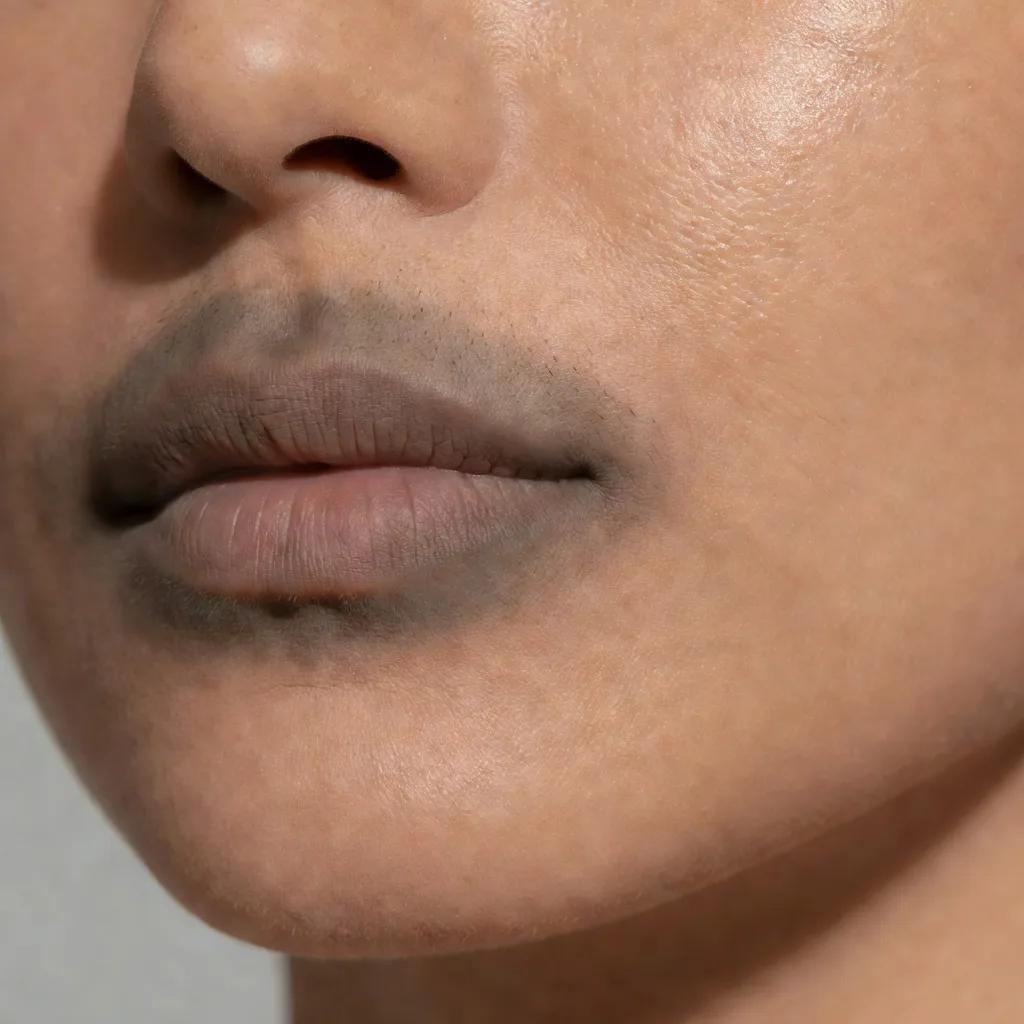
Dark Shadow Around the Mouth: Causes and How to Fade It
The rest of your face looks even, but there is a darker ring or shadow around your mouth, sometimes on the upper lip, sometimes at the corners or across the chin. It can look like a faint moustache shadow or like you have not washed your face properly, even though you have. Concealer never quite hides it.
Part of our guide to skin concerns. Start with: How to Calm Inflamed Red Patches on Your Face
A dark shadow around the mouth is usually hyperpigmentation, extra melanin in the skin. Common causes include sun exposure, irritation from lip licking, toothpaste or products, hormonal changes such as melasma, and friction or inflammation from acne and hair removal. It is more common in medium and deeper skin tones. Daily tinted sunscreen, removing irritants and a gentle fading ingredient such as azelaic acid, niacinamide or tranexamic acid help most people over several months. Harsh bleaching creams and scrubs make it worse.
Pigment cells in this area are easily triggered. The skin around the mouth is rubbed by food, drinks, towels, razors and hands, soaked by saliva and exposed to sunlight at every angle. Each small irritation can nudge pigment cells into producing more melanin, and over time the colour builds up into a visible shadow.
The American Academy of Dermatology advises that fading dark spots depends first on finding and removing the cause, then using tinted sunscreen with iron oxide daily and ingredients such as azelaic acid, retinoids or vitamin C. It also notes that most spots fade within six to twelve months once the trigger is gone, while deeper discolouration can take longer.
This guide explains the common causes, how to tell them apart, a gentle routine to fade the shadow and when a dermatologist should take a look.
Shopping these picks?
Amazon Prime members get fast, free shipping on eligible items, plus Prime Video, Amazon Music and member deals. New members can start with a free trial.
Start a free Prime trialAged 18 to 24? Prime for Young Adults comes with a longer free trial and a lower price after it.
Affiliate link: we may earn a commission at no extra cost to you.
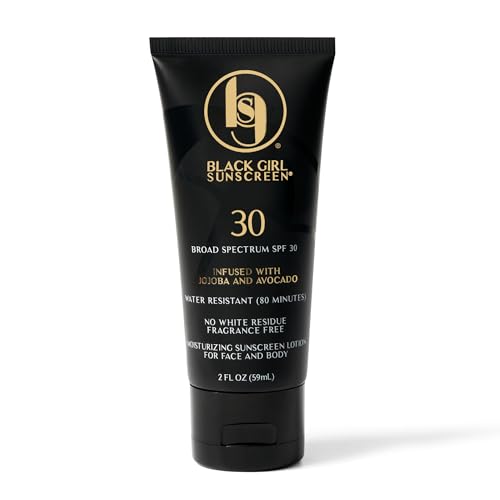
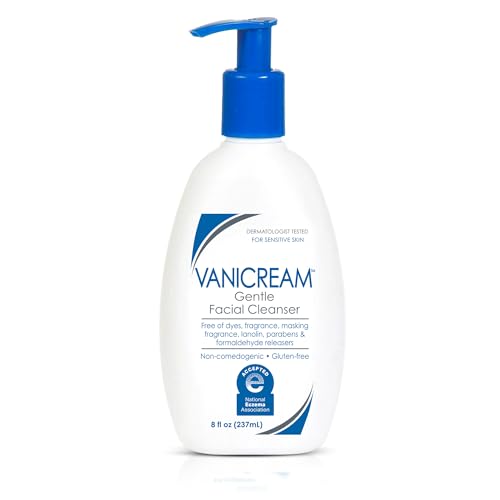
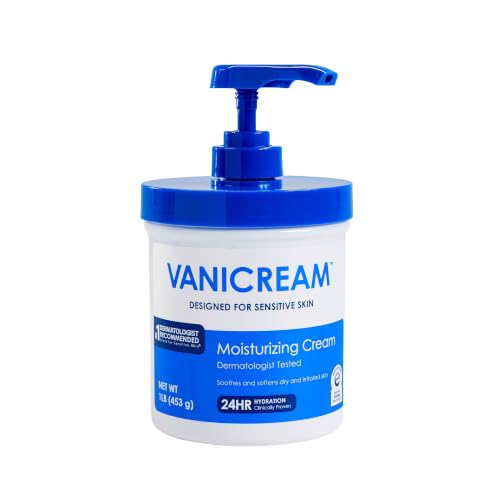
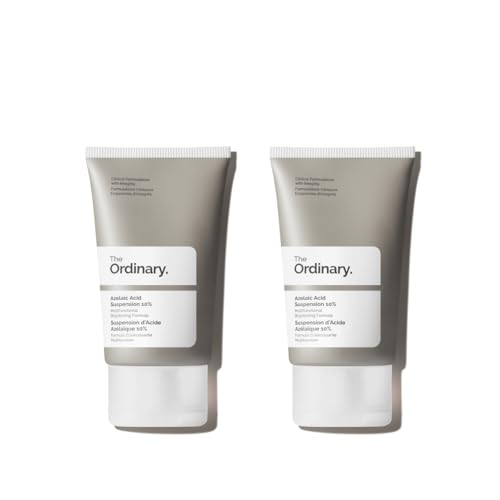
Recommended Products for Darkness Around the Mouth



Quick Answer
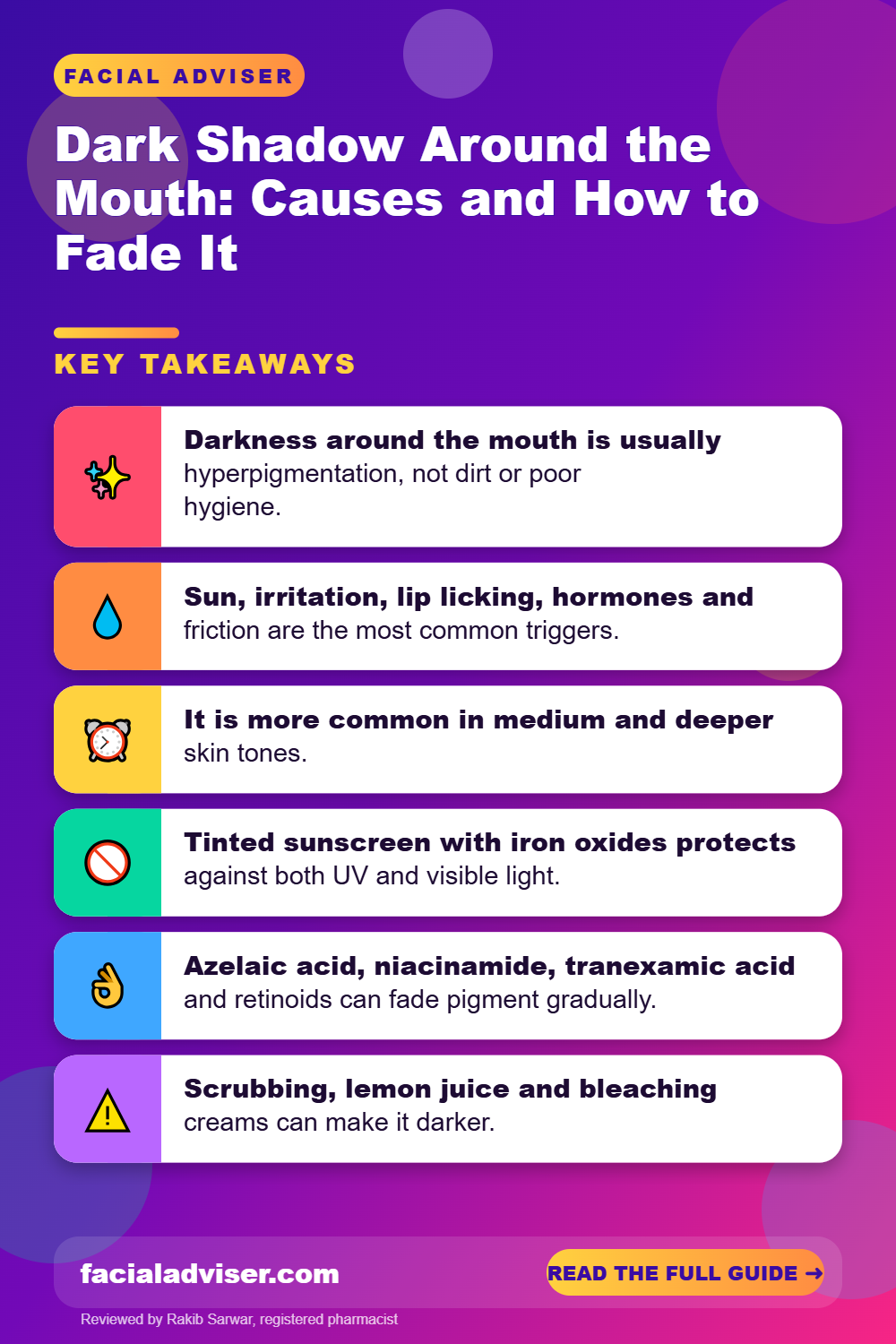
- Darkness around the mouth is usually hyperpigmentation, not dirt or poor hygiene.
- Sun, irritation, lip licking, hormones and friction are the most common triggers.
- It is more common in medium and deeper skin tones.
- Tinted sunscreen with iron oxides protects against both UV and visible light.
- Azelaic acid, niacinamide, tranexamic acid and retinoids can fade pigment gradually.
- Scrubbing, lemon juice and bleaching creams can make it darker.
- Sudden darkening with other symptoms should be checked by a doctor.
On This Page
- Common Causes of a Dark Shadow Around the Mouth
- Melasma on the Upper Lip
- How to Fade Darkness Around the Mouth
- Ingredients That Help Fade Pigment
- What Makes It Darker
- Lip Licking and the Dark Ring
- Dark Marks From Breakouts
- Hair Removal and Upper Lip Darkness
- Covering the Shadow While It Fades
- Professional Treatments
- Honest Limits
- When to See a Doctor
- Frequently Asked Questions
- Final Word
Common Causes of a Dark Shadow Around the Mouth
| Cause | What it looks like | Clue |
|---|---|---|
| Post-inflammatory hyperpigmentation | Brown or grey patches after irritation | Follows acne, eczema, licking or hair removal |
| Melasma | Symmetrical brown patches, often upper lip | Linked to hormones, pregnancy, pill, sun |
| Sun and visible light | Gradual darkening in exposed areas | Worse after summer |
| Lip-licker’s dermatitis | Dark ring right around the lips | Habit of licking; dryness |
| Friction and hair removal | Darkness on upper lip or chin | Waxing, threading, shaving, depilatory creams |
| Contact dermatitis | Darkening after rash or irritation | New toothpaste, lip product or cream |
| Medical causes | Darkening with other changes | Needs medical assessment |
In many people, more than one of these is at work. Melasma, for example, is often made worse by irritation from hair removal and by sun exposure through car windows.
Keeping a note of when the shadow first appeared, and what changed around then, such as a new contraceptive, a pregnancy, a new toothpaste or a switch to waxing, is often the fastest way to find the cause. That information is also very helpful to a dermatologist if you need one.
Melasma on the Upper Lip
Melasma causes brown or grey-brown patches, usually symmetrical, on the cheeks, forehead, nose and upper lip. It is linked to hormones and is common during pregnancy, with hormonal contraception, and in people with medium and deeper skin tones. Sun and visible light make it darker.
Upper lip melasma is often mistaken for a shadow from facial hair. It tends to return each summer and needs consistent, long-term sun protection alongside treatment.
Heat can also play a part. Some people notice their melasma darkens after hot yoga, saunas or cooking over a hot stove, even without direct sun, so keeping the face cool where possible is worth trying.
Waxing and threading on an upper lip with melasma can inflame the skin and darken the patch. Gentler hair removal methods, or asking a dermatologist for advice, can help.
How to Fade Darkness Around the Mouth
Identify and remove irritants
Stop lip licking, rinse off toothpaste, and pause any product that stings or causes redness around the mouth.
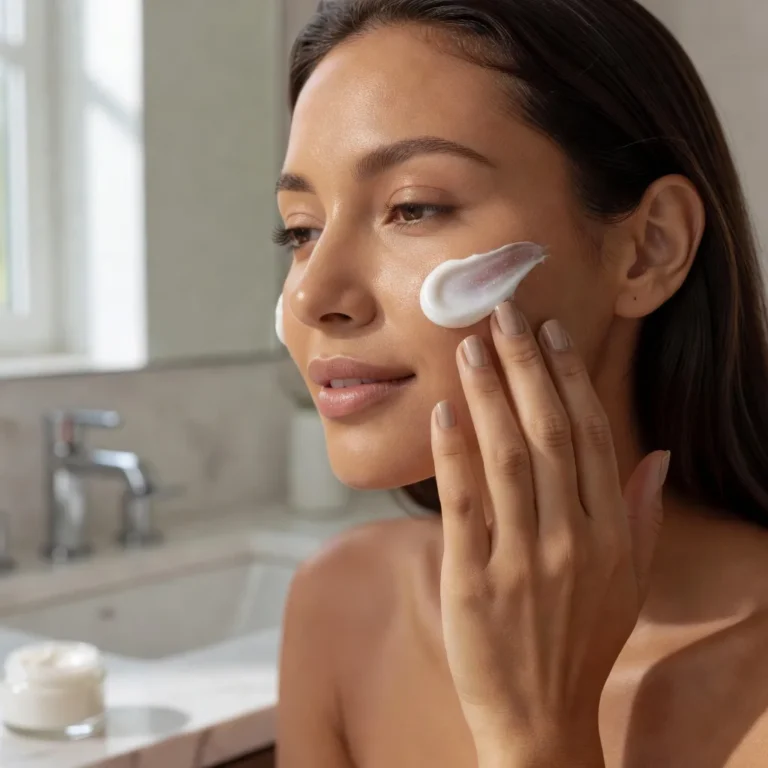
Use tinted sunscreen every morning
Choose a broad-spectrum SPF 30 or higher with iron oxides and reapply when outdoors. Include the upper lip and chin.
Protect the lips
Use a lip balm with SPF during the day.
Add one fading ingredient
Start azelaic acid, niacinamide or tranexamic acid once a day. Introduce retinoids later and slowly.
Moisturise
A fragrance-free moisturiser keeps the barrier calm, which prevents new pigment.
Be gentle with hair removal
Avoid waxing and harsh depilatory creams on the upper lip while treating pigment.
Give it three to six months
Take photos in the same light monthly to track slow progress.
Reapplying sunscreen around the mouth after eating and drinking makes a real difference, since this area loses protection faster than the rest of the face.
Ingredients That Help Fade Pigment
| Ingredient | How it helps | Notes |
|---|---|---|
| Azelaic acid | Slows melanin production, calms inflammation | Good for sensitive and acne-prone skin |
| Niacinamide | Reduces pigment transfer to skin cells | Well tolerated |
| Tranexamic acid | Targets pathways involved in melasma | Topical versions well tolerated |
| Retinoids | Speed up turnover of pigmented cells | Can irritate; start slowly |
| Vitamin C | Antioxidant, mild brightening | Can sting on irritated skin |
| Kojic acid | Inhibits melanin production | Occasional irritation |
| Hydroquinone | Strong pigment inhibitor | Use only under medical supervision |
The AAD lists azelaic acid, glycolic acid, kojic acid, retinoids and vitamin C among the ingredients that can help fade dark spots, and recommends tinted sunscreen with iron oxide to prevent new ones (AAD).
What Makes It Darker
Good Habits
- Wear tinted sunscreen daily
- Use one fading ingredient consistently
- Keep lips moisturised
- Rinse toothpaste off the skin
- Be patient
Common Mistakes
- Scrub the area
- Apply lemon juice, baking soda or toothpaste
- Use unregulated skin-lightening creams
- Wax or thread irritated skin
- Stack several strong acids at once
Avoid skin-lightening creams bought online or from market stalls. Some have been found to contain mercury or strong steroids, which can damage the skin and your health.
Lip Licking and the Dark Ring
Constant lip licking causes a dry, irritated ring around the mouth, and in medium and deeper skin tones that irritation often leaves a dark outline once it heals. Breaking the habit is essential for the colour to fade.
Keep an unflavoured lip balm handy and use it whenever you feel the urge to lick. Our guide to dry skin around the mouth covers the dryness side of this problem.
Children and teenagers are especially prone to the licking habit in cold weather. Applying a plain ointment around the mouth at bedtime and after meals breaks the cycle of dryness and licking, and the dark ring usually fades gradually once the skin stops being irritated.
Dark Marks From Breakouts
Pimples along the chin and around the mouth often leave brown or dark marks, especially in deeper skin tones. Treating the acne itself is the first step, or new marks will keep appearing. Our guides to jawline and chin pimples and marks that won’t fade explain both parts of the process.
While marks are fading, avoid picking or squeezing spots around the mouth, and use a hydrocolloid patch on new ones if you are tempted. Each picked spot is another round of inflammation, and in pigment-prone skin every round can leave a mark that lasts months. Starting a retinoid such as adapalene helps on both fronts, since it treats acne and speeds up fading of the marks it leaves behind.
Hair Removal and Upper Lip Darkness
Waxing, threading, epilating and depilatory creams can all irritate the upper lip. In people prone to pigment, that irritation can darken the area over time, which then looks like a shadow even after the hair is removed.
- Trim or use a facial razor gently instead of waxing while treating pigment.
- If you use a depilatory cream, patch test first and never leave it on longer than directed.
- Apply a soothing moisturiser after hair removal and avoid sun on freshly treated skin.
- Ask a dermatologist about laser hair removal suited to your skin tone if hair is the main concern.
Covering the Shadow While It Fades
Makeup can make the waiting period easier. The key is colour correction rather than piling on concealer, which tends to look grey or cakey around a mobile area like the mouth.
- Use a peach or orange colour corrector on grey or brown shadows in medium and deeper skin tones, or a light peach shade in fairer skin.
- Tap a thin layer on with a fingertip and let it set for a minute.
- Follow with a concealer or foundation that matches your skin, pressed on rather than rubbed.
- Set lightly with powder only if needed, since heavy powder settles into lines around the mouth.
- Remove everything gently at night with a mild cleanser.
Choose non-comedogenic, fragrance-free products where possible, since irritation from makeup can add to the pigment you are trying to fade.
Professional Treatments
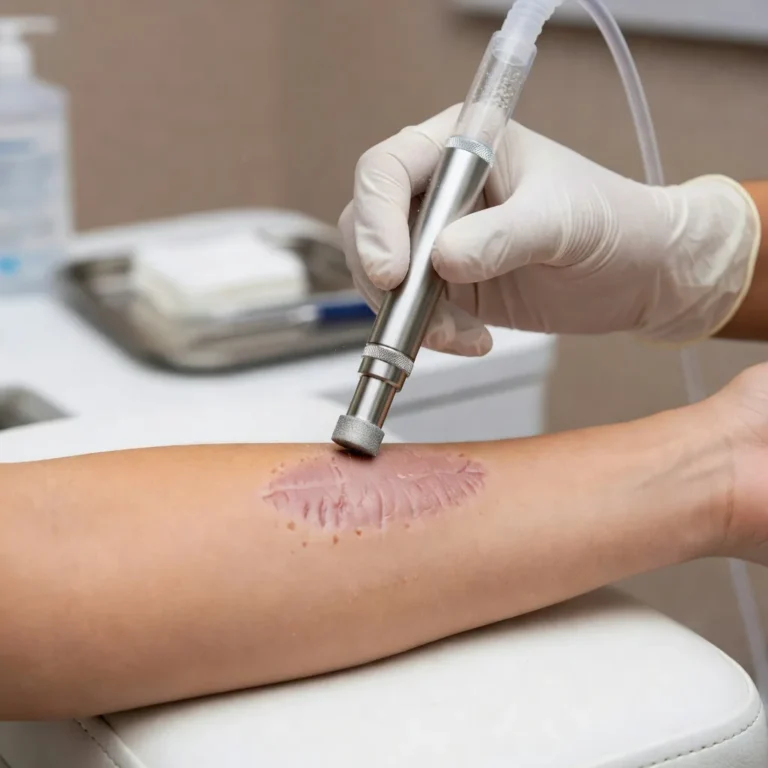
If home care has not helped after three to six months, a dermatologist can offer stronger options. These may include prescription creams such as hydroquinone or combination creams, chemical peels chosen carefully for your skin tone, and in some cases lasers or oral tranexamic acid for melasma.
Because some treatments can cause more pigment in deeper skin tones if done too aggressively, it is important to see someone experienced with your skin type.
Professional treatments work best alongside the home basics, not instead of them. Without daily sunscreen and removal of the original trigger, even expensive procedures tend to give short-lived results, and pigment often returns within a season.
Honest Limits
Pigment fades slowly. Even with good care, it often takes three to six months to see a clear change, and melasma can return with sun exposure or hormonal changes. Keeping up sun protection is what maintains results.
Some natural variation in colour around the mouth is normal, especially in deeper skin tones, and does not need treatment unless it bothers you.
It is also common for the area around the mouth and chin to be slightly darker than the cheeks simply because of how light and shadow fall on the lower face, particularly under overhead lighting. Before starting treatment, look in daylight and compare with photos taken outdoors, where natural light shows the true difference in colour.
When to See a Doctor
- Darkening appeared suddenly or is spreading quickly.
- You also have darkening in skin folds, such as the neck or armpits, which can be linked to insulin resistance.
- Darkening comes with tiredness, weight loss, low blood pressure or darkening elsewhere on the body.
- A single dark spot is changing in shape, size or colour.
- Home care has not helped after three to six months.
This article is for general information and does not replace professional medical advice. See a doctor or dermatologist for new or changing pigmentation.
Frequently Asked Questions
Why is the skin around my mouth darker?
Usually hyperpigmentation from sun, irritation, lip licking, hormones or friction.
Is darkness around the mouth caused by poor hygiene?
No. It is extra pigment in the skin and cannot be washed off.
Can melasma appear on the upper lip?
Yes. Upper lip melasma is common and often mistaken for a hair shadow.
What is the best treatment for dark skin around the mouth?
Daily tinted sunscreen plus a fading ingredient such as azelaic acid, niacinamide or tranexamic acid.
Can lip licking cause darkness around the mouth?
Yes. The repeated irritation can leave a dark ring, especially in deeper skin tones.
Does waxing darken the upper lip?
It can, if it irritates the skin in people prone to pigmentation.
How long does it take to fade?
Often three to six months or more; melasma can take longer and may return.
Should I use lemon juice to lighten it?
No. It can irritate the skin and make pigment worse.
Is hydroquinone safe?
It can be effective but should be used under medical supervision.
When should I worry about dark skin around the mouth?
If it appears suddenly, spreads, or comes with other symptoms or darkening elsewhere, see a doctor.
Final Word
A dark shadow around the mouth is usually hyperpigmentation caused by sun, irritation, lip licking, hormones or hair removal. It is common, especially in medium and deeper skin tones, and it is not a sign of poor hygiene.
Find and remove the trigger, wear tinted sunscreen every day, protect your lips and use one gentle fading ingredient consistently for several months. Avoid scrubs and bleaching creams, and see a dermatologist if the darkening is sudden, spreading or not improving.

Written by
Registered pharmacist and founder of Facial Adviser. Rakib's pharmacy training covers how skincare actives work and interact; a later course in cosmetology turned that into a focus on facial treatments and skincare products. He plans, researches and edits every guide on the site and checks health claims against sources such as the American Academy of Dermatology, the FDA and the NIH. He is not a dermatologist; see the Editorial Policy and Medical Disclaimer.
About · Editorial policy · How we choose products · Medical disclaimer · Contact
Keep reading: Redness, puffiness and uneven tone
- How to Calm Inflamed Red Patches on Your Face
- Facial Tightness After Washing Face: Why It Happens and How to Stop It
- Why Cheeks Get Hot Suddenly: Causes of Facial Flushing and What Helps
- How to Soothe Post-Facial Irritation: Calm Redness and Know What Is Normal
- Facial Numbness After a Nerve Block or Dental Work: What Is Normal
- Facial Discoloration After Sunburn: Why It Happens and How to Fade It
- How Can I Make My Pores Less Visible?
- Are Facials Good for Acne?