Face Yoga: Does It Work? What the Evidence Says
Face yoga has gone from a niche trend to a daily habit for many people. Videos show people pulling, pressing and stretching their faces in the hope of firmer cheeks, a sharper jawline and fewer lines.
Part of our guide to body and other. Start with: 10 Best Body Tools for Skincare and Massage (2026): Smooth and Relax
Books, apps and online courses promise results in a few weeks, and some claim to rival injectables or facelifts. It is easy to see why the idea is appealing.

The idea behind it is simple. Facial skin sits on top of more than forty small muscles, and exercising them might build volume, improve tone and change how the face looks, much like exercising other muscles.
Black Friday is coming: shop the deals with Prime
It is a pleasant thought, but facial anatomy is different from the biceps or quadriceps, and the research is much thinner than the marketing suggests.
The honest picture is mixed. A small number of studies suggest modest improvements in cheek fullness and the appearance of age after months of facial exercise. Dermatologists also point out that repeated expressions can deepen some lines, and that sunscreen, sleep and avoiding smoking matter far more for aging skin than any exercise routine.
In this guide we explain what face yoga is, what the evidence actually shows, possible benefits and risks, who should be careful, and a gentle way to try it.
We also list seven books and tools people often use alongside it, described from their listings, so check each product before you buy. None of them are required for face yoga.
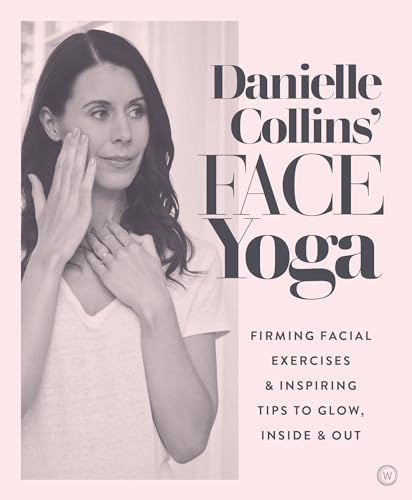
Face Yoga Books and Tools People Often Use




The Short Version
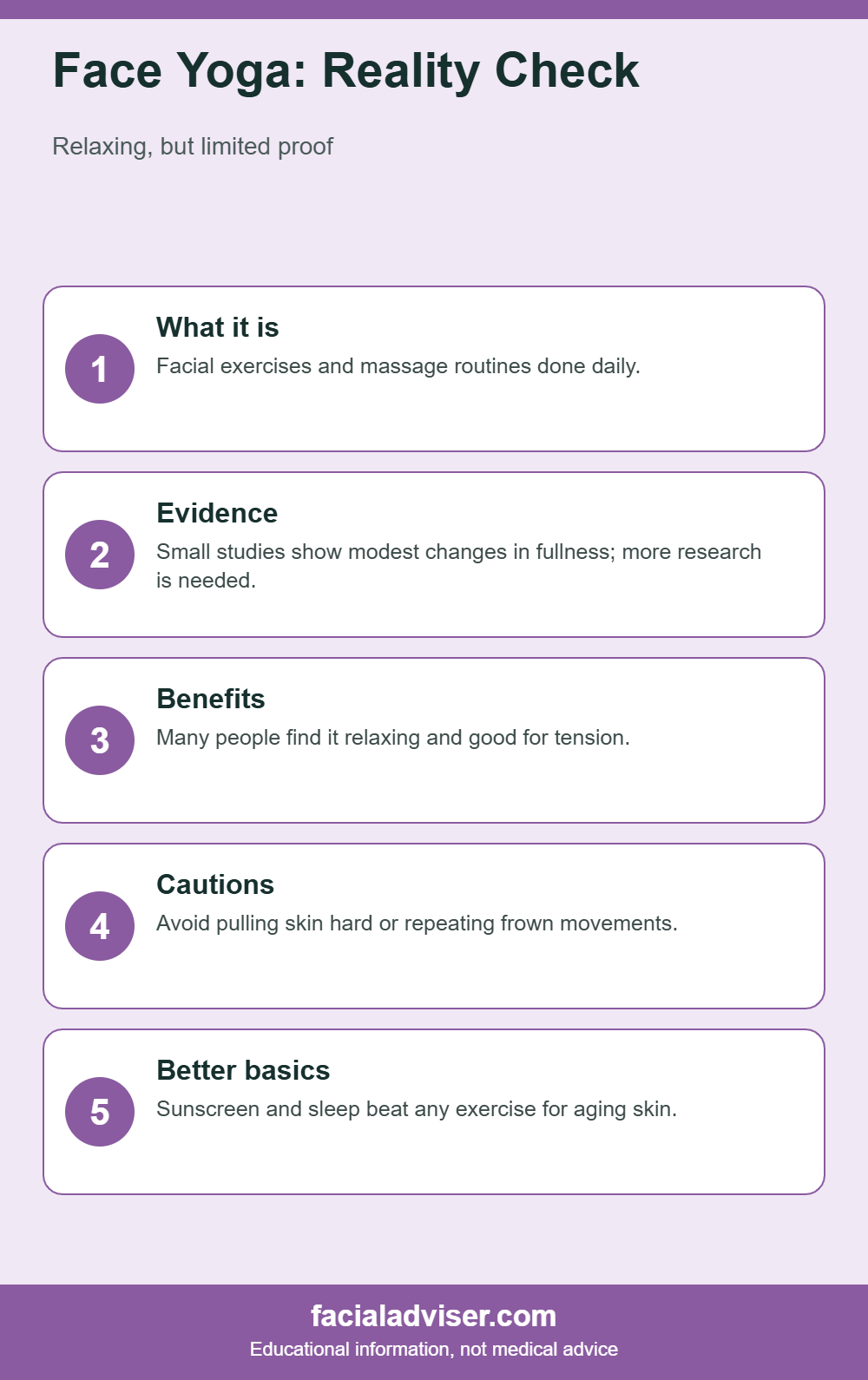
- Face yoga is a set of facial exercises and massage movements done regularly.
- A small study found modest improvements in cheek fullness after about 20 weeks, but it was small and not strongly controlled.
- Evidence for dramatic lifting or wrinkle removal is weak.
- Pulling and repetitive frowning can strain skin and may deepen lines.
- Many people enjoy it as a relaxing ritual that eases facial tension.
- Sunscreen, not smoking and sleep do more for aging skin than exercises.
- See a doctor for facial pain, sudden changes or jaw problems.
Contents
- What Face Yoga Is
- What the Evidence Says
- Possible Benefits
- Risks and Downsides
- A Gentle Routine to Try
- Do You Need Tools or Books
- What Does More for Aging Skin
- Face Yoga vs Other Anti-Aging Options
- Who May Enjoy It and Who Should Skip
- Common Mistakes With Face Yoga
- Honest Limits
- When to See a Professional
- Your Questions, Answered
- Summing Up
What Face Yoga Is
Face yoga is a collection of exercises, stretches and massage movements for the face, neck and jaw. Routines may include puffing the cheeks, lifting the brows, smiling against resistance, pressing along the jawline and massaging with the fingers or a tool.
The goal is to strengthen or relax facial muscles and improve circulation. Some versions borrow from yoga and breathing practices, while others focus on lymphatic drainage or gua sha.
There are many methods, books and apps, and each makes different promises. Few have been tested in controlled studies, so it is hard to compare them.
Face yoga is not the same as gua sha, though the two are often mixed together. Gua sha uses a smooth tool to press or scrape along the skin, while face yoga relies on muscle movement. Both are optional extras, and neither has strong evidence for permanent change.
What the Evidence Says
The best-known study followed 27 women aged 40 to 65 who did a 30-minute facial exercise program for about 20 weeks. Dermatologists who reviewed their photos rated the upper and lower cheeks as fuller and the faces as looking slightly younger, around three years younger on average.
That sounds encouraging, but the study was small, had no control group and relied on photographs and ratings. It does not prove that exercise reverses aging, and results may not apply to everyone.
| Claim | Evidence level | Our take |
|---|---|---|
| Cheek fullness improves | Small study, modest effect | Possible, needs more research |
| Wrinkles disappear | Weak | Do not expect this |
| Jawline becomes sharper | Mostly anecdotal | Unproven |
| Relaxes tension | Plausible, user reports | Reasonable |
| Replaces injectables | No evidence | No |
More research is needed. Until then, it is fair to treat face yoga as a low-cost habit with possible small benefits, not a replacement for proven skin care or medical treatments.
Possible Benefits
Beyond the small study, there are plausible reasons some people like face yoga. It can ease tension in the jaw and forehead, which many of us hold without realizing. Gentle massage may improve circulation and give a temporary glow.
It also encourages a daily pause. Taking five minutes to slow down, breathe and care for your skin can feel good, and that may be a benefit in itself.
Some people find that stretching the neck and shoulders alongside facial movements helps with posture and tension headaches. These effects are mostly anecdotal, but they are low risk when done gently.
Whatever you decide, treat it as a pleasant habit rather than a treatment. If you enjoy it, keep it gentle. If it feels like a chore, you are free to skip it and put the time into sleep, sunscreen or a walk.
Risks and Downsides
Skin is not a rubber band, and repeated tugging can stress it. Strong pulling, stretching or rubbing may irritate skin, especially without lubrication.
Repetitive expressions, such as frowning or squinting, can deepen lines over time. Some face yoga routines include these expressions, which may work against the goal. Pay attention to movements that create sharp creases and avoid them.
Aggressive massage or tools can cause redness, bruising or breakouts, particularly if you have acne, rosacea or eczema. If you have jaw pain, a clicking jaw or temporomandibular joint problems, check with a doctor or dentist before adding jaw exercises.
If you notice headaches, jaw soreness, or new tightness after sessions, reduce the intensity or stop. Persistent symptoms deserve a check with a doctor or dentist.
A Gentle Routine to Try
If you want to try face yoga, keep it gentle and short.
Start with clean hands and face
Wash your hands and cleanse your face. Use a little facial oil or moisturizer so your fingers glide.
Relax the jaw and forehead
Take a deep breath and let your jaw drop slightly. Smooth the forehead with light strokes upward.
Lift and release the cheeks
Smile gently, hold for five seconds, then release. Repeat five times.
Massage along the jaw
Use your knuckles or fingertips with light pressure from the chin toward the ears.
Finish with the neck
Tilt your head side to side and stretch the neck gently.
Keep sessions to five or ten minutes. Stop if any movement causes pain or creases that look sharp.
Do not pull or drag the skin hard, and avoid facial exercises on irritated, sunburned or injured skin.
Do the routine in front of a mirror at first so you can check that your expression stays relaxed and that you are not squinting or creasing the forehead.
After a few weeks the movements will feel natural, and you can drop the mirror and do them while watching TV or waiting for your coffee. If you skip days, simply start again without trying to catch up.
Pair the routine with good basics: drink enough water, avoid sleeping on the same side every night if you can, and apply sunscreen each morning. Together these habits support healthy-looking skin far more than any single exercise.
Do You Need Tools or Books
You do not need any tools. Hands are enough for most routines. Gua sha stones, rollers and brushes can feel pleasant and add a ritual, but there is no strong evidence that they change facial structure.
Books and apps can help you learn movements and keep a routine. If you choose one, look for authors who are cautious about claims and who warn against pulling or harsh pressure.
Clean any tools after use, and do not share them. Dirty tools can transfer oil and bacteria to the skin.
What Does More for Aging Skin
Evidence is much stronger for a few simple habits. Daily broad-spectrum sunscreen reduces the sun damage that causes most visible aging. Not smoking protects collagen, and enough sleep supports repair.
Topical retinoids have decades of research for fine lines and texture. A gentle moisturizer helps skin look smoother, and a balanced diet and regular exercise support overall health.
If you want to address volume loss or deeper lines, a dermatologist can discuss options such as fillers, neuromodulators or devices, with their risks and benefits explained.
If your concern is sagging or volume loss that bothers you, a consultation costs little and gives you information. You are never obligated to treat anything, and many people decide that natural aging is fine.
Face Yoga vs Other Anti-Aging Options
Comparing face yoga with other options helps put it in perspective. The table below shows where each approach stands.
| Option | Evidence | Effort and cost | Notes |
|---|---|---|---|
| Daily sunscreen | Strong | Low | Most important step for aging skin |
| Topical retinoids | Strong | Low to medium | Can irritate; avoid in pregnancy |
| Moisturizer | Moderate | Low | Improves comfort and appearance |
| Face yoga | Limited | Low time, no cost | May add subtle fullness; relaxing |
| Fillers or neuromodulators | Strong for specific uses | High cost | Needs a trained provider |
None of these are mutually exclusive. Face yoga can be a pleasant extra, but it should not take the place of the basics.
Who May Enjoy It and Who Should Skip
Do
- People who enjoy a short daily self-care ritual
- Those who carry tension in the jaw and forehead
- Anyone curious about a low-cost, low-tech habit
- People who prefer gentle massage to devices
- Those who combine it with sunscreen and good skincare
Don’t
- People with acute facial injuries, infections or recent procedures
- Anyone with jaw joint problems without medical advice
- Those with active acne, rosacea or eczema who find massage irritating
- People who expect dramatic anti-aging results
- Anyone who pulls or tugs the skin hard
If you have had fillers, Botox or surgery, ask your provider before adding facial exercises or massage.
Common Mistakes With Face Yoga
The most common mistake is pulling or stretching the skin hard. Gentle movement is enough, and force can irritate skin or make it feel tight.
Another is doing the same expression again and again. If a movement creates sharp lines at the forehead or between the brows, change it or skip it.
Many people also skip sunscreen while spending time on a routine they hope will improve aging skin. Exercises cannot protect you from UV damage.
Finally, some people compare themselves to filtered photos or heavily edited videos. Real changes, if any, are small and gradual, so judge them with your own photos taken in the same light every few weeks.
Honest Limits
Face yoga cannot change bone structure, remove deep wrinkles or replace professional treatments. Results, if any, are subtle and take months.
We have not tested every product, and the descriptions here come from listings and general knowledge. Your experience may differ.
Be cautious of programs that promise to erase lines in days, or that sell expensive courses with before-and-after photos taken under different lighting.
When to See a Professional
See a doctor or dermatologist if you have facial pain, numbness, sudden asymmetry, swelling, or a skin concern that does not improve. Jaw pain or clicking may need a dentist or physician.
This article is for general information and is not medical advice. Rakib Sarwar is a registered pharmacist with a cosmetology course, not a dermatologist. Talk to a doctor or dermatologist about facial pain or persistent skin concerns.
Your Questions, Answered
Does face yoga really work?
Small studies suggest modest improvements in cheek fullness, but evidence for lifting or removing wrinkles is weak.
How long does face yoga take to show results?
Studies lasted about 20 weeks, and any change is subtle.
Can face yoga cause wrinkles?
Repetitive frowning or tugging may deepen lines. Choose gentle, relaxed movements.
Is face yoga safe?
It is generally low risk if done gently, but stop if you feel pain or irritation.
How often should I do face yoga?
Short sessions of five to ten minutes, a few days a week, are common.
Do I need tools like gua sha for face yoga?
No. Hands are enough.
Can face yoga replace Botox or fillers?
No. It has not been shown to give comparable results.
Does face yoga help double chin?
There is little evidence. Weight, genetics and anatomy play bigger roles.
Can I do face yoga with acne?
Gentle movements may be fine, but avoid massage on inflamed areas.
When should I see a doctor?
See a doctor for pain, numbness or sudden changes in your face.
Summing Up
Face yoga is a low-cost, low-risk habit that may help you relax and could give subtle changes in cheek fullness over time. Keep it gentle, avoid pulling, and do not expect dramatic results.
For skin aging, daily sunscreen and proven treatments matter more, and a dermatologist can help with specific concerns.

Written by
Registered pharmacist and founder of Facial Adviser. Rakib's pharmacy training covers how skincare actives work and interact; a later course in cosmetology turned that into a focus on facial treatments and skincare products. He plans, researches and edits every guide on the site and checks health claims against sources such as the American Academy of Dermatology, the FDA and the NIH. He is not a dermatologist; see the Editorial Policy and Medical Disclaimer.
About · Editorial policy · How we choose products · Medical disclaimer · Contact
Keep reading: Body care and more
- 10 Best Body Tools for Skincare and Massage (2026): Smooth and Relax
- Ozempic Face: Why GLP-1 Weight Loss Changes Your Face and What Helps
- Is a Muscle Massage Gun Worth It? What the Evidence Says and Who Benefits
- Jeroboam Gozo Perfume: Notes, Wear and Who It Suits
- 10 Best Massage Chairs Under $2,000 (2026): Full-Body Picks for Home
- 10 Best Massage Chairs Under $500 (2026): Budget Recliners With Heat
Build a spa-like routine with ad-free music