
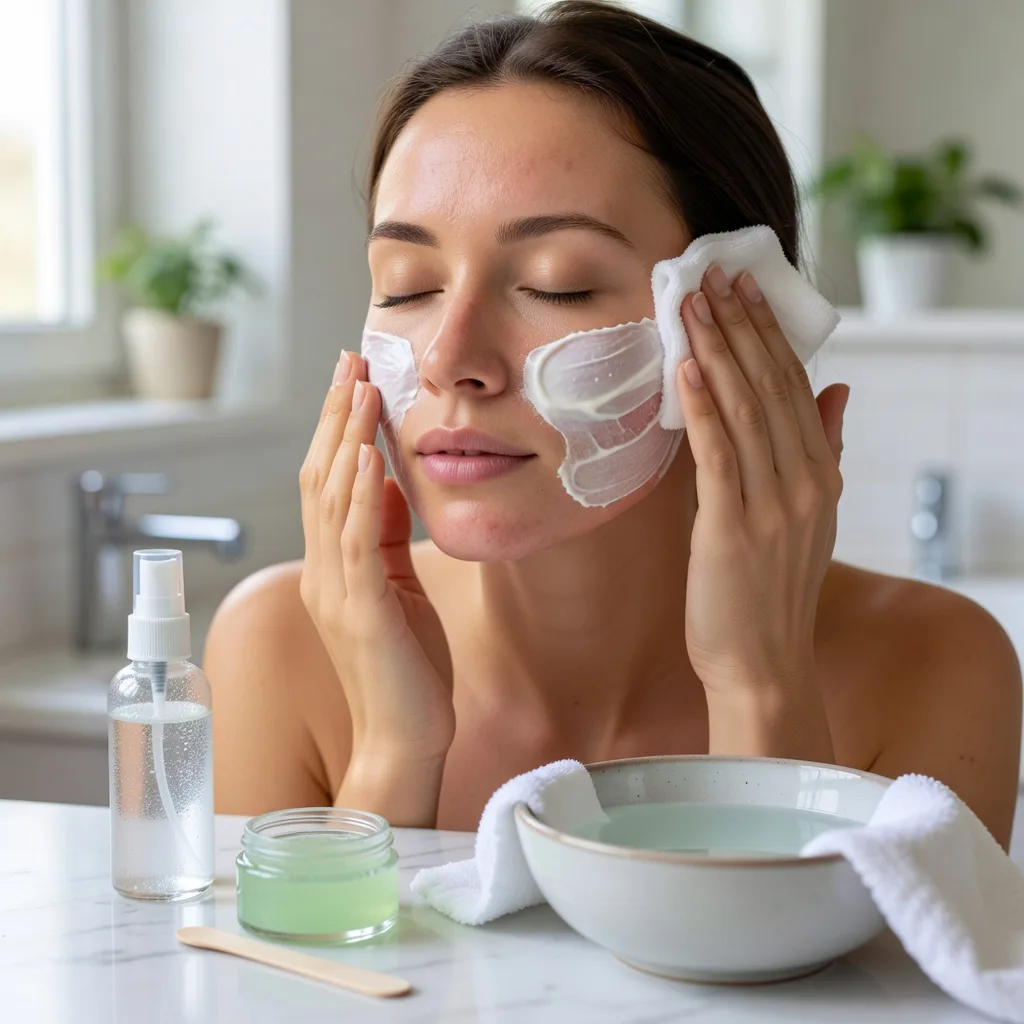
How to Soothe Post-Facial Irritation: Calm Redness and Know What Is Normal
You leave the salon with a fresh, clean face, and by the evening your cheeks look pink, your skin feels warm or a few spots have appeared. Some reaction after a facial is common, especially after extractions, peels, exfoliation or massage. The question is how to calm it down without making it worse, and how to tell a normal reaction from one that needs attention.
Part of our guide to skin concerns. Start with: How to Calm Inflamed Red Patches on Your Face
To soothe post-facial irritation, keep your routine very simple for 48 to 72 hours: rinse or wash with lukewarm water and a gentle, fragrance-free cleanser, apply a plain moisturiser or a panthenol or cica balm, and cool the skin with a clean, cold compress or chilled gel mask for a few minutes at a time. Avoid heat, sweating, exfoliants, retinoids, fragrance and makeup for at least a day, and protect your skin with a mineral sunscreen. Mild redness, warmth and slight tightness usually settle within hours to a day or two. Swelling, blistering, oozing, spreading rash or pain that gets worse is not normal and should be reported to your provider or a doctor.
In short: cool, cleanse gently, moisturise, protect from sun and do nothing else until your skin settles.
The American Academy of Dermatology explains that redness and peeling are expected after chemical peels and that sun protection and following aftercare instructions are important while skin heals.
This guide covers normal and abnormal reactions, a step-by-step soothing routine, what to skip and when to get help.
Shopping these picks?
Amazon Prime members get fast, free shipping on eligible items, plus Prime Video, Amazon Music and member deals. New members can start with a free trial.
Start a free Prime trialAged 18 to 24? Prime for Young Adults comes with a longer free trial and a lower price after it.
Affiliate link: we may earn a commission at no extra cost to you.
Recommended Products to Soothe Skin After a Facial
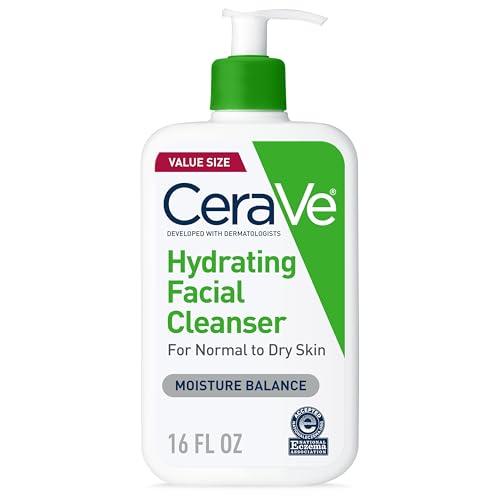
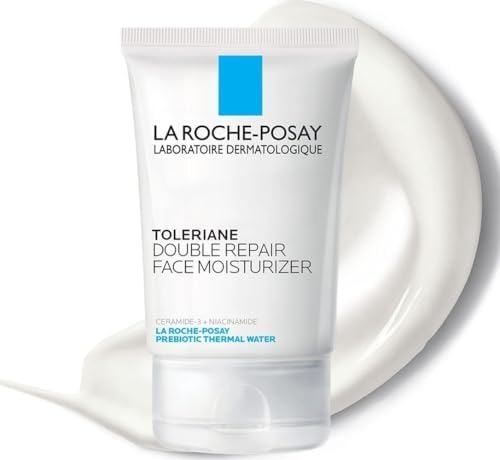
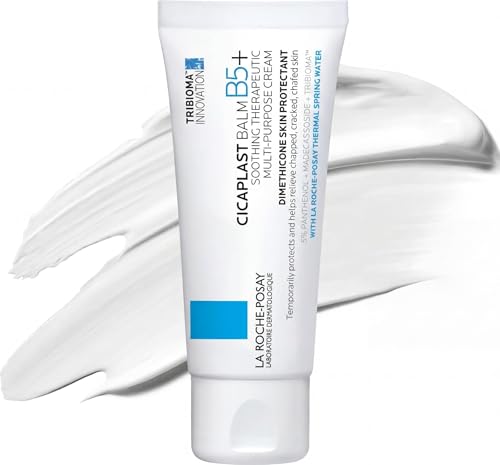

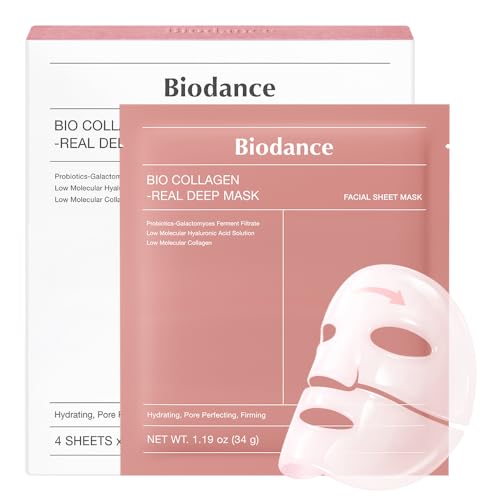
![SKIN1004 [Hudson's Pick] Centella Ampoule, Korean Face Serum, 3.3...](https://m.media-amazon.com/images/I/31Kxg2RcOgL.jpg)

What to Know First
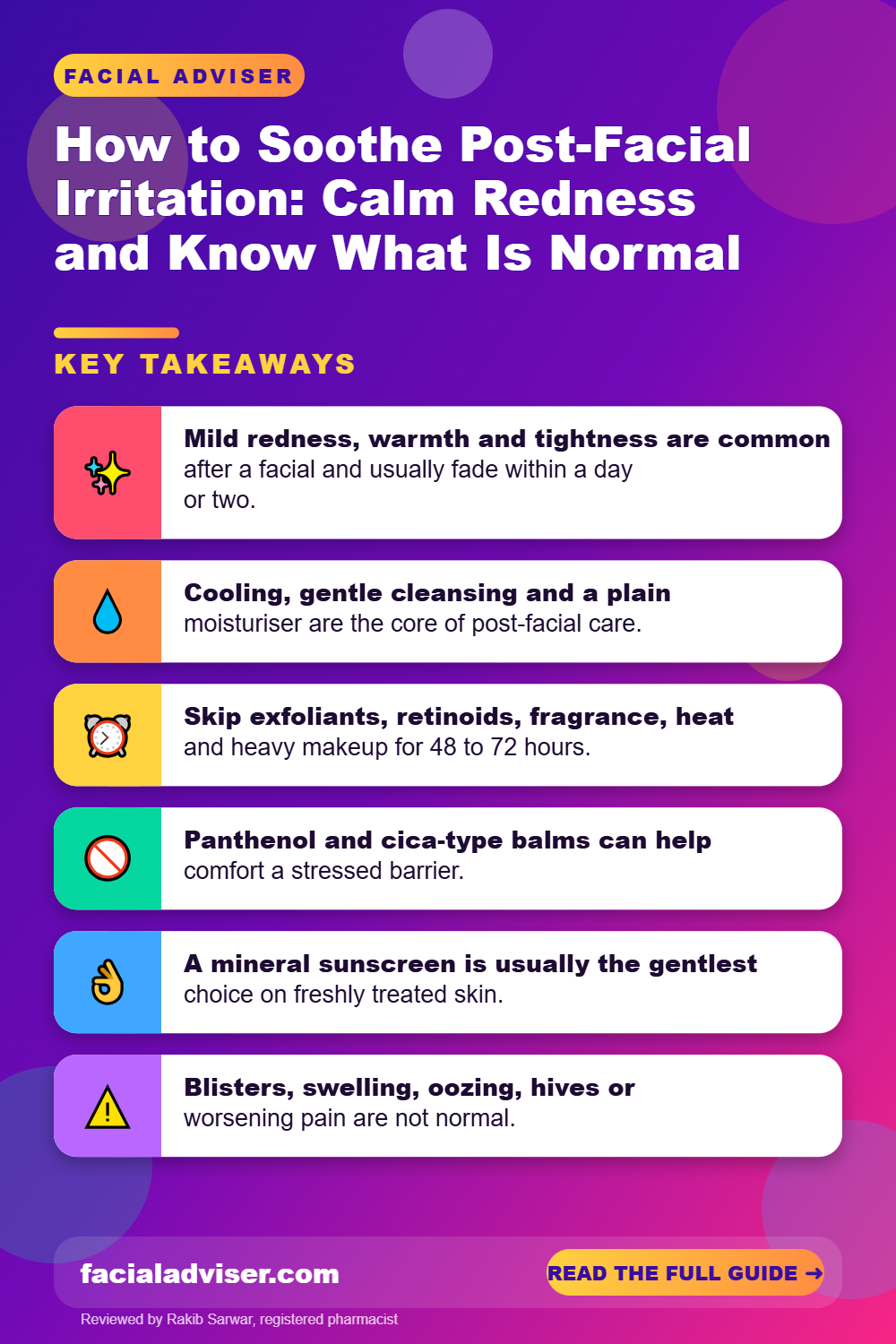
- Mild redness, warmth and tightness are common after a facial and usually fade within a day or two.
- Cooling, gentle cleansing and a plain moisturiser are the core of post-facial care.
- Skip exfoliants, retinoids, fragrance, heat and heavy makeup for 48 to 72 hours.
- Panthenol and cica-type balms can help comfort a stressed barrier.
- A mineral sunscreen is usually the gentlest choice on freshly treated skin.
- Blisters, swelling, oozing, hives or worsening pain are not normal.
- Tell your provider about any reaction so they can adjust your next treatment.
Contents
- Why Skin Gets Irritated After a Facial
- Normal vs Abnormal Reactions After a Facial
- Cooling the Skin Safely
- How to Soothe Your Skin in the First 72 Hours
- Which Soothing Ingredients Help
- What to Avoid for 48 to 72 Hours
- Makeup and Sunscreen After a Facial
- Irritation or Allergic Reaction?
- Aftercare by Type of Facial
- Honest Limits: What Soothing Can and Cannot Do
- When to See a Dermatologist or Call Your Provider
- Your Questions, Answered
- The Bottom Line
Why Skin Gets Irritated After a Facial
A facial can involve cleansing, steaming, exfoliation, extractions, massage, masks and sometimes acids or devices. Each step stresses the skin a little. Steam and massage increase blood flow, exfoliation removes part of the outer layer, and extractions put pressure on individual pores. The result can be temporary redness and sensitivity even when the treatment was done well.
Reactions are more likely if you have sensitive skin, rosacea or eczema, if you used a retinoid or exfoliant in the days before, or if the facial included a stronger peel. Fragrance, essential oils and some botanical extracts in salon products can also trigger irritation or, less commonly, allergy.
Normal vs Abnormal Reactions After a Facial
Most post-facial reactions are mild and short-lived. The table below is a general guide to what is usually expected and what deserves a call.
| Reaction | Usually normal? | Typical course | What to do |
|---|---|---|---|
| Pink or flushed skin | Yes | Fades within hours to a day | Cool, moisturise, avoid heat |
| Warmth or tightness | Yes | Settles within a day or two | Plain moisturiser, skip actives |
| Small marks from extractions | Yes | Fade over a few days | Leave alone, do not pick |
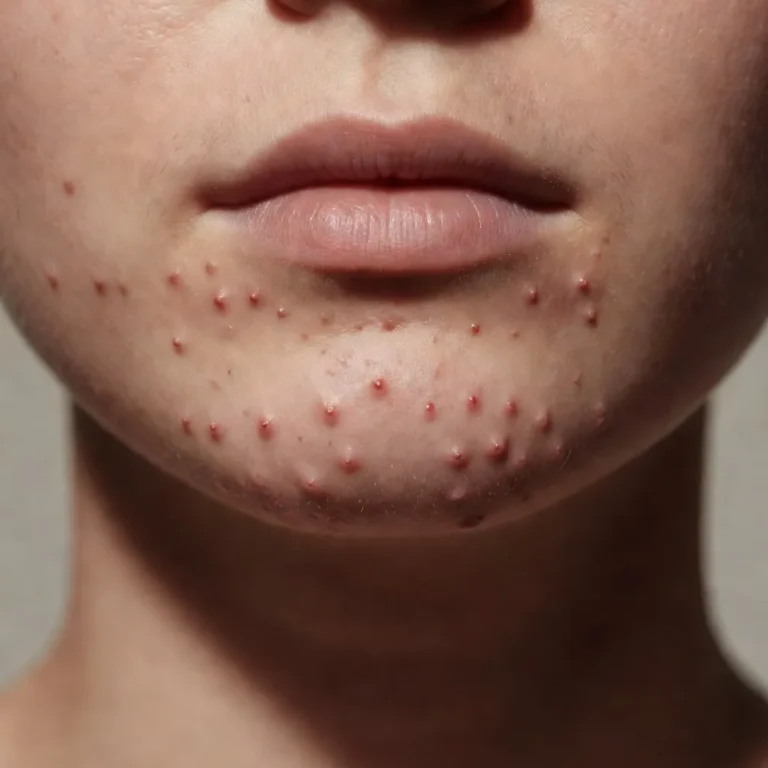
| A few small spots | Often | Can appear in the first days | Do not squeeze, keep routine simple |
| Light flaking after a peel | Yes, if a peel was used | Several days | Moisturise, do not peel it off |
| Stinging that worsens | No | Should not build over time | Rinse off products, call provider |
| Swelling, hives or intense itch | No | May signal allergy | Seek medical advice promptly |
| Blisters, crusting or oozing | No | Needs assessment | Contact provider or doctor |
Spots in the first few days are a common worry. Our guide on whether you will break out after a facial explains why this happens and how long it usually lasts.
Cooling the Skin Safely
Cooling is one of the quickest ways to take the heat out of flushed skin. It narrows surface blood vessels for a short time and can ease the warm, tight feeling.
- Use a clean cloth soaked in cool water and wrung out, held on the skin for a few minutes.
- A chilled hydrogel mask or a cold gel pack wrapped in a thin cloth works well.
- An ice roller or cooling globes kept in the fridge can be rolled lightly over the face.
- Keep sessions short, around five to ten minutes, and take breaks.
- Clean any tool before and after use, because freshly treated skin is more vulnerable.
Never put ice directly on the skin or hold a freezing object in one place. On freshly exfoliated or peeled skin, extreme cold can damage the surface. Always use a cloth barrier or a fridge-cold rather than freezer-cold tool, and stop if it stings.
How to Soothe Your Skin in the First 72 Hours
This simple routine suits most people after a standard facial. Always follow any specific aftercare your provider gave you first.
Wait before washing
If possible, leave the skin alone for the rest of the day, or rinse gently with lukewarm water in the evening.
Cleanse gently
Use a mild, fragrance-free cleanser with your fingertips, no brushes, cloths or scrubs, and pat dry.
Cool if warm
Hold a cool compress or chilled gel mask on flushed areas for a few minutes.
Apply a soothing layer
Smooth on a fragrance-free moisturiser or a thin layer of a panthenol or cica balm.
Protect in the morning
Apply a broad-spectrum mineral sunscreen and stay out of strong sun.
Keep it minimal
Repeat the same routine morning and night for two to three days before adding anything else.
Reintroduce slowly
Bring back actives one at a time once your skin feels normal again.
Which Soothing Ingredients Help
You do not need special products to recover from a facial, but choosing the right texture and ingredients makes a difference. Look for short ingredient lists and no added fragrance.
| Ingredient or product | How it may help | Notes |
|---|---|---|
| Panthenol (provitamin B5) | Attracts water and supports barrier comfort | Common in balms and creams |
| Centella asiatica (cica) | Traditionally used to calm skin | Some people react to plant extracts |
| Ceramides and glycerin | Help restore the moisture barrier | Good in simple moisturisers |
| Petrolatum-based ointment | Seals in moisture on dry or flaky patches | Use a thin layer; can feel heavy |
| Zinc oxide sunscreen | Physical sun filter often tolerated by sensitive skin | May leave a slight white cast |
If your skin feels tight or stings with everything, focus on repairing the barrier first. Our guide on how to repair your moisture barrier explains a stripped-back routine in more detail.
Aloe vera gel is popular after treatments, but some gels contain alcohol, fragrance or preservatives that sting on sensitive skin. If you use it, choose a plain, fragrance-free formula and patch test it first.
What to Avoid for 48 to 72 Hours
The first few days after a facial are about not adding stress. Most irritation that lingers is caused by going back to a full routine too soon.
Do
- Use lukewarm water and pat dry
- Wear a mineral sunscreen daily
- Sleep on a clean pillowcase
- Keep hands off your face
- Drink water and rest
Don’t
- Do not use retinoids, acids or scrubs
- Do not use saunas, steam rooms or hot yoga
- Do not do intense workouts that make you sweat heavily
- Do not pick at spots or flakes
- Do not apply fragranced products or heavy makeup
Swimming pools, hot showers aimed at the face and waxing or threading on treated areas are also best avoided for a couple of days. For a fuller checklist, see what you should not do after a facial.
Makeup and Sunscreen After a Facial
Many providers suggest waiting at least 24 hours before wearing makeup, and longer after peels or extractions. Makeup applied over freshly treated skin can sting, and brushes or sponges that are not clean can introduce bacteria to open pores.
Sunscreen is the exception. Freshly exfoliated skin burns more easily, so protection matters. A mineral sunscreen with zinc oxide or titanium dioxide is often gentler at this stage. Apply enough to cover the whole face, as the AAD guidance on applying sunscreen describes, and add a hat if you will be outside.
If you need to cover redness for work, wait a full day, then use a small amount of a fragrance-free tinted mineral sunscreen or a green-tinted primer applied with clean fingers. Remove it gently in the evening.
Irritation or Allergic Reaction?
Irritant reactions are the most common. They cause redness, stinging or tightness where products touched the skin and ease within a day or two once you stop the trigger. Allergic contact dermatitis is less common and tends to be itchier, can appear a day or more later and may spread beyond the treated area, sometimes with small bumps or blisters.
If intense itching is your main symptom, or the rash appears in places the products did not touch, an allergy is more likely than simple irritation. Keep a note of the products used during the treatment so a doctor can help identify a trigger if it happens again.
Aftercare by Type of Facial
How long your skin needs depends on what was done. A hydrating or massage-based facial usually causes brief flushing that is gone by the next morning. A deep-cleansing facial with extractions can leave small red marks around the nose and chin for a few days. Facials that include a chemical peel, enzyme peel or microdermabrasion remove more of the surface layer, so tightness and light flaking can last most of a week.
As a rough rule, the stronger the exfoliation, the longer you should keep your routine minimal and the more careful you should be with sun exposure. If you are unsure what was used on your skin, ask your provider before you leave, and ask whether any acids or retinoids were applied. That tells you how cautious to be in the days that follow and when it is sensible to return to your usual products.
Honest Limits: What Soothing Can and Cannot Do
Cooling and gentle products make irritated skin more comfortable and help it recover, but they do not speed healing dramatically. Normal redness fades on its own timeline, usually within a day or two. No balm reverses a chemical burn, clears an infection or stops a true allergic reaction. Antihistamines, steroid creams and antibiotics are medical treatments that should be used only on the advice of a pharmacist or doctor. If your skin is getting worse rather than better after two days, home care is not the answer.
When to See a Dermatologist or Call Your Provider
Contact the person who performed your facial within a day if redness is not easing, and see a doctor or dermatologist if you notice blistering, crusting, yellow discharge, spreading redness, fever, severe pain, swelling or hives. Seek urgent medical help for swelling of the lips, tongue or throat, or any difficulty breathing. If you had a strong reaction, ask your provider to note it and use gentler products next time.
This article is for general information and does not replace professional medical advice. Follow the aftercare given by your provider, patch test new products and see a board-certified dermatologist or doctor for reactions that are severe, spreading or not improving.
Your Questions, Answered
How long does redness last after a facial?
Mild redness usually fades within a few hours to a day or two.
Can I put ice on my face after a facial?
Use a cold compress or chilled tool wrapped in cloth, never ice directly on the skin.
What should I put on my face after a facial?
A gentle cleanser, a fragrance-free moisturiser or soothing balm, and mineral sunscreen.
When can I use retinol again after a facial?
Most people wait at least 48 to 72 hours, longer after a peel or if skin is still sensitive.
Is it normal to break out after a facial?
A few small spots can appear, but widespread or painful breakouts should be reported.
Can I wear makeup after a facial?
It is usually best to wait at least 24 hours, longer after peels or extractions.
Is burning after a facial normal?
Brief tingling can be, but burning that persists or worsens is not.
Can I exercise after a facial?
Light activity is fine, but avoid heavy sweating, saunas and hot rooms for a day or two.
Does aloe vera help after a facial?
Some people find it soothing, but choose a fragrance-free, alcohol-free gel.
When should I call a doctor after a facial?
For blisters, oozing, spreading rash, swelling, fever or any trouble breathing.
The Bottom Line
Most irritation after a facial is short-lived and settles with a cool compress, a gentle cleanser, a plain moisturiser and sun protection. The most useful thing you can do is resist adding more products until your skin feels normal again.
Know the difference between expected redness and warning signs, keep your provider informed about any reaction and see a doctor promptly if symptoms are severe, spreading or getting worse.

Written by
Registered pharmacist and founder of Facial Adviser. Rakib's pharmacy training covers how skincare actives work and interact; a later course in cosmetology turned that into a focus on facial treatments and skincare products. He plans, researches and edits every guide on the site and checks health claims against sources such as the American Academy of Dermatology, the FDA and the NIH. He is not a dermatologist; see the Editorial Policy and Medical Disclaimer.
About · Editorial policy · How we choose products · Medical disclaimer · Contact
Keep reading: Redness, puffiness and uneven tone
- How to Calm Inflamed Red Patches on Your Face
- Facial Numbness After a Nerve Block or Dental Work: What Is Normal
- Facial Discoloration After Sunburn: Why It Happens and How to Fade It
- Facial Swelling in the Morning: Common Reasons and When to Worry
- What to Eat to Remove Dark Spots on Your Face
- Itchy Face After a Facial? Common Reasons and What to Do
- How Can I Make My Pores Less Visible?
- Are Facials Good for Acne?

One Comment