Tranexamic Acid for Dark Spots: How to Use It Without Irritation
Tranexamic acid has gone from a prescription medicine for bleeding to a serum ingredient on every brightening shelf. Skincare brands describe it as a gentle way to fade dark spots, uneven tone and post-acne marks, and Korean and Japanese beauty brands have made it a staple of the newest wave of pigment serums.
Part of our guide to skin concerns. Start with: How to Calm Inflamed Red Patches on Your Face

Tranexamic acid is an ingredient that appears to calm the signals that cause the skin to produce extra pigment, which is why it is used in serums for dark spots and melasma. Studies so far are small, and one randomized trial of a 5 percent topical product found it no better than the vehicle alone, although both lightened melasma over 12 weeks. A realistic plan combines a gentle tranexamic acid serum with daily sunscreen and patience, and a doctor’s advice if the spots are stubborn or hormonal.
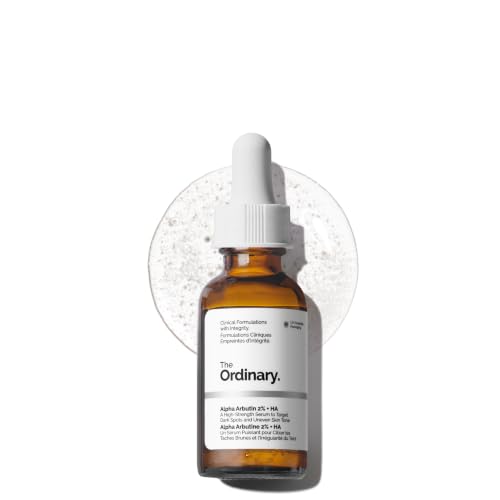
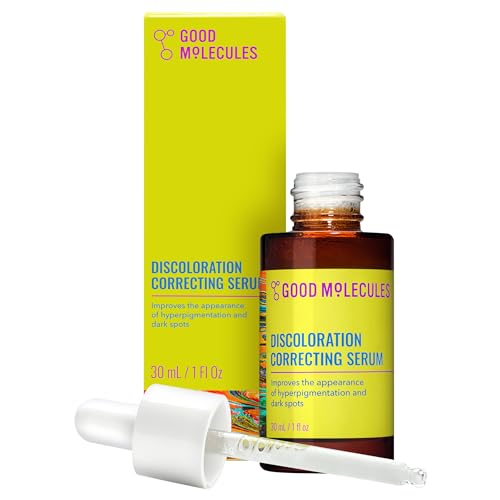
Recommended Products for Dark Spots and Sun Protection


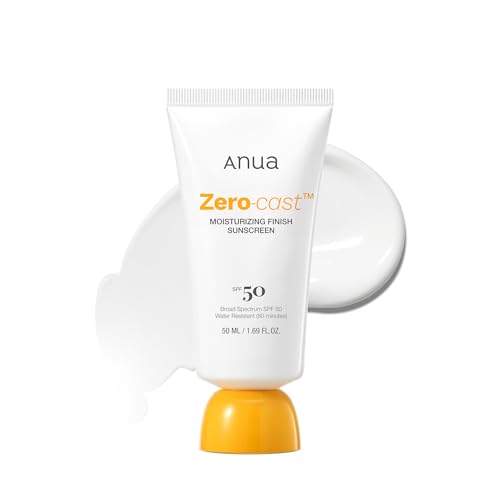
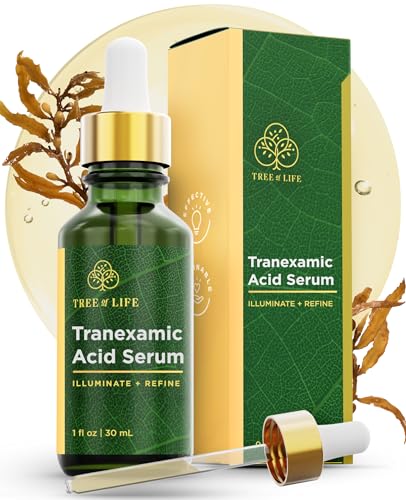

That trial, published in the Journal of Cosmetic and Laser Therapy, is a useful reality check. It showed that pigment can improve with sunscreen and simple care alone, and that the active itself may add redness in some users.
Black Friday is coming: shop the deals with Prime
It does not prove tranexamic acid is useless, but it explains why you should keep expectations modest.
In this guide we explain what tranexamic acid does in the skin, how topical products differ from the oral medicine, how to use a serum without irritation, what to expect over eight to twelve weeks, and who should talk to a doctor first. We also cover the pairing that matters most, daily sun protection.
If you are still mapping out the rest of your routine, see our skin care routine guide and our guide to Korean sunscreens for oily skin.
Contents
- What Tranexamic Acid Is
- Does It Work? What the Studies Show
- Tranexamic Acid vs Other Dark Spot Ingredients
- How to Use It Without Irritation
- What to Pair It With and What to Avoid
- What to Expect and When
- Do and Do Not
- A Simple Dark Spot Routine
- Who Should Be Careful
- Honest Limits
- Common Mistakes With Dark Spot Serums
- When to See a Professional
- Your Questions, Answered
- The Takeaway
What to Know First
- Tranexamic acid is used in serums to help fade dark spots and uneven tone.
- Evidence for topical use is limited, and results are usually gradual.
- A randomized trial of a 5 percent topical product found no clear advantage over its base, and noted redness in some users.
- Start every other evening and moisturize to reduce irritation.
- Daily sunscreen is essential, because sun exposure brings dark spots back.
- Fading usually takes eight to twelve weeks or longer.
- See a doctor for melasma, sudden changes or spots that change shape.
What Tranexamic Acid Is
Tranexamic acid is a synthetic derivative of the amino acid lysine. In medicine it is used to reduce bleeding, and it is prescribed in tablets or given by injection for that purpose.
Doctors also began to notice that it seemed to lighten melasma, a form of stubborn facial pigmentation, which led to research on both oral and topical use.
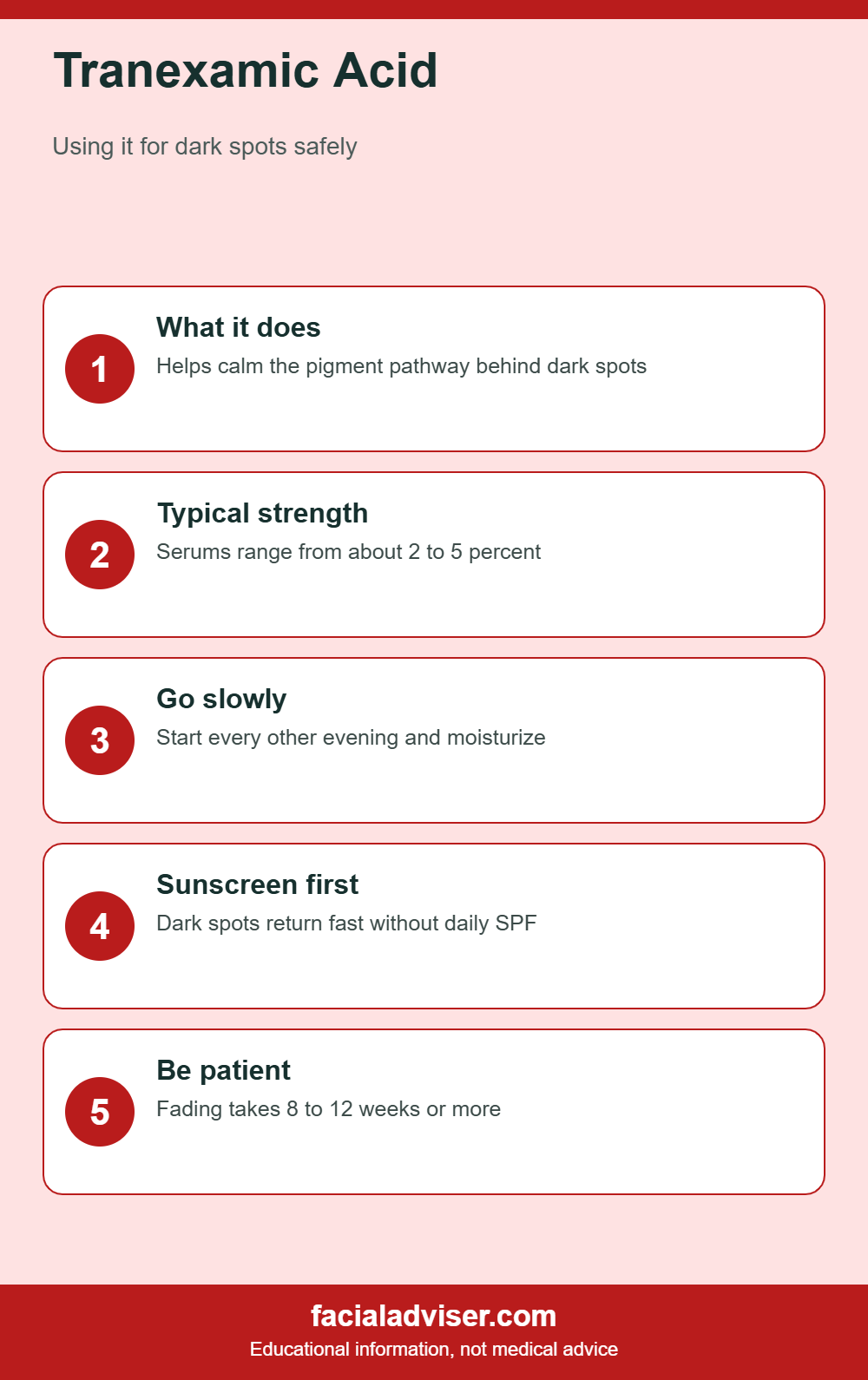
Cosmetic serums use much lower amounts, typically from about 2 percent to 5 percent, and are designed to be applied to the skin rather than swallowed. This article is only about topical use.
Oral tranexamic acid is a prescription drug with serious risks for some people, and it should only be taken under a doctor’s care.
In skincare, the ingredient is said to interfere with the pathway that tells pigment cells to make melanin after inflammation or sun exposure. Think of it as turning the volume down on the signal rather than bleaching the skin.
Because the ingredient name sounds clinical, some shoppers worry it is a harsh chemical. In serum form it is water-soluble, usually fragrance-free in better formulas, and used in far lower amounts than the medicine. That said, low does not mean risk-free, and skin reactions are possible, so patch testing still matters.
Does It Work? What the Studies Show
Research on topical tranexamic acid exists but is limited, mostly small trials in melasma, and results vary by formula, strength and study design.
One double-blind randomized trial of a 5 percent topical gel compared with its vehicle in 23 women with melasma over 12 weeks. Pigment decreased on both sides of the face, but the improvement with tranexamic acid was not significantly different from the vehicle, and the treated side showed more redness.
You can read the abstract of the 5 percent topical tranexamic acid trial.
Other studies have compared tranexamic acid with other agents or combined it with lasers and microneedling, with mixed results. The honest summary is that it is a promising, relatively gentle option for some people, not a guaranteed fix.
Both sides of the face improved in the trial above, which shows how much consistent sunscreen and basic care can matter on their own.
It also helps to remember what the trial measured. Participants had epidermal melasma, which is only one type of pigment problem, and the study lasted twelve weeks. Post-acne marks and sun spots behave differently, and many brands test their own serums on small groups without a comparison, so ask what the claim is based on.
Tranexamic Acid vs Other Dark Spot Ingredients
Several ingredients target dark spots. Tranexamic acid sits on the gentler end.
| Ingredient | How it helps | Typical drawback |
|---|---|---|
| Tranexamic acid | Calms pigment signaling | Limited evidence, may redden skin |
| Vitamin C | Antioxidant, interrupts melanin production | Can sting, unstable formulas |
| Niacinamide | Reduces pigment transfer, supports barrier | Slow, mild effect |
| Azelaic acid | Reduces pigment and inflammation | Can tingle or dry |
| Retinoids | Speed cell turnover | Irritation, sun sensitivity |
| Hydroquinone | Reduces melanin production | Prescription strengths need medical supervision |
Many serums combine tranexamic acid with niacinamide or vitamin C. If you are comparing labels, our guide to reading a cosmetic ingredient list shows how to see where the active sits in the formula.
How to Use It Without Irritation
Gentle products can still irritate, so start slowly.
Patch test
Apply a small amount behind the ear or on the jaw for several days before using it on your face.
Start every other evening
After cleansing, apply a few drops to dry skin, avoiding the eyes and lips.
Moisturize on top
Follow with a barrier moisturizer to reduce dryness or redness.
Add sunscreen every morning
Use a broad-spectrum SPF 30 or higher daily and reapply outdoors. Sun undoes brightening quickly.
Judge at 8 to 12 weeks
Take photos in the same light every four weeks. Increase use only if skin is calm.
Introduce one new active at a time. If you add tranexamic acid, vitamin C and a retinoid in the same week, you will not know what caused any irritation.
Stop if you notice persistent redness, burning or swelling. Do not take oral tranexamic acid for dark spots without a doctor, since it can raise the risk of blood clots for some people.
What to Pair It With and What to Avoid
Tranexamic acid is usually a supporting player. It works best alongside ingredients that protect the skin and support its barrier.
Niacinamide is the most common partner. It reduces the transfer of pigment to the skin surface and supports the barrier, and many serums combine the two for a gentle brightening pair. Hyaluronic acid and ceramides add moisture, which keeps irritation down.
Sunscreen is the essential partner, because ultraviolet light is the main reason dark spots deepen.
Be careful about stacking it with strong exfoliating acids, scrubs and high-dose retinoids in the first weeks. Each of those can cause redness on its own, and tranexamic acid products have been reported to redden some skin. If you want to use several actives, introduce them one at a time and on different nights.
What to Expect and When
Pigment fades slowly because the skin has to shed pigmented cells and make new ones.
| Time | Common experience |
|---|---|
| Weeks 1 to 4 | Skin adjusts; no visible change yet; watch for redness |
| Weeks 4 to 8 | Spots may look slightly lighter or less defined |
| Weeks 8 to 12 | Clearer change in tone if sun protection is consistent |
| After 12 weeks | Decide whether to continue, add other ingredients or see a doctor |
Post-acne marks often fade faster than melasma or sun spots. Melasma is hormonally influenced and often needs a doctor’s input.
Dark spots can also look darker before they fade, because they sometimes rise to the surface as skin renews. Do not scrub them to speed this up. Keep using sunscreen and let the renewal run its course.
Do and Do Not
Try This
- Use sunscreen every day
- Patch test before starting
- Start slowly and moisturize
- Take photos to track progress
- Ask a doctor about melasma
Avoid This
- Skip sunscreen
- Pick or scrub the spots
- Layer many new actives at once
- Take oral tranexamic acid without a doctor
- Expect results in a week
Do not use tranexamic acid serums on broken or sunburned skin.
A Simple Dark Spot Routine
A short routine is easier to stick with and easier to troubleshoot.
| Time | Steps |
|---|---|
| Morning | Gentle cleanse, light moisturizer, broad-spectrum sunscreen |
| Evening (start) | Gentle cleanse, tranexamic acid serum every other evening, moisturizer |
| Evening (after a month) | Add a second active only if skin is calm; keep the serum on alternating nights |
Our skin care routine guide explains the order of steps in more detail. Keep the routine short while you test the serum.
Who Should Be Careful
People who are pregnant or breastfeeding should check any new active with a doctor. Anyone with a history of blood clots should speak to a doctor before using tranexamic acid in any form, even though topical absorption is low.
If you have melasma, a new dark patch, or a spot that is changing in shape or color, see a doctor or dermatologist first. Pigment changes can look harmless and still need evaluation.
Reactive or rosacea-prone skin may find even gentle actives irritating. Introduce them slowly or avoid them.
Darker skin tones are more prone to post-inflammatory marks from irritation, so very slow introduction and strict sun protection matter even more.
Honest Limits
Topical tranexamic acid is not a proven cure for hyperpigmentation, and marketing often outpaces research. Most evidence comes from small trials, and some include procedures or other drugs alongside the serum.
The product suggestions here are examples of common products for dark spots and sun protection, not guarantees of results. Check each listing for the active strength.
Daily sunscreen remains the most reliable way to stop dark spots from deepening.
Common Mistakes With Dark Spot Serums
Most disappointments with brightening serums come from a few habits.
Skipping sunscreen is the biggest one. Even a good serum cannot keep up with daily sun exposure on spots. Picking at spots or scrubbing them is another, because injury and inflammation create new pigment. Changing products every two weeks is a third, since pigment takes months to shift and no serum works that quickly.
Layering too many actives at once also backfires. Irritated skin makes more pigment, which can leave you with more dark marks than you started with. Finally, using stronger percentages is not always better.
A well-formulated 2 to 5 percent serum used consistently is usually more useful than a very high percentage that your skin cannot tolerate.
When to See a Professional
See a doctor or dermatologist for dark patches that are symmetrical on the cheeks or forehead, spots that change shape or color, or dark marks that do not improve after several months of sun protection and gentle care.
This article is for general information and is not medical advice. Rakib Sarwar is a registered pharmacist with a cosmetology course, not a dermatologist. Talk to a doctor or dermatologist about changing or persistent skin spots.
Your Questions, Answered
What does tranexamic acid do for skin?
It is used in serums to help fade dark spots and uneven tone by calming the pathway that triggers extra pigment.
Is tranexamic acid better than vitamin C?
Neither is clearly better. They work differently, and many people use both in different parts of the routine.
How long does tranexamic acid take to work?
Usually eight to twelve weeks, and sometimes longer.
Can tranexamic acid irritate skin?
Yes. Redness was seen in a trial of a 5 percent topical product, so start slowly.
Can I use it with niacinamide?
Yes, they are commonly combined in the same product or routine.
Do I need sunscreen with tranexamic acid?
Yes. Sun exposure brings dark spots back.
Can I use it with retinol?
Yes, but introduce them separately and not on the same night at first.
Is topical tranexamic acid safe in pregnancy?
Ask a doctor before using any new active during pregnancy or breastfeeding.
Is oral tranexamic acid for dark spots safe?
Oral tranexamic acid is a prescription drug with real risks, so only a doctor should decide if it is appropriate.
Does it work for melasma?
Studies are mixed. A doctor can suggest the best plan for melasma.
The Takeaway
Tranexamic acid is a gentle, promising ingredient for dark spots, but it works best as part of a plan built on daily sunscreen and patience.
Start slowly, track your progress with photos, and ask a doctor if spots are stubborn, symmetrical or changing.

Written by
Registered pharmacist and founder of Facial Adviser. Rakib's pharmacy training covers how skincare actives work and interact; a later course in cosmetology turned that into a focus on facial treatments and skincare products. He plans, researches and edits every guide on the site and checks health claims against sources such as the American Academy of Dermatology, the FDA and the NIH. He is not a dermatologist; see the Editorial Policy and Medical Disclaimer.
About · Editorial policy · How we choose products · Medical disclaimer · Contact
Keep reading: Redness, puffiness and uneven tone
- How to Calm Inflamed Red Patches on Your Face
- 10 Best Dark Spot Correctors for Face (2026): Serums That Help Fade Marks
- What to Eat to Remove Dark Spots on Your Face
- Itchy Face After a Facial? Common Reasons and What to Do
- Facial Swelling That Gets Worse in the Evening: Possible Causes
- What Causes Your Face to Look Tired All the Time? Causes and Real Fixes
- How Can I Make My Pores Less Visible?
- Are Facials Good for Acne?
Prime for Young Adults: a longer free trial and a lower price after it