Is Steaming Your Face Good for Your Skin? Benefits, Myths and Safe Use
Face steaming is one of the oldest at-home spa rituals. A few minutes over a bowl of hot water or a facial steamer leaves skin warm, flushed and soft, and many people swear it clears their pores. Home steamers have made the habit even more popular. But how much of the benefit is real, and when can steam do more harm than good?
Part of our guide to at-home facial devices. Start with: 10 Best Facial Tools (2026): LED, Cleansing, Gua Sha and More
Steaming your face can be good for your skin in a limited way: warm, moist air softens the outer layer of skin and the oil in pores, which can make blackheads easier to remove and skin feel hydrated and relaxed for a short time. It does not open or close pores, which have no muscles, and it does not detox the body. Too much heat can worsen rosacea, broken capillaries, eczema and inflamed acne, and very hot water or steam can scald. Short, warm sessions a couple of times a month suit most people; those with sensitive or reactive skin may be better off skipping it.
In short, steam is a pleasant way to soften skin before cleansing or extractions, not a deep-cleaning or detox treatment.
The American Academy of Dermatology recommends washing the face with lukewarm rather than hot water, and a 2026 randomised study in the International Journal of Cosmetic Science found that cool-water cleansing helped preserve the skin barrier compared with warm water. That is a useful reminder to keep heat moderate and sessions short.
This guide covers what steam can and cannot do, when it helps, who should avoid it and how to steam safely at home.
Shopping these picks?
Amazon Prime members get fast, free shipping on eligible items, plus Prime Video, Amazon Music and member deals. New members can start with a free trial.
Start a free Prime trialAged 18 to 24? Prime for Young Adults comes with a longer free trial and a lower price after it.
Affiliate link: we may earn a commission at no extra cost to you.
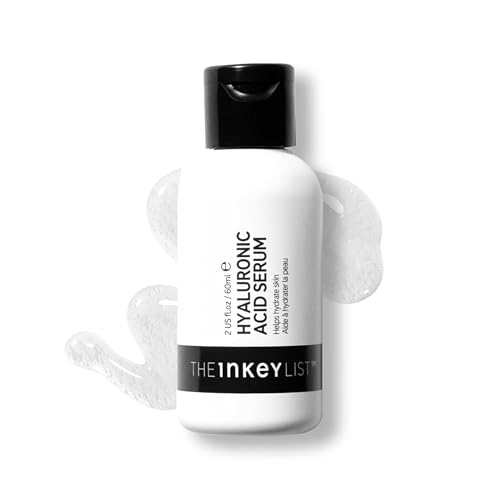
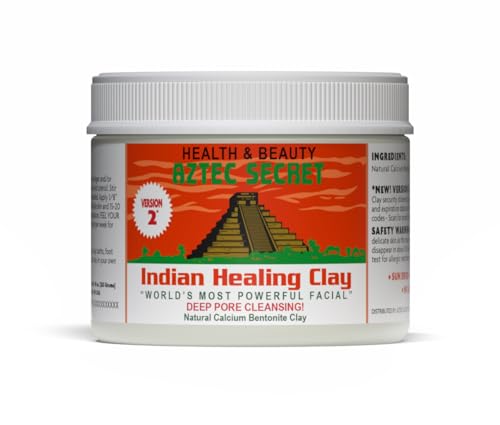
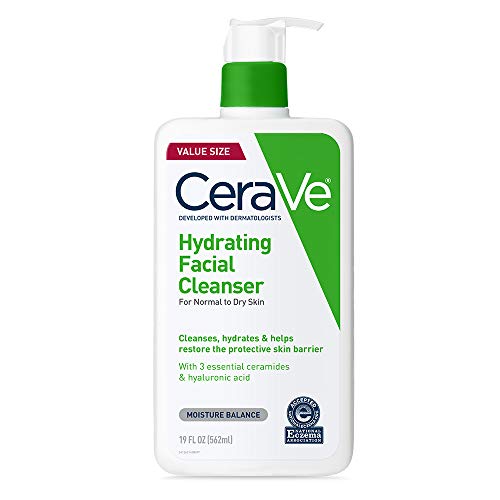
Recommended Facial Steamers and Steaming Companions



In Brief
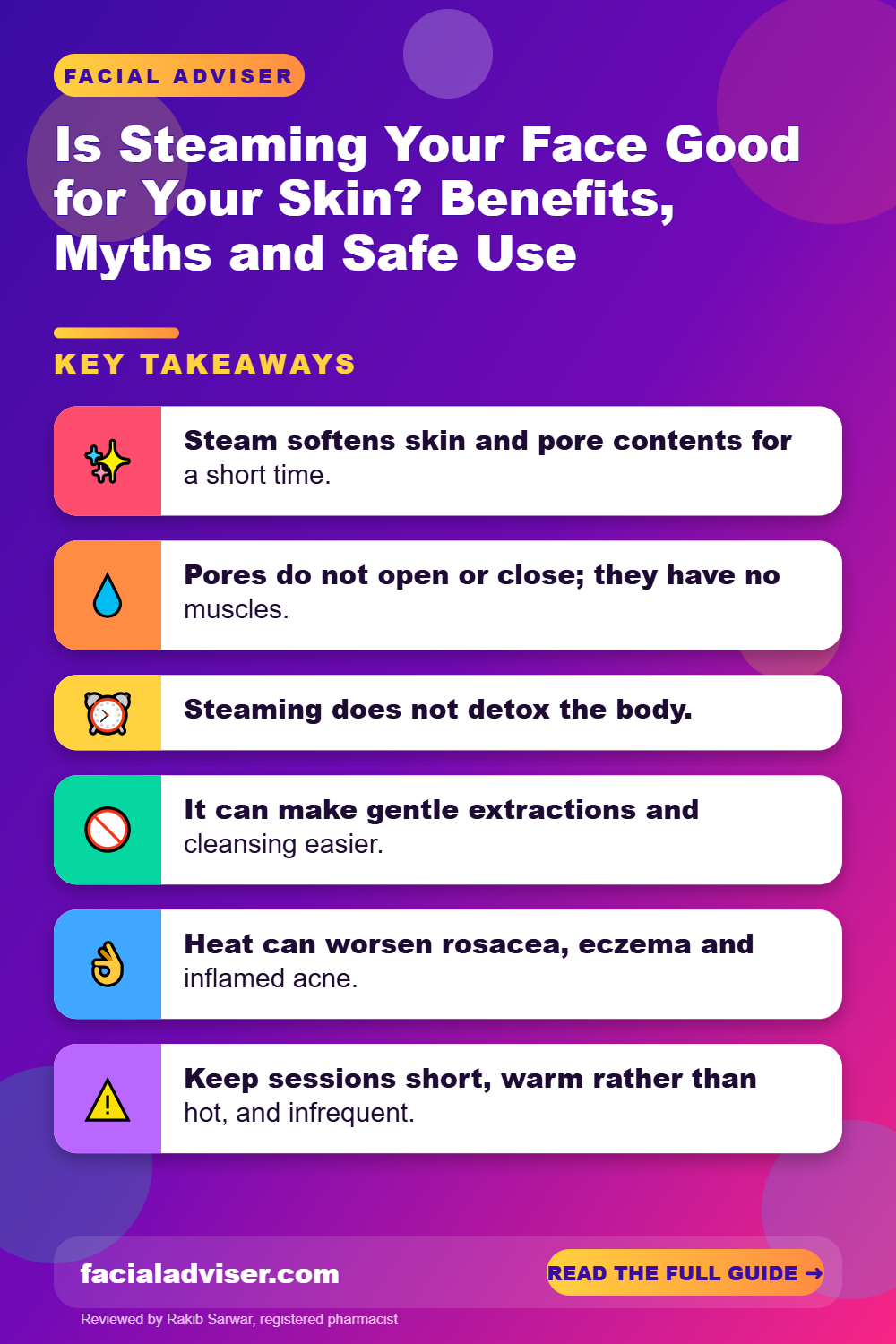
- Steam softens skin and pore contents for a short time.
- Pores do not open or close; they have no muscles.
- Steaming does not detox the body.
- It can make gentle extractions and cleansing easier.
- Heat can worsen rosacea, eczema and inflamed acne.
- Keep sessions short, warm rather than hot, and infrequent.
- Moisturise and use sunscreen afterwards.
On This Page
- What Steam Can and Cannot Do
- Does Steaming Unclog Pores?
- How to Steam Your Face Safely
- Who Should Avoid Face Steaming
- What the Research Says About Heat and Skin
- Steaming After a Facial or Before Extractions
- How Often Should You Steam?
- Facial Steamer or Bowl of Hot Water?
- Herbs, Essential Oils and Other Add-Ins
- Dos and Don’ts
- Honest Limits
- When to See a Dermatologist
- FAQ
- Where This Leaves You
What Steam Can and Cannot Do
Many claims about face steaming go beyond what heat and moisture can actually achieve.
| Claim | Reality |
|---|---|
| Opens pores | Pores have no muscles; warmth softens their contents, making them look clearer |
| Detoxes the body | Your liver and kidneys handle detoxification; sweat from the face does not |
| Deep cleans pores | Softens oil and debris, which can help cleansing or extractions |
| Hydrates skin | Adds temporary surface moisture that evaporates without a moisturiser |
| Boosts circulation | Warmth increases blood flow briefly, causing a flush |
| Improves product absorption | Softened skin may feel like it absorbs better; evidence is limited |
The pleasant, glowing look after steaming is mostly warmth and temporary hydration. It fades within an hour or so, which is why what you do right after steaming matters more than the steam itself. Think of steam as preparation: it makes the next step, whether a cleanse, a mask or a gentle extraction, a little more effective and comfortable.
Does Steaming Unclog Pores?
Steam does not unclog pores on its own, but it can help. Blackheads are plugs of oil and dead skin cells. Warmth softens this material, so gentle cleansing, a clay mask or careful extraction afterwards can remove more of it.
For lasting results, the most useful step is regular chemical exfoliation with an ingredient such as salicylic acid, which works inside the pore lining. Steam can be a relaxing extra before a mask, but it will not replace a consistent routine. It also helps to set expectations: some visible dots on the nose are sebaceous filaments, a normal part of the skin that refills within days, so no amount of steaming will make them disappear permanently.
Aggressive squeezing after steaming is a common cause of redness, broken capillaries and scarring. If you extract, use clean hands or tools, gentle pressure and stop if nothing comes out easily.
Our guide on how to deep clean your pores covers the routine that makes the biggest difference, and sebaceous filaments versus blackheads explains why some dots never fully disappear.
How to Steam Your Face Safely
Follow these steps for a gentle, safe session.
Cleanse first
Remove makeup and oil with a gentle cleanser.
Use warm, not boiling, steam
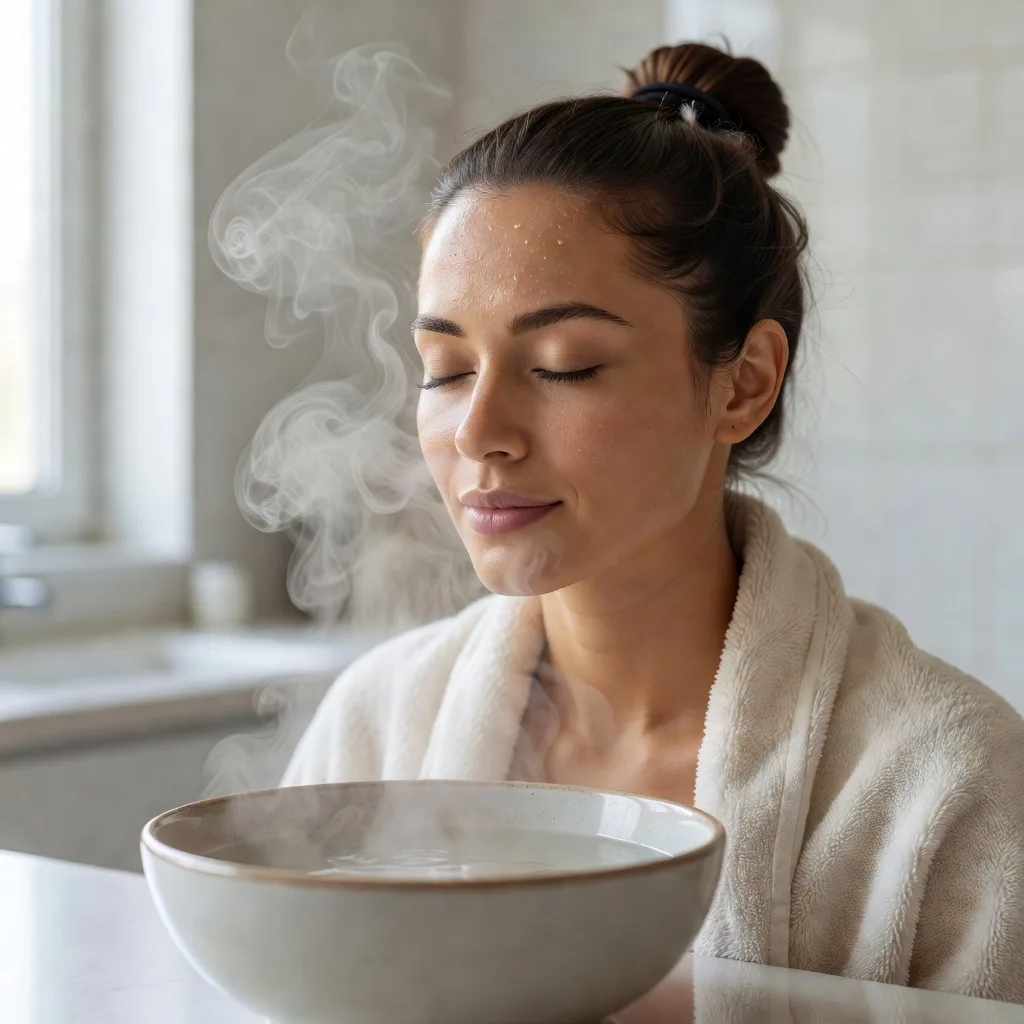
If using a bowl, let freshly boiled water cool for a few minutes first.
Keep a safe distance
Stay about 20 to 30 centimetres from the steam source.
Limit the time
Five to ten minutes is enough; stop sooner if skin feels hot or stings.
Follow with a treatment
Apply a clay mask or do gentle extractions if needed.
Rinse with lukewarm water
Pat skin dry with a clean towel.
Moisturise
Apply a hydrating serum and moisturiser to lock in water.
Use a facial steamer with a timer if you tend to lose track of time. It keeps the temperature steady and removes the risk of spilling a bowl of hot water.
The American Academy of Dermatology’s face washing guide recommends lukewarm water, which is a good principle for steaming too.
Who Should Avoid Face Steaming
Heat and humidity are not good for every skin type.
- Rosacea: heat is a common trigger for flushing and flare-ups.
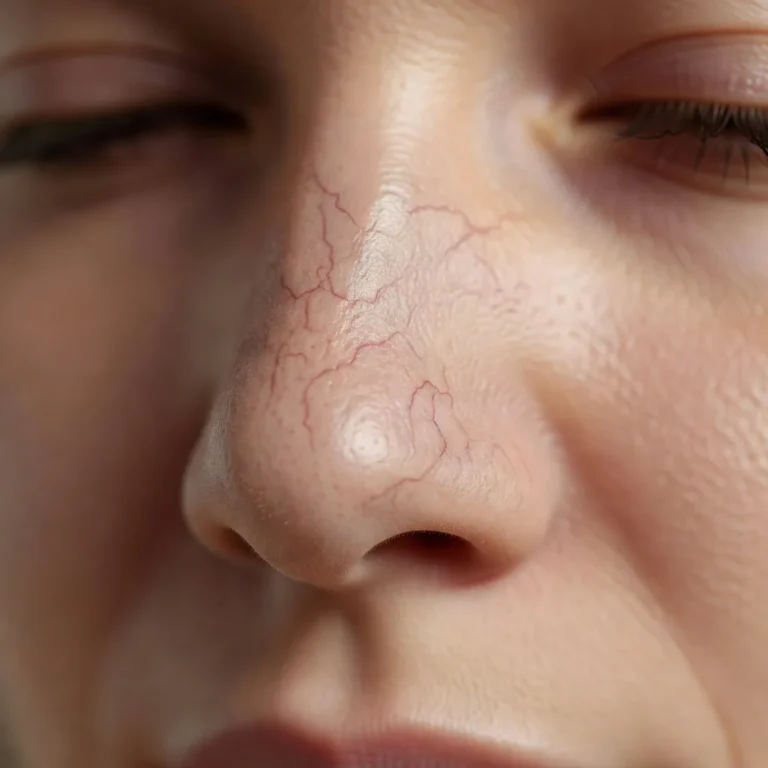
- Broken capillaries: heat can make visible blood vessels more noticeable.
- Eczema or very dry skin: steam can leave skin drier once it evaporates.
- Active, inflamed acne: heat can increase redness and irritation.
- Recent treatments: avoid steam after peels, laser, microneedling or waxing until skin has healed.
Never steam over boiling water, lean too close or place your face directly over a pot on the stove. Steam burns can be serious. Keep children away from bowls of hot water and steamers.
If your skin flushes easily or stings with heat, a cool compress and gentle cleanser are kinder alternatives. People with asthma or breathing problems should also be cautious, as very hot, humid air can feel uncomfortable, and anyone with a history of cold sores may find that heat triggers a flare.
What the Research Says About Heat and Skin
There are few studies on facial steaming itself, but research on water temperature is relevant. A randomised controlled study published in the International Journal of Cosmetic Science and available on PubMed compared cool and warm water for routine facial cleansing and concluded that cool water helped preserve skin barrier integrity, while both removed makeup effectively.
This supports keeping heat moderate and sessions short. Steam is not harmful for most people occasionally, but frequent, hot sessions may leave skin drier and more sensitive over time. Water loss is the key issue: when warm moisture evaporates from the surface, it can take some of the skin’s own water with it unless you seal it in with a moisturiser straight away.
Our guide on whether cold water closes pores explains the other half of the temperature myth.
Steaming After a Facial or Before Extractions
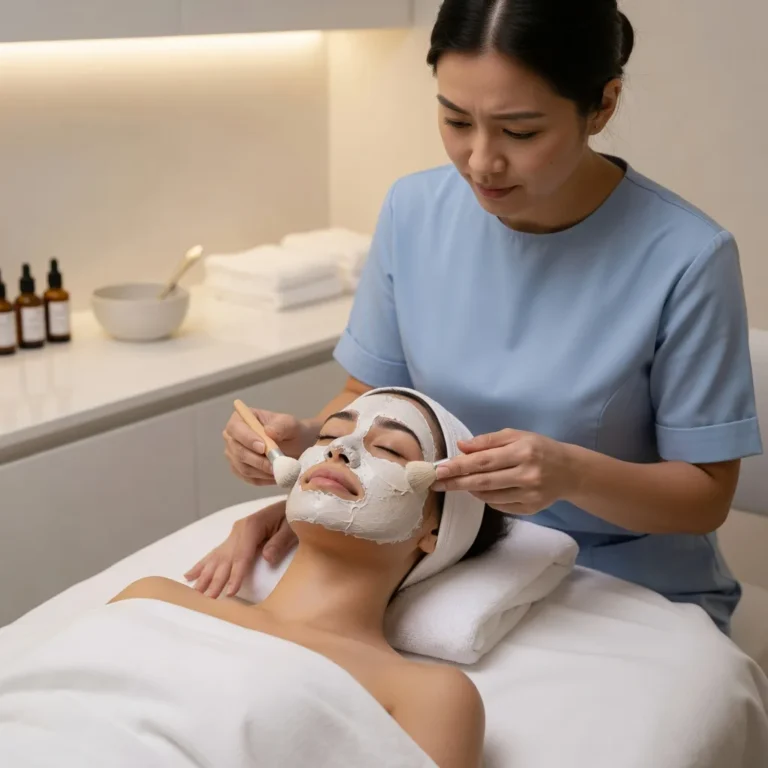
In professional facials, steam is usually used early in the treatment to soften the skin before extractions. At home, the same order makes sense: cleanse, steam briefly, then extract or apply a mask.
| Situation | Steam? | Why |
|---|---|---|
| Before a clay mask | Optional, briefly | Softens skin so the mask can absorb oil |
| Before gentle extractions | Yes, briefly | Softened plugs come out more easily |
| After a professional facial | No, not the same day | Skin is already sensitised |
| After a chemical peel | No | Heat can irritate freshly exfoliated skin |
| Before makeup | Usually no | Can cause flushing and make makeup slide |
If you have just had a facial, give your skin at least a day or two before adding heat at home. The same applies after waxing, threading or dermaplaning, when the skin surface is freshly disturbed and more easily irritated.
How Often Should You Steam?
For most people, once a week at most is plenty, and every couple of weeks is often enough. Steaming more often does not clean pores faster and can dry out or irritate the skin.
Oily, congested skin may tolerate weekly sessions; dry or sensitive skin may do better with occasional sessions or none at all. Pay attention to how your skin feels the next day: tightness, stinging or extra redness are signs to cut back. Climate matters too: in humid weather your skin may need steaming less, while in dry winter months a short session followed by a rich moisturiser can feel soothing. Adjust how often you steam through the year rather than sticking to a fixed schedule.
Facial Steamer or Bowl of Hot Water?
Both can work, but a facial steamer offers more control.
- Steamers produce a steady, warm mist at a consistent distance and often include a timer.
- A bowl of hot water is free but the temperature drops quickly and spills can scald.
- Steamers need regular cleaning to prevent mineral build-up and bacteria.
- Use distilled water in steamers if the instructions recommend it.
Whichever you choose, keep your eyes closed or protected, keep the session short and stop if anything feels too hot. Empty and dry the steamer after each use, and descale it as the manufacturer recommends so it keeps producing a fine, even mist.
Herbs, Essential Oils and Other Add-Ins
Many online guides suggest adding herbs, tea bags, lemon or essential oils to the water for a more luxurious steam. These can smell pleasant, but they add little proven benefit and can irritate the skin and eyes.
- Essential oils: can cause irritation or allergic reactions, especially on sensitive skin and around the eyes.
- Lemon and citrus: acidic and can irritate; skip them on the face.
- Herbal teas such as chamomile: usually mild, but some people are allergic to plants in the daisy family.
- Salt or bicarbonate of soda: no clear benefit in steam and can dry the skin.
- Plain water: the safest option for most people.
If you want a spa feel, plain warm steam followed by a gentle mask and a good moisturiser gives most of the benefit with fewer risks. If you do try herbs, patch-test first and stop at the first sign of stinging or redness.
Facial steamers are designed for plain or distilled water. Adding oils or herbs to a steamer can damage it and may void the warranty, so check the instructions before experimenting.
Dos and Don’ts
Helps
- Cleanse before steaming
- Keep steam warm, not hot
- Limit sessions to 5 to 10 minutes
- Moisturise afterwards
- Clean your steamer regularly
Backfires
- Lean over boiling water
- Steam with rosacea or eczema flare-ups
- Squeeze hard after steaming
- Steam right after peels or laser
- Expect steam to detox your body
Honest Limits
Face steaming is mostly a comfort ritual with modest, short-lived benefits. It can make skin feel softer and blackheads easier to remove, but it does not open pores, detox the body or replace a consistent skincare routine.
If you struggle with persistent blackheads or acne, proven treatments such as salicylic acid, benzoyl peroxide or retinoids will do far more. Used alongside those basics, an occasional gentle steam is a perfectly reasonable part of a relaxing self-care routine. Our guide on whether a facial gets rid of blackheads explains what really works.
When to See a Dermatologist
- You get redness, burning or broken capillaries after steaming.
- You have frequent flushing that may be rosacea.
- Acne is painful, persistent or scarring.
- You burn your skin with steam or hot water.
This article is for general information and does not replace professional medical advice. Seek urgent care for burns and see a board-certified dermatologist for ongoing skin concerns.
FAQ
Is steaming your face good for your skin?
It can soften skin and pore contents briefly, but benefits are modest.
Does steam open pores?
No, pores have no muscles; steam softens their contents.
Does face steaming detox the body?
No, your liver and kidneys do that.
How long should I steam my face?
About five to ten minutes.
How often can I steam my face?
Once a week at most for most people.
Should I steam before or after cleansing?
After cleansing, before a mask or extractions.
Can steaming cause breakouts?
It can irritate inflamed acne; keep it gentle.
Is steaming good for rosacea?
Usually not, as heat is a common trigger.
Can I steam after a facial?
Wait at least a day or two.
Is a facial steamer better than a bowl?
It is safer and more controlled, but both can work.
Where This Leaves You
Steaming your face can soften skin and the oil in pores for a short time, making cleansing, masks and gentle extractions easier, but it does not open pores or detox the body, and heat can worsen sensitive skin conditions.
Keep sessions warm, short and occasional, skip steam if you have rosacea or eczema, and always follow with moisturiser and daily sunscreen.

Written by
Registered pharmacist and founder of Facial Adviser. Rakib's pharmacy training covers how skincare actives work and interact; a later course in cosmetology turned that into a focus on facial treatments and skincare products. He plans, researches and edits every guide on the site and checks health claims against sources such as the American Academy of Dermatology, the FDA and the NIH. He is not a dermatologist; see the Editorial Policy and Medical Disclaimer.
About · Editorial policy · How we choose products · Medical disclaimer · Contact
Keep reading: Cleansing brushes and skin tools
- 10 Best Facial Tools (2026): LED, Cleansing, Gua Sha and More
- Facial Steamer vs Humidifier: Which Is Better for Dry Skin?
- Best Skin Scrubber: How to Choose an Ultrasonic Spatula for Your Skin
- 10 Best Blackhead Extractor Tools for Beginners (2026): Gentle Picks
- 10 Best Facial Steamers for Home Spa Treatments (2026): Safe Picks
- Best AI-Powered Acne Scanner for Clear Skin: What Skin Analysers Can Do
- 10 Best LED Light Therapy Masks (2026): Clearer Skin, Softer Lines
- How to Incorporate Microcurrent Into Your Routine: Gel, Timing and Safety