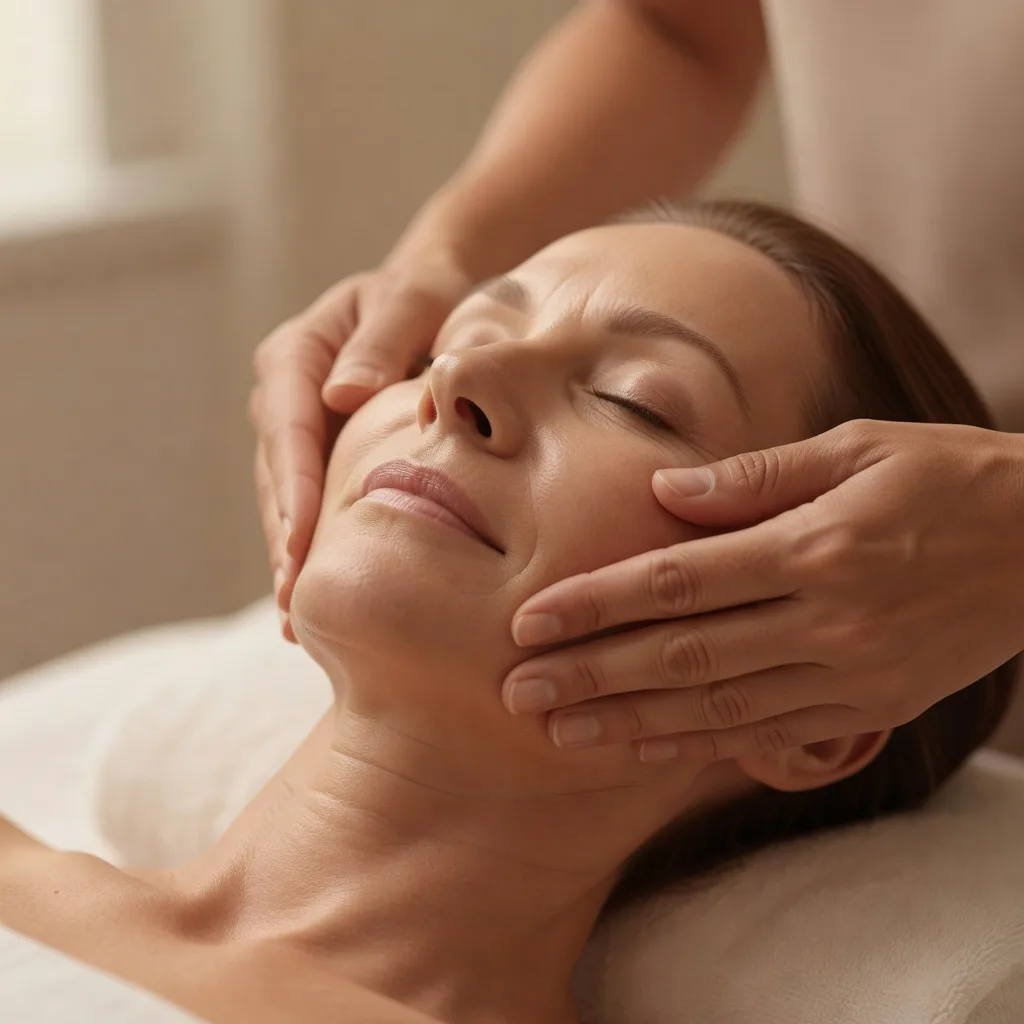
Does Massaging Your Face Reduce Wrinkles? What It Can and Cannot Do
Face massage has become one of the most popular at-home anti-ageing habits, helped along by gua sha stones, rollers and vibrating tools. Many people notice their skin looks smoother and brighter straight after a session, which naturally leads to the question of whether rubbing and kneading the face can actually reduce wrinkles over time.
Part of our guide to at-home facial devices. Start with: 10 Best Gua Sha Facial Tools (2026): Stone and Steel Picks Compared
Massaging your face does not remove wrinkles, but it can make fine lines look softer for a few hours. Massage briefly increases blood flow, moves fluid out of puffy areas and relaxes tense muscles, so skin can look plumper, smoother and more even straight afterwards. Small studies suggest regular massage with a device may slightly improve skin elasticity, but the evidence is limited and short term. Deep wrinkles, sagging and lines from sun damage need proven care such as daily sunscreen, retinoids and, if you want bigger change, in-clinic treatments. Think of massage as a relaxing extra that supports a good routine, not a wrinkle treatment in its own right.
In short: face massage gives a temporary smoothing effect and a nice glow, but it does not rebuild collagen enough to erase wrinkles.
The American Academy of Dermatology points to sun protection as one of the most effective ways to prevent new lines, which is why massage works best alongside, not instead of, daily sunscreen.
This guide explains what face massage does to wrinkles, which tools are worth trying, how to do it safely and when other treatments make more sense.
Shopping these picks?
Amazon Prime members get fast, free shipping on eligible items, plus Prime Video, Amazon Music and member deals. New members can start with a free trial.
Start a free Prime trialAged 18 to 24? Prime for Young Adults comes with a longer free trial and a lower price after it.
Affiliate link: we may earn a commission at no extra cost to you.
Recommended Face Massage Tools and Oils

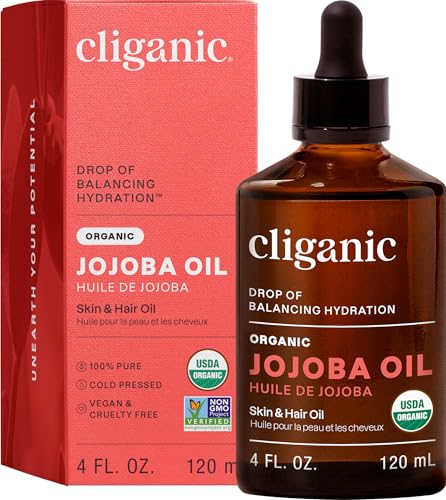

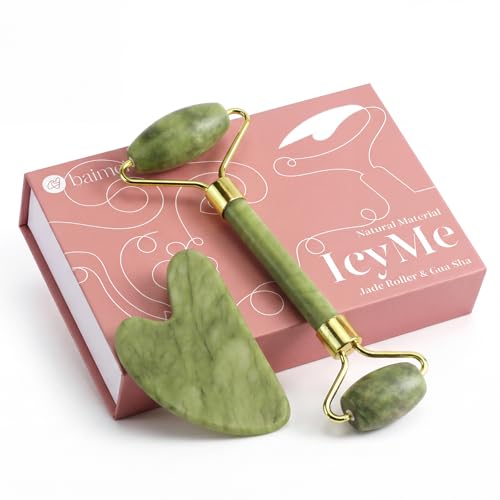

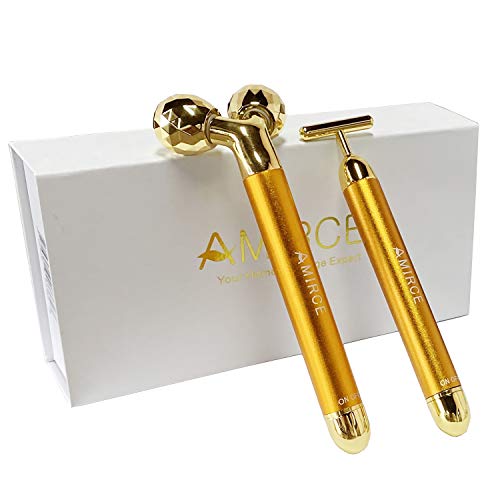

What to Know First
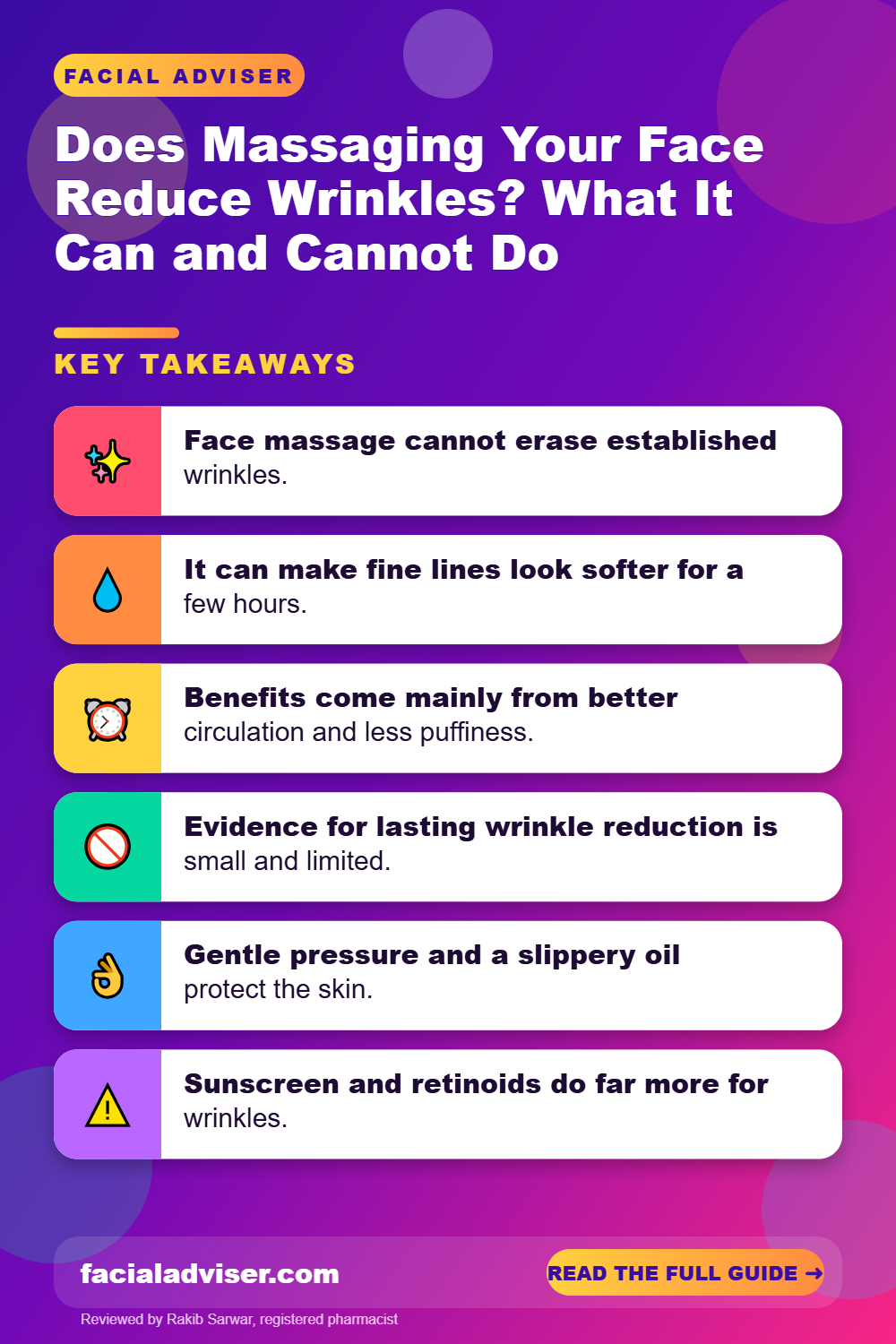
- Face massage cannot erase established wrinkles.
- It can make fine lines look softer for a few hours.
- Benefits come mainly from better circulation and less puffiness.
- Evidence for lasting wrinkle reduction is small and limited.
- Gentle pressure and a slippery oil protect the skin.
- Sunscreen and retinoids do far more for wrinkles.
- Stop massage over active acne, rashes or broken skin.
Contents
- What Face Massage Actually Does to Wrinkles
- What the Research Says
- Which Wrinkles Respond Best to Massage
- Hands vs Gua Sha vs Rollers vs Devices
- How to Massage Your Face for Smoother-Looking Skin
- How Hard and How Often to Massage
- What Reduces Wrinkles More Effectively Than Massage
- Face Massage for Different Skin Types and Ages
- Face Massage Dos and Donts
- Possible Side Effects
- Honest Limits
- When to See a Dermatologist
- Questions People Ask
- Final Word
What Face Massage Actually Does to Wrinkles
To understand whether massage helps, it helps to know what a wrinkle is. Wrinkles form when the skin loses collagen and elastin, the proteins that keep it firm and springy. Sun exposure, smoking, genetics and repeated facial expressions speed up that loss, and fat pads under the skin also shrink and shift with age.
Massage works on the surface and just below it. It does not add collagen in any meaningful amount, and it cannot refill lost volume. What it can do is change how the skin looks for a while.
- It warms the skin and increases blood flow, which gives a brighter, rosier tone.
- It helps move trapped fluid, so morning puffiness around the eyes and jaw goes down.
- It relaxes tight muscles in the forehead and jaw, which can soften expression lines briefly.
- It helps oils and moisturisers spread evenly, so dry fine lines look less obvious.
- It is relaxing, and lower stress may help you stick with the rest of your routine.
All of these effects are real, but they fade within hours as fluid and blood flow return to normal. That is why the smoothing effect people see in before and after photos is usually temporary.
What the Research Says
Research on face massage and wrinkles is limited. Most studies are small, short, funded by device makers or measure skin elasticity rather than wrinkle depth. Some small trials of massage devices have reported modest improvements in skin firmness or elasticity after several weeks of daily use, but the changes are usually subtle and not clearly linked to fewer visible wrinkles.
| Claim | What the evidence suggests | Verdict |
|---|---|---|
| Massage erases wrinkles | No good evidence | Not supported |
| Massage softens fine lines briefly | Consistent with how massage affects fluid and blood flow | Likely, but temporary |
| Massage boosts collagen | Small device studies show slight elasticity changes | Weak and uncertain |
| Massage reduces puffiness | Supported by how lymph drainage works | Likely, short term |
| Massage lifts sagging jowls | No reliable evidence | Not supported |
Our guide on whether anti-aging face massages work looks at the wider claims, including lifting and contouring, in more detail.
Which Wrinkles Respond Best to Massage
Not all lines behave the same way. Massage tends to have the most visible short-term effect on lines caused by dryness or tension, and the least effect on deep, sun-related creases.
| Type of line | Main cause | Likely response to massage |
|---|---|---|
| Dehydration lines | Dry surface skin | Look softer once oil or moisturiser is massaged in |
| Expression lines on the forehead | Repeated muscle movement | May soften briefly as muscles relax |
| Crows feet | Smiling, squinting, sun | Minimal; skin here is thin, so go very gently |
| Nasolabial folds | Volume loss and gravity | Little to none |
| Deep etched wrinkles | Collagen loss and sun damage | No lasting change |
Dehydration lines often disappear with a good moisturiser and massage, while true wrinkles remain. If a line fades when your skin is well hydrated, it was mostly a dryness line rather than a wrinkle.
Hands vs Gua Sha vs Rollers vs Devices
You do not need a tool to massage your face, but tools can make it easier to use even, gentle pressure. None of them has strong evidence for removing wrinkles.
- Fingertips: free, easy to control and suitable for every area, including around the eyes.
- Gua sha: a flat stone or metal tool scraped gently upwards and outwards; good for draining puffiness along the jaw and cheeks.
- Face rollers: quick and cooling, especially when chilled; best for morning puffiness.
- Electric or vibrating massagers: add light vibration; useful if your hands tire easily.
- Microcurrent devices: use a low electrical current and are marketed for toning; results are modest and need consistent use.
If you are deciding between the two most popular tools, our guide to facial roller vs gua sha compares how each feels and what each is best for.
How to Massage Your Face for Smoother-Looking Skin
A short, gentle routine is enough. Five minutes a few times a week is plenty for most people.
Start with clean skin
Wash your face and hands, and clean any tool you plan to use.
Add slip
Apply a few drops of facial oil or a generous layer of moisturiser so fingers or tools glide without tugging.
Work the neck first
Stroke gently down the sides of the neck towards the collarbone to encourage drainage.
Sweep the jaw and cheeks
Move from the centre of the face outwards and upwards, using light, even pressure.
Smooth the forehead
Glide from the brows up to the hairline, then out towards the temples.
Go gently around the eyes
Use your ring finger to tap lightly along the orbital bone, never dragging the thin skin.
Finish with sunscreen or night care
In the morning, follow with sunscreen; at night, apply your usual treatment products.
Chill a roller or gua sha in the fridge for a morning session. The cool surface helps reduce puffiness and feels soothing, especially after a short night.
How Hard and How Often to Massage
Light pressure is enough. The goal is to move fluid and warm the skin, not to knead it like a sore muscle. Pressing hard or scraping without oil can break small blood vessels and cause redness or bruising, particularly on thin or mature skin.
Most people get the best results from three to five short sessions a week, or a quick daily session if it feels good and causes no irritation. Our guide on whether daily face massage is good for skin covers frequency in more detail. Mild pinkness that fades within half an hour is normal; lasting redness, broken capillaries or stinging mean you are pressing too hard or too often.
What Reduces Wrinkles More Effectively Than Massage
If your main goal is fewer or shallower wrinkles, some treatments have much stronger evidence than massage.
- Daily broad-spectrum sunscreen, which slows new lines and allows some repair over time.
- Topical retinoids, such as retinol or prescription tretinoin, which can improve fine lines with months of use.
- Alpha hydroxy acids, which smooth surface texture when used carefully.
- Not smoking and limiting sunbeds, both major causes of early wrinkles.
- In-clinic options such as chemical peels, lasers, fillers and muscle-relaxing injections for deeper lines.
The AAD’s guide to how to apply sunscreen explains how much to use for real protection, and its overview of chemical peels explains how peels treat fine lines.
Face Massage for Different Skin Types and Ages
How you massage should change with your skin. The same routine that suits thick, oily skin can irritate thin, dry or reactive skin, so adjust pressure, tools and products to what your face tolerates.
- Dry or mature skin: use a richer oil or balm, keep strokes slow and light, and avoid pulling downwards on the cheeks and neck.
- Oily or acne-prone skin: choose a lightweight, non-comedogenic oil or a gel moisturiser, skip areas with active spots and wash your face afterwards if you feel congested.
- Sensitive skin or rosacea: keep sessions short, use a cool tool rather than warm hands, and stop at the first sign of lasting redness.
- Skin in your twenties and thirties: massage is mainly about relaxation and puffiness here; sunscreen matters far more for preventing future lines.
- Skin after sun exposure: wait until any sunburn has fully healed before massaging.
If you are using a retinoid or an exfoliating acid, your skin may be more fragile than usual. On those nights, use gentler pressure or massage only on alternate evenings so you do not add friction to skin that is already working hard.
Face Massage Dos and Donts
Try This
- Use an oil or rich moisturiser for slip
- Keep pressure light and even
- Clean tools after every use
- Massage upwards and outwards
- Pair massage with daily sunscreen
Avoid This
- Drag or tug dry skin
- Massage over active acne or cold sores
- Press hard around the eyes
- Share tools without cleaning them
- Expect massage to replace proven treatments
A clean tool matters more than people think. Oils and skin cells build up on stones and rollers, so wash them with mild soap and water after each session and let them dry fully.
Possible Side Effects
Face massage is safe for most people when done gently, but a few problems can appear.
- Redness or small broken capillaries from heavy pressure.
- Breakouts if the oil is too heavy for acne-prone skin or tools are not cleaned.
- Irritation or rash from fragranced or essential oil blends.
- Worsening of rosacea, which often flares with heat and friction.
- Spreading bacteria or viruses when massaging over spots or cold sores.
Do not massage over active acne, open wounds, cold sores, sunburn, rashes or areas recently treated with fillers or injections unless your clinician says it is safe. Massage can spread infection and may shift freshly placed filler.
Honest Limits
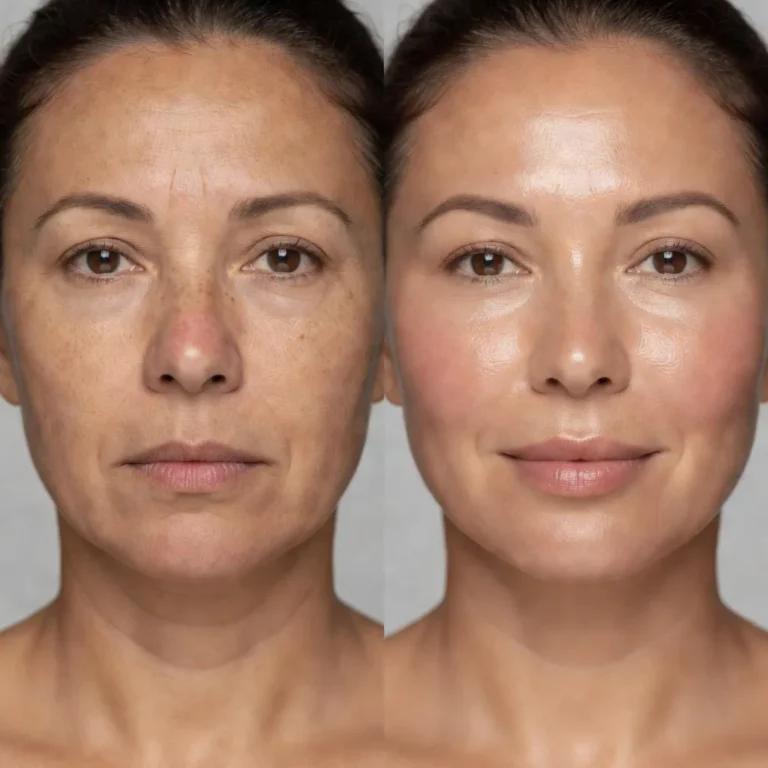
Face massage is pleasant, cheap and low risk, and it can give a real short-term glow. But it will not undo years of sun exposure, rebuild lost collagen or lift sagging skin in any lasting way. Before and after photos online are usually taken within minutes of a session, when puffiness has dropped and blood flow is high.
If you enjoy it, keep it as part of a relaxing routine. If wrinkles bother you, spend your effort first on sunscreen and a retinoid, and consider a dermatologist’s advice for deeper lines.
When to See a Dermatologist
Consider professional advice if at-home care is not giving you the results you want or your skin reacts badly.
- Wrinkles or sagging are deepening quickly and bother you.
- You have rosacea, eczema or very sensitive skin and want to know if massage is safe.
- You develop broken capillaries, bruising or ongoing redness.
- You have had fillers, injections or facial surgery recently.
This article is for general information and does not replace professional medical advice. See a board-certified dermatologist for persistent skin concerns, reactions to products or before starting any new treatment after a cosmetic procedure.
Questions People Ask
Does massaging your face reduce wrinkles?
It can soften fine lines for a few hours but does not remove wrinkles.
How long do face massage results last?
Usually a few hours, until fluid and blood flow return to normal.
Can face massage cause wrinkles?
Gentle massage is unlikely to, but heavy tugging can stress thin skin.
Is gua sha better than a face roller for wrinkles?
Neither removes wrinkles; gua sha is better for draining puffiness.
How often should I massage my face?
Three to five short sessions a week is enough for most people.
Should I use oil for face massage?
Yes, an oil or rich moisturiser prevents tugging and irritation.
Can face massage boost collagen?
Evidence is weak and any effect appears small.
Can I massage my face if I have acne?
Avoid massaging over active spots, as it can spread bacteria.
Does massage help crows feet?
Only very slightly; the skin there is thin, so be gentle.
What works better than massage for wrinkles?
Daily sunscreen, retinoids and in-clinic treatments.
Final Word
Face massage can make your skin look brighter and fine lines softer for a few hours, but it does not erase wrinkles or lift sagging skin for good.
Enjoy it gently with a good oil and clean tools, and rely on sunscreen, retinoids and professional advice for real, lasting wrinkle care.

Written by
Registered pharmacist and founder of Facial Adviser. Rakib's pharmacy training covers how skincare actives work and interact; a later course in cosmetology turned that into a focus on facial treatments and skincare products. He plans, researches and edits every guide on the site and checks health claims against sources such as the American Academy of Dermatology, the FDA and the NIH. He is not a dermatologist; see the Editorial Policy and Medical Disclaimer.
About · Editorial policy · How we choose products · Medical disclaimer · Contact
Keep reading: Facial rollers, gua sha and massagers
- 10 Best Gua Sha Facial Tools (2026): Stone and Steel Picks Compared
- Is a Face Massager Good for Your Skin? What Rollers, Gua Sha and Devices Can Do
- Frownies vs Facial Smoothies: Do Wrinkle Patches Actually Work?
- Facial Roller vs Gua Sha: What a 2025 Trial Found and Which to Choose
- Facial Cupping vs Gua Sha: Suction, Scraping, and What Each Is Good For
- Jade vs Rose Quartz Facial Roller: Does the Stone Actually Matter?
- 10 Best Facial Tools (2026): LED, Cleansing, Gua Sha and More
- 10 Best LED Light Therapy Masks (2026): Clearer Skin, Softer Lines