Would a Facial Get Rid of Blackheads? What It Can and Cannot Do
Blackheads are stubborn. They cluster on the nose, chin and forehead, and no amount of scrubbing seems to shift them. It is natural to wonder whether a professional facial with extractions is the answer, and whether one appointment could leave your skin clear for good.
Part of our guide to skin concerns. Start with: Are Facials Good for Acne?
A facial with professional extractions can remove many blackheads and leave pores looking clearer straight away, especially on the nose and chin. However, it does not stop new blackheads forming, so most people see them return within a few weeks. Blackheads form when oil and dead skin clog pores, and that process continues after any facial. For lasting improvement, combine occasional facials with daily care: gentle cleansing, salicylic acid, a topical retinoid such as adapalene and non-comedogenic products. Persistent blackheads or acne are best treated with help from a dermatologist.
In other words, a facial is a useful reset but not a cure, and the results depend heavily on what you do in the weeks that follow. It can remove existing plugs safely, while home care prevents new ones from forming as quickly.
The American Academy of Dermatology recommends retinoids such as adapalene as a first-line treatment for blackheads and whiteheads, and advises against squeezing or picking at them yourself, which can cause infection and scarring.
This guide explains how blackheads form, what happens during facial extractions, how long results last, what works better long term and how to keep blackheads away between appointments.
Shopping these picks?
Amazon Prime members get fast, free shipping on eligible items, plus Prime Video, Amazon Music and member deals. New members can start with a free trial.
Start a free Prime trialAged 18 to 24? Prime for Young Adults comes with a longer free trial and a lower price after it.
Affiliate link: we may earn a commission at no extra cost to you.
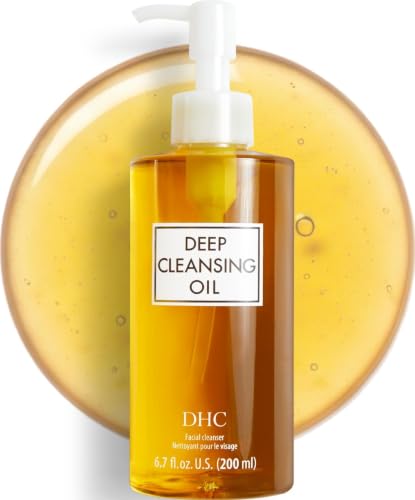
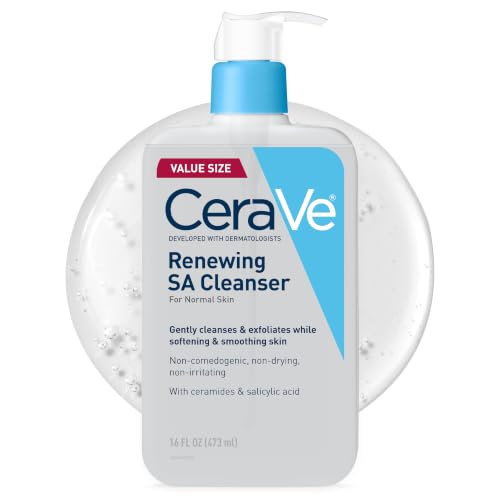
Recommended Products for Keeping Blackheads Under Control


In This Guide
- How Blackheads Form
- What Happens During Facial Extractions
- How Long Results Last
- What Works Better Long Term
- How to Keep Blackheads Away After a Facial
- Which Facial Is Best for Blackheads?
- Pore Strips, Scrubs and Other Quick Fixes
- Blackheads on Different Skin Types
- Common Myths About Blackheads
- Dos and Don’ts
- Honest Limits
- When to See a Dermatologist
- Common Questions
- Summing Up
At a Glance
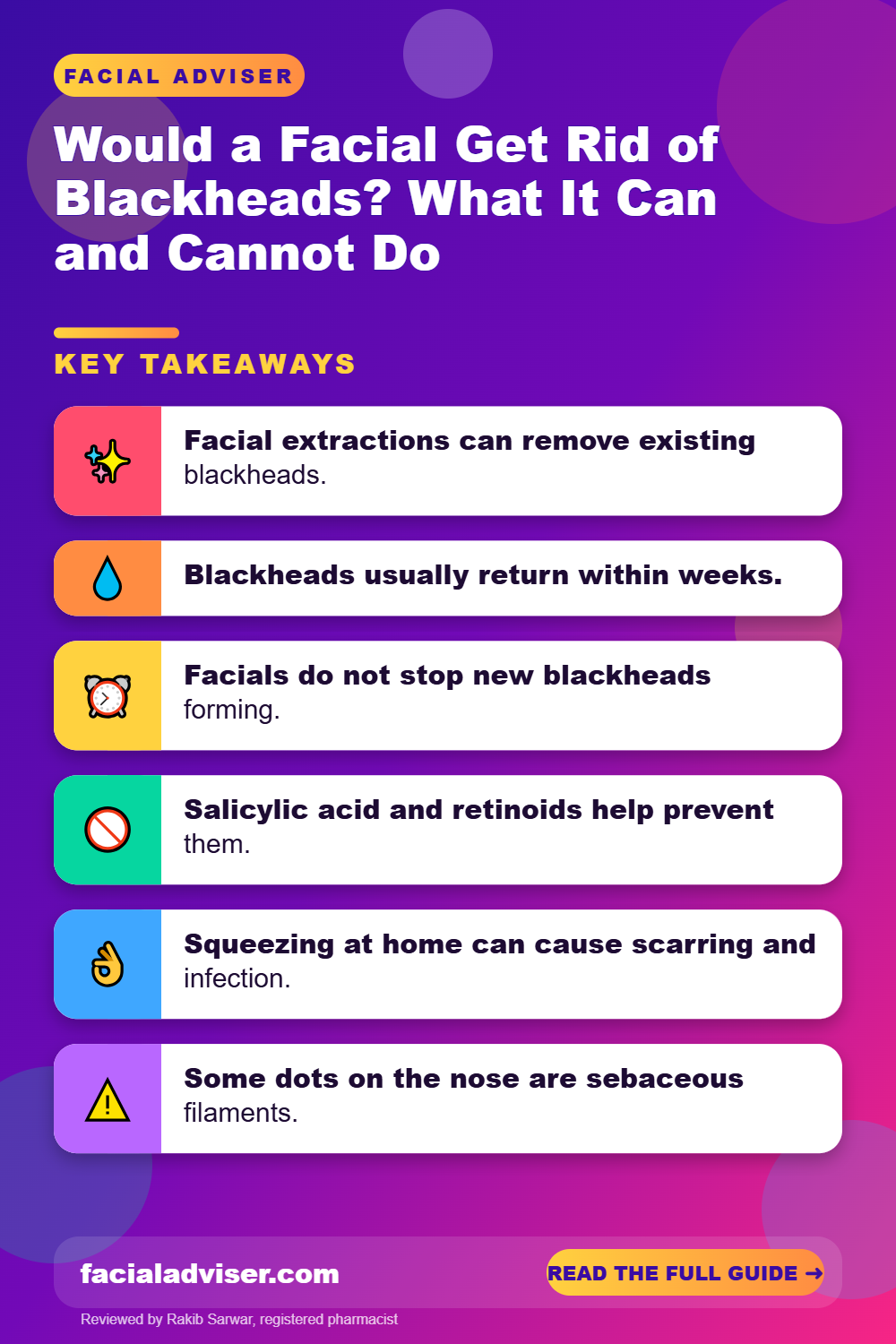
- Facial extractions can remove existing blackheads.
- Blackheads usually return within weeks.
- Facials do not stop new blackheads forming.
- Salicylic acid and retinoids help prevent them.
- Squeezing at home can cause scarring and infection.
- Some dots on the nose are sebaceous filaments.
- See a dermatologist for persistent blackheads or acne.
How Blackheads Form
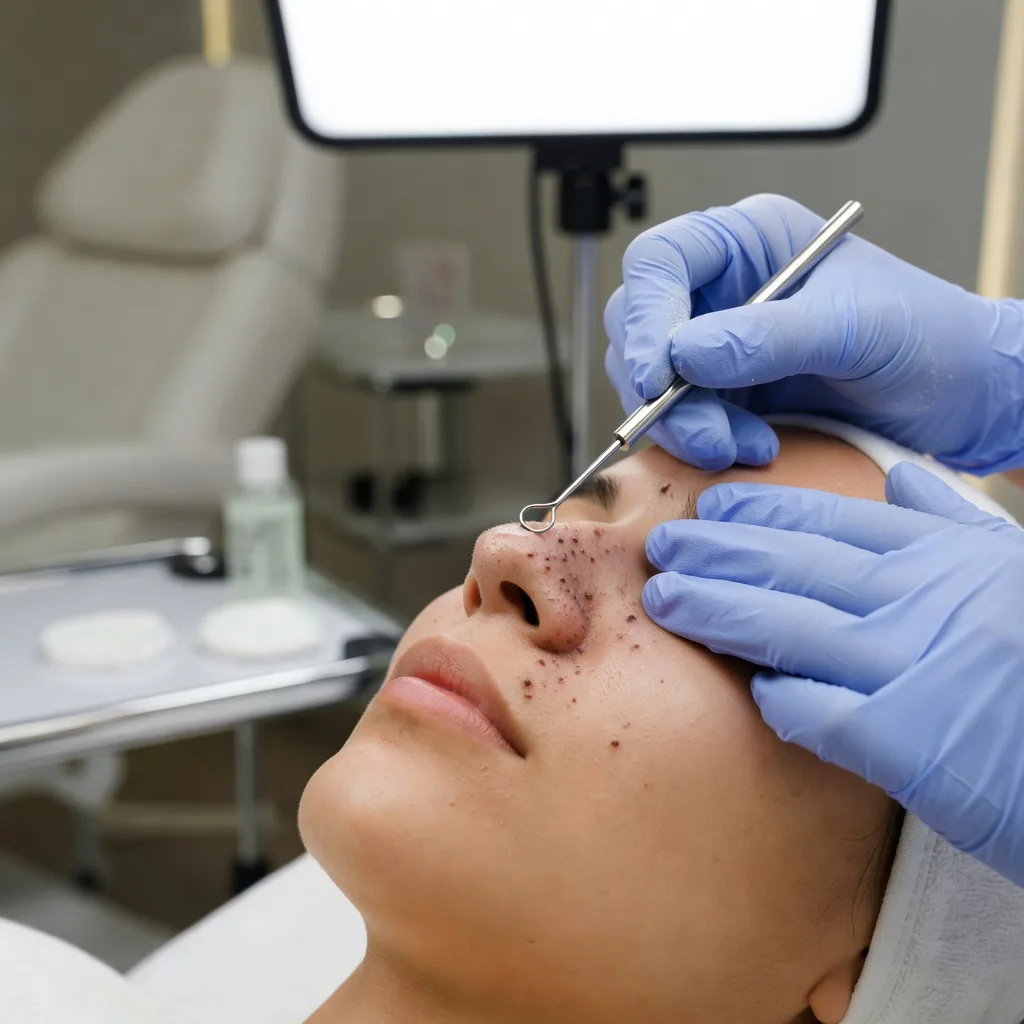
Blackheads are a type of acne lesion called open comedones. They form when a pore becomes clogged with oil and dead skin cells. Because the top of the plug is open to the air, the material at the surface darkens, giving the characteristic black or dark grey dot. It is not dirt.
| Factor | How it contributes | What helps |
|---|---|---|
| Oil production | More sebum to clog pores | Oil control, salicylic acid |
| Slow shedding of skin cells | Cells build up inside the pore | Retinoids, gentle exfoliation |
| Hormones | Increase oil, especially on the T-zone | Consistent routine; dermatologist if severe |
| Comedogenic products | Heavy oils and waxes can add to plugs | Non-comedogenic products |
| Humidity and sweat | Mix with oil and debris | Cleanse after sweating |
| Picking and squeezing | Inflames pores and spreads bacteria | Hands off; professional extractions |
Some dark dots on the nose are not blackheads but sebaceous filaments, a normal part of pores that refill naturally. Extractions can empty them briefly, but they return within days. Our guide on sebaceous filaments versus blackheads explains how to tell them apart.
What Happens During Facial Extractions
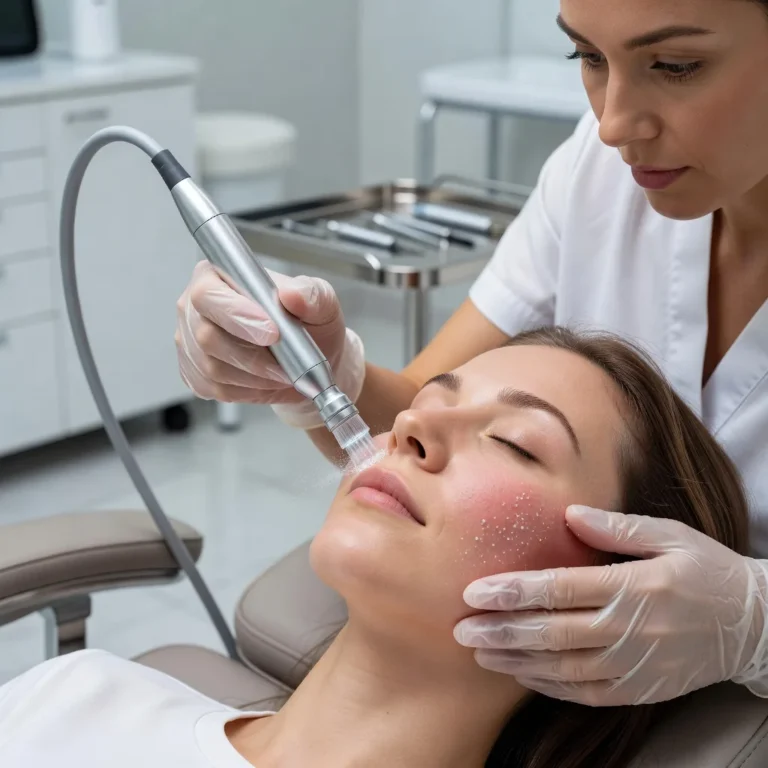
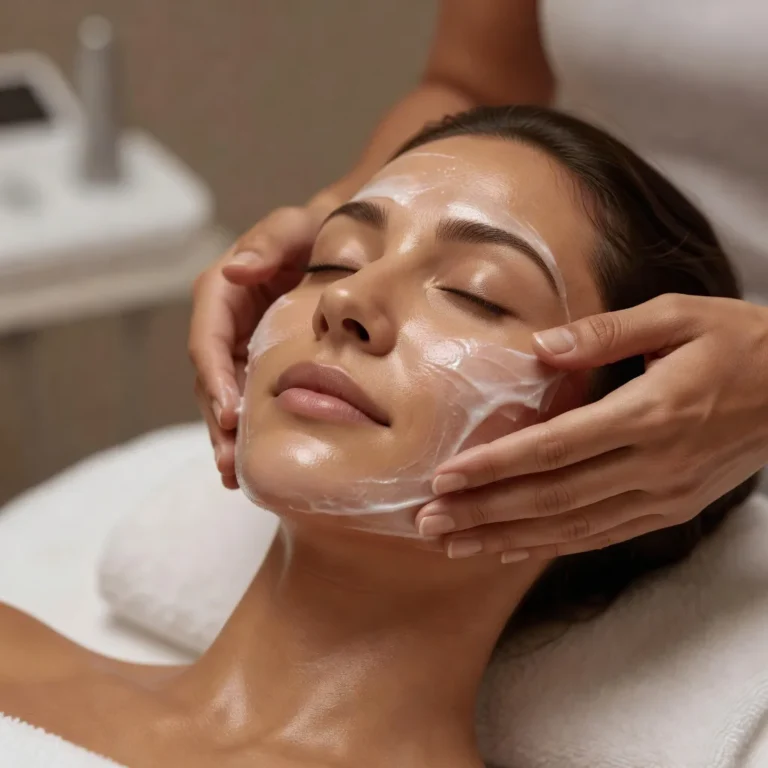
During a facial, the esthetician usually cleanses and exfoliates the skin, then softens it with steam or warm towels. They then apply gentle pressure around each blackhead, often using gloved fingers wrapped in tissue or a sterile comedone extractor, to push the plug out of the pore.
- Softening the skin first makes extraction easier and gentler.
- A trained esthetician avoids inflamed spots, which can scar if squeezed.
- Pores are cleansed afterwards and a calming or clay mask is applied.
- Mild redness for a few hours is normal.
Extractions can feel uncomfortable, especially on the nose, but they should not be very painful. Professional extraction is much safer than squeezing at home because the skin is prepared, the technique is controlled and tools are sterile. It still carries some risk of redness, broken capillaries or marks, especially on darker skin tones, so it is worth choosing an experienced provider. Our guide on whether facials are harmful explains how to choose a safe spa.
Do not try to copy extractions at home with metal tools, pins or fingernails. Squeezing can push debris deeper, break the skin, spread bacteria and leave scars.
How Long Results Last
After a facial with extractions, pores on the nose and chin often look noticeably clearer. How long that lasts depends on your skin and your home routine.
Everyone’s timeline is different. For many people, blackheads start to reappear within two to four weeks, because oil production and skin cell shedding continue as before. With a good home routine that includes salicylic acid or a retinoid, the return is usually slower and less noticeable. Without any home care, blackheads may be back to their previous level within a few weeks.
A facial works best as a starting point. Clearing existing blackheads professionally, then using preventive products at home, gives better long-term results than either approach alone.
What Works Better Long Term
Several home treatments have better evidence than facials for keeping blackheads under control over time.
- Topical retinoids such as adapalene help normalise skin cell shedding and prevent new plugs.
- Salicylic acid dissolves oil inside the pore and loosens existing plugs.
- Benzoyl peroxide is helpful when blackheads come with inflamed spots.
- Non-comedogenic moisturisers and makeup reduce new clogging.
- Cleansing twice a day and after sweating removes excess oil.
The American Academy of Dermatology describes how dermatologists diagnose and treat acne, including retinoids and other options for blackheads and whiteheads. Results usually take several weeks, so patience is important. Our guide on how to deep clean your pores explains a gentle daily routine.
How to Keep Blackheads Away After a Facial
Let skin settle
Keep your routine gentle for a few days after the facial.
Cleanse twice daily
Use a gentle cleanser and remove makeup and sunscreen at night.
Add salicylic acid
Use a BHA product two to four times a week.
Consider a retinoid
Start adapalene two or three nights a week and build up slowly.
Moisturise
Use a light, non-comedogenic moisturiser.
Use a weekly clay mask
Apply to oily areas to absorb excess oil.
Book occasional facials
Every four to eight weeks if you find extractions helpful.
Do not start a retinoid and a strong exfoliant in the same week. Add one product at a time so you can see how your skin reacts and avoid irritation.
Give any new routine at least six to eight weeks before judging it, since pores take time to clear and some people notice a brief increase in small spots at first. Consistency is what keeps blackheads away. A simple routine followed most days does more than an occasional intensive treatment. If your skin becomes red or flaky, cut back on actives rather than stopping them altogether. Using a gentle moisturiser alongside retinoids helps many people tolerate them better.
Which Facial Is Best for Blackheads?
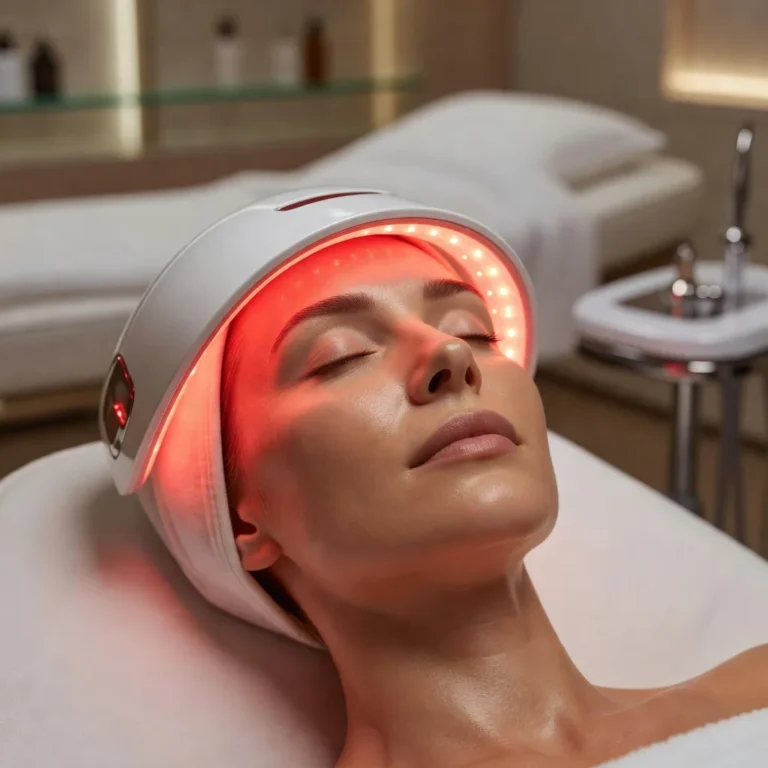
If you want a facial specifically for blackheads, choose one that includes exfoliation and extractions.
| Facial type | Helpful for blackheads? | Notes |
|---|---|---|
| Deep cleansing facial | Yes | Focuses on exfoliation and extractions |
| HydraFacial-style treatment | Often | Suction cleansing can lift debris from pores |
| Salicylic acid peel facial | Yes | Dissolves oil inside pores |
| Hydrating facial | Limited | Improves comfort and glow, not congestion |
| Calming facial | Limited | Best for sensitive skin, few extractions |
Tell your esthetician that blackheads are your main concern and ask how they approach extractions. Mention any retinoids or acids you use, since they may need to adjust the treatment or ask you to pause them for a few days beforehand. If you have sensitive or darker skin, ask for gentle extractions to reduce the risk of marks. Our guide on which facial is best for glowing skin compares other facial types.
Pore Strips, Scrubs and Other Quick Fixes
Pore strips pull out the top part of blackheads and can give a satisfying result, but the pores refill quickly and frequent use can irritate the skin, especially on the nose. Harsh scrubs remove surface dead skin but do not reach inside the pore, and they can cause redness and small tears.
Occasional pore strips are unlikely to cause harm for most people, but they are not a long-term solution. Salicylic acid and retinoids target the cause rather than the surface. Charcoal and clay masks can absorb surface oil and make the nose look less shiny for a day or two, but they do not clear the pore from within either. If you use strips, avoid them on sensitive, sunburned or broken skin and do not use them on the same day as exfoliating acids.
Blackheads on Different Skin Types
Blackheads can appear on any skin type, but the approach changes slightly depending on how oily or sensitive your skin is.
- Oily skin: salicylic acid most days, a weekly clay mask and a light gel moisturiser.
- Combination skin: treat the T-zone with salicylic acid and keep cheeks hydrated.
- Dry skin with blackheads: use salicylic acid once or twice a week with a richer non-comedogenic moisturiser.
- Sensitive skin: start with a low-strength product once a week and build up slowly.
- Darker skin tones: avoid harsh extractions and scrubs that can leave dark marks.
Blackheads on dry skin often come from heavy, occlusive products rather than excess oil. Switching to lighter, non-comedogenic formulas can help more than adding strong exfoliants.
If you wear makeup daily, cleaning brushes and sponges weekly and removing makeup fully every night both reduce new clogging. Our guide on the difference between cleansing and a facial explains how daily cleansing and occasional treatments work together.
Common Myths About Blackheads
- Myth: blackheads are dirt. They are oxidised oil and skin cells.
- Myth: washing more often clears them. Over-washing can irritate skin and increase oil.
- Myth: steam opens pores. Warmth softens the plug, but pores do not open and close.
- Myth: toothpaste or lemon juice dries them out. Both can irritate and burn the skin.
- Myth: one strong facial fixes them. Prevention needs regular home care.
Believing that blackheads are dirt often leads people to scrub harder, which irritates the skin without clearing the pores. Understanding that they form from within the pore makes it easier to choose treatments that work, such as salicylic acid and retinoids.
Home remedies shared online, such as baking soda scrubs or glue-based masks, can damage the skin barrier and cause burns or rashes. It is safer to stick with well-tested ingredients.
Dos and Don’ts
Do
- Use salicylic acid or a retinoid
- Choose non-comedogenic products
- Book professional extractions if needed
- Cleanse after sweating
- Be patient with results
Don’t
- Squeeze blackheads at home
- Use metal extraction tools
- Scrub hard
- Expect one facial to fix blackheads permanently
- Use pore strips on irritated skin
Honest Limits
No treatment can stop blackheads from ever forming again, because pores naturally produce oil. The aim is to keep them fewer and less noticeable.
Pore size is largely genetic, so people with larger pores may always see some blackheads or filaments on the nose. Hormonal changes around periods, pregnancy or menopause can also make blackheads come and go regardless of how careful your routine is. Facials and home care make them less visible but cannot change pore size permanently.
When to See a Dermatologist
- You have many blackheads or whiteheads that do not improve after two to three months of home care.
- Blackheads come with inflamed spots, cysts or scarring.
- Over-the-counter products irritate your skin.
- You want prescription treatment options.
This article is for general information and does not replace professional medical advice. See a dermatologist for persistent acne, painful spots or scarring.
Common Questions
Would a facial get rid of blackheads?
It can remove many temporarily, but they usually return within weeks.
How long do facial results last for blackheads?
Often two to four weeks without home care; longer with it.
Are facial extractions safe?
Yes, when done by a trained professional with clean tools.
What is the best facial for blackheads?
A deep cleansing facial or salicylic acid peel.
Can I remove blackheads at home?
Use salicylic acid and retinoids rather than squeezing.
Do pore strips work?
They remove the top of blackheads briefly but do not prevent them.
Why do blackheads come back?
Pores keep producing oil and shedding skin cells.
Are the dots on my nose blackheads?
Some may be sebaceous filaments, which are normal.
Does adapalene help blackheads?
Yes, it is one of the most effective treatments.
How often should I get a facial for blackheads?
Every four to eight weeks if it helps you.
Summing Up
A facial with professional extractions can clear many blackheads and leave pores looking cleaner, but it does not stop new ones forming. Most people see them return within a few weeks without home care.
For lasting results, combine occasional facials with daily salicylic acid or a retinoid, gentle cleansing and non-comedogenic products. Avoid squeezing at home, and see a dermatologist if blackheads persist.

Written by
Registered pharmacist and founder of Facial Adviser. Rakib's pharmacy training covers how skincare actives work and interact; a later course in cosmetology turned that into a focus on facial treatments and skincare products. He plans, researches and edits every guide on the site and checks health claims against sources such as the American Academy of Dermatology, the FDA and the NIH. He is not a dermatologist; see the Editorial Policy and Medical Disclaimer.
About · Editorial policy · How we choose products · Medical disclaimer · Contact
Keep reading: Acne and breakouts
- Are Facials Good for Acne?
- Pimple Scars That Won't Fade: What Actually Works
- How to Treat Small Milia Around Eyes Safely Without Picking or Scarring
- Why Do I Get Acne on My Temples? The Real Causes and How to Fix Them
- Tiny Pimples on the Jawline and Chin: Causes and Treatment
- Does Accutane Work for Body Acne?
- How Can I Make My Pores Less Visible?
- How to Calm Inflamed Red Patches on Your Face