Fungal Acne vs Regular Acne: How to Tell the Difference
You are doing everything right, yet the small bumps on your forehead or chest keep coming back, itch a little, and shrug off every acne product you try. If that sounds familiar, you may be reading about the wrong condition.
Part of our guide to skin concerns. Start with: Are Facials Good for Acne?
What people call fungal acne is not acne at all, and the difference changes what actually helps.
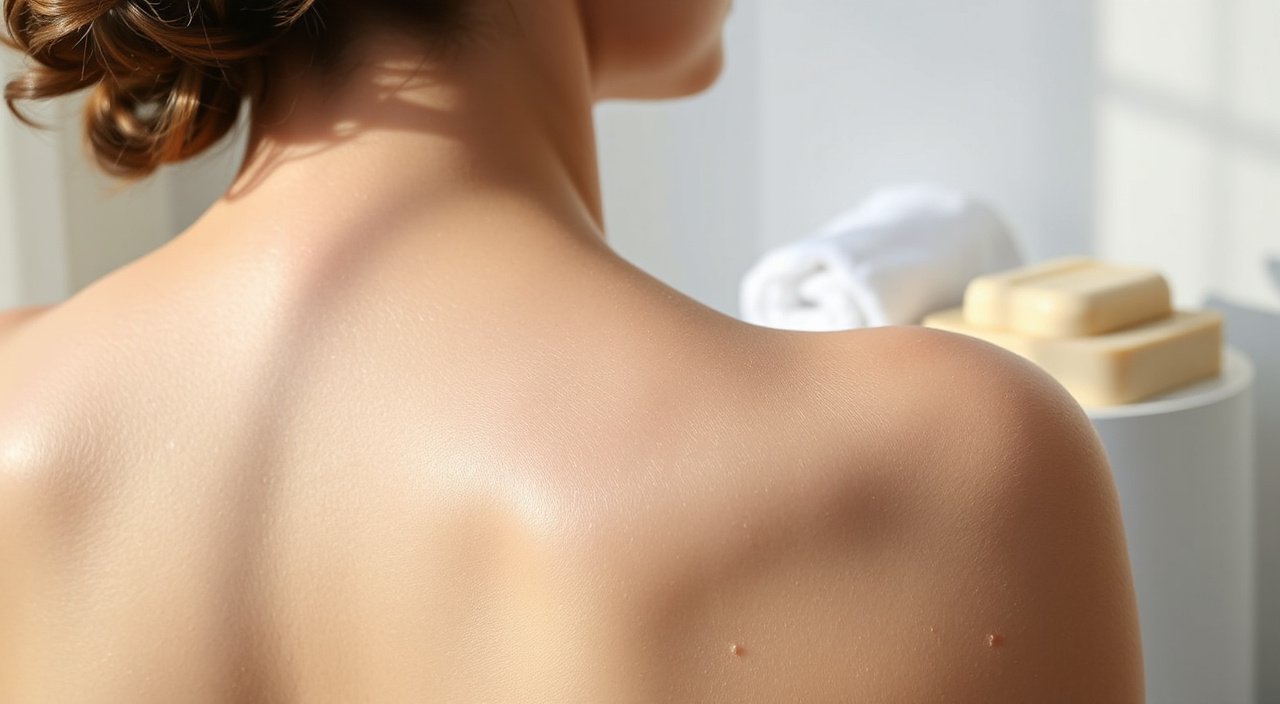
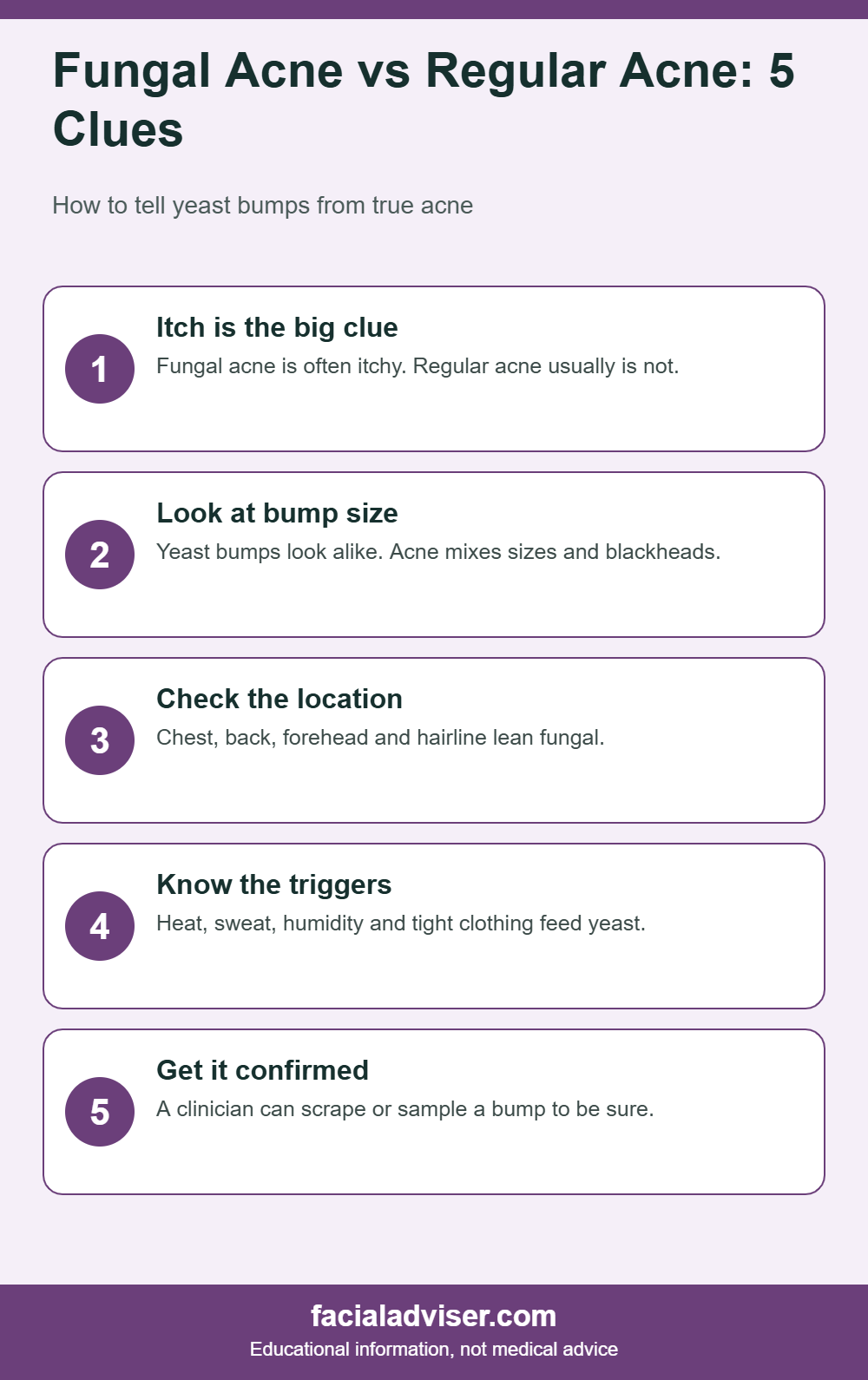
Fungal acne is the popular name for Malassezia folliculitis, an inflammation of hair follicles caused by an overgrowth of a yeast that normally lives on skin. Regular acne (acne vulgaris) comes from clogged pores, excess oil, bacteria and inflammation. Fungal acne usually shows up as small, uniform, itchy bumps on the chest, back, shoulders, forehead or hairline, while regular acne tends to mix blackheads, whiteheads and bumps of different sizes. Because the causes differ, treatments that work for one can fail or even backfire for the other.
Black Friday is coming: shop the deals with Prime
In short: look at itch, bump uniformity and location, track what changes over two weeks, and get a clinician to confirm before you spend months on the wrong routine. A skin scraping or exam can settle it far faster than guessing.
A systematic analysis of treatments for Malassezia folliculitis in the Journal of the European Academy of Dermatology and Venereology describes it as an itchy, follicle-centered eruption most often on the upper trunk, notes that it is regularly overlooked, and says that confirming it needs microscopic or tissue examination.
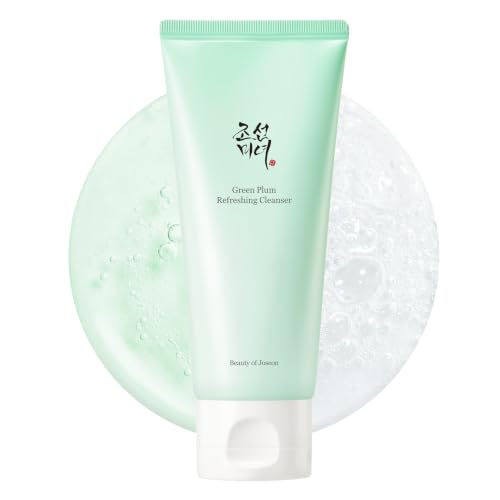
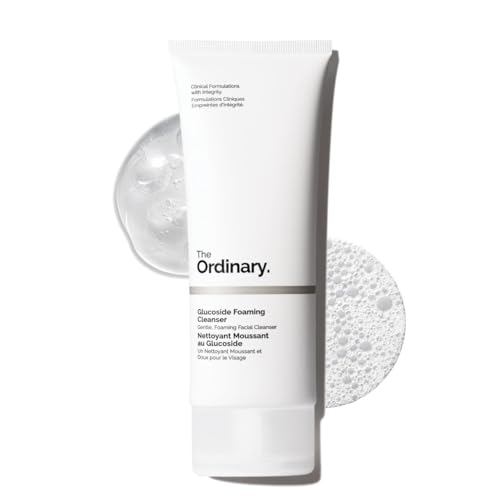
This guide compares the two conditions side by side, explains common triggers, shows a practical way to sort out which one you have, lists ingredients people often check on labels, and shares seven gentle cleansers to consider while you wait for an answer. For routine basics, see our guide to facials and acne.
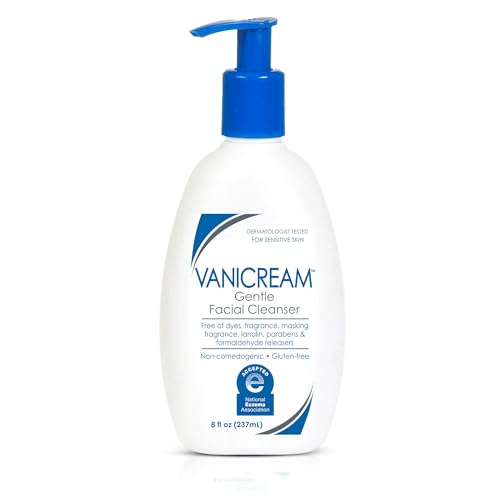
Gentle Cleansers to Consider While You Sort It Out



Jump to a Section
- What “Fungal Acne” Really Is
- Fungal Acne vs Regular Acne: Side by Side
- What Triggers Fungal Acne
- How to Sort Out Which One You Have
- Ingredients People Check on Labels
- Daily Habits That Support Skin
- Common Mistakes That Prolong the Problem
- How It Is Treated
- Honest Limits
- When to See a Professional
- Frequently Asked Questions
- Final Word
At a Glance
- Fungal acne is yeast-related folliculitis, not true acne, so acne products often do not fix it.
- Itchy, same-sized small bumps on the chest, back, forehead or hairline are the classic clue.
- Regular acne usually includes blackheads or whiteheads and bumps of mixed sizes.
- Heat, sweat, tight clothing and a weakened immune system are recognized triggers.
- Only an exam, scraping or biopsy can confirm it; photos and online quizzes cannot.
- Treatment is usually antifungal and prescribed or recommended by a clinician.
- Gentle cleansers and simple routines can support skin while you wait for answers.
What “Fungal Acne” Really Is
Everyone has Malassezia on their skin. It is a yeast that lives in oily areas, feeds on skin lipids, and normally causes no trouble. When conditions shift, it can multiply inside hair follicles and trigger inflammation. Doctors call the result Malassezia folliculitis, or pityrosporum folliculitis.
The nickname “fungal acne” stuck because the bumps look like pimples. The mechanism is different. There is no blocked-pore comedone driving it, and bacteria are not the main culprit. That is why common acne products, from salicylic acid to antibiotics, can leave it unchanged.
The analysis cited above describes it as an itchy eruption of follicular papules and pustules, most commonly on the upper trunk, in young to middle-aged adults and in people with weakened immunity. In everyday practice the forehead and hairline are also frequent sites.
Fungal Acne vs Regular Acne: Side by Side
No single feature is definitive, and the two can occur together. Use the table as a pattern guide, not a diagnosis.
| Feature | Fungal acne (yeast folliculitis) | Regular acne (acne vulgaris) |
|---|---|---|
| Itch | Often itchy | Usually not itchy; may be tender |
| Bump size | Small and very similar in size | Mixed sizes, from tiny to large |
| Blackheads and whiteheads | Usually absent | Typical |
| Common locations | Chest, back, shoulders, forehead, hairline | Face, jaw, chest and back |
| Deep cysts | Uncommon | Possible |
| Response to usual acne products | Often poor | Often improves over weeks |
| Typical triggers | Heat, sweat, humid climates, occlusive clothing | Hormones, oil, bacteria, genetics |
| Confirmed by | Exam, scraping or biopsy | Clinical exam |
What Triggers Fungal Acne
Researchers point to environmental and personal triggers: high temperature, humidity, tight or sweaty clothing, and a weakened immune system. Long courses of antibiotics or steroid medicines may also shift the balance of microbes in some people, which is why a clinician needs your full medication history.
Day to day, the usual story is sweat that stays on the skin. A workout, a long commute in damp weather or a rain-soaked helmet can create the warm, moist, lipid-rich environment Malassezia likes. Heavy moisturizers and oils can also feed the yeast, which is why ingredient lists matter later in this guide.
Diet and gut health come up often online. The evidence linking a specific food to Malassezia folliculitis is thin, but you can read our broader overview of how diet affects the skin microbiome for context.
How to Sort Out Which One You Have
Check for itch
Rate itch from 0 to 10 at the same time of day for a week. Regular, strong itch with small uniform bumps points toward yeast.
Compare bump sizes
Take a clear daylight photo each morning. If almost every bump looks the same size, note that.
Map where it is
Chest, back, shoulders and hairline are common for yeast. Jawline-heavy breakouts lean hormonal acne.
Pause new products
Hold off on adding anything new for two weeks so you can see the pattern without noise.
Look at what feeds yeast
Review your cleanser, moisturizer and body products with the ingredient table below.
Book an exam
A clinician can scrape or sample a bump and look under a microscope. This is the fastest way to know.
Take photos in the same place near a window with no filters. A series of dated pictures is more useful to a doctor than a single bad-day photo.
Ingredients People Check on Labels
Malassezia depends on lipids to grow. Many people with fungal acne therefore scan labels for ingredients that may feed yeast. This approach is based on lab biology and clinical experience, and rigorous product studies are scarce, so treat it as a trial and not a rule.
| Ingredient group | Examples on labels | Commonly raised concern |
|---|---|---|
| Fatty acid esters | Isopropyl myristate, isopropyl palmitate, glyceryl stearate | Lipid food for yeast in theory |
| Polysorbates | Polysorbate 20, 60, 80 | Oleic-based emulsifiers are often flagged |
| Many plant oils | Coconut, olive, argan, avocado | Rich in fatty acids yeast can use |
| Lanolin and some waxes | Lanolin, certain waxes | Lipid-heavy bases |
| Often considered lower concern | Squalane, caprylic or capric triglyceride | Short-chain lipids yeast uses poorly |
Do not stop prescribed medicines, and do not apply anti-dandruff or antifungal products to your face without advice. Some contain strong actives that can burn or dry facial skin.
If you want to learn how to scan labels more quickly, our guide on how to read a cosmetic ingredient list walks through the order, percentages and common synonyms.
Daily Habits That Support Skin
Helps
- Shower soon after sweaty workouts
- Change out of damp clothing quickly
- Wear breathable fabrics on the chest and back
- Wash hats, helmets and pillowcases regularly
Backfires
- Layer heavy oils and rich balms over bumpy areas
- Pick at or squeeze itchy bumps
- Keep stacking new acne actives while the bumps are spreading
- Assume antibiotics are the answer without confirming the cause
A simple routine usually helps clarity: a gentle cleanser, a light moisturizer with a short ingredient list, and sunscreen in the morning. If clogged pores are also part of the picture, our guide to cleansers for clogged pores may help.
Common Mistakes That Prolong the Problem
The most frequent mistake is treating every bump as acne. People add a stronger acid, a harsher scrub or another round of spot treatment, then wonder why itchy bumps spread. Over-exfoliating can also damage the skin barrier, which makes skin more reactive and harder to read.
The second mistake is changing everything at once. Swapping cleanser, moisturizer, sunscreen and body wash in a single week makes it impossible to tell what helped or hurt. Change one product at a time and give it two to four weeks unless it stings or itches.
The third is relying on social media lists. A product that works for one person may contain an ingredient that bothers another, and the same product can be reformulated. Use lists as a starting point and read the actual ingredient list in front of you.
Finally, many people skip the exam because the bumps seem minor. A short visit can save months of trial and error, particularly if you have repeated breakouts that arrive after sweating, after antibiotics or in humid weather.
How It Is Treated
According to the analysis cited above, treatment focuses on controlling inflammation and preventing recurrence, using systemic or topical options. In practice, clinicians commonly use antifungal medicines applied to the skin or taken by mouth, chosen by severity and location. Over-the-counter tools can complement that plan, but they cannot replace the diagnosis.
Recurrence is part of the picture. Because Malassezia is a normal skin resident, treatment is often followed by a maintenance plan. Ask your clinician what to do if bumps return, rather than restarting old routines.
When you see a clinician, bring a list of every product you use, including shampoos and body washes, plus any recent medicines. Mention when bumps appear (after workouts, in summer, after antibiotics) and whether they itch more at night. Those details often point toward the right diagnosis faster than the photos alone.
Honest Limits
Online ingredient lists, “fungal acne safe” lists and quizzes are not diagnostic tools. The phrase “fungal acne safe” is a community label, not a regulated claim, and formulas change without notice. Studies on product ingredients are limited, so nobody can promise a particular cleanser will fix yeast folliculitis.
We also cannot see your skin. The products below are shortlisted as gentle, simple cleansers from widely reviewed listings, based on research and listing details, not testing. Always compare each current ingredient list against what you are avoiding.
When to See a Professional
See a doctor or dermatologist if bumps itch intensely, spread, last longer than a few weeks despite a simple routine, return right after antibiotics, or appear alongside fever, fatigue or other illness. Also seek advice if you have a weakened immune system, since folliculitis may behave differently.
This article is for general information and is not medical advice. It does not diagnose or treat any condition. Talk to a doctor, pharmacist or dermatologist about persistent skin problems.
Frequently Asked Questions
What is fungal acne?
It is the common name for Malassezia folliculitis, an inflammation of hair follicles caused by an overgrowth of normal skin yeast. It looks like acne but is not caused by clogged pores in the same way.
How do I know if I have fungal acne or regular acne?
Itch, small bumps that all look alike, and a chest, back or hairline pattern suggest yeast. Mixed sizes with blackheads or whiteheads suggest regular acne. Only an exam or scraping can confirm.
Can fungal acne and regular acne happen together?
Yes. Some people have both, which can make treatment confusing. A clinician can tell which part is driving your symptoms.
Why do my acne products not work?
Common acne products target oil, clogged pores and bacteria. They may not help a yeast problem. If a routine has failed for weeks, ask for an exam.
Is fungal acne contagious?
No. The yeast is a normal part of skin for nearly everyone. What differs is the environment that lets it overgrow.
Does sweat cause fungal acne?
Sweat that stays on skin, especially under tight clothing in warm weather, is a recognized trigger. Showering and changing soon after exercise is a sensible habit.
Which skincare ingredients should I check?
People often review fatty acid esters, polysorbates, many plant oils and lanolin. This is guidance from lab biology and experience, so treat it as a trial and recheck with your clinician.
How is fungal acne treated?
Usually with antifungal treatment applied to the skin or taken by mouth, chosen by a clinician based on severity. Supportive skin care and trigger control help prevent relapse.
Can I treat it with anti-dandruff shampoo?
Some clinicians suggest it, but products differ and facial skin is more delicate. Ask first, and never use medicated shampoo near eyes or on broken skin.
How long until it improves?
It depends on severity and treatment. Improvement is often seen over weeks, and relapses are common, so follow-up care matters.
Final Word
Fungal acne and regular acne share a look but not a cause, and that is why mixing them up wastes months. Watch for itch, uniform bumps and trunk or hairline involvement, and do not let a product list stand in for a diagnosis.
Keep your routine simple, manage sweat and clothing, and book an exam if bumps persist. Once you know which condition you are treating, the plan becomes far clearer, and so do the results.

Written by
Registered pharmacist and founder of Facial Adviser. Rakib's pharmacy training covers how skincare actives work and interact; a later course in cosmetology turned that into a focus on facial treatments and skincare products. He plans, researches and edits every guide on the site and checks health claims against sources such as the American Academy of Dermatology, the FDA and the NIH. He is not a dermatologist; see the Editorial Policy and Medical Disclaimer.
About · Editorial policy · How we choose products · Medical disclaimer · Contact
Keep reading: Acne and breakouts
- 10 Best Pimple Patches (2026): Hydrocolloid Stickers for Stubborn Breakouts
- 10 Best Hypochlorous Acid Sprays for Face (2026): Calming Mists for Acne-Prone Skin
- Does Accutane Work for Body Acne?
- Are Facials Good for Acne?
- Do They Remove Blackheads During a Facial?
- How Can I Make My Pores Less Visible?
- How to Calm Inflamed Red Patches on Your Face
Turn skincare time into me-time with a free audiobook