What Are the Benefits of Anti-Wrinkle Injections? Results, Risks and Options
Anti-wrinkle injections are one of the most popular cosmetic treatments in the world, and for good reason: they are quick, need no downtime and soften certain lines better than any cream. They are also a medical procedure with real limits, costs that repeat and side effects worth knowing before you book.
Part of our guide to facial treatments. Start with: What Is the Best Anti-Aging Facial Treatment? Options Compared by Goal
The main benefits of anti-wrinkle injections are smoother frown lines, forehead lines and crow’s feet, a more rested look and a lower chance of those expression lines deepening over time. The injections use a purified botulinum toxin that temporarily blocks the nerve signals that make specific facial muscles contract. When those muscles relax, the skin over them creases less, so dynamic lines soften within about three to fourteen days. Results usually last around three to four months, the treatment takes minutes and most people return to normal activities the same day. The effect is temporary, it does not fix sagging or sun damage, and it must be repeated to keep results.
In short: injections are the most reliable way to soften expression lines, but only for a few months at a time.
The US Food and Drug Administration has approved botulinum toxin products for specific cosmetic uses such as frown lines between the brows, and the American Academy of Dermatology advises choosing a board-certified dermatologist or other qualified, experienced injector.
This guide explains how the injections work, what they can and cannot do, how long they last, who should avoid them and the non-injection alternatives worth trying first.
Shopping these picks?
Amazon Prime members get fast, free shipping on eligible items, plus Prime Video, Amazon Music and member deals. New members can start with a free trial.
Start a free Prime trialAged 18 to 24? Prime for Young Adults comes with a longer free trial and a lower price after it.
Affiliate link: we may earn a commission at no extra cost to you.
Recommended Aftercare and Non-Injection Alternatives



Key Takeaways
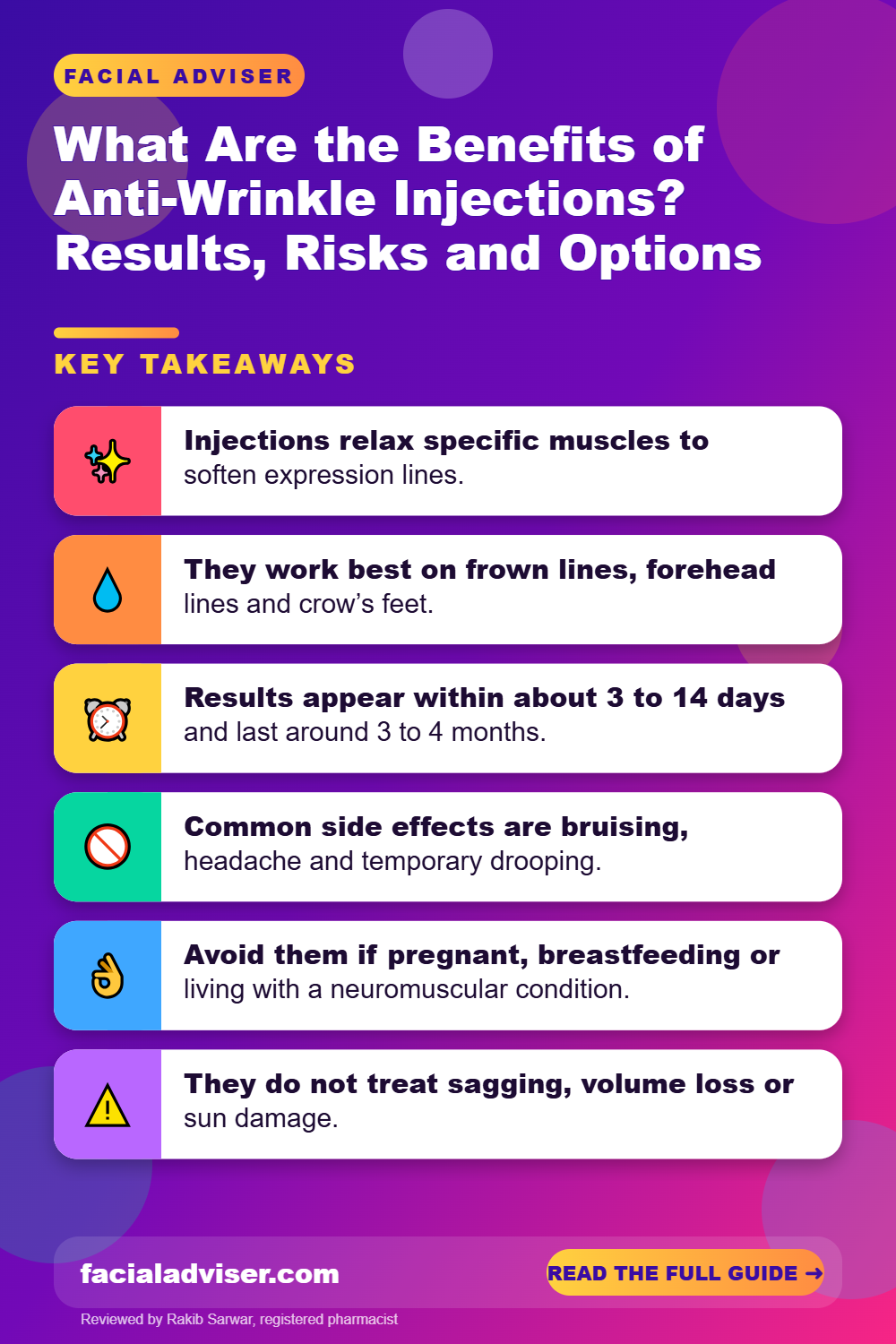
- Injections relax specific muscles to soften expression lines.
- They work best on frown lines, forehead lines and crow’s feet.
- Results appear within about 3 to 14 days and last around 3 to 4 months.
- Common side effects are bruising, headache and temporary drooping.
- Avoid them if pregnant, breastfeeding or living with a neuromuscular condition.
- They do not treat sagging, volume loss or sun damage.
- Retinoids, sunscreen and patches are gentler, slower alternatives.
In This Guide
- How Botulinum Toxin Injections Work
- The Main Benefits of Anti-Wrinkle Injections
- Which Lines Respond Best
- How Long Anti-Wrinkle Injections Last
- Side Effects and Risks
- Who Should Avoid Anti-Wrinkle Injections
- How to Prepare for and Look After Anti-Wrinkle Injections
- Non-Injection Alternatives
- Dos and Don’ts
- Honest Limits
- When to See a Dermatologist
- Your Questions, Answered
- Where This Leaves You
How Botulinum Toxin Injections Work
Every time you frown, squint or raise your eyebrows, small facial muscles pull on the skin above them. Over years, those repeated movements etch lines that eventually stay visible even when your face is still. These are called dynamic wrinkles, and they are what anti-wrinkle injections target.
The injection places a tiny dose of purified botulinum toxin into a chosen muscle. The toxin blocks the release of a chemical messenger called acetylcholine at the nerve ending, so the muscle receives a weaker signal to contract. The muscle is not removed or damaged; it simply moves less until the nerve grows new connections, which is why the effect wears off gradually.
Anti-wrinkle injections soften lines caused by movement. They do not add volume, lift loose skin or smooth lines caused by sun damage and thinning skin. Those need different treatments, such as fillers, energy devices, peels or retinoids.
Because the dose is small and placed precisely, a skilled injector can relax the lines you dislike while keeping enough movement for a natural expression. Our guide on facial fillers vs Botox explains why the two treatments are often confused and how they differ.
The Main Benefits of Anti-Wrinkle Injections
When the treatment suits the problem, the benefits are clear and fairly predictable. Here is what people usually gain.
- Smoother frown lines between the brows, often called the elevens.
- Softer horizontal forehead lines.
- Fewer crow’s feet at the outer corners of the eyes when smiling.
- A more relaxed, less tired or less cross resting expression.
- Slower deepening of expression lines while the muscles are relaxed.
- A quick appointment, often under 20 minutes, with no downtime for most people.
- Predictable, adjustable results that can be fine-tuned at the next session.
There are medical benefits too. The same toxin is used under medical supervision to treat excessive sweating, chronic migraine and some muscle spasm conditions, which is part of why it is so well studied. For cosmetic use, the benefit is mainly about how lines look rather than skin health, so it works best alongside good daily skincare rather than instead of it.
Which Lines Respond Best
Not every wrinkle responds equally. This table shows the areas that usually do well and those where injections have limited or no effect.
| Area | How well injections work | Notes |
|---|---|---|
| Frown lines between the brows | Very well | The most studied cosmetic use |
| Horizontal forehead lines | Well | Too much can lower or flatten the brows |
| Crow’s feet | Well | Some smile creases below the eye may remain |
| Bunny lines on the nose | Moderately | Small doses only |
| Lines around the mouth | Limited | Risk of affecting speech and smiling |
| Neck bands | Moderately | Needs an experienced injector |
| Deep static creases | Partly | Often need filler or resurfacing too |
| Sagging jowls or cheeks | Not effective | Volume and skin laxity need other treatments |
If your lines are fine and caused by dryness or sun damage, a cream will usually do more than an injection. If they are etched deeply into still skin, injections may soften them but rarely erase them in a single session. Our article on why crow’s feet can remain after Botox explains the most common reasons results fall short.
How Long Anti-Wrinkle Injections Last
Timing is one of the most common questions, and the answer has two parts: how quickly the effect appears and how long it stays.
| Stage | Typical timing | What you notice |
|---|---|---|
| First signs | 2 to 5 days | Lines begin to soften when you move |
| Full effect | 10 to 14 days | Maximum smoothing; time for any top-up review |
| Steady result | 2 to 3 months | Relaxed expression with natural movement |
| Wearing off | 3 to 4 months | Movement returns gradually |
| Longer intervals | Up to 5 or 6 months for some | Varies with dose, area and person |
Results tend to fade faster in people with strong facial muscles, in areas with a lot of movement and sometimes in very active people. With regular treatments, some people find they can space appointments further apart because the muscles have been used less. There is no benefit in booking before the previous dose has worn off; repeating too often can raise the risk of the body forming antibodies that make future treatments less effective.
Side Effects and Risks
In the hands of a trained injector, anti-wrinkle injections are considered low risk, but they are not risk free. Most side effects are mild and short-lived.
- Redness, tenderness or small bumps at injection sites for an hour or so.
- Bruising, especially around the eyes.
- A mild headache for a day or two.
- Heavy brows or a flat forehead if the dose or placement is not right.
- A drooping eyelid or uneven eyebrows that can last several weeks.
- Asymmetry, such as one brow sitting higher than the other.
- Rarely, allergic reactions or effects spreading beyond the treated area.
Seek urgent medical help if you develop trouble swallowing, speaking or breathing, double vision or marked muscle weakness after any botulinum toxin injection. The FDA includes a warning about the toxin effect spreading beyond the injection site on these products.
Most cosmetic problems, such as a heavy brow or droop, fade as the product wears off. Choosing an experienced, qualified injector who assesses your face first is the single best way to lower your risk.
Who Should Avoid Anti-Wrinkle Injections
Some people should not have injections, or should wait until a problem has cleared. A proper medical consultation before treatment should cover all of these.
- People who are pregnant, trying to conceive or breastfeeding.
- Anyone with a neuromuscular condition such as myasthenia gravis or Lambert-Eaton syndrome.
- People with a known allergy to botulinum toxin or any ingredient in the product.
- Anyone with an active skin infection, cold sore or inflamed acne at the injection site.
- People taking certain medicines, such as some antibiotics or muscle relaxants, until cleared by their doctor.
- Anyone expecting injections to fix sagging skin or volume loss.
Tell your injector about blood thinners, supplements such as fish oil and any history of facial surgery, drooping eyelids or bleeding problems. It is also worth being honest about your expectations. A frozen, expressionless look is not what most people want, and a good injector will tell you if the treatment is unlikely to give the result you are hoping for.
How to Prepare for and Look After Anti-Wrinkle Injections
Simple preparation and aftercare lower the chance of bruising and help the product stay where it was placed. Always follow your own injector’s advice first.
Book a consultation
Choose a board-certified dermatologist or qualified medical injector and discuss your goals and health history.
Pause blood thinners if advised
Only stop medicines your doctor agrees to; supplements such as fish oil may increase bruising.
Arrive with clean skin
Skip makeup on the day so the area can be cleaned properly.
Stay upright afterwards
Avoid lying flat for about four hours after treatment.
Do not rub or massage
Leave the area alone for the rest of the day and skip facials or face tools.
Use a cold compress gently
Hold a wrapped cold pack lightly on any sore spots to ease swelling or bruising.
Skip heat and hard exercise
Avoid saunas, hot yoga and strenuous workouts for about 24 hours.
Review at two weeks
Return if you notice asymmetry so your injector can assess a small top-up.
Plan injections at least two weeks before a wedding, event or photos. That gives time for the full effect to appear and for any bruising or unevenness to be corrected.
Non-Injection Alternatives
If you are not ready for injections, or want to extend and support their results, several at-home options help. None match the muscle-relaxing effect, but each has a role.
| Option | What it does | Realistic result |
|---|---|---|
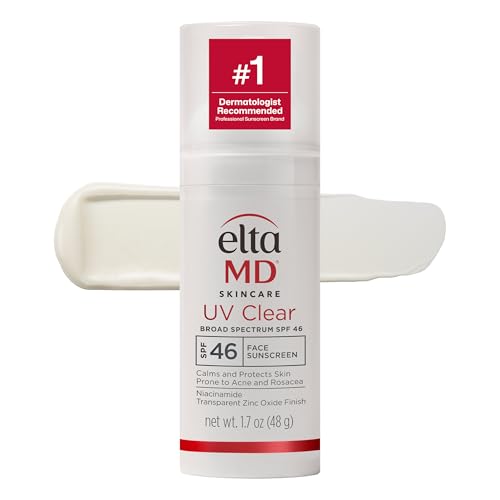
| Daily broad-spectrum sunscreen | Prevents UV damage that deepens lines | Slows new wrinkles; the best prevention |
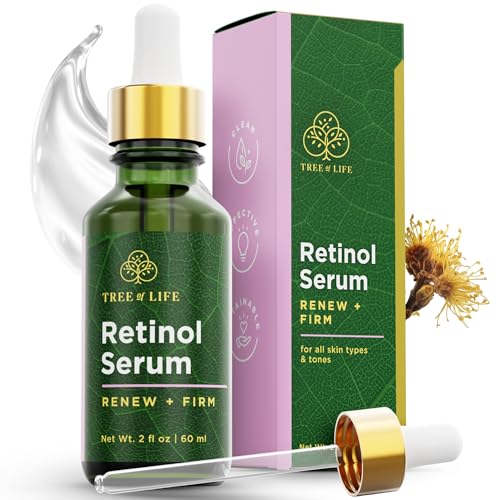
| Retinol or prescription retinoid | Speeds cell turnover and supports collagen | Softer fine lines after several months |
| Peptide serum | Supports the skin barrier and firmness | Subtle smoothing and hydration |
| Hyaluronic acid serum | Draws water into the upper skin | Plumper look for hours, not a lasting fix |
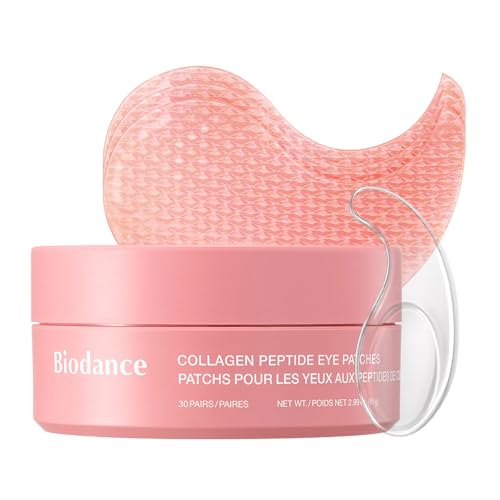
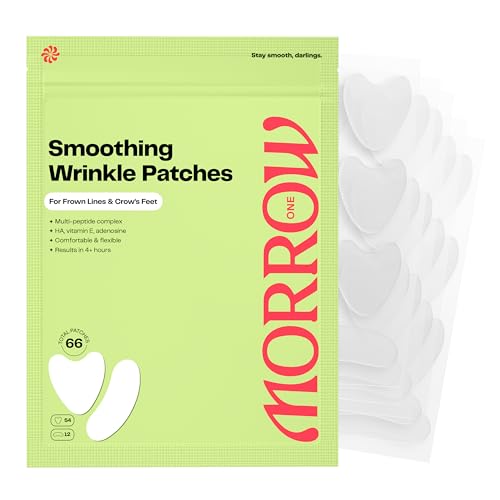
| Silicone or hydrogel wrinkle patches | Hold skin still and hydrated overnight | Temporary smoothing by morning |
| Chemical peels | Remove damaged outer skin | Improved texture and fine lines |
Sun protection matters most. The AAD guide on how to apply sunscreen explains how much to use and when to reapply. If you want to start a retinoid, our guide on how to transition to retinol smoothly helps you avoid irritation. For stronger resurfacing, the AAD overview of chemical peels explains what a professional peel can do.
Dos and Don’ts
Do
- Choose a qualified, experienced injector
- Share your full medical history
- Wear sunscreen daily to protect results
- Wait two weeks before judging the result
- Use retinoids and moisturiser to support skin quality
Don’t
- Book with untrained providers or at parties
- Have injections while pregnant or breastfeeding
- Rub or massage the area on the day
- Rebook before the last dose has worn off
- Expect injections to lift sagging skin
Honest Limits
Anti-wrinkle injections are effective for the job they do, but that job is narrow. They soften lines made by muscle movement, and nothing else. They will not improve skin texture, pores, pigmentation or looseness, and results fade within months, so the cost and appointments continue for as long as you want the effect.
Creams, patches and serums cannot copy the injections, whatever the marketing says. Products sold as a needle-free alternative may hydrate or tighten the surface for a few hours, but they do not reach or relax the muscle. The honest approach is to use daily sunscreen and a retinoid as your foundation, and treat injections as an optional extra rather than a must.
When to See a Dermatologist
- You are considering injections and want a medical assessment first.
- You notice drooping, asymmetry or weakness that worries you after treatment.
- You have bruising, swelling or pain that is getting worse rather than better.
- Your lines are deep or caused by sagging, and you want to know which treatments suit you.
This article is for general information and does not replace professional medical advice. Anti-wrinkle injections are a medical procedure; always consult a board-certified dermatologist or qualified medical practitioner before treatment.
Your Questions, Answered
What are the benefits of anti-wrinkle injections?
Smoother expression lines, a more rested look and quick, low-downtime treatment.
How do anti-wrinkle injections work?
They temporarily block nerve signals so treated muscles contract less.
How long do anti-wrinkle injections last?
Usually about three to four months.
When will I see results?
Within 2 to 5 days, with the full effect at about two weeks.
Do anti-wrinkle injections hurt?
Most people feel only brief pinches.
What are the most common side effects?
Bruising, redness, headache and occasional temporary drooping.
Who should not have anti-wrinkle injections?
Pregnant or breastfeeding people and those with neuromuscular conditions.
Can injections prevent wrinkles?
They can slow expression lines deepening while the muscles are relaxed.
Is there a cream that works like Botox?
No cream relaxes muscles the way injections do.
What should I avoid after injections?
Rubbing the area, lying flat, heat and hard exercise for about a day.
Where This Leaves You
The main benefits of anti-wrinkle injections are smoother frown lines, forehead lines and crow’s feet with little downtime, but results last only around three to four months and carry some risks.
Choose a qualified injector, follow simple aftercare, and support your skin every day with sunscreen and a retinoid, whether or not you decide to have injections.

Written by
Registered pharmacist and founder of Facial Adviser. Rakib's pharmacy training covers how skincare actives work and interact; a later course in cosmetology turned that into a focus on facial treatments and skincare products. He plans, researches and edits every guide on the site and checks health claims against sources such as the American Academy of Dermatology, the FDA and the NIH. He is not a dermatologist; see the Editorial Policy and Medical Disclaimer.
About · Editorial policy · How we choose products · Medical disclaimer · Contact
Keep reading: Anti-aging facials and treatments
- What Should I Use on My Face for Anti-Aging? The 5 Products That Matter
- What Does an Anti-Aging Facial Consist Of? Steps, Types and What to Expect
- Can Anti-Aging Creams Age You? Irritation, Sun Sensitivity and Fixes
- Anti Aging Facial Price: Affordable Treatments for Youthful Skin
- What Is the Best Anti-Aging Facial Treatment? Options Compared by Goal
- Ultimate Guide Microdermabrasion: What to Know
- Facial vs Chemical Peel: Differences, Results and Which to Choose