What Is an LED Anti-Aging Facial? Red Light, Results and Safety
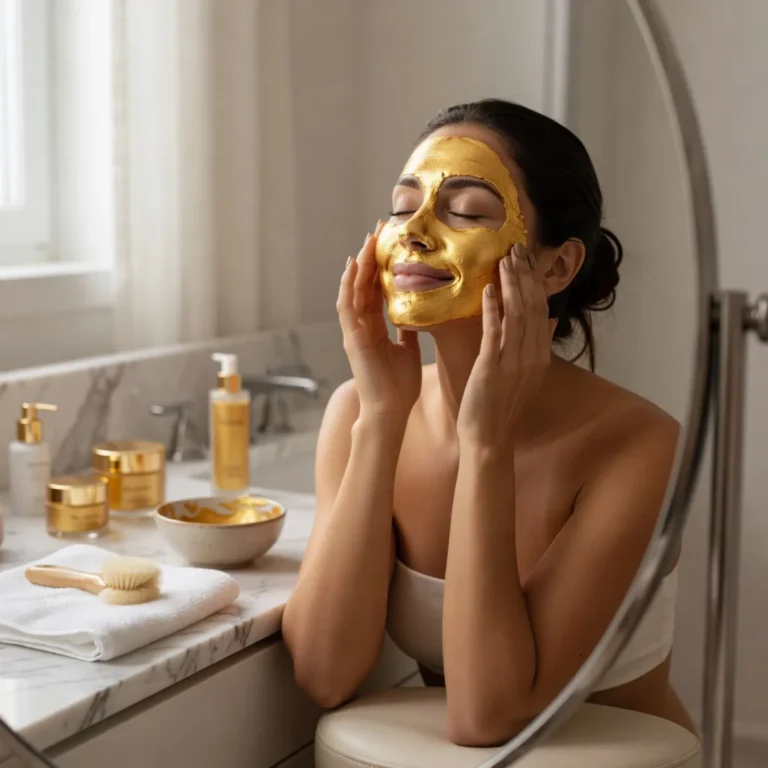
LED facials have moved from dermatology clinics into spas and bathrooms, helped by the striking image of a glowing face mask. They are painless, need no downtime and promise smoother, firmer skin, which makes them appealing if you want anti-aging care without needles, acids or heat.
Part of our guide to at-home facial devices. Start with: 10 Best LED Light Therapy Masks (2026): Clearer Skin, Softer Lines
An LED anti-aging facial is a treatment that shines low-level red and near-infrared light onto the skin using light-emitting diodes, either from a clinic panel or an at-home mask. Red light, at around 630 to 660 nanometres, reaches the upper layers of skin, and near-infrared, at around 810 to 850 nanometres, reaches a little deeper. Both are thought to boost energy production in skin cells, supporting collagen and calming inflammation. Small studies suggest modest improvements in fine lines, texture and tone after several weeks of regular sessions. It does not burn or peel the skin, so there is no downtime, but results are gradual and subtle.
In short: LED is a gentle, low-risk way to support ageing skin, best used consistently alongside sunscreen and proven skincare.
The US Food and Drug Administration has cleared some LED devices for specific uses, but clearance means a device is considered reasonably safe for its intended use, not that it will dramatically reverse ageing. The American Academy of Dermatology continues to stress daily sunscreen as the most effective anti-aging habit.
This guide explains how red and near-infrared light work, how often to use LED, what to expect from home masks and how to protect your eyes.
Shopping these picks?
Amazon Prime members get fast, free shipping on eligible items, plus Prime Video, Amazon Music and member deals. New members can start with a free trial.
Start a free Prime trialAged 18 to 24? Prime for Young Adults comes with a longer free trial and a lower price after it.
Affiliate link: we may earn a commission at no extra cost to you.
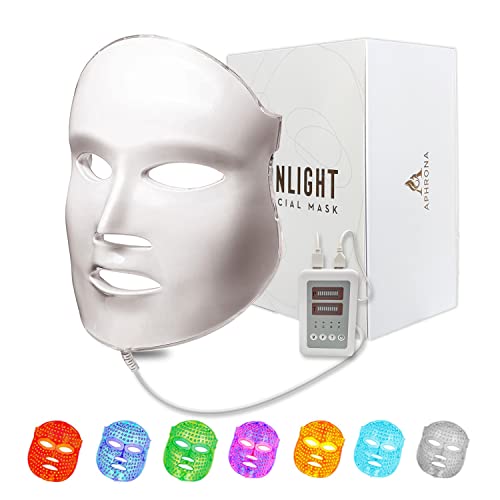
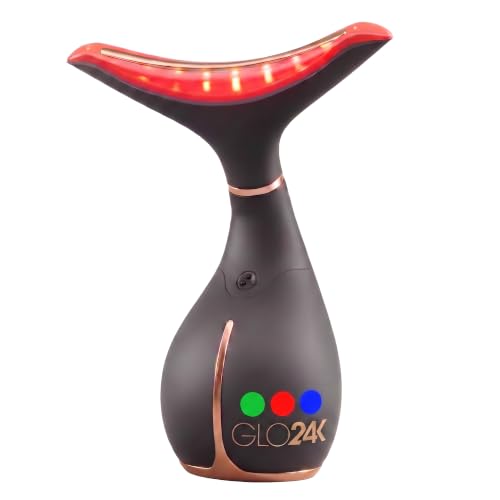
Recommended LED Face Masks and Red Light Devices




Key Takeaways
- LED facials use red and near-infrared light, not UV, so they do not tan or burn.
- Red light targets the upper skin; near-infrared reaches slightly deeper.
- Evidence shows modest improvements in fine lines and tone over weeks.
- Consistency matters more than session length.
- Home masks are weaker than clinic panels but convenient.
- Protect your eyes, especially with bright or near-infrared devices.
- LED supports, but does not replace, sunscreen and retinoids.
Contents
- How an LED Anti-Aging Facial Works
- Red vs Near-Infrared Light: What Is the Difference?
- What an LED Facial Can Do for Ageing Skin
- LED Facials in a Clinic or Spa
- At-Home LED Face Masks: Do They Work?
- How Often Should You Do an LED Facial?
- Combining LED With Your Skincare Routine
- Is LED Safe for Your Eyes?
- How to Use an LED Face Mask at Home
- Dos and Don’ts
- Honest Limits
- When to See a Dermatologist
- FAQ
- The Takeaway
How an LED Anti-Aging Facial Works
LED therapy is sometimes called photobiomodulation. The idea is that certain wavelengths of light are absorbed by structures inside skin cells, particularly the mitochondria that produce energy. With more energy available, cells called fibroblasts may produce more collagen and elastin, and inflammation may settle.
Unlike lasers or intense pulsed light, LED light is low in energy and spread over a wide area, and it is delivered at a comfortable distance from the skin. It does not heat or injure the skin, which is why it needs no recovery time. The trade-off is that its effects are gentler and build slowly, so it rewards patience and regular sessions rather than one-off treatments.
- LED light does not contain ultraviolet rays, so it does not cause tanning or sunburn.
- Different colours reach different depths: blue stays near the surface, red goes a little deeper and near-infrared deeper still.
- Most anti-aging devices use red, near-infrared or both together.
- Blue light is mainly used for acne rather than anti-aging.
Red vs Near-Infrared Light: What Is the Difference?
Red and near-infrared are the two wavelengths most linked with anti-aging. Many devices combine them, but it helps to know what each one is meant to do.
| Feature | Red light | Near-infrared light |
|---|---|---|
| Typical wavelength | About 630 to 660 nm | About 810 to 850 nm |
| Visible? | Yes, a bright red glow | Mostly invisible, may look faintly red |
| Depth | Upper layers of skin | Slightly deeper layers |
| Main aims | Fine lines, tone, radiance | Firmness, calming, recovery |
| Eye comfort | Bright; many people close their eyes | Invisible, so the eyes do not react to it |
| Common in | Most masks and panels | Higher-end masks and clinic devices |
The combination is popular because the two wavelengths may complement each other. Because near-infrared is invisible, your eyes do not naturally squint or blink against it, which is one reason eye protection matters with stronger devices.
What an LED Facial Can Do for Ageing Skin
Research on LED is promising but mostly based on small studies, often funded by manufacturers. Taken together, they suggest these realistic benefits after several weeks of regular use:
- Slight softening of fine lines, especially around the eyes.
- Smoother texture and a more even skin tone.
- A brighter, healthier-looking glow.
- Less redness and calmer skin after procedures or irritation.
- Support for healing after peels or microneedling when used under professional guidance.
LED results are subtle. Most people notice a better glow within a few weeks, but changes in lines usually take two to three months of consistent sessions. Deep wrinkles, sagging and volume loss will not change much.
Our guide on how to stimulate collagen naturally explains which daily habits and ingredients support collagen alongside treatments like LED.
LED Facials in a Clinic or Spa
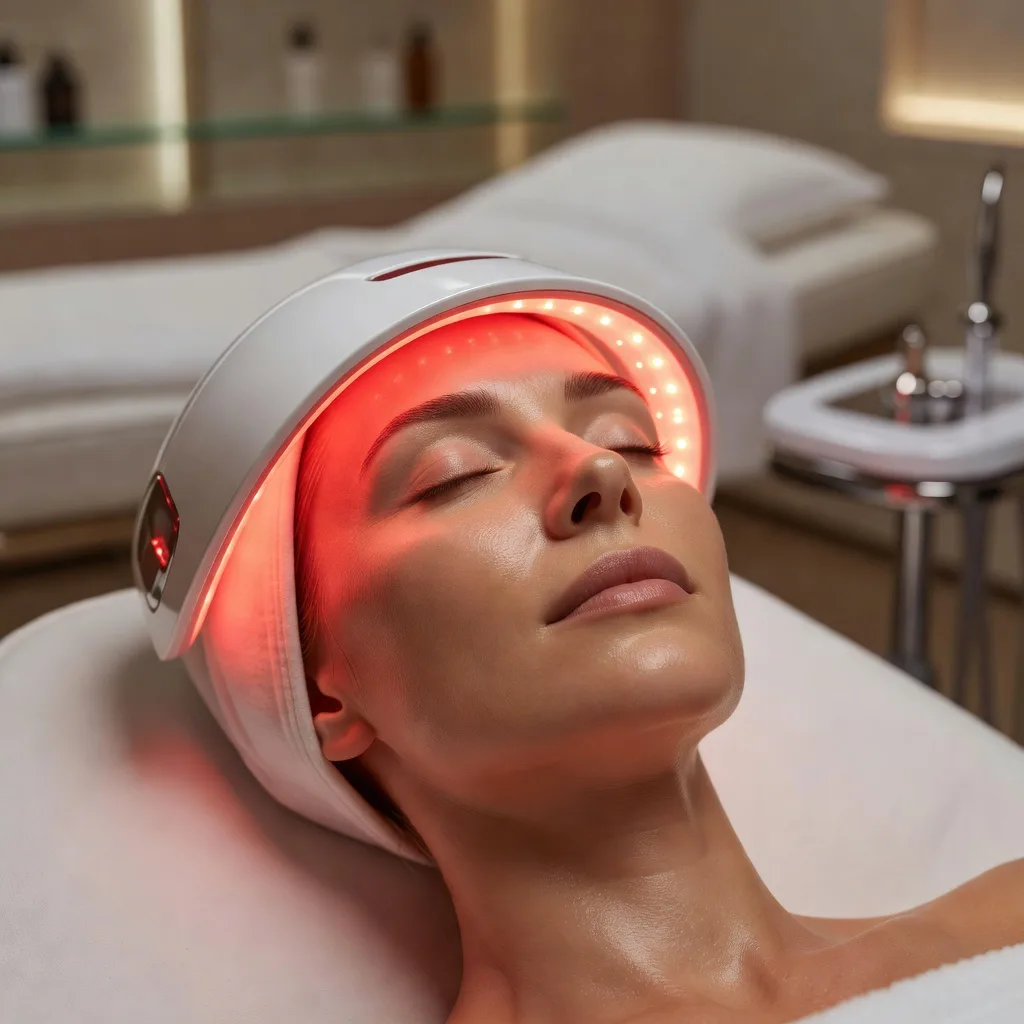
A professional LED facial usually forms part of a longer anti-aging facial. After cleansing and sometimes a light peel, you lie under a large LED panel with protective goggles for about 15 to 30 minutes.
- Clinic panels are usually more powerful and cover the face evenly.
- LED is often added after microneedling or peels to calm the skin.
- Courses are typically one or two sessions a week for four to eight weeks.
- Maintenance sessions are then spaced a few weeks apart.
If you are thinking of booking a full treatment, our guide to the anti-aging facial explains how LED fits alongside peels, masks and massage.
At-Home LED Face Masks: Do They Work?
At-home LED masks use the same kinds of wavelengths as clinic devices but at lower power, so each session delivers less light energy. That makes them safer for untrained users, but it also means results depend heavily on regular use.
| Factor | At-home mask | Clinic LED |
|---|---|---|
| Power | Lower | Higher |
| Session length | Usually 3 to 20 minutes | Usually 15 to 30 minutes |
| Frequency | Several times a week | Once or twice a week |
| Convenience | High, use at home | Needs appointments |
| Supervision | None | Trained staff |
| Best for | Ongoing maintenance | Faster, stronger courses |
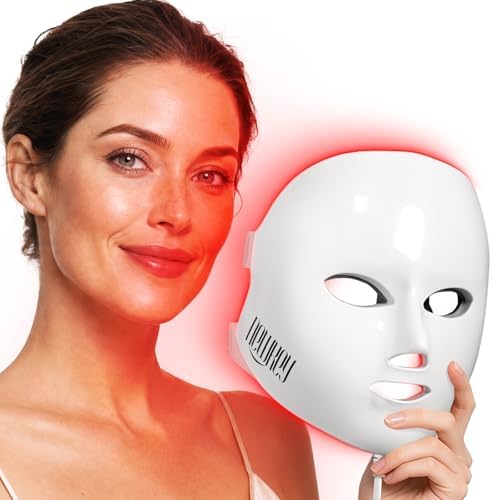
When choosing a home device, look for clearly stated wavelengths, a timer, and FDA clearance for the intended use. A good fit matters too: a mask that sits far from the skin delivers less light. Flexible silicone masks tend to follow the contours of the face more closely than rigid plastic ones, while handheld wands let you target small areas such as the eyes or mouth but take longer to cover the whole face. Treat it as one part of a routine that also includes sunscreen and proven actives, not a replacement for them.
How Often Should You Do an LED Facial?
Frequency depends on the device strength. More is not always better, because skin cells appear to respond best to moderate, regular doses rather than long, intense sessions.
- Home masks: usually 3 to 5 times a week for the first 8 to 12 weeks, following the manufacturer’s session time.
- Maintenance at home: 2 to 3 times a week once you are happy with results.
- Clinic LED: once or twice a week during a course, then every few weeks.
- Do not double session times hoping for faster results; follow the instructions.
Consistency is the biggest factor. A mask used three times a week for three months will do far more than a mask used daily for a fortnight and then forgotten in a drawer. If your skin feels warm, tight or looks flushed after sessions, cut back to fewer sessions a week and check that you are following the recommended time for your device.
Combining LED With Your Skincare Routine
LED works well alongside a sensible routine, and there is no need to overhaul your products to use it. A few simple habits help you avoid irritation and get more from each session.
- Use LED on clean, dry skin, then apply serums and moisturiser afterwards rather than before.
- Vitamin C in the morning and a retinoid at night fit comfortably around evening LED sessions.
- If your skin is sensitive, avoid LED on nights you use a strong acid peel.
- Hydrating ingredients such as hyaluronic acid and ceramides help soothe skin after sessions.
- Keep sunscreen as your non-negotiable morning step, whatever device you use.
Think of LED as a supporting habit that sits alongside proven ingredients. The combination of daily sun protection, a retinoid and regular LED is more likely to show visible change than any one of these on its own.
Is LED Safe for Your Eyes?
LED light is generally considered safe for skin, but eyes deserve more care. Bright red light can be uncomfortable, and questions remain about long-term exposure to strong light, particularly for people with eye conditions or on light-sensitising medicines.
- Always use the goggles or eye shields supplied, or close your eyes during treatment.
- Never look directly into the diodes.
- Be extra careful with devices that include near-infrared, which you cannot see.
- Ask an eye doctor first if you have an eye condition or take medicines that increase light sensitivity.
Do not use LED if you take medicines or supplements that make you sensitive to light, have a light-triggered condition such as lupus or a history of light-induced migraines or seizures, without checking with your doctor first. Stop if you notice eye pain, blurred vision or headaches.
How to Use an LED Face Mask at Home
These steps help you get the most from a home device while keeping your skin and eyes safe.
Read the instructions
Check the wavelengths, session time and any warnings for your device.
Cleanse your face
Remove makeup and sunscreen so the light reaches clean, dry skin.
Protect your eyes
Wear the supplied goggles or keep your eyes closed throughout.
Position the mask
Make sure it sits close to the skin and covers the areas you want to treat.
Run one session
Use the built-in timer and do not repeat sessions back to back.
Apply skincare
Follow with a serum and moisturiser; save retinol for nights you are not irritated.
Track progress
Take a photo in the same light every four weeks to judge results.
Build LED into a habit you already have, such as ten minutes while reading in the evening. Home masks only work if you actually use them several times a week for months.
Dos and Don’ts
Good Habits
- Use LED consistently for at least eight weeks
- Protect your eyes every session
- Cleanse before each session
- Check with a doctor if you take photosensitising medicines
- Keep using daily sunscreen
Common Mistakes
- Expect LED to replace fillers or a facelift
- Stare into the lights
- Exceed the recommended session time
- Use it over broken or infected skin
- Rely on LED instead of sunscreen
Honest Limits
LED is one of the safest anti-aging treatments, but it is also one of the mildest. Much of the research involves small groups, short follow-up and different devices, which makes it hard to predict how much any one mask will help you.
If your main concern is deep wrinkles or sagging, treatments like microneedling, peels or radiofrequency have stronger evidence. LED works best as a gentle add-on. The most proven anti-aging steps remain daily sunscreen, applied as described in the AAD guide on how to apply sunscreen, and a retinoid. For another no-downtime option, see our guide to microcurrent facials.
When to See a Dermatologist
- You have a light-sensitive condition or take photosensitising medicines.
- You want stronger treatment for wrinkles or sagging.
- Your skin becomes irritated, blotchy or darker after LED use.
- You have a new or changing spot you hope to treat with light.
This article is for general information and does not replace professional medical advice. See a board-certified dermatologist, and an eye doctor if you have eye concerns, before starting LED treatment.
FAQ
What is an LED anti-aging facial?
A treatment using red and near-infrared light to support collagen and calm skin.
Does an LED facial really work?
It can give modest improvements in fine lines and tone with regular use.
Is red or near-infrared better for wrinkles?
Both may help; many devices combine them.
How often should I use an LED mask?
Usually three to five times a week at first, then two or three for maintenance.
How long until I see results?
Glow in a few weeks; fine line changes usually take two to three months.
Are at-home LED masks as good as clinic LED?
No, they are weaker, but useful with consistent use.
Is LED safe for your eyes?
Generally, with goggles or closed eyes; avoid looking at the lights.
Does LED hurt?
No, most people feel nothing or mild warmth.
Can I use LED with retinol?
Yes, but use them at different times if your skin is sensitive.
Can LED replace sunscreen?
No, daily sunscreen is still essential.
The Takeaway
An LED anti-aging facial uses red and near-infrared light to gently support collagen, calm redness and brighten skin, with no pain or downtime but only modest, gradual results.
Use it consistently for a few months, protect your eyes every time, and pair it with daily sunscreen and proven skincare for the best outcome.

Written by
Registered pharmacist and founder of Facial Adviser. Rakib's pharmacy training covers how skincare actives work and interact; a later course in cosmetology turned that into a focus on facial treatments and skincare products. He plans, researches and edits every guide on the site and checks health claims against sources such as the American Academy of Dermatology, the FDA and the NIH. He is not a dermatologist; see the Editorial Policy and Medical Disclaimer.
About · Editorial policy · How we choose products · Medical disclaimer · Contact
Keep reading: LED light therapy
- 10 Best LED Light Therapy Masks (2026): Clearer Skin, Softer Lines
- Best Anti-Breakout Skin Therapy Wand for Hormonal Acne: Blue Light Guide
- Best Mask-Friendly LED Therapy Cap for Combined Treatments: Buyer's Guide
- 10 Best LED Face Masks for Acne and Wrinkles (2026): Blue and Red
- Does Blue Light Damage Your Skin? Screens vs Sunlight
- 10 Best Products for Women's Facial Hair Removal (2026): Gentle Picks
- 10 Best Gua Sha Facial Tools (2026): Stone and Steel Picks Compared