Lemon Facial: The Safety Issue Nobody Mentions
A lemon facial gets recommended constantly for brightening and fading dark spots. Citric acid genuinely is a real AHA, but the way this facial is typically used at home creates a documented safety issue that most articles never mention.
Part of our guide to facial treatments. Start with: Fruit Facial at Home: Does It Actually Work?
Raw lemon juice’s pH and concentration routinely exceed the safety range that formulated AHA products are deliberately kept within. More importantly, phytophotodermatitis, a real chemical burn reaction from citrus juice combined with sun exposure, is the single most important finding in this guide.
This isn’t an allergic reaction, it’s a direct, sun-triggered chemical injury that can leave marks lasting months to years, and a standard patch test doesn’t rule it out.
This guide covers what lemon juice can genuinely do for skin, and the one behavior change that actually keeps this facial safe.
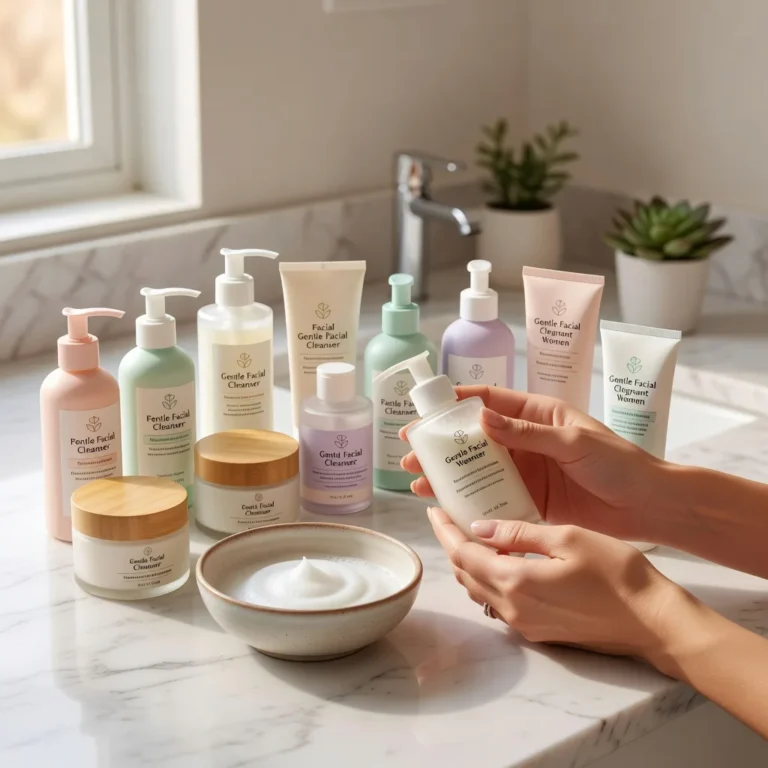
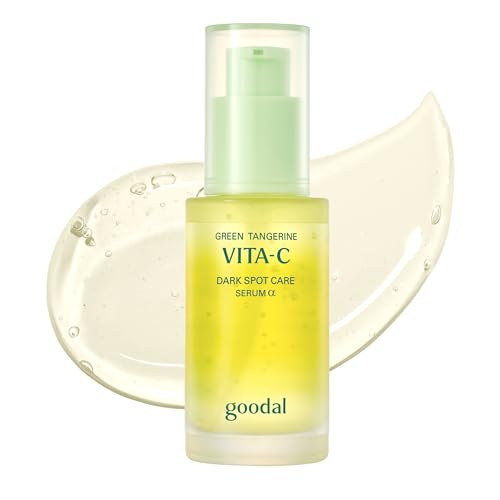
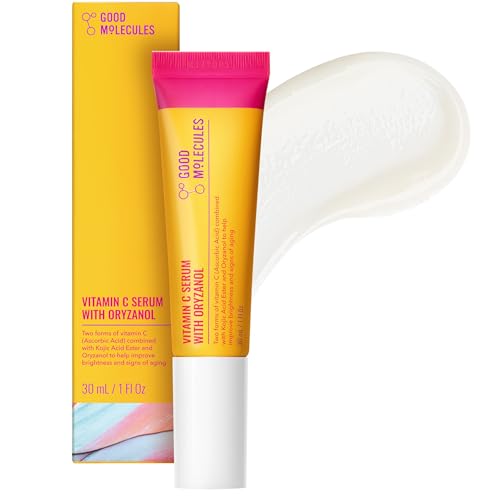
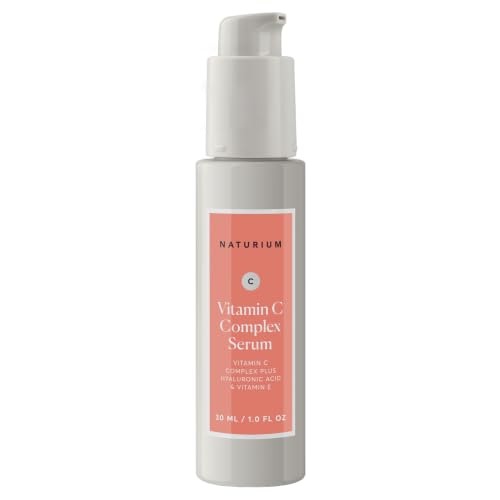
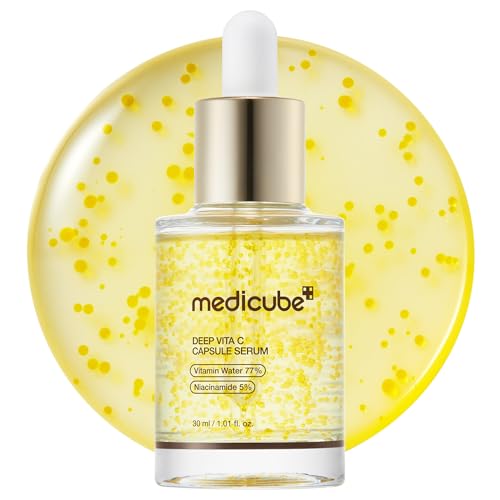
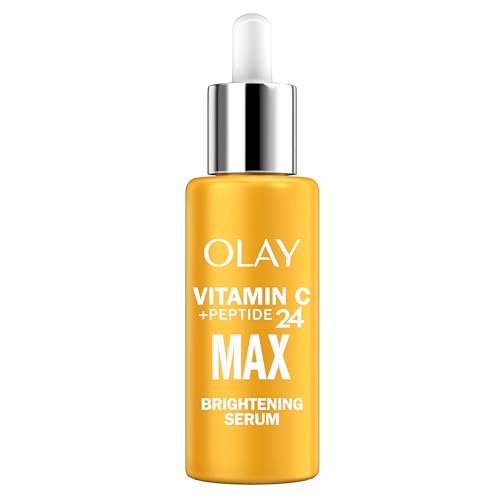
Recommended Products for Safe Brightening


Key Takeaways
- Citric acid is a genuine, well-recognized AHA, but raw lemon juice’s pH and concentration routinely exceed the safety range formulated AHA products are deliberately kept within.
- The vitamin C claim carries the same bioavailability caveat as other raw-fruit facials, uncontrolled dose, unstable in light and air, and an acidic pH that isn’t standardized.
- The single most important safety finding here is phytophotodermatitis, a real, well-documented chemical burn reaction from citrus juice plus subsequent sun exposure.
- Phytophotodermatitis is chemophototoxic, not allergic, meaning it’s a direct cell-damage reaction, not an immune response, and it can leave marks that last months to years.
- A standard indoor patch test does not rule out phytophotodermatitis, because the reaction is triggered by sunlight exposure after application, not by the juice alone.
- “Fast-fades dark spots” claims overstate what gradual, modest AHA-driven exfoliation can realistically deliver.
- The real, actionable precaution is behavioral: never apply raw citrus juice and then go into direct sunlight the same day.
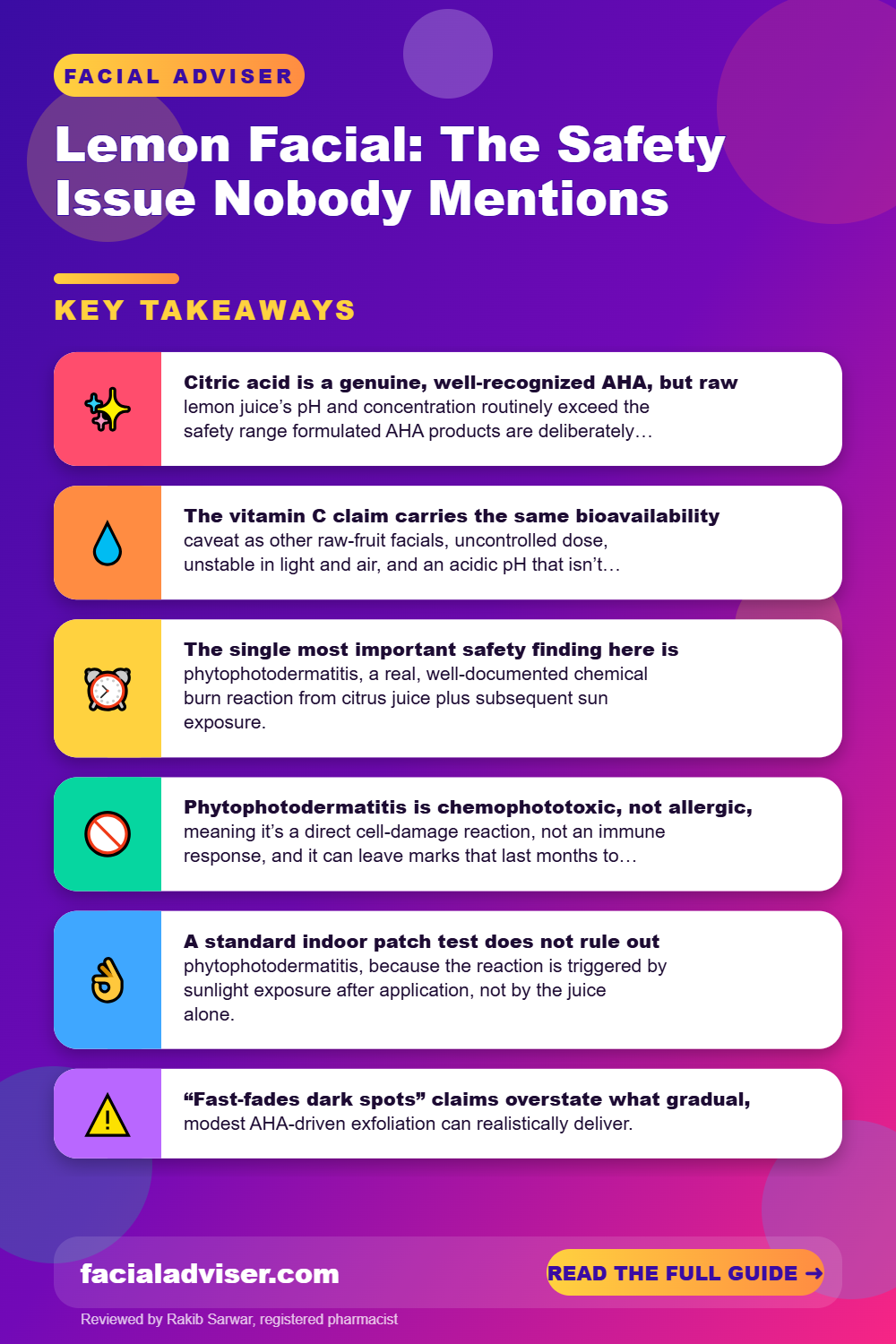
Table of Contents
- What a Lemon Facial Actually Involves
- Citric Acid: A Real AHA, But Uncontrolled at Home
- The Vitamin C Claim’s Bioavailability Problem
- Phytophotodermatitis: The Real Safety Finding
- The Sun-Exposure Self-Check That Actually Matters
- Formulated AHA vs. Raw Lemon Juice
- Do This, Not That
- How to Use Lemon on Skin Safely, If At All
- Recognizing a Phytophotodermatitis Reaction
- When to See a Doctor
- Frequently Asked Questions
- The Bottom Line
What a Lemon Facial Actually Involves
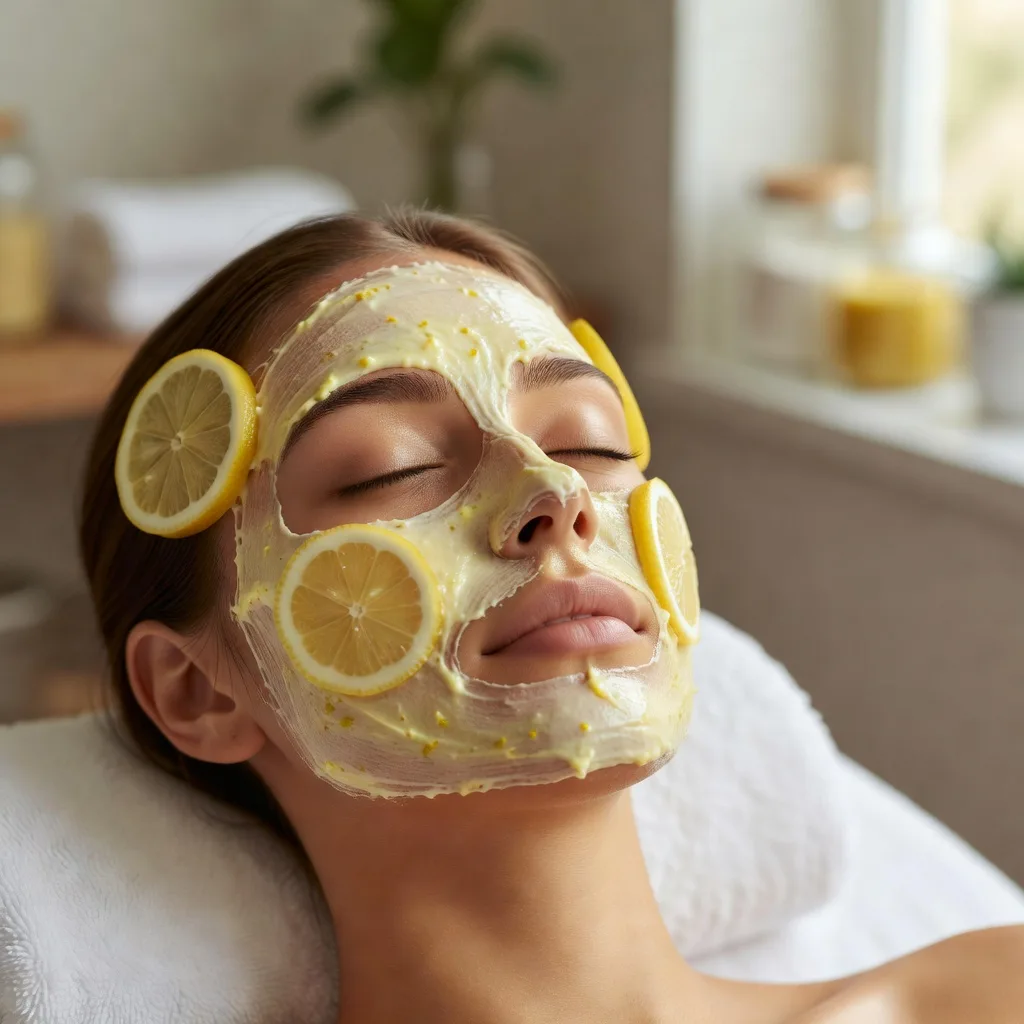
A lemon facial typically means raw lemon juice applied directly to skin, diluted or undiluted, or mixed into a mask with honey, sugar, or yogurt. It’s marketed for brightening, acne spot treatment, and fading scars. Two of citrus’s real components, citric acid and vitamin C, do have genuine mechanisms behind them, but the way this facial is typically used at home creates a real, well-documented safety issue that most articles about it never mention.
Shopping these picks?
Amazon Prime members get fast, free shipping on eligible items, plus Prime Video, Amazon Music and member deals. New members can start with a free trial.
Start a free Prime trialAged 18 to 24? Prime for Young Adults comes with a longer free trial and a lower price after it.
Affiliate link: we may earn a commission at no extra cost to you.
Citric Acid: A Real AHA, But Uncontrolled at Home
Citric acid is a legitimate, well-recognized alpha-hydroxy acid. It works through the same mechanism as other AHAs, loosening the corneodesmosomes that hold dead skin cells together, revealing fresher skin underneath. That mechanism is real dermatological science, not marketing.
Note: If your goal is reliable AHA exfoliation without the uncontrolled dose or the phototoxicity risk covered below, a formulated product built specifically around citric, glycolic, or lactic acid at a standardized concentration delivers the same real mechanism far more predictably than raw lemon juice does.
The FDA and the Cosmetic Ingredient Review panel have established a safety framework for AHA cosmetic products: a concentration of 10 percent or less, combined with a product pH of 3.5 or higher, plus sun-protection labeling. Raw lemon juice has a pH around 2 to 3 and an uncontrolled, often higher citric-acid concentration than that threshold. A DIY lemon facial routinely exceeds the parameters formulated AHA products are deliberately kept within, which is the real, technical reason dermatologists discourage applying it neat, not just an aesthetic preference.
The Vitamin C Claim’s Bioavailability Problem
Vitamin C, or ascorbic acid, carries the same bioavailability caveat that applies to other raw-fruit vitamin C claims. Effective topical vitamin C formulations generally require a specific acidic pH around 3.5 and a defined concentration, commonly 10 to 20 percent L-ascorbic acid, to penetrate skin and remain chemically stable. Raw lemon juice’s vitamin C content is variable, degrades rapidly with light, air, and heat exposure, and delivers an uncontrolled dose to skin. The mechanism, vitamin C as an antioxidant and collagen-synthesis cofactor, is real; “lemon facial gives you vitamin C skin benefits” isn’t well substantiated in that uncontrolled DIY form.
Phytophotodermatitis: The Real Safety Finding
Warning: This is the single most important safety finding in this article, and it deserves to be a centerpiece, not a footnote. Phytophotodermatitis is a genuine, well-documented dermatologic phenomenon.
The mechanism is chemophototoxic, not allergic. Furanocoumarins in citrus juice, when left on skin and then exposed to UVA radiation, cause direct cell-membrane damage and inflammation, a photochemical toxic reaction rather than an immune-mediated response. Symptoms typically appear 24 to 48 hours after the sun-exposed contact: skin becomes red, inflamed, and often blisters, frequently in a streaky or drip-shaped pattern that literally traces where the juice ran down the skin. Lime is the most-cited culprit in case literature, the so-called “margarita burn,” but lemon is documented too, including a specific case report describing furocoumarin-driven burn-like injuries directly attributed to lemon juice and sun exposure. Resolution can take months to years, with resulting post-inflammatory hyperpigmentation sometimes lasting several years in documented cases.
Separately, raw lemon juice’s low pH can also cause plain irritant contact dermatitis or acid injury on intact facial skin even without any subsequent sun exposure, especially on skin that’s already compromised or recently exfoliated. Combining a lemon facial with another exfoliating step on the same day, such as a scrub or an additional acid product, compounds this irritation risk further and isn’t recommended regardless of sun exposure plans.
The Sun-Exposure Self-Check That Actually Matters
A standard indoor patch test is not sufficient to rule out phytophotodermatitis, because it’s a light-triggered reaction, not a contact-allergy one. The genuine self-check here is behavioral rather than a simple skin test: if you apply lemon juice at all, deliberately avoid sun exposure on that area for at least 48 hours afterward, and watch specifically for delayed streaky redness or blistering as the diagnostic sign, since that pattern, not itching alone, is the tell for phytophotodermatitis rather than ordinary irritation or infection.
Formulated AHA vs. Raw Lemon Juice
| Formulated AHA product | Raw lemon juice | |
|---|---|---|
| Concentration | 10 percent or less, standardized | Uncontrolled, often higher |
| pH | 3.5 or higher, standardized | Around 2 to 3 |
| Regulatory framework | FDA/CIR guidance applies | Food product, no cosmetic safety threshold applies |
| Sun-sensitivity labeling | Sunburn Alert recommended on label | None, phytophotodermatitis risk unlabeled |
| Claim | What the evidence actually supports |
|---|---|
| “Real AHA exfoliation” | Supported, mechanism is genuine |
| “Fast-fades dark spots/scars” | Overstated, real improvement is gradual and modest |
| “Vitamin C benefits from raw juice” | Not well supported, uncontrolled unstable dose |
| “Safe as long as you don’t have sensitive skin” | Not accurate, phytophotodermatitis risk applies regardless of skin sensitivity |
Do This, Not That
Do
- Wash your hands and face thoroughly with soap and water after any citrus contact
- Apply sunscreen the day after any citrus application, regardless of visible reaction
- Use a formulated, pH-balanced AHA product instead if you want reliable exfoliation
- Apply in the evening with zero planned sun exposure if you use raw juice at all
- Watch for delayed streaky redness or blistering over 24 to 48 hours
Don’t
- Apply raw citrus juice and then go outside in direct sunlight the same day
- Assume a normal indoor patch test rules out phytophotodermatitis risk
- Use lemon juice on already-irritated, sunburned, or recently exfoliated skin
- Expect fast, dramatic dark-spot fading from an uncontrolled AHA dose
- Treat this as a low-risk “natural” alternative to formulated skincare acids
How to Use Lemon on Skin Safely, If At All
Consider a formulated alternative first
A pH-balanced, standardized AHA product delivers the same real exfoliation mechanism without the uncontrolled concentration or the phototoxicity risk.
If using raw juice, apply only in the evening
This avoids same-day sun exposure while the furanocoumarins are still on your skin.
Tip: Rinse thoroughly with soap and water afterward rather than letting it sit overnight.
Avoid any sun exposure for 48 hours after
This is the single most important step for preventing phytophotodermatitis.
Apply sunscreen the following morning regardless
AHA-induced photosensitivity persists even after the juice itself is rinsed away.
Watch for delayed streaky redness or blistering
This pattern over the next 1 to 2 days is the specific sign of a phototoxic reaction, not ordinary irritation.
Recognizing a Phytophotodermatitis Reaction
The distinguishing feature of phytophotodermatitis is its pattern: streaky, linear, or drip-shaped redness and sometimes blistering that traces exactly where the juice ran or was wiped, appearing 24 to 48 hours after sun exposure rather than immediately. This is different from an ordinary allergic reaction, which tends to be more diffuse and itchy rather than burn-like and patterned. If you see this streaky pattern after a lemon facial followed by any sun exposure, that’s the tell worth acting on, and it’s worth photographing the affected area early to show a doctor how the pattern has changed over the following days.
When to See a Doctor
Warning: Extensive blistering, significant pain, or a reaction covering a large area of skin after a citrus-and-sun exposure warrants prompt medical attention, not home management.
A dermatologist can confirm phytophotodermatitis versus other skin conditions, and can advise on treatment to reduce the risk of lasting post-inflammatory hyperpigmentation, which in documented cases has lasted several years. If pigmentation is your underlying concern, they can also point you toward a better-evidenced option like azelaic acid, which doesn’t carry a phototoxicity risk of this kind.
Frequently Asked Questions
Is lemon juice a real exfoliant?
Yes, citric acid is a genuine AHA that works through the same corneodesmosome-loosening mechanism as other AHAs, though raw juice delivers an uncontrolled, often too-concentrated dose.
What is phytophotodermatitis?
A chemophototoxic skin reaction caused by furanocoumarins in citrus juice combined with subsequent UVA exposure, causing direct cell damage rather than an allergic response.
Can a patch test rule out a lemon facial reaction?
No, a standard indoor patch test doesn’t rule out phytophotodermatitis, because the reaction requires sun exposure after application to trigger it.
How long after using lemon juice does a reaction appear?
Typically 24 to 48 hours after sun-exposed contact, often in a streaky or drip-shaped pattern tracing where the juice touched skin.
Does lemon juice really fade dark spots fast?
No, real AHA-driven pigmentation improvement is gradual and modest, not the dramatic quick fix often implied in marketing.
Does raw lemon juice deliver real vitamin C benefits?
Not reliably, since effective topical vitamin C needs a controlled pH and concentration that raw, unstable lemon juice doesn’t provide.
How long can phytophotodermatitis marks last?
Resulting post-inflammatory hyperpigmentation may last several years in documented cases.
Is lime or lemon more likely to cause this reaction?
Lime is the most-cited culprit in case literature, but lemon-caused reactions are also documented in medical case reports.
What should I do after applying lemon juice to my skin?
Wash thoroughly with soap and water, avoid direct sunlight for at least 48 hours, and apply sunscreen the following day regardless.
Is a formulated AHA product safer than raw lemon juice?
Yes, formulated products are kept within a safety-tested concentration and pH range that raw lemon juice routinely exceeds.
The Bottom Line
Citric acid is a genuinely real AHA, but raw lemon juice delivers it at an uncontrolled concentration and pH that formulated products are specifically designed to avoid. The vitamin C claim runs into the same bioavailability problem seen with other raw-fruit facials.
The finding that should change how you treat this facial is phytophotodermatitis: a real, documented, sun-triggered chemical burn that can leave marks lasting years. If you use lemon on your skin at all, keep it away from sunlight for 48 hours afterward, that single behavior change is what actually keeps this facial safe.

Written by
Registered pharmacist and founder of Facial Adviser. Rakib's pharmacy training covers how skincare actives work and interact; a later course in cosmetology turned that into a focus on facial treatments and skincare products. He plans, researches and edits every guide on the site and checks health claims against sources such as the American Academy of Dermatology, the FDA and the NIH. He is not a dermatologist; see the Editorial Policy and Medical Disclaimer.
About · Editorial policy · How we choose products · Medical disclaimer · Contact
Keep reading: DIY and ingredient facials
- Fruit Facial at Home: Does It Actually Work?
- Milk Facial: The Best-Evidenced Natural Facial
- Wine Facial: Does It Actually Work?
- Paraffin Facial: What It Really Does for Skin
- De-Tan Facial: The Two Mechanisms Marketing Blurs
- Gold Facial at Home: What the Evidence Shows
- What Is a Spa Facial?
- Facial Types: A Guide to 11 Popular Facials and How to Choose One