

Facial Fat Grafting Cost: What You’ll Really Pay
Trying to figure out facial fat grafting cost before you book an actual consultation, and feeling confused by wildly different numbers you’ve found while researching this procedure online?
Part of our guide to facial treatments. Start with: What Is the Best Anti-Aging Facial Treatment? Options Compared by Goal
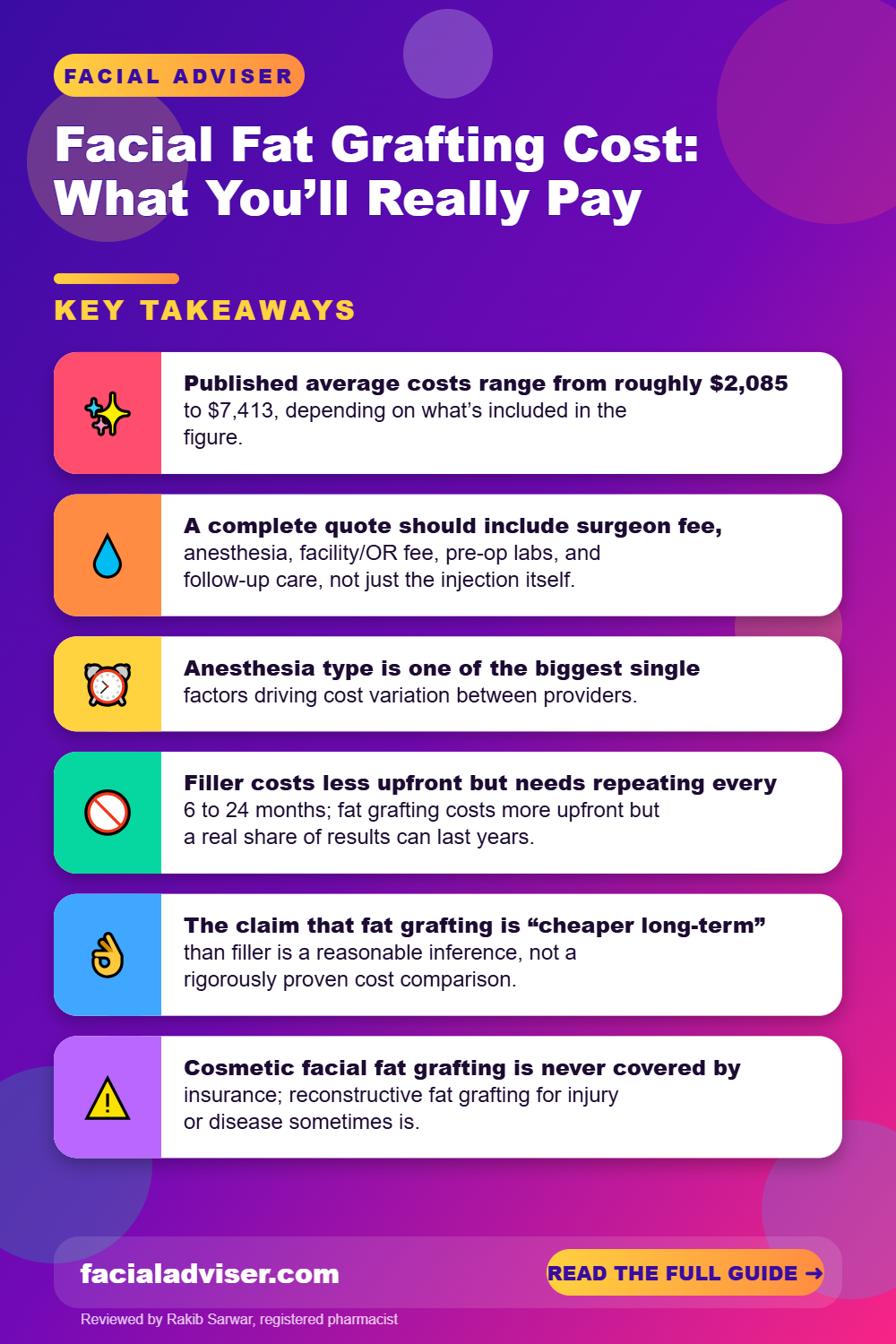
Published averages for facial fat grafting cost range from roughly $2,085 to $7,413, a gap that comes down to what each figure actually includes, not conflicting data. A realistic all-in quote generally lands between $3,000 and $10,000 or more.
The popular claim that fat grafting works out cheaper than filler over time is a reasonable inference given how long a real share of the results last, but it hasn’t been rigorously proven in a published cost comparison.
This guide breaks down exactly what a complete quote should include, what genuinely drives the price up or down between providers, and where insurance coverage actually applies to this specific procedure.
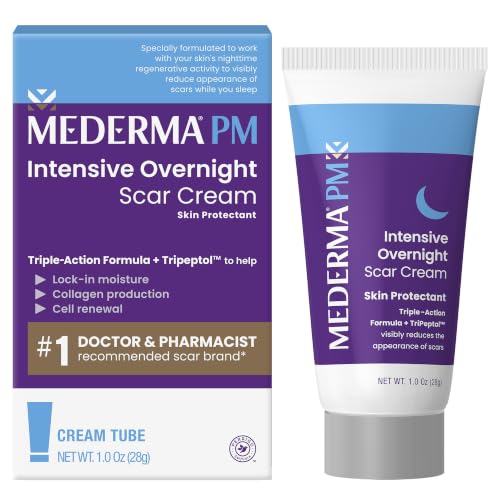
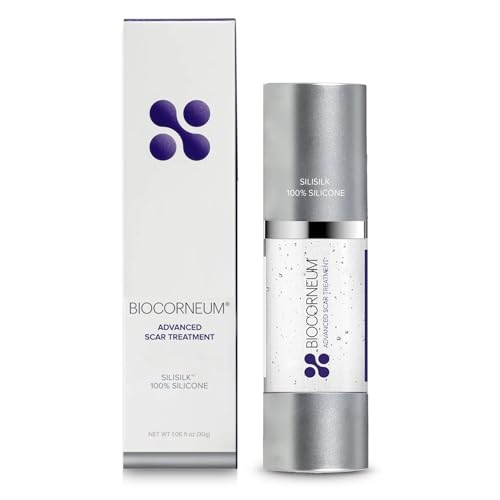
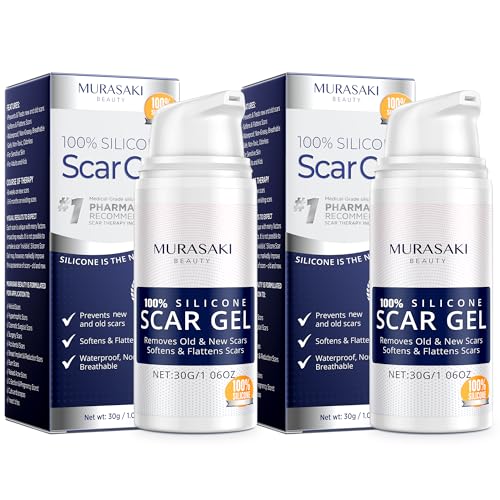
Recommended Silicone Scar Care Products



Why “Average Cost” Figures for This Vary So Much
Search for the cost of facial fat grafting and you’ll find numbers ranging from just over two thousand dollars to nearly eighteen thousand, which understandably looks like conflicting or unreliable data. It isn’t conflicting so much as inconsistently scoped — different sources measure completely different things and call the result “the cost.” One major industry association’s figure covers only the surgeon and facility fee; a separate patient-reported average includes everything, from anesthesia to aftercare.
Shopping these picks?
Amazon Prime members get fast, free shipping on eligible items, plus Prime Video, Amazon Music and member deals. New members can start with a free trial.
Start a free Prime trialAged 18 to 24? Prime for Young Adults comes with a longer free trial and a lower price after it.
Affiliate link: we may earn a commission at no extra cost to you.
This guide breaks down exactly what’s driving that gap, what a complete quote should actually include, how the price compares to filler over the years that follow, and where insurance does and doesn’t apply.
Cost Snapshot
- Published average costs range from roughly $2,085 to $7,413, depending on what’s included in the figure.
- A complete quote should include surgeon fee, anesthesia, facility/OR fee, pre-op labs, and follow-up care, not just the injection itself.
- Anesthesia type is one of the biggest single factors driving cost variation between providers.
- Filler costs less upfront but needs repeating every 6 to 24 months; fat grafting costs more upfront but a real share of results can last years.
- The claim that fat grafting is “cheaper long-term” than filler is a reasonable inference, not a rigorously proven cost comparison.
- Cosmetic facial fat grafting is never covered by insurance; reconstructive fat grafting for injury or disease sometimes is.
What’s Covered Here
- Why “Average Cost” Figures for This Vary So Much
- What a Complete Quote Should Actually Include
- What Drives Cost Higher or Lower
- Fat Grafting vs. Filler: Cost Over Time
- Does Insurance Ever Cover This?
- How to Get an Accurate Quote
- Who This Pricing Guide Is Most Useful For
- Red Flags in a Quote
- When to Get a Second Opinion
- No Universal Price Calculator Exists — What to Do Instead
- Where the Data Runs Out
- Frequently Asked Questions
What a Complete Quote Should Actually Include
The Aesthetic Society’s own databank statistics put the average surgeon-and-facility fee for fat grafting at roughly $2,085 — but that figure explicitly excludes anesthesia, labs, and prescriptions. Patient-reported data from a large aggregator site, drawn from more than 900 reviews, puts the average at $7,413, with reported costs running as high as $18,000. The nearly fourfold gap between these numbers is best explained by scope: one is a base professional fee, the other is a real-world, all-in total. A complete, honest quote should itemize the surgeon’s fee (which typically bundles harvesting, processing, and injection together rather than billing them separately), the anesthesia fee, the facility or operating-room fee, pre-operative labs, and post-operative garments or follow-up visits.
What Drives Cost Higher or Lower
Anesthesia type is one of the single biggest cost drivers: local or tumescent anesthesia is the least expensive option, while IV sedation or general anesthesia with a dedicated anesthesiologist adds meaningfully to the total. Geography matters too — major metro markets like New York, Los Angeles, and Miami tend to run higher than smaller markets. Surgeon reputation and demand, whether the procedure happens in a hospital-affiliated surgical center versus an office-based setting, and whether fat grafting is performed alone versus bundled as an add-on to a larger procedure like a facelift all shift the final number. Fat grafting performed as a standalone procedure often costs more per session than when bundled with another surgery, because the harvesting and facility setup costs aren’t shared across two procedures.
| Cost factor | How it typically shifts price |
|---|---|
| Anesthesia type | Local < IV sedation < general anesthesia |
| Setting | Office-based typically lower than accredited surgical center |
| Bundled vs. standalone | Standalone often costs more per procedure than an add-on |
| Geography | Major metro markets generally higher than smaller markets |
Fat Grafting vs. Filler: Cost Over Time
Dermal filler typically runs $500 to $1,000 per syringe and needs repeating every 6 to 24 months depending on the specific product and injection site. Facial fat grafting runs $3,000 to $10,000 or more as a one-time cost, with a meaningful share of the transferred fat surviving long-term (see our companion guide on how long facial fat grafting actually lasts for the real retention numbers) and typically only one or two treatments needed over a patient’s lifetime rather than ongoing maintenance visits.
The popular claim that fat transfer works out cheaper than filler over the long run is directionally reasonable given those numbers, but it hasn’t actually been tested in a rigorous, published cost-effectiveness study comparing lifetime filler spending against one-time fat-grafting spending over a defined time horizon. Treat it as a sensible inference rather than an established financial fact.
| Filler | Fat grafting | |
|---|---|---|
| Typical upfront cost | $500-$1,000 per syringe | $3,000-$10,000+ |
| Maintenance interval | Every 6-24 months | Often none needed after initial recovery |
| Source material | Manufactured, synthetic or biologic | Patient’s own harvested fat |
Does Insurance Ever Cover This?
Cosmetic facial fat grafting for volume restoration or aging-related rejuvenation is never covered by insurance, since it’s classified as elective. Fat grafting is sometimes covered when performed for reconstructive reasons — post-traumatic facial deformity, reconstruction following cancer treatment, craniofacial syndromes, or facial atrophy from a condition like scleroderma. Those cases go through an entirely separate medical-necessity coding and approval pathway, distinct from the cosmetic-market pricing discussed throughout this guide.
A useful parallel exists in breast reconstruction, where autologous fat grafting is often covered under federal law protecting reconstructive procedures following mastectomy. No equivalent federal protection exists for facial fat grafting, even in genuinely reconstructive facial cases, which is why coverage there depends heavily on how a specific insurer’s medical-necessity criteria are written and how thoroughly the surgeon’s office documents the underlying diagnosis when submitting for pre-authorization.
How to Get an Accurate Quote
Request a full itemized breakdown
Ask specifically what’s included: surgeon fee, anesthesia, facility fee, labs, and follow-up care.Confirm the anesthesia type
This is one of the largest cost swings between providers, so ask for it explicitly.Ask if it’s standalone or bundled
Confirm whether the quote assumes fat grafting alone or as part of a larger procedure.Get at least two consultations
Compare itemized quotes from two board-certified providers rather than a single number in isolation.Clarify what happens if a touch-up is needed
Ask whether a follow-up session, given typical fat resorption, is included or billed separately.
Do
- Ask for a fully itemized quote, not just one bottom-line number
- Confirm anesthesia type and setting before comparing prices
- Get a second opinion from another board-certified provider
Don’t
- Compare quotes that don’t specify what’s included
- Assume a lower price includes the same anesthesia and facility standard
- Assume any quote is insurance-covered without confirming a reconstructive diagnosis
Who This Pricing Guide Is Most Useful For
This is most relevant for anyone actively comparing quotes between providers for cosmetic facial volume restoration, and for anyone confused by wildly different “average cost” figures found online. It’s also useful context for patients weighing fat grafting against ongoing filler maintenance from a purely financial standpoint.
Red Flags in a Quote
Be cautious of a quote that’s dramatically lower than others without explanation, a provider unwilling to itemize what’s included, or pressure to book before you’ve had time to get a second opinion. A legitimate provider should be able to explain exactly what their number covers.
When to Get a Second Opinion
If a quote seems unusually high or low relative to others you’ve received, if you’re unclear on what anesthesia or facility standard is included, or if you’re uncertain whether your situation might actually qualify as reconstructive rather than cosmetic, a second consultation with a board-certified plastic surgeon is worth the time before committing.
No Universal Price Calculator Exists — What to Do Instead
There’s no single authoritative pricing database for this procedure. The practical substitute is collecting two or three fully itemized quotes from board-certified providers in your area and comparing them line by line, rather than relying on a single published national average, since those averages are measuring different things depending on the source.
Where the Data Runs Out
No peer-reviewed, rigorous cost-effectiveness study directly compares total lifetime spending on filler maintenance against a one-time fat-grafting cost over a specific time horizon. Published cost figures also come from a mix of industry-association databank statistics and patient self-reported data, not a single standardized national pricing survey, which is part of why the range is so wide. There’s also no published research tracking how cost expectations compare against actual long-term satisfaction, so a genuinely evidence-based “value” verdict, beyond the raw dollar figures presented here, isn’t something the current literature can support. Patients are generally left to weigh the upfront cost against their own priorities, informed by realistic pricing ranges rather than a single misleadingly precise number. Bringing a written list of specific questions to a consultation remains the most reliable way to get an honest, comparable answer.
Frequently Asked Questions
How much does facial fat grafting cost?
Published averages range from about $2,085 to $7,413 depending on what’s included, with a realistic all-in range of $3,000 to $10,000 or more.
Why do cost estimates for this vary so much?
Different sources measure different things — some cover only the surgeon’s base fee, others include anesthesia, facility, and follow-up costs.
Is fat grafting cheaper than filler long-term?
It’s a directionally reasonable inference given survival data, but no rigorous published cost-effectiveness study has confirmed it.
Does insurance cover facial fat grafting?
Cosmetic fat grafting is never covered; reconstructive fat grafting for injury, cancer treatment, or certain medical conditions sometimes is.
What’s included in a facial fat grafting quote?
A complete quote should include the surgeon’s fee, anesthesia, facility fee, pre-op labs, and follow-up care.
What affects the price the most?
Anesthesia type is one of the single biggest factors, along with geography and whether it’s standalone or bundled with another procedure.
Is fat grafting more expensive than filler upfront?
Yes, typically $3,000-$10,000+ versus $500-$1,000 per filler syringe, though filler needs repeating every 6-24 months.
Should I get more than one quote?
Yes — comparing at least two itemized quotes from board-certified providers is the most reliable way to evaluate pricing.
Can fat grafting cost less if bundled with another surgery?
Often yes, since harvesting and facility setup costs can be shared across both procedures.
Is a very low quote a red flag?
It can be, especially if the provider won’t itemize what’s included or explain the difference from other quotes you’ve received.

Written by
Registered pharmacist and founder of Facial Adviser. Rakib's pharmacy training covers how skincare actives work and interact; a later course in cosmetology turned that into a focus on facial treatments and skincare products. He plans, researches and edits every guide on the site and checks health claims against sources such as the American Academy of Dermatology, the FDA and the NIH. He is not a dermatologist; see the Editorial Policy and Medical Disclaimer.
About · Editorial policy · How we choose products · Medical disclaimer · Contact
Keep reading: Anti-aging facials and treatments
- What Is the Best Anti-Aging Facial Treatment? Options Compared by Goal
- How Long Does Facial Fat Grafting Last?
- Facial Fat Transfer vs Fillers: Longevity, Predictability, and Who Each Suits
- Cryo Facial vs Botox: Which Is Better for Wrinkles and Puffiness?
- Facial Liposuction vs Buccal Fat Removal: Differences, Risks and Recovery
- Facial Fillers vs Botox: Which Treats Your Lines, and What Each Can Go Wrong
- Microneedling Facial: Real Results, Explained
- Is Hydrafacial a Gimmick? What Evidence Shows