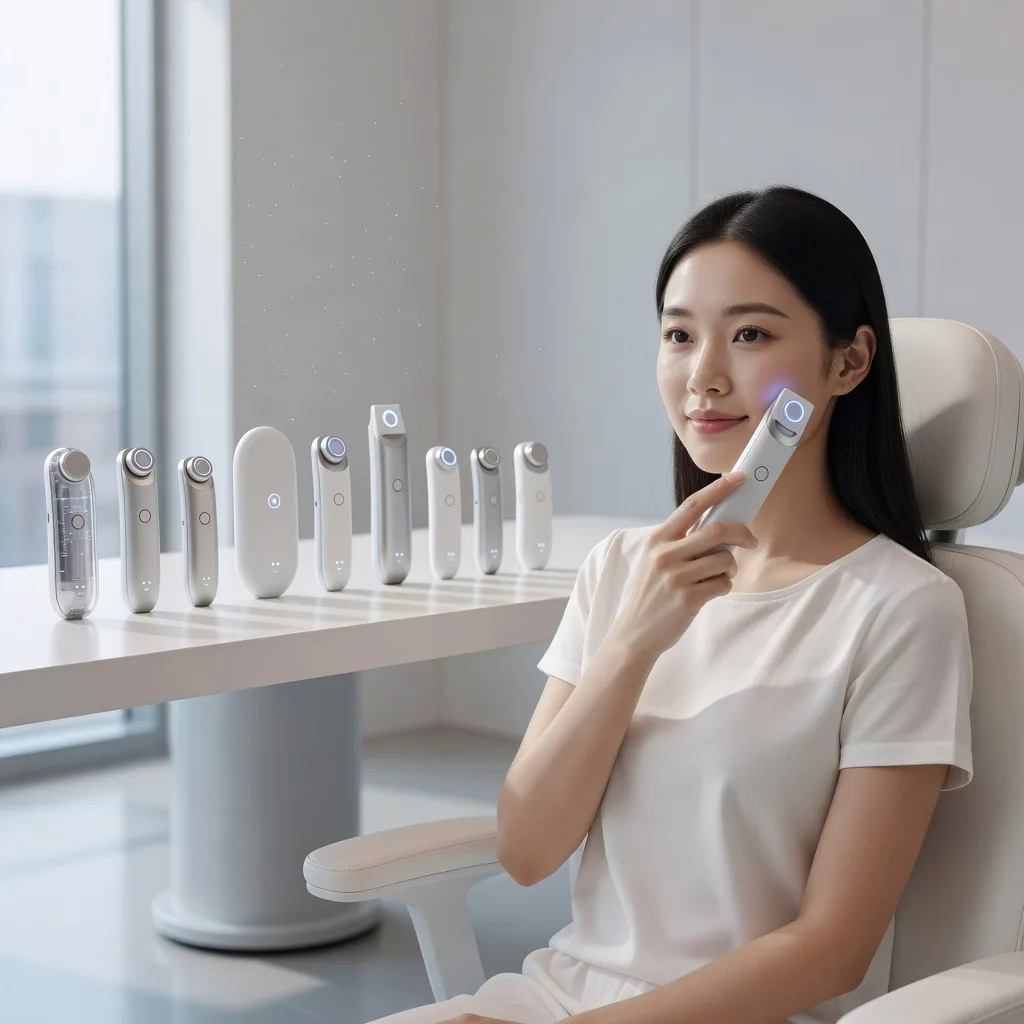
Best AI-Powered Acne Scanner for Clear Skin: What Skin Analysers Can Do
AI-powered acne scanners promise to photograph your face, count your spots, measure oil and pores, and tell you exactly which products to use. Some are small handheld cameras or magnifying analysers, others are smartphone apps, and a few sit inside smart mirrors. They are appealing if you want to track progress objectively rather than squinting in the bathroom mirror.
Part of our guide to at-home facial devices. Start with: 10 Best Facial Tools (2026): LED, Cleansing, Gua Sha and More
The best AI-powered acne scanner is a skin analyser or app that takes consistent, well-lit photos, tracks changes over weeks, explains what it measures and keeps your images private. Used this way, it can help you see whether a routine is working and stay motivated. It cannot diagnose acne types, rule out other conditions such as rosacea or fungal acne, or replace a dermatologist. Its product suggestions are often tied to what the maker sells. Pair any scanner with proven acne basics, such as a gentle cleanser, benzoyl peroxide or a retinoid, and non-comedogenic moisturiser.
In short: a scanner is a tracking tool, not a treatment, and clear skin still comes from consistent, evidence-based care.
The American Academy of Dermatology advises giving acne treatments time to work, usually several weeks, avoiding picking and scrubbing, and seeing a board-certified dermatologist if acne does not clear or leaves marks.
This buyer’s guide explains what AI skin analysers measure, how accurate they can be, what to look for when buying one, and which simple products do the real work of clearing acne.
Shopping these picks?
Amazon Prime members get fast, free shipping on eligible items, plus Prime Video, Amazon Music and member deals. New members can start with a free trial.
Start a free Prime trialAged 18 to 24? Prime for Young Adults comes with a longer free trial and a lower price after it.
Affiliate link: we may earn a commission at no extra cost to you.
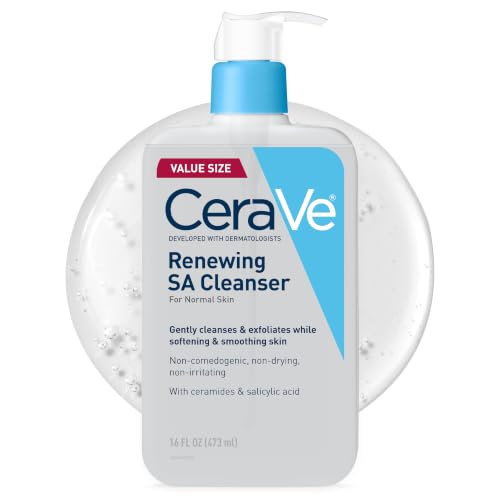
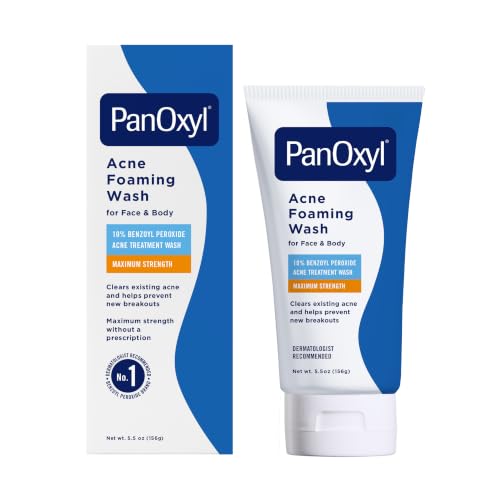
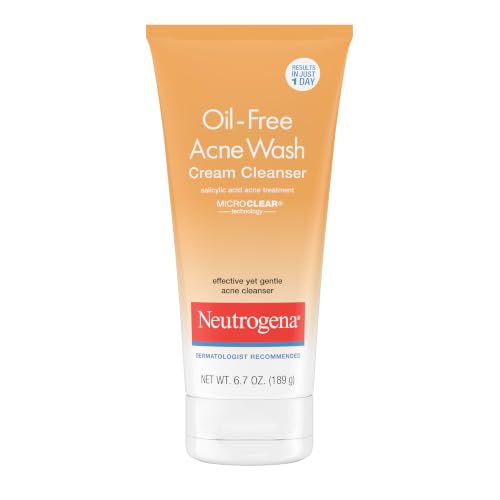
Recommended Skin Analysers and Acne Basics on Amazon



Contents
- What Is an AI-Powered Acne Scanner?
- What Skin Analysers Can and Cannot Measure
- Features to Look For When Buying
- Privacy: Your Face Is Personal Data
- Handheld Analyser, App or Smart Mirror: Which Suits You?
- The Acne Basics That Actually Clear Skin
- How to Use a Skin Analyser Alongside Your Acne Routine
- Are Free Acne Scanner Apps Worth It?
- Conditions a Scanner May Mistake for Acne
- Dos and Don’ts
- Honest Limits
- When to See a Dermatologist
- Your Questions, Answered
- Summing Up
The Short Version
- AI acne scanners track skin changes; they do not treat acne.
- Consistent lighting and angles matter more than fancy AI.
- Scanners cannot diagnose acne or rule out other conditions.
- Be cautious of product recommendations tied to one brand.
- Check how the app stores and shares your face photos.
- Proven acne basics do the real work.
- See a dermatologist for painful, scarring or stubborn acne.
What Is an AI-Powered Acne Scanner?
An AI acne scanner is any device or app that captures images of your skin and uses software to estimate features such as spots, redness, oiliness, pores, texture and pigmentation. The results are usually shown as scores, heat maps or charts that you can compare over time.
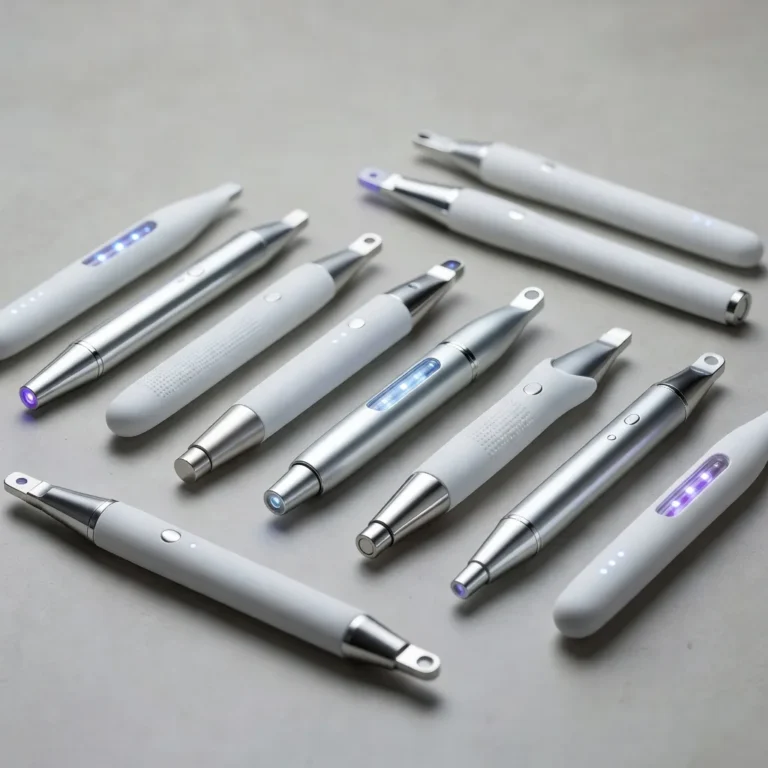
There are three main types. Handheld skin analysers are small cameras, sometimes with polarised or ultraviolet light, that connect to a phone. Smartphone apps use your phone camera and cloud software. Smart mirrors and salon analysers combine a larger camera with controlled lighting. A separate group of cheap pen-shaped testers measure surface moisture and oil using electrical signals rather than images.
The word AI covers a wide range, from genuinely trained image recognition to simple colour thresholds. A listing that says AI-powered does not tell you how accurate or well tested the software is.
What Skin Analysers Can and Cannot Measure
| Feature | How well scanners handle it | Notes |
|---|---|---|
| Counting visible spots | Reasonable with good lighting | Can confuse spots with freckles, moles or marks |
| Redness | Fair, highly lighting dependent | Varies with skin tone and camera |
| Surface oil and shine | Fair | Changes through the day |
| Pore appearance | Fair, based on image contrast | Makeup and angle affect results |
| Moisture level | Rough estimate only | Affected by sweat, products and humidity |
| Acne type or diagnosis | Not reliable | Needs a clinician |
| Underlying cause | Not possible | Hormones, genetics and medicines are invisible |
Scanners are best at noticing change in the same person under the same conditions. They are much weaker at comparing you to other people or at deciding what kind of acne you have. Some systems may also perform less well on darker skin tones if they were trained mostly on lighter skin, so treat redness and pigment scores with extra caution.
Features to Look For When Buying
- Consistent built-in lighting, or clear guidance for taking photos in the same light.
- A photo history so you can compare images side by side over weeks.
- Clear explanations of each score rather than a single mystery number.
- A privacy policy that explains where images are stored and whether they are shared or used for training.
- The option to delete your photos and account.
- Magnification or a close-up lens if you want to look at pores and texture.
- Recommendations that include ingredients, not only products from one shop.
Handheld analysers with their own light usually give more consistent images than phone apps used in changing room light. If you choose an app, set up a simple routine: same room, same time of day, bare skin, same distance and angle.
Avoid devices or apps that make medical claims, such as diagnosing skin cancer or prescribing treatments, unless they are clearly regulated for that purpose. That is a different category from a cosmetic analyser.
Privacy: Your Face Is Personal Data
Face photos are sensitive. Before uploading images to an app, read how the company stores them, whether they are linked to your name or email, and whether they may be shared with partners or used to train software. Look for an easy way to delete your data. Devices that store images on your phone rather than in the cloud give you more control. If an app asks for access to your contacts, location or full photo library without a clear reason, that is a sign to look elsewhere.
Do not rely on an app to decide whether a new or changing mole, a sore that does not heal or an unusual patch is safe. Any spot that changes in size, shape or colour, bleeds or itches should be checked by a doctor or dermatologist in person.
Handheld Analyser, App or Smart Mirror: Which Suits You?
A handheld skin analyser suits people who want close-up images of pores, texture and individual spots. Because it touches or sits close to the skin and brings its own light, the pictures tend to be more consistent than phone photos. The downside is a small field of view, so it is slow to cover the whole face, and you need to clean the lens tip between uses.
A smartphone app suits people who want a quick overview of the whole face with no extra hardware. It is the cheapest option, but results depend heavily on room lighting, camera quality and how you hold the phone, so scores can swing from one day to the next.
Smart mirrors and salon-style analysers sit in between, with larger cameras and controlled lighting. They can be useful in a clinic or spa, but for home use they are expensive for what is still essentially a photo diary.
Whichever type you choose, pick the one you will actually use consistently. A simple tool used every week in the same way gives more useful information than a sophisticated one used occasionally.
The Acne Basics That Actually Clear Skin
A scanner can show you whether your routine is working, but the routine itself is what matters. For mild to moderate acne, a few well-studied ingredients do most of the work.
| Ingredient or product | What it does | Tips |
|---|---|---|
| Benzoyl peroxide | Reduces acne bacteria and inflammation | Start low; can bleach fabrics |
| Adapalene or other retinoid | Prevents clogged pores and new spots | Use at night, build up slowly, wear sunscreen |
| Salicylic acid | Loosens dead skin inside pores | Good for blackheads and oily skin |
| Azelaic acid | Calms redness and helps marks | Often well tolerated |
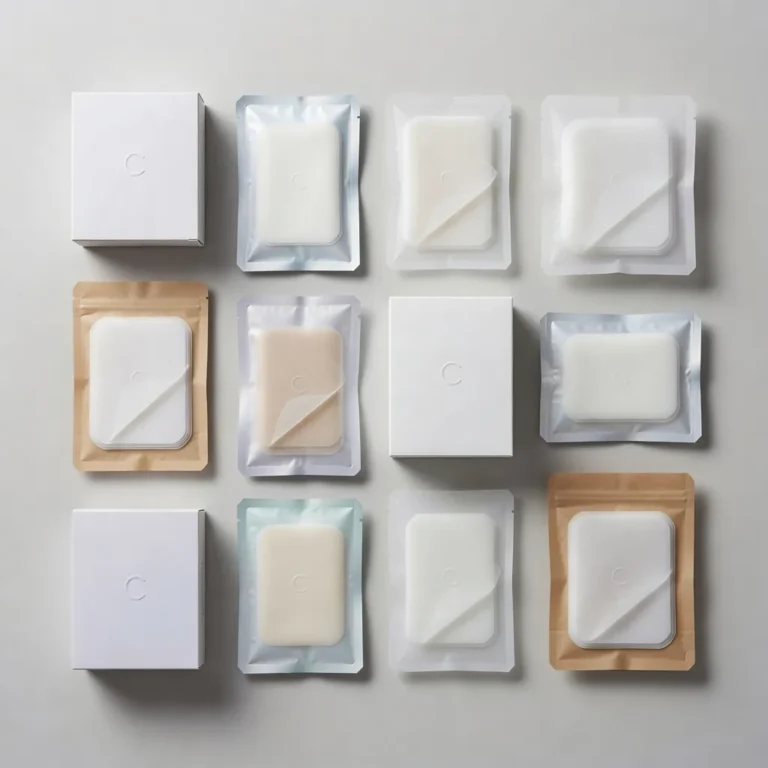
| Hydrocolloid patches | Cover and protect individual spots | Stops picking; best on surfaced spots |
| Non-comedogenic moisturiser | Reduces dryness from treatments | Use daily, even on oily skin |
The American Academy of Dermatology’s acne skin care tips recommend washing gently, choosing non-comedogenic products, resisting the urge to pick and giving treatments time. Our guide to the best facial moisturiser for acne-prone skin covers the moisturiser step in more detail.
How to Use a Skin Analyser Alongside Your Acne Routine
Take a baseline
Before changing anything, scan or photograph your face in the same light on bare, clean skin.
Start one change at a time
Add a single new treatment so you can tell what is helping or irritating.
Scan on a schedule
Scan once a week at the same time of day, rather than daily.
Look at trends, not single scores
Compare images over four to twelve weeks, since acne treatments take time.
Note your triggers
Record periods, stress, new products or medicines alongside your scans.
Share with a professional
Bring your photo history to a dermatologist appointment if acne persists.
Daily scanning can make you fixate on every spot and may tempt you to pick. Weekly scans give a clearer picture of real progress and are kinder to your mood.
Are Free Acne Scanner Apps Worth It?
Many free apps offer a quick skin score and a list of recommended products. They can be fun and motivating, but they often make money by selling products, so recommendations may lean towards what the app sells rather than what suits you. Some apps analyse only one photo in uncontrolled light, which makes scores jump around from day to day.
A useful free alternative is simply taking weekly photos with your phone in the same place and light. It costs nothing, keeps images on your device, and gives you a reliable record to show a clinician. If you do use an app, treat its product suggestions as a starting point, and check the ingredients against the basics above.
Conditions a Scanner May Mistake for Acne
Not every bump is acne, and treating the wrong condition can make things worse. A scanner that simply counts red spots cannot tell these apart reliably.
- Rosacea, which causes redness and bumps on the central face, often triggered by heat and spicy food.
- Fungal or yeast-related folliculitis, with itchy, uniform small bumps.
- Perioral dermatitis, a rash around the mouth and nose, sometimes linked to steroid creams.
- Milia, small hard white bumps that are not blocked pores.
- Irritation or allergic reactions from makeup or skincare.
If your spots do not respond to standard acne care, or you are not sure what they are, a dermatologist can make the diagnosis. Our article on what to do if makeup is causing acne also covers common product-related breakouts.
Dos and Don’ts
Do
- Scan in the same light each time
- Compare trends over weeks
- Use proven acne ingredients
- Read the privacy policy
- Show your photo history to a dermatologist
Don’t
- Treat the score as a diagnosis
- Change products every few days
- Buy everything an app recommends
- Pick spots after scanning
- Ignore changing moles or painful cysts
Honest Limits
There is limited independent research on consumer AI acne scanners, and most devices are not evaluated or approved as medical tools. Accuracy varies widely with lighting, camera quality, skin tone and makeup, and scores from different devices cannot be compared. A better score does not always mean healthier skin, and a worse score can simply mean different lighting.
No scanner can see hormones, genetics, diet, stress or medicines, which all influence acne. The most valuable thing a scanner does is keep a consistent visual diary. The actual improvement comes from gentle cleansing, proven treatments used patiently, sun protection and, when needed, prescription care.
When to See a Dermatologist
- Painful, deep cysts or nodules.
- Acne that leaves scars or dark marks.
- No improvement after about two to three months of consistent over-the-counter care.
- Sudden, severe acne, or acne with irregular periods or excess hair growth.
- Any spot or mole that changes, bleeds or does not heal.
A board-certified dermatologist can diagnose the type of acne, rule out look-alike conditions and prescribe treatments that are not available over the counter.
This article is for general information and does not replace medical advice. AI acne scanners and skin analysers are not diagnostic tools. See a board-certified dermatologist or your doctor for diagnosis and treatment of acne or any concerning skin change.
Your Questions, Answered
Can an AI scanner diagnose acne?
No, it can only estimate visible features.
Are skin analyser scores accurate?
They vary with lighting and are best for tracking change.
How often should I scan my skin?
Once a week in the same light is enough.
Do scanners work on darker skin?
Accuracy may be lower, so interpret scores with care.
Should I buy the products an app recommends?
Check ingredients first; recommendations may be sales-led.
What clears acne best?
Benzoyl peroxide, retinoids and gentle, consistent care.
How long before acne treatment works?
Usually several weeks, often two to three months.
Can a scanner check moles?
No, see a doctor about changing moles.
Are my face photos safe in an app?
Read the privacy policy and delete data you do not need.
When should I see a dermatologist?
For painful, scarring or stubborn acne.
Summing Up
The best AI-powered acne scanner is one that takes consistent images, explains its scores, tracks progress over weeks and respects your privacy. It can be a helpful diary for your skin.
It cannot diagnose or treat acne. Pair it with proven basics, give treatments time, and see a board-certified dermatologist for acne that hurts, scars or will not clear.

Written by
Registered pharmacist and founder of Facial Adviser. Rakib's pharmacy training covers how skincare actives work and interact; a later course in cosmetology turned that into a focus on facial treatments and skincare products. He plans, researches and edits every guide on the site and checks health claims against sources such as the American Academy of Dermatology, the FDA and the NIH. He is not a dermatologist; see the Editorial Policy and Medical Disclaimer.
About · Editorial policy · How we choose products · Medical disclaimer · Contact
Keep reading: Cleansing brushes and skin tools
- 10 Best Facial Tools (2026): LED, Cleansing, Gua Sha and More
- Best Pore Vacuum Blackhead Remover: How to Choose One and Use It Safely
- 10 Best Nano Mist Sprayers (2026): Refresh Skin On the Go
- Best Exfoliating Face Mitt for Glowing Skin: How to Choose and Use One
- 10 Best Adjustable Face Straps (2026): Secure Fit, Less Puffiness
- 10 Best Konjac Sponges for Sensitive Skin (2026): Soft, Gentle Cleansing
- How to Incorporate Microcurrent Into Your Routine: Gel, Timing and Safety
- 10 Best Products for Women's Facial Hair Removal (2026): Gentle Picks