Best Ultrasonic Pore Extractor: How Skin Scrubbers Work and Who They Suit
Ultrasonic pore extractors, usually sold as skin scrubbers or skin spatulas, are flat metal blades that vibrate very fast against wet skin. Videos of them pushing out grime look satisfying, but what they actually remove, and what they cannot, is worth knowing before you buy one.
Part of our guide to at-home facial devices. Start with: 10 Best Facial Tools (2026): LED, Cleansing, Gua Sha and More
The best ultrasonic pore extractor is a simple, well-built skin scrubber with a smooth stainless steel blade, at least two intensity settings and a waterproof body, used gently on well-wet skin once or twice a week. It works by high-frequency vibration that loosens surface oil, dead skin and the soft tops of sebaceous filaments, so pores look cleaner for a day or two. It does not deep-clean or shrink pores, and it cannot remove hardened blackheads or treat acne. Compared with pore vacuums, it is usually gentler and less likely to cause bruising, broken capillaries or swelling.
In short: an ultrasonic scrubber is a gentle surface exfoliator, not a true extractor.
The American Academy of Dermatology warns that over-exfoliating can leave skin red and irritated, and advises people with sensitive skin to avoid mechanical exfoliation, which includes these devices. That advice is a good starting point for deciding whether a scrubber belongs in your routine.
This guide explains how skin scrubbers work, how to use them on wet skin, which settings to choose, the risks and realistic results compared with pore vacuums, plus who should skip them altogether and what to use instead.
Shopping these picks?
Amazon Prime members get fast, free shipping on eligible items, plus Prime Video, Amazon Music and member deals. New members can start with a free trial.
Start a free Prime trialAged 18 to 24? Prime for Young Adults comes with a longer free trial and a lower price after it.
Affiliate link: we may earn a commission at no extra cost to you.
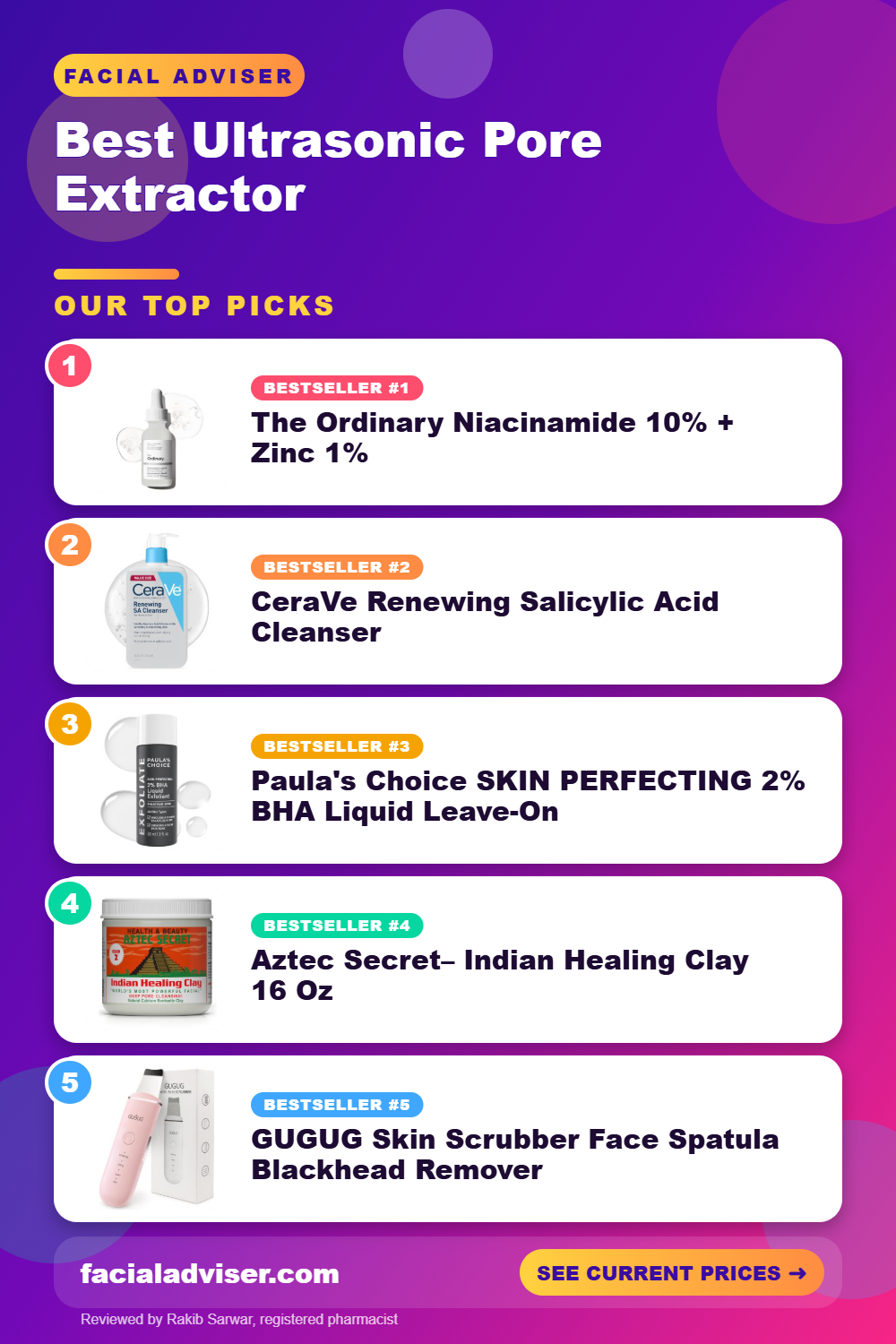
Recommended Ultrasonic Skin Scrubbers on Amazon




On This Page
- How an Ultrasonic Skin Scrubber Works
- Ultrasonic Scrubber vs Pore Vacuum vs Manual Extractor
- Why Wet Skin Is Essential
- Which Setting and How Often
- How to Use an Ultrasonic Skin Scrubber Safely
- Risks and Side Effects
- Realistic Results
- What to Look For in a Good Skin Scrubber
- Cleaning and Caring for the Device
- Dos and Don’ts
- Honest Limits
- When to See a Dermatologist
- Questions People Ask
- The Takeaway
Quick Answer
- Ultrasonic scrubbers vibrate a metal blade to loosen oil and dead skin.
- They only work on wet or misted skin; dry use drags and irritates.
- Results are surface-level and last a day or two.
- They do not shrink pores or treat acne or deep blackheads.
- They are usually gentler than pore vacuums, but can still irritate.
- Once or twice a week at a low setting is enough for most skin.
- Sensitive, rosacea-prone or inflamed skin should skip them.
How an Ultrasonic Skin Scrubber Works
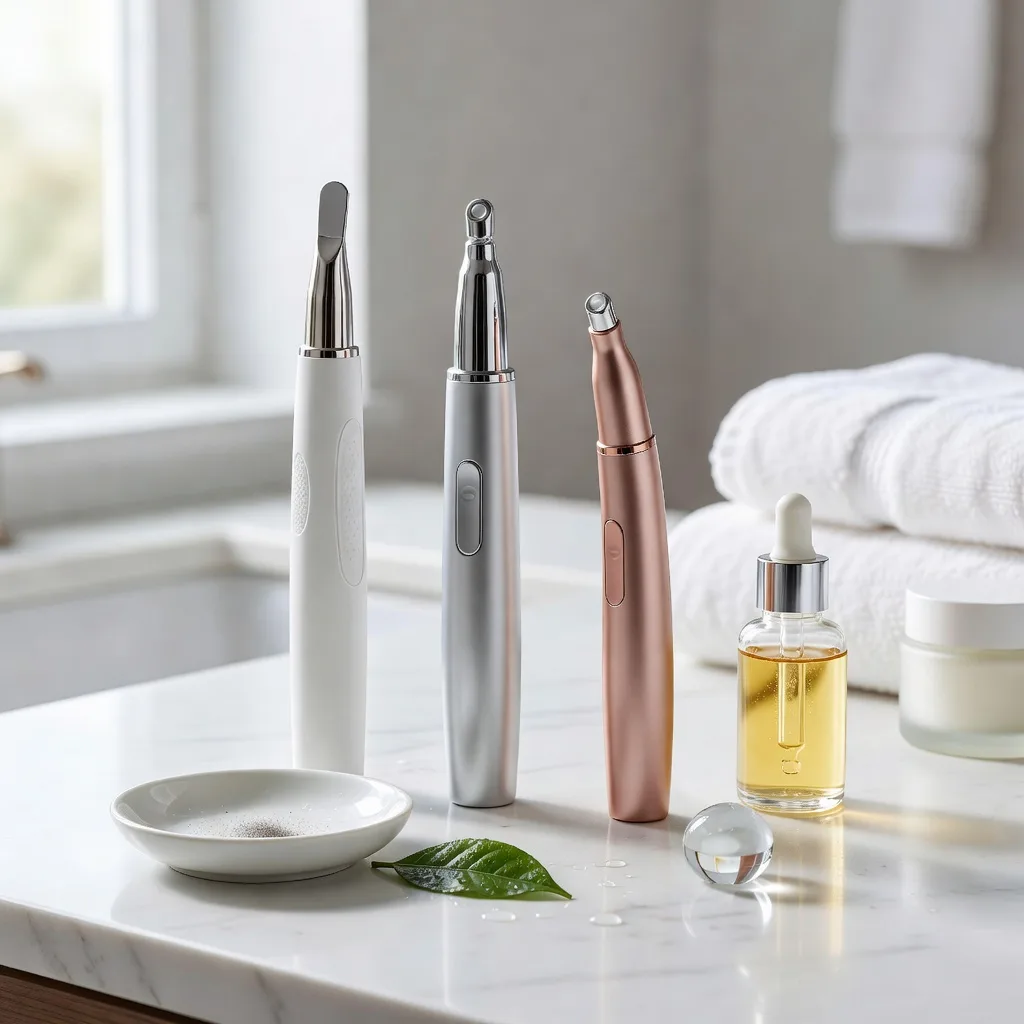
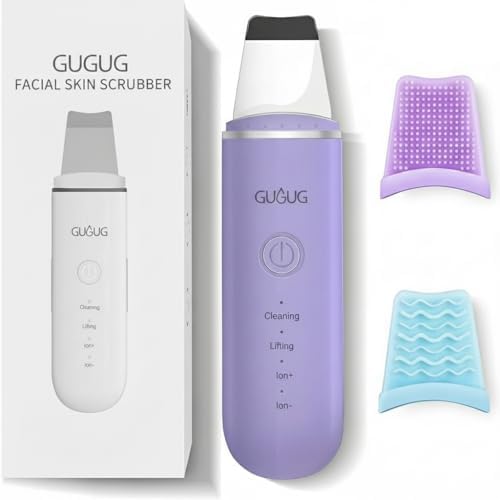
A skin scrubber has a thin, angled stainless steel spatula that vibrates at an ultrasonic frequency, far faster than you can see. When the blade glides over wet skin, the vibration and the water film create tiny movements that lift oil, debris and loose dead cells from the surface.
Most devices have several modes. The exfoliating or peeling mode is used with the blade facing down to scrape gently along the skin. Other modes are marketed for pushing serum into the skin or for lifting, using mild electrical current. These extras are the least proven part of the device.
- Peeling or cleansing mode: the main function; loosens oil and dead skin.
- Serum or infusion mode: gentle vibration to spread products; benefit is small.
- Lifting or EMS mode: mild electrical muscle stimulation; weak evidence for visible lifting.
- Intensity levels: start at the lowest setting and only increase if your skin tolerates it.
Our guide on sebaceous filaments vs blackheads explains why some of the grey dots on your nose will always come back, whatever tool you use.
Ultrasonic Scrubber vs Pore Vacuum vs Manual Extractor
These three tools are often grouped together, but they act on the skin in very different ways. This table compares them on the points that matter most for safety and results.
| Feature | Ultrasonic scrubber | Pore vacuum | Manual extractor tool |
|---|---|---|---|
| How it works | Vibrating blade on wet skin | Suction pulls on skin | Pressure around a blocked pore |
| Main effect | Surface exfoliation and oil removal | Lifts surface oil and some debris | Pushes out individual comedones |
| Risk of bruising | Low | Moderate to high | Moderate if pressed hard |
| Risk of broken capillaries | Low | Higher, especially on cheeks | Moderate |
| Irritation risk | Low to moderate | Moderate | Moderate to high |
| Works on deep blackheads | Rarely | Rarely | Sometimes, but best left to a professional |
| Best for | Oily, resilient skin | Not generally recommended | Professional use |
The main advantage of an ultrasonic scrubber is that it does not pull or squeeze the skin. Pore vacuums use suction that can leave red rings, bruises and visible thread veins, especially on thin cheek skin, which is why many dermatologists advise against them.
Why Wet Skin Is Essential
Ultrasonic vibration needs water to transfer energy to the skin and to let the blade glide. Used on dry skin, the blade drags, scratches and can leave raw patches.
- Cleanse first, then keep the face dripping wet or spray it with water or a simple toner.
- Re-mist every minute or so; the skin dries faster than you think.
- Avoid oil or thick creams during peeling mode, as they reduce contact and make the blade slip.
- Work in small sections, such as the nose first, then the chin, then the forehead.
The water and debris that spray off the blade are mostly the water you applied, mixed with loosened oil and dead cells. It is not proof that your pores have been emptied.
Which Setting and How Often
Most people only need the lowest peeling setting. Higher intensity does not remove more from the pores; it mainly increases friction and the chance of irritation.
| Skin type | Setting | Frequency | Notes |
|---|---|---|---|
| Oily, resilient | Low to medium | Up to twice a week | Focus on nose, chin, forehead |
| Combination | Low | Once a week | Treat only the oily T-zone |
| Normal | Low | Once every one to two weeks | Stop at the first sign of redness |
| Dry | Lowest | Occasionally, if at all | Moisturise straight after |
| Sensitive, rosacea, eczema | Not recommended | Avoid | Use gentle chemical exfoliation instead |
| Active acne | Not recommended | Avoid | Treat breakouts first |
Hold the blade at a low angle, around 30 to 45 degrees, and glide it in one direction without pressing. One or two passes per area is enough. Our guide on how often to exfoliate sensitive skin helps you set a safe frequency if your skin reacts easily.
How to Use an Ultrasonic Skin Scrubber Safely
These steps give the best result with the least irritation, whichever model you choose.
Clean the blade
Wipe the spatula with alcohol and let it dry before and after each use.
Cleanse your face
Remove makeup and sunscreen with a gentle cleanser.
Soak the skin
Keep the face very wet, or mist it with water, before you start.
Choose the lowest setting
Switch to peeling mode at the lowest intensity.
Glide, do not press
Hold the blade at a low angle and move it slowly in one direction over oily areas, re-wetting as you go.
Stop early
Finish after two to three minutes in total, or sooner if skin turns pink or stings.
Soothe and protect
Apply a plain moisturiser, skip strong acids and retinoids that night, and use sunscreen the next day.
Use the scrubber after a warm shower, when skin is soft and oil is looser. You will get a cleaner result on the lowest setting and need fewer passes.
Risks and Side Effects
Ultrasonic scrubbers are gentler than suction tools, but they are still a form of mechanical exfoliation, and overuse is the most common problem.
- Redness, stinging and a tight feeling from too much pressure or too many passes.
- Tiny scratches if the blade is used on dry skin or has a rough edge.
- A weakened skin barrier with flaking and sensitivity if used too often.
- Spread of bacteria if the blade is not cleaned, or if used over active spots.
- Flare-ups of rosacea, eczema or perioral dermatitis.
- Dark marks in deeper skin tones after irritation.
Do not use a skin scrubber over active acne, cold sores, sunburn, cuts, broken capillaries or skin treated with a peel, retinoid flare or laser. Stop if you see bleeding, bruising, lasting redness or new breakouts.
The AAD page on how to safely exfoliate at home advises light strokes, never exfoliating broken or sunburned skin, and moisturising straight afterwards.
Realistic Results
Used correctly, an ultrasonic scrubber makes oily areas feel smoother and look less congested for a day or two. Makeup may sit more evenly afterwards, and a mild glow is common.
What it will not do is permanently change your pores. Pore size is mostly set by genetics, oil production and age, and sebaceous filaments refill within weeks. For longer-lasting improvement, a regular chemical exfoliant such as salicylic acid, a retinoid and oil control do much more. Our guide on how to deep clean your pores covers that routine step by step.
What to Look For in a Good Skin Scrubber
Most skin scrubbers look almost identical, so the differences are in build quality, settings and safety. A basic, well-made model is usually a better buy than one packed with extra modes you will rarely use.
- A smooth, polished stainless steel blade with rounded edges and no rough seams.
- At least two or three intensity levels, including a genuinely low setting.
- A waterproof or water-resistant body, since the device is always used on wet skin.
- An automatic shut-off timer, which helps stop you from overdoing it.
- A comfortable grip that lets you hold the blade at a low angle without pressing.
- Clear instructions on modes, cleaning and who should not use it.
- Simple charging, such as a standard USB cable, and a replaceable or easy-to-clean head.
Be cautious with devices that promise to shrink pores, remove all blackheads or give a facelift. These claims go well beyond what surface vibration can do, and they are a sign that the marketing is ahead of the evidence. If you mainly want smoother texture, a gentle chemical exfoliant may give more for less effort.
Cleaning and Caring for the Device
Because the blade touches wet skin, oil and dead cells, hygiene matters. A dirty blade can spread bacteria and trigger spots, which defeats the purpose of using it.
- Rinse the blade under running water straight after use.
- Wipe it with isopropyl alcohol and let it air-dry completely.
- Store it in a clean, dry place rather than a damp shower caddy.
- Never share the device, even with family members.
- Check the blade edge regularly and stop using it if it becomes scratched or rough.
The same cleaning habits apply to any metal skin tool you own, such as rollers or gua sha stones. A clean, dry, well-stored device lasts longer, works more smoothly and is far less likely to cause irritation or breakouts after use.
Dos and Don’ts
Worth Doing
- Keep skin wet throughout
- Use the lowest setting first
- Clean the blade before and after use
- Moisturise immediately afterwards
- Limit use to once or twice a week
Skip It
- Use it on dry skin
- Press the blade into the skin
- Use it on active spots or broken skin
- Combine it with strong acids the same night
- Expect it to shrink pores
Honest Limits
The dramatic gunk seen in online videos is mostly water, oil and loosened dead skin, not the contents of deep pores. An ultrasonic scrubber is a cosmetic surface tool with limited independent research behind it, and the extra lifting and infusion modes have even less support.
It cannot treat acne, remove hardened comedones or fix enlarged pores. If blackheads are stubborn, a dermatologist or trained facialist can perform safe extractions, and prescription treatments can reduce clogging over time.
When to See a Dermatologist
- You have frequent blackheads, whiteheads or breakouts despite a gentle routine.
- Your skin stays red, raw or sore after using a device.
- You notice new thread veins, bruising or dark marks.
- You have rosacea, eczema or sensitive skin and want safe exfoliation advice.
The AAD acne tips also warn that picking, popping or squeezing spots can lead to scarring and dark marks, so leave deep extractions to a professional.
This article is for general information and does not replace professional medical advice. See a board-certified dermatologist for acne, persistent congestion or any skin reaction to a device.
Questions People Ask
What is the best ultrasonic pore extractor?
A simple stainless steel skin scrubber with low settings and a waterproof body.
Do ultrasonic skin scrubbers really work?
They loosen surface oil and dead skin, but results are temporary.
Is an ultrasonic scrubber better than a pore vacuum?
Usually yes, as it does not use suction that can bruise skin.
How often should I use a skin scrubber?
Once or twice a week at most for oily skin.
Can I use a skin scrubber on dry skin?
No, the skin must be wet during peeling mode.
Does a skin scrubber shrink pores?
No, it only makes them look cleaner for a short time.
Can I use it on acne?
No, avoid active breakouts to prevent irritation and spreading bacteria.
Is it safe for sensitive skin?
Generally not; gentle chemical exfoliation is a better choice.
What should I apply afterwards?
A plain, fragrance-free moisturiser, and sunscreen the next morning.
How do I clean the blade?
Wipe it with alcohol before and after each use and let it dry.
The Takeaway
The best ultrasonic pore extractor is a gentle, well-made skin scrubber used on wet skin at the lowest setting once or twice a week, and it is a safer choice than a pore vacuum.
Treat it as a surface exfoliator with short-lived results, stop at the first sign of irritation, and rely on chemical exfoliants, retinoids and a dermatologist for lasting pore and acne improvements.

Written by
Registered pharmacist and founder of Facial Adviser. Rakib's pharmacy training covers how skincare actives work and interact; a later course in cosmetology turned that into a focus on facial treatments and skincare products. He plans, researches and edits every guide on the site and checks health claims against sources such as the American Academy of Dermatology, the FDA and the NIH. He is not a dermatologist; see the Editorial Policy and Medical Disclaimer.
About · Editorial policy · How we choose products · Medical disclaimer · Contact
Keep reading: Cleansing brushes and skin tools
- 10 Best Body Cleansing Brushes (2026): Gentle Scrubbers for Smooth Skin
- 10 Best Facial Tools (2026): LED, Cleansing, Gua Sha and More
- 10 Best Silicone Facial Brushes (2026): Gentle Sonic and Manual Picks
- 10 Best Skincare Serum Applicators (2026): Cleaner Use, Less Waste
- FOREO LUNA mini 2: Is This Compact Silicone Cleanser Worth It?
- 10 Best Gua Sha Facial Tools (2026): Stone and Steel Picks Compared
- 10 Best LED Light Therapy Masks (2026): Clearer Skin, Softer Lines