10 Best Body Cleansing Brushes (2026): Gentle Scrubbers for Smooth Skin
A body cleansing brush can help you wash hard-to-reach areas like your back, lift away dry, flaky skin and make shower gel lather more evenly. This list covers 10 options, from soft silicone scrubbers to electric and long-handled brushes, and explains which suits which skin, because the wrong brush, used too hard or too often, can leave skin red, dry and irritated.
Part of our guide to at-home facial devices. Start with: 10 Best Facial Tools (2026): LED, Cleansing, Gua Sha and More
The best body cleansing brush for most people is a soft silicone brush or a soft-bristled long-handled brush, used gently in the shower two or three times a week. Silicone is the easiest to keep clean and the gentlest option, which suits sensitive and dry skin. Natural or firmer bristles give more exfoliation for rough areas such as elbows, knees and heels, but need careful drying to avoid mould. Dry brushing feels invigorating but has no proven detox or cellulite benefits. Whatever you choose, use light pressure, avoid broken or sunburned skin, moisturise straight after and replace the brush regularly.
In short: choose soft silicone or soft bristles, use it lightly a few times a week, keep it clean and dry, and always moisturise afterwards.
The American Academy of Dermatology advises using short, light strokes with exfoliating brushes, never exfoliating broken or sunburned skin, and applying moisturiser right after.
Below you will find the ten picks, how we chose them, how the brush types compare, what to avoid, and how to use, clean and replace a body brush.
Shopping these picks?
Amazon Prime members get fast, free shipping on eligible items, plus Prime Video, Amazon Music and member deals. New members can start with a free trial.
Start a free Prime trialAged 18 to 24? Prime for Young Adults comes with a longer free trial and a lower price after it.
Affiliate link: we may earn a commission at no extra cost to you.
As an Amazon Associate we earn from qualifying purchases. This does not change which products we include.


In Brief
- Beurer FC55 is our top pick for its waterproof spinning head, two speeds and removable handle.
- MANSCAPED Body Buffer is the best silicone scrubber, with non-porous bristles that rinse clean.
- Hydrea London Cactus Bristle Brush suits people who want a traditional dry brushing routine.
- Soft silicone brushes are the gentlest and most hygienic choice.
- Two or three times a week is enough for most skin.
- Dry brushing does not detox the body or remove cellulite.
- Never brush over broken, sunburned, inflamed or infected skin.
Jump to a Section
- The 10 Best Body Cleansing Brushes Right Now
- How We Chose These Products
- Types of Body Cleansing Brushes Compared
- Features That Make a Good Body Brush
- Which Body Brush Suits Your Skin Type?
- Does Dry Brushing Work?
- What to Avoid
- How to Use a Body Cleansing Brush
- Moisturising After Brushing
- How to Clean and Replace a Body Brush
- Dos and Don’ts
- Honest Limits
- When to See a Dermatologist
- FAQ
- Where This Leaves You
The 10 Best Body Cleansing Brushes Right Now
These ten brushes were shortlisted from widely reviewed Amazon listings and cover electric, silicone, bristle and long-handled designs. Each pick explains who it suits, its trade-offs and who should skip it.
| # | Product | Best For | Standout Feature | |
|---|---|---|---|---|
| 1 | Beurer FC55 Electric Body Scrubber | Whole-body cleansing with little effort | Waterproof spinning head with two speeds | View |
| 2 | MANSCAPED The Body Buffer Silicone Scrubber | Hygienic everyday cleansing | Long, non-porous food-grade silicone bristles | View |
| 3 | Hydrea London Cactus Bristle Dry Body Brush | A traditional dry brushing routine | Plant-based cactus bristles on wood | View |
| 4 | Shower Bouquet Charcoal Back Loofah 2-Pack | Soft, foamy back washing | Two jumbo loofahs on long handles | View |
| 5 | Avilana Dual-Sided Silicone Body Scrubber | Cleansing and massage in one | Two textures on one palm-sized scrubber | View |
| 6 | GranNaturals Natural Bristle Dry Body Brush | Dry brushing with a softer feel | Natural bristles with a comfortable grip | View |
| 7 | Telescopic Back Scrubber with Anti-Slip Handle | Adjustable reach for the back | Handle extends from about 17 to 26 inches | View |
| 8 | 16 Inch Natural Bristle Dry Body Brush | Dry brushing with a long reach | Detachable handle for two ways to use | View |
| 9 | Backski Long Handle Back Scrubber | Washing the back with two bristle types | Stiff and soft bristles on one head | View |
| 10 | Sndyi Leaf Silicone Body Scrubber | Gentle cleansing for reactive skin | Soft silicone leaf shape | View |
Beurer FC55 Electric Body Scrubber

Best for: Whole-body cleansing with little effort
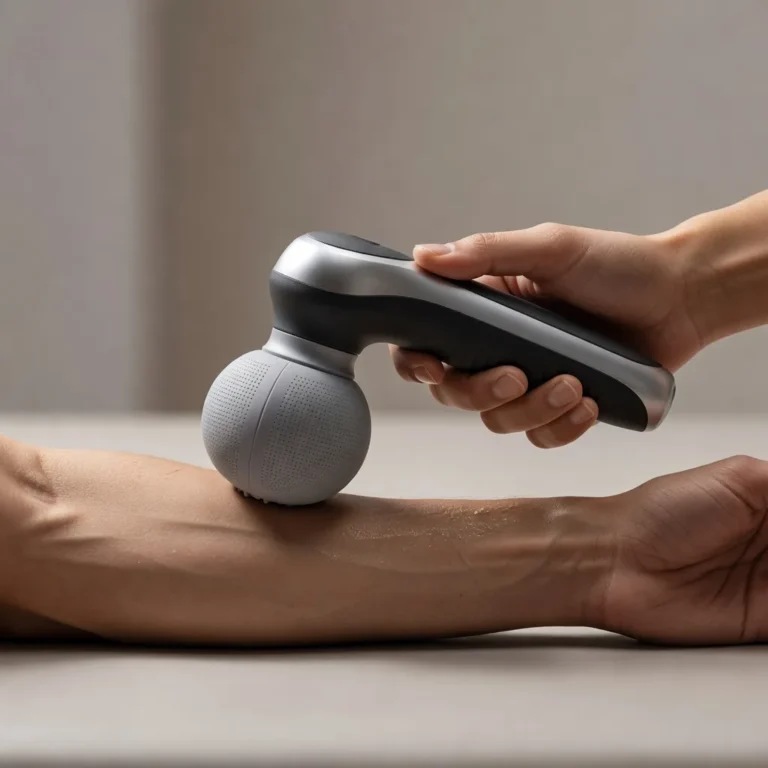
The Beurer FC55 earns the top spot because it does the most for the widest range of people. The spinning head cleanses and gently exfoliates, the removable handle lets you reach your back and legs without stretching, and the brush is waterproof, so you can use it in the shower or bath. It is especially useful if stiff shoulders or back pain make manual scrubbing awkward.
Two speed levels let you start on the lower setting, which is the one most skin will need. It is rechargeable, with around an hour of use per charge, but it is bulkier than the silicone picks and has more parts to rinse and dry. Motorised brushes are easy to overuse, so keep sessions short and limit use to a few times a week.
- Spinning brush head for cleansing and exfoliation
- Waterproof for shower or bath use
- Removable handle to reach the back and legs
- Two speed levels and a rechargeable battery
Pros
- Reaches the back with little effort
- Two speeds for gentler or deeper cleansing
- Helpful for limited shoulder movement
Cons
- Easy to overdo on sensitive skin
- Needs charging and more cleaning than a silicone scrubber
Skip it if: Skip it if you have very sensitive or eczema-prone skin; the Sndyi or Avilana silicone scrubbers are gentler.
Check Price on AmazonMANSCAPED The Body Buffer Silicone Scrubber

Best for: Hygienic everyday cleansing
The MANSCAPED Body Buffer is the best silicone pick because it replaces a loofah with non-porous, food-grade silicone bristles that rinse clean and dry quickly. Silicone is the easiest material to keep hygienic in a damp bathroom, and the lengthened bristles work shower gel into a lather while giving a more thorough scrub than a flat pad.
It is a hand-held scrubber rather than a long-handled brush, so it will not reach the middle of your back as well as the Backski or Shower Bouquet picks. The longer bristles also feel firmer than the Sndyi leaf scrubber at #10, which makes it a better fit for normal skin than for very sensitive skin. Use light pressure and it suits daily washing.
- Non-porous, food-grade silicone bristles
- Designed to clean and gently exfoliate
- Lengthened bristles for a thorough scrub
- A loofah alternative that rinses clean
Pros
- Easy to keep hygienic
- Quick to rinse and dry
- Works shower gel into a lather
Cons
- Does not reach the middle of the back
- Firmer feel than the softest silicone pads
Skip it if: Skip it if you need to reach your back easily; a long-handled pick such as the Backski suits you better.
Check Price on AmazonHydrea London Cactus Bristle Dry Body Brush
Best for: A traditional dry brushing routine
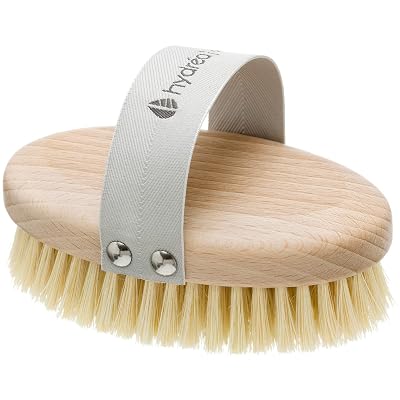
The Hydrea London brush is our dry brushing pick because it is made for exactly that job: a wooden brush with plant-based cactus bristles, used on dry skin before a shower. Many people enjoy the brisk, invigorating feel, and the bristles lift away flaky skin on rough areas such as the elbows, knees and backs of the arms.
Its listing links dry brushing with cellulite and lymphatic benefits that the evidence does not support, so treat it as an exfoliating ritual. Cactus bristles are firm, which makes this a poor choice for sensitive, dry or eczema-prone skin. The wooden handle also needs drying well between uses. Compared with the GranNaturals brush at #6, it is firmer and more eco-focused.
- Plant-based cactus bristles
- Designed for dry brushing before a shower
- Wooden handle from certified sources
- Aimed at exfoliating rough, dry patches
Pros
- Invigorating dry brushing feel
- Good on rough elbows and knees
- Plant-based, vegan bristles
Cons
- Firm bristles can irritate sensitive skin
- Wood must be kept dry to avoid mould
Skip it if: Skip it if you have sensitive, eczema-prone or very dry skin; a silicone scrubber is kinder.
Check Price on AmazonShower Bouquet Charcoal Back Loofah 2-Pack

Best for: Soft, foamy back washing
The Shower Bouquet set is the best pick for people who like the soft, foamy feel of a mesh loofah but struggle to reach their back. Each of the two jumbo, high-density loofahs sits on a long handle, so you can wash between the shoulder blades without twisting, and the two-pack lets you replace one while the other dries or keep one each.
Mesh is gentle but holds water and skin cells, so it needs a thorough rinse, a good shake and time to dry outside the shower. The charcoal infusion is a styling choice rather than a proven skin benefit. Compared with the silicone Backski at #9, it feels softer and lathers more, but it is harder to keep hygienic and needs replacing more often.
- Two jumbo, high-density mesh loofahs
- Long handles for reaching the back
- Charcoal-infused black and white scrubbers
- Soft texture for a foamy lather
Pros
- Soft and gentle on most skin
- Rich lather with little wash
- Two in each pack
Cons
- Mesh holds moisture and needs careful drying
- Needs replacing more often than silicone
Skip it if: Skip it if you want a low-maintenance brush; silicone picks such as the Backski or Avilana dry faster.
Check Price on AmazonAvilana Dual-Sided Silicone Body Scrubber

Best for: Cleansing and massage in one
The Avilana scrubber is the most versatile of the hand-held picks because it has two sides: soft, rounded nubs for a massaging feel and bristles for everyday cleansing. You can switch sides depending on the area, using the bristles on the legs and arms and the nubs where skin is more delicate, and the palm-sized shape and textured grip stay secure even with soapy hands.
It is made from certified food-grade silicone and designed to dry quickly, which keeps it more hygienic than a loofah. The listing describes it as gentle enough for sensitive skin, though it is still worth starting lightly. Like the MANSCAPED pick at #2, it will not reach the middle of your back, but it is softer and more flexible.
- Certified food-grade silicone
- Dual-sided: massage nubs and cleansing bristles
- Palm-sized with a textured grip
- Quick-drying design
Pros
- Two textures in one scrubber
- Secure grip when wet
- Easy to rinse and dry
Cons
- Too small for the middle of the back
- Gives little exfoliation on very rough skin
Skip it if: Skip it if you want stronger exfoliation for rough areas; the Hydrea London brush does more.
Check Price on AmazonGranNaturals Natural Bristle Dry Body Brush

Best for: Dry brushing with a softer feel
The GranNaturals brush is the best natural bristle pick for people who want to try dry brushing with a slightly softer feel than cactus fibres. It lifts away dead skin cells on the legs and arms and gives a soothing, massaging sensation, which is why many people like it as a quick routine before a shower.
Its listing links it to cellulite and lymphatic drainage, claims that the evidence does not support, so think of it as an exfoliating tool. Natural bristles still need a light hand and should not be used on broken, sunburned or inflamed skin. It suits normal to oily body skin best; the Hydrea London brush at #3 is firmer and more rustic.
- Natural bristle head for dry brushing
- Helps remove dead skin cells
- Soothing, massaging feel
- Suited to legs, arms and rough patches
Pros
- Softer than cactus bristles
- Simple pre-shower routine
- Good on rough patches
Cons
- Bristles need careful drying
- Not suitable for sensitive or broken skin
Skip it if: Skip it if you have eczema or very sensitive skin; the Sndyi silicone scrubber is gentler.
Check Price on AmazonTelescopic Back Scrubber with Anti-Slip Handle
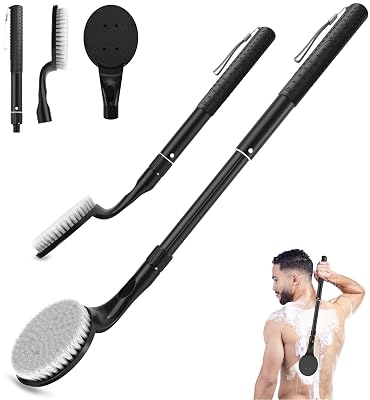
Best for: Adjustable reach for the back
This telescopic back scrubber is the best choice if a fixed handle is either too short or too awkward for you. The handle extends from about 17.5 to 25.7 inches, so you can set the reach that suits your arm length and shoulder movement, and the anti-slip design helps you keep hold of it with wet, soapy hands.
The listing gives little detail beyond the adjustable handle and grip, so it is best for people whose main need is reach rather than a particular bristle feel. It has no motor, unlike the Beurer at #1, so it is lighter and simpler but needs more arm work. Rinse it well and let it dry fully between showers.
- Telescopic handle from about 17.5 to 25.7 inches
- Designed for washing the back in the shower
- Anti-slip grip
- Manual design with no charging
Pros
- Adjustable length for different users
- Light and simple
- No batteries needed
Cons
- Listing gives little detail on the brush head
- Needs more arm work than an electric brush
Skip it if: Skip it if you want detailed product information before buying; the Backski listing is clearer.
Check Price on Amazon16 Inch Natural Bristle Dry Body Brush

Best for: Dry brushing with a long reach
This 16 inch dry body brush is the best pick if you want a traditional bristle brush that also reaches your back. The handle detaches, so you can use the long version for your back and the back of your legs and the head alone as a palm brush for arms and legs, which makes it more flexible than the hand-held dry brushes above it.
It uses natural bristles, so the same cautions apply as for the Hydrea London and GranNaturals picks: use light strokes, skip broken or irritated skin and dry it thoroughly between uses. The listing does not describe bristle firmness in detail, so start gently and see how your skin responds over the first couple of weeks.
- 16 inch brush with natural bristles
- Detachable handle
- Designed for dry brushing
- Reaches the back and legs
Pros
- Two ways to use it
- Long reach for the back
- Simple design
Cons
- Natural bristles can irritate sensitive skin
- Listing gives limited detail on firmness
Skip it if: Skip it if you want a soft, low-maintenance brush; the Avilana or Sndyi silicone picks suit you better.
Check Price on AmazonBackski Long Handle Back Scrubber

Best for: Washing the back with two bristle types
The Backski scrubber is the best dedicated back brush because it pairs a long handle with an anti-slip grip and a head that has both stiff and soft bristles. You can use the soft side for everyday washing and save the stiffer side for rougher areas, which gives more control than a loofah on a stick.
Two bristle types mean some care is needed: the stiff side is too firm for sensitive skin, and pressing hard on the back can trigger irritation or folliculitis in people prone to body acne. Compared with the telescopic pick at #7, it has a fixed handle but a clearer description of the brush head. Hang it to dry between uses.
- Long handle for reaching the back
- Anti-slip grip for wet hands
- Stiff and soft bristles on one head
- Designed for use in the shower
Pros
- Clear two-texture design
- Secure grip in the shower
- Reaches between the shoulder blades
Cons
- Stiff side is too firm for sensitive skin
- Fixed length may not suit everyone
Skip it if: Skip it if your back is prone to breakouts or irritation; a soft loofah or silicone scrubber is gentler.
Check Price on AmazonSndyi Leaf Silicone Body Scrubber
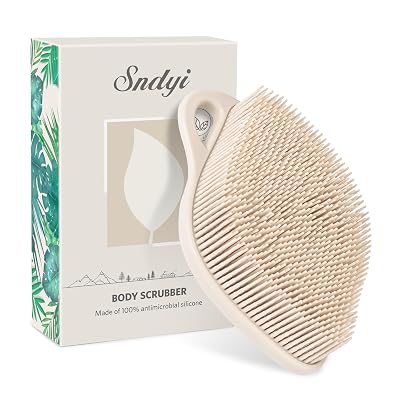
Best for: Gentle cleansing for reactive skin
The Sndyi scrubber is our pick for sensitive skin because it is made from soft silicone and marketed specifically for gentle exfoliation. The leaf shape sits comfortably in the hand, and silicone rinses clean and dries quickly, which matters if your skin reacts to bacteria or soap left in a damp loofah.
It is the simplest brush on this list, with no handle and a gentle feel, so it will not give much exfoliation on very rough heels or elbows and will not reach the middle of your back. Compared with the Avilana at #5, it has fewer textures but is designed to be softer. It suits daily use in the shower when paired with a mild wash.
- Soft silicone body scrubber
- Marketed for gentle exfoliation
- Designed with sensitive skin in mind
- Leaf shape that fits the hand
Pros
- Very gentle on reactive skin
- Easy to rinse and dry
- Simple to use every day
Cons
- Little exfoliation for rough areas
- No handle for reaching the back
Skip it if: Skip it if you want strong exfoliation or back reach; the Beurer FC55 or Backski suits you better.
Check Price on AmazonHow We Chose These Products
We shortlisted body brushes from Amazon listings that are highly rated by a large number of shoppers, favouring established brands and fuller-featured models such as rechargeable, waterproof and long-handled designs. We then checked each product’s listed features against the safety guidance cited in this post, including the AAD’s advice on gentle strokes, avoiding broken skin and moisturising afterwards.
These are research-based picks, not hands-on lab tests. We have not measured bristle stiffness ourselves, so rankings reflect listing detail, design and suitability for different skin types. We left out household spin scrubbers designed for tiles and bathtubs, which often appear in the same searches but are not made for skin.
- Strong ratings from a large number of shoppers
- Established brands and fuller-featured models preferred
- Listed features checked against the cited safety guidance
- Products with thin or unclear listings excluded
- Cleaning tools for bathrooms and tiles left out
Types of Body Cleansing Brushes Compared
Body brushes fall into a few clear types. Each suits different skin, habits and bathrooms, and the right one depends as much on how you shower as on how your skin looks.
| Brush type | Feel | Best for | Drawbacks |
|---|---|---|---|
| Silicone scrubber or brush | Soft, flexible nubs | Sensitive, dry or everyday use | Less exfoliation on very rough skin |
| Soft synthetic bristle, long handle | Gentle, foamy | Reaching the back, general cleansing | Bristles hold water; needs drying |
| Natural bristle (plant or boar) | Firmer, scratchier | Rough elbows, knees, thighs | Can irritate; slow to dry, can go mouldy |
| Dry brush | Firm bristles used on dry skin | Invigorating routine before showering | Easy to overdo; no detox evidence |
| Electric spin brush | Rotating head | People with limited reach or grip | More parts to clean and replace |
| Silicone back strap | Double-handled strip | Scrubbing the back hands-free | Covers the back only |
Electric spin brushes can be helpful for people with arthritis, limited shoulder movement or back pain who struggle to reach, but they are easy to overuse, so keep the lowest speed and short sessions. If you are not sure where to start, a soft silicone brush is the safest first choice because it is gentle, dries fast and does not trap water between bristles.
Features That Make a Good Body Brush
Beyond the bristle type, a few practical details decide whether you enjoy using a brush and whether it stays hygienic. Photos in listings rarely show how stiff bristles really are, so look for clear descriptions such as soft or gentle and check reviews that mention sensitive skin.
- Soft or medium bristles, or rounded silicone nubs, with no sharp or scratchy tips.
- A long, slightly curved handle if you want to reach your back without twisting.
- A non-slip grip that stays secure when wet and soapy.
- A hanging loop or hole so the brush can drip dry.
- A detachable head if you want a hand-held option for legs and arms.
- Waterproof sealing on electric models, with a replaceable head.
Wooden handles look attractive but can crack, swell or grow mould if left wet in the shower. Plastic or silicone handles are easier to keep clean in a damp bathroom.
Which Body Brush Suits Your Skin Type?
Your skin type should guide how firm a brush you choose and how often you use it. Our article on how often to exfoliate sensitive skin explains why gentler and less often is usually better.
| Skin type or concern | Brush choice | How often |
|---|---|---|
| Sensitive or reactive | Soft silicone | 1 to 2 times a week |
| Dry or flaky | Soft silicone or soft bristle, with a creamy wash | 2 times a week |
| Normal | Soft or medium bristle | 2 to 3 times a week |
| Oily or body breakouts | Soft silicone with a gentle wash | 2 to 3 times a week, never scrubbing spots |
| Rough elbows, knees, heels | Medium bristle on those areas only | 1 to 2 times a week |
| Eczema, psoriasis or rosacea | Ask a dermatologist first; often skip brushing | As advised |
Pay attention to how your skin responds over the first two weeks rather than following a fixed rule. Skin that feels soft and comfortable is a good sign; tightness, itching or pink patches mean you should brush less often or more gently. On the body, bumps from keratosis pilaris on the upper arms often get worse with hard scrubbing. A gentle brush, a mild wash and a moisturiser work better than force.
Does Dry Brushing Work?
Dry brushing means brushing dry skin with a firm brush, usually in long strokes towards the heart, before a shower. It is often sold as a way to detox, drain lymph, boost circulation and reduce cellulite.
Research on dry brushing is very limited, and most claims come from spa and wellness marketing rather than studies. The honest picture is simpler. Dry brushing removes some loose dead skin, which can leave skin feeling smoother, and many people find it energising. There is no good evidence that it detoxes the body, breaks down fat or removes cellulite. Any smoothing of dimples is brief and comes from temporary redness and swelling.
- Use a softer brush than you think you need, and light pressure.
- Skip the face, chest if sensitive, and any broken or sunburned skin.
- Limit dry brushing to a couple of times a week.
- Shower and moisturise straight after.
What to Avoid
Some brushes and habits do more harm than good.
- Very stiff or scratchy bristles, especially on the chest, inner arms and inner thighs.
- Using a body brush on the face; facial skin is thinner.
- Brushing over shaved or waxed skin on the same day.
- Combining a brush with harsh scrubs or strong acid washes.
- Sharing brushes, which can spread bacteria and fungal infections.
- Keeping a brush that smells musty, has dark spots or shedding bristles.
Do not use a body brush on broken, cut, sunburned, inflamed or infected skin, or over rashes, eczema flares, psoriasis plaques, boils or folliculitis. Brushing can worsen irritation and spread infection.
How to Use a Body Cleansing Brush
These steps work for silicone and bristle brushes used in the shower.
Wet your skin and the brush
Use lukewarm water rather than hot, which dries skin.
Add a gentle body wash
A small amount of a mild, fragrance-free wash is enough.
Use light, circular strokes
Work from feet upwards in small circles, about 30 seconds per area, without pressing hard.
Reach the back with the long handle
Sweep gently across the shoulders and lower back.
Go lighter on sensitive areas
Skip or barely touch the chest, inner arms, inner thighs and any spots.
Rinse and pat dry
Rinse skin thoroughly and pat, rather than rub, with a towel.
Moisturise straight away
Apply body lotion or cream while skin is still slightly damp.
If your skin looks pink and blotchy or stings afterwards, you pressed too hard or used the brush too often. Drop to once a week and switch to softer bristles or silicone.
Moisturising After Brushing
Brushing lifts away loose skin cells and some of the natural oils on the surface, so moisturising afterwards matters. The AAD’s guide on how to safely exfoliate at home recommends applying moisturiser immediately after exfoliating to keep skin healthy and hydrated.
Creams and ointments are more protective than light lotions for dry skin, and fragrance-free formulas are less likely to sting. Our guide to what emollients are explains which ingredients help skin hold moisture.
If brushing leaves your skin tight or itchy even with moisturiser, it may simply not suit you. Our article on gentler alternatives to exfoliation covers other ways to keep skin smooth.
How to Clean and Replace a Body Brush
A damp brush in a warm bathroom is an ideal place for bacteria and mould, and a brush that stays wet between showers can pass germs back onto freshly washed skin, including small nicks from shaving. Good care keeps it hygienic and extends its life.
- Rinse the brush thoroughly after each use to remove soap and skin cells.
- Shake out excess water and hang it bristles down to dry, ideally outside the shower.
- Once a week, wash with a little mild soap or shampoo and rinse well.
- Silicone brushes can be cleaned with hot soapy water; check if they are dishwasher safe.
- Replace bristle brushes every few months, or sooner if they smell, discolour or shed.
- Replace electric brush heads as the maker recommends.
Dos and Don’ts
Good Habits
- Choose soft silicone or soft bristles
- Use light, circular strokes
- Brush two or three times a week
- Moisturise straight after
- Hang the brush to dry after use
Common Mistakes
- Scrub hard or every day
- Use it on broken or sunburned skin
- Use a body brush on your face
- Share your brush
- Believe detox or cellulite claims
Honest Limits
A body brush is a cleansing and gentle exfoliating tool. It can make skin feel smoother, help you wash hard-to-reach areas and make a shower feel more thorough. That is its real value.
It also cannot fix dryness on its own. Without moisturiser and sensible shower habits, regular brushing can leave skin rougher than before. It cannot remove cellulite, stretch marks or dark patches, drain toxins or treat skin conditions such as eczema, psoriasis or persistent body acne. Many of those need proper treatment, and aggressive brushing can make them worse. If a concern does not improve with gentle care, a dermatologist is the right next step.
When to See a Dermatologist
- Redness, burning or a rash that lasts after brushing.
- Body acne, folliculitis or boils that keep coming back.
- Very dry, cracked or itchy skin that does not improve with moisturiser.
- Patches of eczema or psoriasis.
- A mole or spot that changes in size, shape or colour.
This article is for general information only and does not replace medical advice. See a doctor or board-certified dermatologist for persistent rashes, infections or skin conditions.
FAQ
Is an electric body brush worth it?
It helps if reaching your back is hard. The Beurer FC55 suits that, but a silicone scrubber such as the Avilana cleans well for most people.
Is silicone better than bristles?
Silicone is gentler and more hygienic; bristles exfoliate more.
Which body brush is best for sensitive skin?
A soft silicone scrubber, such as the Sndyi or Avilana picks, is gentler than bristles.
How often should I use a body brush?
Two or three times a week for most skin.
Does dry brushing remove cellulite?
No, any smoothing is temporary.
Which brush is best for reaching my back?
The Backski, Shower Bouquet or telescopic back scrubber picks all have long handles.
Can I use a body brush on my face?
No, facial skin needs a softer, face-specific tool.
Can a body brush help body acne?
Gentle cleansing may help; never scrub spots.
How do I stop my brush going mouldy?
Rinse, shake out and hang it to dry outside the shower.
Should I use a body brush with eczema?
Ask a dermatologist first; brushing can irritate it.
Where This Leaves You
The best body cleansing brush is a soft, easy-to-clean one, usually silicone or soft bristles on a long handle, used gently a few times a week.
Keep strokes light, skip broken or irritated skin, moisturise straight after and dry and replace your brush regularly so it stays hygienic.
Our top pick: Beurer FC55 Electric Body Scrubber
The Beurer FC55 takes the top spot because its waterproof spinning head, two speeds and removable handle cover the whole body, including the back, with very little effort. Choose the MANSCAPED Body Buffer instead if you want a simple, hygienic silicone scrubber, or the Hydrea London brush if you prefer a traditional dry brushing routine.
Check Price on Amazon
Written by
Registered pharmacist and founder of Facial Adviser. Rakib's pharmacy training covers how skincare actives work and interact; a later course in cosmetology turned that into a focus on facial treatments and skincare products. He plans, researches and edits every guide on the site and checks health claims against sources such as the American Academy of Dermatology, the FDA and the NIH. He is not a dermatologist; see the Editorial Policy and Medical Disclaimer.
About · Editorial policy · How we choose products · Medical disclaimer · Contact
Keep reading: Cleansing brushes and skin tools
- 10 Best Facial Tools (2026): LED, Cleansing, Gua Sha and More
- 10 Best Silicone Facial Brushes (2026): Gentle Sonic and Manual Picks
- 10 Best Skincare Serum Applicators (2026): Cleaner Use, Less Waste
- FOREO LUNA mini 2: Is This Compact Silicone Cleanser Worth It?
- FOREO LUNA 4: Features, Pros, Cons and Who It Really Suits
- 10 Best Products for Women's Facial Hair Removal (2026): Gentle Picks
- 10 Best Gua Sha Facial Tools (2026): Stone and Steel Picks Compared