Facial Treatment Devices Explained: Microcurrent, Galvanic, LED and More
If you have ever wondered which device mimics the body’s natural electrical energy to re-educate and tone facial muscles, the answer is a microcurrent device. It is one of several facial treatment devices used in salons and at home, alongside galvanic, high frequency, ultrasonic and LED tools, each working in a different way.
Part of our guide to at-home facial devices. Start with: How to Incorporate Microcurrent Into Your Routine: Gel, Timing and Safety
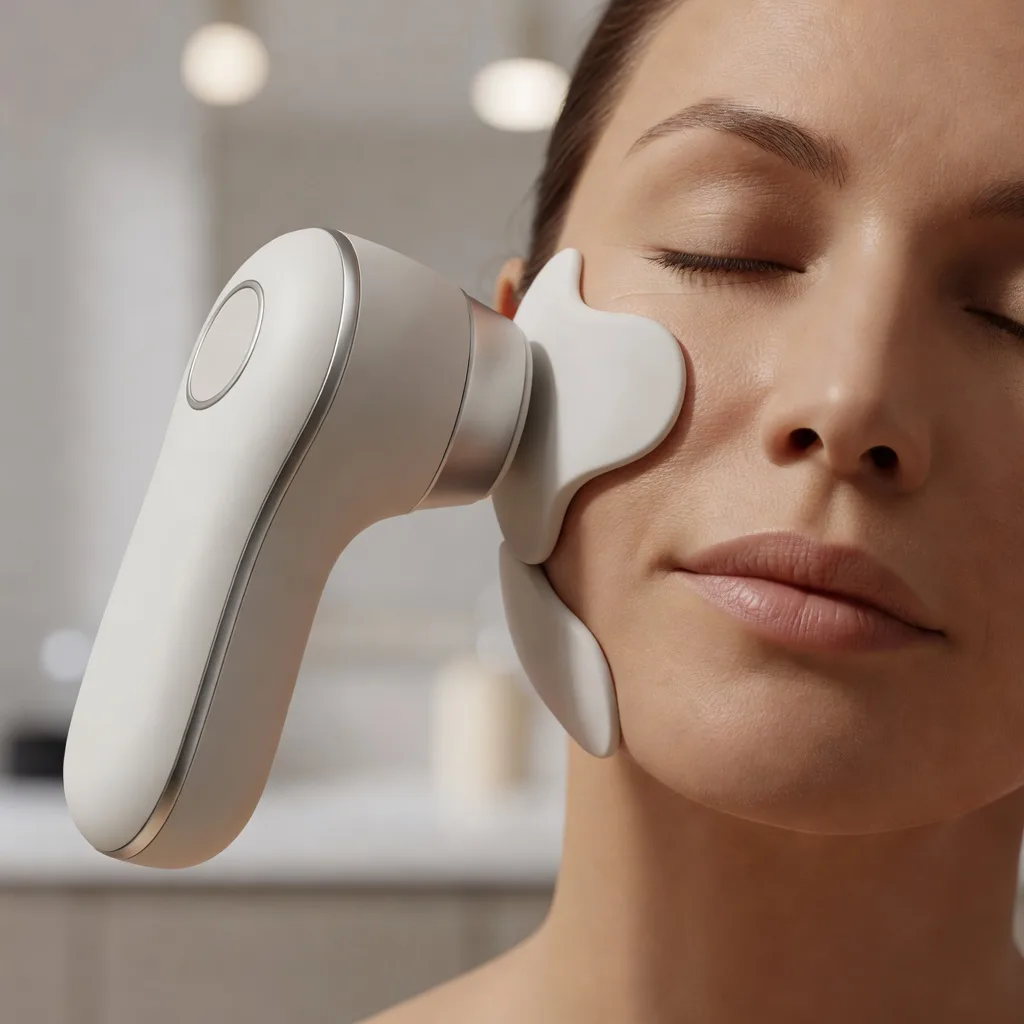
The device that mimics the body’s natural electrical energy to re-educate and tone facial muscles is a microcurrent device. It delivers a very low-level electrical current, measured in millionths of an amp, through two probes or rollers moved along the face. The current is thought to stimulate facial muscles and support cellular energy, which may give a temporarily lifted, firmer look, especially around the brows, cheeks and jaw. Other facial devices work differently: galvanic current helps push products into the skin, high frequency uses a glass electrode for mild antibacterial effects, ultrasonic spatulas exfoliate, and LED uses light. Results from all of them are modest and need regular use.
In short: microcurrent is the muscle-toning device, and each other device targets a different job such as product absorption, exfoliation or light therapy.
Keep expectations in proportion: the American Academy of Dermatology notes that daily broad-spectrum sunscreen is one of the most effective ways to prevent visible skin ageing, and no device replaces it.
This guide explains how each device works, what the evidence suggests, who should avoid which device and how to use them safely at home.
Shopping these picks?
Amazon Prime members get fast, free shipping on eligible items, plus Prime Video, Amazon Music and member deals. New members can start with a free trial.
Start a free Prime trialAged 18 to 24? Prime for Young Adults comes with a longer free trial and a lower price after it.
Affiliate link: we may earn a commission at no extra cost to you.
Recommended Facial Treatment Devices



At a Glance
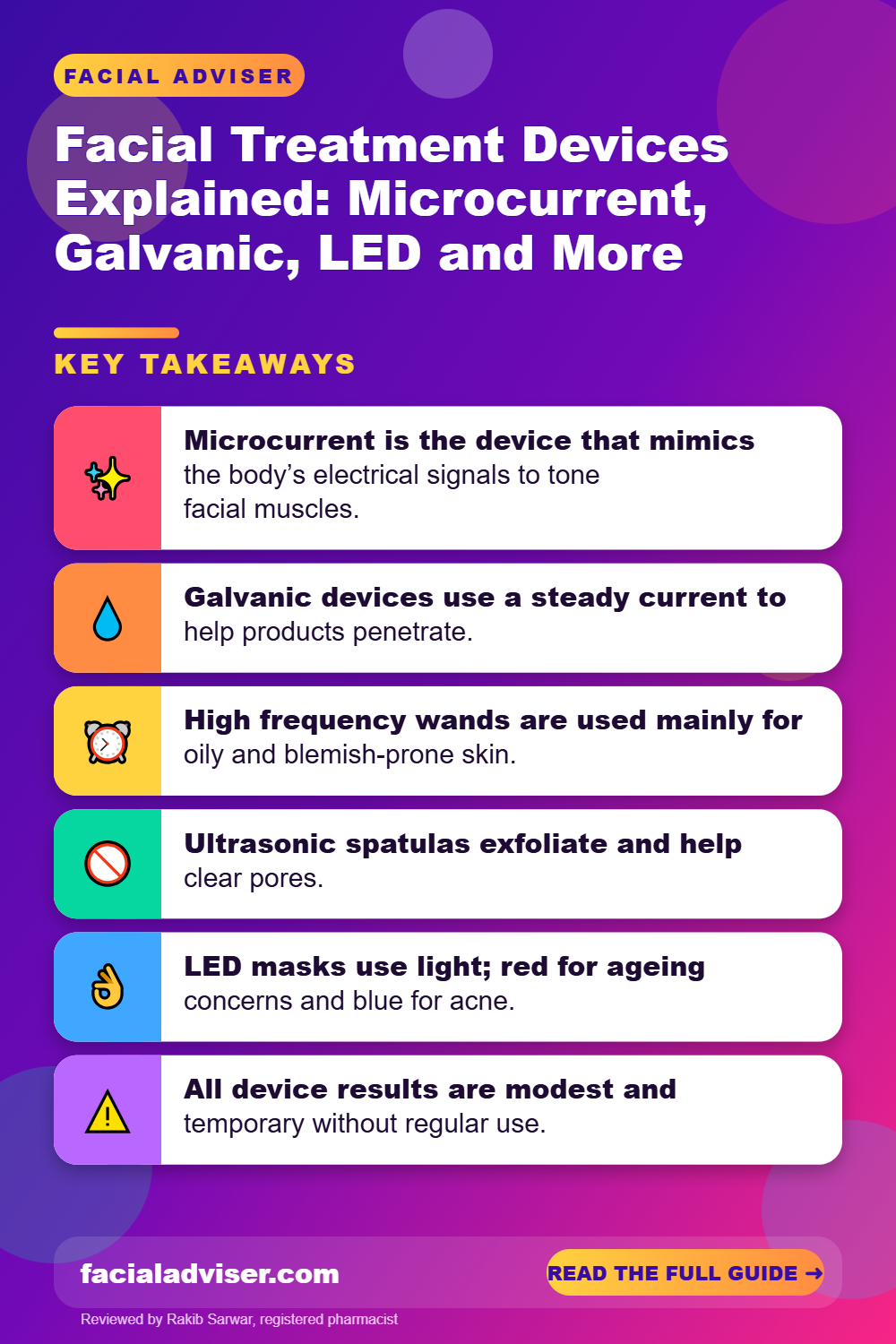
- Microcurrent is the device that mimics the body’s electrical signals to tone facial muscles.
- Galvanic devices use a steady current to help products penetrate.
- High frequency wands are used mainly for oily and blemish-prone skin.
- Ultrasonic spatulas exfoliate and help clear pores.
- LED masks use light; red for ageing concerns and blue for acne.
- All device results are modest and temporary without regular use.
- People with pacemakers, pregnancy or certain conditions should check with a doctor first.
What This Covers
- Facial Treatment Devices at a Glance
- Microcurrent: The Device That Tones Facial Muscles
- Galvanic Devices: Cleansing and Product Infusion
- High Frequency Wands: Oily and Blemish-Prone Skin
- Ultrasonic Spatulas: Gentle Exfoliation
- LED Masks and Panels: Light Therapy
- Salon vs At-Home Facial Devices
- How to Choose and Use a Facial Device Safely
- Who Should Avoid Facial Devices
- Dos and Don’ts
- Honest Limits
- When to See a Dermatologist
- Questions People Ask
- The Bottom Line
Facial Treatment Devices at a Glance
Each device uses a different type of energy, so they suit different goals. This table summarises the main types found in salons and in home versions.
| Device | Energy used | Main use | Typical feel |
|---|---|---|---|
| Microcurrent | Very low electrical current | Muscle toning, temporary lift | Mild tingle or nothing at all |
| Galvanic | Steady direct current | Deep cleansing or product infusion | Slight tingle, metallic taste in some people |
| High frequency | Alternating current through a glass electrode | Oily skin, blemishes, pore appearance | Buzzing, slight warmth, faint smell of ozone |
| Ultrasonic spatula | High-speed vibration | Exfoliation, pore cleansing, product push | Gentle vibration, mist of water |
| LED mask or panel | Visible light, sometimes near infrared | Red for ageing, blue for acne | Gentle warmth or no sensation |
The devices are not interchangeable. Choosing one depends on whether you want toning, cleansing, product absorption, exfoliation or help with breakouts.
Microcurrent: The Device That Tones Facial Muscles
Microcurrent is the answer to the classic exam and quiz question about re-educating facial muscles. It works with a current so low that most people feel little or nothing, which is why it is sometimes marketed as a non-surgical facelift, a phrase that overstates what it does.
- The current is delivered through two probes, rollers or pads, with a conductive gel.
- Probes are glided upward or held in place along muscle lines.
- The aim is to stimulate muscles and support cellular energy, giving a lifted look.
- Results are typically temporary, lasting hours to days, and build with regular use.
- Most home devices need several sessions a week to maintain any effect.
Our guide on microcurrent facial steps and benefits explains a full treatment step by step.
Research on microcurrent is limited and mostly small. Many users report a subtle lift and fresher look, but it will not tighten loose skin like surgery or change bone structure. Treat it as a maintenance tool, not a transformation.
Galvanic Devices: Cleansing and Product Infusion
Galvanic devices use a steady direct current and are among the oldest facial electrical treatments. They work in two main ways, depending on the polarity used.
- Desincrustation: softens oil and debris in pores so they are easier to cleanse.
- Iontophoresis: helps water-based, charged ingredients move into the upper layers of skin.
- Often used with a special gel or serum designed for the device.
- Sessions are usually short, a few minutes per area.
Galvanic treatment is popular in salons as part of a deep-cleansing or hydrating facial. At home, its value depends largely on the serum you use with it, so a well-formulated product matters as much as the device itself.
Galvanic treatment should not be used over broken skin, metal implants or piercings in the treatment area, and some people notice a metallic taste during treatment, which is harmless but can be off-putting.
High Frequency Wands: Oily and Blemish-Prone Skin
High frequency devices pass an alternating current through a glass electrode, often glowing orange or violet. They are used in salons as part of acne and deep-cleansing facials.
- Mild warming and a faint ozone smell are normal.
- Often used after extractions to help calm the area.
- May temporarily reduce oiliness and the look of pores.
- Evidence for acne clearing is limited; it supports but does not replace acne treatment.
Home wands usually come with several glass attachments for different areas. Keep sessions brief, avoid the eye area and never use a wand with flammable products such as alcohol-based toners still on the skin, since the device can produce small sparks.
For acne, proven ingredients remain the foundation. The AAD acne skin care tips recommend gentle cleansing and not picking at spots, and a wand is at most an extra.
Ultrasonic Spatulas: Gentle Exfoliation
An ultrasonic spatula, also called a skin scrubber, vibrates at very high speed. Used on damp skin, it lifts dead skin, oil and debris from the surface and around pores.
- Used with the flat side angled down on wet skin to exfoliate.
- The reverse side is sometimes used to help serums absorb.
- Can reveal visible gunk on the blade, which many users find satisfying.
- Overuse can irritate, so once or twice a week is plenty for most people.
Keep the spatula moving and use light pressure. Holding it in one place or pressing hard can leave skin red and sensitive, especially on thin areas like the nose and around the eyes, which are best avoided altogether.
Exfoliation from any tool should match your skin type. The AAD guide on safely exfoliating at home recommends gentle methods and less frequent exfoliation for sensitive or darker skin tones.
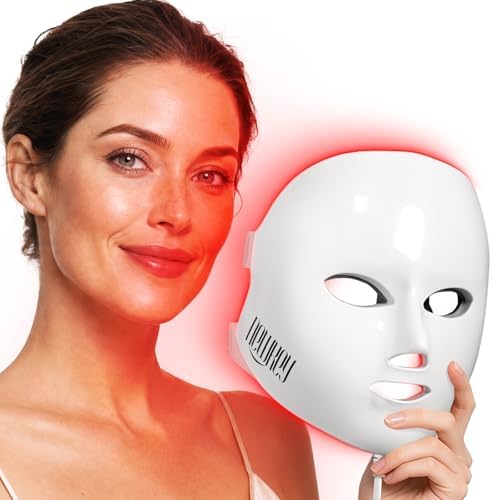
LED Masks and Panels: Light Therapy
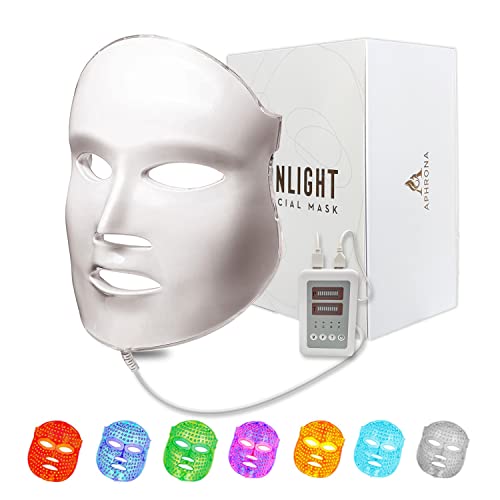
LED devices use specific wavelengths of visible light, and sometimes near infrared, with no heat or current. Different colours are used for different goals.
| Light colour | Common use | What to expect |
|---|---|---|
| Red | Fine lines, texture, general skin health | Subtle, gradual changes with regular use |
| Near infrared | Often paired with red for ageing concerns | Similar gradual effects |
| Blue | Mild acne | Can help some mild breakouts; not for severe acne |
| Amber or yellow | Redness and calming claims | Evidence is limited |
Our guide on LED anti-aging facials explains professional LED treatments, which are usually stronger than home masks. At home, choose a mask with clear wavelength information, follow the session timing exactly and use it on clean, dry skin without active products that increase light sensitivity.
Salon vs At-Home Facial Devices
Most of these technologies exist in both professional and home versions. The principle is the same, but power, precision and supervision differ, which affects both results and risk.
- Salon devices are usually stronger and cover larger areas in less time.
- A trained therapist adjusts settings, avoids unsafe areas and checks for contraindications.
- Home devices are designed with lower power for safety, so they need more frequent use.
- Home use offers convenience and lower cost per session over time, but only if you stay consistent.
- A salon course can be a useful way to find out whether a technology suits you before buying a home device.
Many people combine the two: an occasional professional treatment for a stronger effect, and a home device in between to maintain it. If you choose this route, tell your therapist which device you use at home so they can adjust their treatment and avoid over-stimulating or over-exfoliating the skin.
Whichever route you choose, judge value by what you would actually keep doing. A device used for five minutes several times a week is worth more than an expensive one left in a drawer, and a single salon session rarely gives lasting change on its own.
How to Choose and Use a Facial Device Safely
A device only helps if it matches your goal and you use it correctly and consistently. These steps keep it safe and realistic.
Pick your main goal
Toning suggests microcurrent; exfoliation suggests ultrasonic; mild acne suggests blue LED or high frequency.
Check safety warnings
Read the manual for contraindications such as pacemakers, pregnancy, epilepsy or implants.
Patch test first
Try the device on a small area and wait a day to check for irritation.
Prepare the skin
Cleanse and use the conductive gel or water the device requires.
Follow the timing
Stick to the recommended session length and frequency; more is not better.
Clean the device
Wipe probes, blades and masks after each use.
Review after several weeks
Take photos in the same light to judge whether it is worth continuing.
Consistency matters more than intensity. A short, regular routine several times a week is more likely to show benefits than an occasional long session at the highest setting.
Who Should Avoid Facial Devices
Most devices are low risk for healthy skin, but some situations call for caution or a doctor’s advice first.
- Pacemakers or other implanted electronic devices: avoid electrical devices such as microcurrent, galvanic and high frequency.
- Pregnancy: many manufacturers advise against electrical facial devices.
- Epilepsy or light sensitivity: check with a doctor before LED use.
- Metal implants, fillers or recent injections in the area: check timing with your practitioner.
- Active infections, open wounds, cold sores or sunburn: wait until healed.
- Medicines that cause light sensitivity: ask a doctor or pharmacist before LED.
Stop using any device that causes pain, burning, blistering, a rash or eye discomfort. Always protect your eyes as the manufacturer instructs with LED devices, and never use a damaged or wet electrical device.
Dos and Don’ts
Do
- Match the device to your goal
- Read and follow the manual
- Use conductive gel with microcurrent
- Clean the device after every use
- Keep wearing daily sunscreen
Don’t
- Expect surgical-level results
- Use electrical devices with a pacemaker
- Use on broken or inflamed skin
- Exceed the recommended session time
- Share devices without cleaning them
Honest Limits
Evidence for home facial devices is mixed. LED and microcurrent have the most research, but many studies are small, short or funded by manufacturers, and home devices are usually weaker than professional versions. Any lift, glow or smoothing tends to fade if you stop using them.
For lasting changes, daily sunscreen, a retinoid and a consistent skincare routine usually do more than any gadget. If you want a broader picture of tools, our guide on face tools for anti-aging compares manual and electrical options.
When to See a Dermatologist
- You want significant tightening or lifting that devices cannot provide.
- You have moderate or severe acne.
- Your skin reacts to a device with burns, blisters or lasting redness.
- You have a medical condition or implant and are unsure whether a device is safe.
This article is for general information and does not replace professional medical advice. Follow each device’s instructions and speak to a doctor or board-certified dermatologist if you have health conditions, implants or are pregnant.
Questions People Ask
What device mimics the body’s natural electrical energy to tone facial muscles?
A microcurrent device.
Does microcurrent really lift the face?
It may give a subtle, temporary lift with regular use.
What is the difference between microcurrent and galvanic?
Microcurrent targets muscles; galvanic helps cleanse or push products into skin.
What does a high frequency wand do?
It is used for oily and blemish-prone skin and may reduce oiliness temporarily.
How often should I use an ultrasonic spatula?
Once or twice a week for most people.
Which LED colour is best for acne?
Blue light, for mild acne.
Are home devices as good as salon treatments?
Usually not; home versions are weaker.
Can I use facial devices while pregnant?
Check with your doctor; many brands advise against electrical devices.
Can I combine devices?
Yes, but introduce them one at a time to watch for irritation.
Do I still need sunscreen if I use devices?
Yes, daily sunscreen is essential.
The Bottom Line
Microcurrent is the device that mimics the body’s natural electrical energy to re-educate and tone facial muscles, while galvanic, high frequency, ultrasonic and LED devices each serve different goals from product infusion to exfoliation and light therapy.
Choose a device by your goal, check safety warnings, use it consistently, and remember that sunscreen and a good routine still matter more than any tool.

Written by
Registered pharmacist and founder of Facial Adviser. Rakib's pharmacy training covers how skincare actives work and interact; a later course in cosmetology turned that into a focus on facial treatments and skincare products. He plans, researches and edits every guide on the site and checks health claims against sources such as the American Academy of Dermatology, the FDA and the NIH. He is not a dermatologist; see the Editorial Policy and Medical Disclaimer.
About · Editorial policy · How we choose products · Medical disclaimer · Contact
Keep reading: Microcurrent and RF devices
- How to Incorporate Microcurrent Into Your Routine: Gel, Timing and Safety
- Microcurrent Facial vs Radiofrequency: Which Works Better for Firmer Skin?
- NuFACE Mini vs Trinity: Differences, Specs and Which to Choose
- Radio Frequency vs High Frequency Facial: What Is the Difference?
- Best High Frequency Wand: What to Look For, Real Evidence and Safety
- 10 Best Skin Tightening Devices (2026): LED, Microcurrent and More
- 10 Best Facial Tools (2026): LED, Cleansing, Gua Sha and More
- 10 Best LED Light Therapy Masks (2026): Clearer Skin, Softer Lines