NuFACE Mini vs Trinity: Differences, Specs and Which to Choose
NuFACE is one of the best-known brands of at-home microcurrent devices, and its two most popular models, the Mini and the Trinity, are often compared by people wondering whether the bigger, more expensive option is worth it. Both use the same basic technology, so the choice comes down to features, convenience and how you plan to use the device.
Part of our guide to at-home facial devices. Start with: How to Incorporate Microcurrent Into Your Routine: Gel, Timing and Safety
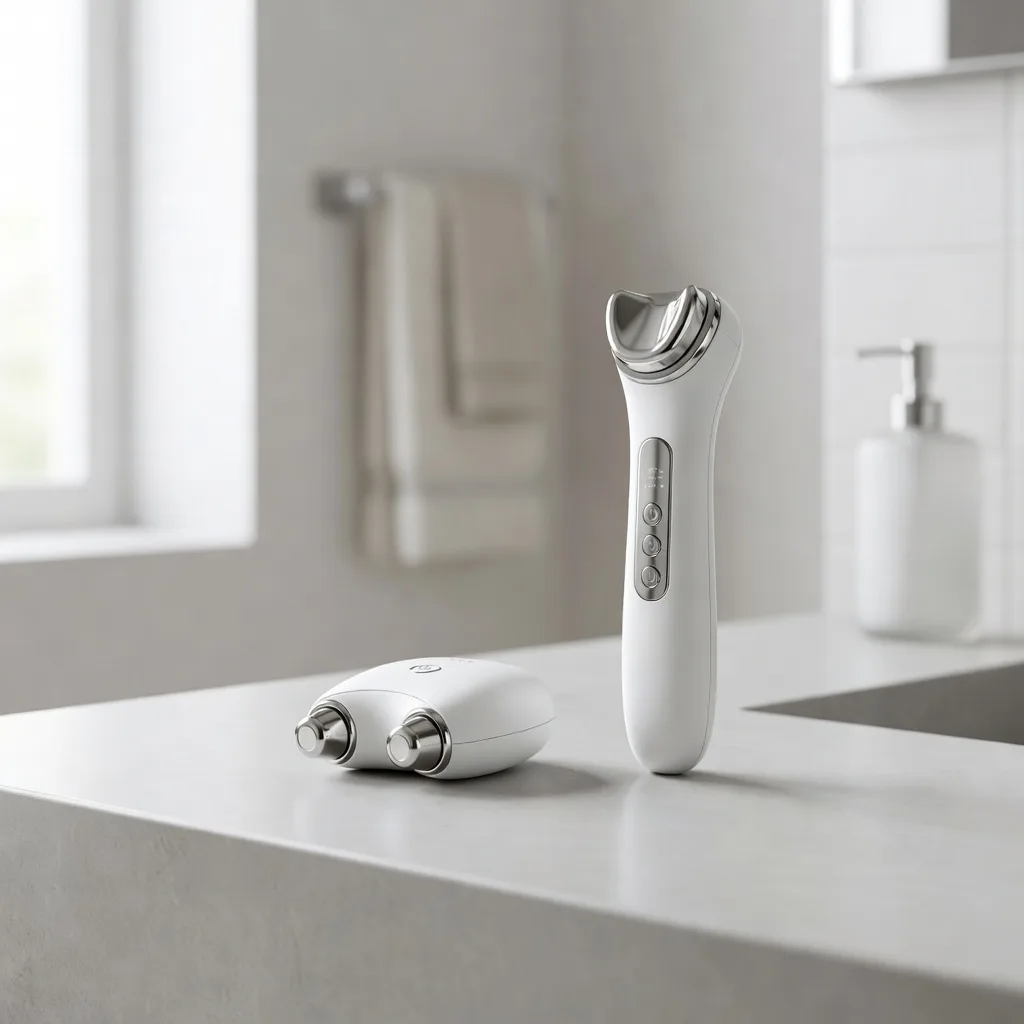
The NuFACE Mini is a smaller, travel-friendly microcurrent device designed for toning the face with its built-in treatment head. The NuFACE Trinity is a full-size device that uses the same type of microcurrent but accepts interchangeable attachments for other targeted treatments, such as smaller heads for the eye and lip area or light-based heads. Both aim to give a temporary lifted, toned look with regular use and a conductive gel. The Mini suits people who want a simple, portable device; the Trinity suits people who want more options. Neither is proven to deliver lasting structural lifting.
In short, the core microcurrent experience is similar; the Trinity mainly adds versatility, while the Mini adds portability.
Scientific evidence on at-home microcurrent is limited. A 2025 paper in Dermatologic Surgery examined the gap between rising public interest in microcurrent devices and the available evidence, and a 2026 report in Cutis looked at adverse events linked to at-home microcurrent facial devices. Both highlight why realistic expectations and careful use matter.
This guide compares the two devices, explains how microcurrent works, what results to expect, safety and how to choose.
Shopping these picks?
Amazon Prime members get fast, free shipping on eligible items, plus Prime Video, Amazon Music and member deals. New members can start with a free trial.
Start a free Prime trialAged 18 to 24? Prime for Young Adults comes with a longer free trial and a lower price after it.
Affiliate link: we may earn a commission at no extra cost to you.
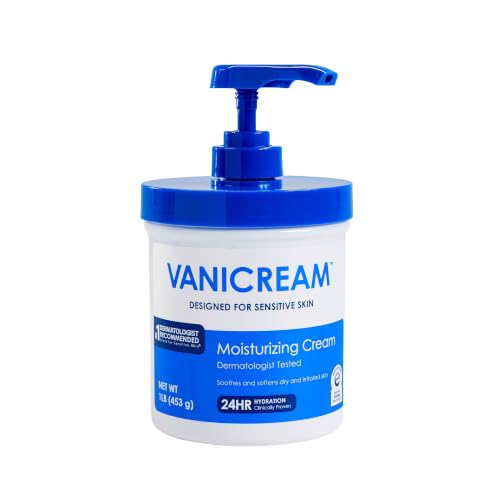
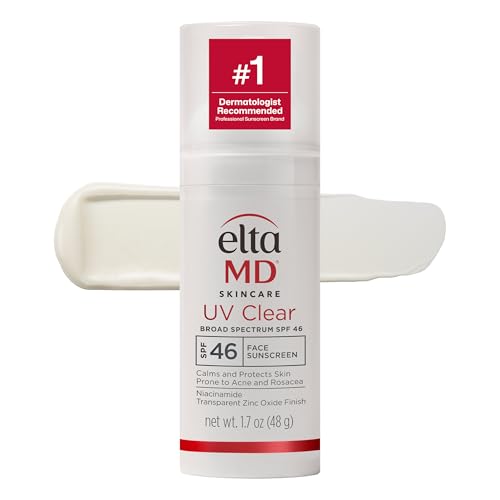
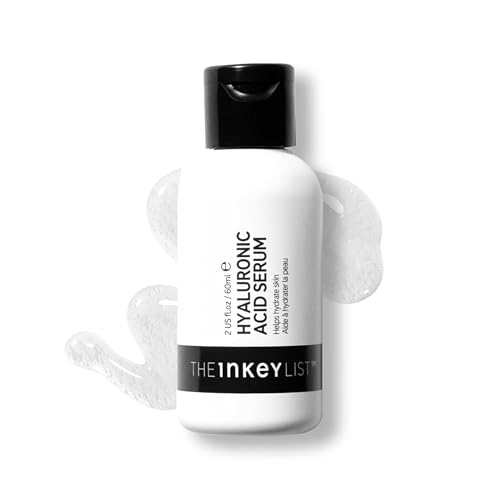
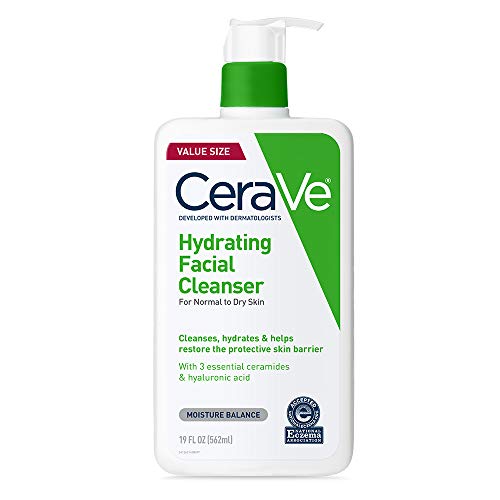
Recommended Products to Use With Microcurrent Devices



What This Covers
- NuFACE Mini vs Trinity at a Glance
- How Microcurrent Devices Work
- What the Evidence Says
- What Results to Expect
- How to Use a Microcurrent Device Safely
- Safety and Who Should Avoid Microcurrent
- Mini or Trinity: Which Should You Choose?
- Supporting Results With Skincare
- Alternatives to Consider
- Dos and Don’ts
- Honest Limits
- When to See a Doctor
- FAQ
- The Takeaway
In Brief
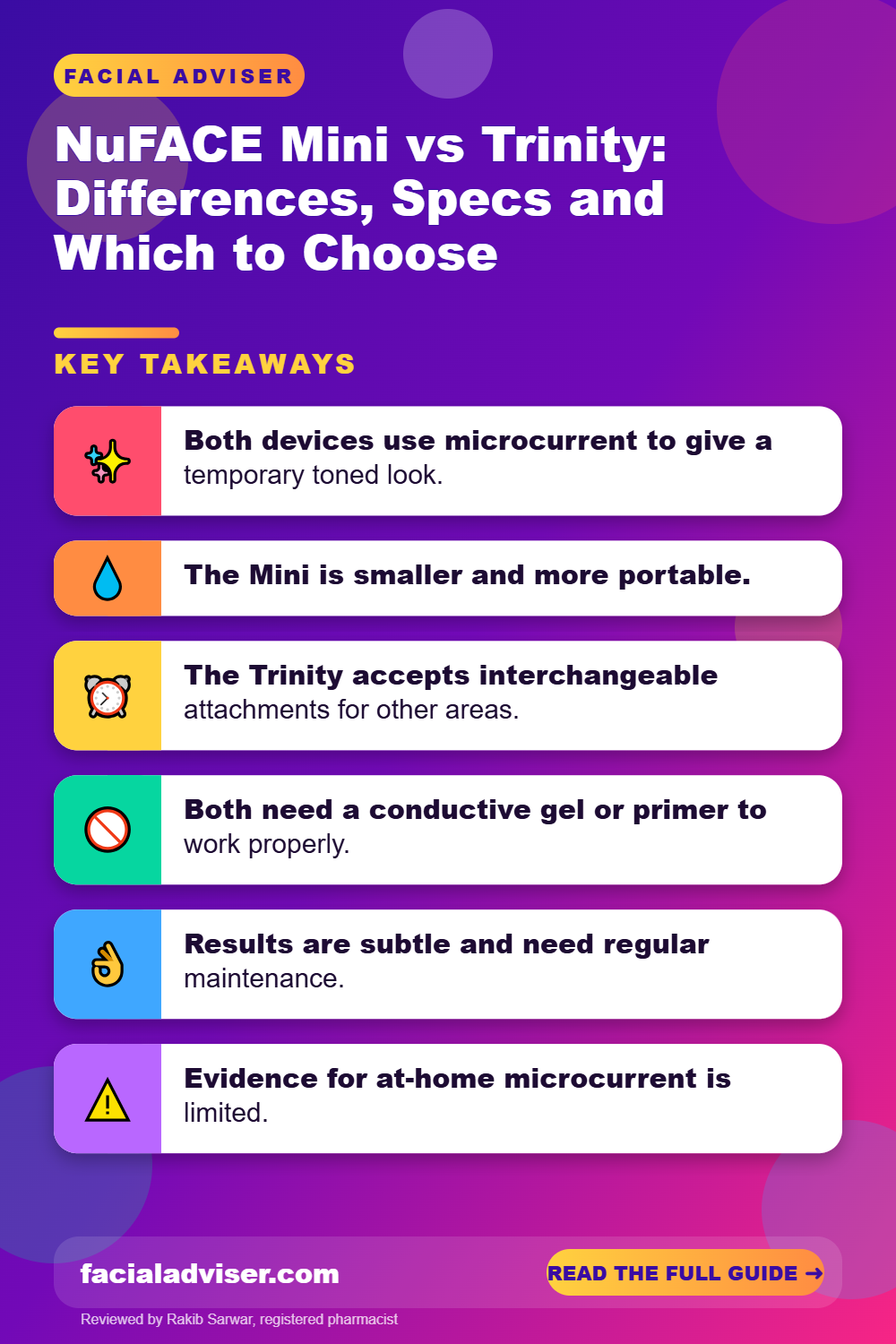
- Both devices use microcurrent to give a temporary toned look.
- The Mini is smaller and more portable.
- The Trinity accepts interchangeable attachments for other areas.
- Both need a conductive gel or primer to work properly.
- Results are subtle and need regular maintenance.
- Evidence for at-home microcurrent is limited.
- Avoid microcurrent with pacemakers, pregnancy or epilepsy unless a doctor approves.
NuFACE Mini vs Trinity at a Glance
Models and bundles change over time, so always check the current specifications before buying. In general, the two devices compare like this.
| Feature | NuFACE Mini | NuFACE Trinity |
|---|---|---|
| Size | Compact, travel-friendly | Full size |
| Technology | Microcurrent | Microcurrent |
| Treatment head | Built-in toning spheres | Standard toning head plus optional attachments |
| Attachments | Limited or none, depending on version | Interchangeable heads for eyes, lips and other treatments |
| Best for | Simple facial toning, travel | More targeted, varied treatments |
| Learning curve | Very easy | Easy, with more options to learn |
| Conductive gel needed | Yes | Yes |
The practical difference is that the Trinity is a platform you can expand, while the Mini is a streamlined device focused on the main facial toning routine. If you only plan to do a quick routine on the cheeks, jaw and forehead, the Mini covers that. If you already know you want to focus on smaller areas, such as around the eyes or mouth, check which attachments the current Trinity version supports and whether they are sold separately.
How Microcurrent Devices Work
Microcurrent devices send a very low electrical current through two metal spheres or probes as they glide over the skin. The current is much weaker than in a TENS unit and is often barely felt, though some people notice tingling or a metallic taste.
Manufacturers say the current stimulates facial muscles and skin cells, giving a lifted, toned look. Any visible effect tends to be subtle and temporary, which is why most brands recommend frequent sessions, especially at the start, followed by regular maintenance.
A conductive gel or primer is essential. Without it, the current does not flow properly, the device may not work as intended and the treatment can feel uncomfortable.
For a comparison of microcurrent with a heat-based firming treatment, see our guide to microcurrent versus radiofrequency. Because NuFACE devices share the same core technology, much of what applies to one model applies to the other: the same gel requirements, the same safety precautions and a similar need for regular sessions to maintain any effect.
What the Evidence Says
Evidence on at-home microcurrent devices is limited. Most published studies are small, short-term or funded by manufacturers, and independent research is scarce.
A 2025 paper in Dermatologic Surgery, available on PubMed, examined the gap between growing public interest in microcurrent devices and the available evidence for anti-aging. A 2026 report in Cutis, also on PubMed, looked at adverse events associated with at-home microcurrent facial devices, a reminder that even low-risk devices need to be used carefully.
This does not mean the devices do nothing. Many users like the temporary effect and the routine itself. It does mean that results should be judged with honest before-and-after photos rather than marketing claims. It also helps to be wary of dramatic before-and-after images online, which can be affected by lighting, angles, expression and even the time of day. Your own photos, taken the same way each time, are a far more trustworthy guide.
What Results to Expect
Expectations are similar for both devices because they use the same basic technology.
| Timeframe | What people commonly report | Realistic view |
|---|---|---|
| Straight after a session | Slightly lifted, more defined look | Subtle, fades within hours to days |
| After several weeks of regular use | More consistent toned look | Depends on consistency and individual response |
| If you stop | Effect fades | Maintenance is needed to keep any benefit |
Results vary widely between people. Taking photos in the same light, from the same angle and at the same time of day before you start and every few weeks is the most reliable way to judge whether a device is working for you.
How to Use a Microcurrent Device Safely
These general steps apply to most microcurrent devices, but always follow your device’s own instructions.
Cleanse your skin
Remove makeup, oil and sunscreen so the gel and current can make good contact.
Apply a generous layer of gel
Cover the area you are treating; add more if it starts to dry.
Glide in upward strokes
Move the device slowly along the recommended paths on the jaw, cheeks and forehead.
Hold where instructed
Pause at the end of each stroke if your device’s guide says to.
Avoid sensitive areas
Keep away from the eyelids, thyroid area and broken skin unless your device allows it.
Remove the gel and moisturise
Rinse or wipe off the gel, then apply your usual moisturiser.
Clean the device
Wipe the spheres or head after each use and store it dry.
Consistency matters more than intensity. A short routine done regularly will tell you far more about whether a device suits you than occasional long sessions.
Safety and Who Should Avoid Microcurrent
Microcurrent is generally considered low risk, but it is not suitable for everyone.
- Common effects: tingling, a metallic taste, mild redness.
- Discomfort or stinging, often from too little gel.
- Irritation if used over broken skin, active acne or rashes.
- Overuse can leave skin feeling sensitive.
Do not use microcurrent devices if you have a pacemaker or other implanted electronic device, are pregnant, have epilepsy or have metal implants in the treatment area, unless a doctor has said it is safe. Stop using the device if you notice burning, blistering or lasting irritation.
If you have recently had fillers, Botox or facial surgery, ask your treating clinician how long to wait before using a microcurrent device.
Mini or Trinity: Which Should You Choose?
Use this quick guide to match the device to your needs.
| If you… | Better choice |
|---|---|
| Want a simple, quick routine | Mini |
| Travel often | Mini |
| Want targeted treatment around eyes or lips | Trinity with the right attachment |
| Like the idea of adding treatments later | Trinity |
| Are unsure if you will stick with microcurrent | Mini, as a lower commitment |
| Want the widest range of options in one device | Trinity |
Before buying either, think honestly about whether you will use it several times a week. A device that sits in a drawer gives no results, and consistency is the biggest factor in whether people see any change. It is also worth checking where you buy. Buying from the brand or an authorised retailer makes it easier to confirm the model, get warranty support and avoid counterfeits, which are a known problem with popular beauty devices. Make sure the device you buy comes with clear instructions and access to the recommended gel.
Supporting Results With Skincare
Microcurrent works best alongside a solid daily routine. Sun damage breaks down collagen and is one of the main causes of visible aging, so daily sunscreen protects any gains you make.
The American Academy of Dermatology lists daily sun protection among its top ways to reduce premature skin aging. A gentle cleanser, a moisturiser suited to your skin and a retinoid, if your skin tolerates it, complete a simple routine. On days you use your device, apply serums and moisturiser after the treatment rather than before, unless your device’s instructions say otherwise, because some products can interfere with the gel’s conductivity. Hydrated skin often feels more comfortable during treatment, so a simple routine that keeps your skin barrier healthy makes regular sessions easier to stick to.
If you prefer a device-free approach to toning, our guide on the benefits of facial yoga looks at what the research shows.
Alternatives to Consider
Several other brands make at-home microcurrent devices with similar goals, often in different shapes and at different price points. When comparing them, look at comfort, how easy the device is to hold, whether it needs a specific gel, battery life and the quality of the instructions.
Clinic-based treatments are another option. Professional microcurrent facials use stronger equipment, and radiofrequency treatments work differently by heating the skin to tighten collagen over time. Our guide on radiofrequency versus high frequency facials explains the differences between these technologies.
Whatever you choose, remember that no home device replaces sun protection, and none can match surgical results for significant sagging. If you are unsure which route to take, a consultation with a dermatologist can help you decide whether a home device, a clinic treatment or simply a better daily routine is the best use of your time.
Dos and Don’ts
Good Habits
- Use plenty of conductive gel
- Follow the device’s treatment paths
- Be consistent
- Track results with photos
- Wear sunscreen daily
Common Mistakes
- Use it with a pacemaker or during pregnancy without advice
- Treat over broken or inflamed skin
- Use it on the eyelids unless allowed
- Expect surgical results
- Keep using it if it burns or stings
Honest Limits
Evidence for at-home microcurrent is limited, and most visible effects are subtle and temporary. Results depend heavily on consistency and vary a lot between people. Neither the Mini nor the Trinity changes bone structure, removes excess skin or matches the results of surgery.
The Trinity’s extra attachments add versatility, not proof of better results for the main facial toning routine. If budget matters, it makes sense to start with the simpler option and upgrade only if you find yourself using it regularly and wanting more.
When to See a Doctor
- You have burns, blisters or lasting redness after using a device.
- You have an implanted device, epilepsy or are pregnant and want to use microcurrent.
- You notice facial twitching, numbness or unusual sensations that persist.
- You want advice on more effective treatments for sagging or deep lines.
This article is for general information and does not replace professional medical advice. Consult a doctor or board-certified dermatologist before using microcurrent devices if you have a medical condition or implant.
FAQ
What is the difference between NuFACE Mini and Trinity?
The Mini is smaller and portable; the Trinity accepts interchangeable attachments.
Is the Trinity more powerful than the Mini?
Both use microcurrent; the Trinity mainly adds versatility.
Do I need a gel with NuFACE devices?
Yes, a conductive gel or primer is essential.
How long do NuFACE results last?
Effects are temporary and need regular maintenance.
Is NuFACE backed by research?
Evidence for at-home microcurrent is limited.
Can I use NuFACE every day?
Follow the device’s instructions; many suggest frequent use at first.
Who should not use microcurrent?
People with pacemakers, implants, epilepsy or who are pregnant, unless a doctor approves.
Can I use NuFACE with acne?
Avoid treating over active breakouts or broken skin.
Which is better for travel?
The Mini, because it is smaller.
Can NuFACE replace a facelift?
No, it cannot match surgical results.
The Takeaway
The NuFACE Mini and Trinity use the same type of microcurrent technology. The Mini is compact and simple, while the Trinity adds interchangeable attachments for more targeted treatments. Results from either are subtle and temporary, and evidence for at-home microcurrent is limited.
Choose the Mini for simplicity and travel or the Trinity for versatility, use plenty of gel, be consistent, check safety first and keep daily sunscreen at the heart of your routine.

Written by
Registered pharmacist and founder of Facial Adviser. Rakib's pharmacy training covers how skincare actives work and interact; a later course in cosmetology turned that into a focus on facial treatments and skincare products. He plans, researches and edits every guide on the site and checks health claims against sources such as the American Academy of Dermatology, the FDA and the NIH. He is not a dermatologist; see the Editorial Policy and Medical Disclaimer.
About · Editorial policy · How we choose products · Medical disclaimer · Contact
Keep reading: Microcurrent and RF devices
- Radio Frequency vs High Frequency Facial: What Is the Difference?
- Best High Frequency Wand: What to Look For, Real Evidence and Safety
- 10 Best Skin Tightening Devices (2026): LED, Microcurrent and More
- How to Use Microcurrent Safely at Home: Settings, Gel and Who Should Skip It
- How to Incorporate Microcurrent Into Your Routine: Gel, Timing and Safety
- 10 Best Products for Women's Facial Hair Removal (2026): Gentle Picks
- 10 Best Gua Sha Facial Tools (2026): Stone and Steel Picks Compared