Radio Frequency vs High Frequency Facial: What Is the Difference?
Radiofrequency and high frequency facials sound almost identical, and both use electrical energy on the face, so they are often confused on spa menus and in online shops. In practice they are completely different technologies with different goals, different sensations and very different levels of scientific support.
Part of our guide to at-home facial devices. Start with: How to Incorporate Microcurrent Into Your Routine: Gel, Timing and Safety
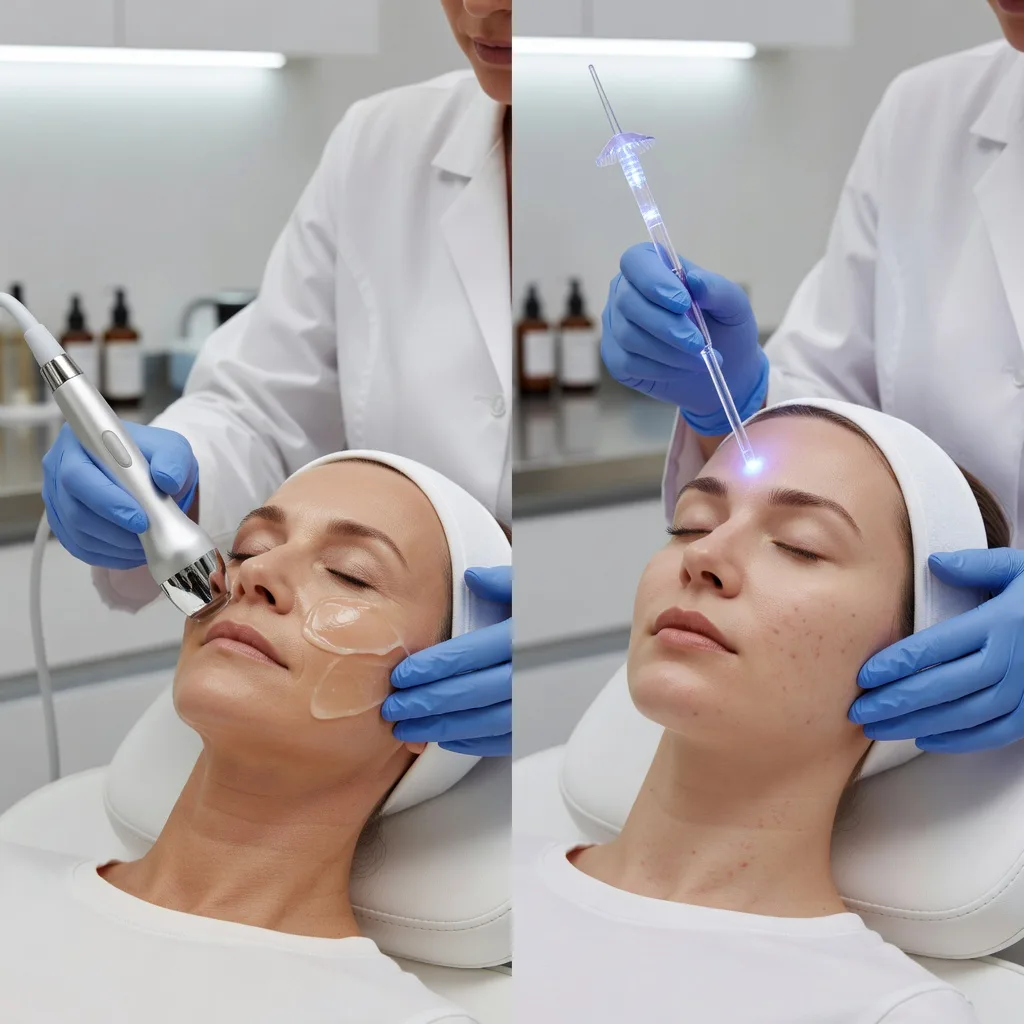
A radiofrequency (RF) facial uses electromagnetic energy to heat the deeper layers of the skin, which causes collagen to contract and encourages new collagen over time, giving gradual, modest tightening. A high frequency facial uses a glass electrode filled with argon or neon gas that glows purple or orange and delivers a mild current to the skin surface, mainly used by estheticians on oily and acne-prone skin for its claimed drying and antibacterial effects. RF is backed by a body of clinical research for skin laxity; high frequency has very little modern evidence. RF is for firming; high frequency is a surface treatment for oil and breakouts.
Put simply, choose RF if your concern is mild sagging or fine lines, and see high frequency as an optional add-on for oily skin rather than a proven acne treatment.
A 2022 systematic review in Plastic and Reconstructive Surgery concluded that monopolar and bipolar RF devices produce measurable improvement in facial and body skin laxity, with mostly minor, temporary complications. By contrast, published research on high frequency facials is sparse and largely decades old.
This guide explains how each works, what to expect, the evidence, safety and how to decide which, if either, fits your skin.
Shopping these picks?
Amazon Prime members get fast, free shipping on eligible items, plus Prime Video, Amazon Music and member deals. New members can start with a free trial.
Start a free Prime trialAged 18 to 24? Prime for Young Adults comes with a longer free trial and a lower price after it.
Affiliate link: we may earn a commission at no extra cost to you.
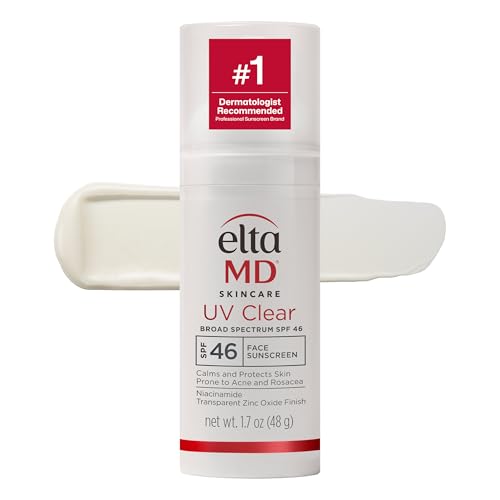
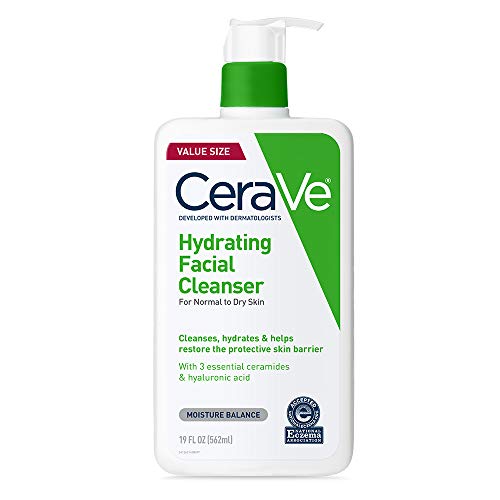
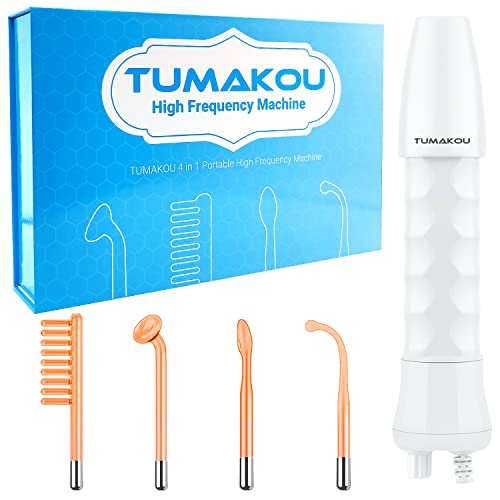
Recommended High Frequency Wands and RF Gels




At a Glance
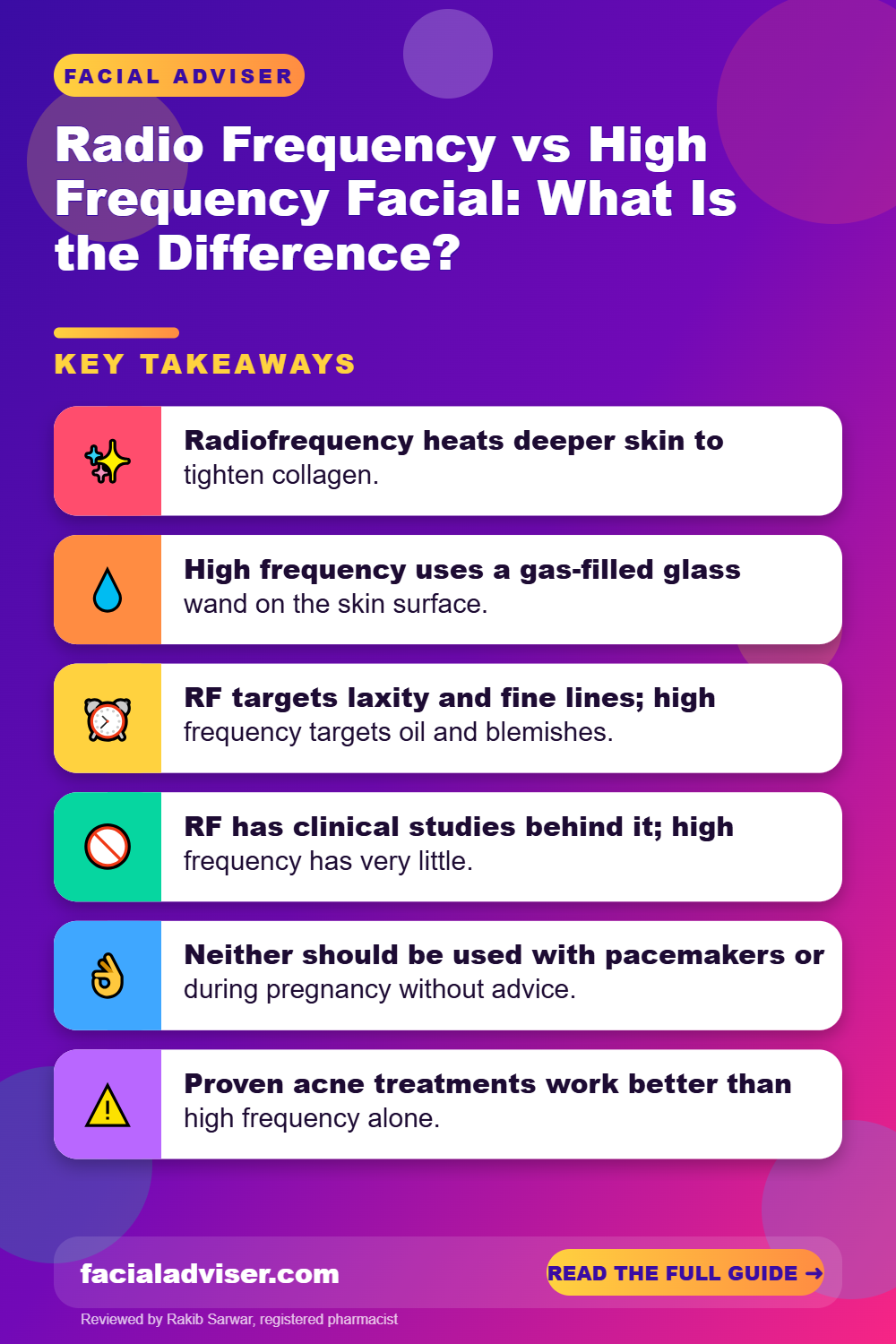
- Radiofrequency heats deeper skin to tighten collagen.
- High frequency uses a gas-filled glass wand on the skin surface.
- RF targets laxity and fine lines; high frequency targets oil and blemishes.
- RF has clinical studies behind it; high frequency has very little.
- Neither should be used with pacemakers or during pregnancy without advice.
- Proven acne treatments work better than high frequency alone.
- Daily sunscreen protects any firming gains.
On This Page
- Radio Frequency vs High Frequency at a Glance
- How Radiofrequency Works
- How a High Frequency Facial Works
- What Results to Expect
- Safety and Who Should Avoid Them
- How to Choose Between Radiofrequency and High Frequency
- High Frequency and Acne: A Realistic View
- Using Home Devices Safely
- What Happens During Each Session
- Dos and Don’ts
- Honest Limits
- When to See a Doctor
- Frequently Asked Questions
- The Takeaway
Radio Frequency vs High Frequency at a Glance
This table summarises how the two technologies compare.
| Feature | Radiofrequency (RF) | High frequency |
|---|---|---|
| Energy | Electromagnetic energy that heats tissue | Mild high-frequency current through a gas-filled glass electrode |
| Depth | Dermis, below the surface | Skin surface |
| Main goal | Tightening, texture, fine lines | Oily skin, blemishes, finishing step after extractions |
| Feel | Warmth, sometimes hot | Light tingling, buzzing and small sparks |
| Results | Gradual over weeks to months | Immediate, short-lived |
| Evidence | Systematic reviews and clinical studies | Very limited, mostly older reports |
| Typical setting | Clinics, some home devices | Spas, estheticians, home wands |
Because the names are so similar, it is worth checking which one a clinic actually offers before booking. A spa listing a high frequency facial is not offering skin tightening.
How Radiofrequency Works
RF devices deliver energy that heats the dermis, the deeper layer of skin that contains collagen. Heat causes existing collagen fibres to contract and starts a healing response that produces new collagen over the following months.
- Monopolar RF: deeper heating, usually in clinics.
- Bipolar and multipolar RF: shallower heating, common in clinics and home devices.
- RF microneedling: combines needles with RF energy, performed only in clinics.
A systematic review published in Plastic and Reconstructive Surgery and available on PubMed examined 23 studies of monopolar and bipolar devices. It found clinical evidence of measurable improvement in skin laxity of the face and body, with most complications minor and short-lived, and noted that major complications were more frequent with monopolar devices.
For a deeper comparison of RF with another popular firming treatment, see our guide to microcurrent versus radiofrequency.
How a High Frequency Facial Works
High frequency devices use a glass electrode filled with inert gas. When switched on, the gas glows, usually violet with argon or orange with neon, and a gentle current passes to the skin. Estheticians glide the electrode over the face, often after extractions, or use a technique that produces tiny sparks over blemishes.
Supporters say the current generates small amounts of ozone that may help kill bacteria and that the treatment helps dry oily skin, calm spots and leave the skin feeling refreshed. Some people also report a temporary tightening sensation.
High frequency has been used in esthetics for decades, but modern controlled studies are scarce. Most claims about acne and pore size come from providers and device sellers rather than clinical trials.
Because high frequency works on the surface, any effect tends to be short-lived. It is best viewed as a finishing step in a facial rather than a treatment in its own right.
What Results to Expect
Expectations should match what each technology can realistically do.
| Concern | Radiofrequency | High frequency |
|---|---|---|
| Mild sagging | Gradual, modest improvement | No meaningful effect |
| Fine lines | Some improvement over months | Temporary tightening feel only |
| Oily skin | Not a primary use | May feel less oily for a short time |
| Active blemishes | Not a primary use | Sometimes used on spots; evidence limited |
| Acne scars | RF microneedling may help | No meaningful effect |
RF results depend on age, skin quality, device and number of sessions, and they build slowly. High frequency results, if any, are visible straight away and fade within a day or two. Taking photos in the same lighting is the best way to judge whether either is working for you.
Safety and Who Should Avoid Them
Both are generally low risk when used correctly, but they carry different side effects.
- RF: warmth, redness and swelling for a few hours; rarely burns, blisters or fat loss with poorly controlled devices.
- High frequency: tingling, mild redness and a faint ozone smell; small sparks can sting.
- Home devices: risk of burns or irritation if instructions are ignored or used too often.
Do not use radiofrequency or high frequency devices if you have a pacemaker or other implanted electronic device, are pregnant, have epilepsy or have metal implants in the treatment area, unless a doctor has said it is safe. Remove jewellery, and never use high frequency near flammable products such as alcohol-based toners or hairspray.
People with rosacea, broken capillaries, eczema or very sensitive skin may find either treatment irritating. If you have active acne that is not improving, a dermatologist can recommend treatments with far stronger evidence.
How to Choose Between Radiofrequency and High Frequency
Identify your concern
Laxity or fine lines point to RF; oiliness and occasional spots point to high frequency as an add-on.
Check your health
Rule out implants, pregnancy and conditions that make electrical treatments unsuitable.
Consider the evidence
RF has clinical studies; high frequency has very little.
Choose a qualified provider
Ask about training, device type and expected results.
Decide on professional or home
Clinic RF is stronger; home devices are milder and need consistent use.
Plan for maintenance
RF needs a series and occasional top-ups; high frequency effects are brief.
Support with skincare
Use sunscreen daily and proven acne treatments where needed.
If acne is your main concern, start with proven over-the-counter options such as salicylic acid or benzoyl peroxide, and see a dermatologist if breakouts persist, before spending money on devices.
Our guide on facial specialists, estheticians and dermatologists explains who offers each type of treatment.
High Frequency and Acne: A Realistic View
High frequency is often marketed for acne, but acne develops from a combination of excess oil, clogged pores, bacteria and inflammation. Treatments with strong evidence target these causes directly, including topical retinoids, benzoyl peroxide, salicylic acid and, for more severe cases, prescription medication.
The American Academy of Dermatology outlines how dermatologists treat acne, which is a useful starting point if breakouts are persistent. High frequency can be a pleasant addition to a facial, but it should not replace these treatments.
Hydrocolloid pimple patches can also help protect individual spots and discourage picking, which reduces the risk of marks.
Using Home Devices Safely
Both technologies are sold as home devices. Home RF devices are deliberately weaker than clinic machines, and home high frequency wands are similar to those used in spas but should be used cautiously.
- Read and follow the manufacturer’s instructions exactly.
- Use conductive gel with RF devices as directed.
- Keep high frequency electrodes away from eyes, and never use them over broken skin.
- Clean electrodes after each use.
- Stop if you notice burning, blistering or lasting redness.
Give any home device a fair trial of several weeks before judging it, and keep realistic expectations about what milder devices can achieve. Protecting your skin from the sun every day matters more to long-term firmness than any gadget, as the AAD explains in its guide to ways to firm sagging skin.
What Happens During Each Session
Knowing what a session involves can help you decide which treatment fits your routine and comfort level.
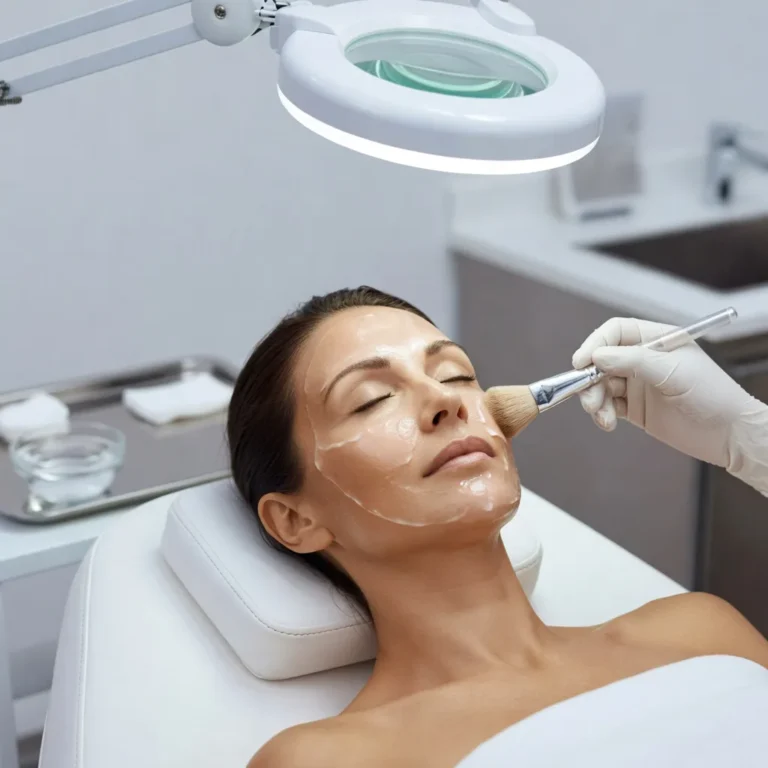
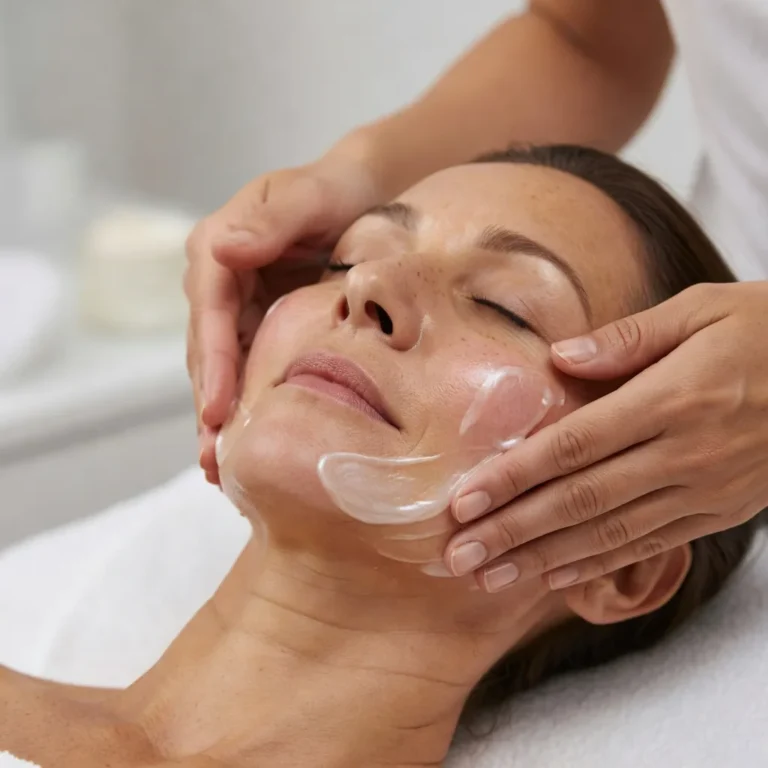
A professional RF facial usually starts with cleansing and removing makeup, followed by a layer of conductive gel. The practitioner moves the handpiece over the face in slow passes, checking skin temperature and asking about comfort as the skin warms. Sessions often last 30 to 60 minutes depending on the area treated, and skin may look pink for a few hours afterwards. A course of several sessions, spaced a few weeks apart, is common for bipolar devices, while some monopolar treatments are done once or twice.
A high frequency step is much shorter, often just five to ten minutes at the end of a facial. After cleansing and any extractions, the esthetician glides the glass electrode over the skin, sometimes over a thin gauze layer, and may briefly lift it over individual spots to create small sparks. You may notice a buzzing sound and a faint smell similar to the air after a thunderstorm. There is no downtime, and makeup can usually be applied soon after.
Whichever you try, tell the practitioner straight away if anything feels too hot or painful, as settings can be adjusted.
Dos and Don’ts
Worth Doing
- Match the device to your concern
- Check for implants and pregnancy first
- Use conductive gel with RF
- Keep sessions within instructions
- Use sunscreen daily
Skip It
- Confuse high frequency with RF tightening
- Use devices over broken skin
- Use high frequency near alcohol-based products
- Rely on high frequency to treat acne alone
- Ignore burning or blistering
Honest Limits
RF has the stronger evidence base, but results are usually modest and vary between people and devices. It does not replace surgery for significant sagging.
High frequency has little modern research behind it. It may make oily skin feel fresher for a short time, but claims about shrinking pores or curing acne are not well supported. If you are unsure which treatment could help your skin, a consultation with a dermatologist is the most reliable route. It is also worth weighing the time and money involved: RF usually needs a course of treatments plus maintenance, and high frequency adds cost to a facial without clear proof of lasting benefit. A consistent routine with a gentle cleanser, targeted acne or anti-aging ingredients and daily sunscreen often delivers better value over the long term.
When to See a Doctor
- You have burns, blisters or lasting redness after a treatment.
- Acne is persistent, painful or leaving marks or scars.
- You have an implanted device, are pregnant or have a medical condition and want treatment.
- You want advice on the best option for sagging skin.
This article is for general information and does not replace professional medical advice. Consult a board-certified dermatologist before starting device-based skin treatments, especially if you have a medical condition.
Frequently Asked Questions
What is the difference between radiofrequency and high frequency?
RF heats deeper skin to tighten it; high frequency uses a gas-filled wand on the surface for oily skin.
Does high frequency tighten skin?
It may give a brief tight feeling, but it does not tighten skin like RF.
Is high frequency good for acne?
Evidence is limited; proven acne treatments work better.
Is radiofrequency effective?
Studies show modest improvement in mild skin laxity.
Does high frequency hurt?
It tingles and small sparks can sting, but it is usually tolerable.
Can I use both?
Yes, if suitable, but they serve different purposes.
Are home devices safe?
Generally, if you follow instructions and have no contraindications.
Who should avoid these treatments?
People with pacemakers, implants, epilepsy or who are pregnant, unless a doctor approves.
How long do RF results last?
Often months, with occasional maintenance.
How long do high frequency effects last?
Usually only a day or two.
The Takeaway
Radiofrequency uses heat to tighten collagen and has clinical evidence for mild laxity, while high frequency uses a glowing glass electrode on the surface and is mainly used as a finishing step for oily, blemish-prone skin with little proof behind it.
Choose based on your concern, check your health first, rely on proven treatments for acne and protect your skin with daily sunscreen.

Written by
Registered pharmacist and founder of Facial Adviser. Rakib's pharmacy training covers how skincare actives work and interact; a later course in cosmetology turned that into a focus on facial treatments and skincare products. He plans, researches and edits every guide on the site and checks health claims against sources such as the American Academy of Dermatology, the FDA and the NIH. He is not a dermatologist; see the Editorial Policy and Medical Disclaimer.
About · Editorial policy · How we choose products · Medical disclaimer · Contact
Keep reading: Microcurrent and RF devices
- Best High Frequency Wand: What to Look For, Real Evidence and Safety
- 10 Best Skin Tightening Devices (2026): LED, Microcurrent and More
- How to Use Microcurrent Safely at Home: Settings, Gel and Who Should Skip It
- How to Incorporate Microcurrent Into Your Routine: Gel, Timing and Safety
- Best Body Microcurrent Device: Evidence, Safety and How to Choose
- 10 Best Gua Sha Facial Tools (2026): Stone and Steel Picks Compared
- 10 Best Facial Tools (2026): LED, Cleansing, Gua Sha and More