
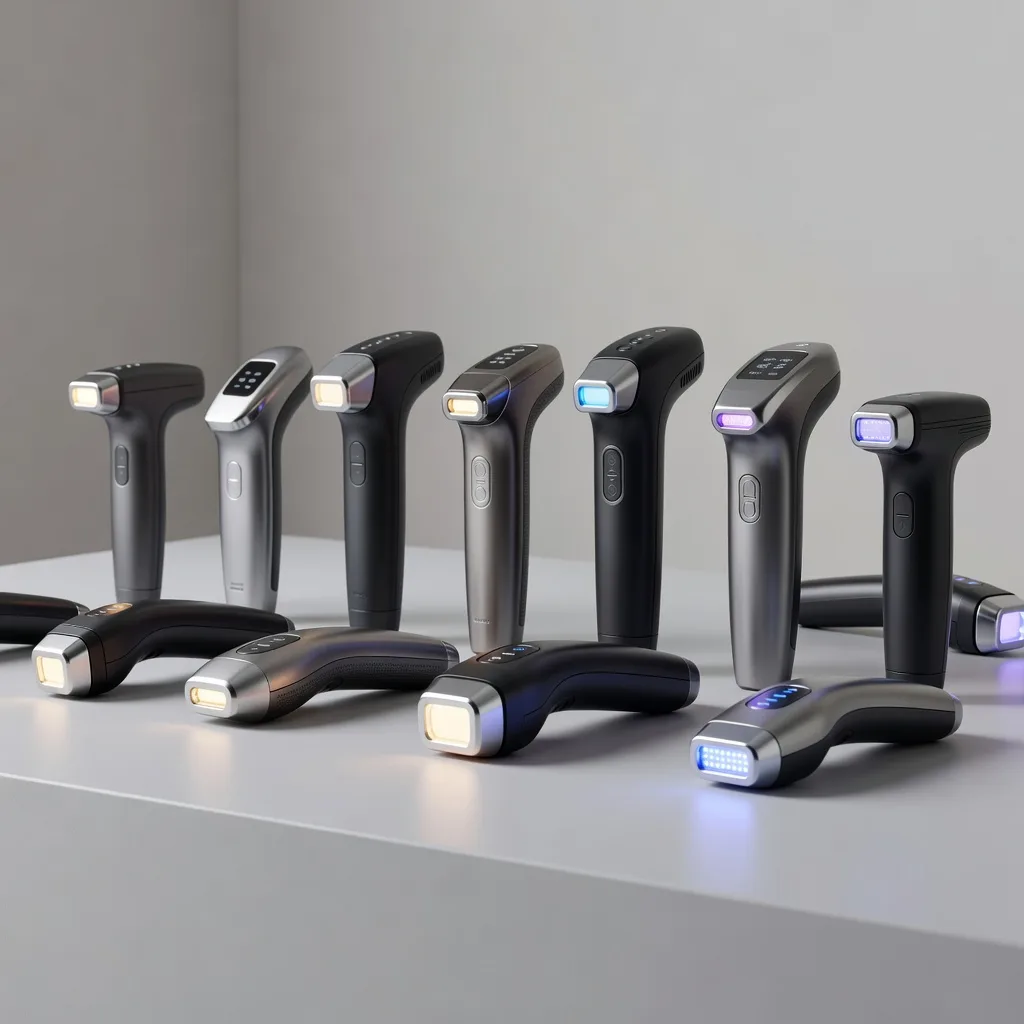
10 Best Skin Tightening Devices (2026): LED, Microcurrent and More
At-home skin tightening devices promise firmer, lifted skin without needles or downtime, but radiofrequency wands, microcurrent tools and LED masks work in very different ways. This list covers 10 options, from full face and neck LED masks to handheld microcurrent devices, with notes on who each one suits, its trade-offs and who should skip it.
Part of our guide to at-home facial devices. Start with: How to Incorporate Microcurrent Into Your Routine: Gel, Timing and Safety
The best skin tightening device for home use depends on your goal. Radiofrequency (RF) devices gently heat deeper skin and give the best chance of mild firming over months. Microcurrent devices tone facial muscles for a temporary lifted look, and red and near-infrared LED masks support overall skin quality, texture and fine lines rather than true lift. None of them match in-office radiofrequency, RF microneedling or focused ultrasound, which deliver far more energy. Expect subtle, gradual change in mild laxity after eight to twelve weeks of consistent use, and choose a device with clear instructions, timers and eye protection where relevant.
In short: LED masks suit skin quality, microcurrent suits short-term lift, RF suits mild tightening, and clinic treatments suit visible sagging.
The American Academy of Dermatology stresses that daily broad-spectrum sunscreen is one of the most effective ways to prevent collagen loss, so any device works best alongside good sun protection.
Below you will find the ten picks, how we chose them, how each device type works, realistic results, safe use and when an in-office treatment makes more sense.
Shopping these picks?
Amazon Prime members get fast, free shipping on eligible items, plus Prime Video, Amazon Music and member deals. New members can start with a free trial.
Start a free Prime trialAged 18 to 24? Prime for Young Adults comes with a longer free trial and a lower price after it.
Affiliate link: we may earn a commission at no extra cost to you.
As an Amazon Associate we earn from qualifying purchases. This does not change which products we include.


What to Know First
- MEGELIN Face and Neck Mask is our top pick for its flexible fit, eye pads and neck coverage.
- Shark CryoGlow is the premium pick, with preset treatments, under-eye cooling and FDA clearance stated on its listing.
- FOREO Bear is the pick for microcurrent, giving a temporary toned look with regular use.
- LED supports skin quality; it does not lift noticeably sagging skin.
- At-home devices use far lower energy than clinic treatments, so results are subtle.
- Avoid unregulated at-home high-intensity focused ultrasound devices.
- Daily sunscreen protects the collagen any device helps support.
What This Covers
- The 10 Best Skin Tightening Devices Right Now
- How We Chose These Products
- Types of At-Home Skin Tightening Devices
- Radiofrequency Devices: The Closest to Real Tightening
- Microcurrent and LED: What They Can and Cannot Do
- At-Home Devices vs In-Office Treatments
- Realistic Results: What to Expect Over Time
- How to Use an At-Home Skin Tightening Device Safely
- Safety: Who Should Avoid These Devices
- Dos and Don’ts for Skin Tightening Devices
- How to Choose the Best Skin Tightening Device for You
- Honest Limits of At-Home Devices
- When to See a Dermatologist
- Questions People Ask
- Where This Leaves You
The 10 Best Skin Tightening Devices Right Now
These ten devices were shortlisted from widely reviewed Amazon listings and span LED masks, handheld light and vibration tools and microcurrent devices. Each pick explains who it suits, its trade-offs and who should skip it.
| # | Product | Best For | Standout Feature | |
|---|---|---|---|---|
| 1 | MEGELIN LED Face and Neck Mask | Face and neck skin quality | Separate face and neck coverage | View |
| 2 | Shark CryoGlow LED Face Mask | Guided, preset LED sessions | Preset treatments plus under-eye cooling | View |
| 3 | FOREO Bear Microcurrent Facial Device | A toned, sculpted look | Compact microcurrent toning from a known brand | View |
| 4 | INIA GLOW 4D Wireless LED Mask | Cord-free sessions around the home | Contoured wireless fit with dual near-infrared | View |
| 5 | NEWKEY 4D Red and Blue LED Mask | Steady, simple ten-minute routines | Corded power with no battery fade | View |
| 6 | INTEO Wireless Face and Neck LED Mask | Face and neck without a cable | Wireless face and neck mask with remote | View |
| 7 | INIA FLARE 3-in-1 Red Light Device | Targeting jawline and neck | Three modes with red light and vibration | View |
| 8 | GLO24K LED Face and Neck Wand | Routines on the go | Cordless wand with cover for travel | View |
| 9 | Fxtiaa 7-Colour LED Face and Body Mask | Face, neck and hands | Detachable mask for face and body | View |
| 10 | KDUNE 7-in-1 Microcurrent Facial Device | Trying microcurrent for the first time | Microcurrent, gua sha shape and red light | View |
MEGELIN LED Face and Neck Mask

Best for: Face and neck skin quality
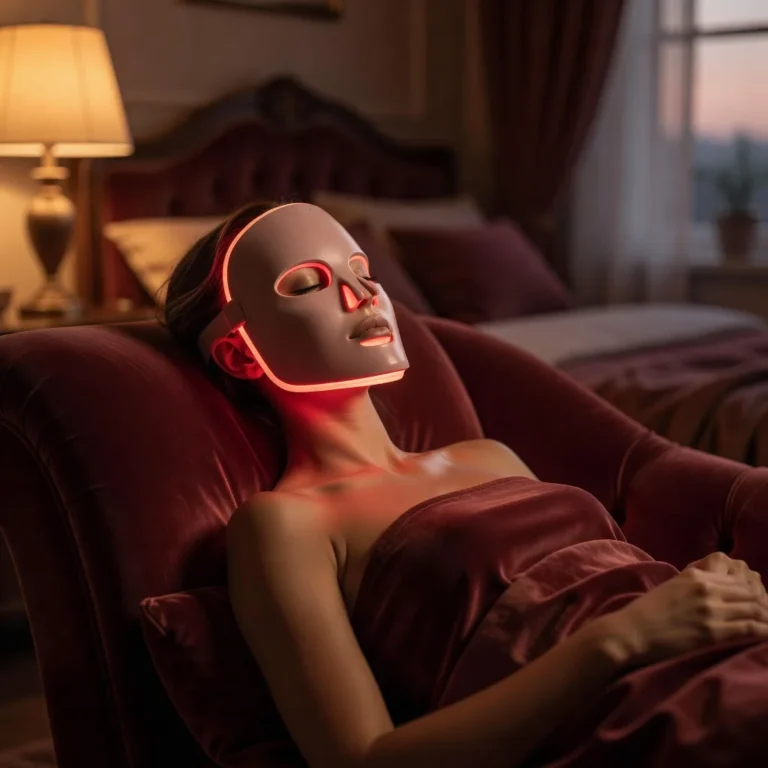
The MEGELIN mask earns the top spot because it treats the face and the often-neglected neck in one routine. The flexible silicone design sits close to the skin, which matters for home light therapy, and it comes with eye pads that many rivals leave out. For people whose firmness worries start at the jawline and neck, that extra coverage is the main reason to choose it.
It offers seven light colours, though red and near-infrared are the settings most relevant to firmness and fine lines. The seller is clear that results need regular sessions a few times a week, which is an honest framing. It is rechargeable, but unlike the #2 Shark it does not state FDA clearance, and like every LED pick it supports skin quality rather than lifting sagging skin.
- Flexible silicone mask covering face and neck
- Seven light colours including red and infrared
- Suggested routine of several sessions a week
- Rechargeable, with protective eye pads
Pros
- Covers the neck as well as the face
- Soft fit keeps LEDs close to the skin
- Eye pads included
Cons
- Listing does not state FDA clearance
- Most of the extra colours have little evidence behind them
Skip it if: Skip it if you want visible lift rather than better skin quality; a microcurrent pick or clinic treatment suits you better.
Check Price on AmazonShark CryoGlow LED Face Mask

Best for: Guided, preset LED sessions
The Shark CryoGlow is the premium choice for people who want a mask that does the thinking for them. It combines red, blue and deep infrared light with built-in under-eye cooling, and it runs four preset treatments aimed at ageing, clearer skin, maintenance and tired-looking eyes. Its listing also states FDA clearance, which is a safety and intended-use signal rather than a promise of results.
Compared with the #1 MEGELIN it is a rigid face mask with no neck piece, so it suits people focused on fine lines and texture across the face. The cooling function is a nice extra for morning puffiness. The trade-off is less flexibility over settings, and like all LED masks it will not tighten loose skin in the way clinic radiofrequency can.
- Red, blue and deep infrared light in one mask
- Built-in under-eye cooling
- Four preset treatment programmes
- Developed with optical engineers and dermatologists
Pros
- Presets make sessions simple
- FDA clearance stated on the listing
- Cooling helps eyes feel refreshed
Cons
- No neck coverage
- Fewer manual options than multi-colour masks
Skip it if: Skip it if you mainly want to treat the neck; the MEGELIN or INTEO picks cover that area.
Check Price on AmazonFOREO Bear Microcurrent Facial Device

Best for: A toned, sculpted look
The FOREO Bear is the pick for readers who want microcurrent rather than light. Microcurrent sends a very low electrical current to the facial muscles, and many users notice a slightly lifted, sculpted look around the cheeks and brows straight after a session. It is a compact handheld device from an established skincare-device brand, designed for lifting and toning routines at home.
The honest catch is that microcurrent effects fade within a day or two, so it rewards people who enjoy a short daily or near-daily ritual. It needs a conductive gel or serum, which the LED masks above do not. Compared with the #1 and #2 picks it does nothing for texture or tone, so it suits a different goal rather than being a better or worse choice.
- Handheld microcurrent facial device
- Designed for lifting and toning routines
- Compact, travel-friendly shape
- Used with a conductive gel or serum
Pros
- Targets muscle tone rather than surface texture
- Compact and easy to store
- Established device brand
Cons
- Results fade without regular use
- Needs conductive gel each session
Skip it if: Skip it if you have a pacemaker or implanted device, or if you will not keep up frequent sessions.
Check Price on AmazonINIA GLOW 4D Wireless LED Mask

Best for: Cord-free sessions around the home
The INIA GLOW 4D is the wireless mask to choose if you want to move around during a session. It uses 320 LEDs set in flexible silicone that is shaped to follow the contours of the face, and it lists two near-infrared channels alongside red, blue and amber modes. A magnetic cooling gel pad for the eyes is included, which helps if you often wake up puffy.
Against the #2 Shark it gives you more manual control over modes but no preset programmes, and against the #1 MEGELIN it covers the face only. The contoured design is a strength for close contact, but people with a longer or wider face should check the fit guidance. Like every LED pick it supports texture and fine lines rather than lifting loose skin.
- 320 LEDs in contoured, flexible silicone
- Two near-infrared channels plus red, blue and amber
- Magnetic cooling gel pad for the eye area
- Fully wireless design
Pros
- No cable during sessions
- Contoured fit keeps LEDs close
- Cooling pad included
Cons
- Face only, no neck piece
- Fit may vary with face shape
Skip it if: Skip it if you prefer one-button presets; the Shark CryoGlow is simpler to run.
Check Price on AmazonNEWKEY 4D Red and Blue LED Mask
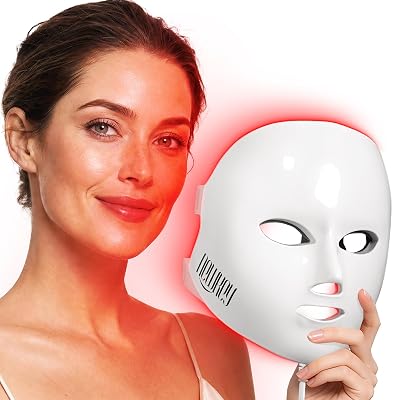
Best for: Steady, simple ten-minute routines
The NEWKEY 4D mask is a long-standing, widely reviewed option built around red and blue light. It is corded, which some people see as a drawback, but it means power stays steady through every session and there is no battery to wear out or recharge. The routine is short at around ten minutes, which makes it easier to stick with for the eight to twelve weeks results need.
It is a sensible middle choice between the premium #2 Shark and the lower-cost masks further down the list. The listing leans on study claims, which we have not repeated; treat it as a skin-quality tool for texture and fine lines. The cord limits where you can use it, so the #4 INIA GLOW suits people who want to move around.
- Red and blue light modes
- Corded design for consistent power
- Short sessions of around ten minutes
- 150 LEDs arranged across the face
Pros
- No battery to charge or degrade
- Short, simple sessions
- Long-established, widely reviewed model
Cons
- Cable ties you to a socket
- No neck coverage
Skip it if: Skip it if you want to walk around during treatment; pick a wireless mask instead.
Check Price on AmazonINTEO Wireless Face and Neck LED Mask
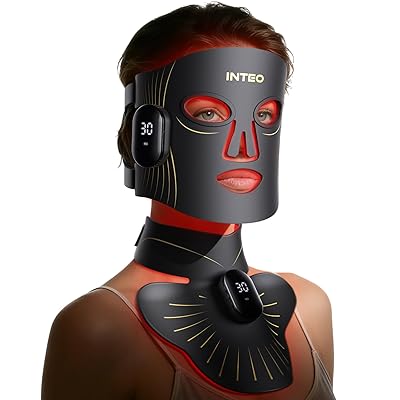
Best for: Face and neck without a cable
The INTEO mask is the pick for people who like the #1 MEGELIN idea of face and neck coverage but want it cordless. It lists a large number of light beads across the face and neck pieces, four modes including red, blue, amber and near-infrared, and a rechargeable remote with a timer so you can set sessions without guesswork.
The soft silicone build is described as gentle and lightweight, which helps comfort during longer routines. Compared with the MEGELIN it has fewer colours, which is not a real loss given the evidence mostly supports red and near-infrared. As with the other LED picks, think of it as support for skin quality around the jaw and neck, not a way to lift heavy jowls.
- Face and neck coverage in one wireless set
- Four modes including red and near-infrared
- Rechargeable remote with built-in timer
- Soft, lightweight silicone
Pros
- Cordless with neck coverage
- Timer takes the guesswork out
- Comfortable, flexible material
Cons
- Remote is one more part to keep charged
- Listing does not state FDA clearance
Skip it if: Skip it if you only care about the face; a simpler face-only mask will do the same job.
Check Price on AmazonINIA FLARE 3-in-1 Red Light Device
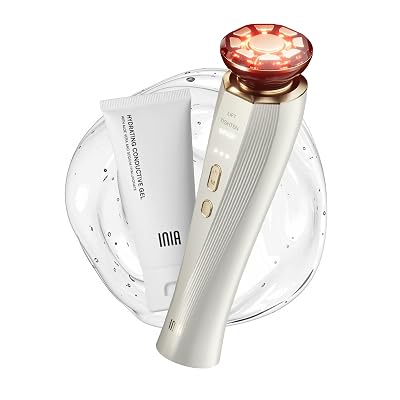
Best for: Targeting jawline and neck
The INIA FLARE is a handheld alternative to a full mask, useful if you want to focus on specific areas such as the jawline, under-chin and neck. It has three modes: a lift mode using vibration massage, a tighten mode that pairs vibration with red light, and an infuse mode designed to help skincare products absorb.
Because you glide it over the skin yourself, sessions take more effort than the hands-free masks above, but you control exactly where the light goes. It is a good companion to the #3 FOREO Bear if you want both toning and light in your routine. The mode names sound dramatic; realistically it supports skin quality and relaxation rather than delivering measurable tightening.
- Three modes for lifting, firming and absorption
- Red light combined with vibration
- Designed for face and neck
- Handheld for targeted areas
Pros
- Targets specific zones precisely
- Doubles as a product-application tool
- Compact and easy to store
Cons
- Hands-on sessions take more effort
- Covers a small area at a time
Skip it if: Skip it if you want a hands-free routine; any of the masks above will be easier to stick with.
Check Price on AmazonGLO24K LED Face and Neck Wand

Best for: Routines on the go
The GLO24K wand is the easiest device on this list to pack. It combines several LED modes with gentle vibration in a small, cordless body that charges by USB-C and comes with a protective cover. The massage head is shaped to glide along the face, jawline, neck and chest, and it is designed to be used with your usual serums and moisturisers.
It is similar in idea to the #7 INIA FLARE but simpler, with fewer named modes. That makes it a friendly starting point if you are new to devices. The limits are the same as for any small LED wand: it covers a small area at a time and supports skin quality and relaxation rather than true tightening.
- Several LED modes plus gentle vibration
- Shaped head for face, jaw, neck and chest
- Designed to use with serums and creams
- USB-C rechargeable with protective cover
Pros
- Small and travel friendly
- Simple to learn
- Works alongside existing skincare
Cons
- Small treatment area per pass
- Fewer settings than the INIA FLARE
Skip it if: Skip it if you want the most light coverage per session; a full mask covers far more skin.
Check Price on AmazonFxtiaa 7-Colour LED Face and Body Mask

Best for: Face, neck and hands
The Fxtiaa mask is the pick if you want to use light on more than your face. It is a detachable design with a large number of light beads and seven colours, and the seller describes it for use on the face, neck, hands and body. Sessions are suggested two to three times a week, which is easy to fit around a busy routine.
It is a more basic design than the #1 MEGELIN or #4 INIA GLOW, with a rigid build and fewer comfort details. The seven colours sound impressive, but red and near-infrared are the ones with the most support for skin quality. Treat it as a flexible, all-round light device rather than a precision facial tool.
- Seven light colours
- Detachable design for face, neck, hands and body
- Suggested use two to three times a week
- Simple to assemble and carry
Pros
- Can be used beyond the face
- Straightforward schedule
- Easy to set up
Cons
- Less contoured than silicone masks
- Extra colours add little proven benefit
Skip it if: Skip it if comfort and a close facial fit matter most; the MEGELIN or INIA GLOW fit better.
Check Price on AmazonKDUNE 7-in-1 Microcurrent Facial Device

Best for: Trying microcurrent for the first time
The KDUNE device is a lower-commitment way to try microcurrent. It combines microcurrent with a gua sha style shape for the face and neck and adds red light, so it suits people who like a hands-on massage routine and want to see whether toning tools suit them before spending more on a device like the #3 FOREO Bear.
Its listing is less detailed than the higher picks, so we have described it only from what the title states. Like any microcurrent tool, the toned look it gives fades without regular use, and it needs a conductive gel. It will not tighten loose skin, but as an entry point to device-based routines it offers a lot of functions in one tool.
- Microcurrent facial function
- Gua sha style shape for face and neck
- Red light function
- Multi-mode, all-in-one design
Pros
- Several functions in one tool
- Good entry point to microcurrent
- Suits hands-on massage routines
Cons
- Less detailed listing than higher picks
- Results fade without frequent use
Skip it if: Skip it if you have an implanted electronic device or want an established brand; the FOREO Bear is the safer-known choice.
Check Price on AmazonHow We Chose These Products
We shortlisted at-home skin tightening devices from Amazon listings that are highly rated by a large number of shoppers, favouring established brands and fuller-featured models with clear modes, timers and eye protection. We then checked each product’s listed features against the safety guidance cited in this post, and described two picks with thinner listings only from what their titles state.
These are research-based picks, not hands-on lab tests. We did not measure light output or current, so rankings reflect listing detail, design and fit rather than personal results. Widely reviewed at-home RF devices with clear listings were scarce when we compiled this list, so it leans towards LED and microcurrent; the guide below explains how RF compares.
- Strong ratings from a large number of shoppers
- Established brands and fuller-featured models preferred
- Listed features checked against the cited safety guidance
- Products with thin or unclear listings excluded or ranked lower
- No medical claims from listings repeated as fact
Types of At-Home Skin Tightening Devices
Each technology works in a different way and suits a different goal. Knowing which is which helps you avoid paying for a device that cannot do what you want.
| Device type | How it works | Main benefit | Tightening potential |
|---|---|---|---|
| Radiofrequency (RF) | Gently heats the dermis to prompt collagen remodelling | Mild firming over months | Low to moderate |
| Microcurrent | Low electrical current stimulates facial muscles | Temporary toned, lifted look | Low, short-lived |
| Red and near-infrared LED | Light energy supports skin cell activity | Better texture and tone, fewer fine lines | Low |
| Low-energy ultrasound | Sound waves vibrate the skin surface | Mainly helps products spread and absorb | Very low |
| EMS | Stronger muscle stimulation than microcurrent | Muscle toning | Low, short-lived |
Many devices combine two or three technologies, often RF with LED or microcurrent with LED. That can be convenient, but check that each function has enough power and clear instructions rather than choosing the gadget with the longest list of features.
Radiofrequency Devices: The Closest to Real Tightening
RF devices deliver energy that warms the deeper layer of the skin. Heat causes existing collagen fibres to contract and, over time, can encourage the skin to make new collagen. This is the same principle used in clinics, but at a much lower, safer energy level.
- Best for mild laxity along the jaw, cheeks, neck and around the eyes.
- Usually used two to three times a week for several minutes per area.
- Needs a conductive gel so the device glides and heats evenly.
- Should feel warm but never painfully hot.
- Look for built-in temperature sensors and automatic shut-off.
Our comparison of microcurrent and radiofrequency facials explains how the two technologies differ in more depth, including which one suits which concern.
Microcurrent and LED: What They Can and Cannot Do
Microcurrent sends a very low electrical current through the skin to the facial muscles. Many users notice a slightly lifted, sculpted look straight after a session, especially around the cheeks and brows. The catch is that the effect fades within a day or two, so it needs regular maintenance to keep.
Red and near-infrared LED masks are gentle and easy to use. Research suggests they may improve skin texture, tone and fine lines with regular use, but they do not tighten noticeably sagging skin. They are a good option if you want overall skin quality rather than lift. Our guide to LED anti-aging facials covers what light therapy can realistically do.
Blue LED is aimed at acne-causing bacteria, not tightening. If a device mainly advertises blue light, it is an acne tool rather than a firming one.
At-Home Devices vs In-Office Treatments
If your main goal is visible tightening, it helps to understand the gap between home and clinic. Home devices are about maintenance and gradual change; clinic treatments are about measurable lift.
| Factor | At-home devices | In-office treatments |
|---|---|---|
| Energy level | Low, designed for safety | High, delivered by trained staff |
| Sessions | Frequent, often several times a week | Usually one to a few sessions |
| Results | Subtle, gradual, need maintenance | More visible, can last a year or more |
| Downtime | None | None to a few days |
| Best for | Prevention and mild laxity | Mild to moderate laxity |
| Risk | Low when used correctly | Low to moderate, depends on provider |
For moderate or advanced sagging, in-office RF, RF microneedling or focused ultrasound usually give far better value than years of home use. Surgery remains the most effective option for significant laxity. A dermatologist can assess your skin and tell you honestly whether a home device is likely to be worth the effort for your level of laxity.
Be especially wary of handheld high-intensity focused ultrasound units sold for home use. Clinic ultrasound reaches deep structural layers with focused energy, and in untrained hands it can cause burns, nerve irritation and uneven results. Most home ultrasound gadgets only vibrate the surface to help serums spread and do not tighten skin in a meaningful way.
Realistic Results: What to Expect Over Time
Knowing what a normal timeline looks like helps you judge whether a device is working and stops you giving up too early or overusing it out of impatience.
- Straight after a session: mild warmth or slight redness from RF, and a brief lifted look from microcurrent.
- Weeks 1 to 4: skin may look a little smoother and more hydrated, but structure has not changed yet.
- Weeks 6 to 12: people who respond may notice slightly firmer skin along the jaw and cheeks with RF.
- After 12 weeks: results plateau, and maintenance sessions are needed to keep them.
- If you stop: most of the visible benefit fades over the following weeks.
Everyone responds differently. Younger skin with mild laxity tends to respond best, while deeper folds, heavy jowls or loose neck skin usually need professional treatment. Taking photos in the same light every four weeks is the fairest way to judge your own results, because day-to-day changes are too small to notice in the mirror.
How to Use an At-Home Skin Tightening Device Safely
Correct use makes the difference between gentle benefit and irritation. Always read the instructions for your specific device, as settings and timings vary.
Patch test first
Use the lowest setting on a small area of the jaw and wait 24 hours.
Cleanse and dry the skin
Remove makeup, oil and sunscreen so the device works evenly.
Apply conductive gel if required
RF and microcurrent devices usually need a generous, even layer.
Start on the lowest setting
Move the device slowly and constantly; never hold it in one spot.
Follow the recommended time per area
Most RF devices suggest a few minutes per zone.
Rinse and moisturise
Remove the gel and apply a gentle, fragrance-free moisturiser.
Keep to the schedule
Use the device as directed for eight to twelve weeks before judging results.
Put device sessions in your evening routine and save active ingredients such as retinoids or acids for other nights, at least until you know how your skin reacts to both.
Safety: Who Should Avoid These Devices
Most at-home devices are safe for healthy adults when used as directed, but some people should avoid them or check with a doctor first. Buying from a reputable seller also matters, because cheap copies may lack temperature control, clear instructions or basic electrical safety checks.
- People with a pacemaker or other implanted electronic device.
- Pregnant people, as most devices have not been tested in pregnancy.
- Anyone with epilepsy, active skin infection, open wounds or active acne in the area.
- People with metal implants or plates in the face.
- Anyone who has had fillers or injectables recently, unless their provider approves.
Stop using any device that causes burning, blistering, prolonged redness, swelling or numbness. Never use RF or ultrasound devices over the eyes unless the device is specifically designed for the eye area, and never use a damaged device or cable.
Dos and Don’ts for Skin Tightening Devices
Worth Doing
- Choose RF if tightening is your main goal
- Use conductive gel when instructed
- Keep the device moving
- Stay consistent for at least eight weeks
- Wear sunscreen daily
Skip It
- Expect clinic results from a home gadget
- Use unregulated high-intensity ultrasound at home
- Increase the setting to speed up results
- Use on broken, irritated or infected skin
- Ignore burning or numbness
How to Choose the Best Skin Tightening Device for You
Start with your main concern, then check the safety and comfort features. A cheaper device you use consistently will do more than an expensive one left in a drawer. Before buying, check the return policy, how long the battery lasts, whether replacement gel or parts are easy to find, and whether the instructions give clear timings for each area of the face and neck.
- Mild sagging on the jaw or neck: an RF device with temperature control.
- Wanting a lifted look before events: a microcurrent device.
- Dull skin and fine lines: a red or near-infrared LED mask.
- Sensitive skin: LED is the gentlest place to start.
- Busy schedule: a hands-free LED mask may be easier to stick with.
If you pick microcurrent, our guide on adding microcurrent to your routine shows how to fit it around the rest of your skincare.
Honest Limits of At-Home Devices
Home devices cannot lift deep folds, remove excess skin or replace lost volume. Most of the published research is small, short and sometimes funded by manufacturers, and many studies measure changes that are hard to see in the mirror.
Results also depend on consistency. Stop using an RF or microcurrent device for a few weeks and most of the benefit fades. If you would rather have one clear result than an ongoing routine, a consultation for in-office treatment is often the better investment. Sunscreen, retinoids and not smoking remain the foundation of keeping skin firm; the AAD guide on how to apply sunscreen explains how much to use every day.
When to See a Dermatologist
- You have moderate or advanced sagging and want visible change.
- A device caused a burn, blister, dark patch or lasting redness.
- You have a skin condition such as rosacea, melasma or eczema.
- You are unsure whether a device is safe with your medical history or implants.
This article is for general information and does not replace professional medical advice. Speak to a board-certified dermatologist before starting a device if you have a medical condition, implant or are pregnant.
Questions People Ask
What is the best skin tightening device for home use?
Our top pick is the MEGELIN face and neck mask for skin quality; RF devices give the best chance of mild tightening.
Is the most expensive skin tightening device worth it?
Not always. The Shark CryoGlow adds presets and cooling, but the MEGELIN and INTEO masks cover the core red and near-infrared light.
Which device is best for the jawline and neck?
The MEGELIN and INTEO masks cover the neck, and the INIA FLARE handheld lets you target the jaw precisely.
Do at-home skin tightening devices really work?
They can give subtle, gradual improvement in mild laxity.
How long until I see results?
Usually eight to twelve weeks of consistent use.
Is microcurrent or RF better for tightening?
RF for tightening; microcurrent, such as the FOREO Bear, for temporary toning.
Does red light therapy tighten skin?
It improves skin quality but does little for sagging.
Are at-home HIFU devices safe?
They are best avoided because of burn and nerve risks.
Do results last?
Only with ongoing use; benefits fade when you stop.
Are home devices as good as clinic treatments?
No, clinic treatments use much higher energy.
Where This Leaves You
The best skin tightening device for home use depends on your goal: a well-fitting face and neck LED mask suits skin quality, microcurrent suits a toned look, and RF gives the best chance of mild tightening, but none match in-office treatments.
Choose by your main concern, use the device safely and consistently, protect your skin with daily sunscreen, and see a dermatologist if you want more visible tightening.
Our top pick: MEGELIN LED Face and Neck Mask
The MEGELIN face and neck mask takes the top spot because it combines a flexible silicone fit, eye pads, a separate neck piece and a clear weekly schedule, which covers skin quality on the face and neck for most buyers. Choose the Shark CryoGlow if you want preset programmes and FDA clearance stated on the listing, or the FOREO Bear if a toned, lifted look matters more to you than texture.
Check Price on Amazon
Written by
Registered pharmacist and founder of Facial Adviser. Rakib's pharmacy training covers how skincare actives work and interact; a later course in cosmetology turned that into a focus on facial treatments and skincare products. He plans, researches and edits every guide on the site and checks health claims against sources such as the American Academy of Dermatology, the FDA and the NIH. He is not a dermatologist; see the Editorial Policy and Medical Disclaimer.
About · Editorial policy · How we choose products · Medical disclaimer · Contact
Keep reading: Microcurrent and RF devices
- How to Use Microcurrent Safely at Home: Settings, Gel and Who Should Skip It
- How to Incorporate Microcurrent Into Your Routine: Gel, Timing and Safety
- Best Body Microcurrent Device: Evidence, Safety and How to Choose
- Thermage Treatment: What Actually Happens
- Electric Current Facial: Galvanic vs. Microcurrent
- 10 Best Gua Sha Facial Tools (2026): Stone and Steel Picks Compared
- 10 Best Facial Tools (2026): LED, Cleansing, Gua Sha and More
2 Comments