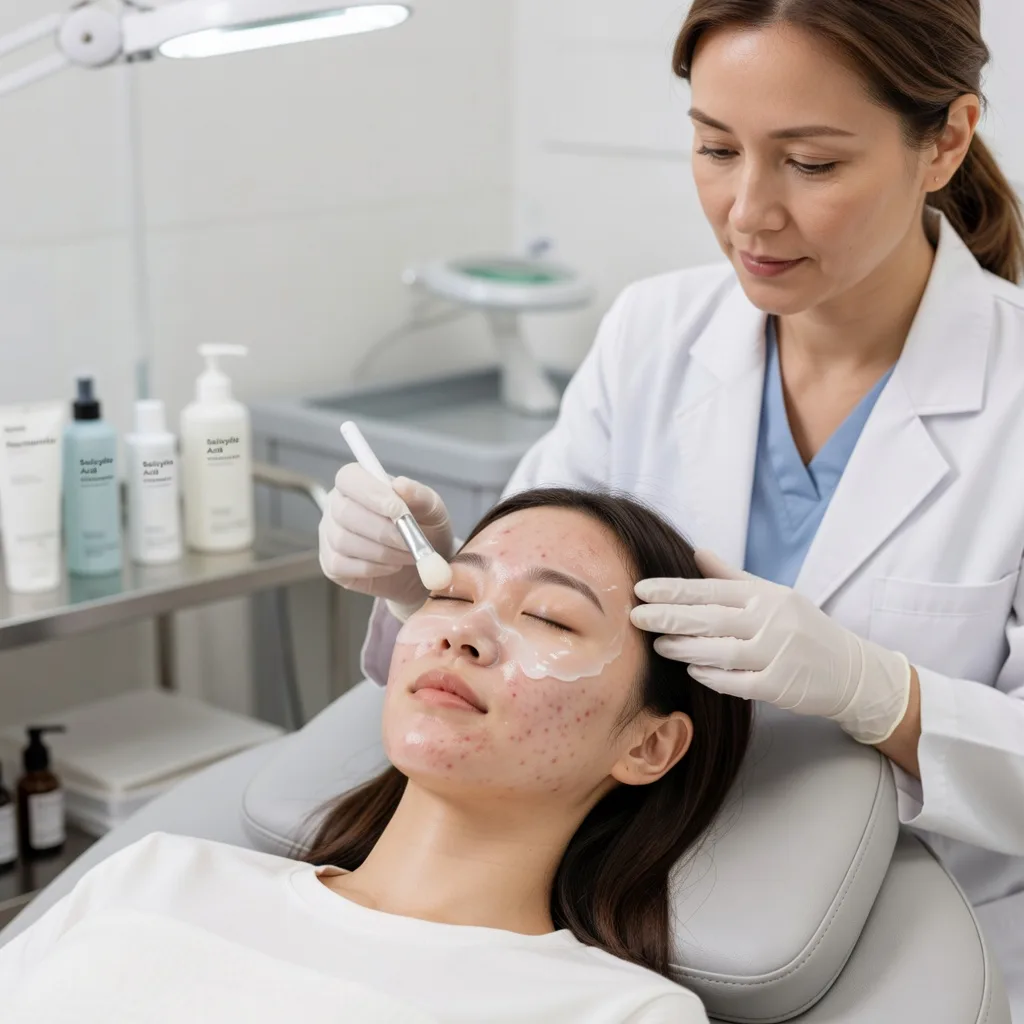
Which Facial Is Best for Acne-Prone Skin? Options, Evidence and What to Avoid
If you have acne-prone skin, booking a facial can feel like a gamble. Some people leave with clearer pores and calmer skin; others break out a few days later. The difference usually comes down to the type of facial, the products used and how the therapist handles active breakouts.
Part of our guide to facial treatments. Start with: Facial Types: A Guide to 11 Popular Facials and How to Choose One
The best facials for acne-prone skin are gentle, non-comedogenic treatments that clear pores without inflaming the skin, such as a deep cleansing facial with careful extractions, a light salicylic or glycolic acid peel, or a facial that includes blue light. Facials with heavy creams, oils, aggressive scrubbing or harsh extractions can make acne worse. Facials can support clearer skin, but they are not a treatment for acne on their own. Daily treatments such as benzoyl peroxide, topical retinoids and, for moderate to severe acne, prescription medicines have the strongest evidence.
In short, choose a gentle, purpose-built acne facial as an extra, and rely on proven daily treatments for real control.
The American Academy of Dermatology’s 2024 acne guidelines, published in the Journal of the American Academy of Dermatology, strongly recommend benzoyl peroxide, topical retinoids, topical antibiotics and oral doxycycline, and give conditional recommendations for salicylic acid and azelaic acid. Spa facials are not among the evidence-based treatments, which is why they work best as support.
This guide compares facial types for acne, explains what to ask before booking, what to avoid and how to keep skin clear between appointments.
Shopping these picks?
Amazon Prime members get fast, free shipping on eligible items, plus Prime Video, Amazon Music and member deals. New members can start with a free trial.
Start a free Prime trialAged 18 to 24? Prime for Young Adults comes with a longer free trial and a lower price after it.
Affiliate link: we may earn a commission at no extra cost to you.
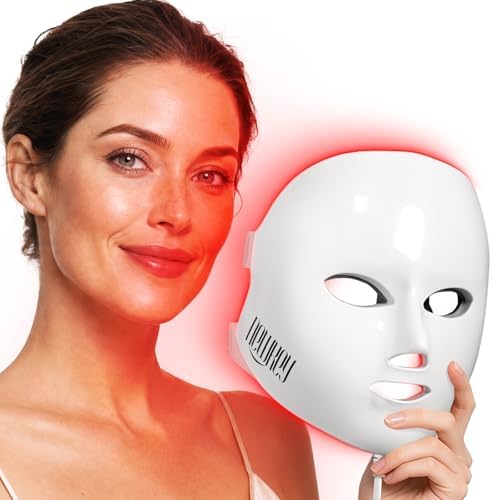
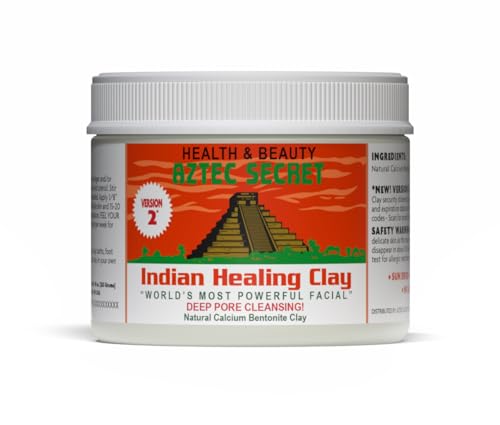
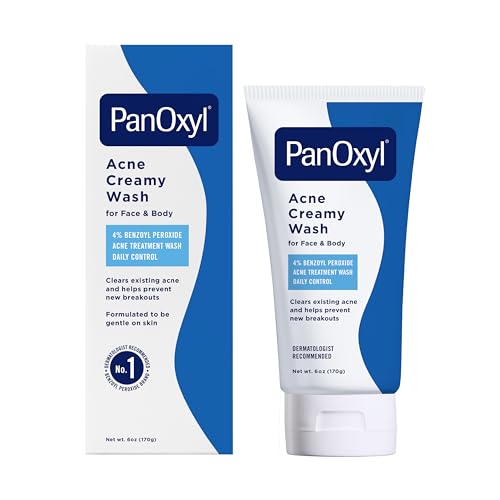
Recommended At-Home Facial Products for Acne-Prone Skin


In This Guide
- Facial Types for Acne-Prone Skin Compared
- Which Type of Acne Do You Have?
- What the Evidence Says About Acne Treatment
- How to Choose a Facial for Acne-Prone Skin
- What to Avoid in a Facial if You Have Acne
- Purging or Breakout: How to Tell
- Keeping Skin Clear Between Facials
- Aftercare After a Facial for Acne-Prone Skin
- How Often Should You Get a Facial for Acne?
- Dos and Don’ts
- Honest Limits
- When to See a Dermatologist
- Common Questions
- Final Word
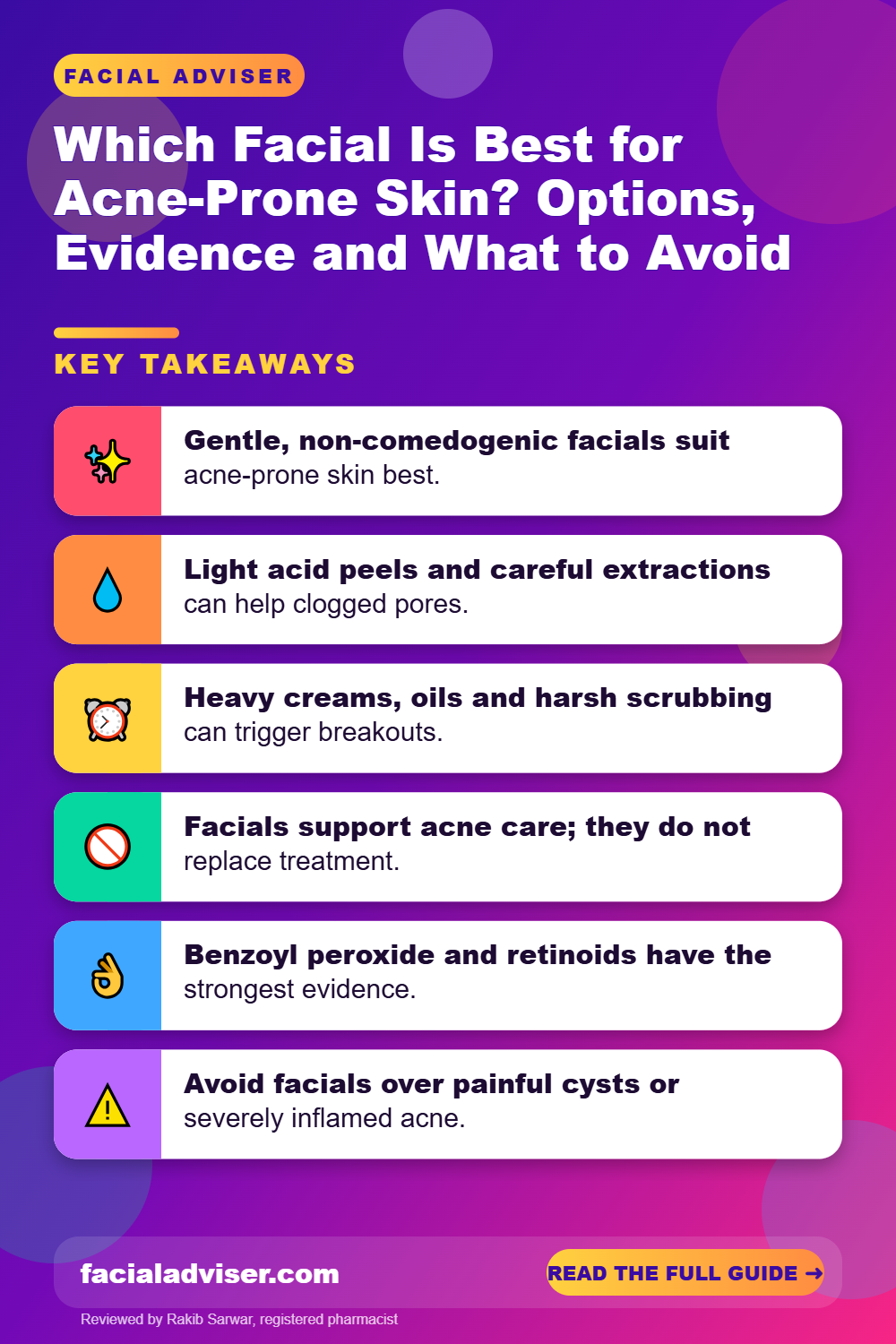
At a Glance
- Gentle, non-comedogenic facials suit acne-prone skin best.
- Light acid peels and careful extractions can help clogged pores.
- Heavy creams, oils and harsh scrubbing can trigger breakouts.
- Facials support acne care; they do not replace treatment.
- Benzoyl peroxide and retinoids have the strongest evidence.
- Avoid facials over painful cysts or severely inflamed acne.
- See a dermatologist for moderate, severe or scarring acne.
Facial Types for Acne-Prone Skin Compared
Not all facials suit acne-prone skin. This table compares common options.
| Facial type | Good for acne-prone skin? | Why |
|---|---|---|
| Deep cleansing with extractions | Often yes | Clears blackheads and whiteheads if done gently |
| Light salicylic or glycolic peel | Often yes | Helps unclog pores and smooth texture |
| Blue light (LED) facial | Sometimes | May reduce inflamed spots in some people; evidence is mixed |
| Hydrating facial with light products | Yes, for dry or irritated acne skin | Calms skin that is dried out by acne treatments |
| Aromatherapy or massage-heavy facial | Often no | Oils and fragrance can clog pores or irritate |
| Microdermabrasion or harsh scrubs | Use caution | Can inflame active acne |
The best choice depends on what your acne looks like. Blackheads and whiteheads respond well to cleansing and gentle exfoliation, while red, inflamed or cystic acne needs a much gentler approach and usually medical treatment. If you are not sure which facial to book, ask for a consultation first. A skilled therapist will look at your skin, ask about your routine and suggest a treatment, or tell you honestly that a facial is not the right step right now.
Which Type of Acne Do You Have?
Knowing your acne type helps you choose the right facial and set realistic expectations.
- Blackheads and whiteheads (comedonal acne): clogged pores without much redness; responds well to exfoliation and extractions.
- Papules and pustules (inflammatory acne): red bumps and pus-filled spots; need gentle handling and medical treatment.
- Nodules and cysts: deep, painful lumps; should not be extracted at a spa and need a dermatologist.
- Post-acne marks: flat dark or red marks left behind; may improve with gentle peels and sun protection.
Squeezing or extracting deep, painful spots can push inflammation deeper and increase the risk of scarring. A good therapist will leave these alone and suggest seeing a dermatologist.
If you are unsure what type of acne you have, a dermatologist can tell you quickly and recommend treatment that targets the cause. Many people have more than one type at once, for example blackheads on the nose with a few inflamed spots on the chin, so a good facial plan often treats different areas differently rather than using one approach for the whole face.
What the Evidence Says About Acne Treatment
Spa facials are rarely studied in clinical trials, but the ingredients and methods used in them sometimes are.
The American Academy of Dermatology’s guidelines of care for acne, published in the Journal of the American Academy of Dermatology and available on PubMed, present 18 evidence-based recommendations. Strong recommendations are made for benzoyl peroxide, topical retinoids, topical antibiotics and oral doxycycline, while salicylic acid and azelaic acid receive conditional recommendations. Oral isotretinoin is strongly recommended for severe acne, acne causing scarring or acne that has not responded to standard therapy.
This helps explain why facials are best seen as a helpful extra. A salicylic acid peel uses an ingredient with some support, but the daily treatments you use at home have far more impact than an occasional spa visit. The AAD also explains how dermatologists treat acne in plain language.
How to Choose a Facial for Acne-Prone Skin
Use these steps to find a facial that helps rather than hurts.
Identify your acne type
Comedones suit extractions and peels; inflamed or cystic acne needs gentle care and medical treatment.
Ask about products
Request non-comedogenic, fragrance-free products and no heavy oils or rich creams.
Ask how they handle extractions
Look for gentle, hygienic extractions and a willingness to leave inflamed spots alone.
Share your medications
Tell the therapist about retinoids, benzoyl peroxide, antibiotics or isotretinoin.
Start with a gentle option
Try a basic cleansing facial or light peel before stronger treatments.
Watch your skin for a week
Mild purging can happen, but lasting breakouts suggest the facial did not suit you.
Keep up daily treatment
Continue your acne routine; facials are support, not a replacement.
Book facials for acne-prone skin at least a few days before an important event. Extractions can leave temporary redness or small marks that need time to settle.
If you are comparing facials with stronger options such as peels, our guide on facials versus chemical peels explains the differences.
What to Avoid in a Facial if You Have Acne
Some common facial steps can make acne worse.
- Heavy massage oils, rich creams and occlusive masks on oily or acne-prone skin.
- Strong fragrance and essential oils, which can irritate.
- Aggressive scrubs or brushes on inflamed skin.
- Squeezing deep cysts or nodules.
- Reusing tools without proper cleaning.
- Strong peels if you are using prescription retinoids or have recently taken isotretinoin.
Do not have extractions, peels, waxing or microdermabrasion if you are taking or have recently taken isotretinoin, unless your dermatologist approves. Skin can be fragile and more likely to scar or tear during and after treatment.
If a facial repeatedly causes breakouts, stop and discuss it with a dermatologist before trying another. It also helps to bring your own products or a list of their ingredients, so the therapist can avoid anything that has irritated your skin before.
Purging or Breakout: How to Tell
Some people notice a few new spots after a facial, especially after peels or extractions. This can be purging, where clogged pores come to the surface faster, or a reaction to products.
| Feature | Purging | Breakout from products |
|---|---|---|
| Where | Areas where you usually get acne | New areas where you rarely break out |
| Type of spots | Small whiteheads or blackheads coming to the surface | Red bumps, irritation or itchy spots |
| How long | Settles within days to a couple of weeks | Continues or worsens with repeat use |
| What to do | Keep skincare simple and give it time | Stop the product and tell the therapist |
If you are unsure, take photos and share them with the therapist or a dermatologist so they can adjust future treatments.
Keeping Skin Clear Between Facials
Your daily routine does most of the work in controlling acne.
- Cleanse twice a day with a gentle cleanser; a benzoyl peroxide wash can help.
- Use a topical retinoid such as adapalene at night, starting a few times a week.
- Moisturise with a non-comedogenic moisturiser to reduce dryness from treatments.
- Wear an oil-free, non-comedogenic sunscreen every morning.
- Use hydrocolloid patches on individual spots to discourage picking.
- Give treatments at least 8 to 12 weeks before judging them.
If your acne treatments leave your skin dry and irritated, a hydrating facial with light, non-comedogenic products can be a welcome break, as long as the therapist avoids heavy oils.
Aftercare After a Facial for Acne-Prone Skin
What you do in the first two days after a facial can make the difference between calmer skin and a flare.
- Keep your hands off your face and avoid picking at any small bumps.
- Skip makeup for the rest of the day if you had extractions, or use a light, non-comedogenic product.
- Pause strong actives such as retinoids and exfoliating acids for a day or two if skin feels tender.
- Use a gentle cleanser and a light, non-comedogenic moisturiser.
- Avoid heavy workouts, saunas and hot showers on the same day.
- Wear broad-spectrum sunscreen, as freshly treated skin is more sensitive.
Change your pillowcase and clean your phone screen, since both touch your face for hours. Once your skin has settled, go back to your usual acne routine. If redness, swelling or pain increases rather than fades, contact the therapist and consider seeing a doctor.
How Often Should You Get a Facial for Acne?
There is no single right answer. Many therapists suggest every four to six weeks, roughly in line with how quickly skin renews. More frequent facials are not necessarily better, especially if they include extractions or peels that need time to heal.
If your acne is mild and mostly blackheads, a regular cleansing facial alongside a good routine may be enough to keep pores clearer. If your acne is inflamed, painful or leaving marks, a dermatologist should be your first stop, and facials can be added later once your skin is under control.
For people who want a glow rather than acne care, our guide on which facial is best for glowing skin covers other options.
Dos and Don’ts
Helps
- Choose non-comedogenic products
- Tell the therapist about your medications
- Start with gentle treatments
- Keep up your daily acne routine
- Wear sunscreen daily
Backfires
- Allow squeezing of deep cysts
- Book heavy oil or massage facials
- Get a peel while on isotretinoin
- Expect a facial to cure acne
- Pick at spots afterwards
Honest Limits
Facials can clear pores temporarily, reduce blackheads and make skin feel fresher, but they do not treat the underlying causes of acne, such as excess oil, clogged follicles, bacteria and inflammation, as effectively as daily treatments.
Evidence for many popular facial add-ons, such as LED light and high frequency, is limited or mixed. Our guide on radiofrequency versus high frequency facials looks at one of these in more detail. If your acne is moderate, severe or scarring, prescription treatment is the most effective route.
When to See a Dermatologist
- You have painful nodules or cysts.
- Acne is leaving scars or dark marks.
- Over-the-counter treatments have not helped after about three months.
- Acne is affecting your confidence or mood.
This article is for general information and does not replace professional medical advice. Consult a board-certified dermatologist for diagnosis and treatment of acne, especially if it is severe or scarring.
Common Questions
Which facial is best for acne-prone skin?
A gentle, non-comedogenic facial with careful extractions or a light salicylic or glycolic peel.
Can facials make acne worse?
Yes, if they use heavy oils, harsh scrubs or aggressive extractions.
Are facials good for cystic acne?
Deep cysts should not be extracted; see a dermatologist.
How often should I get a facial for acne?
Many people choose every four to six weeks.
Is purging after a facial normal?
A few small spots in usual areas can be; persistent new breakouts are not.
Do LED facials help acne?
Some people see improvement, but evidence is mixed.
Can I get a facial while using retinoids?
Tell the therapist; avoid strong peels and scrubs.
Can I get a facial on isotretinoin?
Avoid extractions and peels unless your dermatologist approves.
Do facials replace acne treatment?
No, daily treatments have much stronger evidence.
What should I use at home between facials?
A gentle cleanser, benzoyl peroxide or a retinoid, moisturiser and sunscreen.
Final Word
The best facial for acne-prone skin is a gentle, non-comedogenic one, such as a cleansing facial with careful extractions or a light acid peel, while heavy oils, harsh scrubs and aggressive extractions can make acne worse.
Use facials as a helpful extra, keep up proven daily treatments such as benzoyl peroxide and retinoids, and see a dermatologist if your acne is painful, persistent or scarring.

Written by
Registered pharmacist and founder of Facial Adviser. Rakib's pharmacy training covers how skincare actives work and interact; a later course in cosmetology turned that into a focus on facial treatments and skincare products. He plans, researches and edits every guide on the site and checks health claims against sources such as the American Academy of Dermatology, the FDA and the NIH. He is not a dermatologist; see the Editorial Policy and Medical Disclaimer.
About · Editorial policy · How we choose products · Medical disclaimer · Contact
Keep reading: Types of facials compared
- Facial Types: A Guide to 11 Popular Facials and How to Choose One
- Which Facial Is Best for Glowing Skin? Matching the Treatment to Your Skin
- Cleanup or Facial: Which Is Actually Better?
- Facial vs Massage: Which Spa Treatment Is Worth Booking?
- Facial Treatment Names Explained: 25+ Types and What Each One Does
- Best Place for a Facial: Spa, Dermatologist, Medspa, Salon or Home?
- What Is the Best Anti-Aging Facial Treatment? Options Compared by Goal
- What Is a Spa Facial?