Do Estheticians Pop Pimples?
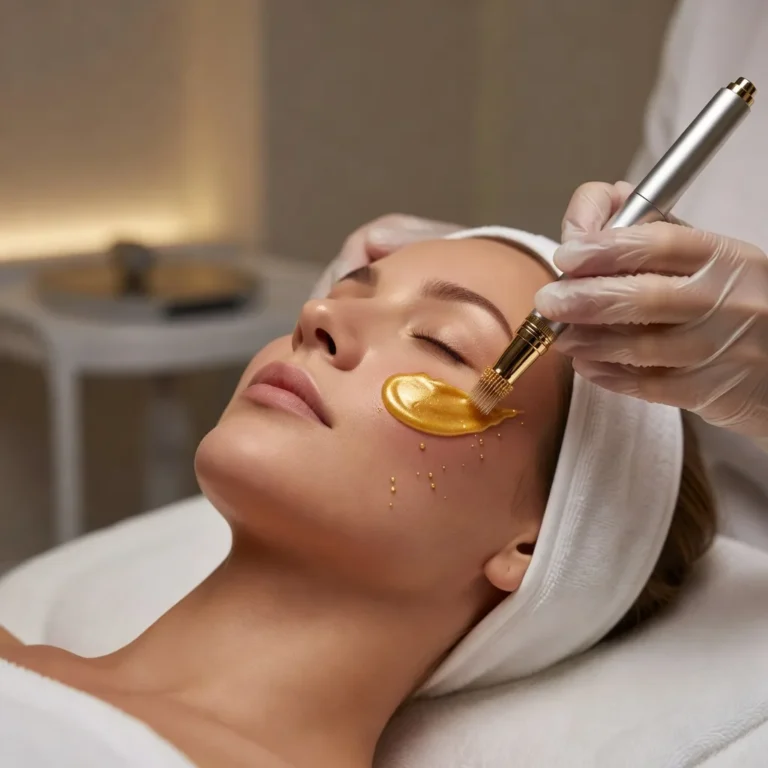
Do estheticians pop pimples the same way you might at home, or is there a real, legally defined line between what they’re trained and licensed to do?
Part of our guide to skin concerns. Start with: Are Facials Good for Acne?
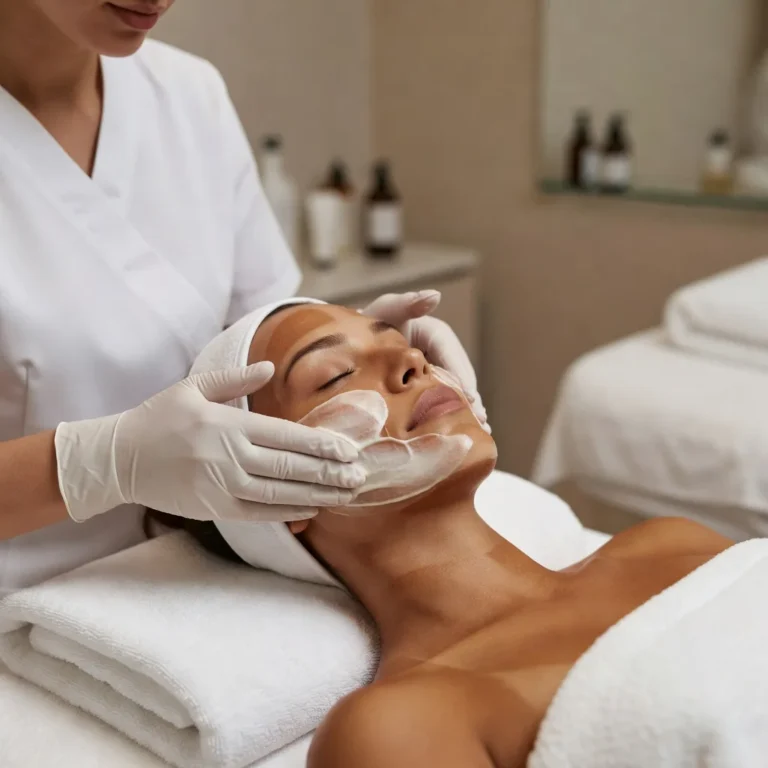
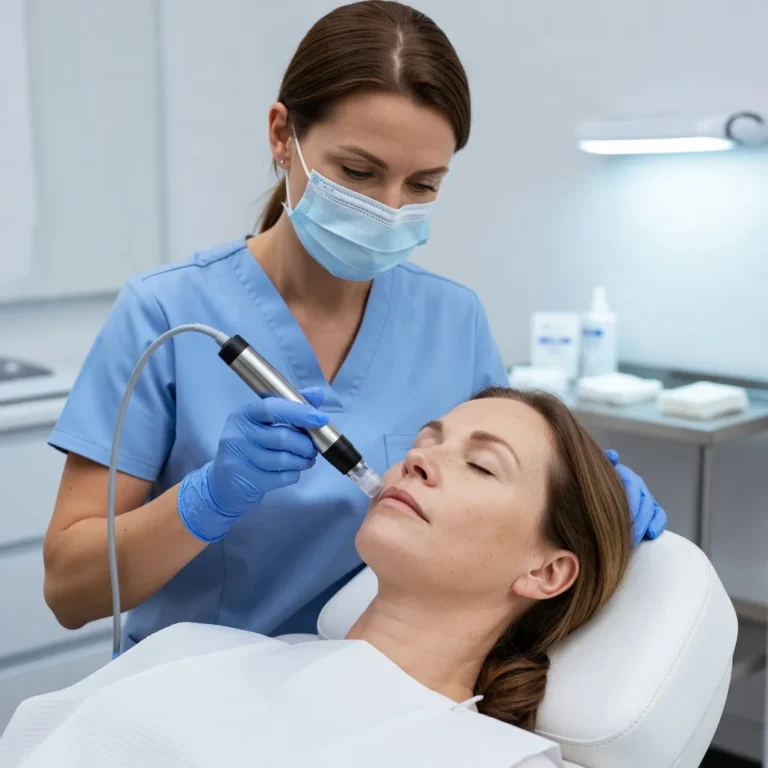
Estheticians can perform controlled extraction on non-inflamed, surface-level comedones like blackheads and whiteheads using sterile tools, but inflamed pimples, cysts, and nodules fall outside their scope of practice and should go to a dermatologist instead. That boundary isn’t arbitrary — state regulations specifically limit estheticians to non-invasive services on living tissue at or above the epidermis, not deeper.
The distinction between “extraction” and “popping” matters mechanically, too, since uncontrolled squeezing of an inflamed lesion tends to push its contents deeper rather than resolving them, which is part of why dermatologists have separate, more invasive tools for that category of blemish.
This guide covers exactly what estheticians are and aren’t licensed to do, the regulatory language behind that boundary, and when a dermatologist’s tools are genuinely the safer and more effective option.
Recommended Sterile At-Home Comedone Extraction Tools


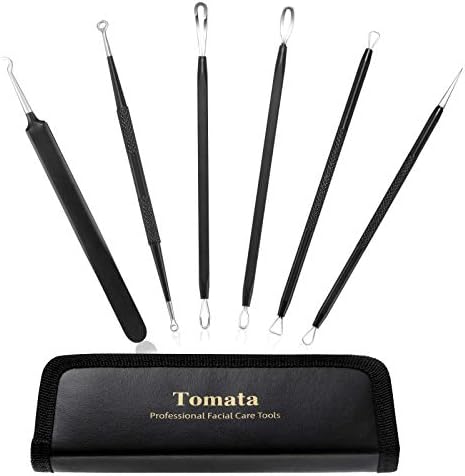


The Essentials
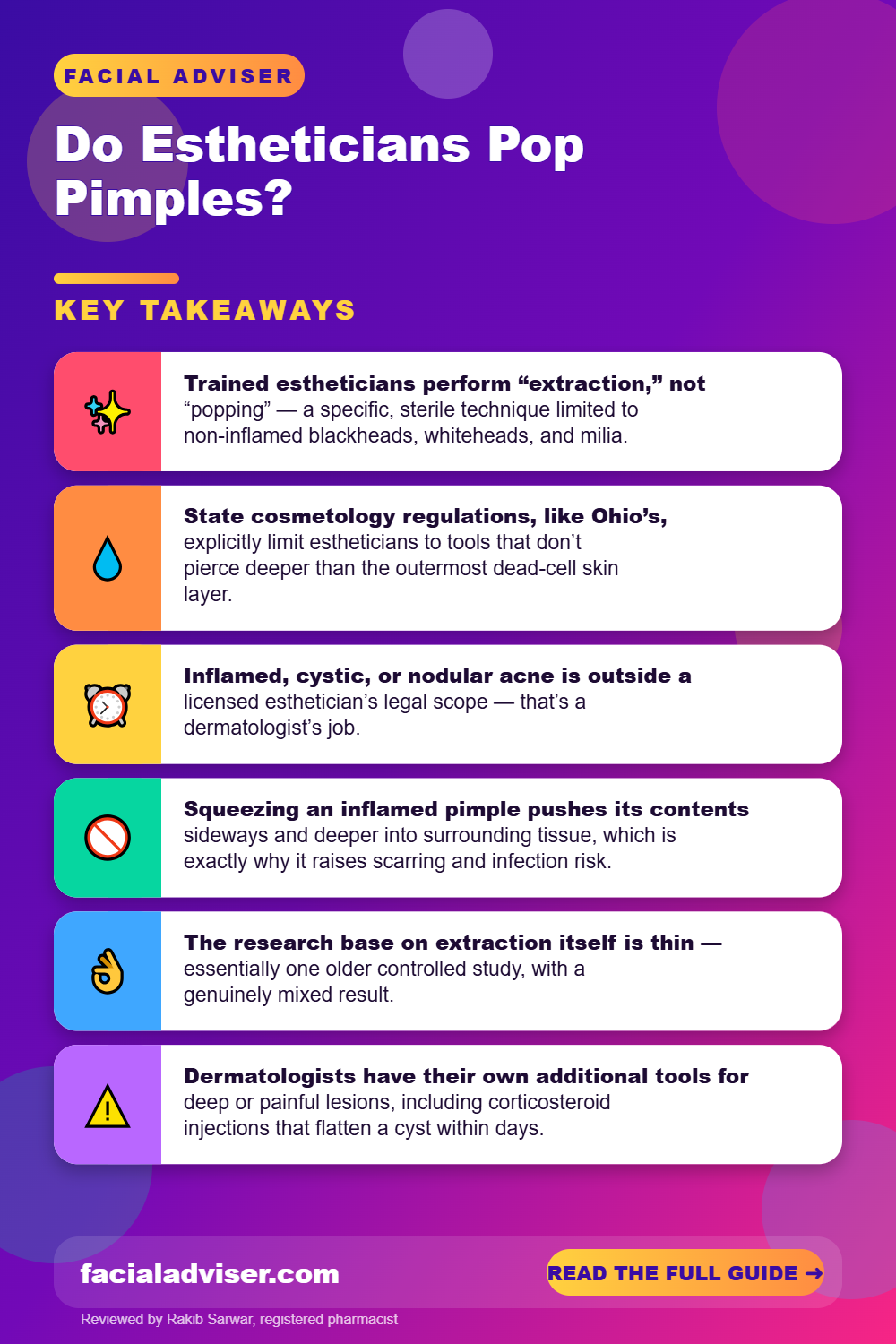
- Trained estheticians perform “extraction,” not “popping” — a specific, sterile technique limited to non-inflamed blackheads, whiteheads, and milia.
- State cosmetology regulations, like Ohio’s, explicitly limit estheticians to tools that don’t pierce deeper than the outermost dead-cell skin layer.
- Inflamed, cystic, or nodular acne is outside a licensed esthetician’s legal scope — that’s a dermatologist’s job.
- Squeezing an inflamed pimple pushes its contents sideways and deeper into surrounding tissue, which is exactly why it raises scarring and infection risk.
- The research base on extraction itself is thin — essentially one older controlled study, with a genuinely mixed result.
- Dermatologists have their own additional tools for deep or painful lesions, including corticosteroid injections that flatten a cyst within days.
- Knowing the difference between a comedone and an inflamed lesion is the single most useful thing for deciding who should touch it.
What’s Covered
- Popping vs. Extraction: The Real Difference
- What’s Actually in an Esthetician’s Legal Scope
- Which Lesion Types Get Which Treatment
- How a Proper Extraction Is Actually Done
- Why Inflamed Acne Gets Referred Out
- What the Research Actually Shows
- What Dermatologists Can Do That Estheticians Can’t
- Esthetician Tools vs. Dermatologist Tools
- A Quick Self-Check Before Any Appointment
- If You’re Tempted to Do It Yourself
- Do This, Not That
- Frequently Asked Questions
- When to See a Dermatologist Instead
- The Bottom Line
Popping vs. Extraction: The Real Difference
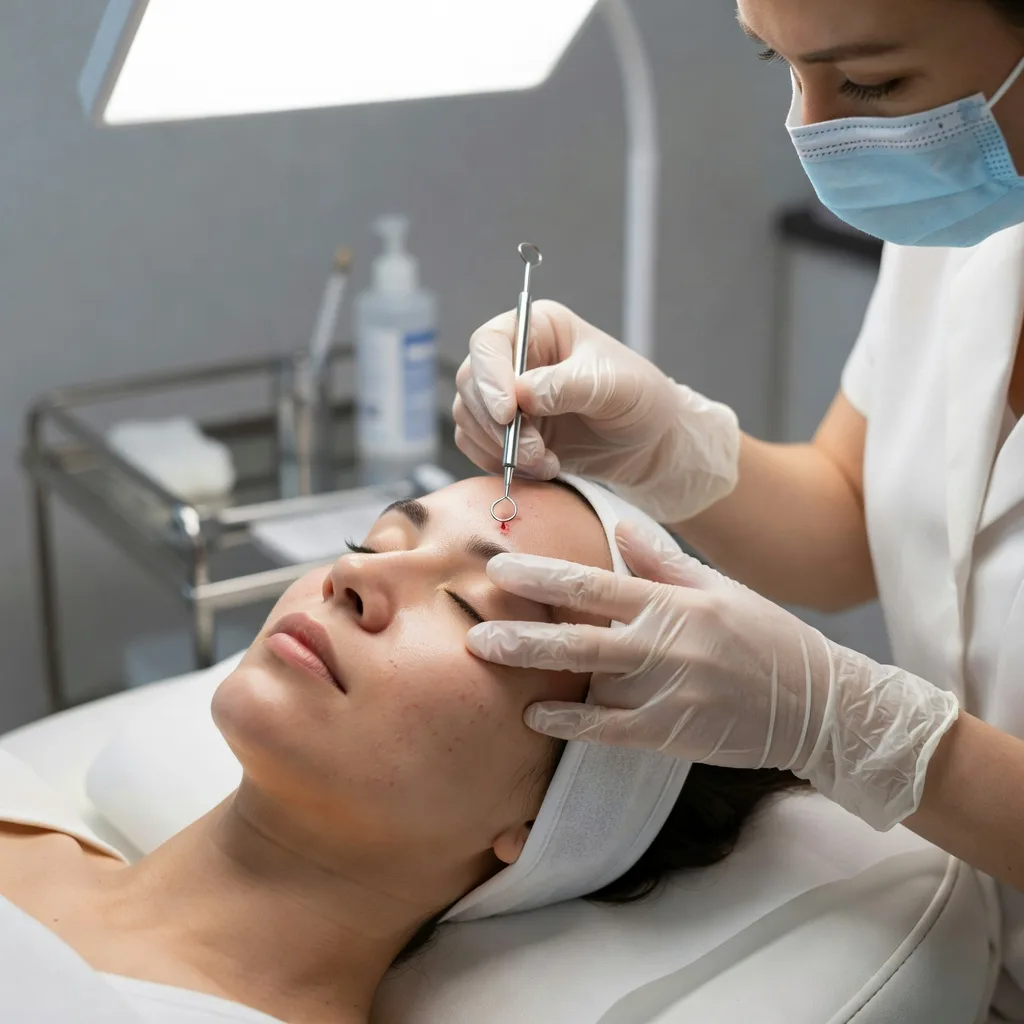
These get used interchangeably in everyday conversation, but they describe genuinely different actions with different risk profiles. “Popping” means manually squeezing a lesion between fingers to force its contents out through ruptured skin — typically applied to an already-inflamed pimple. “Extraction” means using a sterile tool, like a metal comedone extractor or a fine lancet, to gently express the contents of a non-inflamed clogged pore — a blackhead, whitehead, or milia bump — through its existing opening.
Buying for a salon, spa or clinic?
A free Amazon Business account gives you business-only pricing on eligible items, multi-user buying and tax-exemption tools.
Create a free Business accountAffiliate link: we may earn a commission at no extra cost to you.
The distinction isn’t just semantic. It maps directly onto what’s legally within an esthetician’s scope of practice and what genuinely raises versus lowers your risk of scarring.
What’s Actually in an Esthetician’s Legal Scope
This isn’t just industry custom — it’s written into state cosmetology regulations. Ohio’s administrative code, for example, permits estheticians to use a sterile, single-use, disposable lancet specifically to enhance or create a small opening in a comedone, but explicitly prohibits that lancet from piercing any deeper than the stratum corneum, the outermost layer of dead skin cells. Used lancets go straight into sharps disposal, and the tool can’t be used for anything else. The broader principle behind the rule: esthetician services are limited to beautification and non-invasive care, and estheticians may not “ablate, damage, or alter any living cells.”
California’s scope-of-practice guidance draws the same line differently worded: estheticians can extract on the surface of the skin, but anything that penetrates or removes living tissue below the epidermis crosses into medical territory and requires a physician, nurse practitioner, or physician assistant.
Which Lesion Types Get Which Treatment
| Lesion type | Who can treat it | Typical approach |
|---|---|---|
| Milia (tiny keratin bumps) | Esthetician | Fine lancet, lanced parallel to skin, expressed with cotton pressure |
| Blackheads/whiteheads (comedones) | Esthetician | Comedone extractor or gloved fingertips, firm lateral pressure |
| Inflamed papules/pustules | Dermatologist | Referral, not manual extraction |
| Cysts/nodules | Dermatologist | Corticosteroid injection or incision and drainage |
How a Proper Extraction Is Actually Done
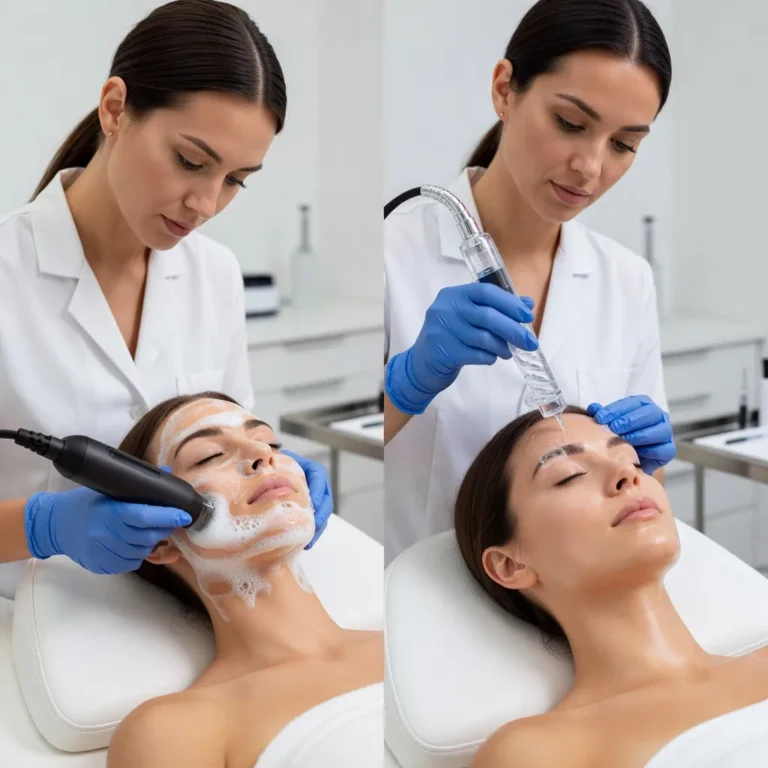
For a genuine comedone, a trained esthetician uses a comedone extractor tool, gloved fingertips wrapped in astringent-soaked cotton, or sterile cotton swabs, applying firm lateral pressure around — never directly on top of — the lesion. Nails or excessive pressure risk bruising the surrounding tissue or driving the plug deeper rather than out. Full clearance sometimes takes more than one session rather than forcing everything out at once.
For milia, the technique is slightly different: a lancet is used horizontally, parallel to the skin, right at the follicle opening, then the contents are expressed with gentle pressure from both sides using cotton swabs.
Why Inflamed Acne Gets Referred Out
Two separate reasons converge here, and both matter. Legally, an inflamed papule or pustule involves living tissue below the surface in a way that’s outside a standard esthetician’s licensed scope. Mechanically, squeezing an already-inflamed lesion pushes its contents sideways and deeper into surrounding tissue rather than up and out through an existing opening — the opposite of what proper comedone extraction achieves. That combination is exactly why estheticians are trained to refer inflamed, cystic, or nodular acne to a dermatologist rather than attempt it themselves.
What the Research Actually Shows
The evidence base behind extraction itself is thinner than the confidence with which it’s often recommended. A literature review found essentially one controlled study on the subject, dating to 1964, which looked at extracting non-inflamed whitehead comedones on the forehead. The result was genuinely mixed: extraction reduced future inflamed-lesion counts and recurrence for the non-inflamed comedones it was used on — but when the same approach was applied to already-inflamed cystic lesions in the same study, it made those specific lesions worse. That’s a strikingly old, narrow evidence base for a technique performed millions of times a year, and it’s honest to say so rather than imply extraction is more rigorously studied than it actually is. What it does support clearly: the comedone-only, non-inflamed-lesion scope that state regulations already enforce.
What Dermatologists Can Do That Estheticians Can’t
Dermatologists have tools specifically suited to deeper or more inflamed lesions that fall outside esthetic scope entirely. An intralesional corticosteroid injection delivered directly into a deep cyst or nodule typically flattens most of it within 48 to 72 hours — a fast, targeted option nothing in an esthetician’s toolkit replicates. For deep, painful lesions, a dermatologist can also perform incision and drainage using a sterile needle or blade under controlled conditions.
Esthetician Tools vs. Dermatologist Tools
| Tool/technique | Used by | Purpose |
|---|---|---|
| Comedone extractor | Esthetician | Surface-level blackhead/whitehead removal |
| Fine lancet (surface only) | Esthetician | Enhancing a comedone opening or milia removal |
| Intralesional corticosteroid injection | Dermatologist | Flattening a deep cyst or nodule quickly |
| Incision and drainage | Dermatologist | Draining a deep, painful lesion under sterile conditions |
A Quick Self-Check Before Any Appointment
Look at the spot
Is it a dark or light surface bump with no redness or swelling, or does it look inflamed and tender?
Press gently near it, not on it
A non-inflamed comedone typically doesn’t hurt to the touch; an inflamed lesion usually does.
Check how long it’s been there
A deep, painful bump that’s persisted for over a week is more likely a cyst or nodule than a simple comedone.
Mention it to your esthetician directly
A trained esthetician should tell you honestly if something is outside what they should touch.
See a dermatologist for anything inflamed or uncertain
When in doubt, a professional diagnosis beats guessing.
If You’re Tempted to Do It Yourself
At-home extraction of a genuine, non-inflamed blackhead with clean hands and a properly sanitized tool carries a similar underlying mechanism to what a trained esthetician does — the real difference is consistency of technique, sterility, and correctly judging which lesions are safe to touch in the first place. That last part is where most at-home attempts go wrong: it’s easy to misjudge an early-stage inflamed lesion as a simple whitehead and apply pressure that makes it worse.
Do This, Not That
Do
- Let a trained esthetician extract genuine surface-level comedones
- See a dermatologist for anything inflamed, cystic, or painful
- Ask what technique and tools will be used before an extraction facial
Don’t
- Squeeze an inflamed pimple yourself or let anyone else do it
- Expect an esthetician to treat a deep cyst or nodule
- Assume “extraction” and “popping” mean the same thing
Frequently Asked Questions
Is it ever okay for an esthetician to pop a pimple?
Not an inflamed one — that’s outside their legal scope in most US states. They can extract non-inflamed comedones with sterile tools.
Why does popping cause scarring more than extraction?
Squeezing an inflamed lesion pushes contents sideways and deeper into tissue rather than out through an existing opening, increasing tissue damage and infection risk.
Can I ask my esthetician to just try popping a cyst anyway?
A responsible, licensed esthetician should decline and refer you to a dermatologist instead — it’s both outside their scope and more likely to worsen the lesion.
How fast does a cortisone injection work on a cyst?
Most deep cysts noticeably flatten within 48 to 72 hours of an intralesional corticosteroid injection.
Does extraction actually prevent future breakouts?
The one controlled study on this found it reduced recurrence for non-inflamed comedones specifically — it’s not shown to prevent breakouts broadly.
Is milia the same as a whitehead?
No — milia are small, hard, keratin-filled cysts near the surface, while whiteheads are closed comedones from a blocked follicle. They’re treated with slightly different techniques.
What happens if I pop my own inflamed pimple at home?
The same mechanical risk applies regardless of who does it — pressure on inflamed tissue can push bacteria deeper and raise scarring risk.
Do all states regulate esthetician extraction the same way?
No, specifics vary by state, but the general principle — surface-level only, no living tissue below the epidermis — holds broadly across US cosmetology boards.
Can extraction leave marks even when done correctly?
Mild, temporary redness or a small mark is possible even with correct technique, though it should settle faster than damage from squeezing an inflamed lesion.
Should I ask about tools before booking an extraction facial?
Yes — asking whether sterile, single-use tools are used, and under what lighting, is a reasonable and useful question before any extraction-focused appointment.
When to See a Dermatologist Instead
See a dermatologist rather than an esthetician for any cystic, nodular, deeply painful, or persistently inflamed lesion, or for acne that hasn’t responded to over-the-counter treatment. These fall outside safe, legal esthetic scope and respond better to dermatologist-specific tools.
The Bottom Line
Estheticians don’t pop pimples in the inflamed-lesion sense — and a properly trained one shouldn’t. What they legally and safely do is extract non-inflamed comedones and milia using sterile, surface-level tools, a technique with real regulatory backing even if the underlying research is thinner than commonly assumed. Anything inflamed, cystic, or persistently painful belongs with a dermatologist, who has tools built specifically for that job.

Written by
Registered pharmacist and founder of Facial Adviser. Rakib's pharmacy training covers how skincare actives work and interact; a later course in cosmetology turned that into a focus on facial treatments and skincare products. He plans, researches and edits every guide on the site and checks health claims against sources such as the American Academy of Dermatology, the FDA and the NIH. He is not a dermatologist; see the Editorial Policy and Medical Disclaimer.
About · Editorial policy · How we choose products · Medical disclaimer · Contact
Keep reading: Acne and breakouts
- Are Facials Good for Acne?
- Can an Esthetician Clear Acne?
- Would a Facial Get Rid of Blackheads? What It Can and Cannot Do
- Pimple Scars That Won't Fade: What Actually Works
- How to Treat Small Milia Around Eyes Safely Without Picking or Scarring
- Why Do I Get Acne on My Temples? The Real Causes and How to Fix Them
- How to Calm Inflamed Red Patches on Your Face
- How Can I Make My Pores Less Visible?