How Much Does a European Facial Cost?
How much does a european facial cost, and does the fancier name on the menu actually buy you a meaningfully different treatment?
Part of our guide to facial treatments. Start with: What Is a Spa Facial?
A european facial typically runs $35 to $250 per session, averaging around $85, with the range driven mostly by session length, product customization, and whether massage and add-ons are included as standard. “European” isn’t a regulated or standardized treatment name, so that wide range reflects real differences in what any given spa actually bundles under the label, not just a markup for the word itself.
Package deals, add-ons like LED light therapy or extended massage, and regional pricing differences all shift the real number you’ll pay further, which is why comparing the included step list matters more than comparing the price tag alone.
This guide breaks down what a european facial typically includes, what actually drives the cost up or down, and how to compare it fairly against a basic facial or other spa treatments.
Recommended At-Home Products That Extend Facial Results


![SKIN1004 [Hudson's Pick] Poremizing Clay Stick Mask, Pore Care, 0...](https://m.media-amazon.com/images/I/41JnWZuIzmL.jpg)

At a Glance
- “European facial” isn’t a regulated or standardized service — it’s a branding term, so what’s included varies a lot by spa.
- It’s generally positioned as the fuller, more intensive version of a basic facial — longer, with massage and a customized mask as standard rather than optional.
- Expect it to cost noticeably more than a basic facial — roughly double is a reasonable rule of thumb, not a fixed number.
- What actually drives the price: session length, product customization, massage time, and any add-ons layered on top.
- There’s no rigorous regional cost breakdown available — treat any specific city-by-city price claim as thin or anecdotal.
- Compared to other spa treatments, it typically sits in the mid-range — more than a basic facial, less than device-based options like microneedling.
- The name alone doesn’t guarantee a specific set of steps — always confirm what’s included before booking, regardless of the label.
In This Guide
- What a European Facial Actually Is
- What It Typically Costs
- European Facial vs. Other Spa Treatments
- What Actually Drives the Price
- Cost Drivers, Ranked
- European Facial vs. Basic Facial
- Does Location Change the Price?
- Are Package Deals Actually Worth It?
- Common Add-Ons and What They Change
- “European,” “Parisian,” “Hollywood”: Do the Names Mean Anything?
- How to Get a Fair Price
- Tipping and Gratuity Norms
- Do This, Not That
- Frequently Asked Questions
- When a Facial Isn’t the Right Purchase
- The Bottom Line
What a European Facial Actually Is
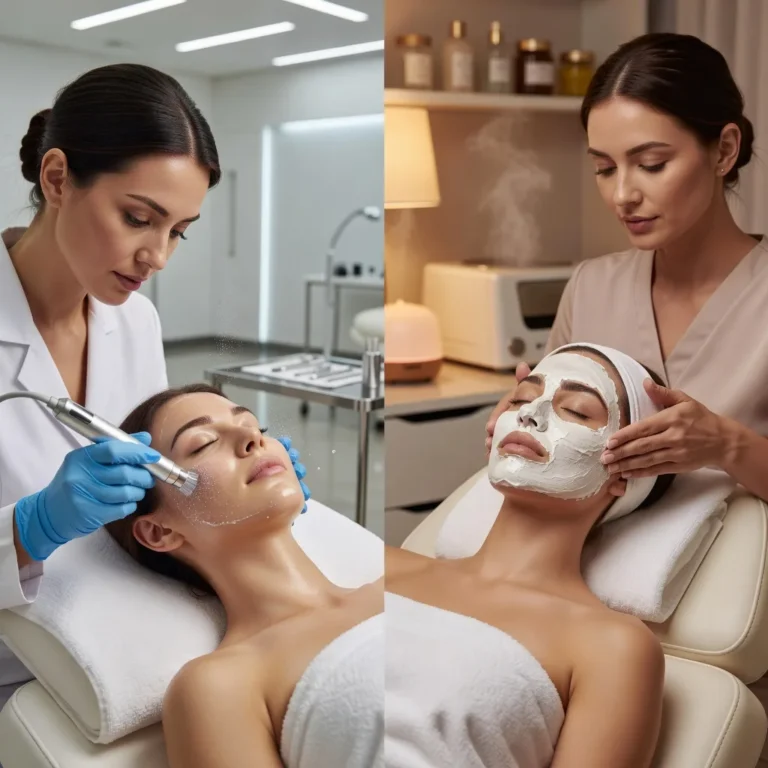
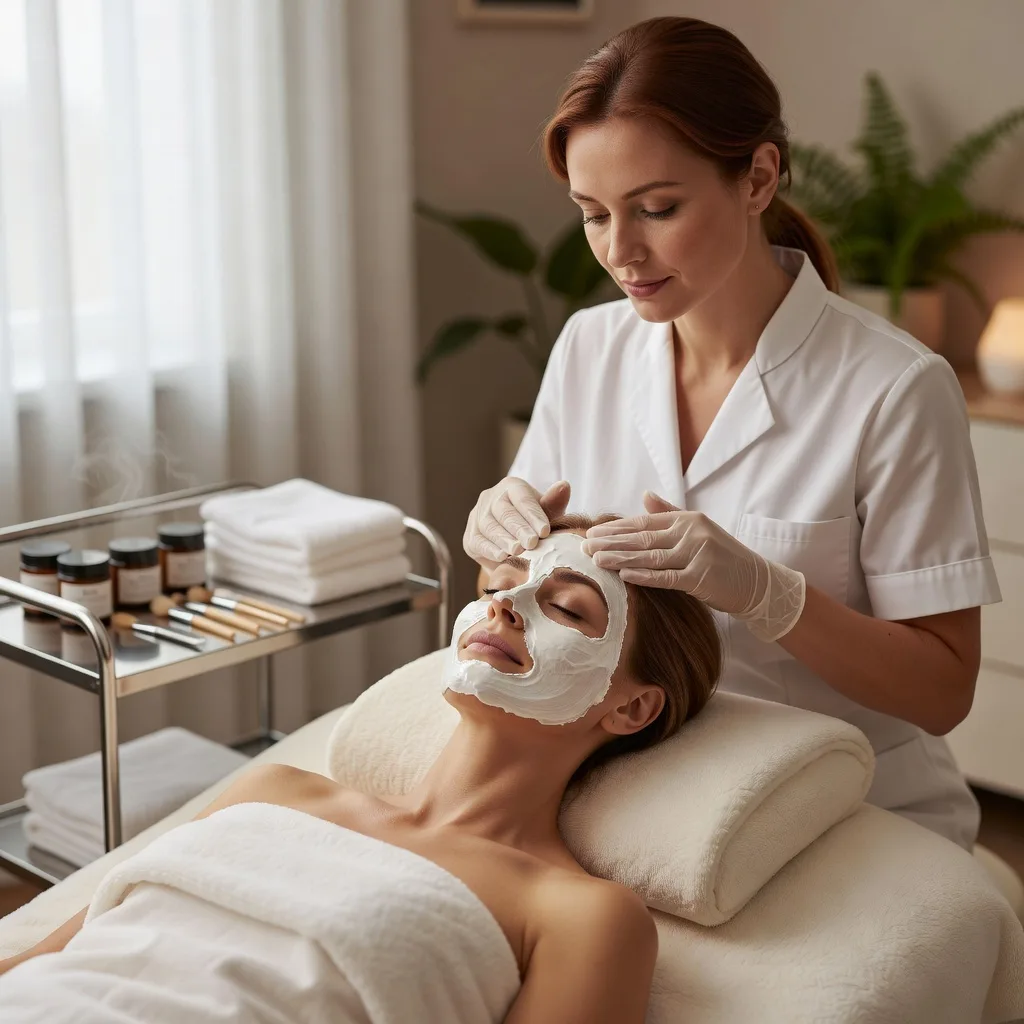
A “European facial” is the fuller, more complete version of the standard facial sequence: cleansing, exfoliation, steam (often via warm towels), extraction as needed, a massage extending to the face, shoulders, and neck, a mask customized to skin type, and a finishing moisturizer. The label is best understood as a branding term for the “full-service” tier rather than a distinct clinical treatment — there’s no governing body that defines exactly what has to be included for a spa to call something a European facial, which is worth knowing before comparing prices across different spas.
Shopping these picks?
Amazon Prime members get fast, free shipping on eligible items, plus Prime Video, Amazon Music and member deals. New members can start with a free trial.
Start a free Prime trialAged 18 to 24? Prime for Young Adults comes with a longer free trial and a lower price after it.
Affiliate link: we may earn a commission at no extra cost to you.
What It Typically Costs
Pricing varies substantially by spa, location, and provider, but the general pattern across the market: a basic entry-level facial often starts in the $35–$50 range, while a European facial specifically tends to start similarly but average noticeably higher, with upper-tier versions running considerably more. Rather than anchoring on one specific number, the more useful takeaway is relative: expect a European facial to cost meaningfully more than a basic 30-minute service, roughly in the neighborhood of double, reflecting its longer session time and fuller step list.
European Facial vs. Other Spa Treatments
Here’s roughly where a European facial sits relative to other common spa and med-spa treatments, from least to most expensive.
| Treatment | Relative cost tier |
|---|---|
| Basic/express facial | Lowest |
| European facial | Low-to-mid |
| Oxygen facial | Mid |
| Microdermabrasion | Mid |
| HydraFacial | Mid-to-high |
| Microneedling / PRP facial | Highest |
What Actually Drives the Price
Four factors explain most of the price difference between a European facial and a shorter, cheaper service. Session length is the biggest one — a 60 to 90 minute appointment simply costs more in labor time than a 30 to 45 minute one. Product customization matters too: European facials typically use masks and serums selected for your specific skin type rather than one generic product applied to every client. Massage time extends the appointment and requires additional trained technique. And add-ons — ampoules, serums, LED, or an upgraded mask — get layered on as optional extra charges at many spas.
Cost Drivers, Ranked
| Factor | Why it raises the price |
|---|---|
| Session length | Directly scales the labor cost of the appointment |
| Product customization | Skin-type-specific products cost more than one generic option |
| Massage time | Extends the service and requires trained technique |
| Add-ons | Optional extras tiered on top of the base price |
European Facial vs. Basic Facial
The practical difference comes down to what a basic facial treats as optional versus what a European facial treats as standard. A basic or express facial might skip massage entirely or reduce it to a brief pass, and use one generic mask for every client. A European facial builds massage and a customized mask into the core service rather than offering them as upsells — which is really the whole reason it costs more, not a fundamentally different treatment philosophy.
Does Location Change the Price?
It’s reasonable to assume a facial costs more in a major city than a small town, the way most services do, but there’s no rigorous, sourced regional cost breakdown available to back a specific claim here. Treat any confident city-by-city price comparison you see elsewhere as anecdotal rather than data-backed, and expect real variation by neighborhood, spa tier, and local market regardless of general city-size assumptions.
Are Package Deals Actually Worth It?
Many spas offer discounted multi-session packages — five or six European facials bundled at a lower per-session rate than booking individually. The math genuinely works out cheaper per visit if you’re already planning to go regularly, but it’s worth confirming the package doesn’t expire before you’d realistically use all the sessions, and that it’s transferable or refundable if your plans change. A package is a reasonable value if it matches a maintenance schedule you were already going to keep; it’s a weaker deal if it just pressures you into more visits than you’d otherwise book.
Common Add-Ons and What They Change
Serum or ampoule upgrade
A targeted active added to the mask step, usually a modest additional charge.
LED light therapy
Often offered as a brief add-on session tacked onto the end.
Extended massage
Some spas offer a longer massage segment as a standalone upgrade.
Extraction focus
A deeper, more thorough extraction pass beyond the standard light version.
Eye or lip treatment
A separate, smaller add-on treating a specific area in more depth.
Do This, Not That
Do
- Ask exactly what’s included before comparing prices between spas
- Treat “European facial” as a service tier, not a fixed protocol
- Ask about add-on pricing upfront to avoid surprises
Don’t
- Assume the name guarantees a specific set of steps
- Compare prices across spas without confirming what’s included
- Assume a higher price always means a proportionally better result
“European,” “Parisian,” “Hollywood”: Do the Names Mean Anything?
Spa menus are full of geographically or celebrity-flavored facial names — European, Parisian, Hollywood, Tokyo — and none of them refer to a treatment actually regulated, licensed, or standardized by the place or person in the name. They function as marketing shorthand for a general style or tier of service, not a documented protocol with a verifiable origin. That’s not necessarily dishonest — it’s closer to how a restaurant might call a dish “Parisian-style” without claiming an actual French regulatory body signed off on the recipe — but it does mean the name alone tells you very little about what you’ll actually get.
How to Get a Fair Price
Ask directly what’s included in the base price versus what counts as an add-on, how long the session runs, and whether the mask and products are customized to your skin type. A spa that answers these specifically, rather than vaguely, is a reasonable signal you’re getting what you’re actually paying for.
Tipping and Gratuity Norms
Tipping practices for a European facial follow the same general norms as other spa services in your area, though the added length and perceived “premium” positioning of the treatment sometimes pushes clients toward tipping a bit more generously than they would for a basic facial. In the United States, fifteen to twenty percent of the pre-tax service price is the common range, and some spas now build an optional gratuity line directly into the checkout screen or card reader, which makes the decision easier but isn’t obligatory to accept as-is. Outside the U.S., norms vary considerably — gratuity is far less customary in much of Europe, where service charges are frequently built into the listed price already, so it’s worth checking local expectations rather than assuming your home country’s habits transfer directly.
If you received an add-on from a different specialist partway through — an LED session handed off to a second esthetician, for instance — some spas expect a separate small tip for that portion, while others pool gratuities across the team. Asking the front desk directly, before you’re standing at checkout deciding on the spot, avoids any awkwardness either way.
Frequently Asked Questions
Is a European facial the same everywhere?
No — since it isn’t a standardized or regulated service, what’s included can vary meaningfully between spas even at similar price points.
Why is it called “European”?
The name reflects its origin as a spa-industry branding term for a fuller, more traditional facial protocol, not a treatment developed or regulated by any specific European body.
Is it worth paying more for a European facial over a basic one?
That depends on whether you value the added massage and customized mask — both offer real but modest additional benefit over a basic facial’s shorter, more generic version.
How long does a European facial usually take?
Typically 60 to 90 minutes, though exact timing varies by spa.
Does insurance ever cover this?
No, a European facial is a cosmetic spa service, not a medical treatment, so it isn’t insurance-eligible.
Can I request specific products for my skin type?
Yes, most spas offering European facials build in some product customization by default, and you can ask for specifics during booking or your initial consultation.
Is it the same as a “signature facial”?
Often similar in scope, though “signature facial” is usually a spa’s own proprietary name for its flagship service, while “European facial” is a broader industry term — ask what’s included either way.
Do med-spas offer European facials?
Some do, sometimes layered with add-ons like LED, though a true medical facial with prescription-strength actives is a separate category entirely.
Should I tip on top of the listed price?
Standard service-industry tipping norms typically apply, similar to other spa treatments.
What’s the best way to compare prices between two spas?
Ask each one for a specific breakdown of included steps and session length, rather than comparing the listed price alone.
When a Facial Isn’t the Right Purchase
Skip booking any spa facial, European or otherwise, and see a dermatologist instead if you have active cystic acne, an undiagnosed skin condition, or a concern that needs an actual medical diagnosis rather than a cosmetic treatment.
The Bottom Line
A European facial costs more than a basic facial mainly because it builds massage, a customized mask, and a longer session into the standard service rather than treating those as extras. Since the name itself isn’t regulated, the smartest way to shop for one is asking exactly what’s included at each spa you’re considering, rather than trusting the label or the price tag alone to tell you.

Written by
Registered pharmacist and founder of Facial Adviser. Rakib's pharmacy training covers how skincare actives work and interact; a later course in cosmetology turned that into a focus on facial treatments and skincare products. He plans, researches and edits every guide on the site and checks health claims against sources such as the American Academy of Dermatology, the FDA and the NIH. He is not a dermatologist; see the Editorial Policy and Medical Disclaimer.
About · Editorial policy · How we choose products · Medical disclaimer · Contact
Keep reading: Spa and brand-name facials